


Search results
Search for "reagent" in Full Text gives 1319 result(s) in Beilstein Journal of Organic Chemistry. Showing first 200.
Recent advances in the electrochemical synthesis of organophosphorus compounds
Beilstein J. Org. Chem. 2025, 21, 770–797, doi:10.3762/bjoc.21.61
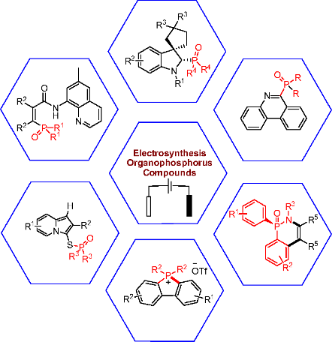
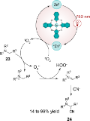
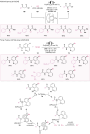
- according to the following mechanism via an anodic trimethylsilyl cyanide radical formation (Scheme 24). The formation of the Ph₃P=O as the side product was assumed to be due to the presence of water or oxygen in the reaction mixture, which competes with the aminating reagent. Electrochemical O–P bond


Development and mechanistic studies of calcium–BINOL phosphate-catalyzed hydrocyanation of hydrazones
Beilstein J. Org. Chem. 2025, 21, 755–765, doi:10.3762/bjoc.21.59
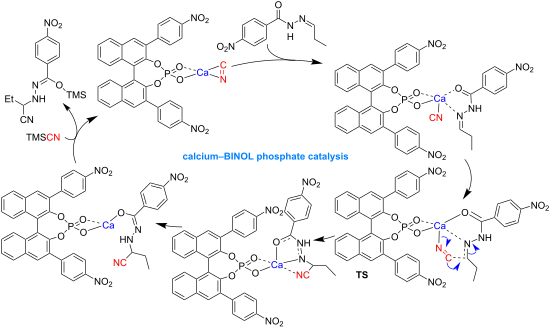
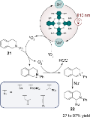
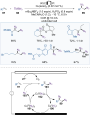
- -tetrahedral coordination environment with cyanide, stemming from a common reagent (vide infra) and binding to the metal in a preferred side-on (π-complex) mode [54]. When the hydrazone substrate enters the catalytic cycle, it coordinates also as a bidentate ligand to calcium via oxygen and nitrogen atoms
- achieved by reacting 11 with stoichiometric reagent TMSCN (8). This "reloads" calcium with cyanide and replaces TMS-bound isolated product 12 from the metal complex and in which silicon, rather than calcium, is bound to the carbonyl oxygen. The addition reaction itself is rather exothermic (Figure 3) and


Asymmetric synthesis of fluorinated derivatives of aromatic and γ-branched amino acids via a chiral Ni(II) complex
Beilstein J. Org. Chem. 2025, 21, 659–669, doi:10.3762/bjoc.21.52
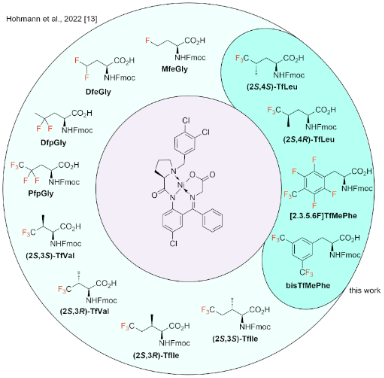
- , base, solvent, and reagent equivalents to optimize the alkylation reaction for both bromides 4 and 5 (Table 1 and Table 2). For Ni(II) complex of [2.3.5.6F]TfMePhe (6), firstly we screened different inorganic and organic bases (Table 1, entries 1–3) and 1,8-diazabicyclo[5.4.0]undec-7-ene (DBU) was


Recent advances in allylation of chiral secondary alkylcopper species
Beilstein J. Org. Chem. 2025, 21, 639–658, doi:10.3762/bjoc.21.51
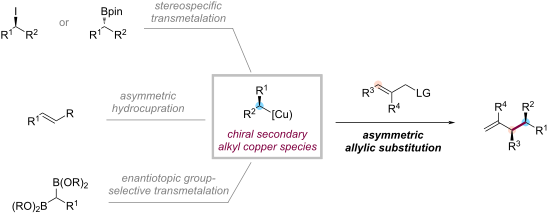
- electrophiles While the direct formation of chiral copper species from organolithium compounds provides an efficient route to stereospecific allylic alkylation products, the requirement of stoichiometric amounts of the copper reagent limits its practical application [46]. An alternative approach utilizing more


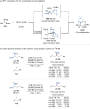


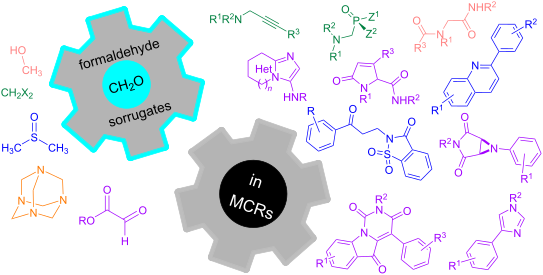
Formaldehyde surrogates in multicomponent reactions
Beilstein J. Org. Chem. 2025, 21, 564–595, doi:10.3762/bjoc.21.45
- %), but when DMSO is used as solvent and reagent, the yield was greatly improved. The proposed mechanism involves the activation of the disulfide component by CuBr2 as the Lewis acid (Scheme 14). The copper(II) center coordinates the sulfur atom of the disulfide allowing for the electrophilic addition to


Study of the interaction of 2H-furo[3,2-b]pyran-2-ones with nitrogen-containing nucleophiles
Beilstein J. Org. Chem. 2025, 21, 556–563, doi:10.3762/bjoc.21.44
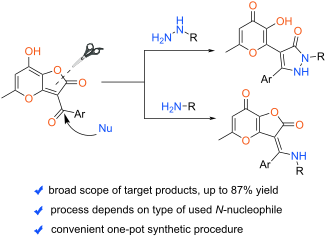
- with diverse N-nucleophiles was investigated. It was shown that the direction of the process depends on the type of employed nitrogen-containing reagent. For example, condensation with aliphatic amines leads to 2H-furo[3,2-b]pyran-2,7(3H)-diones bearing an exocyclic enamine moiety. At the same time
- target product was not obtained (Table 1, entries 3–5). Apparently, the presence of acid reagent is necessary for implementation of considered recyclization. In this regard we tried to perform the process under study using phenylhydrazine in salt form. Indeed, reflux of furanone 1a with the corresponding
- the best result was achieved in the case of EtOH (Table 1, entry 7). Then, we optimized the process time for the reaction with reagent 7a. It was shown that 8 h reflux is enough for the considered recyclization (Table 1, entry 10). Wherein, further shortening of the duration decreased the yield of


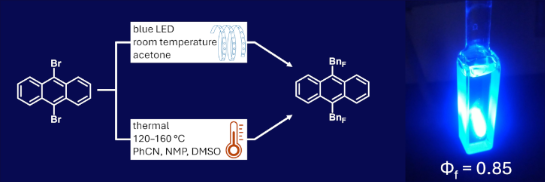
Deep-blue emitting 9,10-bis(perfluorobenzyl)anthracene
Beilstein J. Org. Chem. 2025, 21, 515–525, doi:10.3762/bjoc.21.39
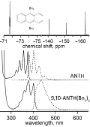
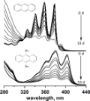
- crystals, addition of a drop of 1,2-dibromoethane). Only the addition of 1,2-dibromoethane enabled the generation of the Grignard reagent which was observed by bubbles and an instant increase of the reaction mixture’s temperature. CF2C6F5I (97.5 µL, 625 µmol) dissolved in dry THF (20 mL) was added with a





Synthesis of the aggregation pheromone of Tribolium castaneum
Beilstein J. Org. Chem. 2025, 21, 510–514, doi:10.3762/bjoc.21.38
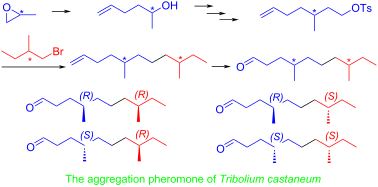
- with Grignard reagent, and oxidation with RuCl3/NaIO4. Keywords: aggregation pheromone; chiral 2-methyloxirane; red flour beetle; total synthesis; Introduction The red flour beetle, Tribolium castaneum Herbst (Coleoptera: Tenebrionidae), is a cosmopolitan, destructive stored product pest [1], which
- olefine (5R,9R)-12, which could be obtained through Li2CuCl4-catalyzed coupling of chiral tosylate (S)-10 with a Grignard reagent derived from (R)-1-bromo-2-methylbutane ((R)-11). The key chiral building block (S)-10 was envisaged to be prepared through a sequence of hydrolyzation, decarboxylation, borane
- prepared the target aggregation pheromone (4R,8R)-1, (4R,8S)-1, (4S,8R)-1, and (4S,8S)-1 (Scheme 4). Li2CuCl4-catalyzed coupling of chiral tosylate (S)-10 with the Grignard reagent derived from (R)-1-bromo-2-methylbutane ((R)-11) and Mg afforded (5R,9R)-5,9-dimethylundec-1-ene ((5R,9R)-12) in 80% yield [35


Organocatalytic kinetic resolution of 1,5-dicarbonyl compounds through a retro-Michael reaction
Beilstein J. Org. Chem. 2025, 21, 473–482, doi:10.3762/bjoc.21.34
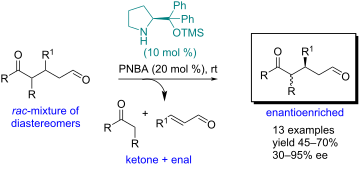
- chromatography [1]. Sometime later, kinetic resolution (KR) emerged. This method is based on the different reaction rates of each enantiomer in a racemic mixture when they are reacted with a reagent, a chiral catalyst, or an enzyme. This process results in obtaining the less reactive enantioenriched enantiomer


Photomechanochemistry: harnessing mechanical forces to enhance photochemical reactions
Beilstein J. Org. Chem. 2025, 21, 458–472, doi:10.3762/bjoc.21.33
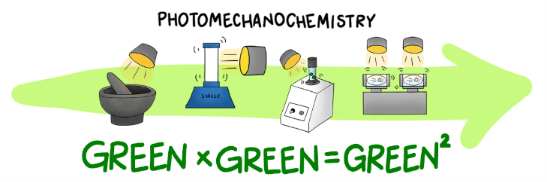
- (9.1) (Scheme 9) [75]. In this case the authors used a ball-mill reactor equipped with a blue LED, and the reaction was run in a glass vial with two transparent PMMA balls. The authors noted that fluorination of the vial and the use of silica gel to adjust texture were needed to prevent reagent
- using a mixture of 12.1 (0.2 mmol), NaI (1 equiv), Koser’s reagent, and Na2CO3 (each 4 equiv), in the presence of 100 wt % of SAOED, pyrrolidine 12.2 was isolated in 90% yield. As far as the mechanochemical setup is concerned, the authors milled the reaction mixture at 30 Hz in a 5 mL stainless-steel




Beyond symmetric self-assembly and effective molarity: unlocking functional enzyme mimics with robust organic cages
Beilstein J. Org. Chem. 2025, 21, 421–443, doi:10.3762/bjoc.21.30
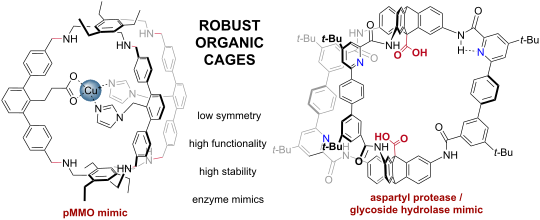
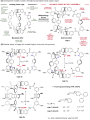
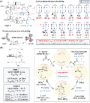
- predominantly achieved organization and polarization independently [26]. As we shall see, there has been a bias towards organization (controlling reagent distributions), often leaving any catalysis to chance. This even appears to be a strategy: “the search for supramolecular reactors that contain no




Red light excitation: illuminating photocatalysis in a new spectrum
Beilstein J. Org. Chem. 2025, 21, 296–326, doi:10.3762/bjoc.21.22

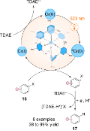
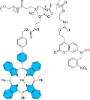
- emerged as potent catalysts for red-light-mediated photoreactions. Furuyama et al. demonstrated that a ruthenium phthalocyanin complex could catalyze trifluoromethylation reactions of styrene derivatives 18 with either CF3SO2Cl or Umemoto’s reagent 19 under red-light irradiation without the need for















Three-component reactions of conjugated dienes, CH acids and formaldehyde under diffusion mixing conditions
Beilstein J. Org. Chem. 2025, 21, 262–269, doi:10.3762/bjoc.21.18
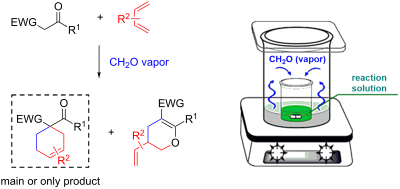
- Dmitry E. Shybanov Maxim E. Kukushkin Eugene V. Babaev Nikolai V. Zyk Elena K. Beloglazkina Department of Chemistry, M. V. Lomonosov Moscow State University, 119991 Moscow, Russian Federation 10.3762/bjoc.21.18 Abstract A diffusion mixing technique with a volatile reagent was successfully used to
- main reaction products. Keywords: aldol condensation; [4 + 2]-cycloaddition; diffusion mixing; formaldehyde; Knoevenagel condensation; three-component reactions; Introduction Formaldehyde is a reactive electrophilic reagent widely used as a C1 building block in multicomponent reactions [1][2][3]. Its
- reactions that proceed through the formation of formaldehyde condensation products (Scheme 1). Previously, we have proposed a convenient diffusion mixing technique for multicomponent reactions based on the absorption of volatile reagent vapors by a mixture containing the remaining reaction components. This


Visible-light-promoted radical cyclisation of unactivated alkenes in benzimidazoles: synthesis of difluoromethyl- and aryldifluoromethyl-substituted polycyclic imidazoles
Beilstein J. Org. Chem. 2025, 21, 234–241, doi:10.3762/bjoc.21.15
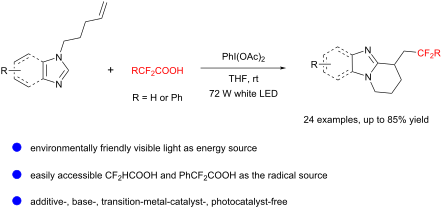
- reaction (Table 1). Employing PIDA as the promoter, THF as the solvent, and 72 W white LED as the light source, the desired product 3a formed in 85% isolated yield at room temperature (Table 1, entry 1). We found that the hypervalent iodine reagent was of significant importance for the present


Dioxazolones as electrophilic amide sources in copper-catalyzed and -mediated transformations
Beilstein J. Org. Chem. 2025, 21, 200–216, doi:10.3762/bjoc.21.12
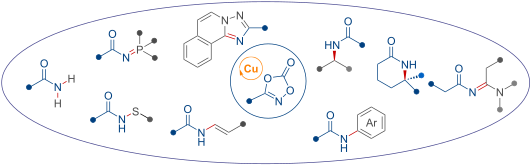
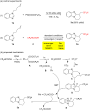
- dioxazolone bearing a linear alkyl group was efficiently converted to the N-vinylamide 26a in good yield. The observed regioselectivity followed the anti-Markovnikov fashion stemming from the regioselective hydrozirconation of the alkyne using Schwartz’s reagent [100]. Aryl substituents on the dioxazolone


Recent advances in electrochemical copper catalysis for modern organic synthesis
Beilstein J. Org. Chem. 2025, 21, 155–178, doi:10.3762/bjoc.21.9

- stoichiometric quantities of a copper reagent [3]. This pioneering work, known as the “classical Ullmann reaction”, was extended by Ullmann and Goldberg to enable the C–N and C–O bond formation [4][5][6]. Subsequently, key developments in Cu-catalyzed cross-coupling reactions were achieved, including the
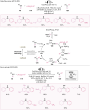
- , Huang, and Mei et al. explored Cu-catalyzed electrochemical C(sp2)–H bromination of 8-aminoquinoline amide at the C5 site of quinoline using NH4Br as a brominating reagent under anoxic oxidation conditions (Figure 13) [64]. This catalytic reaction has a broad substrate scope, and further investigation








Cu(OTf)2-catalyzed multicomponent reactions
Beilstein J. Org. Chem. 2025, 21, 122–145, doi:10.3762/bjoc.21.7

- -difunctionalization of alkenes carried out with carbazates (N-aminocarbamates) and (hetero)arene nucleophiles or amines exploiting N-(tert-butyl)-N-fluoro-3,5-bis(trifluoromethyl)benzenesulfonamide (NFBS) as intermolecular hydrogen-atom-transfer reagent results in alkylarylation processes (Scheme 5) [19]. The
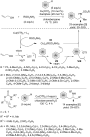
- was crucial for the formation of the organozinc reagent (Scheme 19) [36]. Spiro-2,3-dihydroquinazolinones 26 were formed exploiting a one-pot multicomponent reaction, using isatoic anhydride, ketones and primary amines. The isolation of the amide intermediate XXIII obtained by the copper-catalyzed




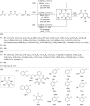


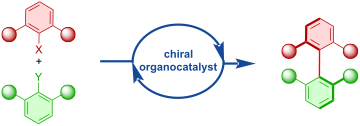
Recent advances in organocatalytic atroposelective reactions
Beilstein J. Org. Chem. 2025, 21, 55–121, doi:10.3762/bjoc.21.6
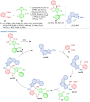
- -axial chirality conversion and formation of axially chiral products 21a–e (Scheme 7). This critical aromatization was later studied in more detail, and the team was able to achieve enantiodivergent aromatization, which led to different atropoisomers based on the oxidation reagent used [26]. The use of






Emerging trends in the optimization of organic synthesis through high-throughput tools and machine learning
Beilstein J. Org. Chem. 2025, 21, 10–38, doi:10.3762/bjoc.21.3
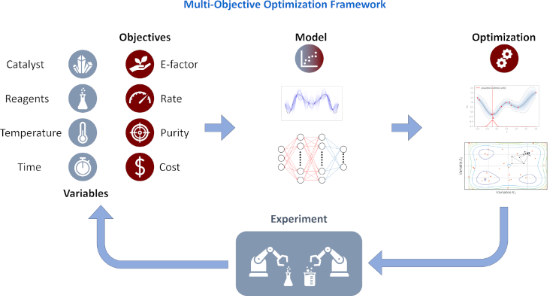
- an AI model that recommends the sequence of operations needed to perform the corresponding chemical reactions, including the order of reagent addition [35]. This model facilitates that the synthesis tasks are sent to a robotic research lab from anywhere in the world, allowing the robot to execute the
- system comprised of a flow chemistry synthesis platform, a reagent delivery system, a packed bed reactor, process-analytical tools, and an integrated software control system that automates end-to-end process operations and monitoring. The system has been used to demonstrate the synthesis of at least ten
- . Using this configuration, the platform can perform a calibration of the reagent and product concentration through a standard addition method. Once the PAT is calibrated, the platform performs dynamic experiments where the concentration of the reagents is ramped to explore the parametric space. Finally


Synthesis, structure and π-expansion of tris(4,5-dehydro-2,3:6,7-dibenzotropone)
Beilstein J. Org. Chem. 2025, 21, 1–7, doi:10.3762/bjoc.21.1
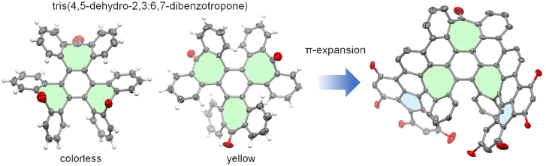
- the carbonyl groups in 1, it was treated with three equivalents Lawesson's reagent, affording dithioketone 8a in a 40% yield together with trithioketone 8b in a yield of 10%. To expand the π-skeleton of 1, compound 8a was subjected to the Barton–Kellogg reaction with diazo compound 9, which was


Reactivity of hypervalent iodine(III) reagents bearing a benzylamine with sulfenate salts
Beilstein J. Org. Chem. 2024, 20, 3281–3289, doi:10.3762/bjoc.20.272
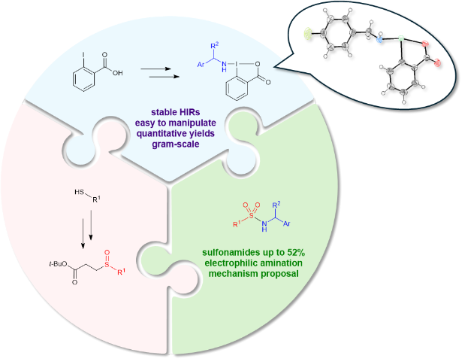
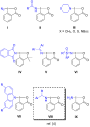
- first report from Zhdankin and co-workers in 1994, described the preparation of azidobenziodoxolone, ABX (I), a reagent widely used in oxidative azide transfer reactions [21]. Years later, Zhdankin’s group also reported the synthesis of amidobenziodoxolone (II) [14]. Other examples of N-containing
- groups (V), which proved to be useful in the transfer of imine radicals [17]. Bolm et al. contributed also to this topic by introducing a sulfoximidoyl-containing benziodoxolone (VI) [18]. Recently, our group disclosed the first HIRs bearing a primary amine moiety, the benzylamine benziodoxolone reagent
- reagent 2a in most organic solvents, an alternative solvent was tested; nevertheless, BBX 2a showed to be insoluble when using toluene (Table 1, entry 3). To have further insights on the formation of sulfonamide 5aa, an experiment was conducted under the same stoichiometric conditions that yielded product



Giese-type alkylation of dehydroalanine derivatives via silane-mediated alkyl bromide activation
Beilstein J. Org. Chem. 2024, 20, 3274–3280, doi:10.3762/bjoc.20.271
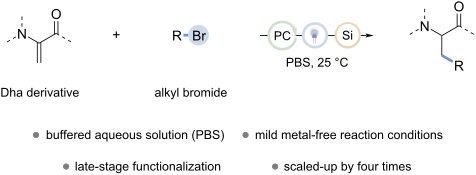
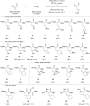
- photocatalytic activation (Figure 1b) [17][18][19][20][21]. A photocatalytic HAT or SET generates the corresponding boryl, α-amino or silyl radical, which can abstract a halogen atom from alkyl halides to form the corresponding alkyl radical. However, the use of TTMS as a XAT reagent had already been established



Germanyl triazoles as a platform for CuAAC diversification and chemoselective orthogonal cross-coupling
Beilstein J. Org. Chem. 2024, 20, 3198–3204, doi:10.3762/bjoc.20.265
- . studentship. G.A.B., F.P., and A.J.B.W. thank the Leverhulme Trust (RPG-2020-380). A.J.B.W. thanks the Leverhulme Trust for a Research Fellowship (RF-2022-014) and the EPSRC Programme Grant ‘‘Boron: Beyond the Reagent’’ (EP/W007517/1) for support.



Direct trifluoroethylation of carbonyl sulfoxonium ylides using hypervalent iodine compounds
Beilstein J. Org. Chem. 2024, 20, 3182–3190, doi:10.3762/bjoc.20.263
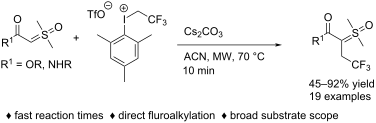
- discovered by Umemoto has proven an effective electrophilic trifluoroethyl transfer reagent [34][35], and to further explore the potential of fluoroalkyliodonium salts we evaluated the reactivity of such compounds in the context of sulfoxonium ylide derivatization. As depicted in Table 1, we began our
- easily available 2,2,2-trifluoroethyl(mesityl)iodonium triflate reagent enabled the straightforward trifluoroethylation of diverse sulfoxonium ylides under mild conditions and short reaction times. Various computational strategies were also employed to differentiate between competing halogen bond


Controlled oligomerization of [1.1.1]propellane through radical polarity matching: selective synthesis of SF5- and CF3SF4-containing [2]staffanes
Beilstein J. Org. Chem. 2024, 20, 3134–3143, doi:10.3762/bjoc.20.259
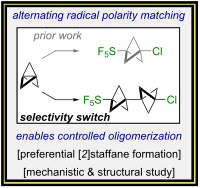
- point of comparison, we examined the reactivity of 1 with CF3SF4Cl. This reagent is known to behave comparably to SF5Cl in radical chain reactions [17][59][60][61] and can also be prepared conveniently in house [62]. In an analogous equivalents screen, we found that the 5:3 product ratio shifts from 7.7
- phenomenon is quite sensitive to changes in the fluorinated sulfur reagent scaffold (see Supporting Information File 1 for more details). This second instance of controlled oligomerization of 1 using CF3SF4Cl was also studied at the PWPB95-D4/def2-QZVPP//PCM(Et2O)-ωB97X-D/def2-TZVP level of theory (Figure 3
- , e.g., a radical or cation) on the transannular carbon atom of a bicyclopentyl moiety can interact through space [35][63][64]. The consequence is ostensibly that more "nucleophilic" INT2 and INT5 are better matched for Cl atom abstraction from the "electrophilic" reagent (SF5Cl or CF3SF4Cl). To test





