Search results
Search for "ring formation" in Full Text gives 88 result(s) in Beilstein Journal of Organic Chemistry.
Natural product biosyntheses in cyanobacteria: A treasure trove of unique enzymes
Beilstein J. Org. Chem. 2011, 7, 1622–1635, doi:10.3762/bjoc.7.191
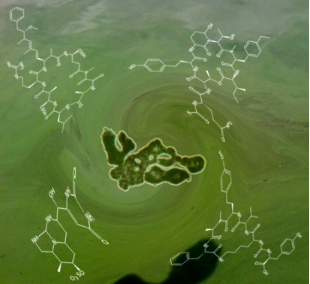
- responsible for uracil ring formation, although biochemical evidence is currently missing. The final hydroxylation step towards cylindrospermopsin has been shown to be catalyzed by CyrI, a 2-oxoglutarate-dependent iron oxygenase [31]. Interestingly, two epimers were described for the corresponding hydroxyl
- halogenated by unique biochemical mechanisms through the two non-heme iron(II)-dependent halogenases BarB1 and BarB2 (Figure 6A) [40]. Further extraordinary features of the pathway include one-carbon truncation during chain elongation, E-double bond formation and thiazole ring formation. Jamaicamide The
- substituent, a beta-methoxy eneone system, and a pyrrolinone ring [41]. The incorporation of the chlorovinylidene group was partially elucidated and predicted to be highly similar to the cyclopropane ring formation of curacin A biosynthesis (Figure 6B) ([42], see below). The enzyme cassette comprises a PKS


Intramolecular hydroamination of alkynic sulfonamides catalyzed by a gold–triethynylphosphine complex: Construction of azepine frameworks by 7-exo-dig cyclization
Beilstein J. Org. Chem. 2011, 7, 951–959, doi:10.3762/bjoc.7.106
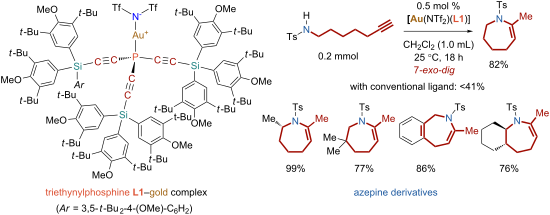
- intramolecular hydroamination of alkynes [19][20][21][22][23][24][25][26][27][28][29][30][31][32][33][34][35][36][37][38][39][40][41][42][43][44][45][46][47][48][49][50][51], seven-membered ring formation is rare and is limited to the cases where the substrate is preorganized for cyclization: The substrates must
- triethynylphosphine ligand L1 was also evaluated for the eight-membered ring formation of sulfonamide 9, which is much more challenging than the seven-membered ring formation of 4. The reaction required 5 mol % catalyst loading under heating conditions (80 °C) in 1,2-dichloroethane for a reasonable conversion rate to


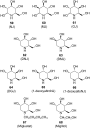
Metathesis access to monocyclic iminocyclitol-based therapeutic agents
Beilstein J. Org. Chem. 2011, 7, 699–716, doi:10.3762/bjoc.7.81

- . Its synthesis, as well as that of its dihydroxylated homologue 36, features as the key step five-membered ring formation via RCM induced by the 2nd-generation Grubbs catalyst 5 (Scheme 6) [58]. A further contribution to new pyrrolidine-based azasugars, characteristically having 1,2-dihydroxyethyl side





Novel carbazole–pyridine copolymers by an economical method: synthesis, spectroscopic and thermochemical studies
Beilstein J. Org. Chem. 2011, 7, 638–647, doi:10.3762/bjoc.7.75
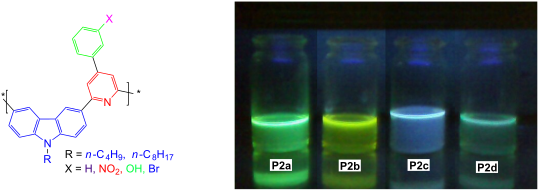
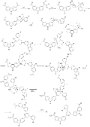
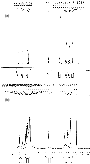
- monomers. i) R–Br, 50% KOH, benzene, TBAB, 80 °C, 2 h; ii) AcCl, AlCl3, CHCl3, 0 °C then rt, 3 h. Synthesis of poly[3,6-N-alkylcarbazole-4-(3-substituted phenyl)pyridine-2,5-diyl]. i) CH3COONH4, CH3COOH, reflux, 18 h. Proposed mechanism of pyridine ring formation. Thermal data and molecular weights for




One-pot gold-catalyzed synthesis of 3-silylethynyl indoles from unprotected o-alkynylanilines
Beilstein J. Org. Chem. 2011, 7, 565–569, doi:10.3762/bjoc.7.65
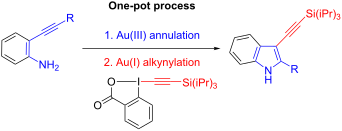
- first results on the direct alkynylation reaction combined in a one-pot procedure with gold-catalyzed indole ring formation are promising, and analogous strategies combining palladium-catalyzed synthesis of indoles [3] and gold-catalyzed alkynylation could also be envisaged. The next step will be to


An overview of the key routes to the best selling 5-membered ring heterocyclic pharmaceuticals
Beilstein J. Org. Chem. 2011, 7, 442–495, doi:10.3762/bjoc.7.57
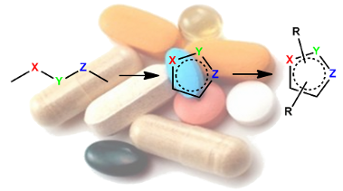
- indole ring formation (Scheme 11) [13]. As can be seen from Scheme 11 the indole 59 prepared via the Japp–Klingemann reaction is substituted at position 2 by an ester group which prevents reaction with electrophiles, thereby reducing the amount of undesired by-products. A simple sequence of hydrolysis





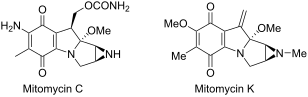
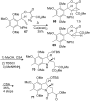
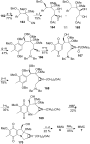
Mitomycins syntheses: a recent update
Beilstein J. Org. Chem. 2009, 5, No. 33, doi:10.3762/bjoc.5.33






Synthesis of new Cα-tetrasubstituted α-amino acids
Beilstein J. Org. Chem. 2009, 5, No. 5, doi:10.3762/bjoc.5.5

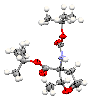
- from commercially available racemic methionine in a four step synthesis. TAAs show the ability to induce stable β-turns in solid state and solution when incorporated into natural peptide sequences [20]. The key step of the TAA synthesis is the ring formation, which is an aldol type reaction between the
- improve the diastereoselectivity of the ring formation. n-Butyraldehyde (2) was chosen for the first set of reactions to optimize the reaction conditions. Table 1 summarizes the results. In total eight different reaction conditions were tried and the conversion was determined by 1H NMR analysis after
- aldehyde was reacted with the sulfonium salt 1. The corresponding TAA was obtained in 18% yield. To investigate the reactivity of ketones, acetone (9) was tested but no TAA product was formed. The diastereoselectivity of the reaction was also examined. The previously reported ring formation reactions with


End game strategies towards the total synthesis of vibsanin E, 3-hydroxyvibsanin E, furanovibsanin A, and 3-O-methylfuranovibsanin A
Beilstein J. Org. Chem. 2008, 4, No. 34, doi:10.3762/bjoc.4.34
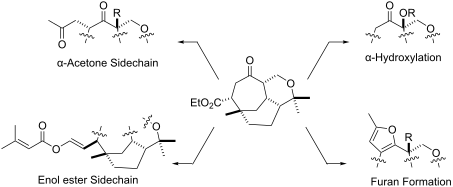
- so efficiently furan ring formation was investigated with ketone 30. Three general protocols were identified as suitable for attempting fused furan formation with substrate 30; 1) Padwa [20] and Mukaiyama [21] furan synthesis, 2) Nishizawa furan synthesis [22], and 3) classical acid catalysed


Allylsilanes in the synthesis of three to seven membered rings: the silylcuprate strategy
Beilstein J. Org. Chem. 2007, 3, No. 16, doi:10.1186/1860-5397-3-16
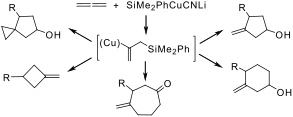
- silylcuprate with electrophiles ("the silylcuprate strategy") provides new routes for the synthesis of functionalised allylsilanes, which undergo highly stereocontrolled silicon-assisted intramolecular cyclizations leading to three to seven membered ring-formation. Background Organosilicon compounds and in
- groups in appropriate positions undergo silylcupration-ring formation, when treated with higher order cyanocuprates as (PhMe2Si)2CuCNLi2. Intramolecular trapping of the vinylcuprate intermediate allows the synthesis of methylenecyclopentanes 20–22 (Scheme 4). [14] Epoxidation of the oxoallylsilanes
- -cyclopropane moiety, from open chain allylsilanes in just one step. The high stereocontrol associated to the ring formation allows the synthesis of enantiomerically pure spiro-tricyclic alcohols containing an angular OH-group, such as 38 (Scheme 7). [20] The use of reagents different from organoaluminun




Microwave- assisted ring closure reactions: Synthesis of 8-substituted xanthine derivatives and related pyrimido- and diazepinopurinediones
Beilstein J. Org. Chem. 2006, 2, No. 20, doi:10.1186/1860-5397-2-20
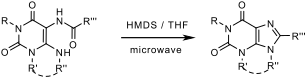
- a versatile condensing agent in heterocyclic ring formation [21][22]. However, its very low polarity can cause solubility problems when polar compounds are to be reacted. High temperatures (>120°C) and long reaction times (from several hours to several days) are generally required for the synthesis
- poor mixing. Microwave-assisted synthesis has been extensively applied in the field of heterocyclic chemistry, especially when high temperatures are needed for ring formation with conventional heating [24]. Based on these findings the preparation of 8-substituted xanthine derivatives and related


The vicinal difluoro motif: The synthesis and conformation of erythro- and threo- diastereoisomers of 1,2-difluorodiphenylethanes, 2,3-difluorosuccinic acids and their derivatives
Beilstein J. Org. Chem. 2006, 2, No. 19, doi:10.1186/1860-5397-2-19
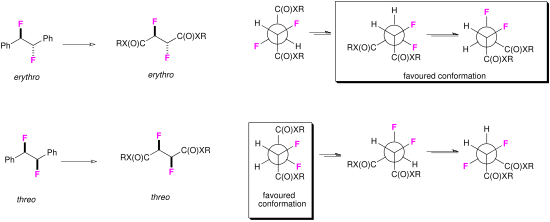
- benzylic as well as anchimeric stabilisation via phenonium ring formation 18 with the β-phenyl group as illustrated in Scheme 6. Isolation of the minor threo-13 isomer required careful chromatography. In order to improve the synthesis of threo-13 a reaction with cis-stilbene 17 was investigated. The one


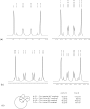
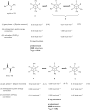


Crystal engineering of analogous and homologous organic compounds: hydrogen bonding patterns in trimethoprim hydrogen phthalate and trimethoprim hydrogen adipate
Beilstein J. Org. Chem. 2006, 2, No. 8, doi:10.1186/1860-5397-2-8
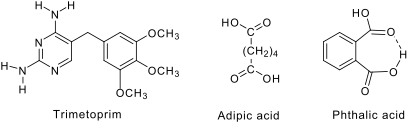
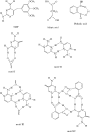
- identical with TMP-dicarboxylate salts such as TMP-hydrogen glutarate [17] and TMP-succinate [29] but differ only in the number of carbon atoms of the chain. Such cyclic hydrogen-bonded ring formation blocks the base-pairing interaction between the pyrimidine moieties. Hence base-pairing has not been