Search results
Search for "asymmetric" in Full Text gives 954 result(s) in Beilstein Journal of Organic Chemistry. Showing first 200.
Asymmetric organocatalytic synthesis of chiral homoallylic amines
Beilstein J. Org. Chem. 2024, 20, 2349–2377, doi:10.3762/bjoc.20.201
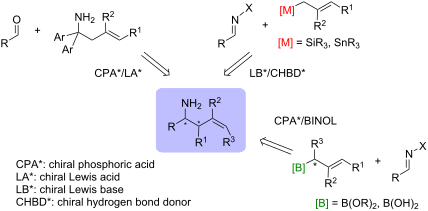
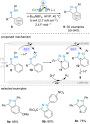
- equimolar chiral controller. However, recent years have witnessed the rise of asymmetric transition-metal catalysts and, importantly, organocatalytic allylation, reshaping the landscape of modern synthetic chemistry. This review explores the latest developments in the asymmetric allylation of imines
- , encompassing cutting-edge advances in hydrogen-bond catalysis and non-classical approaches. Furthermore, practical examples showcasing the application of these innovative methodologies in total synthesis are presented. Keywords: asymmetric catalysis; asymmetric synthesis; chiral amines; organicatalysis
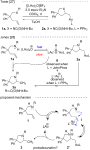
- essential to provide a comprehensive overview of this significant topic. Review Asymmetric allylation with boron-based reagents The research on the metal-free, asymmetric organocatalytic allylation of acylimines was pioneered in 2007 by Schaus and co-workers [24]. In their elegant approach, high






Stereoselective mechanochemical synthesis of thiomalonate Michael adducts via iminium catalysis by chiral primary amines
Beilstein J. Org. Chem. 2024, 20, 2313–2322, doi:10.3762/bjoc.20.198
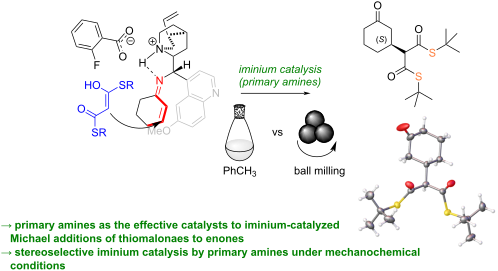
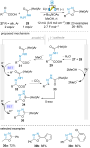
- nucleophiles in this transformation. Keywords: asymmetric catalysis; iminium catalysis; mechanochemistry; organocatalysis; thioesters; Introduction Mechanochemistry, particularly solventless processes under ball milling conditions, offers the opportunity to devise unconventional reaction pathways [1][2][3][4
- attention. The controlled formation of C–C and C–X bonds in a stereoselective fashion has found extensive application in asymmetric synthesis. Notably, the addition of malonates has attracted significant interest, albeit primarily limited to methyl or ethyl diesters [18][19][20]. The combination of iminium
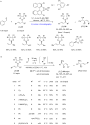
- reactivity by chiral quaternary ammonium salt in the asymmetric variant of the phase-transfer catalysis. Nevertheless, no product was formed despite several conditions being examined. Finally, an attempt to activate the electrophile was performed. We chose iminium salt catalysis particularly employing chiral


Catalysing (organo-)catalysis: Trends in the application of machine learning to enantioselective organocatalysis
Beilstein J. Org. Chem. 2024, 20, 2280–2304, doi:10.3762/bjoc.20.196
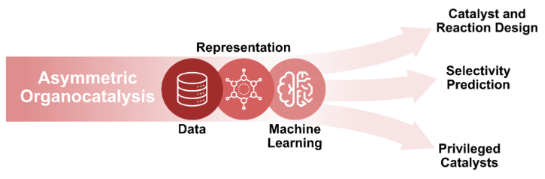
- the award of the Nobel Prize to List and MacMillan in 2021 ‘for the development of asymmetric organocatalysis’. Organocatalytic transformations have also seen the transition to industrial processes for the production of a variety of pesticides and medicinal compounds, as recently reviewed [6][7][8][9
- include the development of ACE (Asymmetric Catalyst Evaluation) [19][20], AARON (Automated Reaction Optimiser for New Catalysts) [21] or CatVS (Catalyst Virtual Screening) [22]. Such tools have been extensively reviewed in the past years [23][24][25]. Based on a known mechanism, the tools calculate the


Factors influencing the performance of organocatalysts immobilised on solid supports: A review
Beilstein J. Org. Chem. 2024, 20, 2129–2142, doi:10.3762/bjoc.20.183
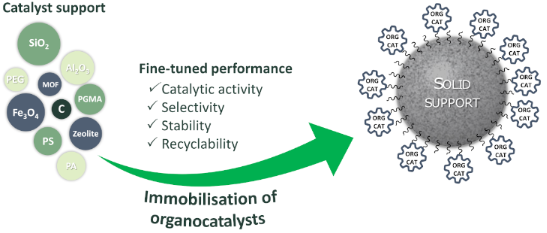
- applications in organic chemistry. Keywords: asymmetric synthesis; catalyst recycling; heterogenisation; organocatalysis; solid support; Introduction Organocatalysts are small molecules that do not contain a metal atom in the reaction centre and are able to increase the speed of reactions. They have proven
- MacMillan were awarded the Nobel Prize in 2021 for the development of asymmetric organocatalysis [6]. To date, industrial companies have used a number of asymmetric organocatalytic processes to synthesise pharmaceuticals and fine chemicals on large scales [7]. Catalyst recycling is key from both an economic
- , giving easily recyclable asymmetric catalysts. The asymmetric sites can be different types, commonly they are binaphthyl-, biphenyl- [91][92][93] and proline-based [94][95]. COFs are a type of crystalline porous material, consisting of covalently linked organic ligands [96][97]. Since the framework only


Multicomponent syntheses of pyrazoles via (3 + 2)-cyclocondensation and (3 + 2)-cycloaddition key steps
Beilstein J. Org. Chem. 2024, 20, 2024–2077, doi:10.3762/bjoc.20.178

- feature of the method is the regioselectivity with asymmetric diketones. In addition to β-ketoesters, acetylacetone can be used in the concept. The same research group employed ethyl 4,4,4-trifluoroacetoacetate as a substrate in this method. The pyrazoline oxidation proved to be critical, and the addition




Diastereoselective synthesis of highly substituted cyclohexanones and tetrahydrochromene-4-ones via conjugate addition of curcumins to arylidenemalonates
Beilstein J. Org. Chem. 2024, 20, 2016–2023, doi:10.3762/bjoc.20.177
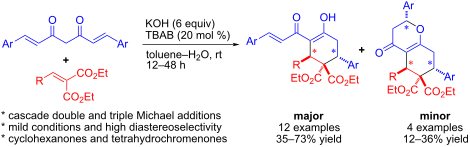
- KOH using TBAB as a suitable phase transfer catalyst in a biphasic medium at room temperature. The scalability of the reaction has also been demonstrated. Our future efforts will involve performing an asymmetric version of this reaction using chiral phase-transfer catalysts and the results will be


Harnessing the versatility of hydrazones through electrosynthetic oxidative transformations
Beilstein J. Org. Chem. 2024, 20, 1988–2004, doi:10.3762/bjoc.20.175
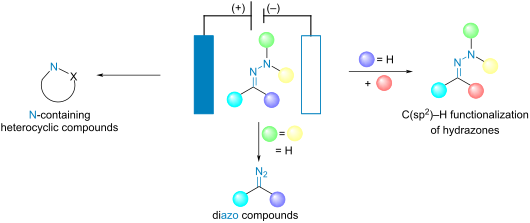
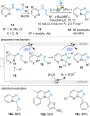
- -methoxymethylpyrrolidine)hydrazones could be also key intermediates for the asymmetric synthesis of α-substituted aldehydes and ketones [18][19]. Interestingly, depending on the substitution pattern, the C=N bond can feature different electronic properties [20]. For instance, various hydrazones have been employed for the
- asymmetric preparation of chiral amines through the addition of nucleophilic partners [21][22] while the azaenamine character of some aldehyde-derived hydrazones has been demonstrated in the coupling with suitable electrophiles such as Michael acceptors [23][24]. Last but not least, the C=N bond of



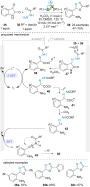
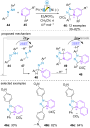
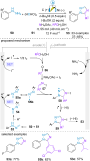
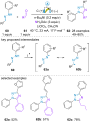






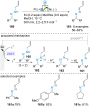
Allostreptopyrroles A–E, β-alkylpyrrole derivatives from an actinomycete Allostreptomyces sp. RD068384
Beilstein J. Org. Chem. 2024, 20, 1981–1987, doi:10.3762/bjoc.20.174
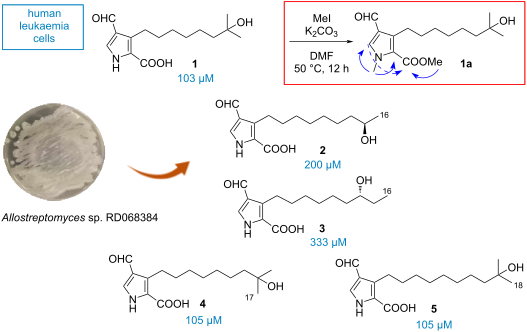
- (porphyrins) including heme, chlorophyll, and vitamin B12 [1][2] (Figure S54 in Supporting Information File 1). Porphobilinogen, the fundamental biological precursor of tetrapyrroles, is biosynthesized via asymmetric condensation of two δ-aminolevulinic acid molecules [2][3]. From another aspect


Negishi-coupling-enabled synthesis of α-heteroaryl-α-amino acid building blocks for DNA-encoded chemical library applications
Beilstein J. Org. Chem. 2024, 20, 1922–1932, doi:10.3762/bjoc.20.168
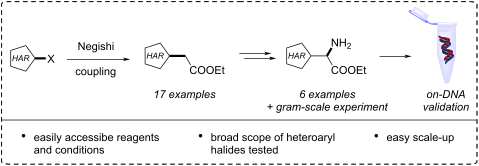
- range of less widely applicable strategies have been developed as well [17][18][19][20][21][22]. The above-mentioned methods focus on the synthesis of α-alkyl-amino acids. Moving to α-aryl-amino acids, the Clayden group published an excellent asymmetric α-arylation method to access quaternary amino


Chiral bifunctional sulfide-catalyzed enantioselective bromolactonizations of α- and β-substituted 5-hexenoic acids
Beilstein J. Org. Chem. 2024, 20, 1794–1799, doi:10.3762/bjoc.20.158
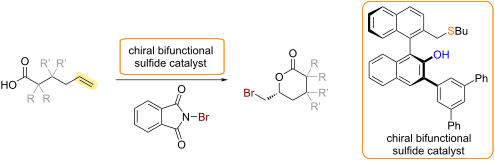
- without substituents on the carbon–carbon double bond have remained a formidable challenge. To address this limitation, we report herein the asymmetric bromolactonization of 5-hexenoic acid derivatives catalyzed by a BINOL-derived chiral bifunctional sulfide. Keywords: asymmetric catalysis
- ; enantioselectivity; halogenation; lactones; organocatalysis; Introduction Catalytic asymmetric halolactonizations of alkenoic acids are powerful methods for the preparation of important chiral lactones in enantioenriched forms [1][2][3][4][5][6][7][8][9][10][11]. A wide variety of chiral catalysts have been applied
- to asymmetric halolactonizations, especially for the synthesis of chiral γ-butyrolactones and δ-valerolactones via the reaction of 4-pentenoic acid and 5-hexenoic acid derivatives (Scheme 1). Notably, however, substituents on the carbon–carbon double bond of alkenoic acid substrates are generally


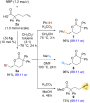
Primary amine-catalyzed enantioselective 1,4-Michael addition reaction of pyrazolin-5-ones to α,β-unsaturated ketones
Beilstein J. Org. Chem. 2024, 20, 1518–1526, doi:10.3762/bjoc.20.136
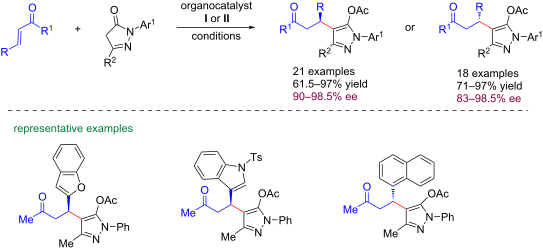
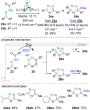
- structurally diverse pyrazole derivatives [4][5][6][7][10][11][12]. 4-Unsubstituted pyrazolin-5-ones are well known precursors for the construction of optically active structurally diverse pyrazoles [10][11][12]. In this context, the organocatalyzed asymmetric Michael addition of 4-unsubstituted pyrazolin-5
- [10][11][12][13][14][15][16][17][18][19][20][21]. Among the developed organocatalyzed enantioselective 1,4-addition reactions of pyrazolin-5-ones, the catalytic asymmetric reactions of pyrazolin-5-ones with α,β-unsaturated ketones are comparatively less studied. In 2009, Zhao’s group were the first
- organocatalyzed asymmetric Michael addition reaction of 4-monosubstituted pyrazol-5-ones to simple enones for the synthesis of pyrazolone derivatives [25]. Despite these progresses, arylidene/heteroarylideneacetones have remained untapped by 4-unsubstituted pyrazolin-5-ones under asymmetric organocatalytic or




Tetrabutylammonium iodide-catalyzed oxidative α-azidation of β-ketocarbonyl compounds using sodium azide
Beilstein J. Org. Chem. 2024, 20, 1510–1517, doi:10.3762/bjoc.20.135
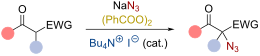
- addition, the recent years have seen remarkable progress in utilizing electrophilic azide-transfer reagents, i.e., hypervalent iodine-based compounds, for (asymmetric) α-azidations [16][17][18][19][20][21][22][23]. Besides these valuable approaches, which either require appropriate pre-functionalization of


Towards an asymmetric β-selective addition of azlactones to allenoates
Beilstein J. Org. Chem. 2024, 20, 1504–1509, doi:10.3762/bjoc.20.134
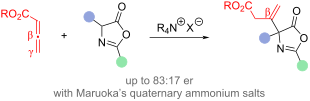
- , Iran 10.3762/bjoc.20.134 Abstract We herein report the asymmetric organocatalytic addition of azlactones to allenoates. Upon using chiral quaternary ammonium salt catalysts, i.e., Maruoka’s binaphthyl-based spirocyclic ammonium salts, the addition of various azlactones to allenoates proceeds in a β
- ; quaternary ammonium salt catalysis; Introduction The development of asymmetric synthesis routes to access non-natural amino acids has for decades been one of the most heavily investigated tasks in organic synthesis and catalysis-oriented research [1][2][3][4][5][6][7][8][9][10][11][12][13]. As a consequence
- synthesis approaches. Our group has a longstanding focus on the development of asymmetric organocatalytic methods to access non-natural chiral α- and β-AA [14][15][16][17][18][19]. Hereby we are especially interested in utilizing simple (prochiral) starting materials and carry out stereoselective α


Challenge N- versus O-six-membered annulation: FeCl3-catalyzed synthesis of heterocyclic N,O-aminals
Beilstein J. Org. Chem. 2024, 20, 1412–1420, doi:10.3762/bjoc.20.123
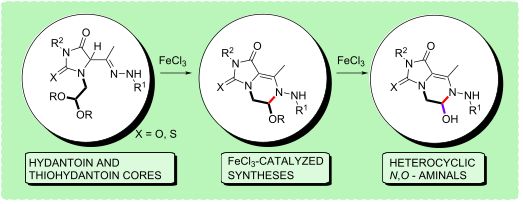
- ), whose sequential acylation process by iso(thio)cyanates 3a–h gives rise to the asymmetric (thio)urea derivatives (intermediate II). The spontaneous nucleophilic attack of the (thio)amide nitrogen on the terminal methyl ester function at C-4 of the starting azo-ene system provides a regioselective




Hypervalent iodine-catalyzed amide and alkene coupling enabled by lithium salt activation
Beilstein J. Org. Chem. 2024, 20, 1405–1411, doi:10.3762/bjoc.20.122

- . This strategy rendered the participation of simple and unadorned amides as bifunctional nucleophiles to achieve olefin oxyamination reactions. Time studies of these reactions further unveiled interesting mechanistic features that will be useful for our future catalysis development and asymmetric



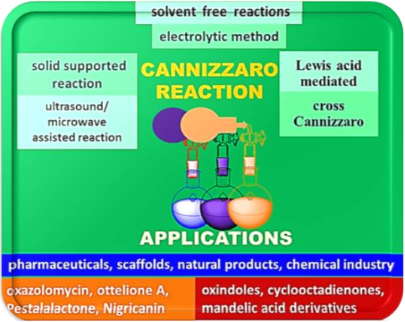
Synthetic applications of the Cannizzaro reaction
Beilstein J. Org. Chem. 2024, 20, 1376–1395, doi:10.3762/bjoc.20.120
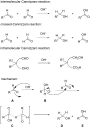
- transformation of the aryl glyoxals is outlined below (Scheme 4), which depicts the coordination of the hemiacetal B with the metal catalyst to give C, followed by hydride transfer to form the metal-coordinated Cannizzaro product D. Another intramolecular asymmetric Cannizzaro reaction was reported by Wu et al
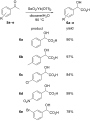
- alcohols 10. Excellent yields and enantioselectivities of the intramolecular Cannizzaro version were observed furnishing a wide range of alkyl and aryl mandelate esters 9 and 3 (Scheme 5). The asymmetric intramolecular Cannizzaro reaction of anhydrous phenylglyoxal (7a) with alcohols was envisaged by
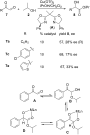
- % enantioselectivity. They employed a double asymmetric induction with (+)/(−)-menthol (12), and CuX2 bis(oxazoline) catalyst where the corresponding chiral mandelate ester 13 was obtained in 81% yield and high selectivity (90% de) (Scheme 6). The proposed mechanism of the reaction is depicted below. Hong et al








Bismuth(III) triflate: an economical and environmentally friendly catalyst for the Nazarov reaction
Beilstein J. Org. Chem. 2024, 20, 1167–1178, doi:10.3762/bjoc.20.99
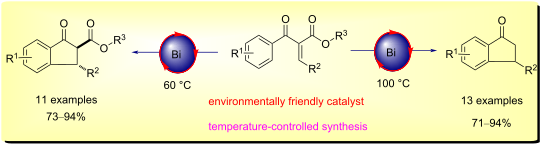
- first asymmetric catalytic Nazarov reaction [32]. In recent years, several strategies were reported employing different Lewis acids, such as, AuCl3/AgSbF6, Cu(II), In(OTf)3, Ir(III), Al(III), Sc(OTf)3/LiClO4, In(OTf)3/diphenylphosphoric acid (DPP), Fe(OTf)3/(CF3)2PhB(OH)2, iodine [33][34][35][36][37][38
- ][39][40][41][42][43], and other strategies [44][45]. Although methodologies involving catalysis by Lewis acids are very efficient, including asymmetric versions of the Nazarov reaction, the experimental protocols are quite laborious in most cases, requiring low temperature, an inert atmosphere, or the


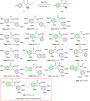
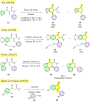


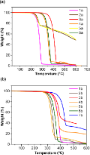
Structure–property relationships in dicyanopyrazinoquinoxalines and their hydrogen-bonding-capable dihydropyrazinoquinoxalinedione derivatives
Beilstein J. Org. Chem. 2024, 20, 1037–1052, doi:10.3762/bjoc.20.92
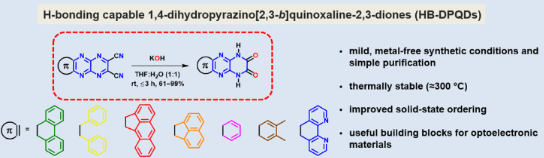
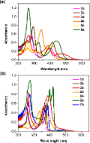
- * level of theory), and corresponding molecular orbital plots for 1b–7b. Asymmetric unit of DPQD 2b with important bond lengths highlighted (a). Torsion angles of 4.33° and 5.25° are associated with the carbonyl groups and rings 1 and 3, respectively (b) and (c). Packing diagram showing the average




Enantioselective synthesis of β-aryl-γ-lactam derivatives via Heck–Matsuda desymmetrization of N-protected 2,5-dihydro-1H-pyrroles
Beilstein J. Org. Chem. 2024, 20, 940–949, doi:10.3762/bjoc.20.84
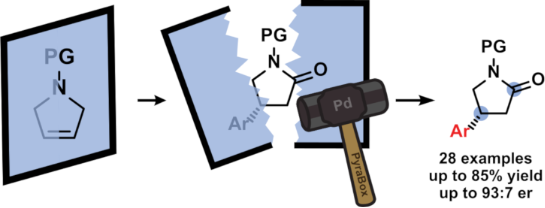
- preclude chirality as in the transformation of a prochiral molecular entity into a chiral one [1]. It is a powerful and elegant strategy in asymmetric synthesis [2], which combined with the use of chiral ligands and transition-metal catalysts enabled many valuable transformations to increase molecular
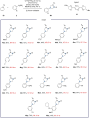
- upward, therefore creating an asymmetric center with absolute configuration (R), in accordance with experimental results. A rationalization for the transition state that would lead to the observed outcome is depicted in Figure 2. Conclusion The palladium-catalyzed Heck–Matsuda desymmetrization of N




Advancements in hydrochlorination of alkenes
Beilstein J. Org. Chem. 2024, 20, 787–814, doi:10.3762/bjoc.20.72
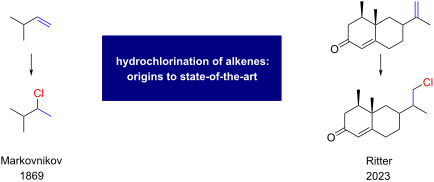
- -workers [22][23]. Recently, Jacobsen reported asymmetric Prins cyclizations with HCl solutions [24]. Hence, all the described hydrochlorinations are racemic or diastereoselective reactions. Review Polar hydrochlorination reactions To comprehend polar hydrochlorination reactions, a solid understanding of
- of a single report concerning the catalytic asymmetric hydrochlorination of alkenes. Hence, this represents another important challenge for the future. Mayr’s nucleophilicity parameters for several alkenes. References for each compound can be consulted via the database. Hydride affinities relating to






Chemoenzymatic synthesis of macrocyclic peptides and polyketides via thioesterase-catalyzed macrocyclization
Beilstein J. Org. Chem. 2024, 20, 721–733, doi:10.3762/bjoc.20.66
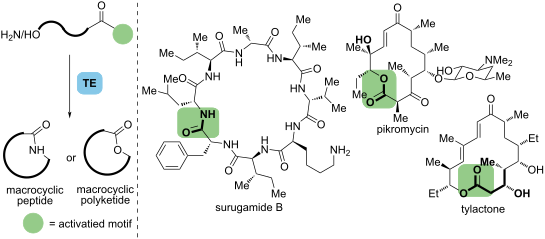
- pikromycin and the aglycones in this family, 10-deoxymethynolide (24) and norbonolide (25), using asymmetric aldol reaction, Yamaguchi esterification, and ring-closing metathesis as key steps [65][66]. Nevertheless, the inherent complexity of these natural products demands high step counts, leading to low
- , they established a preparative-scale approach toward the pikromycins family and their aglycones in 2013 [70]. The preparation of activated pentaketides (37) using asymmetric α-alkylation and cross metathesis as key reactions reduced the step counts from 14 to 11 steps. Replacing the extender unit from
- epoxidation with enzymatic macrocyclization in 2020 as shown in Scheme 8 [85]. According to their previous report [86], the production of fragments 61 was initiated by Evans’ asymmetric aldol and alcohol protection to generate 57. Six-step route transformations, including cross metathesis, afforded aldehyde


Evaluation of the enantioselectivity of new chiral ligands based on imidazolidin-4-one derivatives
Beilstein J. Org. Chem. 2024, 20, 684–691, doi:10.3762/bjoc.20.62
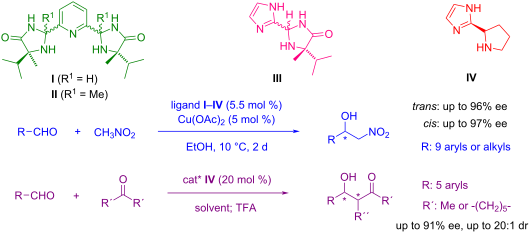
- based on derivatives of imidazolidin-4-one were synthesised and characterised. The catalytic activity and enantioselectivity of their corresponding copper(II) complexes were studied in asymmetric Henry reactions. It was found that the enantioselectivity of these catalysts is overall very high and
- also tested in asymmetric aldol reactions. Under the optimised reaction conditions, aldol products with enantioselectivities of up to 91% ee were obtained. Keywords: asymmetric aldol reaction; asymmetric Henry reaction; chiral ligands; enantioselective catalysis; imidazolidine derivatives
- itself constitutes a stereocentre [4]. The specific pairing of a chiral ligand and a metal ion is essential for the catalytic characteristics and its effectiveness of the complex in asymmetric syntheses [1][2][3]. In recent years, our research group has synthesised a series of chiral ligands based on 2


A laterally-fused N-heterocyclic carbene framework from polysubstituted aminoimidazo[5,1-b]oxazol-6-ium salts
Beilstein J. Org. Chem. 2024, 20, 621–627, doi:10.3762/bjoc.20.54
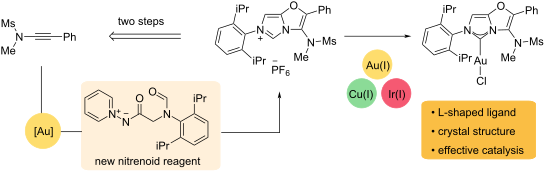
- secondary gold-ligand interactions [8][9][10], chiral environments [11][12][13] including those enabling secondary interactions with substrates for asymmetric catalysis [14], cooperative and bimetallic catalysis [7][15], and redox-enabling function for Au(I)/(III) cycles [16][17]. Such L-shaped ligands


Switchable molecular tweezers: design and applications
Beilstein J. Org. Chem. 2024, 20, 504–539, doi:10.3762/bjoc.20.45
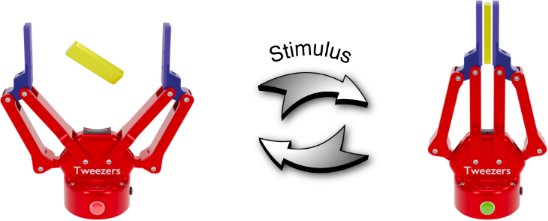
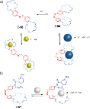
- allosteric catalytic regulation (Figure 21). Mirkin and co-workers reported the symmetric tweezers 40 based on a Rh(I) complex with a phosphine and a labile thioether site and Cr(III)–salen arms as catalytic sites for the asymmetric ring opening of cyclohexene oxide by TMSN3 [80]. The closed tweezers showed




Ligand effects, solvent cooperation, and large kinetic solvent deuterium isotope effects in gold(I)-catalyzed intramolecular alkene hydroamination
Beilstein J. Org. Chem. 2024, 20, 479–496, doi:10.3762/bjoc.20.43
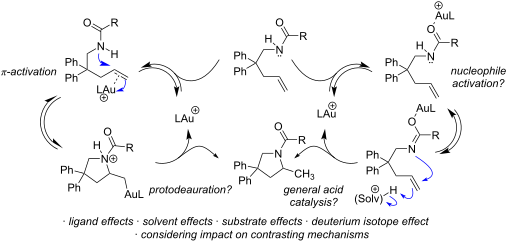
- of alkenes remains challenging. Advances in asymmetric catalysis [2][3][4][5][6][7][8][9][10], C–N [11][12][13][14][15][16][17] and C–C functionalization [18][19] reveal opportunities, but harsh conditions and limited substrate scope present problems. Intramolecular reactions almost invariably
- catalyzed by triflic acid and the gold π-activation pathway was questioned [26]. Nevertheless, advancements in gold-catalyzed reactions continued to be achieved. In particular, successful asymmetric methods were reported in short time after initially reported non-asymmetric methods, specifically Kojima’s
- tropos BIPHEP-gold(I)-catalyzed hydroamination of alkenylureas in 2012 [9]. Michon [5][6][7][8][10] and Widenhoefer continued to make advancements in asymmetric intra- and intermolecular variants, and unique solvent and anion dependencies continue to be examined from a theoretical standpoint. For example