Search results
Search for "intramolecular" in Full Text gives 1424 result(s) in Beilstein Journal of Organic Chemistry. Showing first 200.
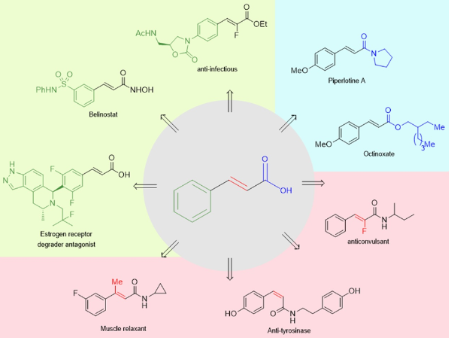
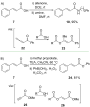
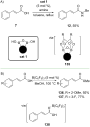
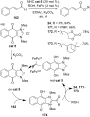
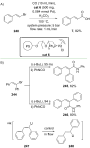
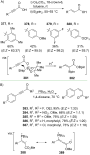
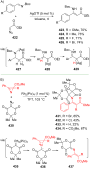
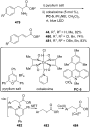
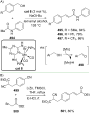
Recent advances in synthetic approaches for bioactive cinnamic acid derivatives
Beilstein J. Org. Chem. 2025, 21, 1031–1086, doi:10.3762/bjoc.21.85


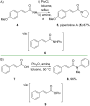

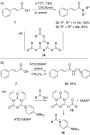










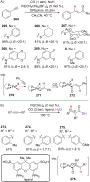


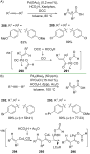


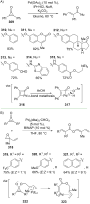
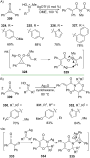








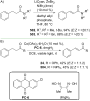


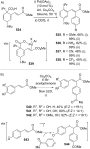


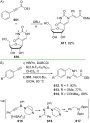


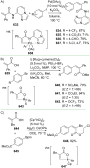







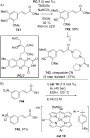


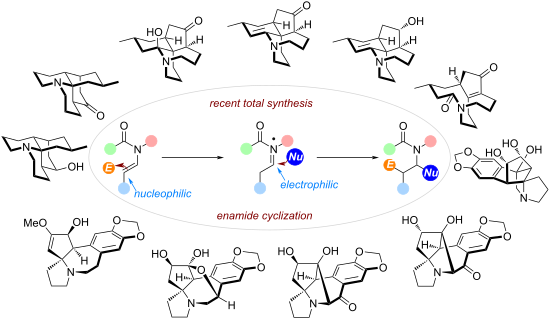
Recent total synthesis of natural products leveraging a strategy of enamide cyclization
Beilstein J. Org. Chem. 2025, 21, 999–1009, doi:10.3762/bjoc.21.81
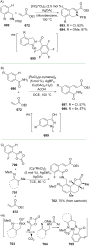
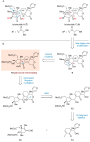
- , lycopodine features a characteristic tetracyclic structure with a bridged cyclohexanone. To address the challenges associated with constructing the complex ring systems of this structure, She and co-workers devised an intramolecular aza-Prins cyclization strategy to form both the bridge ring and the N-hetero
- the terminal alkene and the conformational strain of forming a bridge[3.2.1]bicycle might be responsible for a selective 6-exo-trig cyclization. From tricyclic compound 4, anti-Markovnikov oxidation catalyzed by palladium led to the formation of aldehyde 5. When treated with p-TsOH, the intramolecular
- ring was then constructed via an intramolecular reductive Heck reaction from vinyl bromide 10 with exclusive regioselectivity. Considering the strain of forming the 7-membered ring, this highly efficient 7-endo-trig (vs 6-exo-trig) transannular Heck cyclization reaction was remarkable to be realized in


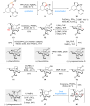


Harnessing tethered nitreniums for diastereoselective amino-sulfonoxylation of alkenes
Beilstein J. Org. Chem. 2025, 21, 947–954, doi:10.3762/bjoc.21.78

- expect this metal-free protocol for alkene amino-oxygenation to find widespread use in both academic and industrial synthetic chemistry. Poor performers. Existing reports of intramolecular alkene functionalization reactions with nitreniums have focused on amino-trifluoroacetoxylations. We show the first


A convergent synthetic approach to the tetracyclic core framework of khayanolide-type limonoids
Beilstein J. Org. Chem. 2025, 21, 926–934, doi:10.3762/bjoc.21.75
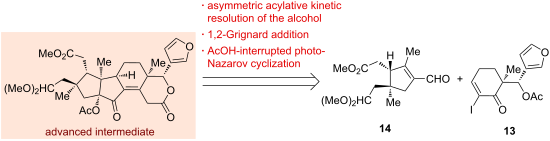
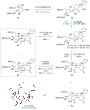
- molecules could be synthesized from diol 9 through a late-stage modification involving adjustment of the oxidation state and regioselective acylation. The formation of 9 was envisioned to proceed via an intramolecular pinacol coupling [30][31] of [5,5,6,6]-tetracycle 10, which forges the A2 ring while
- essential tertiary alcohol at C1. The β-hydroxylactone moiety (D ring) in 11 could be introduced through an intramolecular aldol condensation [35] of acetate 12. Ultimately, the preparation of 12 could be traced back to aldehyde 14 through 1,2-Grignard addition with an organomagnesium reagent [36] prepared
- % brsm). Since the newly created configuration at C30 was inconsequential, an intramolecular aldol reaction was directly carried out by treatment with LiHMDS to furnish β-hydroxylactone, which could be converted to dienone 11 through TPAP oxidation. Having secured 11, we proceeded to evaluate the pivotal




Silver(I) triflate-catalyzed post-Ugi synthesis of pyrazolodiazepines
Beilstein J. Org. Chem. 2025, 21, 915–925, doi:10.3762/bjoc.21.74
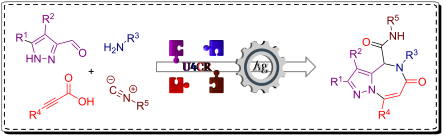
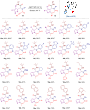
- isocyanides, followed by a silver(I) triflate-catalyzed intramolecular heteroannulation of the resulting pyrazole-tethered propargylamides occurring in a 7-endo-dig fashion. The approach is scalable and tolerates a diverse range of substitution patterns. Keywords: heterocycles; post-MCR transformations
- intramolecular condensation with the arylglyoxal-derived keto-carbonyl group [37]. In 2024, the same group streamlined this strategy by utilizing unprotected anthranilic acids, enabling the assembly of benzo[e][1,4]diazepines 6 directly during the Ugi reaction step [38]. In 2013, Van der Eycken and co-workers
- ][44] and hydroalkoxylations [45]. In 2013, Van der Eycken and co-workers described an intramolecular cationic gold-catalyzed post-Ugi heteroannulation of imidazoles with activated alkynes for the diversity-oriented synthesis of imidazo[1,4]diazepines 13 from Ugi-derived propargylamides 12 (Scheme 1c




Recent advances in controllable/divergent synthesis
Beilstein J. Org. Chem. 2025, 21, 890–914, doi:10.3762/bjoc.21.73

- in steering catalytic selectivity. In 2016, the Jiang group achieved regioselective control in the gold-catalyzed intramolecular hydroarylation of alkynes by modulating the electronic and steric effects of ligands (Scheme 2) [20]. Mechanistically, the electron-deficient phosphite ligand L1 and the
- undergoes intramolecular cyclization into a proximal C(sp2)–H bond (ΔG‡ = +19.7 kcal·mol−1) to form Int-46, which reacts with 4-MePhSH (ΔG‡ = +14.9 kcal·mol−1) to yield radical intermediate Int-47 and a thiyl radical (4-MePhS·). Sequential thiol-assisted hydrogen shifts produce Int-48, followed by
- -methylacryloylbenzamides, and 2-iodobiphenyls – thereby selectively synthesizing silacyclic compounds with varying ring sizes, including ten-membered, seven-membered, and five-membered rings. Mechanism (Scheme 15): Substrate 53 undergoes oxidative addition with Pd(0), followed by intramolecular carbopalladation to form




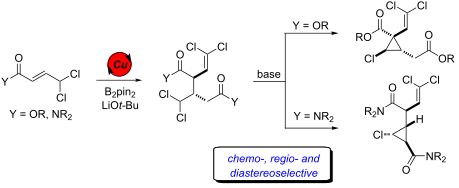
Cu–Bpin-mediated dimerization of 4,4-dichloro-2-butenoic acid derivatives enables the synthesis of densely functionalized cyclopropanes
Beilstein J. Org. Chem. 2025, 21, 877–883, doi:10.3762/bjoc.21.71
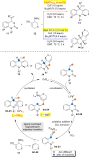
- . Finally, the new enolate E evolves through intramolecular proton abstraction and elimination of boryllithium [20][21]. The formation of side product 3 observed when dichloromethane was used as a solvent could be explained by protonation of intermediate A, followed by transmetalation of the resulting
- mechanism for the Cu-catalyzed dimerization of 4,4-dichoro-2-butenoic acid derivatives. a) KOt-Bu-mediated intramolecular cyclization of 9. b) Direct formation of cyclopropane 20 from gem-dichloride 5 using KOt-Bu as base. Optimization studies. Synthesis of densely functionalized (2,2-dichlorovinyl
- )cyclopropanes by base-promoted intramolecular cyclization. Supporting Information Supporting Information File 2: Experimental procedures, characterization data and copies of NMR spectra. Funding Financial support from the AEI (PID2020-118237RB-I00), European Research Council (863914), Xunta de Galicia (ED431C


Light-enabled intramolecular [2 + 2] cycloaddition via photoactivation of simple alkenylboronic esters
Beilstein J. Org. Chem. 2025, 21, 854–863, doi:10.3762/bjoc.21.69
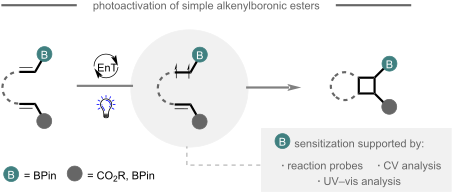
- , and control reactions support sensitization, enabling an intramolecular [2 + 2] cycloaddition to be realized accessing 3D bicyclic fragments containing a boron handle. Keywords: boron; catalysis; [2 + 2] cycloaddition; energy transfer; photochemistry; Introduction The strategic use of a photon to
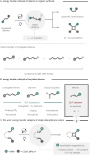
- . Herein, we demonstrate the sensitization of alkenylboronates to enable efficient intramolecular [2 + 2] cycloaddition using high energy photosensitizers (Figure 1C). Sensitization was quickly established and explored through the use of alkene scrambling (geometrical isomerization) reaction probes, to
- generated triplet diradical in an intramolecular system. To further assess the properties relevant for intramolecular reactivity, substrate 3b was designed (see Supporting Information File 1 for full details), given that non-activated α,β-unsaturated systems are also comparatively underexplored via EnT



4-(1-Methylamino)ethylidene-1,5-disubstituted pyrrolidine-2,3-diones: synthesis, anti-inflammatory effect and in silico approaches
Beilstein J. Org. Chem. 2025, 21, 817–829, doi:10.3762/bjoc.21.65

- forms 3a’–e’ will be attacked by methylamine (4) to yield the tetrahedral intermediate 6 and then, the intramolecular proton transfer will lead to intermediate 7. It has been proven that Schiff’ bases show normally higher reactivity than the corresponding carbonyl compounds towards nitrogen-containing
- a dihedral angle of 49.86(10) 86.22(11)° with the phenyl rings C6–C11 and C18–C23, respectively. The angle between both phenyl rings is 70.76(11)°. The stereochemistry around the double bond is Z, allowing an intramolecular N–H···O hydrogen bond between one of the carbonyl oxygen atoms and the amino
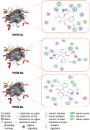
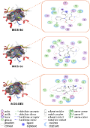
- ellipsoids at the 30% probability level. The intramolecular hydrogen bond is shown as red dashed line. The bioavailability radar of studied compounds 5a–e. The interactions of potential drugs 5a–c in the active site of enzyme iNOS. The interactions of potential drugs 5d and 5e and control drug (DEX) in the


Recent advances in the electrochemical synthesis of organophosphorus compounds
Beilstein J. Org. Chem. 2025, 21, 770–797, doi:10.3762/bjoc.21.61
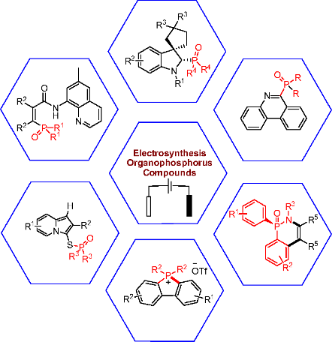
- phenyl rings' ortho, meta, or para positions. This method proceeded via an anodic oxidation, followed by intramolecular cyclization (Scheme 32). The key role of anodic oxidation became evident when the annulation product


Development and mechanistic studies of calcium–BINOL phosphate-catalyzed hydrocyanation of hydrazones
Beilstein J. Org. Chem. 2025, 21, 755–765, doi:10.3762/bjoc.21.59
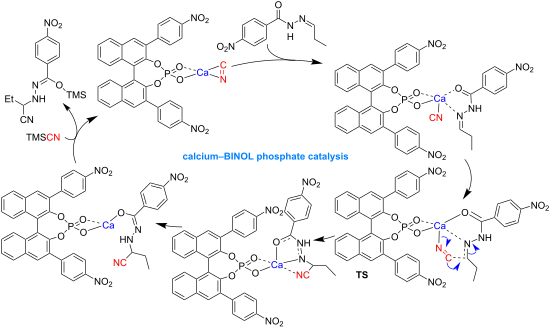
- internal rotation in 11 via TS8 and reaction with TMSCN to give adduct 13 (see Figure 3). Distances and bond lengths are given in pm. Catalyst 7 is replaced in TS 11-12 by concerted electrophilic intramolecular substitution with formal trimethylsilyl cation as electrophile. Please note the surprisingly


Synthesis of HBC fluorophores with an electrophilic handle for covalent attachment to Pepper RNA
Beilstein J. Org. Chem. 2025, 21, 727–735, doi:10.3762/bjoc.21.56
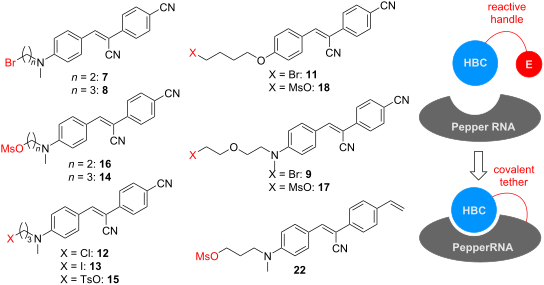
- was impractical for the HBC derivative with a C4-handle (N-(4-bromobutyl)-HBC) due to intramolecular cyclization with the amine. To prevent intramolecular cyclization, we considered the 4-bromobutyl HBC ether 11 as a potential candidate with a 4-atom spacer. Accordingly, 4-hydroxybenzaldehyde was



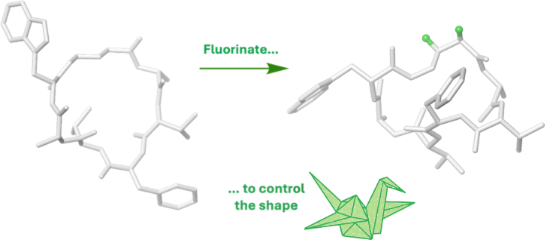
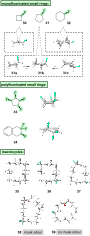
Origami with small molecules: exploiting the C–F bond as a conformational tool
Beilstein J. Org. Chem. 2025, 21, 680–716, doi:10.3762/bjoc.21.54
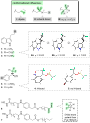
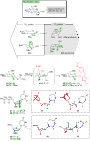
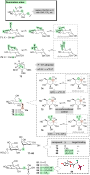
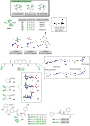
- a potentially valuable tool for molecular design. Additional stabilisation of the gauche conformation of vicinal fluorohydrins can also be afforded by an intramolecular H-bond (II, Figure 8) [96][97][98]. Fluorine is a weaker H-bond acceptor than oxygen or nitrogen [99][100][101], but F···H
- attraction can still be significant in some contexts [102][103] and the intramolecular H-bond depicted in II (Figure 8) can have a significant impact upon the properties of vicinal fluorohydrins [97]. The possibility of intramolecular H-bonding in vicinal fluorohydrins has important consequences for the
- molecules’ intermolecular interactions too. The intramolecular H-bond makes the hydroxy group a weaker intermolecular H-bond donor [104] (e.g., 55 vs 54, Figure 8). This runs counter to a longstanding assumption [105] that the inductive effect of fluorine should always make the hydroxy group a stronger H








Entry to 2-aminoprolines via electrochemical decarboxylative amidation of N‑acetylamino malonic acid monoesters
Beilstein J. Org. Chem. 2025, 21, 630–638, doi:10.3762/bjoc.21.50
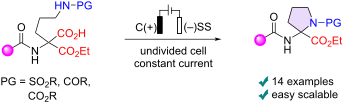
- 10.3762/bjoc.21.50 Abstract The electrochemical synthesis of 2-aminoprolines based on anodic decarboxylation–intramolecular amidation of readily available N-acetylamino malonic acid monoesters is reported. The decarboxylative amidation under Hofer–Moest reaction conditions proceeds in an undivided cell
- [7][8] (Figure 2, reactions 1 and 2, respectively). Results and Discussion N-Acetylamino malonic acid monoester 9a possessing a tosyl-protected tethered amine was selected as a model substrate for the development of the intramolecular amidation under Hofer–Moest conditions. The acid 9a was prepared
- initial deprotonation of carboxylic acid 9a by cathodically generated hydroxide is followed by anodic oxidation/decarboxylation of the formed carboxylate 9a-I to generate stabilized cation 9a-II. The latter undergoes intramolecular cyclization with the tethered N-nucleophile into cyclic aminal 6a. In a



Total synthesis of (±)-simonsol C using dearomatization as key reaction under acidic conditions
Beilstein J. Org. Chem. 2025, 21, 601–606, doi:10.3762/bjoc.21.47
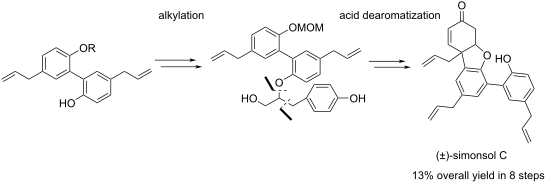
- simonsol C, two reports have utilized alkaline dearomatization strategies and another report used an intramolecular Heck reaction as the key reaction [5][6][7]. However, there have been no reports or studies utilizing acidic dearomatization, which is also effective, to synthesize an arylated quaternary
- carbon center. In the first report on the total synthesis of simonsol C (Scheme 1), in 2016 Banwell’s group employed an intramolecular Heck reaction as key step to furnish the aryl-containing quaternary center and simultaneously construct the benzofuran skeleton [7]. This synthesis involved a total of 12
- scaffold of simonsol C, utilizing an alkaline dearomatization as the key reaction, followed by a functional-group-selective Wittig reaction and concurrent oxy-Michael addition [6]. A bromophenol acetal was used in the intramolecular alkylative dearomatization, which was first reported by Magnus et al. [8


Formaldehyde surrogates in multicomponent reactions
Beilstein J. Org. Chem. 2025, 21, 564–595, doi:10.3762/bjoc.21.45
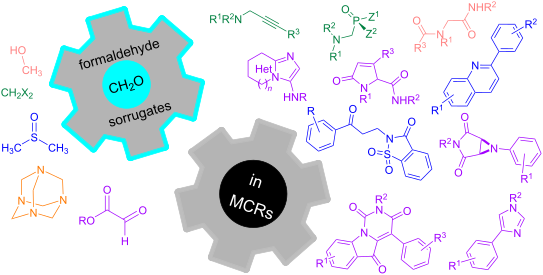
- peptide carbonyl group. Both moieties result from the glyoxylate compound (Scheme 43). There are many examples in which the ester moiety opens the possibility of a further intramolecular cyclization with a nucleophile (for example, a protected amine in an Ugi/deprotection/cyclization sequence [98][99][100
- proton in the C-α position, which leads to a stable carbanion with even mild bases, that can promote intramolecular cyclization. For example, Flores-Constante et al. [106] and Nechaev et al. [107] synthesized Ugi adducts with a propargyl group that could be used as a Michael acceptor (48–50, Scheme 44
- salts and TEMPO as the radical initiator/oxidant couple that promoted the intramolecular radical cyclization of suitable 1,3-dicarbonyl Ugi adducts 54 and 55 (Scheme 45) [108][109]. The stabilization of the enol in the 1,3-dicarbonyl Ugi adduct allows single-electron transfer (SET) with the anion


Study of the interaction of 2H-furo[3,2-b]pyran-2-ones with nitrogen-containing nucleophiles
Beilstein J. Org. Chem. 2025, 21, 556–563, doi:10.3762/bjoc.21.44
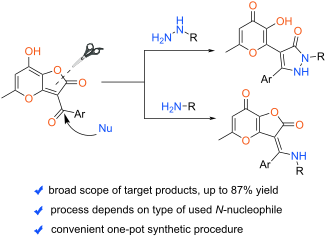
- intramolecular hydrogen bond between the NH-unit and the carbonyl group. The presented results indicate that the reaction of the aliphatic amine doesn’t lead to recyclization of the studied heterocyclic system. Further, we hypothesized that synthesis of the enamine 4a can be realized in one-pot variant without


Unprecedented visible light-initiated topochemical [2 + 2] cycloaddition in a functionalized bimane dye
Beilstein J. Org. Chem. 2025, 21, 500–509, doi:10.3762/bjoc.21.37
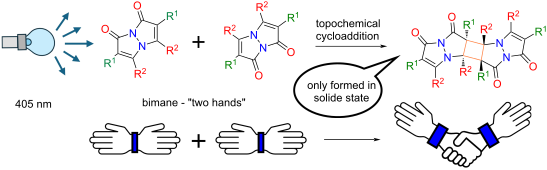
- bimanes studied: a) Cl2B (B), representing 90% of the disordered asymmetric unit, b) Me2B, not disordered with dotted line representing an intramolecular hydrogen bond, and c) Me4B showing the majority occupied (55%) N–N moiety. View of the molecular structure in the crystal of a) symmetry generated by


Synthesis of electrophile-tethered preQ1 analogs for covalent attachment to preQ1 RNA
Beilstein J. Org. Chem. 2025, 21, 483–489, doi:10.3762/bjoc.21.35
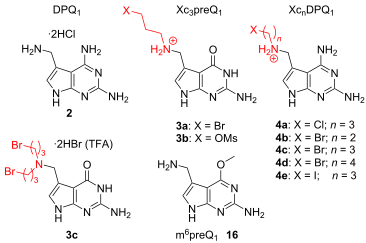
- were required to obtain the corresponding mesylate 3b. Similar to 11, compound 12 was isolated as its trifluoroacetate salt. Selective Boc protection of the aliphatic amine gave 13, which was selectively O-mesylated to give compound 14. Compound 14 was found to slowly undergo intramolecular cyclization


Electrochemical synthesis of cyclic biaryl λ3-bromanes from 2,2’-dibromobiphenyls
Beilstein J. Org. Chem. 2025, 21, 451–457, doi:10.3762/bjoc.21.32
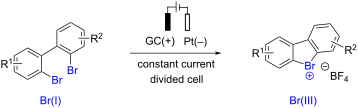
- approach would conceptually differ from previously reported anodic syntheses of cyclic diaryl iodonium compounds, where an electrochemically generated acyclic iodine(III) intermediate undergoes an intramolecular SEAr-type reaction to form the cyclic product [19][20]. Herein, we report on the development of
- Br(II) followed by subsequent deprotonation to generate radical B. A following disproportionation of radical B would lead to the formation of Br(III) species C (anodic oxidation cannot be fully excluded), which undergoes intramolecular SNAr-type substitution to form cyclic λ3-bromane 1a and


New tandem Ugi/intramolecular Diels–Alder reaction based on vinylfuran and 1,3-butadienylfuran derivatives
Beilstein J. Org. Chem. 2025, 21, 444–450, doi:10.3762/bjoc.21.31
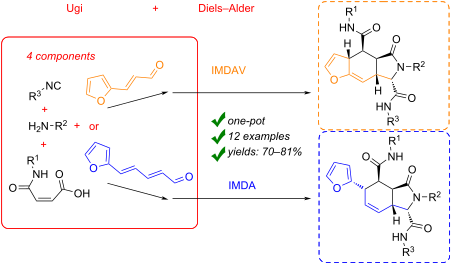
- reaction and Diels–Alder [4 + 2] cycloaddition based on vinylfuran and 1,3-butadienylfuran derivatives was designed and studied. It was found that in the case of 3-(furan-2-yl)acrylaldehyde, a one-pot Ugi reaction and intramolecular Diels–Alder vinylarene (IMDAV) reaction leads to the formation of the
- yields. The studied tandem Ugi and intramolecular Diels–Alder reactions allow high substituent variation in the named isoindoles. Keywords: 1,3-butadienylfuran; furo[2,3-f]isoindole; intramolecular Diels–Alder reaction; isoindole; one-pot; Ugi reaction; vinylfuran; Introduction Energy-saving and
- construction [27][28]. For instance, the intramolecular Diels–Alder reactions of vinylarenes (IMDAV) strategy [29][30] has been used to synthesize annulated isoindoles, including thieno[2,3-f]isoindoles [31][32] and furo[2,3-f]isoindoles [33][34], from thienyl- or furylallylamines and unsaturated acid




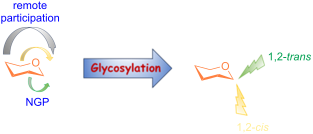
The effect of neighbouring group participation and possible long range remote group participation in O-glycosylation
Beilstein J. Org. Chem. 2025, 21, 369–406, doi:10.3762/bjoc.21.27
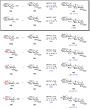
- , Scheme 18) gave product 108 with higher 1,2-cis selectivity. In protocol A, the tosylamide forms an intramolecular hydrogen bonding with the benzylic oxygen forming a quasi-bicyclic intermediate acting as a 1,2-trans directing protecting group. Thus, following subsequent formation of the oxocarbenium ion
- disturbs the intramolecular hydrogen bonding, as in 107 thereby generating a non-participating form as an intermediate. Thus, the acceptor easily attacks from the α-face of the sugar ring, and thereby, leading to the product with higher 1,2-cis stereoselectivity (87:13). A similar bimodal protocol was also




Synthesis, structure, ionochromic and cytotoxic properties of new 2-(indolin-2-yl)-1,3-tropolones
Beilstein J. Org. Chem. 2025, 21, 358–368, doi:10.3762/bjoc.21.26
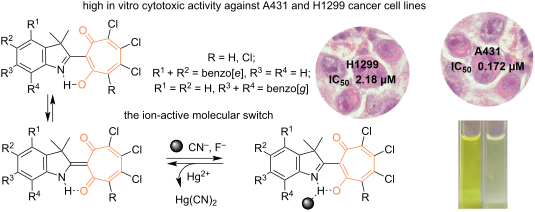
- reactions of 2-methylquinolines with 3,5-di-(tert-butyl)-1,2-benzoquinone [1] and benzophenones with o-chloranil [15]. The norcaradiene derivatives 5, formed in the next step by the intramolecular cyclization reaction of 4, undergo thermal isomerization into 2,3-dihydrotropolones 6. The formation of 2
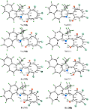
- increase in the intramolecular hydrogen bond length NH···O of the (NH) isomers and a decrease in the magnitude of hydrogen bond N···HO of the (OH) forms (Figure 1). On the other hand, the position of the benzoannelated fragment does not significantly affect the structural and energetic parameters of the
- the previously obtained 2-(indolin-2-yl)-1,3-tropolone)). The angle between the planes C(2)C(3)C(6)C(7) and (3)C(4)C(5)C(6) is equal to 27.6° (34°). In compound 7b, as in 2-(indolin-2-yl)-1,3-tropolone, an intramolecular hydrogen bond N(1)–H(1)···O(2) was realized with parameters: distances N–H = 0.86




Red light excitation: illuminating photocatalysis in a new spectrum
Beilstein J. Org. Chem. 2025, 21, 296–326, doi:10.3762/bjoc.21.22

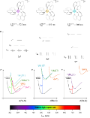
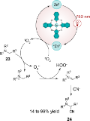
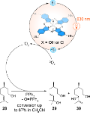
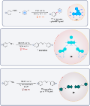
- formed. This reaction only occurs close to the photocatalyst or sensitizer fixed at the intracellular target, for example at tubulin. An intramolecular Diels–Alder reaction followed by nitrogen extrusion















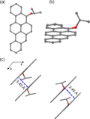
Synthesis and characterizations of highly luminescent 5-isopropoxybenzo[rst]pentaphene
Beilstein J. Org. Chem. 2025, 21, 270–276, doi:10.3762/bjoc.21.19
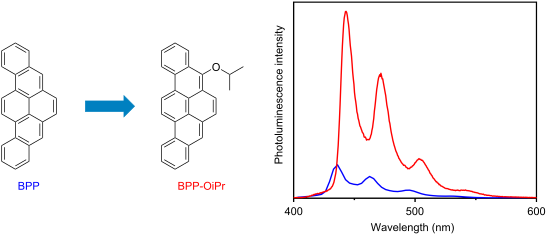
- (13%). BPP-dione, when compared to the parent BPP, also displayed improved absorption and emission from the first excited singlet (S1) state with a PLQY of 62% and an intramolecular charge-transfer character. The rod-like nano- to microcrystals as well as longer wires of these BPPs were also revealed
- by scanning electron microscopy. The intriguing optical properties of BPP and its derivatives may lead to their application as fluorophores. Keywords: benzo[rst]pentaphene; intramolecular charge transfer; nanocrystals; photoluminescence; polycyclic aromatic hydrocarbon; Introduction Polycyclic
- , in comparison with parent BPP 2. Notably, both BPP-OiPr 3 and BPP-dione 4 displayed enhanced PLQYs while a significant solvent-polarity dependence of the emission was observed only for the latter, suggesting the photoinduced intramolecular charge-transfer character of 4. Moreover, BPPs 2–4 formed