


Search results
Search for "lipid" in Full Text gives 159 result(s) in Beilstein Journal of Organic Chemistry.
Benzothiadiazole oligoene fatty acids: fluorescent dyes with large Stokes shifts
Beilstein J. Org. Chem. 2016, 12, 2739–2747, doi:10.3762/bjoc.12.270
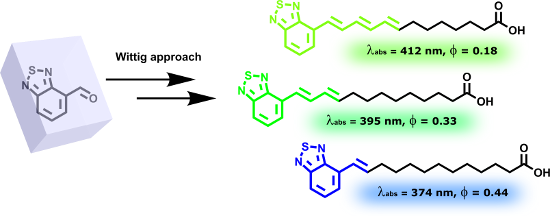
- isomerization are presented. The absorption properties are modulated by the number of conjugated C=C double bonds of the oligoene chain ranging from one to three. Large Stokes shifts of about 4900–5700 cm−1 and fluorescence quantum yields of up to 0.44 were observed. Keywords: fatty acid; fluorescence; lipid
- sufficient to understand membrane dynamics and function. Often membrane domains are formed in which certain lipids, glycolipids or proteins are enriched [2][3][4]. Such domains – also called lipid rafts – do not only differ in their chemical composition, but also show different physical properties (e.g
- ., differences in membrane thickness and stiffness, different diffusion coefficients etc.) [5][6]. Tools to investigate lipid membranes are multifaceted; however, all optical methods are hampered by the missing absorption and fluorescence properties of natural occurring lipid components. Therefore, indirect


Interactions between cyclodextrins and cellular components: Towards greener medical applications?
Beilstein J. Org. Chem. 2016, 12, 2644–2662, doi:10.3762/bjoc.12.261
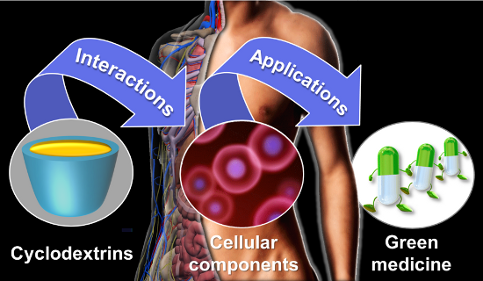
- involving CDs has revolved around their ability to manipulate lipid (phospholipids and cholesterol) composition in different cells [55][56][57][58]. Although numerous studies deal of this topic, the mechanism of this process is poorly investigated (i.e., only the consequences of this phenomenon are reported
- and cholesterol, respectively, whereas γ-CD is generally less lipid-selective. In more detail, the CD affinity for solubilizing various lipid components of the erythrocyte membranes are in the order γ-CD << β-CD < α-CD for phospholipids and α-CD < γ-CD << β-CD for cholesterol [58]. These findings are
- activity in comparison with the parent CDs while the lipophilic ones (e.g., methylated CDs) demonstrate the strongest hemolytic activities [62]. As for parent CDs, these differences are ascribed to the different solubilization effects of lipid components and their sequestration in the external aqueous


Enduracididine, a rare amino acid component of peptide antibiotics: Natural products and synthesis
Beilstein J. Org. Chem. 2016, 12, 2325–2342, doi:10.3762/bjoc.12.226
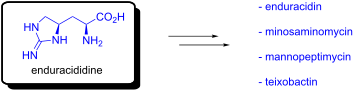
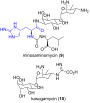
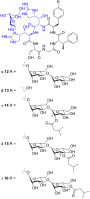
- using traditional techniques. Teixobactin (17) exhibits bactericidal activity through binding of Lipid II, a precursor of peptidoglycan, and therefore shows great potential as the foundation for discovery of a new generation of antibiotics to overcome the development of antimicrobial resistance
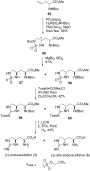
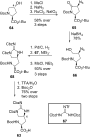
- which involves binding to Lipid II, inhibiting one of the membrane-associated steps of peptidoglycan biosynthesis [43][44]. Analogues of teixobactin (17) have undergone biological testing and results show that the L-allo-enduracididine (3, blue, Figure 7) residue is important for potent antibacterial









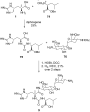

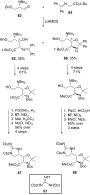
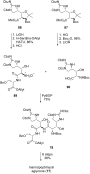


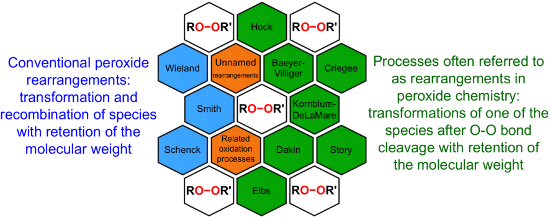
Rearrangements of organic peroxides and related processes
Beilstein J. Org. Chem. 2016, 12, 1647–1748, doi:10.3762/bjoc.12.162

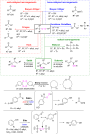


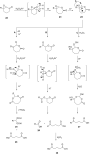


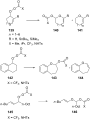


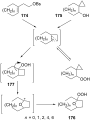




Biradical vs singlet oxygen photogeneration in suprofen–cholesterol systems
Beilstein J. Org. Chem. 2016, 12, 1196–1202, doi:10.3762/bjoc.12.115
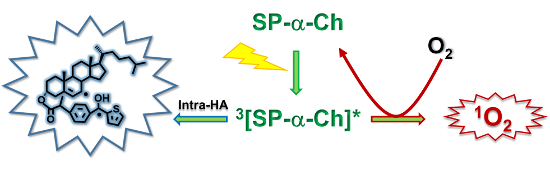
- singlet oxygen, thus being able to initiate Ch oxidation from their triplet excited states following either of the two competing mechanistic pathways. Keywords: aryl ketones; hydrogen abstraction; lipid peroxidation; photoproducts; triplet excited state; Introduction Among the constituents of cell
- membranes, cholesterol (Ch) is the most important lipidic building block. It is required for permeability, fluidity, and integrity of all animal cell membranes. However, as an unsaturated lipid, Ch is susceptible to oxidative degradation, which can result in potentially pathologic consequences encompassing


Synthesis of a deuterated probe for the confocal Raman microscopy imaging of squalenoyl nanomedicines
Beilstein J. Org. Chem. 2016, 12, 1127–1135, doi:10.3762/bjoc.12.109
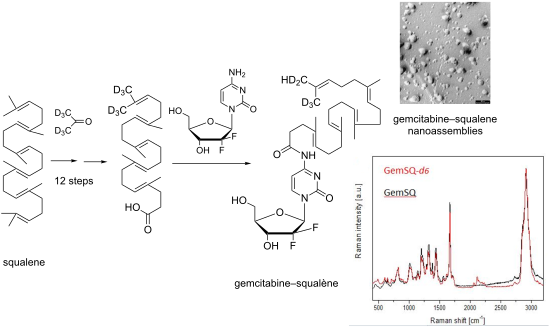
- developed covering all aspects of medicine. Among them, lipid drug conjugates (LDC) were especially developed for the delivery of hydrophilic drugs by covalent coupling with lipid components [3][4]. In this context we recently found that the chemical conjugation of squalene, a natural and biocompatible


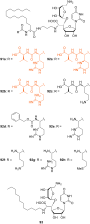
Muraymycin nucleoside-peptide antibiotics: uridine-derived natural products as lead structures for the development of novel antibacterial agents
Beilstein J. Org. Chem. 2016, 12, 769–795, doi:10.3762/bjoc.12.77
- illustrated in Figure 4 and has been described in detail in several reviews (e.g., [51][53][54][55][56][57]). It can be divided into three parts: first, the formation of the monomeric building blocks in the cytosol (Figure 4, step A); second, the membrane-bound steps with the attachment to the lipid linker
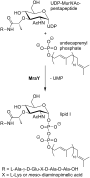
- been reported elsewhere [52]. The membrane-associated steps commence with the transfer of UDP-MurNAc-pentapeptide to the lipid carrier undecaprenyl phosphate, catalysed by translocase I (MraY), to give lipid I (Figure 4, product of step B). The glycosyltransferase MurG attaches a GlcNAc sugar to
- furnish lipid II (Figure 4, product of step C). This building block is then transported to the extracellular side of the membrane. It is speculated that there might be some kind of 'flippase' involved but this particular step is still unclear and requires further investigation [55]. On the extracellular









Art, auto-mechanics, and supramolecular chemistry. A merging of hobbies and career
Beilstein J. Org. Chem. 2016, 12, 362–376, doi:10.3762/bjoc.12.40
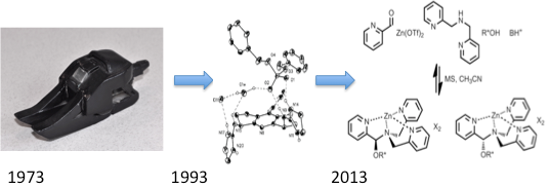
- Molecular Probes. The directions that Vincent Rotello is taking the field of differential sensing, toward that of biological applications, is one clear future. We are similarly moving to biological applications with kinase and lipid analysis, and cellular classification. But, even beverage analysis, complex




Physical properties and biological activities of hesperetin and naringenin in complex with methylated β-cyclodextrin
Beilstein J. Org. Chem. 2015, 11, 2763–2773, doi:10.3762/bjoc.11.297
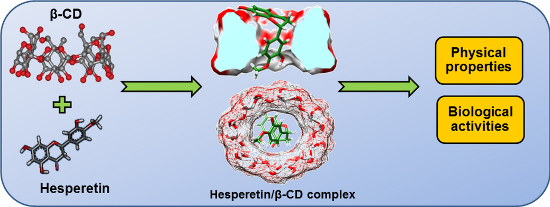
- , grapefruit and orange. Several reports on biological effects of hesperetin and naringenin have been found [6], including blood lipid- and cholesterol-lowering effects [7][8][9], anti-inflammatory [10][11][12][13] and anticancer [14][15][16] activities, improved microcirculation, recovery of venous ulcers


A concise and efficient synthesis of benzimidazo[1,2-c]quinazolines through CuI-catalyzed intramolecular N-arylations
Beilstein J. Org. Chem. 2015, 11, 2365–2369, doi:10.3762/bjoc.11.258
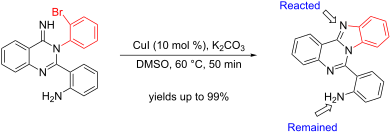
- ]quinazolines were intensively investigated and promising biological activities were observed, such as anticancer, antiviral, antimicrobial, anti-inflammatory and anticonvulsant [3][4][5]. Indeed, some of them are already used as antimicrobial agents and lipid peroxidation inhibitors [6]. Consequently, the


Cholesterol lowering effects of mono-lactose-appended β-cyclodextrin in Niemann–Pick type C disease-like HepG2 cells
Beilstein J. Org. Chem. 2015, 11, 2079–2086, doi:10.3762/bjoc.11.224
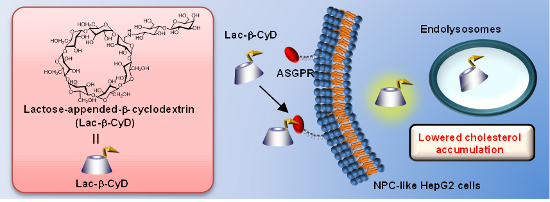
- effects of CyDs in NPC cells are as follows; 1) CyDs may extract the free form of cholesterol from plasma membranes of lipid rafts, and then cholesterol in endolysosomes are transported to plasma membrane to supply, 2) the endocytosed CyDs may transport cholesterol from endolysosomes, and 3) the




Synthesis, antimicrobial and cytotoxicity evaluation of new cholesterol congeners
Beilstein J. Org. Chem. 2015, 11, 1922–1932, doi:10.3762/bjoc.11.208
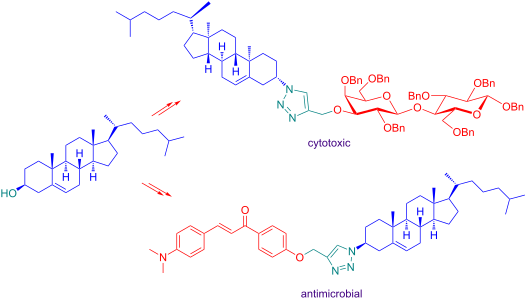
- able to disrupt the cholesterol-rich lipid envelope and inactivate viral invasion [17]. Cholesterol-based hydrazones exhibited insecticidal activity against the larval stage of Mythimna separate (Walker) [18]. Cholesterol–carbamate conjugates, for instance (3β)-cholest-5-en-3-yl (2-aminoethyl)carbamate
- cell line but it was 2.3 fold less active than doxorubicin in vitro. Therefore, this article describes the synthesis of analogues of VI with different lipid, glycon and chalcone [25][26] tags to assay and evaluate their in vitro antimicrobial and cytotoxic activities against the above mentioned
- were 37–64% less active than ampicillin. Compound 11a, that is modified with a C11 lipid tail, was the least active cholesterol derivative, thus, it was 73% less active than the control. On the other hand, derivatives 6c, 7b and the bicholesterol 13 were the most active cholesterols against S. aureus




Recent applications of ring-rearrangement metathesis in organic synthesis
Beilstein J. Org. Chem. 2015, 11, 1833–1864, doi:10.3762/bjoc.11.199
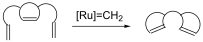
- ethylene (24) under high dilution conditions to deliver the tetracyclic compound 49 in 62% yield (Scheme 7). To assemble 5-F2-isoprostanes, lipid oxidation metabolites, various functionalized cyclobutene derivatives were subjected to a RRM sequence [12]. Cyclobutene derivative 50 in the presence of the




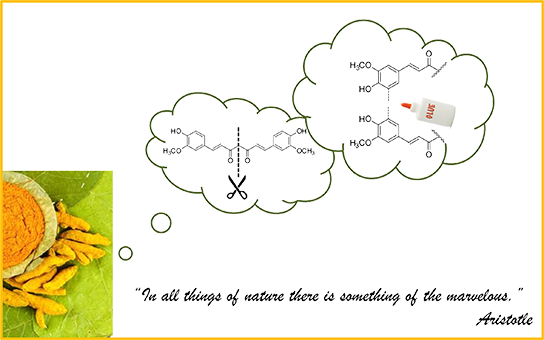
Antioxidant potential of curcumin-related compounds studied by chemiluminescence kinetics, chain-breaking efficiencies, scavenging activity (ORAC) and DFT calculations
Beilstein J. Org. Chem. 2015, 11, 1398–1411, doi:10.3762/bjoc.11.151
- reactions of the antioxidants with peroxyl radicals; model 2 – lipid autoxidation (lipidAO) used for assessing the chain-breaking antioxidant efficiency and reactivity; model 3 – oxygen radical absorbance capacity (ORAC), which yields the activity against peroxyl radicals generated by an azoinitiator; model
- were applied: model 1 – chemiluminescence of a hydrocarbon substrate used for determination of the rate constants (kA) of the reactions of the antioxidants with peroxyl radicals (RO2•); model 2 – lipid autoxidation used for assessing the chain-breaking antioxidant efficiency and reactivity; model 3
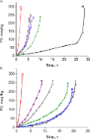
- the side chain that influences the dihedral angle of biphenyl structure. Model 2: Lipid autoxidation Kinetic curves of the lipid autoxidation at concentrations of 1 mM of the studied compounds and of DL-α-tocopherol (11) are presented in Figure 4 and the main kinetic parameters, characterizing the




Terminal lipophilization of a unique DNA dodecamer by various nucleolipid headgroups: Their incorporation into artificial lipid bilayers and hydrodynamic properties
Beilstein J. Org. Chem. 2015, 11, 913–929, doi:10.3762/bjoc.11.103
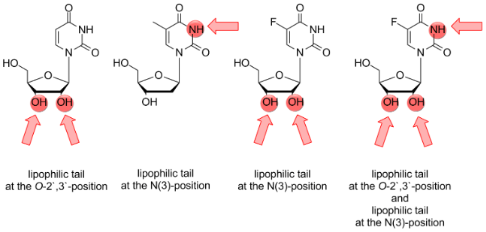
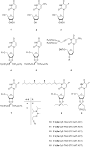
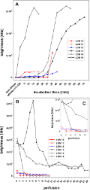
- oligonucleotides (LONs 10–15), each terminally lipophilized with different nucleolipid head groups, were synthesized using the recently prepared phosphoramidites 4b–9b. The insertion of the LONs within an artificial lipid bilayer, composed of 1-palmitoyl-2-oleoyl-sn-glycero-3-phosphocholine (POPC) and 1-palmitoyl
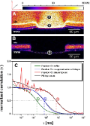
- lipophilicity but mainly the chemical structure and topology of the head group is of decisive importance for the optimal interaction of a lipo-oligonucleotide with an artificial lipid bilayer. Moreover, fluorescence half-live and diffusion time values were measured to determine the diffusion coefficients of the
- lipo-oligonucleotides. Keywords: lipid bilayer; lipo-oligonucleotides; nucleic acids; nucleolipids; Introduction For proper cell function, the biosynthetic lipophilization of proteins and carbohydrates, such as palmitoylation and farnesylation, is of decisive importance [1]. The same seems to be true






Impact of multivalent charge presentation on peptide–nanoparticle aggregation
Beilstein J. Org. Chem. 2015, 11, 792–803, doi:10.3762/bjoc.11.89
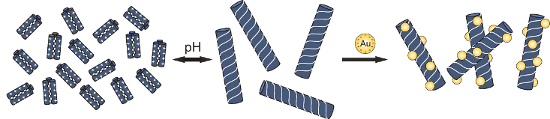
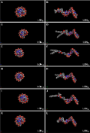
- of assemblies is most likely achieved by hydrogen bonds or other common receptor–binding interactions [28]. Although it is known that nanoparticles can be organised by binding to membranes by means of electrostatic interactions between the charged head group of the lipid and the oppositely charged


Potential of acylated peptides to target the influenza A virus
Beilstein J. Org. Chem. 2015, 11, 589–595, doi:10.3762/bjoc.11.65
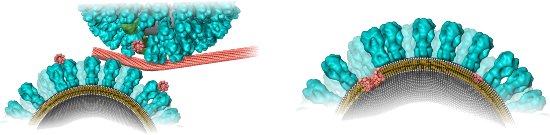
- those peptides to form large amyloid-like supramolecular assemblies. Second, in vivo, the large excess of cell surface membranes provides an unspecific target for the stearylated peptides. We show that acylated peptides insert into the lipid phase of such membranes. Eventually, our study reveals serious
- concentrations being in the range from 7 to 100 µM. It is important to note that the unspecific interaction of our compounds with cells can reduce the efficiency of compounds to prevent virus binding to cells, possibly even by incorporation into the lipid phase of membranes (see below). In addition to the human
- H5N1 at an MOI of 0.05 48 h post infection. Interaction with lipid membranes Although the above presented data may be promising in terms of efficient inhibition of influenza virus binding and, thus, infection, we have to take into account that the conditions of these experiments do not match the in


Natural phenolic metabolites with anti-angiogenic properties – a review from the chemical point of view
Beilstein J. Org. Chem. 2015, 11, 249–264, doi:10.3762/bjoc.11.28
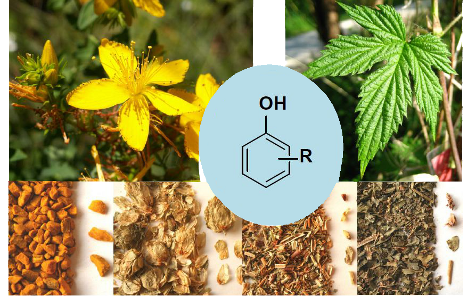
- . L., Rosaceae) and pomegranates (Punica granatum L., Lythraceae). It shows potent antioxidant effects by radical scavenging and the inhibition of lipid peroxidation [28][29]. Ellagic acid is also capable of interfering with some angiogenesis-dependent pathways. It exhibits anticarcinogenic activity


Articulated rods – a novel class of molecular rods based on oligospiroketals (OSK)
Beilstein J. Org. Chem. 2015, 11, 74–84, doi:10.3762/bjoc.11.11

- ). A similar behaviour is observed in the presence of the double-stranded lipid DOPC, which typically forms vesicles with membrane double layers. To determine the orientation of 32a in the membranes quenching experiments with KI were undertaken (for details see Supporting Information File 1). We found




Effects of RAMEA-complexed polyunsaturated fatty acids on the response of human dendritic cells to inflammatory signals
Beilstein J. Org. Chem. 2014, 10, 3152–3160, doi:10.3762/bjoc.10.332
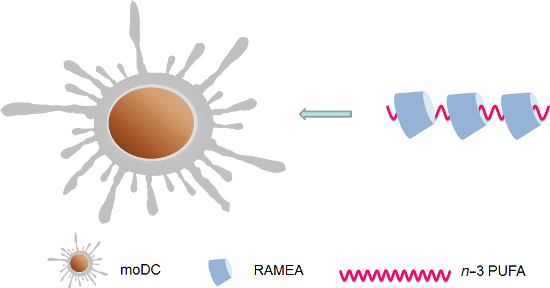
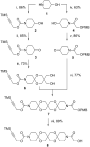
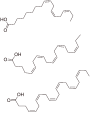
- the blood lipid profile by decreasing the levels of triglyceride and very-low-density lipoprotein (VLDL) without reducing the level of low-density lipoprotein (LDL) [6]. Based on these data n−3 PUFAs have been considered as important contributors of the prevention and/or modulation of various human
- depleting agents to disrupt caveolae and lipid rafts in the cell membrane as well as for replenishment of cholesterol in the form of water-soluble cholesterol/methyl β-CD complex to clarify the role of lipid rafts in various cellular processes [21][22]. For instance, DHA exerted anti-inflammatory effects
- via inhibition of the expression of cytokine-induced adhesion molecules in primary human retinal vascular endothelial (hRVE) cells, the target tissue affected by diabetic retinopathy [23]. To study whether the lipid rafts were involved in the mechanism of action, methylated β-CD was used for both the




A study on the inhibitory mechanism for cholesterol absorption by α-cyclodextrin administration
Beilstein J. Org. Chem. 2014, 10, 2827–2835, doi:10.3762/bjoc.10.300
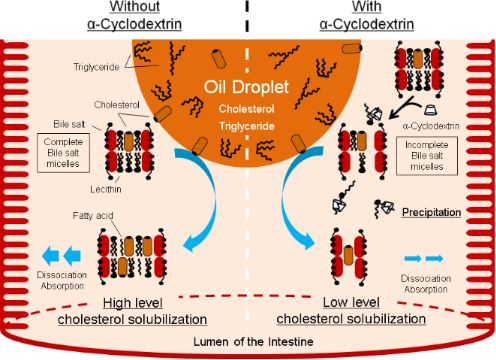
- : Micelle formation of cholesterol with lecithin and bile salts is a key process for intestinal absorption of lipids. Some dietary fibers commonly used to reduce the lipid content in the body are thought to inhibit lipid absorption by binding to bile salts and decreasing the lipid solubility. Amongst these
- has beneficial effects on body weight control, lipid metabolism, glucose metabolism, prebiotics, allergy suppression and other functions [9][10][11][12][13][14][15][16][17]. It is thought that the mechanism behind the lowering of blood triglycerides by α-CD was the latter’s complexation with the fatty
- fluid. Comparison of micellar cholesterol solubility after addition of several water-soluble dietary fibers We compared several water-soluble dietary fibers with α-CD to evaluate their effects on micellar cholesterol solubility in the FeSSIF. Five dietary fibers with a lipid lowering effect were chosen


Preparation and evaluation of cyclodextrin polypseudorotaxane with PEGylated liposome as a sustained release drug carrier
Beilstein J. Org. Chem. 2014, 10, 2756–2764, doi:10.3762/bjoc.10.292
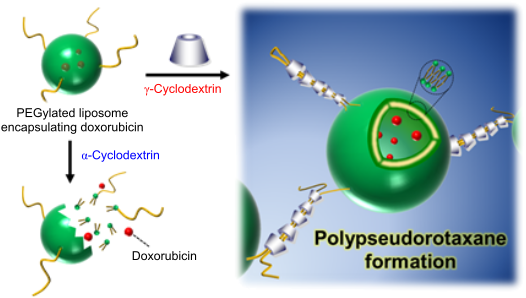
- , phospholipids and proteins of biological membranes in the higher concentration range. Thus, CDs are utilized for studying the functions of caveolae, lipid rafts, and cholesterol transporters in various fields of cell biology [5]. Interestingly, CDs can also form inclusion complexes with linear polymers. Harada
- disrupt LP by their interaction with lipid membranes. In particular, α-CD strongly interacts with phospholipids [5][39][40]. On the other hand, to prepare CD PPRXs, PEG should react with CDs in aqueous solution at high concentration of CDs. Thus, we should take particular care to prepare CD PPRXs of PEG
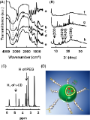
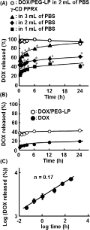
- total DOX from γ-CD PPRX. The amount of DOX was 0.2 mg to 1 mg of lipid. Each point represents the mean ± S.E. of 3 experiments. *p < 0.05 versus DOX/PEG-LP in 2 mL of PBS. Particle sizes, PDI and ζ-potentials of γ-CD PPRXs with PEG-LP and DOX/PEG-LP.a Crystallographic characteristics of γ-CD PPRX with


A green approach to the synthesis of novel phytosphingolipidyl β-cyclodextrin designed to interact with membranes
Beilstein J. Org. Chem. 2014, 10, 2654–2657, doi:10.3762/bjoc.10.278
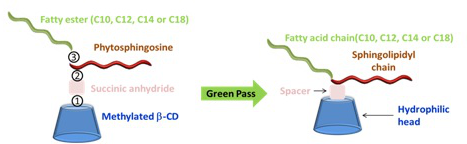
- its lipid structures or through its water-filled pores or tight junctions [4]. Different types of hydrophobic moieties (3-methylcarboxydodecan-5-enoic acyl [5], cholesterol [6], phospholipids [7]) have been successfully selectively grafted on the C6 position of CD. However, new hydrophobic anchors are


Encapsulation of biocides by cyclodextrins: toward synergistic effects against pathogens
Beilstein J. Org. Chem. 2014, 10, 2603–2622, doi:10.3762/bjoc.10.273
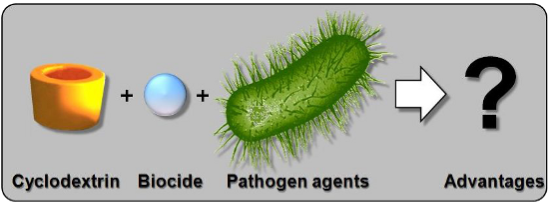
- antimicrobial activity by inhibition of the lipid synthesis and some enzymes whereas butylparaben is assumed to influence the mitochondrial depolarization depletion of cellular adenosine triphosphate. However, the biocidal activity of the CP-β-CD alone is clearly different from the other cationic biocides or
- interaction of the nonionic surfactants with lipid membranes by formation of channels through the membrane [68]. More recently, Groot and Rabone claimed that the inclusion of nonionic surfactants reduces the extensibility and the maximum stress that the bilayer can withstand [69]. These modifications bring


A versatile δ-aminolevulinic acid (ΑLA)-cyclodextrin bimodal conjugate-prodrug for PDT applications with the help of intracellular chemistry
Beilstein J. Org. Chem. 2014, 10, 2414–2420, doi:10.3762/bjoc.10.251
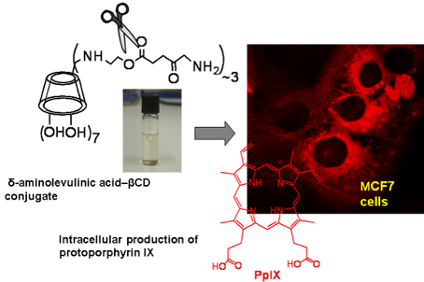
- cholesterol in lipid raft and non-raft regions as well as removing and redistributing phospholipids [20]. Thus, the transport of an adamantyl-substituted guest that blocks the β-CD cavity is anticipated to alter the above host–membrane interactions. In this respect, the primary side enrichment of 1-CD with





