


Search results
Search for "spectroscopy" in Full Text gives 1419 result(s) in Beilstein Journal of Organic Chemistry. Showing first 200.
Synthesis of new condensed naphthoquinone, pyran and pyrimidine furancarboxylates
Beilstein J. Org. Chem. 2025, 21, 340–347, doi:10.3762/bjoc.21.24
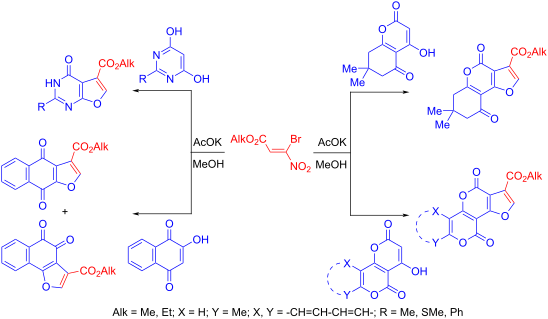
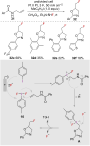
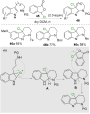
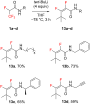
- -dihydronaphtho[1,2-b]furan-3-carboxylate 4a,b with a total yield of up to 73% (ratio 3a/4a = 2:1; 3b/4b = 2:1, according to 1H NMR spectroscopy) (Scheme 4). Using preparative chromatography, the mixture was separated into individual substances. In turn, alkyl 7,7-dimethyl-4,9-dioxo-6,7,8,9-tetrahydro-4H-furo[3,2


Antibiofilm and cytotoxic metabolites from the entomopathogenic fungus Samsoniella aurantia
Beilstein J. Org. Chem. 2025, 21, 327–339, doi:10.3762/bjoc.21.23
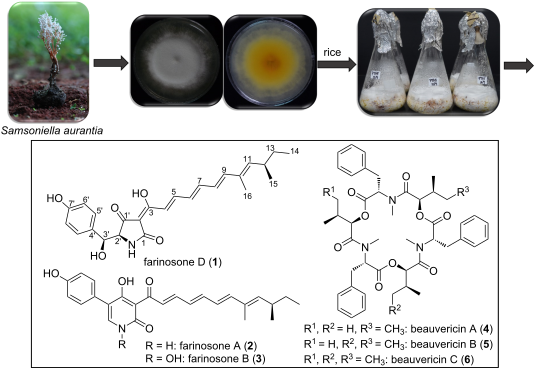
- . Supporting Information Supporting Information File 6: HRESIMS profiles and NMR spectroscopic data of compounds 1–6. Acknowledgements The authors thank S. Reinecke, C. Kakoschke, E. Surges and W. Collisi for their generous technical assistance, acquiring HRESIMS, NMR spectroscopy, antimicrobial and


Molecular diversity of the reactions of MBH carbonates of isatins and various nucleophiles
Beilstein J. Org. Chem. 2025, 21, 286–295, doi:10.3762/bjoc.21.21
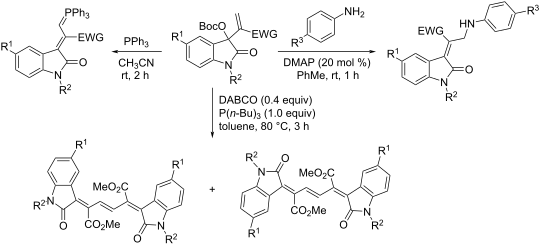
- spectroscopy techniques. In order to show the universality of the substitution reaction, MBH maleimides of isatins 4 were also employed in the reaction. In the absence of any base as promoter, the reaction of MBH maleimides of isatins with various aromatic amines in toluene at 65 °C gave the expected
- and were fully characterized via various spectroscopy methods. The further annulation reaction did not proceed under the reaction conditions. The similar reaction of triphenylphosphine and MBH maleimides of isatins also resulted in the corresponding triphenylphosphaneylidenes 6e and 6f in satisfactory




Oxidation of [3]naphthylenes to cations and dications converts local paratropicity into global diatropicity
Beilstein J. Org. Chem. 2025, 21, 277–285, doi:10.3762/bjoc.21.20

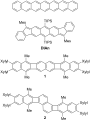
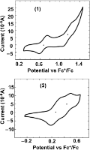
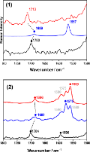
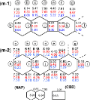
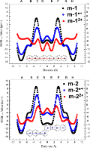
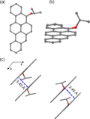
- shift (NICS) calculations and anisotropy of the current induced density (ACID) plots, as they evidenced the presence of a perimetral diatropic global ring current upon oxidation. Keywords: ACID; aromaticity; force constants; NICS; spectroscopy; Introduction Since the discovery of conjugated polymers
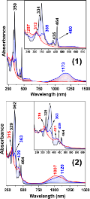
- give rise to two naphthylene-centered cations located at both sides of the molecule. The connection path would be partially interrupted by the angular topology, thus accounting for the more similar redox potentials. Electronic spectroscopy The UV–vis–NIR electronic absorption spectra of the neutral and
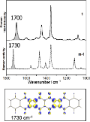
- absorption at 1120 nm. Nonetheless, the spectra of the dications 12+ and 22+ display noticeably differences given that the features at 421 and at 1007 nm, present in the angular [3]naphthylene 2, are apparently absent in the linear isomer 1. Raman spectroscopy Figure 4 shows the experimental Raman spectrum


Synthesis and characterizations of highly luminescent 5-isopropoxybenzo[rst]pentaphene
Beilstein J. Org. Chem. 2025, 21, 270–276, doi:10.3762/bjoc.21.19
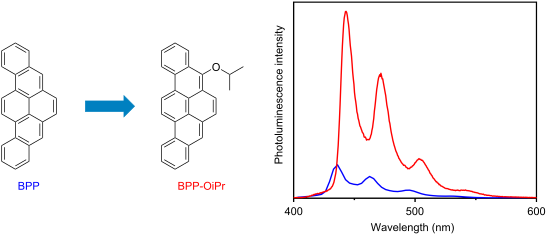
- properties were investigated by UV–vis absorption and fluorescence spectroscopy in compassion to pristine BPP and its oxidation product, benzo[rst]pentaphene-5,8-dione (BPP-dione). BPP-OiPr exhibited a significantly enhanced photoluminescence quantum yield (PLQY), reaching 73% in comparison to pristine BPP
- ferric chloride (FeCl3) gave BPP-dione 4 in 70% yield. The chemical structures of BPP-OiPr 3 and BPP-dione 4 were characterized by 1H and 13C NMR spectroscopy as well as mass spectrometry (see Supporting Information File 1, Figures S8–S11). A single crystal of BPP-OiPr 3 suitable for X-ray diffraction
- optimized by density functional theory (DFT) calculations (Figure S2 in Supporting Information File 1). The optoelectronic properties of BPP-OiPr 3 and BPP-dione 4 were initially investigated by UV–vis absorption spectroscopy in comparison with BPP 2 (Figure 2a). BPP 2 and BPP-OiPr 3 displayed similar and




Three-component reactions of conjugated dienes, CH acids and formaldehyde under diffusion mixing conditions
Beilstein J. Org. Chem. 2025, 21, 262–269, doi:10.3762/bjoc.21.18
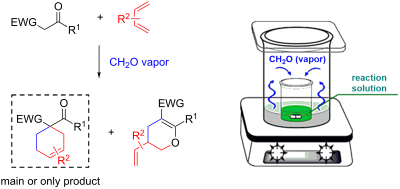
- an important role; the presence of the condensation catalyst ʟ-proline accelerated the absorption of formaldehyde vapors by the reaction mixture. Carrying out the same reaction in the absence of a catalyst in CDCl3 and subsequent 1H NMR spectroscopy analysis showed that the mixture contained 42% of
- cyanoacetic ester and acetylacetone. The configuration of the products 4 and 5 was established by bromination of a small amount of these isomeric compounds in CDCl3 (Scheme 6) and subsequent analysis of the mixture by 1H NMR spectroscopy. For the stereoisomers 4, the main product was lactone 22, identified by
- [27]. The three-component reaction with acetoacetic ester was highly selective, and the formation of a minor [4 + 2]-cycloaddition product was not observed (according to 1H NMR spectroscopy), but the yield of the products 15 did not exceed 9%. For acetylacetone, the reaction was the least selective


Effect of substitution position of aryl groups on the thermal back reactivity of aza-diarylethene photoswitches and prediction by density functional theory
Beilstein J. Org. Chem. 2025, 21, 242–252, doi:10.3762/bjoc.21.16
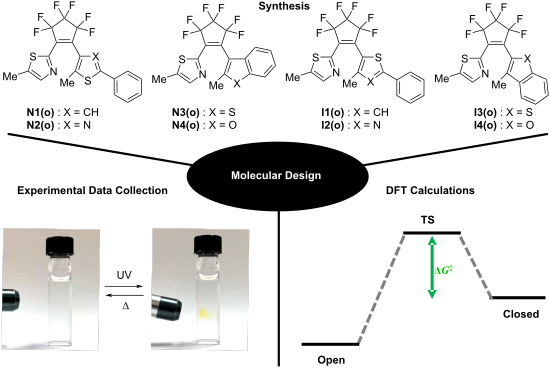
- previous work [56][57], whereas compounds N4 and I1–I4 were synthesized according to Scheme 2 in the Experimental section. The chemical structures of all compounds were confirmed by 1H NMR and 13C NMR spectroscopy and high-resolution mass spectrometry. 1H NMR and 13C NMR spectra are shown in Supporting
- experimental values. These results contribute to the design of advanced photochromic materials with tailored thermal and photophysical properties. Experimental General Commercially available reagents were used as received for the syntheses. Solvents used for spectroscopy were of spectroscopic grade or purified


Streamlined modular synthesis of saframycin substructure via copper-catalyzed three-component assembly and gold-promoted 6-endo cyclization
Beilstein J. Org. Chem. 2025, 21, 226–233, doi:10.3762/bjoc.21.14
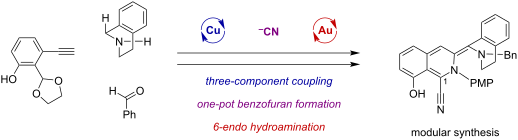
- a fluorescent intermediate 18, and subsequent ring opening allowed a streamlined one-pot access to the substructure of THIQ alkaloids 14 in a good yield of 60% from 11. The structure of the resulting 14 was elucidated through comprehensive two-dimensional NMR spectroscopy, complemented by NOE


Quantifying the ability of the CF2H group as a hydrogen bond donor
Beilstein J. Org. Chem. 2025, 21, 189–199, doi:10.3762/bjoc.21.11
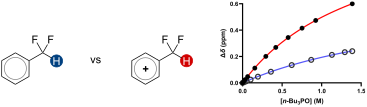
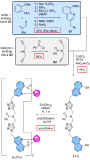
- established methods, including 1H NMR-based hydrogen bond acidity determination, UV–vis spectroscopy titration with Reichardt's dye, and 1H NMR titration using tri-n-butylphosphine oxide as a hydrogen bond acceptor. Our experiments reveal that the direct attachment of the CF2H group to cationic aromatic
- as the charge of the solute changes, complicating the Δδ-based direct assessment of HB acidity. To quantify the HB donation ability of both neutral and cationic species on a single scale, we chose an alternative strategy based on an established UV–vis spectroscopy titration method [52] with
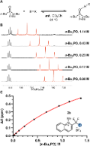
- donation ability of the CF2H group by 1H NMR titration with tri-n-butylphosphine oxide (n-Bu3PO) as a reference HB acceptor (Figure 4A and Figures S20–S40 in Supporting Information File 1). Unlike a previous method that relied on 31P NMR spectroscopy [52], our titration monitors the HB complex formation by




Hydrogen-bonded macrocycle-mediated dimerization for orthogonal supramolecular polymerization
Beilstein J. Org. Chem. 2025, 21, 179–188, doi:10.3762/bjoc.21.10
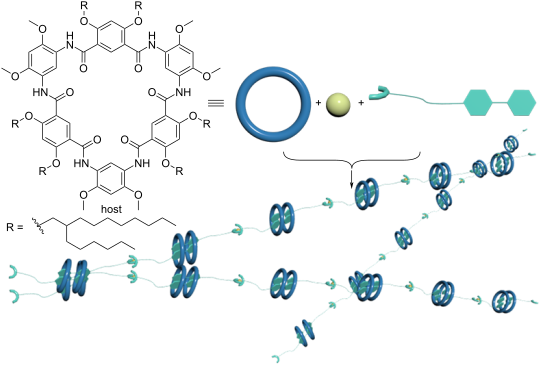
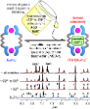
- molar ratio observed in ESI experiments. These inspiring results prompted us to further examine the interaction between host H1 and G1 by 1H NMR spectroscopy. Our prior experience with cyclo[6]aramide has confirmed binding to the cationic guest [49]. Indeed, addition of compound H1 to the guest solution
- mixture of G2 and zinc salt in CHCl3/CH3CN (1:1, v/v) was subjected to 1H NMR spectroscopy. Protons H2–H4, H7, H8, H11, and H12 of G2, located around the metal coordination site, were found to experience upfield or downfield shifts to a varying extent (Figure S8, Supporting Information File 3
- , which is characteristic for the formation of supramolecular polymers. The concentration-dependency of a mixture of H1, G2, and zinc salt was examined by variable-concentration NMR spectroscopy. Pronounced broadening of signals was observed (Figure 8), which clearly indicated increasing polymerization



Nickel-catalyzed cross-coupling of 2-fluorobenzofurans with arylboronic acids via aromatic C–F bond activation
Beilstein J. Org. Chem. 2025, 21, 146–154, doi:10.3762/bjoc.21.8
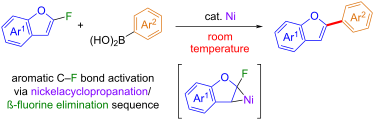
- , excluding boronic acid 2a (Scheme 6). The reaction was monitored using 19F and 31P NMR spectroscopy. The 19F NMR analysis showed that 79% of 1b remained and revealed a new broad double doublet peak at 55.0 ppm (JFP = 53, 42 Hz) relative to internal C6F6 (δ = 0.0 ppm). The 31P NMR spectrum depicted broad
- the Institute for Solid State Physics, the University of Tokyo (1H, 13C, and 19F NMR spectrometer, mass spectroscopy system, and IR spectroscopy system in Mori Laboratory). Funding This work was financially supported by JSPS KAKENHI Grant Number JP21K05066 in Grant-in-Aid for Scientific Research (C



Hot shape transformation: the role of PSar dehydration in stomatocyte morphogenesis
Beilstein J. Org. Chem. 2025, 21, 47–54, doi:10.3762/bjoc.21.5
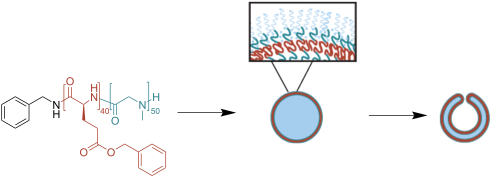
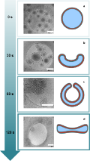
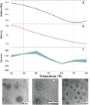
- . However, when the membrane gets too stiff, the deformation is prevented regardless of the increased force that is applied. For further affirmation of the mechanism circular dichroism (CD) spectroscopy was employed to give more insight on the morphological changes in the polymers secondary structure


Emerging trends in the optimization of organic synthesis through high-throughput tools and machine learning
Beilstein J. Org. Chem. 2025, 21, 10–38, doi:10.3762/bjoc.21.3
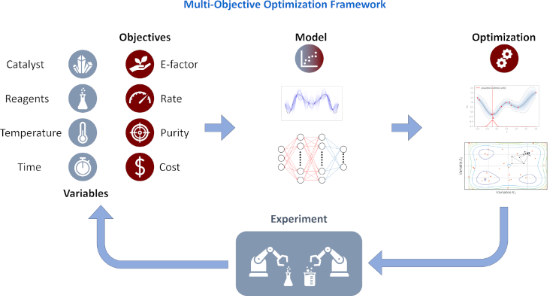
- four-step process involves allylation, Claisen rearrangement, isomerization, and oxidative dimerization. Each reaction step was optimized independently by using either online HPLC or in-line benchtop NMR spectroscopy to afford an overall yield of 67% in 66 iterative experiments over four linear
- reflectance probe was employed for real-time monitoring of hydrolysis by in-line UV–vis spectroscopy. The raw data was processed using a sophisticated neural network algorithm, yielding rapid quantification with an impressive processing time of 1.4 ms per spectrum. This streamlined approach ensured efficient
- overlapping peaks. Its versatility was showcased through the successful completion of four comprehensive case studies, demonstrating its broad applicability across diverse analytical scenarios. Recently, we implemented in-line Raman spectroscopy to monitor the real-time conversion of styrene to polystyrene


Synthesis, characterization, and photophysical properties of novel 9‑phenyl-9-phosphafluorene oxide derivatives
Beilstein J. Org. Chem. 2024, 20, 3299–3305, doi:10.3762/bjoc.20.274
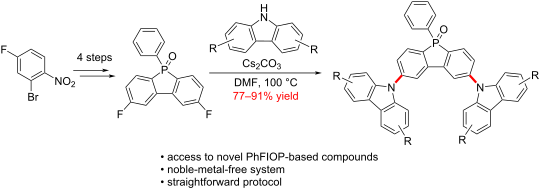
- available 2-bromo-4-fluoro-1-nitrobenzene, featuring a noble-metal-free system, mild reaction conditions, and a good yield, especially for the final Cs2CO3-facilitated nucleophilic substitution (77–91% yield). The characterization data obtained from IR and NMR spectroscopy (1H, 13C, 19F, and 31P) as well as
- 2–7 was performed by NMR spectroscopy, which confirmed the synthetic outcomes (Figures S1–S11, Supporting Information File 1). The structures of compounds 7 were further confirmed by HRMS and IR analyses (Figures S12–S18, Supporting Information File 1). In addition, the chemical structure of 7-H was




Hypervalent iodine-mediated intramolecular alkene halocyclisation
Beilstein J. Org. Chem. 2024, 20, 3113–3133, doi:10.3762/bjoc.20.258
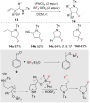
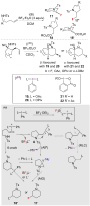
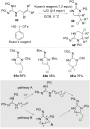
- . The level of this chemoselectivity was dependent on the iodane ligand: OPiv was more selective for aminofluorination than OAc, which was proposed to be due to differences in basicity and nucleophilicity (Scheme 10). Detailed mechanistic studies were carried out using multinuclear NMR spectroscopy



















Synthesis of the 1,5-disubstituted tetrazole-methanesulfonylindole hybrid system via high-order multicomponent reaction
Beilstein J. Org. Chem. 2024, 20, 3077–3084, doi:10.3762/bjoc.20.256
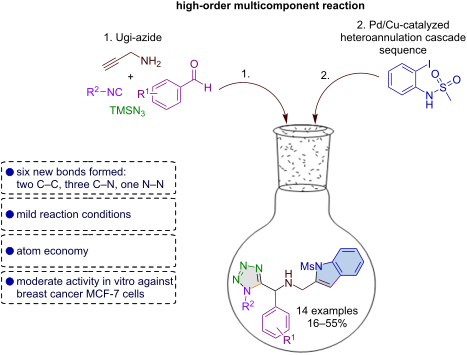
- and resource optimization. In addition, all the target compounds were fully characterized using 1H and 13C NMR spectroscopy and HRMS. It is important to mention that this protocol cannot be considered a true one-pot synthesis, as it requires a solvent exchange between reaction steps (e.g., from



Enantioselective regiospecific addition of propargyltrichlorosilane to aldehydes catalyzed by biisoquinoline N,N’-dioxide
Beilstein J. Org. Chem. 2024, 20, 3069–3076, doi:10.3762/bjoc.20.255
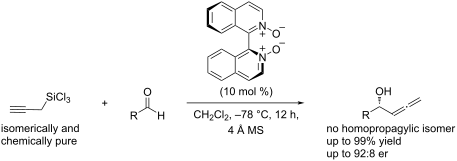
- reaction mixture, but a trace amount of it was detected after the distillation (propargyltrichlorosilane/allenyltrichlorosilane = 200:1 by 1H NMR spectroscopy, see Supporting Information File 1 for details). With distilled propargyltrichlorosilane (>99% isomeric purity) in hand, we set out on our study on
- propargyltrichlorosilane. Evaluation of C2-symmetric catalysts with benzaldehyde (1a) as a model aldehyde. Reaction conditions: 1a (0.1 mmol), silane (0.15 mmol), catalyst (0.01 mmol), CH2Cl2 (0.4 mL); yields were determined by 1H NMR spectroscopy with 1,1,2,2-tetrachloroethane as an internal standard following workup and
- stationary phase, yields were determined by 1H NMR spectroscopy with 1,1,2,2-tetrachloroethane as an internal standard following workup and isolated yields are given in parentheses. aReaction conditions: 1a (1.0 mmol), silane (1.5 mmol), (S)-8 (0.1 mmol), CH2Cl2 (4.0 mL). Supporting Information Supporting


Extension of the π-system of monoaryl-substituted norbornadienes with acetylene bridges: influence on the photochemical conversion and storage of light energy
Beilstein J. Org. Chem. 2024, 20, 3061–3068, doi:10.3762/bjoc.20.254
- because by-products interfered with the chromatographic separation; however, these yields are similar to the ones reported for resembling norbornadienes [34][37]. The novel compounds 1h–l,n were identified and fully characterized by NMR spectroscopy (1H, 13C, COSY, HSQC, HMBC), melting point, and
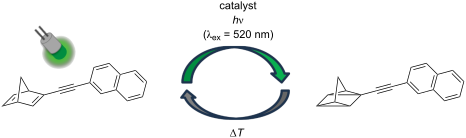
- by 1H NMR spectroscopy. Initially, all derivatives showed the isomerization reactions to the corresponding quadricyclane derivatives, as identified by the characteristic 1H NMR signal pattern of the quadricyclane fragment with five multiplets at around 1.6 ppm, 1.7 ppm, 1.8 ppm, 2.1 ppm, and 2.2 ppm
- quadricyclane signals, so that the quantitative analysis of the photostationary state was not possible with NMR spectroscopy. These observations are surprising, since the 3-acceptor-substituted derivatives and the ones without acetylene linkers have been reported to be converted quantitatively into their


Cyclodextrin-based rotaxanes for polymer materials: challenge on simultaneous realization of inexpensive production and defined structures
Beilstein J. Org. Chem. 2024, 20, 3026–3049, doi:10.3762/bjoc.20.252
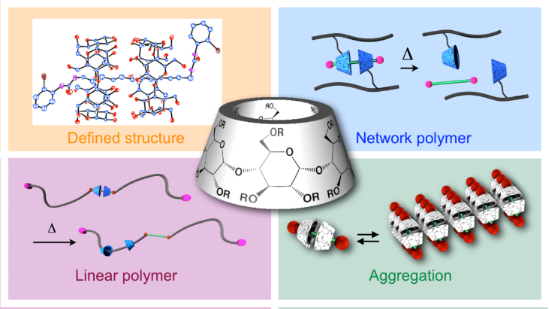
- formation of this inclusion complex, circular dichroism spectroscopy represents a powerful tool when combined with nuclear magnetic resonance (NMR) and X-ray single-crystal analysis. This is because the induced circular dichroism (ICD) can be observed on the guest molecule of the inclusion complex derived
- ratio. Namely, the inclusion of CD prevented the aggregate formation of the conjugative polymer backbone, which usually induces a change in the absorption wavelength. Similarly, in fluorescence spectroscopy, the restriction of the nonradiative deactivation was caused by the inclusion structure
- after the de-crosslinking of the gel. In addition to the qualitative observation by the naked eye, the quantitative kinetic analysis of this decrosslinking was conducted by fluorescence spectroscopy. Such a quantitative study became possible thanks to the defined rotaxane structure, which supported the






Tunable full-color dual-state (solution and solid) emission of push–pull molecules containing the 1-pyrindane moiety
Beilstein J. Org. Chem. 2024, 20, 3016–3025, doi:10.3762/bjoc.20.251

- configuration of the double bond was confirmed using 1H,1H-NOESY spectroscopy. As shown in Figure 2, a correlation between protons of the allyl moiety and the aryl substituent evidenced their spatial proximity in molecule 1c. The absence of a correlation between allyl and vinyl protons additionally supported


Tailored charge-neutral self-assembled L2Zn2 container for taming oxalate
Beilstein J. Org. Chem. 2024, 20, 3007–3015, doi:10.3762/bjoc.20.250
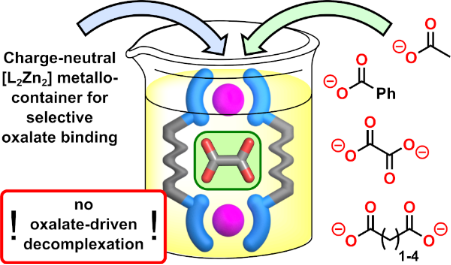
- S20 in Supporting Information File 1). An average binding constant for oxalate of log K = 4.39 was obtained by UV–vis spectroscopy (Figures S21–S26 in Supporting Information File 1) since the intermediate-like exchange prevents the determination directly from the 1H NMR titration. The binding constant




gem-Difluorovinyl and trifluorovinyl Michael acceptors in the synthesis of α,β-unsaturated fluorinated and nonfluorinated amides
Beilstein J. Org. Chem. 2024, 20, 2946–2953, doi:10.3762/bjoc.20.247
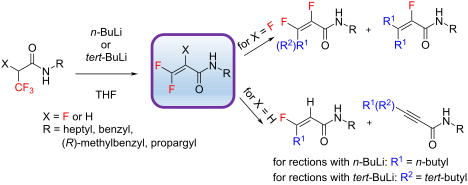
- E-isomer of products 9 were identified. The fluorine atom signals of 9a–d were located at approximately −112 ppm (triplets, J ≈ 27 Hz, Fβ) and at −155 to −159 ppm (multiplets, Fα). The stereochemistry was determined by 19F{1H} NMR spectroscopy. The observed coupling constants J ≈ 2 Hz between
- addition–elimination reaction, affording the corresponding fluorinated 13a–d (Scheme 4) and nonfluorinated 14a–d (Scheme 5) unsaturated products. Also this time, for compounds 13a–d, the formation of only Z isomers was observed (Scheme 4). The stereochemistry was determined by 19F{1H} NMR spectroscopy




Synthesis of pyrrole-fused dibenzoxazepine/dibenzothiazepine/triazolobenzodiazepine derivatives via isocyanide-based multicomponent reactions
Beilstein J. Org. Chem. 2024, 20, 2870–2882, doi:10.3762/bjoc.20.241
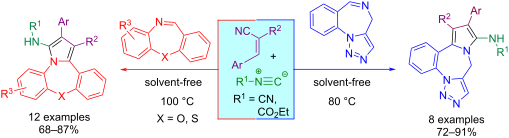
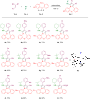
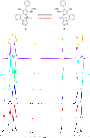
- product compared to the substitution of phenyl (Scheme 4, 6c). Furthermore, n-butyl isocyanide was used to increase the variety of products and the n-butyl-substituted products 6f–h were obtained with 72–78% yield . All the products were characterized by 1H NMR, 13C NMR, and infrared spectroscopy, and






Synthesis and antimycotic activity of new derivatives of imidazo[1,2-a]pyrimidines
Beilstein J. Org. Chem. 2024, 20, 2806–2817, doi:10.3762/bjoc.20.236
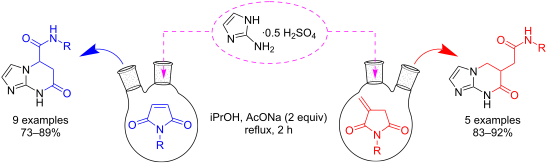
- spectroscopy, HPLC–HRESIMS) of the products of the investigated reactions unambiguously confirms the processes proceeding along routes A1 and B1 with the formation of N-aryl(alkyl)-7-oxo-5,6,7,8-tetrahydroimidazo[1,2-a]pyrimidin-5-carboxamides 4a–i and N-aryl-2-(7-oxo-5,6,7,8-tetrahydroimidazo[1,2-a]pyrimidin


Mechanochemical difluoromethylations of ketones
Beilstein J. Org. Chem. 2024, 20, 2799–2805, doi:10.3762/bjoc.20.235
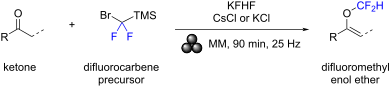
- standard reaction conditions with difluorocarbene precursor TMSCF2Br (2, 2.0 equiv), activator KFHF (4.0 equiv), and grinding auxiliary CsCl (4.0 equiv), difluoromethyl enol ether 3a was obtained after 90 min reaction time at 25 Hz in 74% yield, determined by quantitative 1H NMR spectroscopy (Table 1
- spectroscopy with 1,2-dichloroethane as the internal standard. After these analyses, isolating the products by column chromatography was attempted. Unfortunately, many products were highly volatile and very non-polar, rendering the purification difficult. As a result, in several cases only little or no product
- was obtained. Furthermore, most isolated products had only purities of ca. 90% still containing inseparable impurities (as revealed by NMR spectroscopy). In the first series of substrates, acetophenone derivatives with various para-substituents were applied. Similar to methyl tolyl ketone (1a), which





