Search results
Search for "β-cyclodextrin" in Full Text gives 138 result(s) in Beilstein Journal of Organic Chemistry.
Synthesis of mesomeric betaine compounds with imidazolium-enolate structure
Beilstein J. Org. Chem. 2012, 8, 390–397, doi:10.3762/bjoc.8.42
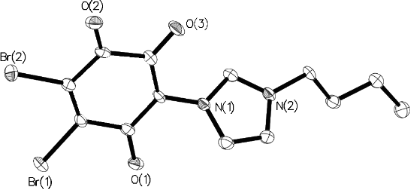
- mesomeric betaine with randomly methylated (1.8) β-cyclodextrin were investigated by UV–vis spectroscopy. Furthermore, the reaction conditions were applied to poly(vinylimidazole) and 1,4-bis(1H-imidazol-1-yl)butane to obtain functionalized polymer networks and condensate polymers, respectively. Keywords
- ). Regarding our interest in supramolecular chemistry and the enhancement of water solubility, the ability of 3 to form inclusion complexes with randomly methylated (1.8) β-cyclodextrin (m-β-CD) was investigated by means of UV–vis spectroscopy. Therefore, the type of inclusion complex and the complex formation
- functionalized polymer networks and oligomers, which were stable at temperatures up to 300 °C and 200 °C, respectively. Experimental Materials. Randomly methylated (1.8) β-cyclodextrin (m-β-CD) was obtained from Wacker-Chemie GmbH (Burghausen, Germany). Prior to use, m-β-CD was dried in a CEM Sam 255 microwave




Highly efficient cyclosarin degradation mediated by a β-cyclodextrin derivative containing an oxime-derived substituent
Beilstein J. Org. Chem. 2011, 7, 1543–1554, doi:10.3762/bjoc.7.182
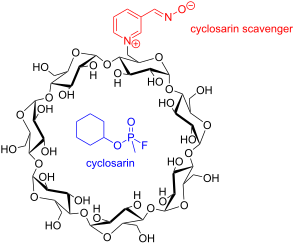
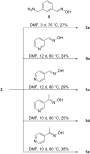
- substituents with an aldoxime or a ketoxime moiety along the narrow opening of the β-cyclodextrin cavity was synthesized, and the ability of these compounds to reduce the inhibitory effect of the neurotoxic organophosphonate cyclosarin on its key target, acetylcholinesterase, was assessed in vitro. All
- compounds exhibited a larger effect than native β-cyclodextrin, and characteristic differences were noted. These differences in activity were correlated with the structural and electronic parameters of the substituents. In addition, the relatively strong effect of the cyclodextrin derivatives on cyclosarin
- phosphates and phosphonates [15][16][17][18], including the highly neurotoxic organophosphonates (OP) sarin and soman [19][20][21]. While α-cyclodextrin, the cyclodextrin containing six anhydroglucose units along the ring, was shown to be most effective for sarin [17][22], the larger β-cyclodextrin with the





Chiral recognition of ephedrine: Hydrophilic polymers bearing β-cyclodextrin moieties as chiral sensitive host molecules
Beilstein J. Org. Chem. 2011, 7, 1516–1519, doi:10.3762/bjoc.7.177
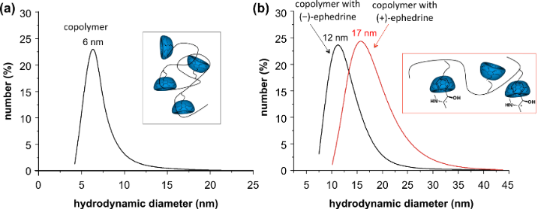
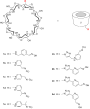
- aromaticity and is pharmaceutically relevant (Scheme 1). Recently we described the monomer synthesis of mono-(6-azido-6-desoxy)-β-cyclodextrin with propargylmethacrylate and the copolymerization with N-isopropylacrylamide (NIPAAM) [20]. The properties of the polymer 1 were characterized further by use of size
- -exclusion chromatography (SEC), dynamic light scattering (DLS) and turbidity measurements. To confirm the formation of the proposed host–guest structure of β-cyclodextrin and ephedrine in principle, 2-D ROESY NMR spectroscopy was performed at room temperature with β-CD in excess. Thus the correlation
- )-(+)-Ephedrine hydrochloride and (1R,2S)-(−)-ephedrine hydrochloride were obtained from Acros Organics and used as received. β-Cyclodextrin (β-CD) was obtained from Wacker-Chemie GmbH, Burghausen, Germany and used after drying overnight in an oil-pump vacuum over P2O5. 1H NMR and ROESY experiments were performed


Hyperbranched polyethylenimine bearing cyclodextrin moieties showing temperature and pH controlled dye release
Beilstein J. Org. Chem. 2011, 7, 1130–1134, doi:10.3762/bjoc.7.130
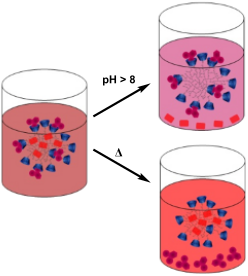
- Indra Bohm Susanne Katharina Kreth Helmut Ritter Institut für Organische und Makromolekulare Chemie II, Heinrich-Heine-Universität Düsseldorf, Universitätsstraße 1, D-40225 Düsseldorf, Germany Fax: (+49) 211 8115840 10.3762/bjoc.7.130 Abstract The release of anthraquinone dyes from β-cyclodextrin
- anionic groups can interact with the cationic hyperbranched structure of the polymeric matrix [14]. These components can be released by changing the pH value [15]. In this context we recently reported the synthesis of hyperbranched PEI bearing covalently attached β-cyclodextrin (CD) [16]. CD has been
- strongly indicates the formation of higher aggregates due to intermolecular interactions. DLS measurements of the complex of unmodified, randomly methylated, β-cyclodextrin (RAMEB-CD) and dye 2 were performed, giving a dH of 68 nm (Supporting Information File 1, Figure S6). The combination of RAMEB-CD and


Advances in synthetic approach to and antifungal activity of triazoles
Beilstein J. Org. Chem. 2011, 7, 668–677, doi:10.3762/bjoc.7.79
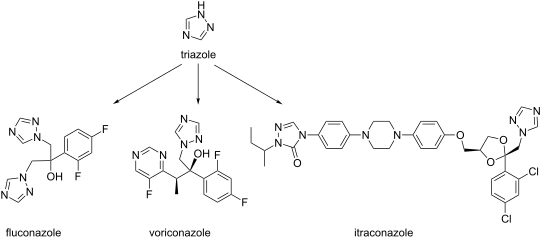
- failure, its excretion is not affected. Its i.v. preparation is solubilized in sulfobutyl ether β-cyclodextrin sodium, which is secreted by the kidneys [52]. Voriconazole interacts with drugs that are substrates of cytochrome P450 3A4 (terfenadine, cisapride, etc.), by increasing their serum levels. It




The arene–alkene photocycloaddition
Beilstein J. Org. Chem. 2011, 7, 525–542, doi:10.3762/bjoc.7.61
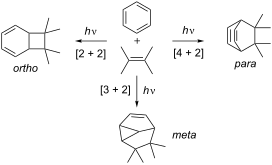
- chiral cavity (β-cyclodextrin) affords the photocycloaddition product in 17% ee (Scheme 15) [52]. Further diversification Meta photocycloaddition can be considered as very regio- and stereoselective if the appropriate substituents are chosen. The only reaction step notoriously lacking regioselectivity is
- tether at position 2. Enantioselective meta photocycloaddition in β-cyclodextrin cavity. Vinylcyclopropane–cyclopentene rearrangement. Further diversification possibilities of the meta photocycloaddition product. Double [3 + 2] photocycloaddition reaction affording fenestrane. Total synthesis of


Chiral recognition of macromolecules with cyclodextrins: pH- and thermosensitive copolymers from N-isopropylacrylamide and N-acryloyl-D/L-phenylalanine and their inclusion complexes with cyclodextrins
Beilstein J. Org. Chem. 2011, 7, 204–209, doi:10.3762/bjoc.7.27
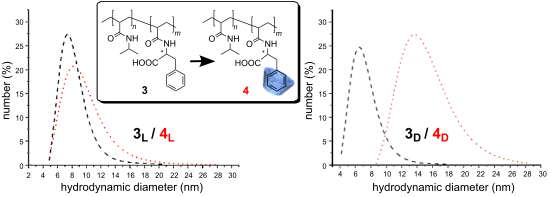
- soluble stimuli-responsive polymers bearing phenylalanine moieties via host-guest interaction with β-cyclodextrin and randomly-methylated-β-cyclodextrin (RAMEB-CD). We synthesised N-acryloyl-D/L-phenylalanine monomers (2D, 2L) which were then copolymerised under free radical conditions with N
- . Randomly methylated β-cyclodextrin (RAMEB-CD) and β-cyclodextrin were obtained from Wacker Chemie GmbH, Burghausen, Germany, and were used after drying overnight under vacuum (oil pump) in the presence of P4O10. D- and L-phenylalanine (98.5%) were purchased from Alfa Aesar GmbH & CoKG, Germany. Acryloyl


Cross-metathesis of allylcarboranes with O-allylcyclodextrins
Beilstein J. Org. Chem. 2010, 6, 1099–1105, doi:10.3762/bjoc.6.126

- carried out according to the previously reported procedures [8]. O-Allylcyclodextrins 2 were prepared by allylation of β-cyclodextrins under various reaction conditions (2I-O-allyl-β-cyclodextrin for 2a [22], 3I-O-allyl-β-cyclodextrin for 2b [23], and 6I-O-allyl-β-cyclodextrin for 2c) followed by
- /H2O) on C18-reversed phase. Per-O-acetyl-2I-O-[4-(1,2-dicarbadodecaboran-1-yl)-but-2-en-1-yl]-β-cyclodextrin (3aa). The compound was prepared from 2a (0.15 g, 0.07 mmol) and 1a (15 mg, 0.05 mmol). Column chromatography gave the title compound, 0.041 g (24%), as a white powder: m. p. 188–190 °C; IR
- ), 516.9 (14), 456.8 (25), 374.0 (29), 242.3 (100), 228.6 (56), 168.9 (41); HR-MS (ESI) calcd. for C88H126O55B10: 1108.3925, found 1108.3954 (C88H126O5510B2B8Na2). Per-O-acetyl-3I-O-[4-(1,2-dicarbadodecaboran-1-yl)-but-2-en-1-yl]-β-cyclodextrin (3ab). The compound was prepared from 2b (0.15 g, 0.07 mmol


Synthesis and crystal structures of multifunctional tosylates as basis for star-shaped poly(2-ethyl-2-oxazoline)s
Beilstein J. Org. Chem. 2010, 6, 773–783, doi:10.3762/bjoc.6.96
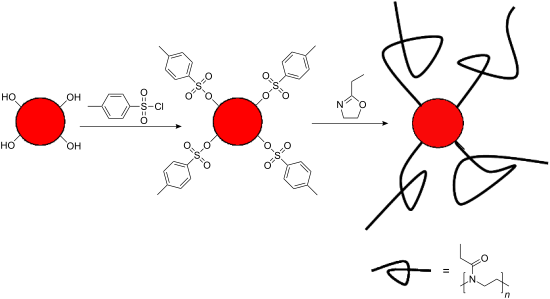
- recently reported a post-modification route for the synthesis of star-shaped poly(2-ethyl-2-oxazoline) by coupling of an acetylene-functionalized poly(2-ethyl-2-oxazoline) to a heptakis-azido functionalized β-cyclodextrin [18]. However, this method required chromatographic separation of the star-shaped




Calix[4]arene-click-cyclodextrin and supramolecular structures with watersoluble NIPAAM-copolymers bearing adamantyl units: “Rings on ring on chain”
Beilstein J. Org. Chem. 2010, 6, 784–788, doi:10.3762/bjoc.6.83
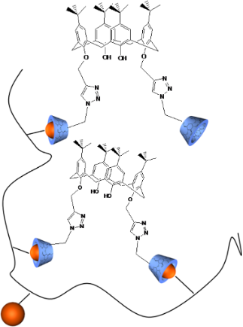
- supramolecular complex formation with poly(NIPAAM) bearing attached adamantyl units was investigated by dynamic light scattering (DLS) and turbidity measurements. Keywords: β-cyclodextrin; calix[4]arene; click chemistry; poly(NIPAAM); Introduction Supramolecular interactions of macrocycles with different types
- higher pH values, a significant change in solubility and hydrodynamic diameter was observed and correlated to the formation of superstructures. Experimental Materials. β-Cyclodextrin (β-CD) was purchased from Wacker Chemie GmbH (Burghausen, Germany) and used after drying overnight over P4O10 under an oil

Chromo- and fluorophoric water-soluble polymers and silica particles by nucleophilic substitution reaction of poly(vinyl amine)
Beilstein J. Org. Chem. 2010, 6, No. 79, doi:10.3762/bjoc.6.79
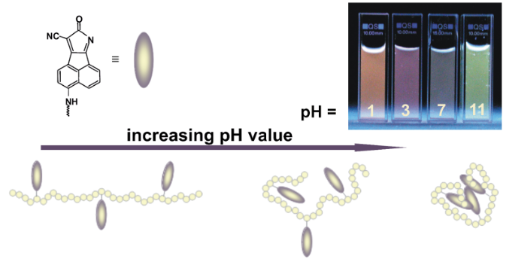
- has been found to be suitable because of its higher solubility in water compared to β-cyclodextrin (800.5 g L−1 vs. 18.5 g L−1) [27][28][29]. Chemical reactions between two incompatible reactants can also be achieved under heterogeneous reaction conditions (the reaction is localized at the interphase
- , 1645, 1576, 1549; C15H6N2O (230.23) Anal. calcd. C, 78.26; H, 2.63; N, 12.17; found C, 77.96; H, 2.61; N, 11.79. Fluorophoric, carbonitrile-functionalized PVAm (1-P) For the β-cyclodextrin complex formation, stoichiometric amounts of 1 (0.29 g, 1.28 mmol) and β-DMCD (1.68 g, 1.28 mmol) were dissolved




Free radical homopolymerization of a vinylferrocene/cyclodextrin complex in water
Beilstein J. Org. Chem. 2010, 6, No. 60, doi:10.3762/bjoc.6.60
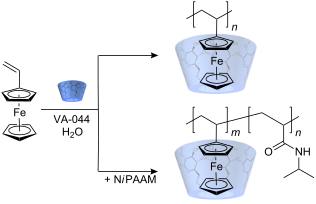
- insoluble in water. Complexation of 1 with methyl-β-cyclodextrin 2 results in clearly water-soluble structures due to incorporation of the ferrocene moiety into the cyclodextrin cavity. After free radical polymerization of the water-soluble complexed monomer, corresponding to polyvinylferrocene (PVFc), the
- homopolymerization of vinylferrocene 1 as a guest in the host methyl-β-cyclodextrin (methyl-β-CD) 2. The stability of the resulting complexed polymers in water is also reported. Results and Discussion Vinylferrocene 1 was added to an aqueous solution of methyl-β-CD 2 and the complex obtained was subjected to radical
- cyclodextrin ring. Experimental Part Materials and Instrumentation Methyl-β-cyclodextrin was obtained from Wacker-Chemie GmbH, Burghausen, Germany, and used after drying overnight with a vacuum oil pump over P4O10. Dimethyl-d6 sulfoxide (99.9 atom % D) was obtained from Euriso-Top SA, France. 2,2-Azobis[2-(2


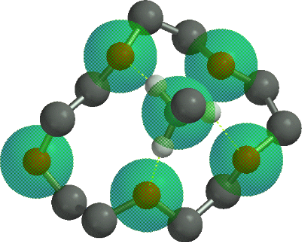
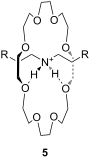
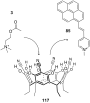
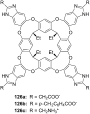
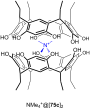
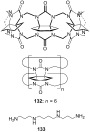
Molecular recognition of organic ammonium ions in solution using synthetic receptors
Beilstein J. Org. Chem. 2010, 6, No. 32, doi:10.3762/bjoc.6.32