Search results
Search for "concentration" in Full Text gives 1454 result(s) in Beilstein Journal of Organic Chemistry. Showing first 200.
Applications of microscopy and small angle scattering techniques for the characterisation of supramolecular gels
Beilstein J. Org. Chem. 2024, 20, 2608–2634, doi:10.3762/bjoc.20.220

- to assemble NFs. The self-sorting of NFs decreases the concentration of NGs, increasing the relative concentration of CGs, allowing a higher critical assembly concentration of the CGs (arising from electrostatic repulsions between the CGs) to be reached, leading to the co-assembly of CFs. Not only
- , the bulk gel (which may not be the same as the surface) is inaccessible and cannot be characterised. AFM has the advantage of allowing for the measurement of hydrated samples, and therefore does not suffer from drying artefacts. Since hydrogels are mainly made of water and low concentration hydrogels
- the range of hierarchical assemblies [32]. Another significant concern posed by blotting is the brief introduction of an air–water interface which can lead to preferential organisation of particles, as well as unpredictable changes in local concentration on the TEM grid [41]. To overcome such


Synthesis and cytotoxicity studies of novel N-arylbenzo[h]quinazolin-2-amines
Beilstein J. Org. Chem. 2024, 20, 2592–2598, doi:10.3762/bjoc.20.218
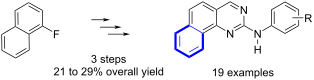
- the meta-methoxy 4f and ortho-fluoro 4h show significant toxicity only on Caco-2 (IC50 4.3 and 4.6 μM, respectively). Further, the para-methyl compound 4d acts on HCT-116 only (IC50 5 μM). On the other hand, all molecules exhibited no effect on normal human fibroblasts at the highest concentration
- assays: primary screen (unique concentration) and secondary screen (IC50) Both studies have been performed following the protocols described in a previous paper, see ref. [2]. Aminoquinazolines and our new target molecules. Target molecules 4 prepared with the yields for the last step. Synthesis of the


Machine learning-guided strategies for reaction conditions design and optimization
Beilstein J. Org. Chem. 2024, 20, 2476–2492, doi:10.3762/bjoc.20.212

- acid–base salts, and continuous variables, such as temperature, pressure, substrate concentration, and residence time. Regression prediction models are then built for these reaction parameters and target objectives by collecting experimental data and conducting statistical analysis. Many reaction


Homogeneous continuous flow nitration of O-methylisouronium sulfate and its optimization by kinetic modeling
Beilstein J. Org. Chem. 2024, 20, 2408–2420, doi:10.3762/bjoc.20.205
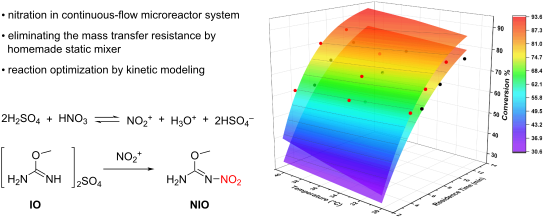
- 94%, initial reactant concentration of 0.5 mol/L, reaction temperature of 40 °C, molar ratio of reactants at 4.4:1, and a residence time of 12.36 minutes. Keywords: continuous flow; kinetic modeling; nitration; reaction optimization; static mixer; Introduction The demand for high-quality
- thermal dissociation and oligomerization, the residence time and temperature were designed rationally to improve the yield of cyclopentadiene. Since NO2+ is the actual substance that plays a role in the nitrification process [16], kinetic modeling based on the concentration of NO2+ is essential for the
- is critical in ensuring the smooth progression of the nitration reaction within a homogeneous system. Given the strongly exothermic nature of this reaction, an excessively high concentration of IO can lead to an overproduction of heat, thereby elevating the associated risks. In contrast, a


![[Graphic 1]](/bjoc/content/inline/1860-5397-20-205-i17.svg?max-width=637&scale=1.18182)


Synthesis, electrochemical properties, and antioxidant activity of sterically hindered catechols with 1,3,4-oxadiazole, 1,2,4-triazole, thiazole or pyridine fragments
Beilstein J. Org. Chem. 2024, 20, 2378–2391, doi:10.3762/bjoc.20.202
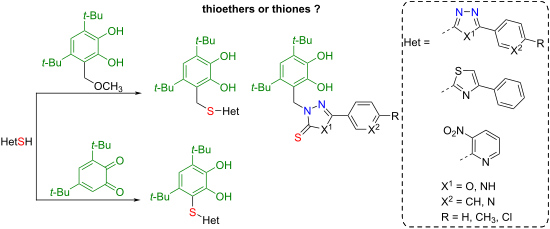
- heterocycle substitute at the sulfur atom [49][50][54]. Non-enzymatic process of the rat (Wistar) liver homogenate lipid peroxidation (LP) in the presence of additives of target compounds 1–9 was studied in vitro. The concentration of the carbonyl compounds forming in the reaction of the lipid peroxidation
- was determined by the accumulation of a colored complex with thiobarbituric acid (TBARS) (Figure 9). A decrease in TBARS concentration was observed in the presence of all tested compounds which indicates their antioxidant effect during incubation time. At the initial stage (3 h), catechol thione 8
- (control) during the incubation for 3, 24, and 48 hours (concentration of compounds in the reaction medium is 0.1 mM). The results are expressed as mean ± standard deviation (* p < 0.001; ** p < 0.01; ***p < 0.05). Synthesis of catechol-containing compounds 1–9. Electrochemical transformations of compounds




Improved deconvolution of natural products’ protein targets using diagnostic ions from chemical proteomics linkers
Beilstein J. Org. Chem. 2024, 20, 2323–2341, doi:10.3762/bjoc.20.199
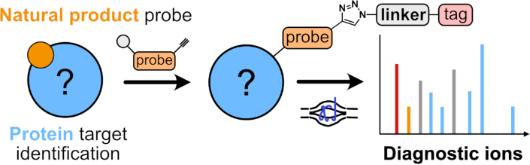
- alkyne probe from the CuAAC reaction mixture or by increasing the concentration of the reducing agent such as tris(2-carboxyethyl)phosphine (TCEP). The reversed chemical proteomics approach in which the azide probe and alkyne tag are used suffers from similar unspecific reactivity of the terminal alkyne
- with free thiols, including the protein cysteines reacting to thioalkyne conjugates [66][67]. This is caused by the relatively high concentration of the alkyne tag which is used to accelerate the reaction. The chemical proteomics workflows can be differentiated based on their read out, which can be
- probe–protein interactions are not detected because of the denaturing conditions of the SDS-PAGE. Alternatively, the fidelity of the probe labeling can be tested by a competition experiment, in which the parent compound lacking a bioorthogonal tag is used at increasing concentration to outcompete the




Stereoselective mechanochemical synthesis of thiomalonate Michael adducts via iminium catalysis by chiral primary amines
Beilstein J. Org. Chem. 2024, 20, 2313–2322, doi:10.3762/bjoc.20.198
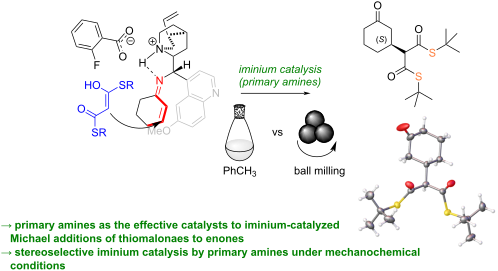
- aim to decrease the time along with the generation of a product with an acceptable yield, we decided to perform the reaction under ball milling conditions reasoning that choice by limiting the solvent, increasing the concentration of both reagents and catalyst accompanying with the efficient mixing
- Michael product. We were sincerely interested in shortening the reaction time. This could be achieved by conducting the reaction under conditions of efficient mixing, increasing substrate concentration without solvents, and utilizing transient but repeatable pressure and temperature increases. These


Catalysing (organo-)catalysis: Trends in the application of machine learning to enantioselective organocatalysis
Beilstein J. Org. Chem. 2024, 20, 2280–2304, doi:10.3762/bjoc.20.196


Cell-free protein synthesis with technical additives – expanding the parameter space of in vitro gene expression
Beilstein J. Org. Chem. 2024, 20, 2242–2253, doi:10.3762/bjoc.20.192
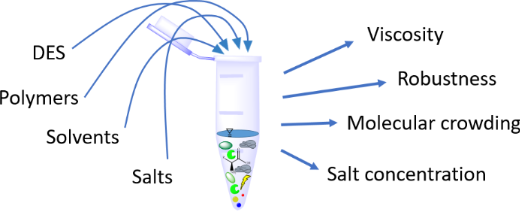
- /ethylene glycol (EG), and choline chloride/glycerol) were chosen as additives to vary the viscosity, ion concentration, amount of macromolecules, and osmolarity in CFPS. The calculated values for the properties of the CFPS system with polymers and DES added at different concentrations are shown in Table 1
- molecular weight of PEG-8000 (8000 g/mol) is below the typical definition of a macromolecule (10,000 g/mol [26]), it is conventionally considered an artificial crowding agent [25] and was included in the calculation of macromolecules. The concentration of inorganic ions in the CFPS system, calculated from
- the magnesium and potassium glutamate concentration, is 140 mM, which is less than half the concentration reported for the cellular environment. The cytoplasmic osmolarity of about 600 mOsm [16] is 50% higher than that calculated for CFPS. Taking into account all defined components, the water content



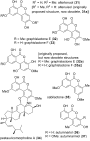
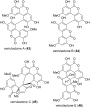
Natural resorcylic lactones derived from alternariol
Beilstein J. Org. Chem. 2024, 20, 2171–2207, doi:10.3762/bjoc.20.187






Factors influencing the performance of organocatalysts immobilised on solid supports: A review
Beilstein J. Org. Chem. 2024, 20, 2129–2142, doi:10.3762/bjoc.20.183
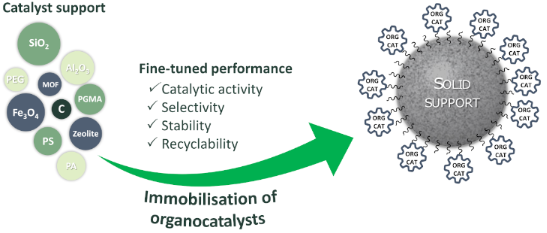
- -condensation method performed under low surfactant concentration conditions [46][47][48][49][50], changing the concentration, molecular size, and hydrophilicity/hydrophobicity of the organoalkoxysilane precursors [51]. Various morphologies of mesoporous silica, including fibre, platelet, rod, and film, can be
- need to diffuse to the active sites on the solid support. Diffusion limitations can decrease the effective concentration of reactants at the catalytic sites, resulting in lower reaction rates compared to the homogeneous catalyst. Thus, optimising reactor design, including appropriate mixing and flow
- . Additionally, the selection of the appropriate solvent is critical. To mitigate diffusion limitation, it is important to ensure appropriate mixing and flow characteristics and adequate concentration of reactants and catalytic units. Flow chemistry can be easily combined with solid-supported organocatalysis


Efficacy of radical reactions of isocyanides with heteroatom radicals in organic synthesis
Beilstein J. Org. Chem. 2024, 20, 2114–2128, doi:10.3762/bjoc.20.182
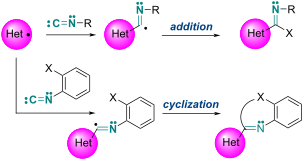
- reaction, pressurization in an autoclave or other pressurization device is required to increase the CO concentration. Isocyanides, on the other hand, have an isoelectronic structure with carbon monoxide and are expected to be not only a promising C1 resource but also an important synthetic reagent for
- photoirradiation. The photoinduced radical addition of the disulfide to aliphatic isocyanides hardly proceeds, whereas the radical addition to aromatic isocyanides proceeds under high concentration conditions using excess amounts of (PhS)2, selectively yielding 1,1-addition product 4 (R = 2,6-xylyl, E = PhS) [28


Cage-like microstructures via sequential Ugi reactions in aqueous emulsions
Beilstein J. Org. Chem. 2024, 20, 2078–2083, doi:10.3762/bjoc.20.179
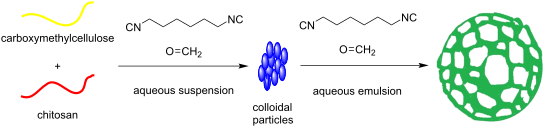
- Pickering emulsions. We also recently encountered this problem when we obtained Pickering emulsions stabilized by cellulose particles with an extremely low concentration, which would not have been enough to form a monolayer at the interface [17]. We assumed that in this case, a cage-like structure was
- pH value. According to atomic force microscopy (AFM) data, the resulting particles had a domain structure and were similar in appearance to raspberries [20]. An interesting feature of the resulting particles was the high efficiency as Pickering emulsifiers: even at a concentration below 0.3 g/L
- , stable emulsions with linseed oil were obtained [17]. Analyzing the results obtained, we came to the conclusion that at a concentration of 0.3 g/L and with an average size of emulsion droplets of about 5 μm, the number of particles was insufficient to completely cover the surface of the droplets. In


Multicomponent syntheses of pyrazoles via (3 + 2)-cyclocondensation and (3 + 2)-cycloaddition key steps
Beilstein J. Org. Chem. 2024, 20, 2024–2077, doi:10.3762/bjoc.20.178




Understanding X-ray-induced isomerisation in photoswitchable surfactant assemblies
Beilstein J. Org. Chem. 2024, 20, 2005–2015, doi:10.3762/bjoc.20.176
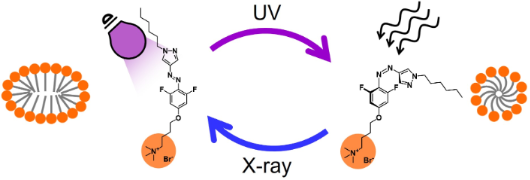
- light and X-ray irradiation on micelles formed from two different PS, containing either an Azo or AAP photoswitch using SAXS with in-situ light irradiation. The effect of X-ray irradiation on the Z isomer is shown to depend on the photoswitch, solvent, concentration and morphology. We use this to create
- structures formed during photoisomerisation of these PS for the first time. Once isomerised to the Z-rich PSS, the effect of X-ray irradiation is studied using time-resolved SAXS collection, where the photoswitch, solvent and concentration are all shown to impact the rate and extent of structural change
- irradiation with SAXS was used to determine the mechanisms for morphology changes in AzoTAB and AAPTAB systems on Z–E isomerisation. A concentration of 50 mM in water was chosen for these experiments, as this is well above the critical micelle concentration (CMC) for both surfactants (CMC in water for (E



Allostreptopyrroles A–E, β-alkylpyrrole derivatives from an actinomycete Allostreptomyces sp. RD068384
Beilstein J. Org. Chem. 2024, 20, 1981–1987, doi:10.3762/bjoc.20.174
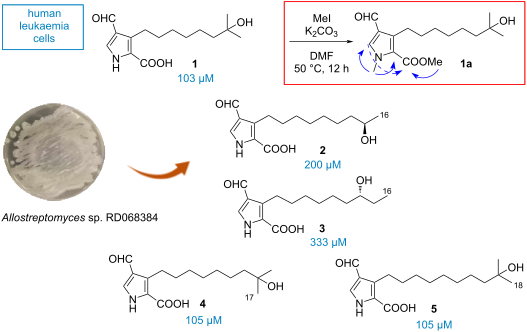
- min), 2 (0.9 mg, tR 12.1 min), 3 (0.8 mg, tR 13.7 min), and 4 (2.3 mg, tR 17.3 min). At time 22 min, the MeCN concentration was raised to 35%, which eluted 5 (1.7 mg) at tR 28.9 min. To obtain higher amounts of compounds, fermentation with 4 L culture and isolation were repeated twice to afford in


Development of a flow photochemical process for a π-Lewis acidic metal-catalyzed cyclization/radical addition sequence: in situ-generated 2-benzopyrylium as photoredox catalyst and reactive intermediate
Beilstein J. Org. Chem. 2024, 20, 1973–1980, doi:10.3762/bjoc.20.173
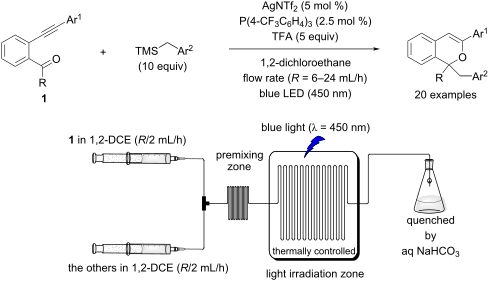
- ). Moreover, the yield of 3a was improved when the concentration of 1a was lowered from 0.1 M to 0.05 M (Table 1, entry 8: 61%). Meanwhile, further reducing the catalyst loading from 5 mol % to 2 mol % resulted in a significant decrease in yield (Table 1, entry 9: 28%). When the reaction was scaled up from


Regioselective alkylation of a versatile indazole: Electrophile scope and mechanistic insights from density functional theory calculations
Beilstein J. Org. Chem. 2024, 20, 1940–1954, doi:10.3762/bjoc.20.170
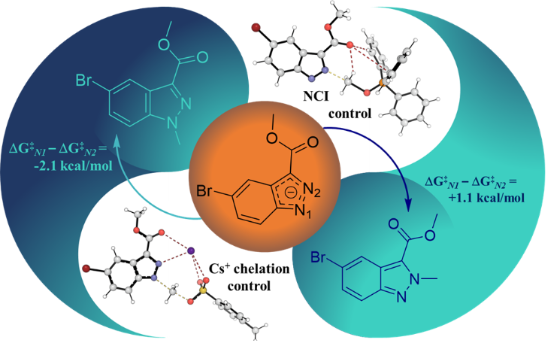
- . The use of chlorobenzene slightly improved the yield to 66%. The reaction in dioxane at 90 °C, entry 6, had a 96% yield. This was a surprising outcome as Keeting observed no reaction in dioxane at rt, suggesting the concentration of Cs2CO3 is significantly increased at this temperature. With the


Negishi-coupling-enabled synthesis of α-heteroaryl-α-amino acid building blocks for DNA-encoded chemical library applications
Beilstein J. Org. Chem. 2024, 20, 1922–1932, doi:10.3762/bjoc.20.168
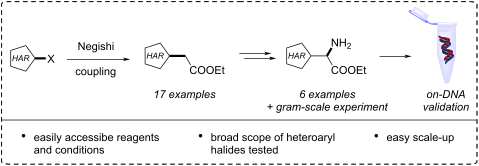
- )acetate at the bottom of the vial after a few hours of storage in the fridge. The solid can be easily re-dissolved by gentle heating, and without affecting the product concentration and integrity. After a brief screening, Pd(dba)2 and X-Phos (in a 1:2 ratio) were selected as the catalyst system for the


The Groebke–Blackburn–Bienaymé reaction in its maturity: innovation and improvements since its 21st birthday (2019–2023)
Beilstein J. Org. Chem. 2024, 20, 1839–1879, doi:10.3762/bjoc.20.162
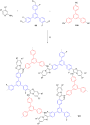
- . 1.3 Compartmented and enzyme-mediated reactions Compartmentation of reaction media has already found many applications in chemistry. Amphiphilic molecules can associate in water to nanometer-sized micelles, above a certain critical concentration. Such micelles are characterized by a lipophilic core
- interactions with the target were synthetized. After optimization of the reaction medium and of the concentration of reactants, and after setting up an analytical method relying on UPLC with tandem quadrupole detector, the on-target KTGS experiments were conducted. In a first set of experiments, a single






Discovery of antimicrobial peptides clostrisin and cellulosin from Clostridium: insights into their structures, co-localized biosynthetic gene clusters, and antibiotic activity
Beilstein J. Org. Chem. 2024, 20, 1800–1816, doi:10.3762/bjoc.20.159

- various levels to ensure the production of high-quality peptides [19]. As an example, subtilin production is autoregulated based on the extracellular concentration of the molecule. At the same time, subtilin expression is also controlled by the spaRK operon and the sigmaH (σH) global regulator, which
- cellulosin samples displayed robust bacteriostatic activity at the highest estimated concentration of 5.6 µg/mL and 4.8 µg/mL, respectively, compared to the bacteria grown in LB media (control), and lower but statistically significant effects at lower concentrations (Figure 5). The immature peptides CloA1
- precursor peptide and CloA2 precursor peptide showed no discernible effect at the same concentration. These findings highlight a change in the activity after the leader peptide's proteolysis and the presence of mature lanthipeptides (Figure 5). For clostrisin, as it has no post-translational modifications




Synthesis of polycyclic aromatic quinones by continuous flow electrochemical oxidation: anodic methoxylation of polycyclic aromatic phenols (PAPs)
Beilstein J. Org. Chem. 2024, 20, 1746–1757, doi:10.3762/bjoc.20.153
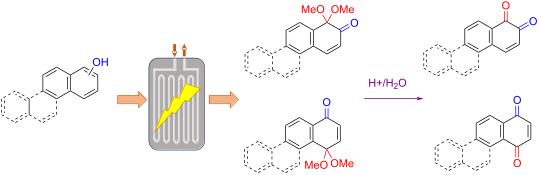
- reactant concentration [46]. The reaction mixture was kept in a flask under stirring and pumped through the Flux cell and back to the flask. The flow rate was increased to 300 μL/min to faster flush out the evolved hydrogen gas from the cell. The Flux cell was operated in the galvanostatic mode at 9 mA




A fiber-optic spectroscopic setup for isomerization quantum yield determination
Beilstein J. Org. Chem. 2024, 20, 1684–1692, doi:10.3762/bjoc.20.150

- conclusion holds for any photoswitch where only one isomer can be isolated successfully. During the measurement and at the PSS, the relative concentrations of the two isomers are unknown. The total absorbance (Absobs) at a given total concentration (c) of the sample is a linear combination of the absorbance
- scaled subtraction [14]. Another powerful method to obtain the spectrum of the second isomer is global and target analysis, where time-resolved spectra can be analyzed to find the number of spectral components and the evolution of their concentration over time [36][37]. Additional information, such as a
- kinetic model describing the components and the non-negativity constraint on the absorbance, can help to guide the decomposition of the data into chemically meaningful concentration traces and species-associated spectra (SAS) [38]. Global and target analysis is one of the methods employed in recent


Oxidation of benzylic alcohols to carbonyls using N-heterocyclic stabilized λ3-iodanes
Beilstein J. Org. Chem. 2024, 20, 1677–1683, doi:10.3762/bjoc.20.149
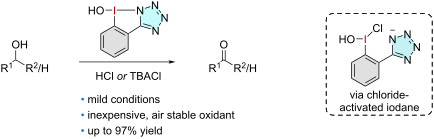
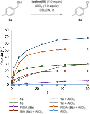
- proposed in the initial experiments is not a Lewis acid activator but just a chloride source. Further optimization studies improved the yield to 78% of 4b using a concentration of 0.20 M of the alcohol and 1.4 equiv of 1a (see Supporting Information File 1). Finally, all NHIs were tested under the




Methyltransferases from RiPP pathways: shaping the landscape of natural product chemistry
Beilstein J. Org. Chem. 2024, 20, 1652–1670, doi:10.3762/bjoc.20.147
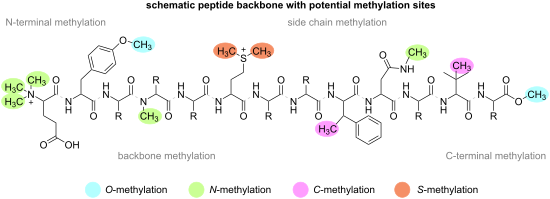
- -terminally methylated nisin retains its antibiotic activity, with MIC (minimal inhibitory concentration) values of 1 µM and 4 µM against Lactococcus lactis and Bacillus subtilis, respectively. Haloduracin is a two-component lanthibiotic that is methylated at both cyclised N-termini by CypM. These experiments