


Search results
Search for "intermediates" in Full Text gives 1507 result(s) in Beilstein Journal of Organic Chemistry. Showing first 200.
Hypervalent iodine-mediated intramolecular alkene halocyclisation
Beilstein J. Org. Chem. 2024, 20, 3113–3133, doi:10.3762/bjoc.20.258
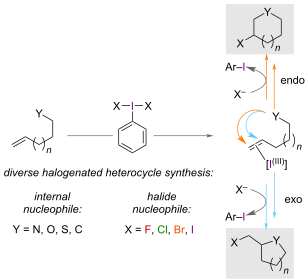
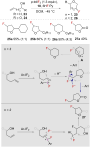
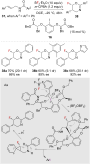
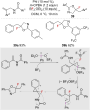
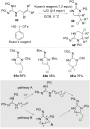
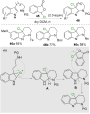
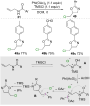
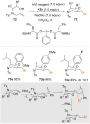
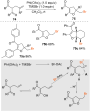
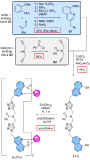
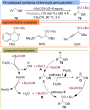
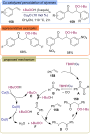
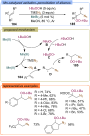
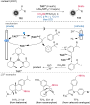
- pyrrolidine intermediates A can undergo further transformations (Scheme 10), depending on their structure and the iodane reagent being used. For example, higher yields of 3-fluoropiperidine products 6 were observed when using cyclic iodane reagents 21 and 22 (Scheme 10), which was suggested to be because a



















Advances in the use of metal-free tetrapyrrolic macrocycles as catalysts
Beilstein J. Org. Chem. 2024, 20, 3085–3112, doi:10.3762/bjoc.20.257
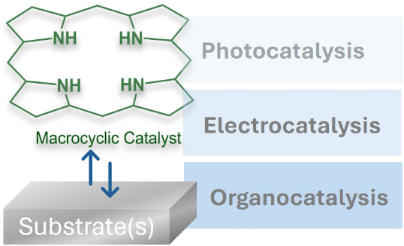
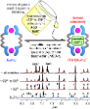
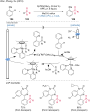
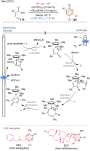
- reversible formation of covalent enamine intermediates, it also leveraged the supramolecular behavior of the porphyrinic component. In acidic aqueous media, the porphyrin macrocycle formed supramolecular H- and J-aggregates stabilized by hydrophobic interactions between the π-systems of the aromatic regions
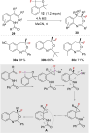
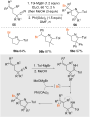
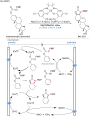
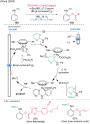
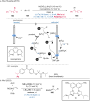
- porphyrin radical anion. Ultimately, protonation of intermediate E led to the final product. Formation of intermediates, such as enamine A and cation radical B, was confirmed using techniques like ESIMS, 1H NMR, and EPR, Stern–Volmer quenching experiments, respectively. All these mechanistic studies


Synthesis of the 1,5-disubstituted tetrazole-methanesulfonylindole hybrid system via high-order multicomponent reaction
Beilstein J. Org. Chem. 2024, 20, 3077–3084, doi:10.3762/bjoc.20.256
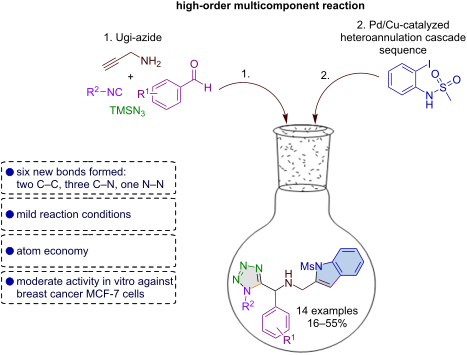
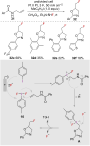
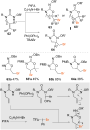
- of the 1,5-disubstituted tetrazole-alkyne intermediates was unnecessary; we previously reported this heterocyclic system [24][25][26]. The heteroannulation reaction was then investigated under the most common conditions, utilizing a catalytic system comprising PdCl2(PPh3)2, Et3N and CuI [23][28



Enantioselective regiospecific addition of propargyltrichlorosilane to aldehydes catalyzed by biisoquinoline N,N’-dioxide
Beilstein J. Org. Chem. 2024, 20, 3069–3076, doi:10.3762/bjoc.20.255
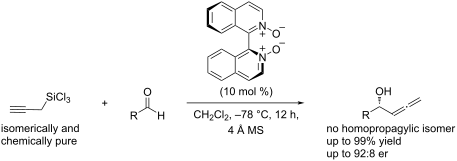
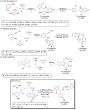
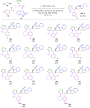
- enantioenriched form [11][12]. However, such metal/metalloid reagents and the corresponding metal catalyst-bound intermediates often equilibrate between possible regioisomeric forms and can undergo both, SE2 and SE2’ addition reactions, resulting in a mixture of homopropargylic alcohols and α-allenic alcohols [14
- ][15][16][17][18][19], the separation of which is by no means trivial [20] (Scheme 1). Nonetheless, substituents at the carbon atom indicated by γ (R2) of these reagents have been shown to bias the metallotropic rearrangement and/or the kinetic reactivity of the competing regioisomeric intermediates
- exergonic from Rprop. These results show that the presence of N,N-diisopropylethylamine as base makes this process more energetically feasible by substantially stabilizing the transition states and intermediates in the pathway. These results are strongly supported by the experimental data. In a previous


Chemical structure metagenomics of microbial natural products: surveying nonribosomal peptides and beyond
Beilstein J. Org. Chem. 2024, 20, 3050–3060, doi:10.3762/bjoc.20.253

- the glycopeptide antibiotic family [62][63]. Their aromatic rings undergo oxidative coupling to form biaryl moieties that restrict atropisomerism; the resulting rigid structure is key to their high affinity binding to peptidoglycan intermediates [64][65]. Glycopeptide antibiotics include vancomycin


Tailored charge-neutral self-assembled L2Zn2 container for taming oxalate
Beilstein J. Org. Chem. 2024, 20, 3007–3015, doi:10.3762/bjoc.20.250
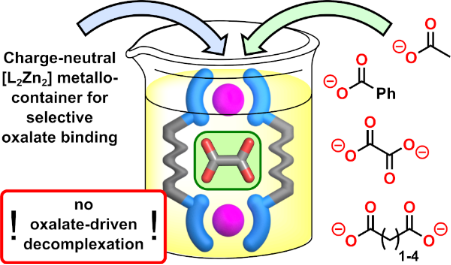
- ; metallocontainer; oxalate; Introduction Dicarboxylic acids and their corresponding anions are essential intermediates in the biosynthesis of proteins and important biological metabolites [1][2]. As a result, the development of receptors for this class of compounds is of high interest [3][4][5]. Oxalate, the




Advances in radical peroxidation with hydroperoxides
Beilstein J. Org. Chem. 2024, 20, 2959–3006, doi:10.3762/bjoc.20.249
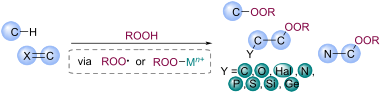
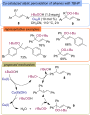
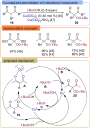
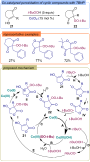
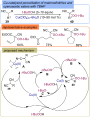
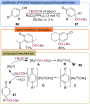
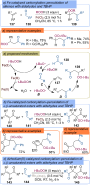
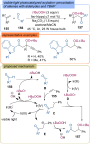
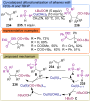
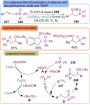
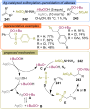
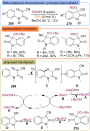
- involving radical intermediates from hydroperoxides under redox conditions (Scheme 3). The reactivity of O-centered radicals is less predictable and more diverse depending on radical structure and substrate pattern than the chemistry of C-centered radicals [29][30]. Generally, peroxy radicals have a
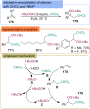
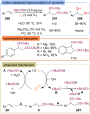
- partners in the difunctionalization of alkenes 169 and 172 with hydroperoxides, respectively (Scheme 53a and Scheme 53b). According to the authors [121], the key intermediates are the Co(III)OO-t-Bu and the CF3 radicals, which are generated from Co(OAc)2 and CF3SO2Na in the presence of TBHP. In the case of
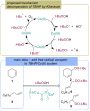
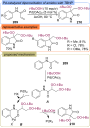
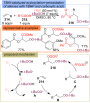
- intermediates (tert-butylperoxy radical or Mn(III)(OAc)2OO-t-Bu) can occur via oxidation of TBHP with Mn(OAc)3 or via ligand exchange between acetate and TBHP. The Mn(OAc)3 is regenerated by oxidation of Mn(OAc)2 with TBHP. The tert-butylperoxy radical reacts with styrene 194 to give the stabilized benzyl































Recent advances in transition-metal-free arylation reactions involving hypervalent iodine salts
Beilstein J. Org. Chem. 2024, 20, 2891–2920, doi:10.3762/bjoc.20.243

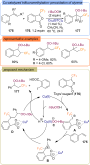
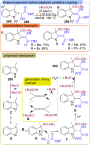
- presence of fluorine and a newly installed electron-deficient aryl group on α-carbon which increases electrophilicity of the α-carbon center [55]. The proposed reaction mechanism (Scheme 2) begins with the formation of one of two potential iodine intermediates, labeled as I or II. These intermediates arise
- upon binding of the enolate molecule to iodine either through a carbon–iodine or an oxygen–iodine bond. Both intermediates, I and II, are in rapid equilibrium with each other and further undergo two different types of reactions: [1,2]-ligand coupling and [2,3]-rearrangement (Scheme 2). Either of these
- base-mediated deprotonation of substrates 86 produces the corresponding ester enolate. This enolate undergoes a retro-Michael reaction, generating sulfenate anion A. The sulfenate anion A then nucleophilically attacks the diaryliodonium salts 16, forming hypervalent iodine intermediates B. Finally




Synthesis of tricarbonylated propargylamine and conversion to 2,5-disubstituted oxazole-4-carboxylates
Beilstein J. Org. Chem. 2024, 20, 2827–2833, doi:10.3762/bjoc.20.238

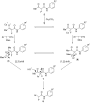
- biologically active compounds [27][28][29][30][31] and their synthetic intermediates [32][33][34][35][36]. Thus, this method, which enables modification at the 2- and 5-positions of oxazole-4-carboxylates, is a valuable tool for the study of these compounds. Experimental General All reagents except for DEMO


Synthesis and antimycotic activity of new derivatives of imidazo[1,2-a]pyrimidines
Beilstein J. Org. Chem. 2024, 20, 2806–2817, doi:10.3762/bjoc.20.236
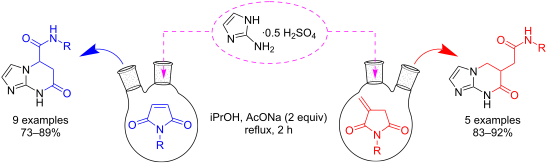
- conversion of the reagents was not achieved until after 12 h of boiling, and the yield of the product varied in the range of 25–35% (entries 1 and 2, Table 1). In the cases of DMF and MeCN, the formation of complex, inseparable mixtures of numerous intermediates and products of their subsequent
- polyfunctional precursors 1, 2, and 3, two pathways are theoretically possible (Scheme 2 and Scheme 3). The first one involves the N-nucleophilic Michael addition to the activated multiple bond of the imide, leading to the formation of linear intermediates 6 or 8 (pathways A1 and B1) at the expense of the endo
- -nitrogen atom. The second route involves the participation of an amino group which allows the formation of adducts 7 and 9 (routes A2 and B2). The intermediates formed then undergo subsequent tandem recyclization of succinimide/citraconimide fragments at the expense of one of the carbonyl groups and the


Mechanochemical difluoromethylations of ketones
Beilstein J. Org. Chem. 2024, 20, 2799–2805, doi:10.3762/bjoc.20.235
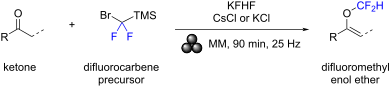
- through the formation of novel reactive intermediates [15][16][17][18]. Fluorine-containing functional groups are essential structural motifs in the development of new bioactive compounds and functional materials. Compared to their non-fluorinated analogs, the presence of fluorine atoms in molecular


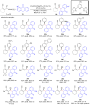
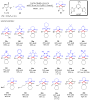
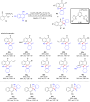
Copper-catalyzed yne-allylic substitutions: concept and recent developments
Beilstein J. Org. Chem. 2024, 20, 2739–2775, doi:10.3762/bjoc.20.232
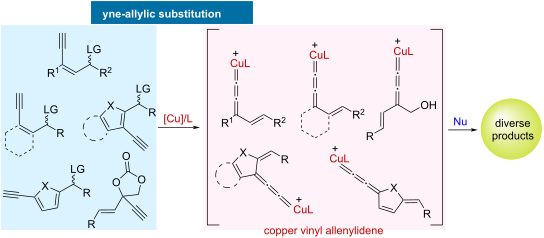
- expand the scope of transition metal-catalyzed substitution reactions. Since its discovery in 2022, copper-catalyzed yne-allylic substitution has undergone rapid development and significant progress has been made using the key copper vinyl allenylidene intermediates. This review summarizes the








Synthesis of spiroindolenines through a one-pot multistep process mediated by visible light
Beilstein J. Org. Chem. 2024, 20, 2722–2731, doi:10.3762/bjoc.20.230
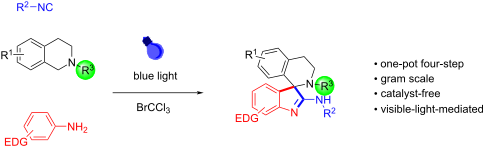
- materials (Scheme 1d). The synthetic procedure is achieved using blue light irradiation and bromotrichloromethane (BrCCl3), as a one-pot procedure, minimizing chemical wastes, avoiding purification of intermediates, and simplifying practical aspects. Results and Discussion We have recently published the one
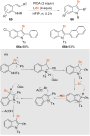
- argon atmosphere to prevent the interaction of oxygen or reactive oxygen intermediates, which are not always compatible with the substrates, as well as the key intermediates. Moreover, BrCCl3 and its reduced form (chloroform) can be easily removed from the reaction mixture thanks to their low boiling
- and the intermediates involved, the relationship between the product conversions and the reaction time was investigated in the reaction between N-Ph-THIQ, 3,5-dimethoxyaniline and t-BuNC in the presence of BrCCl3 under light irradiation (Figure 2). This time profile shows that, as soon as the N-Ph





5th International Symposium on Synthesis and Catalysis (ISySyCat2023)
Beilstein J. Org. Chem. 2024, 20, 2704–2707, doi:10.3762/bjoc.20.227
- imidazolium ring formation. The resulting carbene was metalated at the C2 position with Au(I), Cu(I), and Ir(I), obtaining an L-shaped NHC ligand scaffold. Līpiņš et al. introduced a new method for synthesizing 4-azido-6,7-dimethoxy-2-alkyl/arylsulfonylquinazolines, which are key intermediates in the

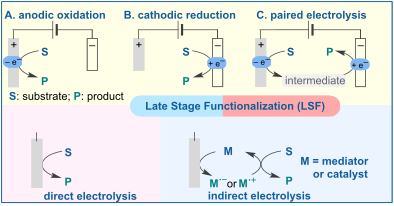
A review of recent advances in electrochemical and photoelectrochemical late-stage functionalization classified by anodic oxidation, cathodic reduction, and paired electrolysis
Beilstein J. Org. Chem. 2024, 20, 2500–2566, doi:10.3762/bjoc.20.214
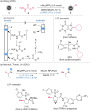
- product (Scheme 15). The synthesis of aziridines can be achieved via the formation of nitrenes in either a metal-catalyzed or metal-free fashion. In this context, Wickens and colleagues presented a remarkable dication pool strategy for accessing N-alkylaziridines via metastable dicationic intermediates
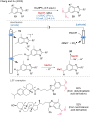
- cross-coupling between these two intermediates, followed by intramolecular cyclization and subsequent deprotonation results in the desired product (Scheme 20). Furthermore, Budny and coworkers demonstrated that (±)-triticonazole and related compounds could be cyclized and alkoxylated to the






















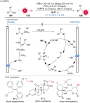
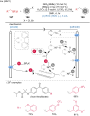
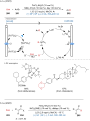


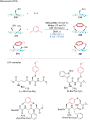


HFIP as a versatile solvent in resorcin[n]arene synthesis
Beilstein J. Org. Chem. 2024, 20, 2469–2475, doi:10.3762/bjoc.20.211
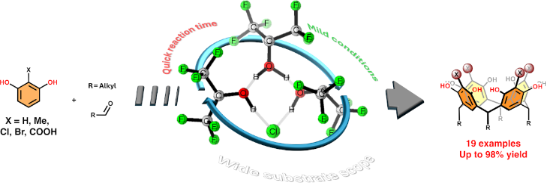
- limitation, we analyzed the mechanism underlying the formation of resorcin[n]arenes. The first step of the cyclization reaction is a hydroxyalkylation involving various cationic intermediates [69]. Hence, we hypothesized that any factor enhancing the rate of the first step by stabilizing carbocations will


Photoredox-catalyzed intramolecular nucleophilic amidation of alkenes with β-lactams
Beilstein J. Org. Chem. 2024, 20, 2461–2468, doi:10.3762/bjoc.20.210
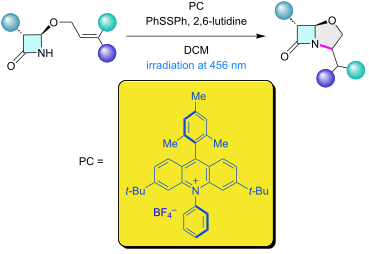
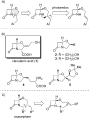
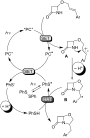
- -centered radicals, such as aminyl, amidyl, or iminyl radicals, N-heterocyclic amidyl radicals were largely underinvestigated despite their importance as intermediates or relevant N-heterocyclic products in medicinal chemistry [7][8][9][10]. Recently, photoredox catalysis has emerged as a novel area of
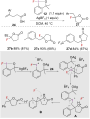
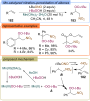
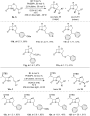
- thiophenolate. Conclusion To conclude, we have employed a photoredox methodology to access clavam and pyrrolyloxazole intermediates, showing the possibility of using the nucleophilic nitrogen atom of β-lactams under photoredox conditions. The acridinium catalyst IV was able to oxidize the C=C double bond




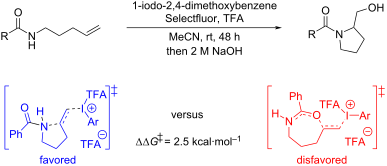
Hypervalent iodine-mediated cyclization of bishomoallylamides to prolinols
Beilstein J. Org. Chem. 2024, 20, 2455–2460, doi:10.3762/bjoc.20.209
- Gauntlett for assistance with synthesis of some intermediates. Funding This study was supported by an EPSRC Doctoral Training Partnership (grant number EP/T51813X/1) held at the University of Huddersfield (K.K.), a University of Huddersfield funded Ph.D. studentship (S.B.), and by the Université de Pau et


Synthesis and conformational analysis of pyran inter-halide analogues of ᴅ-talose
Beilstein J. Org. Chem. 2024, 20, 2442–2454, doi:10.3762/bjoc.20.208
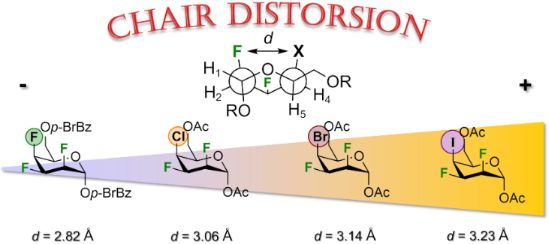
- approach from levoglucosan 1 (Figure 1a) [23]. Allopyranose inter-halides 4 incorporating the 2,3-cis, 3,4-cis relationship for the halogens were prepared via intermediates 2 and 3 from levoglucosan (1). Compounds 4 were the starting point to complex 2,3,4-trihalohexanetriols and 2,3,4,5
- 1,6-anhydro-2,3-dideoxy-2,3-difluoro-β-ᴅ-mannopyranose (5) readily accessible form levoglucosan (1, Scheme 1) [24]. Activation of the C4 hydroxy group as triflate and direct treatment with a nucleophilic halogen furnished intermediates 8–11. The latter compounds proved to be difficult to purify


Efficient one-step synthesis of diarylacetic acids by electrochemical direct carboxylation of diarylmethanol compounds in DMSO
Beilstein J. Org. Chem. 2024, 20, 2392–2400, doi:10.3762/bjoc.20.203
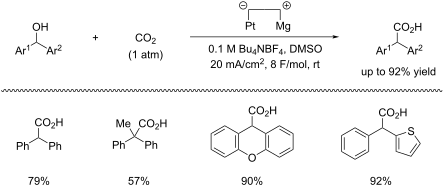
- intermediates at the anode. The produced acetate ion D and a magnesium ion form the salt E, which upon acid treatment during workup gives a diphenylacetic acid 2. The effects of DMSO as solvent are not clear at present, and one reasonable and acceptable aspect might be the solubility of the salt of intermediate


Asymmetric organocatalytic synthesis of chiral homoallylic amines
Beilstein J. Org. Chem. 2024, 20, 2349–2377, doi:10.3762/bjoc.20.201
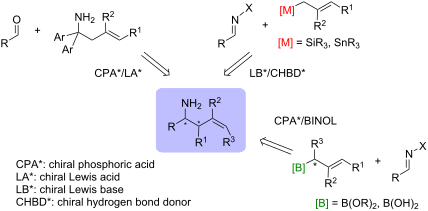
- process and the rich toolkit of advanced organic synthesis [5]. Homoallylic amines occupy a significant niche in alkaloid synthesis as they frequently appear as key intermediates in syntheses of the various nitrogen-containing natural products [6][7][8][9][10][11][12][13][14]. Additionally, they can be
- , that the 2-aminophenol functionality in the substrates is a prerequisite for attaining high enantioselectivity in the allylation. Interestingly, the aldimines synthesised from 2-hydroxy-4-methylaniline produced inferior yields. While the N-aryl homoallylic amines 66 can be useful intermediates in total
- release catalyst 78 completing the catalytic cycle (Scheme 17). In a mechanistic probe, the proposed reaction intermediates were used as starting electrophiles under the standard reaction conditions (Scheme 18). In all three cases, identical outcomes were achieved, supporting the proposed catalytic cycle






Hydrogen-bond activation enables aziridination of unactivated olefins with simple iminoiodinanes
Beilstein J. Org. Chem. 2024, 20, 2305–2312, doi:10.3762/bjoc.20.197
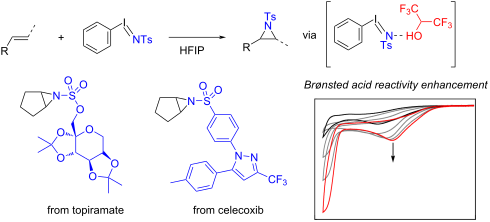
- challenging iminoiodinanes). In situ preparation of the iminoiodinane intermediates is possible, and for those reagents that undergo facile decomposition, aziridination is more efficient using these conditions (yields for in situ-generated iminoiodinanes are in parentheses in Scheme 3, with N-o-methyl (6g


Selective hydrolysis of α-oxo ketene N,S-acetals in water: switchable aqueous synthesis of β-keto thioesters and β-keto amides
Beilstein J. Org. Chem. 2024, 20, 2225–2233, doi:10.3762/bjoc.20.190

- structural characters and multiple good reactivities [1][2][3][4]. Both β-keto thioesters [5][6][7][8][9][10][11][12] and β-keto amides [13][14][15][16][17][18][19][20][21][22] have served as useful synthetic intermediates for the synthesis of a range of potent natural products. Therefore, much effort has

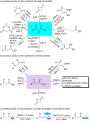


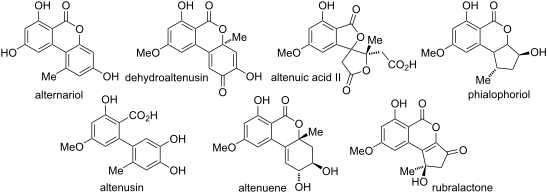
Natural resorcylic lactones derived from alternariol
Beilstein J. Org. Chem. 2024, 20, 2171–2207, doi:10.3762/bjoc.20.187
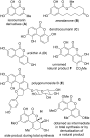
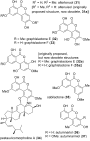
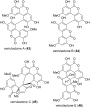
- intermediates [34] (e.g., G) or side products [35] (e.g., H) during their total synthesis, are neither systematically covered in this review. A number of wrongly assigned structures have been proposed over the decades (Figure 3). These are mentioned here in summary, where further details will be given in the
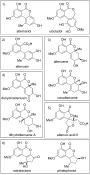
- fecal microbiota [107]. Alternariol methyl ethers: Methyl ethers of alternariol have been obtained during chemical structure elucidation and as intermediates in total syntheses of natural products, but some of these have been furthermore isolated as natural products (Figure 5). First to mention is 9-O






Efficacy of radical reactions of isocyanides with heteroatom radicals in organic synthesis
Beilstein J. Org. Chem. 2024, 20, 2114–2128, doi:10.3762/bjoc.20.182
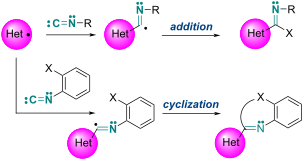
- -Addition of molecular bromine to phenyl isocyanide was reported by E. Kühle et al. to afford the corresponding 1,1-adduct (PhN=CBr2) [23]. Since dichloro compounds (RN=CCl2) [24] are the imino derivatives of highly toxic phosgene (O=CCl2), reactions using them as key intermediates are not safe synthetic
- (R = EWG-C6H4, E = PhS and PhTe) in moderate to high yields [30]. Very few examples of intermolecular cascade reactions with imidoyl radicals as key intermediates have been reported. The intermolecular cascade reaction of diselenide, electron-deficient acetylene, and isocyanide under photoirradiation
- isocyanides forms boron-substituted imidoyl radical intermediates and rapid β-scission then causes elimination of the substituents on the nitrogen (Scheme 12) [53]. Radical cyclization via formation of imidoyl radical species In the former chapter, we discussed 1,1-addition reactions of typical element





