


Search results
Search for "leaving group" in Full Text gives 265 result(s) in Beilstein Journal of Organic Chemistry. Showing first 200.
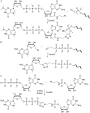
Enzyme-free genetic copying of DNA and RNA sequences
Beilstein J. Org. Chem. 2018, 14, 603–617, doi:10.3762/bjoc.14.47
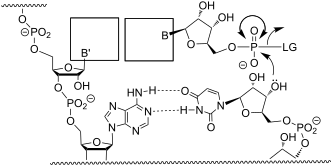
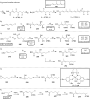
- terminal hydroxy group of the primer has to attack the activated 5'-phosphate of the primer, most likely producing a pentavalent intermediate. Unless the leaving group finds itself in the proper apical position of the intermediate, this is followed by pseudorotation and then the release of the leaving
- the methyl group at the 5-position of the pyrimidine ring, shielded the leaving group-bearing phosphate from incoming water from some angles of attack. For OAt esters of ribonucleotides, we also measured the rates of hydrolysis at 0 °C and −20 °C, and the detailed data can be found in Supplementary
- neutral pH, i.e., conditions favoring longevity for this type of activated monomer, which requires protonation of the imidazole ring to be turned it into a good leaving group. Binding equilibria As mentioned above, primer extension involves the binding of the incoming nucleotide to the primer–template


Synthetic and semi-synthetic approaches to unprotected N-glycan oxazolines
Beilstein J. Org. Chem. 2018, 14, 416–429, doi:10.3762/bjoc.14.30
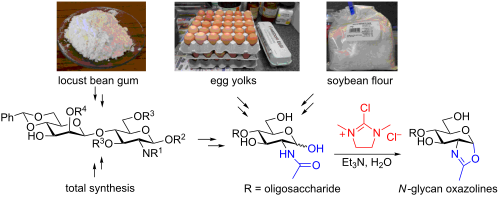
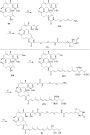
- protected (typically peracetylated) GlcNAc or other 2-acetamido sugar [37][38][39][40]. Oxazoline formation is achieved by activation of the leaving group at the anomeric centre and neighbouring group participation by the 2-acetamide. Unfortunately application of these reaction conditions to oligosaccharide




Fluorescent nucleobase analogues for base–base FRET in nucleic acids: synthesis, photophysics and applications
Beilstein J. Org. Chem. 2018, 14, 114–129, doi:10.3762/bjoc.14.7
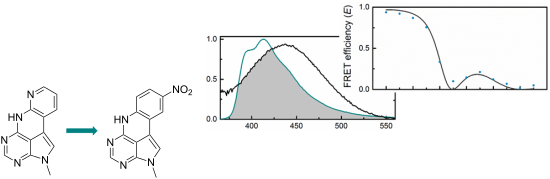
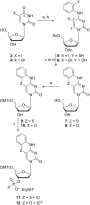
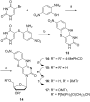
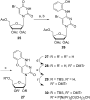
- -iodoaniline 32 in 68% yield after isolation [52]. The cyclization was performed via nucleophilic aromatic substitution with DBU and DABCO. Presumably DABCO activates the chlorine and modifies it into a better leaving group allowing the sterically hindered base DBU to abstract a proton from the protected






Stereochemical outcomes of C–F activation reactions of benzyl fluoride
Beilstein J. Org. Chem. 2018, 14, 106–113, doi:10.3762/bjoc.14.6
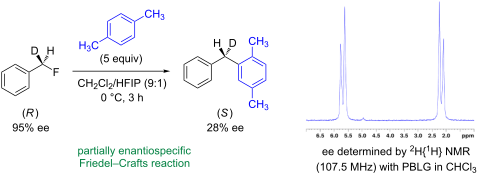
- years, there has been an increasing interest in C–F bond activation [2], with a view to using organic bound fluoride as a leaving group in substitution reactions that typically require more activated leaving groups. Such an approach could circumvent the requirement for protecting groups in multistep
- , benzylic substitutions would be expected to display a significant level of SN1 character. However, given the particularly poor properties of fluoride as a leaving group, developing a better understanding of the dissociative nature of these transformations remains of considerable interest. A direct


Synthetic mRNA capping
Beilstein J. Org. Chem. 2017, 13, 2819–2832, doi:10.3762/bjoc.13.274
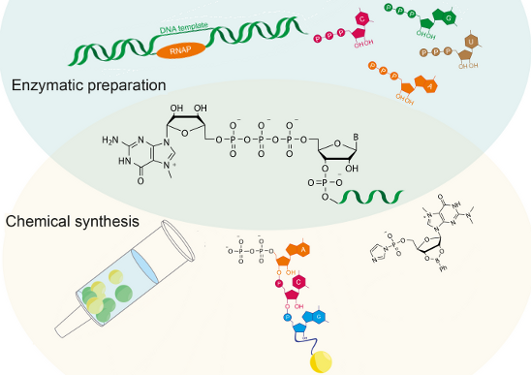
- strategies have been reported which mostly rely on the same principle: One of the two nucleotides (typically the monophosphorylated nucleotide) is equipped with a good leaving group while the other one acts as a nucleophile. Different leaving groups have been exploited for the synthesis of cap analogues



CF3SO2X (X = Na, Cl) as reagents for trifluoromethylation, trifluoromethylsulfenyl-, -sulfinyl- and -sulfonylation and chlorination. Part 2: Use of CF3SO2Cl
Beilstein J. Org. Chem. 2017, 13, 2800–2818, doi:10.3762/bjoc.13.273
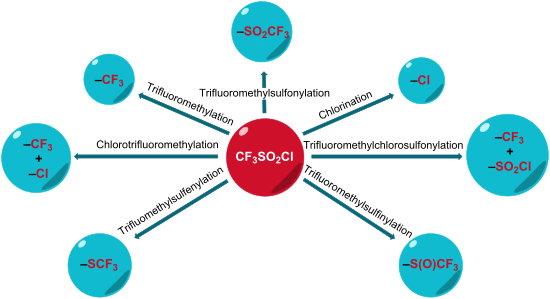
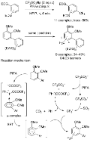
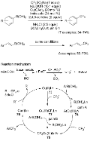
- , CF3SO2Cl reacts with oxygen nucleophiles to generate triflate derivatives as highly electron-withdrawing substituent in order to act in nucleophilic substitutions and metal-catalysed coupling reactions as an excellent leaving group [2]. The reaction of CF3SO2Cl with nitrogen nucleophiles provides

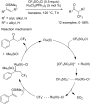

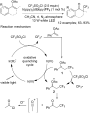


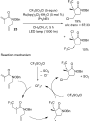


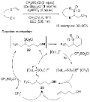


CF3SO2X (X = Na, Cl) as reagents for trifluoromethylation, trifluoromethylsulfenyl-, -sulfinyl- and -sulfonylation. Part 1: Use of CF3SO2Na
Beilstein J. Org. Chem. 2017, 13, 2764–2799, doi:10.3762/bjoc.13.272
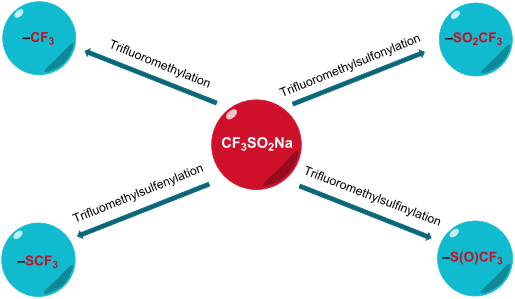
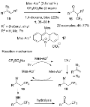
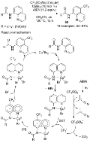
- with a catalytic amount of potassium persulfate to activate CF3SO2Na (Scheme 7) [26]. The heteroatom must be a good leaving group or part of it (X = Br, Cl, NHCOMe, N3, OP(O)(OEt)2). A mechanistic investigation demonstrated the role of oxygen: 93% isotopic purity of the ketone product was obtained when



















Reagent-controlled regiodivergent intermolecular cyclization of 2-aminobenzothiazoles with β-ketoesters and β-ketoamides
Beilstein J. Org. Chem. 2017, 13, 2739–2750, doi:10.3762/bjoc.13.270
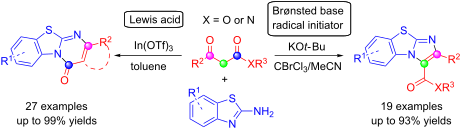
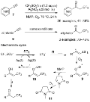
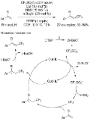
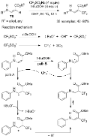
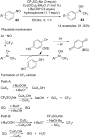
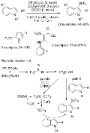
- utilized as a leaving group during the nucleophilic attack by the corresponding alcohol. A series of control experiments were conducted to gain insights into the mechanism of the two contrasting reactions. Firstly, two separate coupling reactions between 2-aminobenzothiazole (1a) and methyl acetoacetate


Fluorination of some highly functionalized cycloalkanes: chemoselectivity and substrate dependence
Beilstein J. Org. Chem. 2017, 13, 2364–2371, doi:10.3762/bjoc.13.233
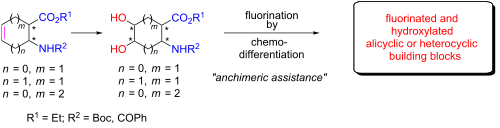
- 2D NMR and X-ray data fluorohydrine derivative (±)-5 through chemodifferentiation in a moderate yield (Scheme 2, Figure 1). This result indicated that in the case of compound (±)-4, the C-4 hydroxy group is transformed into a leaving group on interaction with Deoxofluor, followed by a fluoride attack
- of the alcoholic group at C-4 in (±)-8 into a leaving group, an intramolecular cyclization takes place to afford oxazine (±)-9. Subsequently, this oxazine, in the presence of an excess Deoxofluor gives fluorinated derivative (±)-10. Finally, in the presence of fluoride as base, deprotonation (T9
- located in the γ-position through a β to γ flip (Scheme 7). The formation of isoxazolines (±)-15 and (±)-16 in the presence of 1 equiv of Deoxofluor involves rather simple reaction steps as only one of the hydroxy groups is transformed into a leaving group in each case (T13 and T14, respectively). In


Homologated amino acids with three vicinal fluorines positioned along the backbone: development of a stereoselective synthesis
Beilstein J. Org. Chem. 2017, 13, 2316–2325, doi:10.3762/bjoc.13.228

- not possible to isolate any of the desired product 13. It is possible that varying the reaction solvent might alter the reactivity profile, but this was not investigated in this study. We did explore a triflate leaving group in this reaction (not shown), but this gave a complex mixture of products


Phosphonic acid: preparation and applications
Beilstein J. Org. Chem. 2017, 13, 2186–2213, doi:10.3762/bjoc.13.219
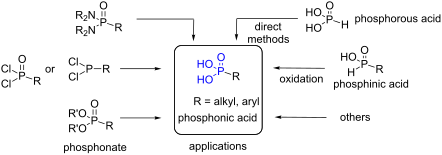
- step. As suggested in the initial works of McKenna, the mechanism occurs by an oxophilic substitution on the silicon atom whereas bromide acts as a leaving group to produce the intermediate I (Figure 14). This intermediate is then dealkylated following a similar path than that occurring with the


Preactivation-based chemoselective glycosylations: A powerful strategy for oligosaccharide assembly
Beilstein J. Org. Chem. 2017, 13, 2094–2114, doi:10.3762/bjoc.13.207
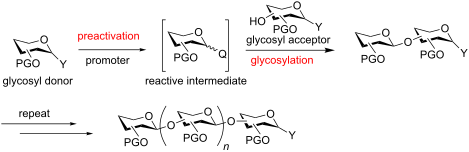
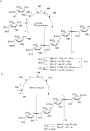
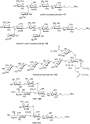
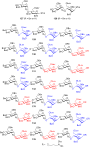
- with the same aglycon leaving group can be used enabling an iterative glycosylation, simplifying the overall synthetic design. For a preactivation based glycosylation reaction to be successful the intermediate formed upon preactivation must be stable prior to the addition of the acceptor and yet







Intramolecular glycosylation
Beilstein J. Org. Chem. 2017, 13, 2028–2048, doi:10.3762/bjoc.13.201
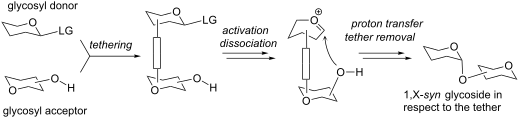
- for elaborate protecting and leaving group manipulations, functionalization, tedious purification, and sophisticated characterization. Achieving high stereocontrol in glycosylation reactions is arguably the major hurdle that chemists experience. This review article overviews methods for intramolecular
- concepts have been invented: a “molecular clamp” approach, intramolecular aglycone delivery (IAD), and leaving group-based methods (approaches A–C, Figure 1). This review will discuss recent developments in the field of intramolecular glycosylations with the main emphasis on the developments of the past
- place away from the reactive centers. These attachment strategies clearly distinguish the molecular clamp method from other intramolecular concepts wherein the attachment involves one of the reactive sites, acceptor hydroxy group in IAD or the leaving group of the donor. “Molecular clamping” was


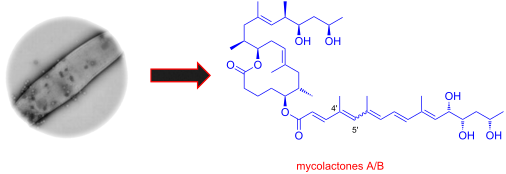
The chemistry and biology of mycolactones
Beilstein J. Org. Chem. 2017, 13, 1596–1660, doi:10.3762/bjoc.13.159









1-Imidoalkylphosphonium salts with modulated Cα–P+ bond strength: synthesis and application as new active α-imidoalkylating agents
Beilstein J. Org. Chem. 2017, 13, 1446–1455, doi:10.3762/bjoc.13.142
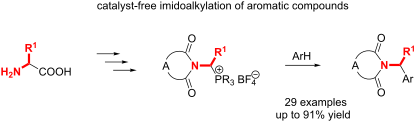
- products [3][4][5][6][7][8][9][10][11][12]. Most of the α-amidoalkylating reagents possess the structure of α-functionalized N-alkylamides 1, where Z = OH, OR, OCOR, Cl, Br, I, NHCOR, SO2Ar, 1-benzotriazolyl or PPh3+ X− and acts as a nucleofugal leaving group (Scheme 1) [3][8][9][10][13][14][15][16][17][18


Strategies toward protecting group-free glycosylation through selective activation of the anomeric center
Beilstein J. Org. Chem. 2017, 13, 1239–1279, doi:10.3762/bjoc.13.123

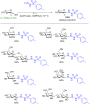
- by participation of the C2–OH group to release 1,3-dimethylimidazolidin-2-one (DMI), the anomeric leaving group. The epoxide is then opened by the nucleophile when added to the reaction mixture. In pathway C the α-DMC complex is displaced directly by the added nucleophile to liberate DMI, once again


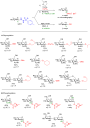


Synthesis of tetrasubstituted pyrazoles containing pyridinyl substituents
Beilstein J. Org. Chem. 2017, 13, 895–902, doi:10.3762/bjoc.13.90
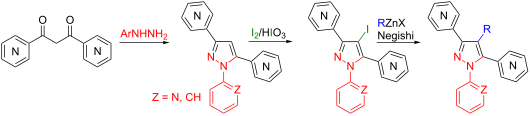
- [3,4-a]quinolizin-6-ium structure 12 was established, which was confirmed by single crystal X-ray structure analysis (see Supporting Information File 1), proving also iodide as the corresponding anion [39] which acts as a leaving group in the coupling reaction and also could origin from the CuI co


DMAP-assisted sulfonylation as an efficient step for the methylation of primary amine motifs on solid support
Beilstein J. Org. Chem. 2017, 13, 806–816, doi:10.3762/bjoc.13.81
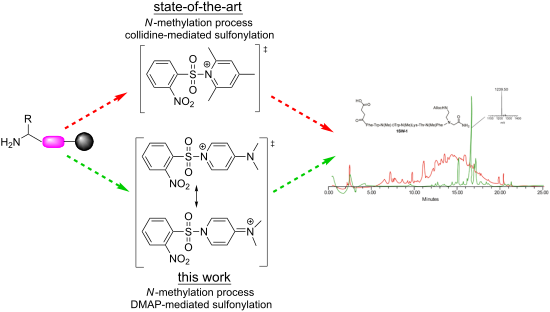
- effective reagent compared to the other additives used. DMAP is used as a catalyst in acylation reactions as it acts via a nucleophilic addition mechanism [34][37][40]. In nucleophilic catalysed acylation, the mechanism involves a step in which the DMAP replaces the leaving group on the carbonyl group

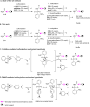
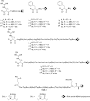


Decarboxylative and dehydrative coupling of dienoic acids and pentadienyl alcohols to form 1,3,6,8-tetraenes
Beilstein J. Org. Chem. 2017, 13, 384–392, doi:10.3762/bjoc.13.41
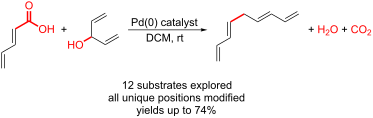
- and coupling this to a substrate with a benzylic or allylic leaving group [19][20]. Typical Pd(0)-catalyzed decarboxylative coupling reactions utilize an allylic or benzylic ester with either an anion-stabilizing group adjacent to the carboxyl group (i.e., carbonyl [19][21][22], nitrile [23][24][25
- accessible alcohol for a leaving group. This reaction was advanced to be possible in a two-component fashion, allowing for the conversion of dienoic acids and pentadienyl alcohols into 1,3,6,8-tetraenes with the only stoichiometric byproducts being water and carbon dioxide. These reactions currently require


Polyketide stereocontrol: a study in chemical biology
Beilstein J. Org. Chem. 2017, 13, 348–371, doi:10.3762/bjoc.13.39
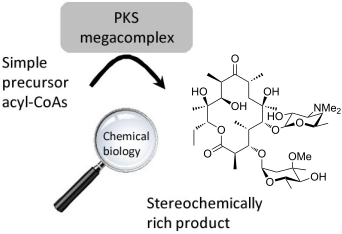
- based on the crystal structure of the DEBS DH [92], in which the conserved His acts as a general base to deprotonate at C-2, while an Asp residue serves as a general acid to stabilize the C-3 hydroxy leaving group. However, only the His has been shown by site-directed mutagenesis to be essential [111


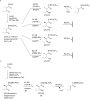


Continuous N-alkylation reactions of amino alcohols using γ-Al2O3 and supercritical CO2: unexpected formation of cyclic ureas and urethanes by reaction with CO2
Beilstein J. Org. Chem. 2017, 13, 329–337, doi:10.3762/bjoc.13.36
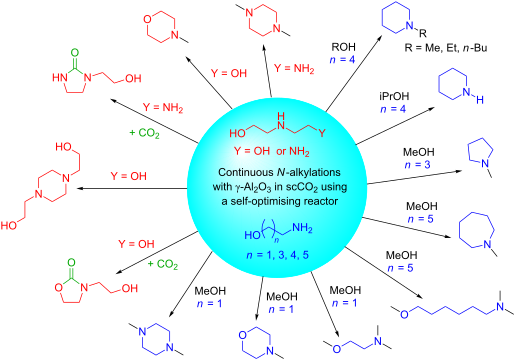
- does not contain a “CO2 unit” that can serve as a leaving group. This was indeed the case as, at 250 °C, 85% selectivity, 70% yield for 16 was observed when the reaction was run in scCO2 (Scheme 3a). In the absence of CO2 as a solvent the formation of imidazolidinone 16 was not observed. When the


Regiochemistry of cyclocondensation reactions in the synthesis of polyazaheterocycles
Beilstein J. Org. Chem. 2017, 13, 257–266, doi:10.3762/bjoc.13.29
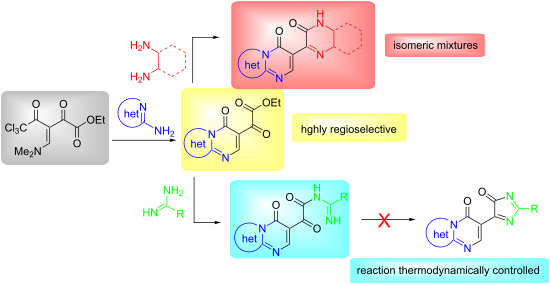
- , followed by aromatization finally generates product 5 (Scheme 1). The trichloromethyl (CCl3) substituent as a leaving group in β-alkoxyvinyl trichloromethyl ketones has been previously used by us for the synthesis of similar heterocycles [27][28]. Products 5–7 are considered to be very attractive building


Silyl-protective groups influencing the reactivity and selectivity in glycosylations
Beilstein J. Org. Chem. 2017, 13, 93–105, doi:10.3762/bjoc.13.12

- considerable reactivity difference between α- and β-thioglucosides was observed with the α-anomer consistently being more reactive. This suggested that the exact alignment of the leaving group is important for the reactivity, but a similar difference was not observed for other superarmed glycosyl donors
- and with N-phenyltrifluoroacetimidate as the leaving group [57][58]. A somewhat similar influence has been observed with the much less steric demanding 4,6-O-benzylidene protective group [59]. A related stereoselectivity is induced by the DTBS group in arabinofuranosylations. Boons and collaborators


Nucleophilic displacement reactions of 5′-derivatised nucleosides in a vibration ball mill
Beilstein J. Org. Chem. 2017, 13, 87–92, doi:10.3762/bjoc.13.11
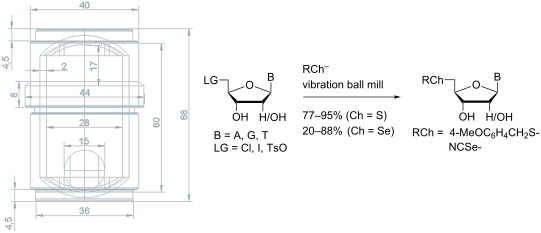
- and nucleoside substrate (e.g., the leaving group [11] or nucleobase protection [12]) are therefore often required. We anticipated that some of these issues could be ameliorated through mechanochemical mixing of reactants and substrates, with diverse solubility profiles, using minimal or no added
- -dependency also observed with KSeCN under Finkelstein conditions [38]. Finally, our approach also offers the convenience of employing tosylate and halide precursors rather than relying on the esoteric tresylate leaving group system. Model reactions of 5′-chloro-5′-deoxyadenosine (1a) with 4


O-Alkylated heavy atom carbohydrate probes for protein X-ray crystallography: Studies towards the synthesis of methyl 2-O-methyl-L-selenofucopyranoside
Beilstein J. Org. Chem. 2016, 12, 2828–2833, doi:10.3762/bjoc.12.282

- derivatives are nowadays used as powerful tools in organic chemistry [6]. Synthetic selenoglycosides are versatile synthons in glycosylation reactions as glycosyl donors for the synthesis of glycosides and oligosaccharides, where their aglycon acts as a leaving group [7][8][9]. They can be selectively





