


Search results
Search for "reactive intermediates" in Full Text gives 134 result(s) in Beilstein Journal of Organic Chemistry.
Homocoupling of aryl halides in flow: Space integration of lithiation and FeCl3 promoted homocoupling
Beilstein J. Org. Chem. 2011, 7, 1064–1069, doi:10.3762/bjoc.7.122
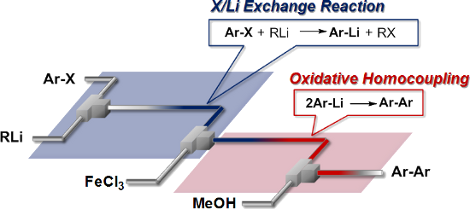
- could also be applied to less stable aryllithium compounds that decompose very quickly. One of the major benefits of flow microreactor synthesis is the ability to use highly unstable reactive intermediates. Such intermediates can be rapidly generated and transferred to another location to be used in a


Chemistry in flow systems II
Beilstein J. Org. Chem. 2011, 7, 1046–1047, doi:10.3762/bjoc.7.119
- highlight three areas. First of all, we have the application to photochemistry, which has the chance of experiencing a renaissance particularly in an industrial environment. Second, flow chemistry lends itself naturally to the synthesis and direct application of reactive intermediates or reactive reagents
When gold can do what iodine cannot do: A critical comparison
Beilstein J. Org. Chem. 2011, 7, 847–859, doi:10.3762/bjoc.7.97
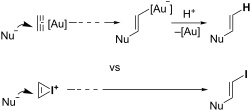
- presence of electrophilic iodine. The reader will also realize how gold-catalyzed processes, which mechanistically benefit from the carbenoid character [55][56][57][58] of the reactive intermediates, cannot be matched by electrophilic processes. As highlighted in the discussion, a starting substrate can be


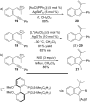


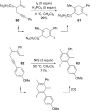


Homoallylic amines by reductive inter- and intramolecular coupling of allenes and nitriles
Beilstein J. Org. Chem. 2011, 7, 824–830, doi:10.3762/bjoc.7.94
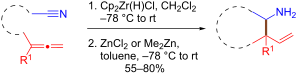
- addition of zirconocene hydrochloride (Cp2Zr(H)Cl, Schwartz’s reagent) to π-bonds usually leads predominantly to σ-complexes, and the resulting organozirconocene complexes are valuable reactive intermediates for the formation of carbon–halogen and carbon–carbon bonds [1][2][3][4][5][6]. The reaction of
- reagents that could potentially serve as dianion equivalents and provide (E)-vinylsilanes and (E)-vinylstannanes in good yields [15]. N-Metalloimines are reactive intermediates that represent masked imine derivatives of ammonia, which are often unstable and difficult to prepare. A common method for the


Molecular rearrangements of superelectrophiles
Beilstein J. Org. Chem. 2011, 7, 346–363, doi:10.3762/bjoc.7.45
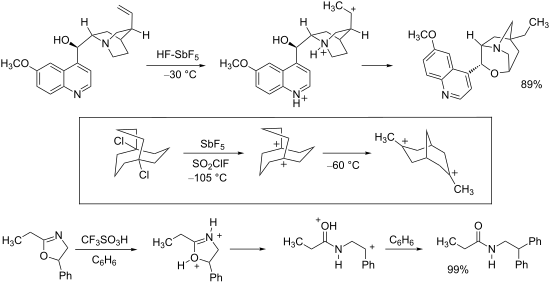
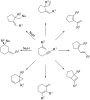
- reactive intermediates may also undergo a wide variety of rearrangement-type reactions. Superelectrophilic rearrangements are often driven by charge–charge repulsive effects, as these densely charged ions react so as to maximize the distances between charge centers. These rearrangements involve reaction


Anion–π interactions influence pKa values
Beilstein J. Org. Chem. 2011, 7, 320–328, doi:10.3762/bjoc.7.42
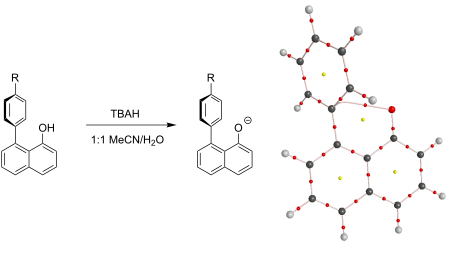
- Supporting Information File 1. Discussion Intermolecular effects on molecules are widely recognised as being important in both binding and reactions, with solvent effects being the classic example of the latter. The effects of solvation on reactive intermediates can change the outcome of a reaction


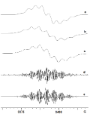
EPR and pulsed ENDOR study of intermediates from reactions of aromatic azides with group 13 metal trichlorides
Beilstein J. Org. Chem. 2010, 6, 713–725, doi:10.3762/bjoc.6.84
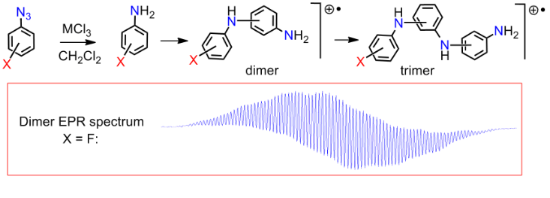
- ], and δ-azidoesters and chlorides into allylated nitrogen heterocycles [30]. To help in elucidating the mechanisms of these reductions, we used CW EPR spectroscopy and attempted to characterise the reactive intermediates in selected reactions involving gallium trichloride. Surprisingly, we found that









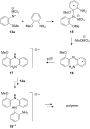
CAAC Boranes. Synthesis and characterization of cyclic (alkyl) (amino) carbene borane complexes from BF3 and BH3
Beilstein J. Org. Chem. 2010, 6, 709–712, doi:10.3762/bjoc.6.82
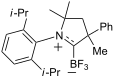
- beginning to be used as synthetic reagents, with applications in radical [5][6][7][8][9], ionic [10][11] and organometallic [12] reactions. They are also precursors for making higher complexes with unusual bonding patterns such as boron–boron double bonds [3], or for making unusual reactive intermediates on


Gold film- catalysed benzannulation by Microwave- Assisted, Continuous Flow Organic Synthesis (MACOS)
Beilstein J. Org. Chem. 2009, 5, No. 35, doi:10.3762/bjoc.5.35
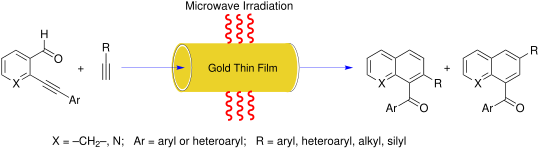
- traditional batch-reactor technology [5][6][7][8][9][10][11][12][13][14][15][16][17][18][19][20][21][22][23][24]. Independent inlet streams allow reactive intermediates to be kept separate until brought together in miniscule amounts to react immediately; this rapidly depletes the starting materials and


Other Beilstein-Institut Open Science Activities



