Search results
Search for "reagent" in Full Text gives 1319 result(s) in Beilstein Journal of Organic Chemistry. Showing first 200.
Improved deconvolution of natural products’ protein targets using diagnostic ions from chemical proteomics linkers
Beilstein J. Org. Chem. 2024, 20, 2323–2341, doi:10.3762/bjoc.20.199
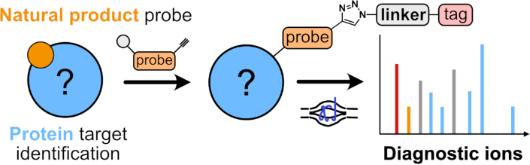
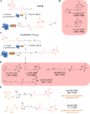
- [84][85]. Similar to the DMP-tag, the AzidoTMT introduced by Ma et al. contains an azide to selectively label probe–peptide conjugates, but the synthesis takes advantage of the commercially available isotopically labeled 11plex-TMT (Figure 7B) [82]. The 11plexTMT reagent is reacted in one step with 3
- beads, the beads can be split into two portions from which one is analyzed by in-gel analysis first to determine the overall labeling and the other portion after on-beads trypsin digest is subjected to LC–MS/MS analysis. The AzKTB reagent can be synthetized by standard solid-phase peptide synthesis
- or scale down and partially automatize the protocol or both. The standard mass spectrometry-based chemical proteomics workflow requires up to 1 mg of total protein, acetone protein precipitation after the ‘click’ reaction to remove the excess of the biotin-containing reagent, desalting of the




Hydrogen-bond activation enables aziridination of unactivated olefins with simple iminoiodinanes
Beilstein J. Org. Chem. 2024, 20, 2305–2312, doi:10.3762/bjoc.20.197
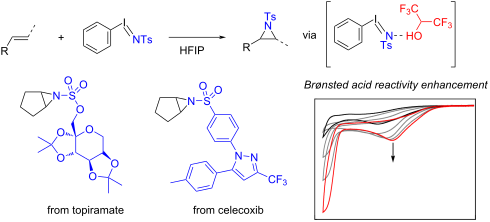
- ), Koser’s reagent (PhI(OH)OTs), Zhdankin’s reagent (C6H4(o-COO)IN3, ABX), and Dess–Martin periodinane (DMP) – and find application in an array of synthetically important transformations including olefin difunctionalization, carbonyl desaturation, alcohol oxidation, and C–H functionalization [3][4
- with the stability of the relevant iminoiodinane reagent, with higher yields attributed to more electron-rich sulfonamide substitution such as 2a. Relatively electron-deficient iminoiodinanes are less efficient but are also more prone to decomposition (see Supporting Information File 1, Figure S2 for
- , signaling the binding of HFIP to 2c enhanced the electron transfer kinetics between the hypervalent iodine reagent and the electrode [45]. Further additions of HFIP further increased the current response and shifted the peak potential, with 10 µL and 15 µL of HFIP showing responses with Epr at −1.55 V and


Catalysing (organo-)catalysis: Trends in the application of machine learning to enantioselective organocatalysis
Beilstein J. Org. Chem. 2024, 20, 2280–2304, doi:10.3762/bjoc.20.196
- [96] investigated a bromocyclization catalysed by a chiral phosphoric acid (CPA) and a DABCOnium brominating reagent (Figure 6). The authors calculated transition state conformer ensembles for several flexible DABCOnium systems and performed energy decomposition analysis to separate the interactions


Deuterated reagents in multicomponent reactions to afford deuterium-labeled products
Beilstein J. Org. Chem. 2024, 20, 2270–2279, doi:10.3762/bjoc.20.195
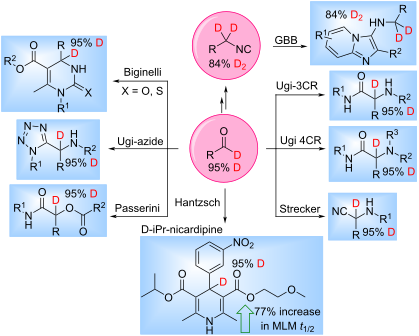
- flexibility [8]. Indeed, early incorporation of deuterium during hit generation may negate the need for late-stage C–H functionalization which often requires strong external oxidants or affords products with significantly lower biological activity [25][26][27]. Thus, eight MCRs were evaluated for D-reagent


gem-Difluorination of carbon–carbon triple bonds using Brønsted acid/Bu4NBF4 or electrogenerated acid
Beilstein J. Org. Chem. 2024, 20, 2261–2269, doi:10.3762/bjoc.20.194
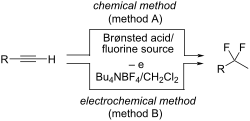
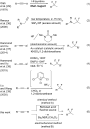
- the use of HF or its complexes as a reagent. These reactions seem to proceed via the formation of the vinyl fluoride as the intermediate [25][26][27][28]. In the first example, Olah and co-workers reported the reaction of terminal alkynes with HF/pyridine (Olah reagent) (Figure 1, reaction 1) [29][30
- to be a good reagent for the gem-difluorination of alkynes, reported by Hammond and Xu (Figure 1, reaction 3) [37]. HF/DMPU is easy to handle under experimental conditions. In addition, they recently reported the utilization of a combination of KHSO4·13HF and DMPU·12HF under neat conditions for the



Synthesis and reactivity of the di(9-anthryl)methyl radical
Beilstein J. Org. Chem. 2024, 20, 2254–2260, doi:10.3762/bjoc.20.193
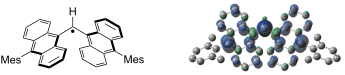
- to the DAntM radical is shown in Scheme 1. The alcohol precursor 3 was prepared via addition reaction of lithium reagent 2 to 10-mesitylanthracene-9-carbaldehyde (1) in moderate yield (59%). The generation of the DAntM radical was performed using stannous chloride dihydrate with hydrogen chloride in


Electrochemical allylations in a deep eutectic solvent
Beilstein J. Org. Chem. 2024, 20, 2217–2224, doi:10.3762/bjoc.20.189
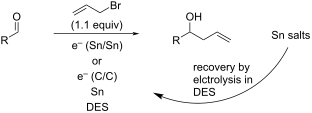
- there are many reasons for this renewed interest, two major motivations are the unmatched control of oxidation or reduction potential that can be achieved and the environmentally friendly aspect of having electrons as the only consumed reagent. This latter reason is certainly an advantage in many cases

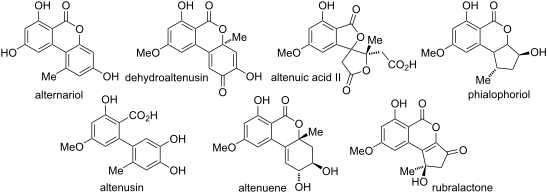
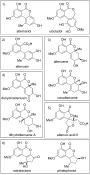
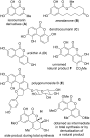
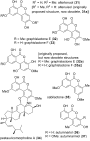
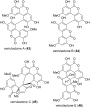
Natural resorcylic lactones derived from alternariol
Beilstein J. Org. Chem. 2024, 20, 2171–2207, doi:10.3762/bjoc.20.187






Efficacy of radical reactions of isocyanides with heteroatom radicals in organic synthesis
Beilstein J. Org. Chem. 2024, 20, 2114–2128, doi:10.3762/bjoc.20.182
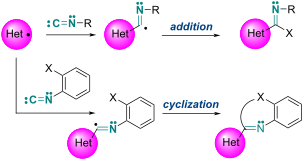
- is a promising synthetic reagent not only as a one-carbon homologation reagent but also as a nitrogen source for nitrogen-containing molecules. Because of their isoelectronic structure with carbon monoxide, isocyanides also react with nucleophiles, electrophiles, carbon radicals, and transition metal
- reaction, pressurization in an autoclave or other pressurization device is required to increase the CO concentration. Isocyanides, on the other hand, have an isoelectronic structure with carbon monoxide and are expected to be not only a promising C1 resource but also an important synthetic reagent for


From perfluoroalkyl aryl sulfoxides to ortho thioethers
Beilstein J. Org. Chem. 2024, 20, 2108–2113, doi:10.3762/bjoc.20.181
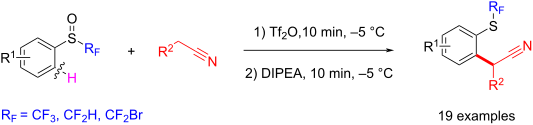
- conditions, a significant amount of degradation products was observed and the yield was rather low. The same result was obtained when the reagent was first added at 0 °C and then heated for one hour under microwave irradiation (Table 1, entry 2). To avoid degradation, the temperature was reduced while the



Multicomponent syntheses of pyrazoles via (3 + 2)-cyclocondensation and (3 + 2)-cycloaddition key steps
Beilstein J. Org. Chem. 2024, 20, 2024–2077, doi:10.3762/bjoc.20.178

- substrates according to this method. However, attempts to carry out the reaction sequence with unprotected hydrazine were unsuccessful. Alternatively, Mitsunobu reagent 23 can be reacted with in situ generated benzyne (from o-(trimethylsilyl)phenyl triflate) to provide the hydrazides for the concomitant
- one-pot process (Scheme 43) [140]. This alkynone generation fulfills two functions: on the one hand, it acts as an activating reagent in the coupling reaction and, on the other, as a ring-forming component. Notably, this process can only be carried out as a domino reaction. For the coupling of
- )-cycloaddition of nitrile oxides 137, generated in situ from hydroxyiminoyl chloride 135 and terminal alkynes, was proposed by Kovacs and Novak. Copper supported on iron serves as a catalyst and as a reagent for the reductive ring opening and leads to β-aminoenones 139, which react in the consecutive one-pot




Harnessing the versatility of hydrazones through electrosynthetic oxidative transformations
Beilstein J. Org. Chem. 2024, 20, 1988–2004, doi:10.3762/bjoc.20.175
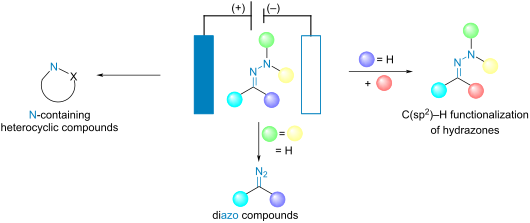
- appealing opportunities to take advantage of the versatility of this reagent. Such an approach can either ameliorate the previous methods in a more sustainable and efficient fashion or provide a mean for the discovery of new reactivity. Herein, this review aims to give an overview of the state of the art in
- the aromatic product 85, thereby regenerating the catalyst (Scheme 16) [61]. Given its abundance, stability, and low price, elemental sufur (S8) is an ideal source of sulfur atom to produce thiacycles [62]. In 2019, H.-T. Tang utilized this reagent in combination with (hetero)aromatic ketone-derived
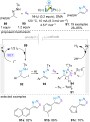
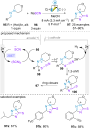
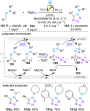
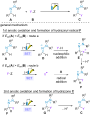
- two carbone graphite electrodes. The Togni reagent 127 was chosen as a source of trifluoromethyl radical with redox neutral and electron-rich hydrazones through a paired electrolysis. In contrast, the Langlois reagent 128 was preferred for electron-poor substrates through an electrooxidative process









Regioselective alkylation of a versatile indazole: Electrophile scope and mechanistic insights from density functional theory calculations
Beilstein J. Org. Chem. 2024, 20, 1940–1954, doi:10.3762/bjoc.20.170
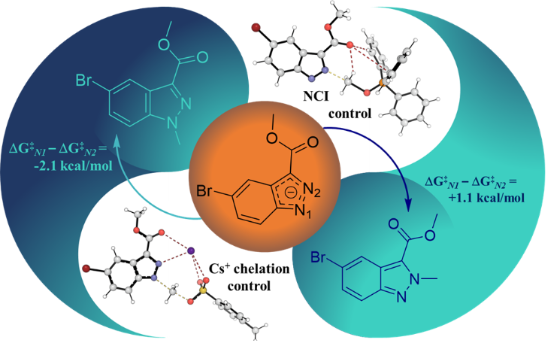
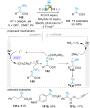
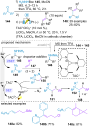
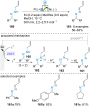
- -dimethylaminopyridine (DMAP) and triethylamine. Used as a model system, the subsequent reaction of sulfonate 12 with compound 6 under varied conditions afforded products P1 and P2. We investigated effects of reagent stoichiometry, bases, reaction time, and temperature on the yields of product P1, as summarized in Table
- yields from the same carbon sources through reagent control. Experimental General methods All materials were obtained from commercial suppliers and used without further purification unless otherwise noted. Anhydrous solvents were obtained from Sigma-Aldrich and used directly. Reactions involving air- or


Negishi-coupling-enabled synthesis of α-heteroaryl-α-amino acid building blocks for DNA-encoded chemical library applications
Beilstein J. Org. Chem. 2024, 20, 1922–1932, doi:10.3762/bjoc.20.168
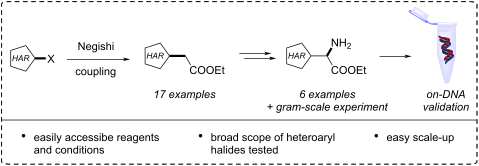
- of ethyl 2-bromoacetate through a pre-activated zinc column (see page 11 in Supporting Information File 1) [44]. The Reformatsky reagent could be obtained in yields varying from 70 to 90% depending on the activation state of the column. The yield of the reaction was determined by titration with
- within 4 h in the dark, irradiation with blue light halves the reaction time for many compounds. Overall, these observations are in line with those of Alcazar et al. [43]. In their work, the authors demonstrated the formation of a complex between palladium and the organozinc reagent which is absorbing in
- protection of the aromatic NH group (2s vs 2t; 2v vs 2u). Reactions with unprotected imidazoles 1s and 1v led to immediate formation of a precipitate upon addition of the Reformatsky reagent. Surprisingly, 1z did not afford the expected product (2z). The synthesis of the Reformatsky reagent can be combined


Solvent-dependent chemoselective synthesis of different isoquinolinones mediated by the hypervalent iodine(III) reagent PISA
Beilstein J. Org. Chem. 2024, 20, 1914–1921, doi:10.3762/bjoc.20.167
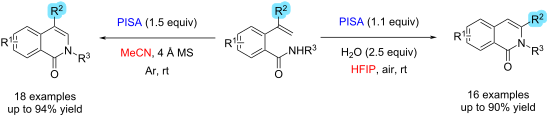
- isoquinolinone derivatives. The method provides highly chemoselective access to 3- or 4-substituted isoquinolinone derivatives by reacting o-alkenylbenzamide derivatives with PISA in either acetonitrile or wet hexafluoro-2-isopropanol. Keywords: annulation; C–H amination; hypervalent iodine reagent; iodine(III
- option for the preparation of isoquinolinone derivatives. In 2020, two reports have been published on the conversion of alkyne-tethered N-alkoxybenzamides to isoquinolinones by intramolecular oxidative annulation, either electrochemically or using the hypervalent iodine reagent phenyliodine(III
- zwitterionic water-soluble hypervalent iodine reagent (phenyliodonio)sulfamate (PISA). In water, PISA is strongly acidic, and the pH value can reach 2.05 in a saturated aqueous solution. With PISA, various indoles have been synthesized via C–H amination of 2-alkenylanilines involving an aryl migration




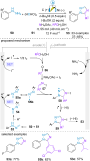
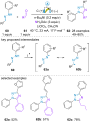
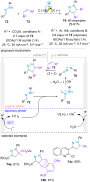
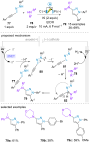
Novel oxidative routes to N-arylpyridoindazolium salts
Beilstein J. Org. Chem. 2024, 20, 1906–1913, doi:10.3762/bjoc.20.166
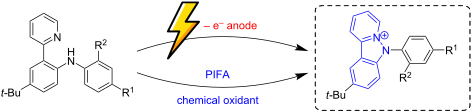
- amine oxidation is increased. Electrochemical synthesis of pyridoindazolium salts The results of the voltammetry testing allowed to assume that pyridoindazolium salts can also be obtained using an anodic synthesis. Electric current as a reagent is inherently safe and easily scalable; electrosynthesis is


Access to 2-oxoazetidine-3-carboxylic acid derivatives via thermal microwave-assisted Wolff rearrangement of 3-diazotetramic acids in the presence of nucleophiles
Beilstein J. Org. Chem. 2024, 20, 1894–1899, doi:10.3762/bjoc.20.164

- ; reaction scale – 0.25 mmol; ascaled-up (1.5 mmol) yield. Negative results with several N-, O-, and C-nucleophiles and with diazo reagent 1m. Preparation of acids 4 by hydrogenolysis of benzyl esters and examples of acid 4a amidation. Supporting Information Deposition Number CCDC 2323689 (for 3t) contains


The Groebke–Blackburn–Bienaymé reaction in its maturity: innovation and improvements since its 21st birthday (2019–2023)
Beilstein J. Org. Chem. 2024, 20, 1839–1879, doi:10.3762/bjoc.20.162
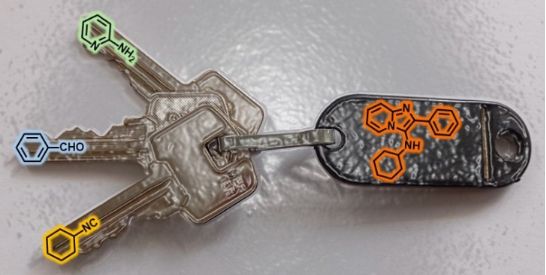
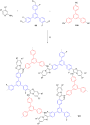
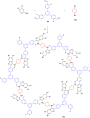
- (controlled pore glass). In this study they used a benzaldehyde unit conjugated to a hexathymidine oligonucleotide 39 and reacted it with various isocyanides and amidines to obtain a small collection (9 examples) of adducts 40 in yields ranging between 23% and 95%; large excess of reagent and a weak Brønsted
- derivative because the base properties of the reagent could hinder AcOH from catalyzing the reaction. Smith et al. [54] explored the potential of acyclic amidines 54 in the synthesis of substituted-imidazoles via the GBB reaction under MW heating (Scheme 21). The resulting 5-aminoimidazoles 55 were in situ






A facile three-component route to powerful 5-aryldeazaalloxazine photocatalysts
Beilstein J. Org. Chem. 2024, 20, 1831–1838, doi:10.3762/bjoc.20.161
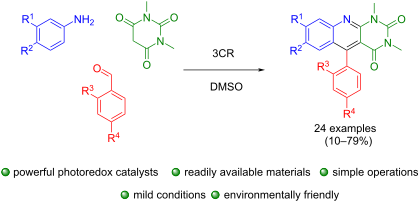
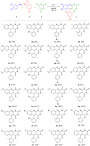
- -dimethyldichloromethyleniminium chloride and the Vilsmeier reagent, or condensations between o-aminobenzaldehydes and barbituric acid [20][21][23][24][25][26][27]. Neither of these methods allows for the introduction of an aryl substituent into C(5), which confers unique chemical and physical properties on 5-aryldeazaalloxazines




Chiral bifunctional sulfide-catalyzed enantioselective bromolactonizations of α- and β-substituted 5-hexenoic acids
Beilstein J. Org. Chem. 2024, 20, 1794–1799, doi:10.3762/bjoc.20.158
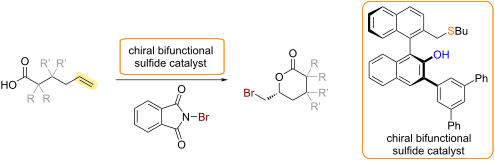
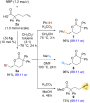
- bromolactonization product 3a. It should be noted that the asymmetric reaction using bromine (Br2) as a brominating reagent gave product 3a in a racemic form. Additionally, iodolactonization of 2a using N-iodosuccinimide in the presence of catalyst (S)-1g was performed. The reaction in dichloromethane, however


Oxidative fluorination with Selectfluor: A convenient procedure for preparing hypervalent iodine(V) fluorides
Beilstein J. Org. Chem. 2024, 20, 1785–1793, doi:10.3762/bjoc.20.157
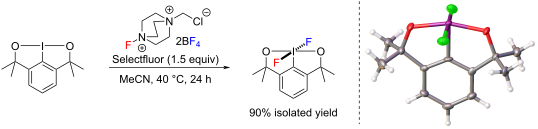
- alternative approach, we reported the first application of using fluoroiodane 2 as a fluorinating reagent in 2013 [11]. The chelate sidearm makes 2 an air-stable, easy-to-handle solid with excellent fluorinating ability and it often exhibits different reactivity to that observed with fluoroaza reagents such
- bromine trifluoride (Scheme 2B) [21][22]. They also showed that hypervalent iodine(V) fluoride 3 fluorinated phenylmagnesium bromide in Freon-113 to form fluorobenzene in 90% yield (Scheme 2A) and so, it is very surprising that this reagent has not been investigated further. Since then, Gruber [23
- fluorinating reagent (Table 1, entry 5). When 8 was reacted with 4 equivalents of freeze-dried Selectfluor in dry acetonitrile at 40 °C for 48 hours, difluoroiodane 6 was formed in 85% spectroscopic yield. However, the iodosyl decomposition product 9 was also produced in 15% spectroscopic yield, despite


Syntheses and medicinal chemistry of spiro heterocyclic steroids
Beilstein J. Org. Chem. 2024, 20, 1713–1745, doi:10.3762/bjoc.20.152
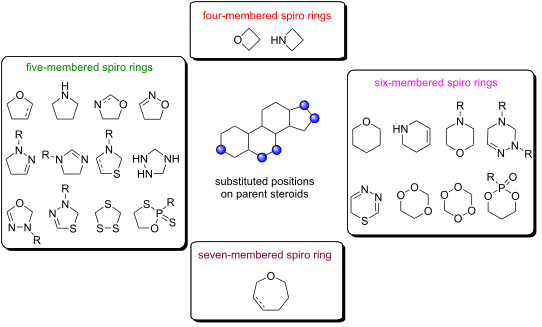
- compounds were hydrogenated, oxidized, and lactonized in a similar fashion, utilizing either the Jones reagent or manganese dioxide as the oxidizing agent [18]. Santhamma et al. developed another route for steroidal spiro-γ-lactones at C-17, from estran-17-one and androstane-17-one derivatives [19]. The
- Lawesson's reagent (LR), yielding chemoselectively 1,2,4-trithiolane dimers 94a–e [50]. The reaction led to the formation of diverse sulfur products, including (di)thioketones, dimeric sulfides, and (4-methoxyphenyl)phosphonotrithioates contingent on reaction time and solvent used. Refluxing unsaturated
- -oxathiaphospholane steroids In 2012, Krstić et al. reported the synthesis of spiro-1,3,2-oxathiaphospholane steroids using Lawesson’s reagent (LR) as a thionating and phosphorylating agent in the reaction with 17α-hydroxyprogesterone (107) [58]. The reaction was conducted in toluene, dichloromethane, or carbon


Methyltransferases from RiPP pathways: shaping the landscape of natural product chemistry
Beilstein J. Org. Chem. 2024, 20, 1652–1670, doi:10.3762/bjoc.20.147
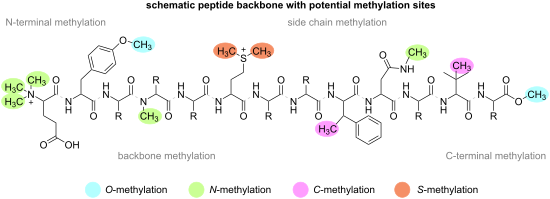
- [34]. In reductive amination, the substrate is usually an aldehyde or amine. After the formation of the iminium ion, it is reduced with the appropriate reagent to form the N-methylated amino acid. Different methods have been established using for example benzaldehyde as a protection group, sodium
- cyanoborohydride as a mild reducing agent, and paraformaldehyde as a methylating agent [36]. Methanol can be used as the methylating reagent in other methods. Here, a palladium on carbon (Pd/C) catalyst processes the dehydrogenation of the alcohol to form the corresponding aldehyde. The subsequently formed imine
- triethylsilane in TFA-CH3Cl, resulting in the N-methylated amino acid as the final product [38]. The third method for chemical N-methylation involves the use of protection groups that also enhance the reactivity of the primary amine (Figure 2). Once the amine is deprotonated, an electrophilic methylation reagent




Divergent role of PIDA and PIFA in the AlX3 (X = Cl, Br) halogenation of 2-naphthol: a mechanistic study
Beilstein J. Org. Chem. 2024, 20, 1580–1589, doi:10.3762/bjoc.20.141
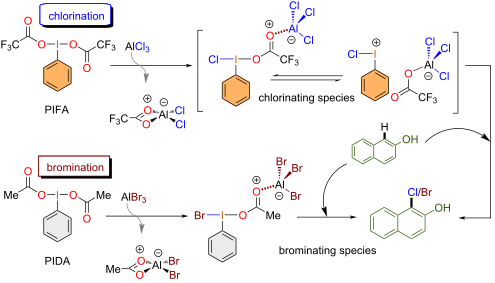
- generated in situ simply by mixing PIFA with a Lewis acid, in this case AlCl3. The importance of this protocol arises from the oxidation of an AlCl3-based chlorine atom, which is an available and cheap reagent. Then it is used as an electrophile source in the chlorination process with an umpolung reactivity
- . In contrast to the suggested traceroute where the chlorine or bromine atom is attached to the hypervalent iodine center of the plausible reagent PhIX2 (X = Cl, Br), our new protocol opens up a broad path for the reaction through different halogenating species. For a deeper understanding of these
- reaction pathway. The first explored mechanism involves PIFA/AlCl3 and the second PIDA/AlCl3 (see Figures S2 and S3, respectively, Supporting Information File 1). In both cases, the route involves the formation of PhICl2 as the chlorinating reagent by considering two equivalents of AlCl3 (PIFA/AlCl3 or


Mining raw plant transcriptomic data for new cyclopeptide alkaloids
Beilstein J. Org. Chem. 2024, 20, 1548–1559, doi:10.3762/bjoc.20.138

- were prepared to match the core amino acids of the predicted ceanothine B and CAM603 cyclopeptide alkaloids. To make each amino acid standard, 0.2 mg of the ʟ- and ᴅ-amino acid was aliquoted into separate reaction vials. To each vial, 50 µL of water, 20 µL of 1 M NaHCO3, and 100 µL 1% Marfey’s reagent
- . Afterward, 25 µL of water, 10 µL of 1 M NaHCO3 and 50 µL of 1% Marfey’s reagent in acetone were added to the reaction vial. The reaction was incubated for 1 h at 40 ºC with periodic agitation. The reaction was quenched by adding 5 µL of 2 M HCl and dried under a nitrogen stream. The dried peptides were