


Search results
Search for "simulations" in Full Text gives 163 result(s) in Beilstein Journal of Organic Chemistry.
First principle investigation of the linker length effects on the thermodynamics of divalent pseudorotaxanes
Beilstein J. Org. Chem. 2015, 11, 687–692, doi:10.3762/bjoc.11.78
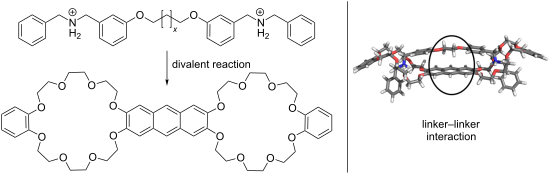
- contributions, enthalpic and entropic temperature effects as well as solvent effects are included in our simulations in order to compare to experimentally obtained Gibbs energy of association. Results and Discussion In order to investigate the cooperativity effects of the binding between divalent host molecules
- ]. This procedure yields very good results for the Gibbs energy of association in the case of the crown-6/ammonium complex in comparison with experiment [25]. For the simulations of the crown-8/ammonium systems the same solvent as in the experiment [16] is used, namely a 2.2:1 mixture of chloroform
- pseudorotaxanes the absolute agreement between the calculated and the experimentally determined Gibbs energies is not as good as in the case of monovalent binding, but the same trends are observed in the simulations as in experiment. The divalent pseudorotaxane with the n0 linker shows a significantly stronger


Synthesis and characterization of a new photoinduced switchable β-cyclodextrin dimer
Beilstein J. Org. Chem. 2014, 10, 2874–2885, doi:10.3762/bjoc.10.304
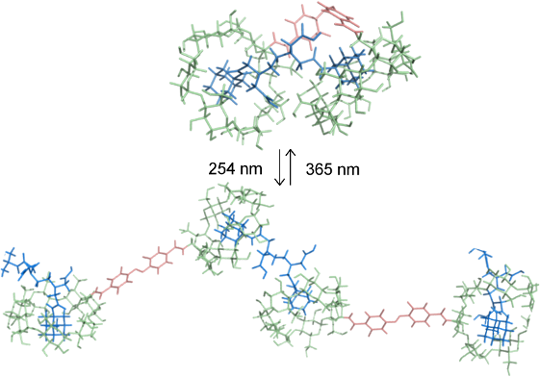
- calculations, the geometrical force field parameters needed for molecular dynamics simulations were derived. Molecular dynamics simulations performed on the two configurations of AZO-CDim 1 highlighted the rigidity of the linker, which governs the relative position of the two CD cavities. The trajectories
- can rotate and move around the azobenzene axis. Throughout the simulations, the C4–C4’ distances and the C–N=N–C dihedral angles did not fluctuate much. The C–C average value was 8.9 ± 0.1 and 5.8 ± 0.3 Å and the C–N=N–C dihedral angle was 175.1 ± 4.8 and −6.3 ± 5.4° for the trans and cis
- parameterized according to the strategy previously developed using the RED program [47] along with the RED server [48]. Molecular dynamics (MD) simulations were performed using the SANDER module of the AMBER10 program suite to perform MD simulations on the aforementioned complexes [49]. The systems were



Binding mode and free energy prediction of fisetin/β-cyclodextrin inclusion complexes
Beilstein J. Org. Chem. 2014, 10, 2789–2799, doi:10.3762/bjoc.10.296
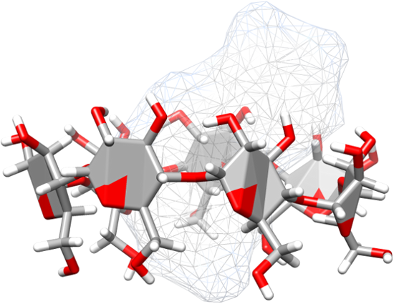
- to investigate the preferential binding mode and encapsulation of the flavonoid fisetin in the nano-pore of β-cyclodextrin (β-CD) at the molecular level using various theoretical approaches: molecular docking, molecular dynamics (MD) simulations and binding free energy calculations. The molecular
- stability against exposure to strong UV light and high temperatures [24][25]. In recent years, computational approaches have played a significant role in monitoring inclusion complexation between cyclodextrin and guest molecules [26][27] at the molecular level [28][29]. Molecular dynamics (MD) simulations
- were used to describe the molecular mechanisms of inclusion complexation between the flavonoids quercetin/myricetin and cyclodextrin in comparison with the experimental results from 1H NMR spectroscopy [30]. Choi and coworkers [31] also reported a theoretical study based on MD simulations in order to


Improving ITC studies of cyclodextrin inclusion compounds by global analysis of conventional and non-conventional experiments
Beilstein J. Org. Chem. 2014, 10, 2630–2641, doi:10.3762/bjoc.10.275
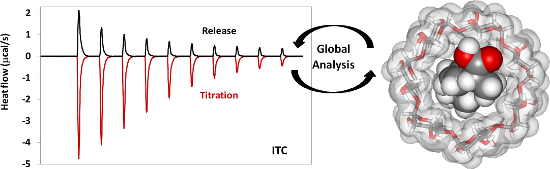
- to cover the range of stability generally observed in cyclodextrin chemistry, our simulations have been realized for four formation constants ranging from 102 M−1 to 105 M−1 (for a guest solubility equal to 2 mM). Results are presented in Table 1. Numerous experiments lead to uncertainties superior
- ) multiplied by the student t factor (1.96). Simulations of the accuracy were carried out for both the real systems studied in this work and hypothetical systems. In the latter case, corresponding binding isotherms were simulated by the postulation of thermodynamic parameters and experimental conditions and by


Towards the sequence-specific multivalent molecular recognition of cyclodextrin oligomers
Beilstein J. Org. Chem. 2014, 10, 2428–2440, doi:10.3762/bjoc.10.253
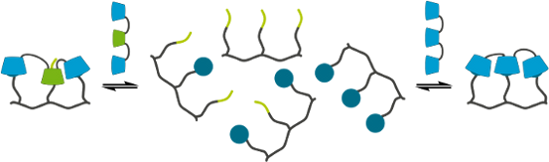
- result in different steric environments during the interactions, but the exact effects cannot be predicted and have to be solved by theoretical calculations and simulations. In the last step the interactions of the trivalent guest strands 11, 12, 13 and 14 with complementary and non-complementary


Effect of cyclodextrin complexation on phenylpropanoids’ solubility and antioxidant activity
Beilstein J. Org. Chem. 2014, 10, 2322–2331, doi:10.3762/bjoc.10.241
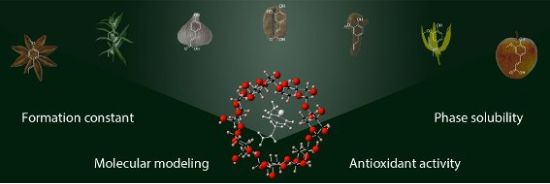
- constructed manually and minimized, prior to inclusion simulations. The docking of each PP inside CD was realized by means of conformational Monte Carlo searches, with the generation of 5000 conformations (FMNR conjugate gradient minimization, convergence fixed to 0.01 kJ Å−1 mol−1). During the search, CD was





Specific DNA duplex formation at an artificial lipid bilayer: fluorescence microscopy after Sybr Green I staining
Beilstein J. Org. Chem. 2014, 10, 2307–2321, doi:10.3762/bjoc.10.240
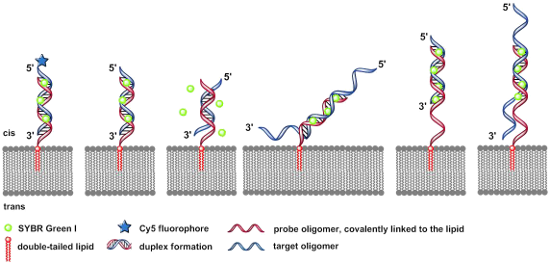
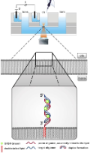
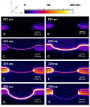
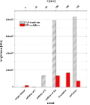
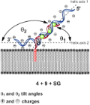
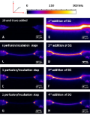
- )- calculations of lipid–nucleic acid complexes with MC and MD simulations of semi-quantitative, “course-grained” models (CGM) are going to be performed (Prof. Dr. Philipp Maass, Department of Statistical Physics, University of Osnabrück). Studies described in this manuscript as well as of those of a forthcoming








Reversibly locked thionucleobase pairs in DNA to study base flipping enzymes
Beilstein J. Org. Chem. 2014, 10, 2293–2306, doi:10.3762/bjoc.10.239
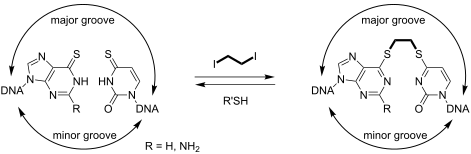
- its neighboring base pairs. In contrast, the ideal geometry of saturated linkers will demand non-planar torsion angles. Coleman et al. [44] investigated this topic by performing molecular dynamic simulations for a disulfide cross-linked I6S/U4S base pair in B-DNA and showed that the compromise between


Why a diaminopyrrolic tripodal receptor binds mannosides in acetonitrile but not in water?
Beilstein J. Org. Chem. 2014, 10, 1513–1523, doi:10.3762/bjoc.10.156
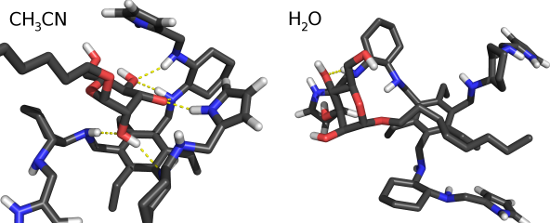
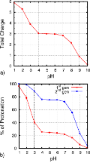
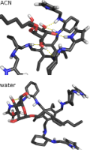
- several molecular dynamics and constant-pH molecular dynamics simulations in acetonitrile and water to evaluate the conformational space of the receptor and to understand the molecular detail of the receptor–mannoside interaction. The protonation states sampled by the receptor show that the positive
- charges are always as distant as possible in order to avoid large intramolecular repulsions. Moreover, the conformational space of the receptor is very similar in water above pH 4.0 and in acetonitrile. From the simulations with the mannoside, we observe that the interactions are more specific in
- ][18][19][20][21][22][23][24]. Since MD simulations deal with pH in a limited way, simply by setting a fixed protonation state in the beginning of the simulation, the use of one of these methods is mandatory. The stochastic titration constant-pH MD method [15][21] takes advantage from the




Biantennary oligoglycines and glyco-oligoglycines self-associating in aqueous medium
Beilstein J. Org. Chem. 2014, 10, 1372–1382, doi:10.3762/bjoc.10.140
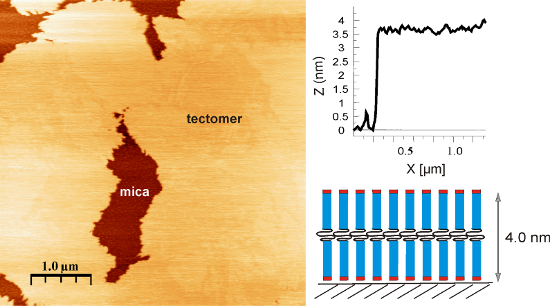
- formation of a monolayer with the monomer conformation ”2 + 0” is favorable according to molecular dynamics simulations [13]. Minimal size of Glyn fragment providing association In the case of biantennary molecules association formally starts from the value n = 4, but, in fact, this value is supposedly





A new building block for DNA network formation by self-assembly and polymerase chain reaction
Beilstein J. Org. Chem. 2014, 10, 1037–1046, doi:10.3762/bjoc.10.104
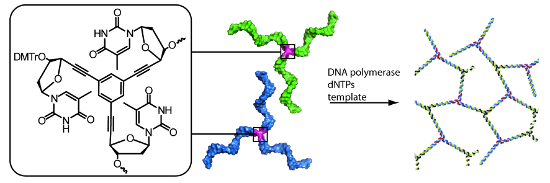
- natural dNTPs. We obtained spectra showing that the spin-labeled nucleotide was indeed incorporated into the DNA (Figure 5B,C). All spectra were quantitatively analyzed by spectral line shape simulations. Thereby, the dynamics of the nitroxide spin-labels are reflected in rotational correlation times τc
- assuming isotropic rotation of the label. The 13C-satellites (Figure 5A) were not taken into account for simulations. While spectra of Figure 5A and B are satisfactorily described by this approach, two components featuring two different rotational correlation times τc were required in case of Figure 5C
- fraction of both spectral components for spin labeled DNA networks as derived by spectral simulations are summarized in Table S1 (see Supporting Information File 1). The drastic decrease in mobility of the probe shown in the EPR spectrum upon enzyme-catalyzed DNA network growth (Figure 5C) clearly


Metal and metal-free photocatalysts: mechanistic approach and application as photoinitiators of photopolymerization
Beilstein J. Org. Chem. 2014, 10, 863–876, doi:10.3762/bjoc.10.83
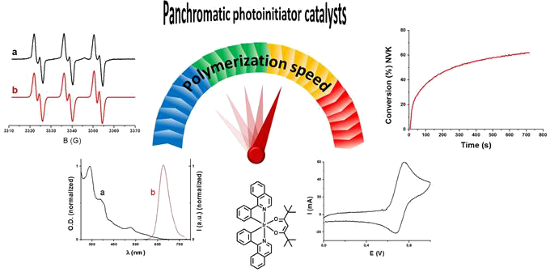
- -butylnitrone (PBN) according to a procedure described in detail in [15]. The ESR spectra simulations were carried out with the PEST WINSIM program. Results and Discussion Possible usable strategies for the design of PICs in the photopolymerization area Oxidizable photoinitiator catalysts Using oxidizable




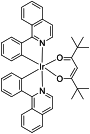


Cyclic phosphonium ionic liquids
Beilstein J. Org. Chem. 2014, 10, 271–275, doi:10.3762/bjoc.10.22

- chains. This topic merits further exploration via molecular dynamics simulations [28] and physical studies such as NMR diffusion measurements, nuclear Overhauser effect spectroscopies, and quasi-elastic neutron scattering. As seen for instance for the cyclic ammonium salts, the viscosities of the cyclic


3-Pyridinols and 5-pyrimidinols: Tailor-made for use in synergistic radical-trapping co-antioxidant systems
Beilstein J. Org. Chem. 2013, 9, 2781–2792, doi:10.3762/bjoc.9.313
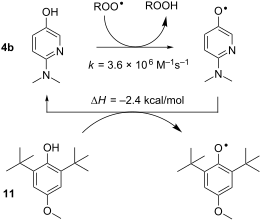
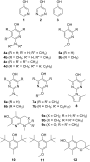
- traces with numerical simulations based on Scheme 3 using Gepasi 3.0 software, as previously described [45]. FTIR spectroscopy. Spectra were recorded at 298 K in a Nicolet Protegé 460 FTIR spectrometer under nitrogen atmosphere using a sealed KBr cell with optical path of 0.5 mm. Solutions of the test




Structure elucidation of β-cyclodextrin–xylazine complex by a combination of quantitative 1H–1H ROESY and molecular dynamics studies
Beilstein J. Org. Chem. 2013, 9, 1917–1924, doi:10.3762/bjoc.9.226
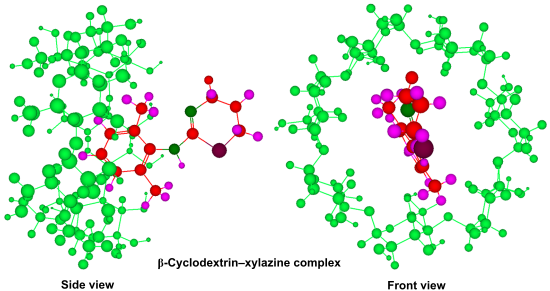
- mechanics and ROESY data recorded with 0.5 s mixing time, but intermolecular peaks on both sides of the diagonal were clear in that case. Molecular dynamics Molecular dynamics simulations for only aromatic ring were performed. All the calculations were performed using CS Chem3D Pro (Cambridge Soft Corp.) in
- Allinger’s force field. Simulations were performed by placing the aromatic ring of xylazine near the mouth of the β-CD cavity along the z-axis either on the narrow (N) or wide (W) side (Figure 6). The carbon skeleton of the β-CD was kept static but other atoms and the xylazine molecule were allowed to move
- then calculated the summed peak intensity ratio ΣΙH-1/ΣΙH-2 for two frames from the narrow side (Frame 105 and 118) and one frame from the wider side (Frame 132) obtained in molecular dynamics simulations. The interproton distances between aromatic protons of xylazine and cavity protons were obtained




Self-assembly of 2,3-dihydroxycholestane steroids into supramolecular organogels as a soft template for the in-situ generation of silicate nanomaterials
Beilstein J. Org. Chem. 2013, 9, 1826–1836, doi:10.3762/bjoc.9.213
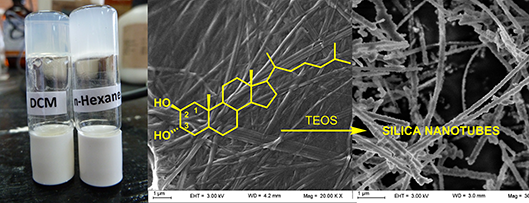
- model of self-assembly through multiple intermolecular hydrogen bonds between the 1,2-dihydroxy system, which is based on experimental data and computational simulations revealing the importance of the di-axial orientation of the hydroxy groups for the one-dimensional self-assembly. Under controlled


True and masked three-coordinate T-shaped platinum(II) intermediates
Beilstein J. Org. Chem. 2013, 9, 1352–1382, doi:10.3762/bjoc.9.153
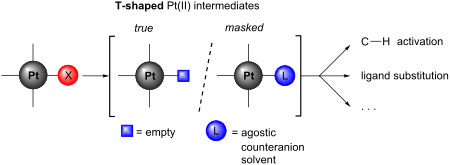
- at work in solution. Recently, ab initio molecular dynamics (AIMD) simulations of some representative T-shaped Pt(II) complexes (T5b, A2b and A11a), performed in explicit dichloromethane solvent, have provided a detailed description of the mechanism by which the equivalence of signals takes place
- [106]. Simulations showed that the dynamics of the agostic interaction in solution strongly depends on the complex. Contingent upon the strength of the agostic interaction and the flexibility of the ligand, several events related with the occupation of the fourth coordination site by an agostic bond





Space filling of β-cyclodextrin and β-cyclodextrin derivatives by volatile hydrophobic guests
Beilstein J. Org. Chem. 2013, 9, 1185–1191, doi:10.3762/bjoc.9.133
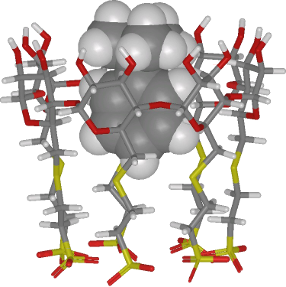
- by means of docking simulations. Measured binding free energies were plotted as a function of the simulated inclusion enthalpies (Figure 6), defined as the enthalpy differences between the inclusion compounds and the free species. A significant linear correlation was obtained, confirming that the
- for benzene derivatives and 7, 10, 12 and 15 mL for cyclohexane derivatives, respectively). Molecular modelling Simulations of inclusion compounds for each benzene derivative into the cavity of host 4 were realized by means of Macromodel [45] with MMFF force field and GB/SA simulation of water [46
- simulations. The docking of each guest inside host 4 was realized by means of Monte Carlo searches, with the generation of 5000 conformations (Polak–Ribiere conjugate gradient minimization, convergence fixed to 0.05 kJ Å−1 mol−1). During the search, host 4 was kept rigid, while the guest was freely modified


High-spin intermediates of the photolysis of 2,4,6-triazido-3-chloro-5-fluoropyridine
Beilstein J. Org. Chem. 2013, 9, 733–742, doi:10.3762/bjoc.9.83
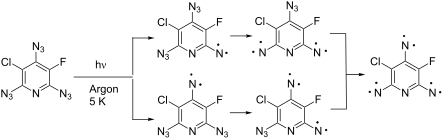
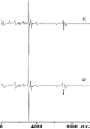
- Abstract In contrast to theoretical expectations, the photolysis of 2,4,6-triazido-3-chloro-5-fluoropyridine in argon at 5 K gives rise to EPR peaks of just two triplet mononitrenes, two quintet dinitrenes, and a septet trinitrene. EPR spectral simulations in combination with DFT calculations show that
- -spin nitrenes. The intensities of these signals reached their maximum values after 45 min of irradiation and then gradually decayed upon further irradiation. The EPR spectrum recorded after 45 min of irradiation is shown in Figure 1b. The EPR spectral simulations show that the products of the reaction
- safely assigned to trinitrene 18 since only this trinitrene has a septet spin state. According to EPR spectral simulations (Figure 1a), this trinitrene is formed in ca. 2% yield. Due to different substituents in positions 3 and 5 of the pyridine ring, trinitrene 18 has different angles Θ1, Θ2, Θ3 between




Photoionisation of the tropyl radical
Beilstein J. Org. Chem. 2013, 9, 681–688, doi:10.3762/bjoc.9.77
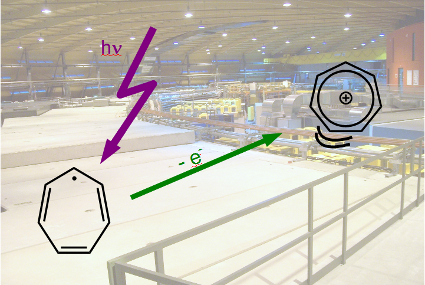
- resonance geometry of the neutral, i.e., the dienylic 2A2 component, even though the geometries are somewhat different. The ground state can be described as a superposition of the 2A2 and 2B1 states, and it is reassuring that they both lead to very similar FC simulations. This also explains why the harmonic
- +, namely (+0.31 eV) and (+0.50 eV). An additional mode reported in the MPI spectrum at +1284 cm–1 is also predicted by the FC-simulations as visible in the stick spectrum in Figure 3. It is buried in the red edge of the +0.19 eV band. We assign it to the ν17+ C–H in-plane bend of e3’ symmetry, computed
- stretching mode with a spacing of 1530 cm−1 (0.19 eV), while the second progression is a combination of the ν2+ a1’ ring-breathing mode and ν16+. The simulations also indicate activity in the ν17+ C–H in-plane bending mode of e3’ symmetry. Moreover the first triplet and (possibly) singlet excited states of




A computational study of base-catalyzed reactions of cyclic 1,2-diones: cyclobutane-1,2-dione
Beilstein J. Org. Chem. 2013, 9, 594–601, doi:10.3762/bjoc.9.64
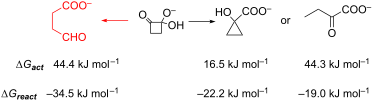
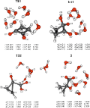
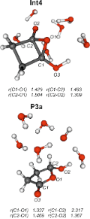
- rearrangements of biacetyl and benzil [11]. Car–Parrinello molecular dynamics simulations of the hydrolysis of formamide in basic solution indicated that the traditional view of attack by hydroxide anion rather than a first-solvation-shell water molecule is more likely; however, the more powerful electrophile





Spin state switching in iron coordination compounds
Beilstein J. Org. Chem. 2013, 9, 342–391, doi:10.3762/bjoc.9.39
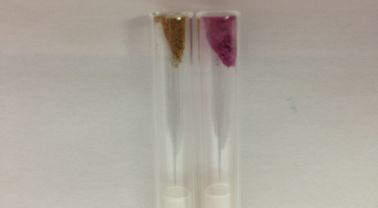


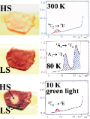
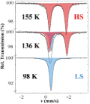


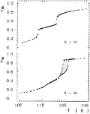

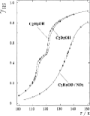


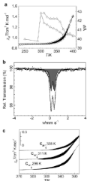
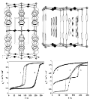
![[Graphic 1]](/bjoc/content/inline/1860-5397-9-39-i3.png?max-width=637&scale=1.18182) ) modes versus the anion volu...
) modes versus the anion volu...






The β-cyclodextrin/benzene complex and its hydrogen bonds – a theoretical study using molecular dynamics, quantum mechanics and COSMO-RS
Beilstein J. Org. Chem. 2013, 9, 118–134, doi:10.3762/bjoc.9.15
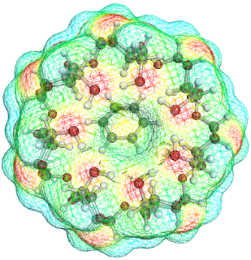
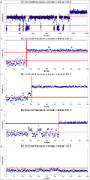
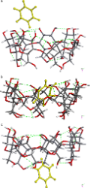
- investigated by three different theoretical methods: classical quantum mechanics (QM) on AM1 and on the BP/TZVP-DISP3 level of approximation, and thirdly by classical molecular dynamics simulations (MD) at different temperatures (120 K and 273 to 300 K). The hydrogen bonds at the larger O2/O3 rim of empty β
- its O6 rim than on its O2/O3 side when all hydrogen bonds were arranged in a concerted mode. This static QM picture of the β-CD/benzene complex at 0 K was extended by MD simulations. At 120 K benzene was mobile but always stayed inside the cavity of β-CD. The trajectories at 273, 280, 290 and 300 K
- simulations displayed different hydrogen bond patterns of cyclodextrins in crystal and in solution and confirmed the experimental findings of soluble cyclodextrin complexes of cholesterol type versus precipitates of cis/trans-cyclohexadecenone//CDs [10][11][12]. MD with λ-dynamics and calculation of the



A bisazobenzene crosslinker that isomerizes with visible light
Beilstein J. Org. Chem. 2012, 8, 2184–2190, doi:10.3762/bjoc.8.246
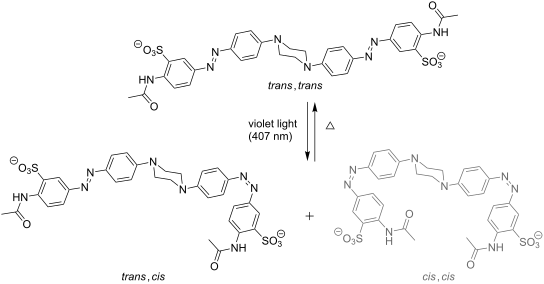
- residues [24]. The end-to-end distance changes expected upon photoisomerization of the resulting crosslink were estimated by molecular dynamics methods. Figure 1 shows models of compound 2 in trans,trans, trans,cis, and cis,cis-isomeric states. These simulations indicate that the trans,trans and cis,cis
- simulations for each isomer. (a) Histograms showing the relative populations of conformations having the sulfur-to-sulfur distances indicated. (b) Examples of trans,trans, trans,cis and cis,cis conformations with the S–S distances indicated. (a) Normalized UV–vis absorption spectra of 2 in DMSO, acetonitrile


Peptides presenting the binding site of human CD4 for the HIV-1 envelope glycoprotein gp120
Beilstein J. Org. Chem. 2012, 8, 1858–1866, doi:10.3762/bjoc.8.214
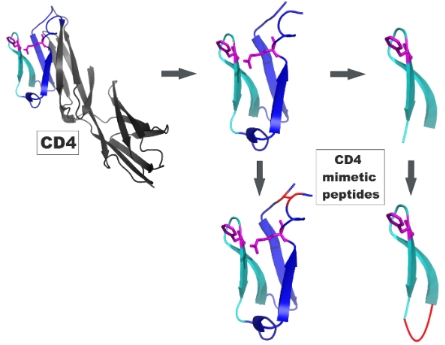
- through cyclization, as evidenced by binding assays, as well as through molecular-dynamics simulations of peptide–gp120 complexes. The specificity of the peptide–gp120 interaction was demonstrated by using peptide variants, in which key residues for the interaction with gp120 were replaced by alanine or D
- binding properties of CD4-M1 and CD4-M2, molecular dynamics (MD) simulations of the peptides in complex with gp120 were carried out and compared to a simulation of the CD4–gp120 complex. Analysis confirmed that the linear peptide CD4-M1 is more flexible than the respective region in CD4 (Figure 5A
- the stable interactions with gp120 that are present in the gp120–CD4 complex (Figure 1), while R58 does not significantly contribute to binding in any of the simulations. The importance of F43 and R59 for peptide binding also supports the notion that both peptides bind specifically to the CD4 binding





