Search results
Search for "host–guest" in Full Text gives 226 result(s) in Beilstein Journal of Organic Chemistry. Showing first 200.
Inclusion of trans-resveratrol in methylated cyclodextrins: synthesis and solid-state structures
Beilstein J. Org. Chem. 2014, 10, 3136–3151, doi:10.3762/bjoc.10.331
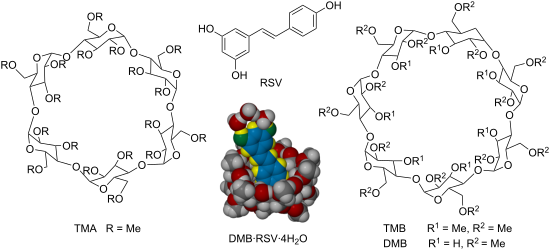
- high-quality single crystals of each of the three inclusion complexes. The host–guest stoichiometries of the inclusion complexes between RSV and the three methylated CDs were all found to be 1:1 from 1H NMR spectra of solutions of single crystals of the respective complexes (Supporting Information File
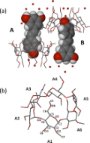
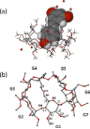
- molecules and 12.5 water molecules, is shown in Figure 4a. In both 1:1 host–guest complex units the guest phenyl ring bearing one phenolic group (the 4-hydroxyphenyl residue) is fully immersed in the host cavity, being located at the primary side, while the ring bearing two phenolic groups (the 1,3
- reported above clearly indicate a mutual induced fit when TMA forms an inclusion complex with RSV. This phenomenon of mutual induced fit has recently been cited as a frequent occurrence in biological systems, but a rare one for synthetic host–guest systems [13]. However, its occurrence in CD inclusion







Release of β-galactosidase from poloxamine/α-cyclodextrin hydrogels
Beilstein J. Org. Chem. 2014, 10, 3127–3135, doi:10.3762/bjoc.10.330
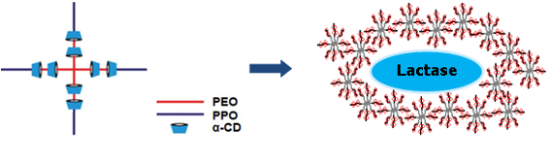
- are able to form host–guest complexes by the inclusion of hydrophobic molecules. Cyclodextrins also act as hosts in the formation of inclusion compounds with polymer chains through non-covalent interactions [10]. For instance, incorporation of 5% α-CD transforms dilute Tetronic solutions into gels


Synthesis and characterization of a new photoinduced switchable β-cyclodextrin dimer
Beilstein J. Org. Chem. 2014, 10, 2874–2885, doi:10.3762/bjoc.10.304
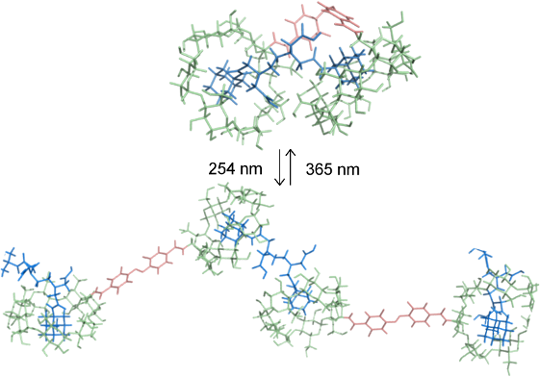
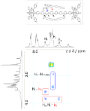
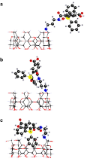
- modeling methods: (a) 1:1 chelate-type complex with AZO-CDim 1 in its cis configuration; linear (b) and cyclic (c) supramolecular polymers with AZO-CDim 1 in its trans configuration. Synthesis pathway of the dimer AZO-CDim 1. Thermodynamic parameters deduced from ITC experiments for the different host
- –guest systems studied (temperature 298 K in water). Acknowledgements The authors would like to acknowledge financial support from the Agence Nationale de la Recherche ANR, France (CP2D program, CYCLOCAT project). Mathilde Bellot and Dr David Mathiron are thanked for their help with ITC and NMR



Synthesis of an organic-soluble π-conjugated [3]rotaxane via rotation of glucopyranose units in permethylated β-cyclodextrin
Beilstein J. Org. Chem. 2014, 10, 2800–2808, doi:10.3762/bjoc.10.297

- prepared organic-soluble host–guest-linked PMCD derivatives that can undergo intramolecular self-inclusion to form an insulated molecule with an [1]rotaxane structure in methanolic aqueous solutions, where PMCD derivatives are soluble in. We recently developed a new method for synthesizing π-conjugated
- -phenylene) as backbone units by polymerization of these linked [3]rotaxanes as monomers. Synthesis of [1]rotaxane by self-inclusion of a host–guest-linked molecule: a) short molecular length, b) appropriate molecular length, c) long molecular length. Synthesis of an insulated molecule via flipping


Binding mode and free energy prediction of fisetin/β-cyclodextrin inclusion complexes
Beilstein J. Org. Chem. 2014, 10, 2789–2799, doi:10.3762/bjoc.10.296
- applications, β-CD has been mostly used as a drug carrier, stabilizer and additive by the formation of host–guest complexes with increased solubility and consequently better bioavailability of low water soluble organic compounds (i.e., drugs) [20][21][22][23]. The inclusion complex can also improve ligand
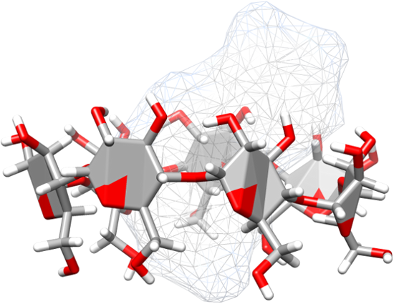
- these two previous studies, the fisetin/β-CD inclusion complex was optimized in gas phase, the A- or B-rings of fisetin were not well inserted, but only partially occupied in the cavity, while the other ring entirely stayed outside of the β-CD moiety. Herein, the host–guest inclusion complexation
- inclusion complex. The ligand binding mode and water accessibility, host–guest interaction, and binding free energy of the inclusion complex were analyzed. The MM-PBSA/GBSA and M06-2X/6-31G(d,p)//MM-PBSA/GBSA approaches were used to predict the binding affinity of fisetin/β-CD complexes. The M06-2X/6-31G(d


Improving ITC studies of cyclodextrin inclusion compounds by global analysis of conventional and non-conventional experiments
Beilstein J. Org. Chem. 2014, 10, 2630–2641, doi:10.3762/bjoc.10.275
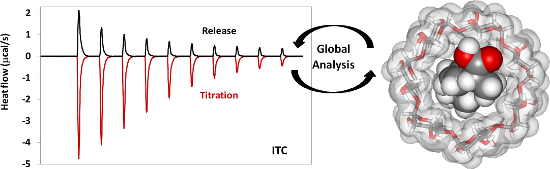
- designing the experimental strategies which achieve the highest quality in the characterization of host–guest supramolecules. Results and Discussion Non-competitive experiments In the first part of this work, we consider the study of inclusion compounds in non-competitive conditions, i.e., with one host and
- be designed to study the complexation phenomenon. Concerning the host, guest, and host–guest solutions to be prepared, some theoretical and experimental facts have to be considered. Firstly, as cyclodextrins are often used to solubilize hydrophobic guests, titration experiments generally employ the
- as the release protocol; it has been introduced by Heerklotz [14] for vesicles and then applied to cyclodextrins [30][31]. Protocol D (called “dilution”) corresponds to the reverse of protocol C: buffer injections within the host–guest mixture induce weak dilutions, thus dissociating a weak part of


Encapsulation of biocides by cyclodextrins: toward synergistic effects against pathogens
Beilstein J. Org. Chem. 2014, 10, 2603–2622, doi:10.3762/bjoc.10.273
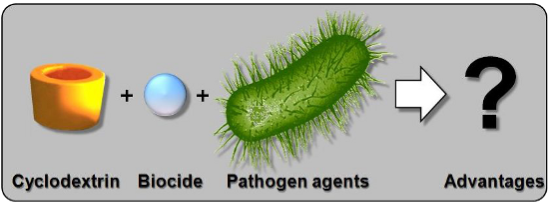
- Veronique Nardello-Rataj Loic Leclercq Université de Lille, Sciences et Technologies, EA 4478, Chimie Moléculaire et Formulation, F-59655 Villeneuve d’Ascq Cedex, France 10.3762/bjoc.10.273 Abstract Host–guest chemistry is useful for the construction of nanosized objects. Some of the widely used
- : cyclodextrin; biocide; encapsulation; host–guest chemistry; pathogen; textile; Introduction Since the first reference to cyclodextrins (CDs) in 1891 by Villiers, CD has been of great interest to researchers [1]. Cyclodextrins are composed of several α-D-glucopyranose units linked 1→4 and arranged in a conical


Synthesis and characterization of a hyper-branched water-soluble β-cyclodextrin polymer
Beilstein J. Org. Chem. 2014, 10, 2586–2593, doi:10.3762/bjoc.10.271
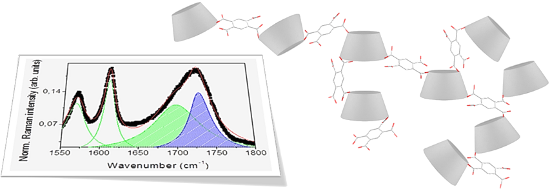
- -shielding in the presence of the polymer, consistent with the formation of a host–guest association. The analysis of the polymer induced chemical shift variations on SF (Δδ values, Table 1) points out that the largest de-shielding is experienced by the protons of the benzofuranone ring system, H3 and H4 in




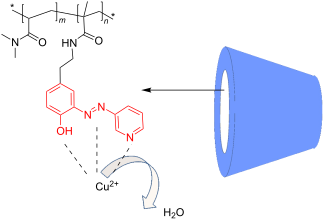
Host–guest-driven color change in water: influence of cyclodextrin on the structure of a copper complex of poly((4-hydroxy-3-(pyridin-3-yldiazenyl)phenethyl)methacrylamide-co-dimethylacrylamide)
Beilstein J. Org. Chem. 2014, 10, 2480–2483, doi:10.3762/bjoc.10.259


Towards the sequence-specific multivalent molecular recognition of cyclodextrin oligomers
Beilstein J. Org. Chem. 2014, 10, 2428–2440, doi:10.3762/bjoc.10.253
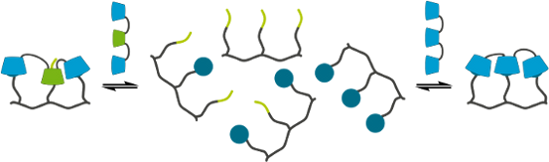
- realize sequence-specific molecular recognition by the use of host–guest chemistry, but the recognition motifs as well as the linkages have to be chosen very carefully. In the case of trivalent systems one adamantane moiety must be included to induce preferred formation of 1:1 adducts. Due to the too weak
- toxins or viruses and for imaging and targeted drug delivery [3]. Hydrogels which are built up by multivalent host–guest interactions and vesicles of amphiphilic host molecules have been intensively studied for their ability to function as drug delivery systems as well [4][5][6][7][8][9]. Additionally
- biofunctional materials [21][22][23][24][25][26][27]. Even the molecular recognition of macroscopic gel blocks by multivalent host–guest interactions has been realized [28][29][30][31][32]. Besides the number of receptor–ligand interactions their spatial distribution is crucial for the highly selective


Derivatives of the triaminoguanidinium ion, 3. Multiple N-functionalization of the triaminoguanidinium ion with isocyanates and isothiocyanates
Beilstein J. Org. Chem. 2014, 10, 2255–2262, doi:10.3762/bjoc.10.234
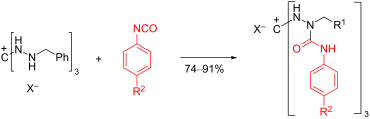
- transformations using heterocumulenes as reagents. Due to their particular molecular shape and the presence of hydrogen-bond donor and acceptor groups, the obtained 1,2,3-tris(ureido)guanidinium salts 7 and the derived neutral guanidine 8 may become of interest as host components in host–guest complexes, for


The effect of permodified cyclodextrins encapsulation on the photophysical properties of a polyfluorene with randomly distributed electron-donor and rotaxane electron-acceptor units
Beilstein J. Org. Chem. 2014, 10, 2145–2156, doi:10.3762/bjoc.10.222
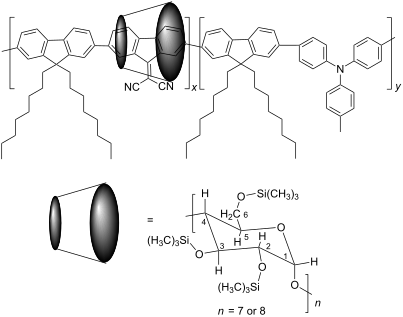
- -CD, respectively. Changes in the absorption spectra of the monomer 1 upon the addition of increasing amounts of TMS-γ-CD in CHCl3. The inset shows the fitted binding constant curve based on a 1:1 host–guest complexation stoichiometry. 1H NMR spectrum of the polyrotaxane 4a copolymer in toluene-d8
- accurately due to the strong UV absorbance of this solvent. Thus, Ks measurements were performed in CHCl3. The Ks was determined by measuring the change in the absolute optical density (OD) at 314 nm with an increasing concentration of TMS-β-CD or TMS-γ-CD macrocycles and the fitting according to a 1:1 host
- –guest complexation stoichiometry. Thus, the Ks in CHCl3 was determined to be approximately 205 and 150 (±30) M−1, respectively (see the determined Ks of 1b in Figure 2). Concerning the binding affinity of molecule 1 to the TMS-β-CD and TMS-γ-CD cavities, it should be mentioned that the values toward


Macrocyclic bis(ureas) as ligands for anion complexation
Beilstein J. Org. Chem. 2014, 10, 1834–1839, doi:10.3762/bjoc.10.193
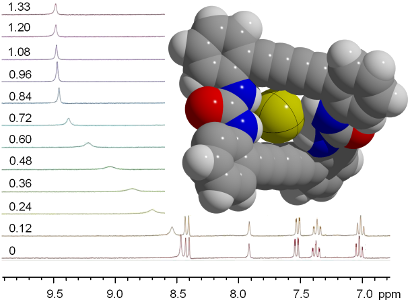
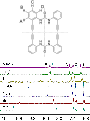
- formed (Figure 4). To ensure the composition of the host–guest complexes Job plots were used. The function molar fraction vs the product of molar fraction multiplied by the shift change Δδ allows for the determination of the molar fractions of host and guest. From the maximum of the extrapolated curve
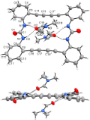
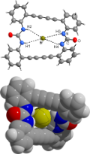
- , indicating a complex of two bis(urea) molecules and one chloride ion. For the smaller macrocyclus 1 the Job plots do not show a distinct plateau after addition of one equivalent of anion. Here, doubtless an interaction is present but apparently not a distinct host–guest complex formation. The binding



Why a diaminopyrrolic tripodal receptor binds mannosides in acetonitrile but not in water?
Beilstein J. Org. Chem. 2014, 10, 1513–1523, doi:10.3762/bjoc.10.156
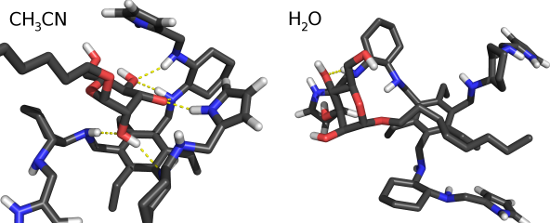
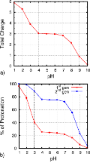
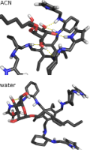
- in water [14]. In fact, this receptor family [11][12][13] could only be tested in water at slightly acidic conditions, due to solubility reasons, and proved to be very inefficient [14]. Unraveling the molecular details of these host–guest interactions is crucial to understand their different




Homochiral BINOL-based macrocycles with π-electron-rich, electron-withdrawing or extended spacing units as receptors for C60
Beilstein J. Org. Chem. 2014, 10, 1308–1316, doi:10.3762/bjoc.10.132
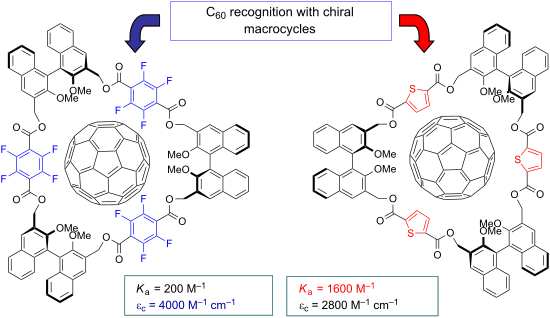
- complexes in solution give insights into the role of nonspecific host–guest interactions (such as π–π stacking) for the overall stabilization of the complexes. We are currently designing binaphthyl-based hosts for the enantioselective recognition and separation of higher fullerenes and chiral nanotubes


Molecular recognition of isomeric protonated amino acid esters monitored by ESI-mass spectrometry
Beilstein J. Org. Chem. 2014, 10, 825–831, doi:10.3762/bjoc.10.78
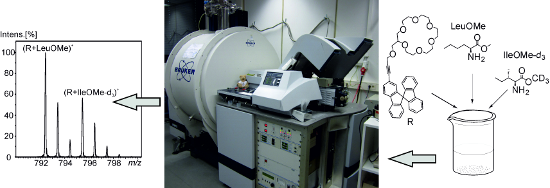
- demonstrate the relevance of dispersive interactions for the overall binding event. These effects also provide hints for the relative spatial orientation of the guest molecules within the host–guest complex, and thereby prove the importance of the spirobifluorene moiety for the observed binding of the
- . However, mass spectrometry has become a major analytical tool in supramolecular chemistry in recent years [19][20][21] and seemed to be perfectly suited in this case, since we were planning to recognise the amino acid derivatives in form of their protonated alkyl esters anyway. Thus, the host–guest
- quasi-isomer is performed to reveal the relative affinity of a receptor towards the different isomers. In this way, the mass spectrometric analysis easily allows direct identification of the individual host–guest complexes. This is usually more complicated with other techniques such as, e.g., NMR


Towards allosteric receptors – synthesis of β-cyclodextrin-functionalised 2,2’-bipyridines and their metal complexes
Beilstein J. Org. Chem. 2014, 10, 814–824, doi:10.3762/bjoc.10.77
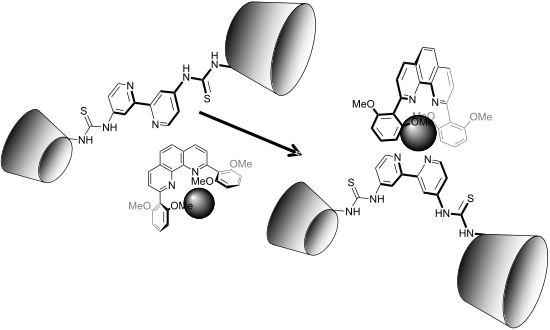
- tool to study the host–guest chemistry of these systems in the future, however, we did not investigate these further. Interestingly, the copper(I) complexes of 2 were much less sensitive to oxidation. This might be a consequence of the steric crowding caused by the 6,6’-disubstitution of the bipyridine
- metal complexes’ host–guest chemistry at a later stage in a quantitative manner, however, a 1:2 metal-to-ligand stoichiometry like in the [Zn(1)2]-complexes is not very easy to study because one has to deal with a very complicated equilibrium between 1:2:2, 1:2:1, 1:2:0 and even more complicated metal
- dimeric complexes with 4,4'-disubstituted bipyridine 1. However, such a 1:2 effector–bipyridine ratio could lead to a difficult-to-handle host–guest chemistry when it comes to binding of additional guest molecules due to very complicated equilibria between 1:2:2, 1:2:1, 1:2:0 and even more complicated


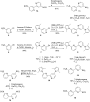


Staudinger ligation towards cyclodextrin dimers in aqueous/organic media. Synthesis, conformations and guest-encapsulation ability
Beilstein J. Org. Chem. 2014, 10, 774–783, doi:10.3762/bjoc.10.73
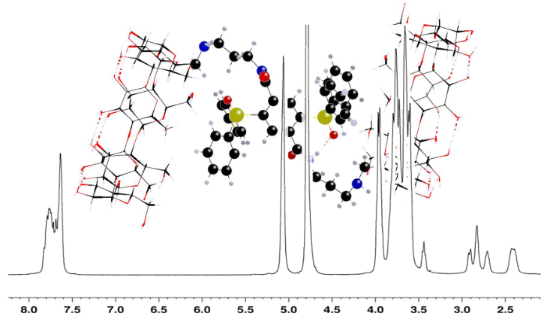
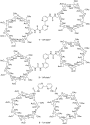
- aqueous solution as shown by DLS [39] and DOSY measurements at different concentrations [38][40][41]; it is therefore reasonable to assume that a part of the aggregation of the dimer is due to the β-CD moieties. Finally, given that in any host–guest solution in the fast exchange regime in the NMR time



End-group-functionalized poly(N,N-diethylacrylamide) via free-radical chain transfer polymerization: Influence of sulfur oxidation and cyclodextrin on self-organization and cloud points in water
Beilstein J. Org. Chem. 2014, 10, 680–691, doi:10.3762/bjoc.10.61
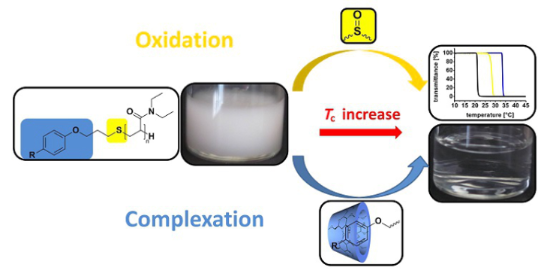
- functionalization is supported by 1H NMR-, SEC-, FTIR- and MALDI–TOF measurements. Keywords: chain-transfer polymerization; cyclodextrins; end-group functionalization; host–guest interaction; lower critical solution temperature (LCST); poly(N,N-diethylacrylamide); Introduction Supramolecular chemistry was first
- ]. Some publications make use of free-radical chain transfer polymerization and subsequent polymer post-modification [25][27][35][36]. The scope of our investigation was the preparation of multiple-stimuli-responsive PDEAAm polymers possessing hydrophobic end-groups suitable for host–guest interactions
- addition the solution properties of polymers 8a–d and 9a–d as a function of temperature were also evaluated in the presence of different amounts of RAMEB-CD. In general, the 4-tert-butylphenyl as well as the 4-tert-octylphenyl end-group are able to build host-guest inclusion complexes with the RAMEB-CD


Novel supramolecular affinity materials based on (−)-isosteviol as molecular templates
Beilstein J. Org. Chem. 2013, 9, 2821–2833, doi:10.3762/bjoc.9.317
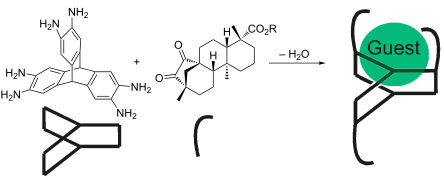
- ][52], molecular machinery [53][54] and supramolecular host–guest chemistry [55][56]. With an angle of 120° between its aromatic moieties, it exhibits a rigid geometry with a defined alignment of functional groups (Figure 3, left). Next to classical convergent–concave structures, architectures with a


Synthesis of enantiopure sugar-decorated six-armed triptycene derivatives
Beilstein J. Org. Chem. 2013, 9, 2410–2416, doi:10.3762/bjoc.9.278
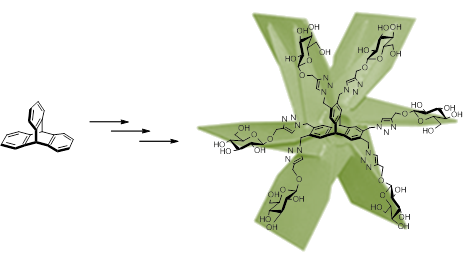
- functionalization of either its arene units or the bridged positions of its bicyclooctatriene system. This allows for the development of a range of structurally different triptycene-based derivatives [1]. Triptycene derivatives have also been used as building blocks for the synthesis of new molecules in host–guest
- applications not only as glycoconjugates in glycochemistry, but also as interesting candidates for host–guest interactions by presenting a rigid lipophilic core surrounded by hydrophilic sugar moieties assembled on a rotor skeleton. The six-armed sugar-decorated triptycene derivatives might constitute a new



Structure elucidation of β-cyclodextrin–xylazine complex by a combination of quantitative 1H–1H ROESY and molecular dynamics studies
Beilstein J. Org. Chem. 2013, 9, 1917–1924, doi:10.3762/bjoc.9.226
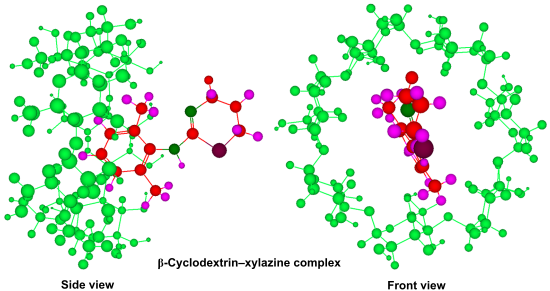
- science and is the basis for most of the vital biological processes [1]. The basis of supramolecular chemistry is molecular recognition where host and guest species interact with each other and exist as a single system. These host–guest systems symbolize simplest examples of supramolecular systems in
- stoichiometry and binding constant of host–guest complexes, 1H NMR titration experiments are most common. These titration experiments give Δδ data for many independent signals which can independently be used to determine the stoichiometry and binding constant. Several NMR versions of Benesi–Hildebrand equations
- . 1H–1H ROESY studies ROESY is an important tool for the study of large molecules and provides information on the through-space proximity of protons [19]. The host–guest interactions are displayed as intermolecular peaks between cavity protons and part of the guest involved in complexation. The




Topochemical control of the photodimerization of aromatic compounds by γ-cyclodextrin thioethers in aqueous solution
Beilstein J. Org. Chem. 2013, 9, 1858–1866, doi:10.3762/bjoc.9.217
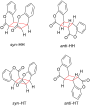
- ]. Formation of 2:2 complexes with β-CD and 1:2 (host/guest) sandwich complexes with γ-CD were made responsible for the observed increase in the quantum yields. The photodimerization of unmodified ANT could be performed for the first time homogenously in aqueous solution, because of the high solubilities of
- quantum yields and molar fractions of the syn-HH isomer, listed in Table 5, are in good agreement with the measured values, listed in Table 4. It also shoes, that the binding constant K, calculated according to the law of mass action for the 1:2 (host/guest) complex, tremendously increases with the salt
- topochemical reaction. This type of topochemical control happening in solution is much more applicable than the classical topochemical control occurring in the crystalline state [3][43][49]. Conclusion Aromatic guests ANT, ACE, and COU form 1:2 (host/guest) complexes within γ-CD thioethers 1–7, which



Self-assembly of 2,3-dihydroxycholestane steroids into supramolecular organogels as a soft template for the in-situ generation of silicate nanomaterials
Beilstein J. Org. Chem. 2013, 9, 1826–1836, doi:10.3762/bjoc.9.213
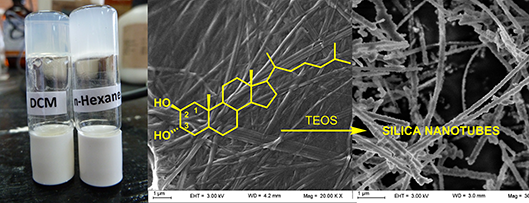
- , electrochemistry, light-harvesting materials and so on [1][2][3][4][5][6]. These small molecules self-assemble into regular supramolecular structures through non covalent interactions such as ion–ion, dipole–dipole, hydrogen bonding, π–π stacking, van der Waals, host–guest, and ion coordination, and in so doing


Efficient continuous-flow synthesis of novel 1,2,3-triazole-substituted β-aminocyclohexanecarboxylic acid derivatives with gram-scale production
Beilstein J. Org. Chem. 2013, 9, 1508–1516, doi:10.3762/bjoc.9.172
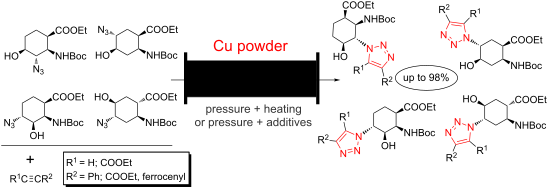
- chemistry and drug discovery as biosensing probes, in immunoassays and in host–guest chemistry [71]. Ferrocene-substituted amino acids have been of significant importance in the investigation of the secondary structures of different peptides and foldamers [72]. Thus, conjugates of the azido-functionalized β