


Search results
Search for "CM" in Full Text gives 1165 result(s) in Beilstein Journal of Organic Chemistry. Showing first 200.
Electrochemical hydrogenation of enones using a proton-exchange membrane reactor: selectivity and utility
Beilstein J. Org. Chem. 2022, 18, 1055–1061, doi:10.3762/bjoc.18.107
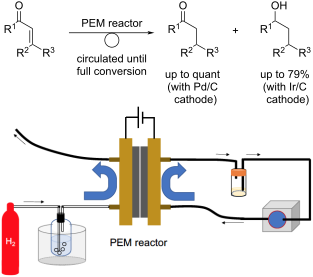
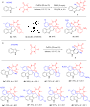
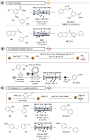
- -one (1a) as a model compound, and the electroreduction of 1a was carried out using a PEM reactor (Figure 1a, a single path). Pd/C was used as a cathode catalyst. Without electricity, trace amounts of cyclohexanone (2a) and cyclohexanol (3a) were obtained (Table 1, entry 1). With a current of 2.5 mA⋅cm
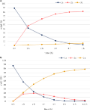
- examined (Table 1, entries 3–7). The yield of 2a increased with an increase in the current density (22% yield, 50 mA⋅cm−1). To improve the conversion, we designed a circulating system for the PEM reactor (Figure 1b) and used it for the electroreduction of 1a (Table 2). First, we carried out the
- electroreduction of 1a with a current of 12.5 mA⋅cm−1. As expected, 1a was almost entirely consumed after the passage of 2.0 F⋅mol−1, and 2a was obtained in 67% yield as a major product (Table 2, entry 1). The yield of 2a and 3a was almost the same with a current of 25 mA⋅cm−1 (Table 2, entry 2). Further, the





Synthesis, optical and electrochemical properties of (D–π)2-type and (D–π)2Ph-type fluorescent dyes
Beilstein J. Org. Chem. 2022, 18, 1047–1054, doi:10.3762/bjoc.18.106
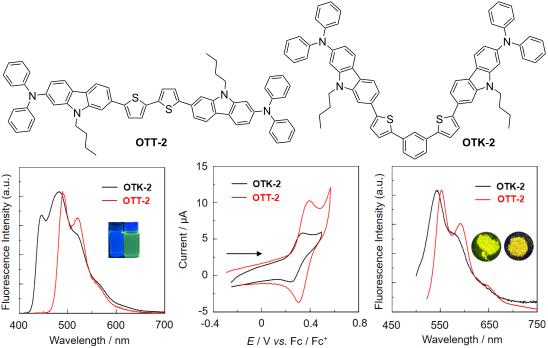
- . The εmax value for the λmax, abs of OTT-2 is 89 200 M−1 cm−1, which is comparable to that (εmax = 98 000 M−1 cm−1) of OTK-2. In the corresponding fluorescence spectra, as in the case of OTK-2, OTT-2 exhibited a vibronically-structured fluorescence band. The fluorescence maximum (λmax,fl) of OTT-2
- appeared at 490 nm, which is a by 43 nm longer wavelength than that (λmax,fl = 447 nm) of OTK-2. The Stokes shift (SS) value of OTT-2 is estimated to be 3177 cm−1, which is higher than that (2945 cm−1) of OTK-2. In addition, the Φfl of OTT-2 is 0.41, which is higher than that (Φfl = 0.36) of OTK-2. Time
- solid and an orange solid, respectively; the characterization data for OTK-2 are in agreement with those reported in the literature [33]; OTT-2: mp >300 °C; FTIR (ATR) ν̄: 1591, 1491, 1460 cm−1; 1H NMR (500 MHz, CD2Cl2) δ 0.76–1.02 (m, 6H), 1.23–1.38 (m, 4H), 1.71–1.81 (m, 4H), 4.12–4.21 (m, 4H), 6.95


Electrochemical Friedel–Crafts-type amidomethylation of arenes by a novel electrochemical oxidation system using a quasi-divided cell and trialkylammonium tetrafluoroborate
Beilstein J. Org. Chem. 2022, 18, 1040–1046, doi:10.3762/bjoc.18.105
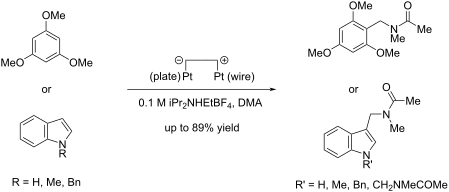
- electrochemical Friedel–Crafts-type amidomethylation. For electrolysis, a test tube-like undivided cell equipped with a Pt plate cathode (2 × 2 cm2) and a Pt wire anode (2 cm × 1 mm Ø) was used. Electrolysis of an N,N-dimethylacetamide (DMA) solution of 1 containing 0.1 M Bu4NBF4 as a supporting electrolyte
- amidomethylation is induced by electrolysis using a quasi-divided cell equipped with a Pt plate cathode (2 × 2 cm2) and a Pt wire anode (2 cm × 1 mm Ø) in DMA containing 0.1 M iPr2NHEtBF4. At the cathode, electrochemical reduction of a proton in iPr2NHEt+ takes place to generate hydrogen gas and iPr2NEt. Evolution


Isolation and biosynthesis of daturamycins from Streptomyces sp. KIB-H1544
Beilstein J. Org. Chem. 2022, 18, 1009–1016, doi:10.3762/bjoc.18.101
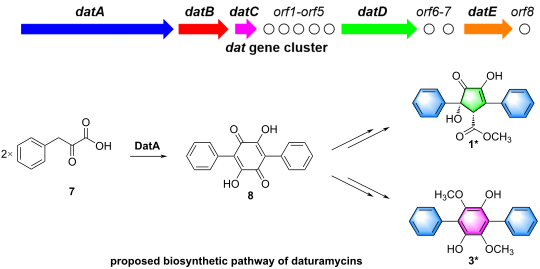
- ): pale yellow solid; IR (KBr) νmax: 3468, 3287, 1731, 1702, 1631, 1398 and 1202 cm−1; UV (MeOH) λmax (log ε): 314 (0.48), 217 (0.28), 202 (0.48); 1H and 13C NMR, see Table 1; HRMS–ESI (m/z): [M + Na]+ calcd for C19H16O5Na+, 347.0890; found, 347.0893. Daturamycin B (2): white powder; 1H and 13C NMR, see


Electroreductive coupling of 2-acylbenzoates with α,β-unsaturated carbonyl compounds: density functional theory study on product selectivity
Beilstein J. Org. Chem. 2022, 18, 956–962, doi:10.3762/bjoc.18.95

- ) was placed in the cathodic chamber of a divided cell (40 mL beaker, 3 cm diameter, 6 cm height) equipped with a platinum cathode (5 × 5 cm2), a platinum anode (2 × 1 cm2), and a ceramic cylindrical diaphragm (1.5 cm diameter). A 0.3 M solution of Bu4NClO4 in DMF (4 mL) was placed in the anodic chamber


Introducing a new 7-ring fused diindenone-dithieno[3,2-b:2',3'-d]thiophene unit as a promising component for organic semiconductor materials
Beilstein J. Org. Chem. 2022, 18, 944–955, doi:10.3762/bjoc.18.94
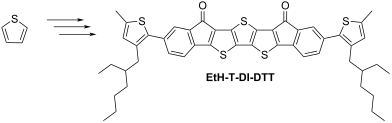
- intermolecular interactions, which are known to lead to a narrowing of the energy gap [3][61]. With a concentration series, an extinction coefficient of ε361 nm = 4.3 × 10⁴ L mol−1 cm−1 could be determined for the band at 361 nm, whilst for the band at 540 nm, a coefficient of ε540 nm = 1.1 × 10⁴ L mol−1 cm−1


Anti-inflammatory aromadendrane- and cadinane-type sesquiterpenoids from the South China Sea sponge Acanthella cavernosa
Beilstein J. Org. Chem. 2022, 18, 916–925, doi:10.3762/bjoc.18.91
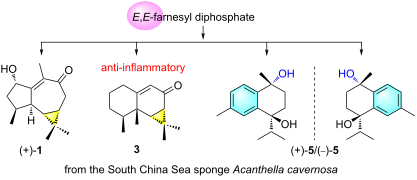
- -unsaturated ketone group (1644 cm−1), as additionally supported by the UV absorption at λmax 245 nm (log ε 3.8). Careful analysis of the NMR spectra of (+)-1 (Table 1 and Figures S8–S13 in Supporting Information File 1) showed a close similarity with those of co-occurring 2 [12][13][14], indicating compound
- with 4. The IR absorption band at 3386 cm−1 suggested the presence of hydroxy groups. A careful analysis of its 1D and 2D NMR spectra revealed that the NMR spectroscopic features of compound 5 (Table 1 and Figures S24–S31 in Supporting Information File 1) extremely resembled those of 4. The main
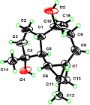
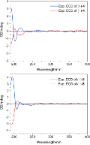
- ; ECD (MeCN) λ max, nm (Δε): 222 (−9.7), 257 (+7.2), 340 (+1.3); IR (KBr) νmax: 3435, 2956, 2927, 2872, 1644, 1383, 1261, 1109, 1037 cm−1; 1H and 13C NMR data, see Table 1; HRMS–ESI (m/z): [M + H]+ calcd for C15H23O2, 235.1693; found, 235.1700. ent-4β,10α-Dihydroxyaromadendrane (2): colorless crystal






First series of N-alkylamino peptoid homooligomers: solution phase synthesis and conformational investigation
Beilstein J. Org. Chem. 2022, 18, 845–854, doi:10.3762/bjoc.18.85
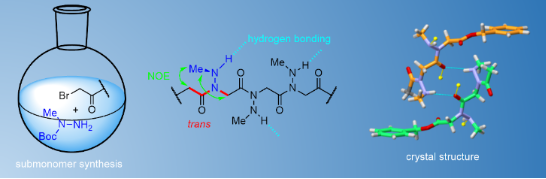
- characterized by Fourier-transform infrared spectroscopy. The spectra show two distinct N–H stretching bands in the 3500–3200 cm−1 region whose relative intensity varies with chain elongation. A first band, the more intense of the two, is observed at about 3300 cm−1. A higher energy band of much lower intensity
- at about 3450–3500 cm−1 is also observed, especially from the trimer stage. We can assume that the lower energy bands (3300 cm−1) are due to hydrogen-bonded N–H while the higher energy bands could be attributed to non-hydrogen bonded NH. This observation may indicate that not all NHs can form
- hydrogen bonds within an assembly, and that this is dependent on the size of the oligomers. Also, the region of the spectra corresponding to the C=O stretching (1800–1600 cm−1) show a band at 1743 cm−1 corresponding to C=O stretching of the ester and a band at 1648 cm−1 which increases with the oligomer


Post-synthesis from Lewis acid–base interaction: an alternative way to generate light and harvest triplet excitons
Beilstein J. Org. Chem. 2022, 18, 825–836, doi:10.3762/bjoc.18.83
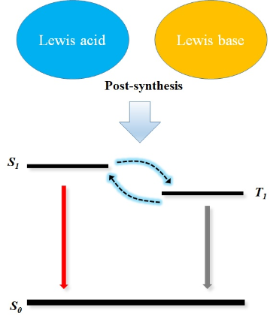
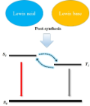
- Lewis basic fluorescent compounds 3–14. (a) PL spectra of compound 6 in toluene after addition of 0.0 (black line), 0.1 (red line), 0.3 (green line), 0.7 (blue line), 1.3 mol equiv (orange line) B(C6F5)3. (b) EL spectra of the device with compound 6 at a constant current density of 111 mA cm−2 for 0.00


Thiophene/selenophene-based S-shaped double helicenes: regioselective synthesis and structures
Beilstein J. Org. Chem. 2022, 18, 809–817, doi:10.3762/bjoc.18.81
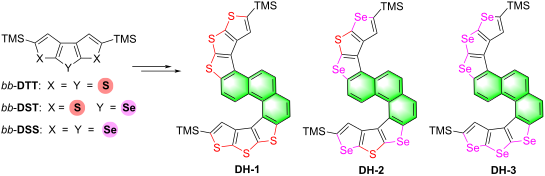
- (d, J = 16.0 Hz, 2H), 6.93 (d, J = 16.0 Hz, 2H), 0.39 (s, 18H); 13C{1H} NMR (100 MHz, CDCl3) δ (ppm) 145.3, 144.7, 143.7, 140.7, 138.4, 137.8, 137.2, 129.1, 127.8, 125.5, 124.9, 124.4, 122.8, 118.0, −0.1; IR (KBr): 3018, 2958, 2849, 1631, 1408, 1360, 945, 837 cm−1; EIMS (70 eV) m/z: [M]+ 662.18 (40
- , 1427, 1367, 920, 831 cm−1; DARTMS (m/z): [M + H]+ 854.8 (75); HRMS-DART (m/z): [M + H]+ calcd for C32H31S2Se4Si2, 854.8071; found, 854.8067. 1,3-Bis(2-(5-(trimethylsilyl)diselenopheno[2,3-b:3',2'-d]selenophen-2-yl)vinyl)benzene (5c) was synthesized according to the procedure described for compound 5a
- , 125.68, 125.20, 125.10, 125.04, 124.85, 124.63, 122.61, 122.51, 0.43, 0.41; IR (KBr): 3010, 2951, 2889, 1624, 1413, 1369, 908, 833 cm−1; MALDIMS (m/z): [M]+ 949.8; HRMS-DART-FT (m/z): [M]+ calcd for C32H30Se6Si2, 949.6894; found, 949.6887. Synthesis of DH-1 To a solution of 5a (9.6 mg, 0.014 mmol) in dry


Copper-catalyzed multicomponent reactions for the efficient synthesis of diverse spirotetrahydrocarbazoles
Beilstein J. Org. Chem. 2022, 18, 796–808, doi:10.3762/bjoc.18.80
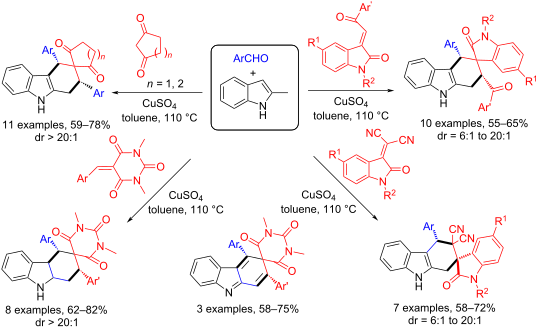
- , 121.8, 121.5, 120.2, 119.1, 110.7, 110.7, 109.0, 56.1, 50.0, 48.8, 43.6, 25.4; IR(KBr) υ: 3367, 3210, 3155, 3017, 2980, 2831, 2864, 1877, 1623, 1611, 1507, 1456, 1355, 1241, 1178, 1143, 955, 931, 849, 789 cm−1; HRMS–ESI (m/z): [M + Na]+ calcd for C39H30N2O2, 581.2199; found, 581.2191. 2. General
- , 29.1; IR(KBr) υ: 3355, 3207, 3117, 3048, 2963, 2831, 2167, 1871, 1641, 1633, 1554, 1431, 1370, 1240, 1131, 1100, 972, 961, 881, 764 cm−1; HRMS–ESI (m/z): [M + Na]+ calcd for C34H24N4O, 527.1842; found, 527.1849. 3. General procedure for the preparation of the tetrahydrospiro[carbazole-3,5'-pyrimidines
- , 129.1, 128.7, 128.3, 128.0, 126.3, 126.1, 125.5, 124.7, 124.2, 123.1, 120.8, 29.6, 28.8, 21.4, 21.3; IR (KBr) υ: 3219, 3158, 3043, 2966, 2900, 1843, 1755, 1648, 1617, 1537, 1466, 1358, 1318, 1266, 1150, 987, 899, 765 cm−1; HRMS–ESI (m/z): [M + Na]+ calcd for C31H25N3O3, 510.1788; found, 510.1788. 4





Inductive heating and flow chemistry – a perfect synergy of emerging enabling technologies
Beilstein J. Org. Chem. 2022, 18, 688–706, doi:10.3762/bjoc.18.70
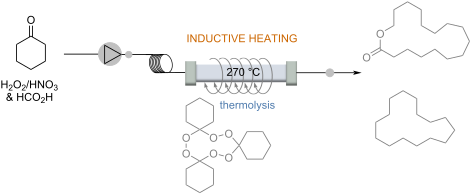
- could be achieved with high flow rates (125 mL/min; reactor dimensions according to SI: 2 cm diameter and 1 cm height of catalyst filling) in an external electromagnetic field of 28 mT. Heating can be problematic when exothermic reactions are performed. To prevent catalyst deactivation, the group of




Mechanochemical halogenation of unsymmetrically substituted azobenzenes
Beilstein J. Org. Chem. 2022, 18, 680–687, doi:10.3762/bjoc.18.69
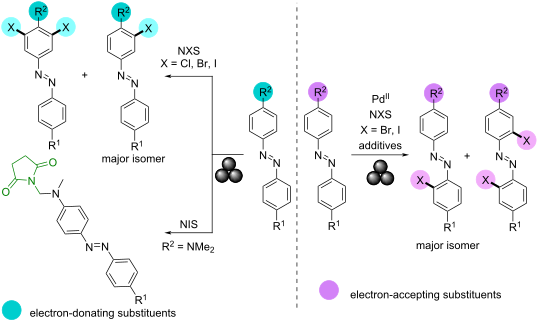
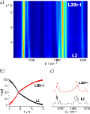
- bromination of L2 confirmed its conversion to the product L2Br-I (Figure 2). The formation of L2Br-I was accompanied by the intensity decrease of L2 ν(N=N) and ν(C–N) bands in the range 1400–1450 and 1080–1200 cm−1, respectively. Compounds L2 and L2Br-I were identified in the reaction mixture by the Raman
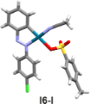
- azo nitrogen and a carbon atom of the unsubstituted phenyl ring. The tosylate ion is at the trans position to the carbon atom. In situ Raman monitoring of the bromination of L6–8 in the presence of 30 mol % PdII catalyst revealed a new band around 1380 cm−1 (Figure 5a and Figures S23–S27 in Supporting





Tri(n-butyl)phosphine-promoted domino reaction for the efficient construction of spiro[cyclohexane-1,3'-indolines] and spiro[indoline-3,2'-furan-3',3''-indolines]
Beilstein J. Org. Chem. 2022, 18, 669–679, doi:10.3762/bjoc.18.68
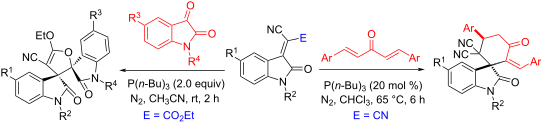
- , 128.0, 127.1, 127.0, 123.0, 112.3, 110.9, 60.3, 49.0, 44.6, 44.4, 42.6, 21.4, 21.2; IR (KBr) ν: 3727, 3405, 3029, 2921, 2863, 2317, 1911, 1709, 1609, 1501, 1443, 1362, 1295, 1185, 1049, 1022, 959, 920, 820, 732 cm−1; HRMS–ESI (m/z): [M + Na]+ calcd for C38H31NaN3O2, 584.2314; found, 584.2306. 2. General
- , 3412, 2933, 2871, 2324, 1925, 1817, 1703, 1604, 1474, 1442, 1339, 1172, 1091, 1010, 904, 824, 716 cm−1; HRMS–ESI (m/z): [M + Na]+ calcd for C38H34ClNaNO4, 626.2069; found, 626.2066. 3. General procedure for the preparation of the spiro[cyclohexane-1,3'-indolines] 8a–m: In an atmosphere of nitrogen
- , 60.1, 43.9, 20.9, 14.7; IR (KBr) ν: 3467, 3063, 3035, 2990, 2919, 2205, 1739, 1706, 1632, 1602, 1496, 1454, 1434, 1408, 1381, 1361, 1333, 1293, 1258, 1215, 1199, 1186, 1167, 1133, 1089, 1070, 1026, 997, 962, 933, 911, 895, 875, 836, 818, 776, 747 cm−1; HRMS–ESI (m/z): [M + Na]+ calcd for C36H28NaClN3O4


Shift of the reaction equilibrium at high pressure in the continuous synthesis of neuraminic acid
Beilstein J. Org. Chem. 2022, 18, 567–579, doi:10.3762/bjoc.18.59
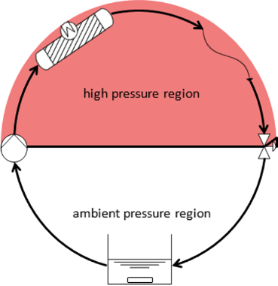
- 80 mg of particles, 5 µL of 10 mM potassium phosphate buffer was used as tracer and injected with a speed of 1 mL/min. Reactor set-up (left to right): UHPLC pump, heated fixed-bed reactor, capillaries (ID: 25 µm or 50 µm, length: 30 cm), back pressure regulator (up to 30 MPa). List of carriers used


Substituent effect on TADF properties of 2-modified 4,6-bis(3,6-di-tert-butyl-9-carbazolyl)-5-methylpyrimidines
Beilstein J. Org. Chem. 2022, 18, 497–507, doi:10.3762/bjoc.18.52
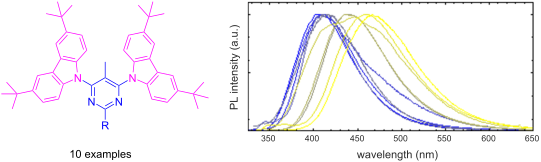
- spectra were rather similar for all compounds, described with, typical for tCbz units, vibronic progression-having peaks bellow ≈340 nm [41]. Molar absorption coefficients were in the range of 19700–34200 M−1 cm−1, being in line with DFT predicted S0→S1 oscillator strengths and LUMO energies. The




Sesquiterpenes from the soil-derived fungus Trichoderma citrinoviride PSU-SPSF346
Beilstein J. Org. Chem. 2022, 18, 479–485, doi:10.3762/bjoc.18.50
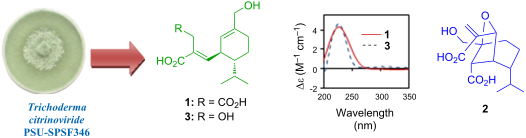
- previously reported. Trichocitrinovirene A (1) was isolated as a colorless gum and had the molecular formula C15H22O5 on the basis of the HRESIMS peak at m/z 305.1359 [M + Na]+. The IR spectrum exhibited absorption bands at 3336, 1684, and 1649 cm−1 for hydroxy, conjugated carboxyl carbonyl, and double bond
- mg) was then washed with acetone to afford compound 5 (3.7 mg). Trichocitrinovirene A (1): Colorless gum; +46.1 (c 0.67, MeOH); UV (MeOH) λmax, nm (log ε): 210 (3.32); ECD (MeOH, c 0.0008) λmax, nm (Δε): 227 (+4.3); IR (neat) νmax: 3336, 1684, 1649 cm−1; 1H and 13C NMR (CD3OD) see Table 1; HRMS–ESI
- (m/z): [M + Na]+ calcd for C15H22O5Na, 305.1356; found, 305.1359. Trichocitrinovirene B (2): Colorless gum; +44.6 (c 0.67, MeOH); UV (MeOH) λmax, nm (log ε): 210 (3.67); IR (neat) νmax: 3386, 1683, 1645 cm−1; 1H and 13C NMR (CD3OD) see Table 1; HRMS–ESI (m/z): [M + Na]+ calcd for C15H22O6Na


Cs2CO3-Promoted reaction of tertiary bromopropargylic alcohols and phenols in DMF: a novel approach to α-phenoxyketones
Beilstein J. Org. Chem. 2022, 18, 420–428, doi:10.3762/bjoc.18.44
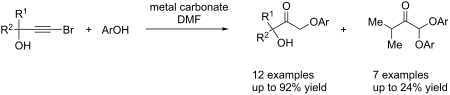
- model substrates for our investigation (Table 1). Completion of the reaction was monitored by IR and 1H NMR spectroscopy by the disappearance of the bands at 2196–2212 cm–1 (–C≡C–Br) and signals of the bromopropargylic alcohol 1a, respectively. Under the conditions previously used [18][19][20][21] for
- mixture was stirred at 50–55 °C for 3 h, filtered and concentrated. The residue was purified by flash column chromatography on silica gel (5.0 × 4.0 cm, gradient elution, C6H14/Et2O, 2:1 followed by Et2O, Me2CO) to give products 3a (10 mg, 4%), 4a (214 mg, 55%), 5a (30 mg, 22%) and 7 (11 mg, 5%). Scope of


Menadione: a platform and a target to valuable compounds synthesis
Beilstein J. Org. Chem. 2022, 18, 381–419, doi:10.3762/bjoc.18.43
- electrolysis (Scheme 10). For this approach, two smooth platinum foil electrodes placed 1 cm apart in the upper aqueous phase were electrolyzed galvanostatically (30 mA/cm2). Additionally, a NaBr solution acidified with H2SO4 was used as electrolyte. The voltage during electrolysis was 2.1 V and when the


Four bioactive new steroids from the soft coral Lobophytum pauciflorum collected in South China Sea
Beilstein J. Org. Chem. 2022, 18, 374–380, doi:10.3762/bjoc.18.42
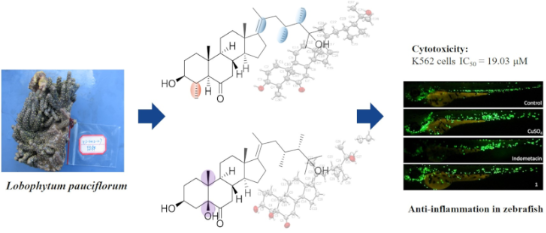
- 0.13, MeOH); IR (KBr) νmax: 3389, 2944, 2871, 1707, 1603, 1467, 1380 cm−1; 1H and 13C NMR data (CDCl3, 500 and 125 MHz) see Table 1; HRESIMS (m/z) [M + Na]+ calcd for C30H50O3Na, 481.3652; found, 481.3648. Compound 2: colorless crystals; [α]D25 −12.77 (c 0.3, MeOH); IR (KBr) νmax: 3361, 2926, 2855
- , 1702, 1651, 1459, 1376 cm−1; 1H and 13C NMR data (CD3OD, 500 and 125 MHz) see Table 1; HRESIMS (m/z) [M + Na]+ calcd for C29H48O4Na, 483.3445; found, 483.3446. Compound 3: colorless crystals; [α]D25 −18.36 (c 0.5, MeOH); IR (KBr) νmax: 3390, 2938, 1702, 1459, 1376 cm−1; 1H and 13C NMR data (CDCl3, 500
- and 125 MHz) see Table 1; HRESIMS (m/z) [M + H]+ calcd for C28H49O4, 449.3625; found, 449.3626. Compound 4: yelllow crystals; [α]D25 −27.83 (c 0.13, MeOH); IR (KBr) νmax: 3391, 2957, 2872, 1683, 1650, 1558, 1540, 1357 cm−1; 1H and 13C NMR data (CDCl3, 500 and 125 MHz) see Table 1; HRESIMS (m/z) [M + H


Synthesis of piperidine and pyrrolidine derivatives by electroreductive cyclization of imine with terminal dihaloalkanes in a flow microreactor
Beilstein J. Org. Chem. 2022, 18, 350–359, doi:10.3762/bjoc.18.39
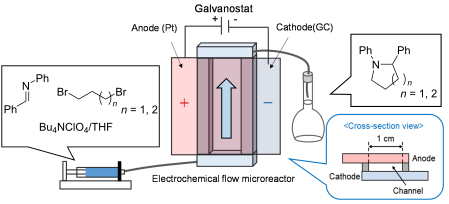
- mol−1; current density, 12.7 mA cm−2; solvent, THF; substrate, 0.06 M benzylideneaniline (1) and 0.12 M 1,4-dibromobutane (2a); base added, 0.06M DBU; supporting electrolyte, 0.14 M n-Bu4N∙ClO4; flow rate, 11 mL h−1 (residence time, 3.9 s); collection volume and time for each fraction, 2 mL, 10 min 55
- microreactor was constructed with a platinum plate (3 × 3 cm) and cathode plate (3 × 3 cm) (Supporting Information File 1, Figure S1). A spacer (double faced adhesive type with thicknesses of 20, 40, or 80 μm) was used to leave a rectangular channel exposed (1 × 3 cm), and the two electrodes were simply
- sandwiched together. After connecting Teflon tubings to the inlets and outlet, the reactor was sealed with epoxy resin (Supporting Information File 1, Figure S2). Thus, the dimensions of the flow channel in the reactor are 1 cm width and 3 cm length, and the channel height corresponds to the thickness of the


Flow synthesis of oxadiazoles coupled with sequential in-line extraction and chromatography
Beilstein J. Org. Chem. 2022, 18, 232–239, doi:10.3762/bjoc.18.27
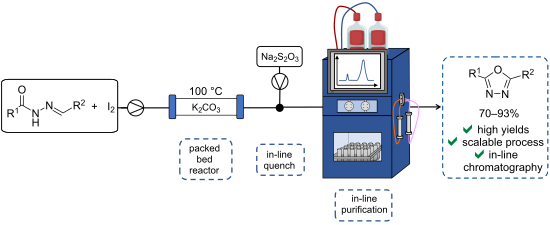
- setup. The initial setup consisted of a heated glass column (i.d. 7 mm, length 7 cm), packed with K2CO3, through which a solution of acyl hydrazone and iodine were passed. It was anticipated that the larger excess of K2CO3 present in the packed bed reactor (when compared to batch mode), in addition to
- larger quantity of K2CO3. As a result of the increased volume of the reactor column (i.d. 15 mm, length 12 cm) a proportional increase in flow rate was necessary to maintain the residence time consistent with our small-scale experiments. Following reaction, the excess iodine must be quenched via a wash


Glycosylated coumarins, flavonoids, lignans and phenylpropanoids from Wikstroemia nutans and their biological activities
Beilstein J. Org. Chem. 2022, 18, 200–207, doi:10.3762/bjoc.18.23
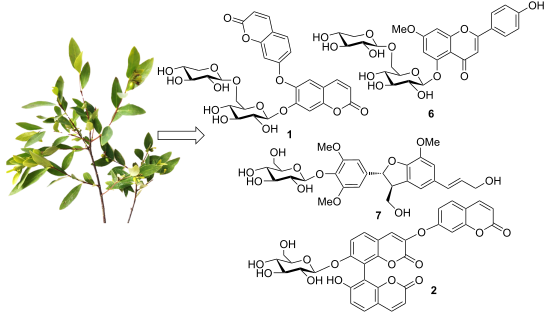
- absorption bands at 325 and 293 nm indicated the presence of a coumarin-type chromophore. The IR spectrum of 1 demonstrated absorption bands characteristic for an hydroxy group (3266 cm−1), α,β-unsaturated carbonyl group (1739 and 1701 cm−1), and an aromatic ring (1624 and 1457 cm−1). The 1H NMR spectrum of
- products generated by plant species from the genus Wikstroemia. Experimental General experimental procedures Optical rotations were measured with a Horiba SEPA-300 polarimeter. UV spectra were recorded using a Waters UV-2401A spectrophotometer equipped with a DAD and a 1 cm path length cell. Methanolic
- the solvent signals. Mass spectra were recorded on a VG Auto Spec-3000 instrument or an API QSTAR Pulsar 1 spectrometer. Semi-preparative HPLC was performed on an Agilent 1120 apparatus equipped with a UV detector and a Zorbax SB-C-18 (Agilent, 9.4 mm × 25 cm) column. Column chromatography was



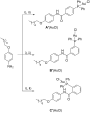
Diametric calix[6]arene-based phosphine gold(I) cavitands
Beilstein J. Org. Chem. 2022, 18, 190–196, doi:10.3762/bjoc.18.21
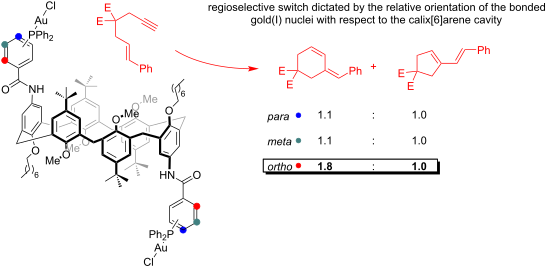
- atmosphere. Subsequently, a tip of spatula (micro spatula, Heyman type 16 cm) of AgSbF6 (≈2.0 mol %, ≈2 mg) was added along with 20 mg of 4 Å molecular sieves. The flask was covered with an aluminum foil and the mixture stirred for 5 minutes. Subsequently, 1a (0.2 mmol, 63.0 mg) was added and the reaction


Multi-faceted reactivity of N-fluorobenzenesulfonimide (NFSI) under mechanochemical conditions: fluorination, fluorodemethylation, sulfonylation, and amidation reactions
Beilstein J. Org. Chem. 2022, 18, 182–189, doi:10.3762/bjoc.18.20
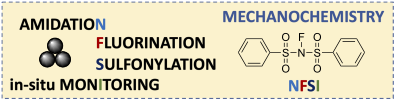
- performed in situ reaction monitoring of the milling process by Raman spectroscopy [32][33]. In an experiment milling 1c with NFSI (1 equiv) we observed the consumption of NFSI after ca. 30 min of milling as evidenced by a reduction in the intensity of the band at 1197 cm−1 of NFSI (Figure S3 in Supporting
- Information File 1). However, the very strong bands around 998 cm−1 (in-plane bending; phenyl ring), 1177 cm−1 (stretching; SO2), and 1583 cm−1 (stretching; phenyl ring) of NFSI and byproducts [(PhSO2)2NH [34], and (PhSO2)2NCH3], prevented the observation of the less Raman active fluorinated products 2c and





