Search results
Search for "dynamics" in Full Text gives 247 result(s) in Beilstein Journal of Organic Chemistry. Showing first 200.
Adsorption mechanism and valency of catechol-functionalized hyperbranched polyglycerols
Beilstein J. Org. Chem. 2015, 11, 828–836, doi:10.3762/bjoc.11.92
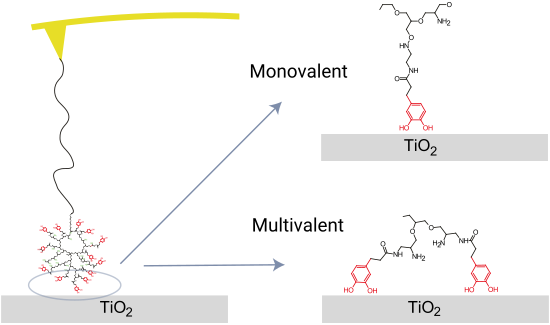
- possible and allows for good cohesion between the layers of this material. Here we investigated the molecular details, valency and dynamics on how molecules with multiple DOPA groups adhere to surfaces. Results and Discussion The publication by Lee et al. [11] sparked considerable interest and since then



Synthesis of carbohydrate-scaffolded thymine glycoconjugates to organize multivalency
Beilstein J. Org. Chem. 2015, 11, 668–674, doi:10.3762/bjoc.11.75
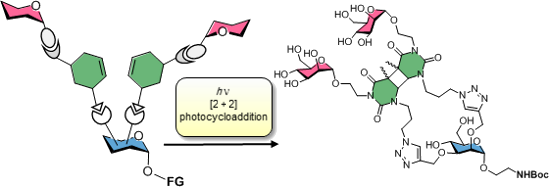
- [6]. This work is based on the idea that changes of ligand orientation as well as changes of their conformational availability are regulating parameters in carbohydrate recognition, in particular on the cell surface. Indeed, we have formerly shown that the molecular dynamics of glycodendrimers
- galectin-mediated organization of cell surface glycoconjugates influences glycan dynamics and essential biological processes like signaling [8]. Therefore, in order to advance our understanding of carbohydrate-mediated biological response, we are seeking further molecular architectures that allow us
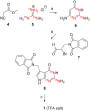
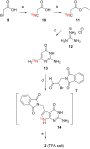
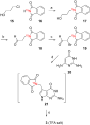
- organizing the multivalency of sugar ligands. We planned for a divalent system to start with, in which the dynamics of two at first flexible branches can be controlled by an intramolecular [2 + 2] cycloaddition reaction (Figure 1A). In order to control the [2 + 2] cycloaddition process, it was planned to



TEMPO-derived spin labels linked to the nucleobases adenine and cytosine for probing local structural perturbations in DNA by EPR spectroscopy
Beilstein J. Org. Chem. 2015, 11, 219–227, doi:10.3762/bjoc.11.24
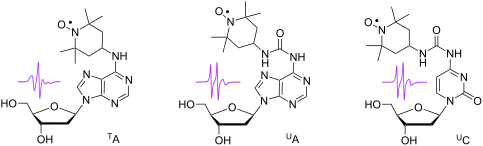
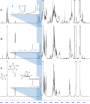
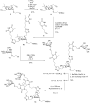
- labels; structure-dependent dynamics; Introduction The knowledge about structures and conformational dynamics of nucleic acids, as well as other biomolecules, is essential to understand their biological functions, including interactions with other molecules. The exact atom-to-atom structural information
- ][41][42], non-native base-pairing properties of nucleobases [43][44][45][46] and their dynamics [42][47][48]. Fluorescence spectroscopy, using environmentally sensitive fluorescent nucleosides has been used for detection of local structural perturbations [49][50][51][52][53][54][55][56][57], including
- the investigation of single-base mismatches [51][54][56][58][59], abasic sites [60] as well as nick sites in duplex DNA [61], and ligand-induced folding of riboswitches [62][63]. Continuous wave (CW) EPR spectroscopy can be used for the determination of structure-dependent dynamics based on the line


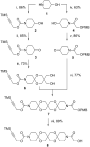
Articulated rods – a novel class of molecular rods based on oligospiroketals (OSK)
Beilstein J. Org. Chem. 2015, 11, 74–84, doi:10.3762/bjoc.11.11

- equilibrium of articulated rods The fundamental feature of articulated rods is the restricted conformational space with two dominating species: a stretched and a folded conformation. This feature was concluded from Molecular Dynamics (MD) simulation revealing a bimodal distribution of the end-to-end distance




Come-back of phenanthridine and phenanthridinium derivatives in the 21st century
Beilstein J. Org. Chem. 2014, 10, 2930–2954, doi:10.3762/bjoc.10.312

- . The obtained results [92][93][94] stress the importance of DNA-basepair dynamics for the electronic transfer processes in DNA-stacks. The efficiency of transfer is rather more controlled by motions of chromophores involved in aromatic stacking of DNA-reporter complex than with rigid aryl-stacking


Synthesis and characterization of a new photoinduced switchable β-cyclodextrin dimer
Beilstein J. Org. Chem. 2014, 10, 2874–2885, doi:10.3762/bjoc.10.304
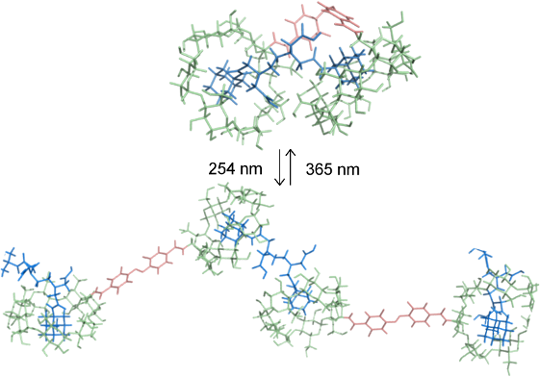
- calculations, the geometrical force field parameters needed for molecular dynamics simulations were derived. Molecular dynamics simulations performed on the two configurations of AZO-CDim 1 highlighted the rigidity of the linker, which governs the relative position of the two CD cavities. The trajectories
- objects in solution. The experimental data strongly suggests that AZO-CDim 1 is a switchable host which forms two different inclusion complexes with this ditopic guest. The structural analyses of the molecular dynamics trajectories of the two configurations of the AZO-CDim 1 systems enable us to draw some
- moiety as the linker [36]. At this stage, based on the molecular dynamics study, at least two supramolecular polymers can be considered: the first is linear, as often described in the literature [43][44] (Figure 8b), and the second is cyclic (Figure 8c). Furthermore, it is possible that such linear or



Binding mode and free energy prediction of fisetin/β-cyclodextrin inclusion complexes
Beilstein J. Org. Chem. 2014, 10, 2789–2799, doi:10.3762/bjoc.10.296
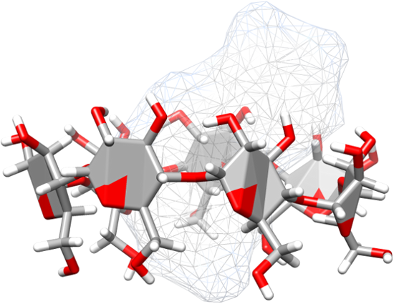
- to investigate the preferential binding mode and encapsulation of the flavonoid fisetin in the nano-pore of β-cyclodextrin (β-CD) at the molecular level using various theoretical approaches: molecular docking, molecular dynamics (MD) simulations and binding free energy calculations. The molecular
- complexes. In addition, the quantum mechanics calculations with M06-2X/6-31G(d,p) clearly showed that both solvation effect and BSSE correction cannot be neglected for the energy determination of the chosen system. Keywords: cyclodextrin; fisetin; flavonoid; MM-PBSA; molecular dynamics simulation; QM-PBSA
- stability against exposure to strong UV light and high temperatures [24][25]. In recent years, computational approaches have played a significant role in monitoring inclusion complexation between cyclodextrin and guest molecules [26][27] at the molecular level [28][29]. Molecular dynamics (MD) simulations


Anomalous diffusion of Ibuprofen in cyclodextrin nanosponge hydrogels: an HRMAS NMR study
Beilstein J. Org. Chem. 2014, 10, 2715–2723, doi:10.3762/bjoc.10.286
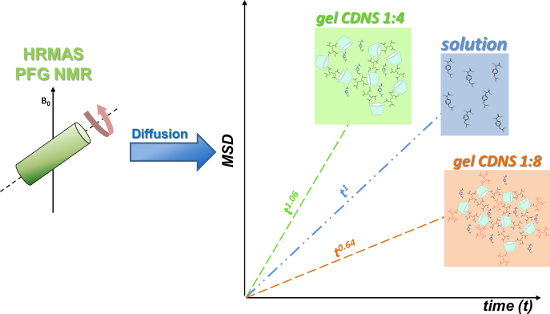
- used to investigate transport phenomena in heterogeneous systems endowed with liquid-like dynamics by applying pulsed field gradient spin echo (PGSE) methodologies under magic-angle spinning conditions [23]. This point is of great interest in the field of controlled release of active pharmaceutical
- fitting procedures were done by Dynamics Center software (2.1.8 version) (Bruker). The experimental error is between 2 and 3%. TEM Images were recorded on a Transmission Electron Microscope Philips CM200 FEG at 200 kV electron accelerating potential. CDNSEDTA 1:4 and CDNSEDTA 1:8 were swollen with a


Specific DNA duplex formation at an artificial lipid bilayer: fluorescence microscopy after Sybr Green I staining
Beilstein J. Org. Chem. 2014, 10, 2307–2321, doi:10.3762/bjoc.10.240
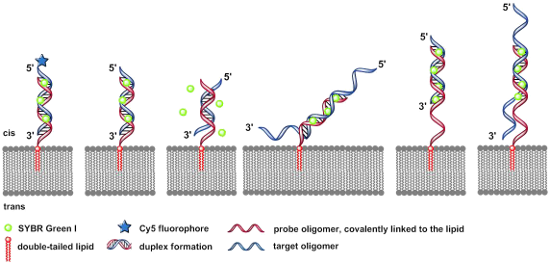
- values of ≈5 × 10⁴ kHz. Further experiments concerning a multiple compartment chamber with a common aqueous sub-phase, as well as a thermostated device for a suppression of nonspecific base pairing are underway [15]. Moreover, ab initio molecular-dynamics- (AIMD)- and ab initio Monte-Carlo- (AIMC








Solution phase synthesis of short oligoribonucleotides on a precipitative tetrapodal support
Beilstein J. Org. Chem. 2014, 10, 2279–2285, doi:10.3762/bjoc.10.237
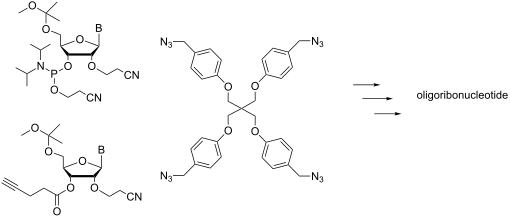
- , dynamics of chain invasion and recognition by small molecular entities [6][7][8][9][10]. The quantities of short RNA sequences required for such studies are often larger than what can easily be obtained by lab-scale solid phase synthesis. In other words, there seems to be a need for a straightforward


Derivatives of the triaminoguanidinium ion, 3. Multiple N-functionalization of the triaminoguanidinium ion with isocyanates and isothiocyanates
Beilstein J. Org. Chem. 2014, 10, 2255–2262, doi:10.3762/bjoc.10.234
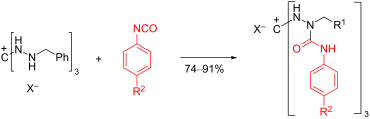
- range, and therefore, a complete assignment of most of these spectra was not possible. Due to the likely occurrence of several dynamic processes in solution (conformational changes with hindered rotation around single bonds, prototropic tautomerism in the guanidine moiety [1], dynamics of intra- and


Synthesis and optical properties of pyrrolidinyl peptide nucleic acid carrying a clicked Nile red label
Beilstein J. Org. Chem. 2014, 10, 2166–2174, doi:10.3762/bjoc.10.224
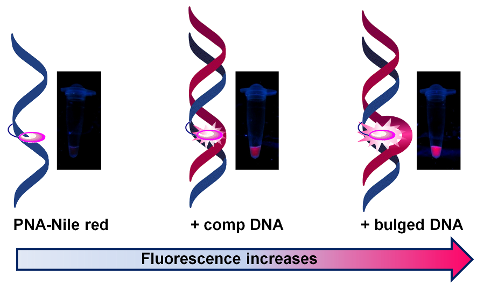
- Chemistry, Karlsruhe Institute of Technology (KIT), Fritz-Haber-Weg 6, 76131 Karlsruhe, Germany 10.3762/bjoc.10.224 Abstract DNA or its analogues with an environment-sensitive fluorescent label are potentially useful as a probe for studying the structure and dynamics of nucleic acids. In this work
- insertion are suggestive of different interactions between the Nile red label and the duplexes. Keywords: click chemistry; deoxyribonucleic acid; DNA bulge; fluorescence; nucleic acids; solvatochromism; Introduction Fluorescent labels are important tools for investigating the structure and dynamics of


Syntheses of 15N-labeled pre-queuosine nucleobase derivatives
Beilstein J. Org. Chem. 2014, 10, 1914–1918, doi:10.3762/bjoc.10.199
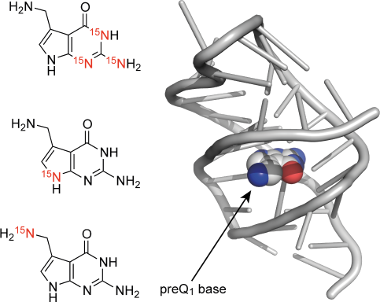
- ][7][8]. To explore the binding process of preQ1 base to the RNA and to shed light on the dynamics underpinning this process advanced NMR spectroscopic methods exist for which 15N-labeled preQ1 base derivatives would be highly beneficial. Here, we report efficient routes for the synthesis of three



Why a diaminopyrrolic tripodal receptor binds mannosides in acetonitrile but not in water?
Beilstein J. Org. Chem. 2014, 10, 1513–1523, doi:10.3762/bjoc.10.156
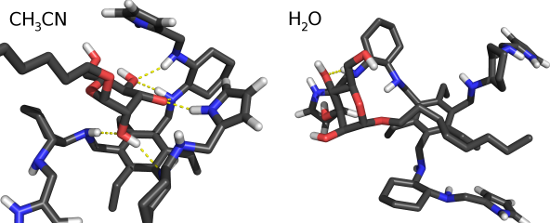
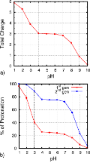
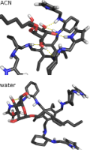
- several molecular dynamics and constant-pH molecular dynamics simulations in acetonitrile and water to evaluate the conformational space of the receptor and to understand the molecular detail of the receptor–mannoside interaction. The protonation states sampled by the receptor show that the positive
- reason for the higher activity in this solvent. This work also presents a new implementation of the stochastic titration constant-pH molecular dynamics method to a synthetic receptor of sugars and attests its ability to describe the protonation/conformation coupling in these molecules. Keywords
- performances when changing the solvent and to identify the molecular determinants behind the reported high affinities. Simulation methods, namely the so-called constant-pH molecular dynamics (CpHMD) methods, have been used to understand the molecular detail of several phenomena in the last years [15][16][17




Multichromophoric sugar for fluorescence photoswitching
Beilstein J. Org. Chem. 2014, 10, 1471–1481, doi:10.3762/bjoc.10.151
- set to 3.1 ps. The instrumental response function was recorded before each decay measurement with a fwhm (full width at half-maximum) of ~25 ps. The fluorescence data were analyzed using the Globals software package developed at the Laboratory for Fluorescence Dynamics at the University of Illinois at




Biantennary oligoglycines and glyco-oligoglycines self-associating in aqueous medium
Beilstein J. Org. Chem. 2014, 10, 1372–1382, doi:10.3762/bjoc.10.140
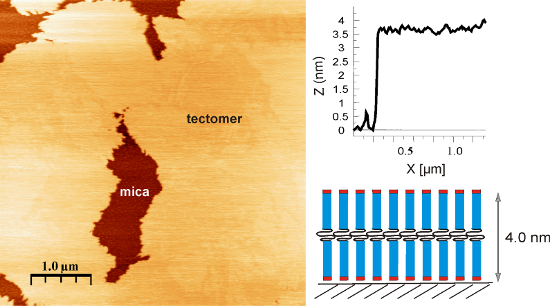
- thermodynamically unfavorable contact with water. It was demonstrated for biantennary oligoglycines that a concentration of 0.1 mg/mL is optimal for the study of the dynamics of tectomer growth on a mica surface. At higher concentrations the growth both in solution and on the surface proceeded so rapidly that the
- dynamics study was considered impossible. No tectomer structure was observed under acidic conditions (рН < 5), whereas under neutral and basic conditions the reaction proceeded similarly in terms of both the velocity and the morphology of formed tectomers. The oligoethylene glycol derivatives Н-Glyn-NH
- )10NHGly4-Н was capable of forming tectomers in neutral and basic solutions which were unchanged in an aqueous phase for a long time. Figure 5 demonstrates the dynamics of layer growth on mica with the characteristic formation of islet structures (texp = 0.5 min, Figure 5а), growing laterally (texp = 1 min





A new building block for DNA network formation by self-assembly and polymerase chain reaction
Beilstein J. Org. Chem. 2014, 10, 1037–1046, doi:10.3762/bjoc.10.104
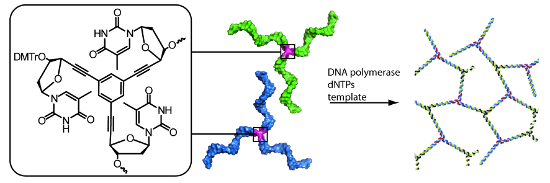
- geometric restriction of the branching unit, the enzymatic generation of complex DNA networks by PCR was feasible. The novel generated DNA networks were investigated by agarose gel electrophoresis, atomic force microscopy, dynamics light scattering, and electron paramagnetic resonance spectroscopy on
- Supporting Information File 1). This DH is variable at different angles because DNA networks were not expected to have spherical morphology in solution [47]. Furthermore, different DH values in the case of branched DNA samples were owed to the dynamics in solution. Comparing scattering intensity of linear
- properties of biological macromolecules, e.g., DNA [48][49][50][51][52][53]. Since the systems studied in the current investigation are diamagnetic, nitroxide labels had to be inserted enzymatically [54][55]. EPR spectra of nitroxide labels are sensitive to dynamics on the picosecond to microsecond


Unusual polymorphism in new bent-shaped liquid crystals based on biphenyl as a central molecular core
Beilstein J. Org. Chem. 2014, 10, 794–807, doi:10.3762/bjoc.10.75
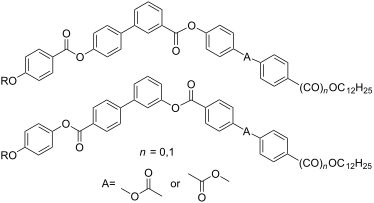
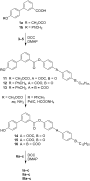
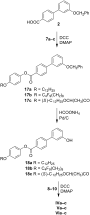
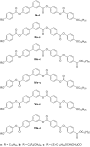
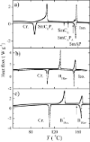
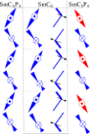
- dielectric measurements. The dielectric spectroscopy data are unique and presented for the first time in the SmCG phase providing new information about the molecular dynamics. Keywords: bent-shaped; biphenyl core; liquid crystals; mesomorphic behaviour; SmCG phase; Introduction Achiral bent-shaped liquid






Staudinger ligation towards cyclodextrin dimers in aqueous/organic media. Synthesis, conformations and guest-encapsulation ability
Beilstein J. Org. Chem. 2014, 10, 774–783, doi:10.3762/bjoc.10.73
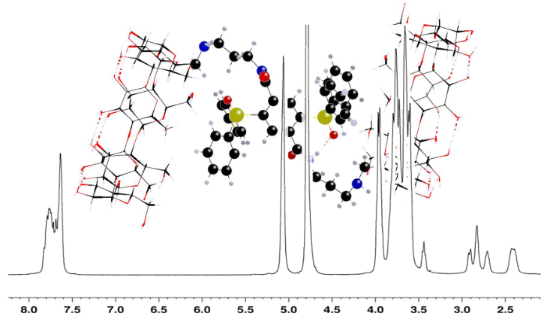
- , (iv) structural characterization regarding conformation and dynamics, intra- and intermolecular interactions, self-inclusion and aggregation in water, and ultimately (iv) availability of the individual CD cavities for molecular inclusion. The later has become of critical importance since it has been



Thermodynamically stable [4 + 2] cycloadducts of lanthanum-encapsulated endohedral metallofullerenes
Beilstein J. Org. Chem. 2014, 10, 714–721, doi:10.3762/bjoc.10.65
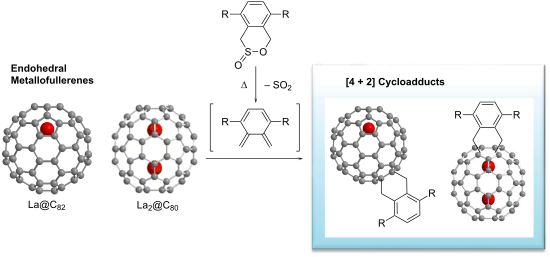
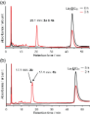
- . However, 3b shows a specific absorption band around 700 nm as in the spectrum recorded by the HPLC system shown in Figure 3, indicating its [6,6]-structure. Temperature-dependent dynamics of the [4 + 2] adducts of endohedral metallofullerenes were studied for 4a by dynamic 1H NMR measurements. Although 4a






Cyclic phosphonium ionic liquids
Beilstein J. Org. Chem. 2014, 10, 271–275, doi:10.3762/bjoc.10.22

- cations wherein the room temperature viscosities of the phosphonium salts are approximately one-half of those of their ammonium congeners [7][8][9][10][11]. This difference draws attention to the particular role that the cyclic alkyl functionality plays in IL fluid dynamics in contrast to two linear
- chains. This topic merits further exploration via molecular dynamics simulations [28] and physical studies such as NMR diffusion measurements, nuclear Overhauser effect spectroscopies, and quasi-elastic neutron scattering. As seen for instance for the cyclic ammonium salts, the viscosities of the cyclic


Plakilactones G and H from a marine sponge. Stereochemical determination of highly flexible systems by quantitative NMR-derived interproton distances combined with quantum mechanical calculations of 13C chemical shifts
Beilstein J. Org. Chem. 2013, 9, 2940–2949, doi:10.3762/bjoc.9.331
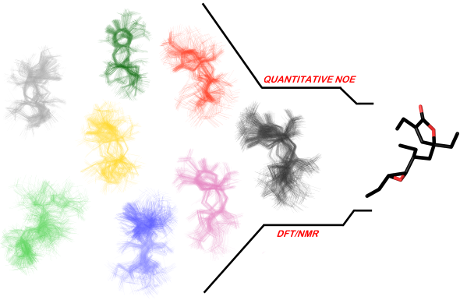
- the configurational assignment of plakilactone H. Molecular dynamics and Monte Carlo conformational search calculations were performed on all possible diastereoisomers of 2 (Figure 3) by using the MMFFs [24] force field (MacroModel software package [25]) in the presence of chloroform (continuum model
- absolute configuration at C-7 and C-8, we tried to elucidate the absolute configuration at C-4 and C-6 on plakilactone G (1). The first step was the conformational search of the four possible diastereoisomers (1a–d in Figure 5), obtained with a fixed 7R,8S configuration, by using molecular dynamics (400
- conformational space of plakilactones G and H (1 and 2), we performed Molecular dynamics and Monte Carlo calculations. Molecular dynamics calculations of 1 and 2 were performed at different temperatures (400 and 600 and 800 K for 5 ns (time-step of 1.5 fs) by using the MMFFs [24] force field (MacroModel software


Flow synthesis of phenylserine using threonine aldolase immobilized on Eupergit support
Beilstein J. Org. Chem. 2013, 9, 2168–2179, doi:10.3762/bjoc.9.254
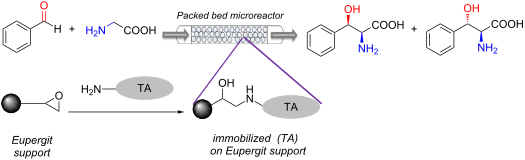
- development of an enzymatic bioreaction and found that the dynamics of a biochemical reaction can be studied in a few seconds [35]. Although many promising routes have been developed for the synthesis of chiral α-amino alcohols, these often depend on the use of toxic and expensive chiral ligands coupled to


Structure elucidation of β-cyclodextrin–xylazine complex by a combination of quantitative 1H–1H ROESY and molecular dynamics studies
Beilstein J. Org. Chem. 2013, 9, 1917–1924, doi:10.3762/bjoc.9.226
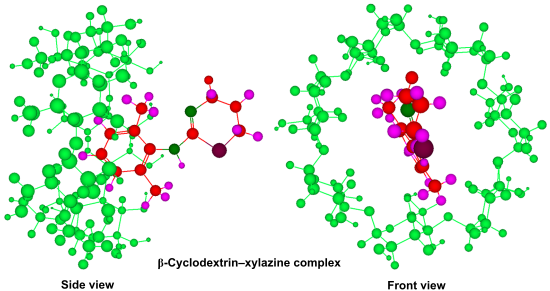
- , could be obtained. We calculated the peak intensity ratio from the inter-proton distances for the most stable conformations obtained by molecular dynamics studies in vacuum. The results show that highly accurate structural information can be deduced efficiently by the combined use of quantitative ROESY
- and molecular dynamics analysis. On the other hand, a ROESY spectrum with no spin diffusion can only compliment an averaged ensemble conformation obtained by molecular dynamics which is generally considered ambiguous. Keywords: β-cyclodextrin; inclusion complex; ROESY; simulation studies; xylazine
- here the study of the complexation of β-CD with xylazine (XZ) (Figure 1) in aqueous medium by NMR spectroscopy and molecular dynamics. Xylazine has two rings, one substituted benzene ring which can only partially penetrate the CD cavity due to the presence of two methyl groups and a heterocyclic ring




True and masked three-coordinate T-shaped platinum(II) intermediates
Beilstein J. Org. Chem. 2013, 9, 1352–1382, doi:10.3762/bjoc.9.153
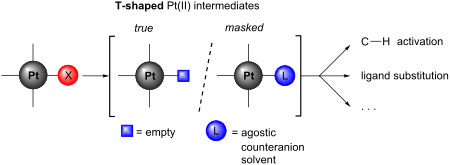
- at work in solution. Recently, ab initio molecular dynamics (AIMD) simulations of some representative T-shaped Pt(II) complexes (T5b, A2b and A11a), performed in explicit dichloromethane solvent, have provided a detailed description of the mechanism by which the equivalence of signals takes place
- [106]. Simulations showed that the dynamics of the agostic interaction in solution strongly depends on the complex. Contingent upon the strength of the agostic interaction and the flexibility of the ligand, several events related with the occupation of the fourth coordination site by an agostic bond