


Search results
Search for "targeting" in Full Text gives 241 result(s) in Beilstein Journal of Organic Chemistry. Showing first 200.
Peptide–polymer ligands for a tandem WW-domain, an adaptive multivalent protein–protein interaction: lessons on the thermodynamic fitness of flexible ligands
Beilstein J. Org. Chem. 2015, 11, 837–847, doi:10.3762/bjoc.11.93
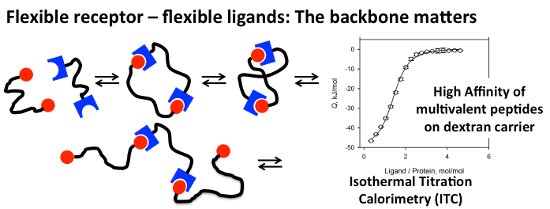
- Informationstechnik Berlin, Numerical Analysis and Modelling, Takustr. 7, 14195 Berlin, Germany 10.3762/bjoc.11.93 Abstract Three polymers, poly(N-(2-hydroxypropyl)methacrylamide) (pHPMA), hyperbranched polyglycerol (hPG), and dextran were investigated as carriers for multivalent ligands targeting the adaptive
- enhancement. For example, the targeting of flexible protein receptors with ligands attached to a rigid DNA-backbone has been reported to be unsuccessful and no preferred ligand distance was found for this “molecular ruler” for flexible divalent protein targets [4]. Recently, we have introduced multivalent





DNA display of glycoconjugates to emulate oligomeric interactions of glycans
Beilstein J. Org. Chem. 2015, 11, 707–719, doi:10.3762/bjoc.11.81
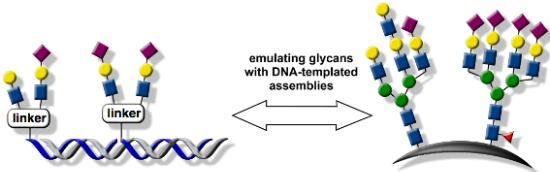
- flexibility of the linker introduced by an unpaired region. The same approach was also used to identify the optimal spatial arrangement for assemblies targeting RCA120 and L-selectin with mannose, LacNAc and sialyl Lewis X–PNA conjugates [45]. The highest binding affinity to RCA120 was obtained with a


Exploring monovalent and multivalent peptides for the inhibition of FBP21-tWW
Beilstein J. Org. Chem. 2015, 11, 701–706, doi:10.3762/bjoc.11.80
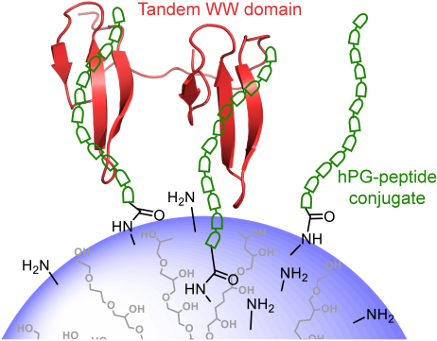
- release of the dendritic polymer into the cytoplasm [13]. These polymeric scaffolds have been explored well for tumor targeting by using polymer-drug conjugates or polyplexes with genes or siRNA [14], but also have the potential to inhibit protein–protein interaction in cells, by displaying multiple
- minimal positive charge on the carrier polymeric backbone which is necessary for cell penetration. The hPG-NH2 1 with 70% amine functionalization was chosen to conjugate multiple copies of an optimized targeting peptide, yielding the multivalent hPG-peptide conjugate 2. The dissociation constant (KD) of
- desired hPG-NH2 1 (see Figure S4 in Supporting Information File 1 for GPC analysis of hPG-NH2 1). The appropriate derivative of the targeting peptide, i.e., Ac-WPPPPRVPRGSG-COOH was activated by N-hydroxysuccinimidyl ester formation and used for coupling with hPG-NH2 1 (Mn = 7.3 kDa, PDI = 1.97) to


Design, synthesis and photochemical properties of the first examples of iminosugar clusters based on fluorescent cores
Beilstein J. Org. Chem. 2015, 11, 659–667, doi:10.3762/bjoc.11.74
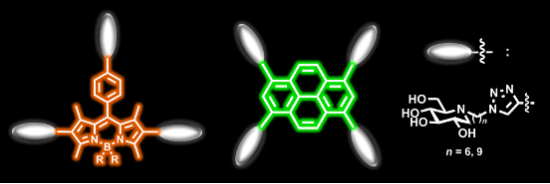
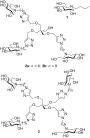
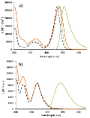
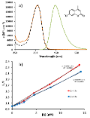
- ][21][22][23][24][25][26]. The interest of the inhibitory multivalent effect for drug discovery was demonstrated by targeting glycosidases involved in rare genetic diseases linked to misfolded proteins [24][25][26]. The first examples of multivalent iminosugars such as 2 and 3 acting as pharmacological



Potential of acylated peptides to target the influenza A virus
Beilstein J. Org. Chem. 2015, 11, 589–595, doi:10.3762/bjoc.11.65
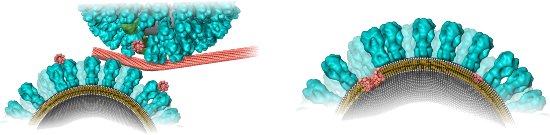
- ]. Hence, research and development of new affordable influenza antivirals are an important task to combat not only seasonal epidemics, but also devastating pandemics. For therapy of infected patients, several pharmaceuticals targeting influenza neuraminidase (oseltamivir, zanamivir) or the proton channel
- vivo situation. Typically, such antiviral compounds will be applied intravenously or by inhalation to allow a systemic distribution or a tissue specific targeting within the infected host. However, in those cases amphiphilic peptides are in an environment of cell membrane surfaces being in excess to


Sequence-specific RNA cleavage by PNA conjugates of the metal-free artificial ribonuclease tris(2-aminobenzimidazole)
Beilstein J. Org. Chem. 2015, 11, 493–498, doi:10.3762/bjoc.11.55
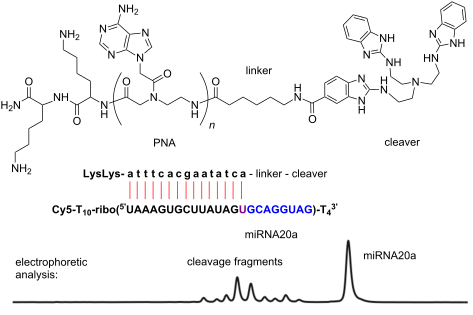
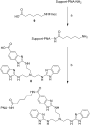
- the one hand, they can improve our mechanistic understanding of natural ribonucleases and of phosphodiester reactivity in general. On the other hand, a wide range of practical applications is conceivable for such RNA cleavers ranging from tools in molecular biology to chemotherapeutics targeting mRNAs




Synthetic strategies for the fluorescent labeling of epichlorohydrin-branched cyclodextrin polymers
Beilstein J. Org. Chem. 2014, 10, 3007–3018, doi:10.3762/bjoc.10.319
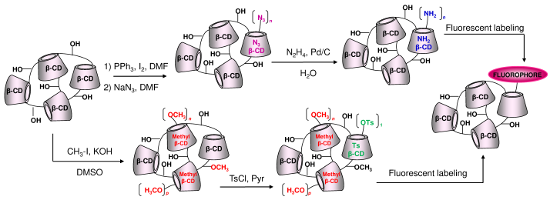
- polymeric network before the introduction of the anchoring group for the fluorescent labeling (Scheme 3). Methylated cyclodextrins have peculiar properties concerning both solubility and complex formation thus targeting a water-soluble methylated β-CD polymer with a low degree of substitution can be


Come-back of phenanthridine and phenanthridinium derivatives in the 21st century
Beilstein J. Org. Chem. 2014, 10, 2930–2954, doi:10.3762/bjoc.10.312

- eliminated the imine-H and formed the imidoyl radical, added to the phenyl ring. The homolytic aromatic substitution was terminated by H-atom abstraction by another t-BuO• radical. Among very few routes targeting the synthesis of 5,6-unsubstituted phenanthridines, the here presented radical-based pathway
- -isocyanobiphenyls with CF3SiMe3 under metal-free conditions showed to be a mild and efficient approach to 6-(trifluoromethyl)phenanthridines, characterised by good yields with high regioselectivity at ambient temperature (Scheme 6) [19][20]. Another radical-based route (targeting 6-perfluoroalkylphenanthridines
- between various DNA and RNA polynucleotides was attributed to the switch of the binding mode (intercalation into dGdC-DNA and AU-RNA and minor groove binding into dAdT-DNA). A common strategy for the modification of DNA- and RNA-targeting molecules by preparation of homo-dimers was also implemented on the


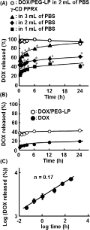
Preparation and evaluation of cyclodextrin polypseudorotaxane with PEGylated liposome as a sustained release drug carrier
Beilstein J. Org. Chem. 2014, 10, 2756–2764, doi:10.3762/bjoc.10.292
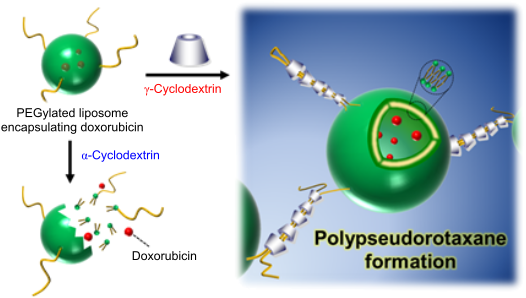
- rapid removal from the systemic circulation by the reticuloendothelial system (RES). To produce long-circulating LPs, hydrophilic polymers, carbohydrates, peptides and proteins have been used to modify the surface of LPs [29]. Additionally, the targeting efficiency of LPs has been improved by appending
- various targeting-ligands such as antibodies, sugars and folic acid to LPs [30][31][32]. Recently, stimulus responsive LPs such as bubble LPs, pH responsive LPs and thermoresponsive LPs have been developed as smart drug carriers [33][34][35]. PEGylated LP (PEG-LP) is one of the most popular LP products


Synthesis of nanodiamond derivatives carrying amino functions and quantification by a modified Kaiser test
Beilstein J. Org. Chem. 2014, 10, 2729–2737, doi:10.3762/bjoc.10.288
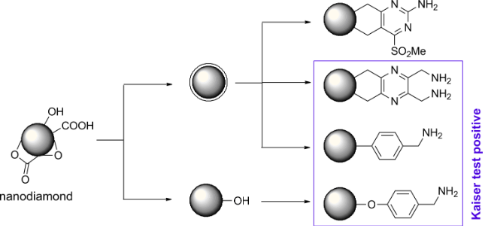
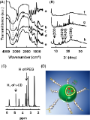
- functional moiety is not prone to hydrolytic or enzymatic decay. Stable conjugation is an essential prerequisite for applications such as labelling or targeting. Here we report on the grafting of nitrogen-containing heterocyclic aromatic compounds using the Diels–Alder reaction of suitable starting materials


Anomalous diffusion of Ibuprofen in cyclodextrin nanosponge hydrogels: an HRMAS NMR study
Beilstein J. Org. Chem. 2014, 10, 2715–2723, doi:10.3762/bjoc.10.286
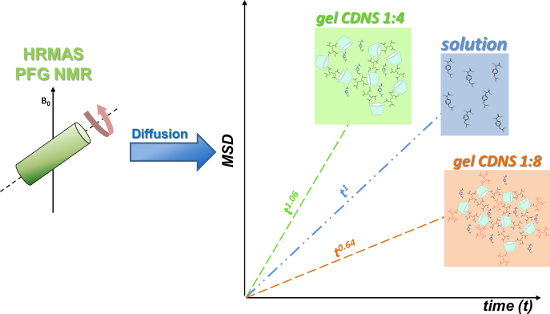
- data on API loaded in complex systems resembling the formulations actually used for drug delivery, targeting or controlled release. Finally, the important issue of how subdiffusive and superdiffusive regime can be related to the structure of the gel should be addressed. In principle, the subdiffusive


Linear-g-hyperbranched and cyclodextrin-based amphiphilic block copolymer as a multifunctional nanocarrier
Beilstein J. Org. Chem. 2014, 10, 2696–2703, doi:10.3762/bjoc.10.284
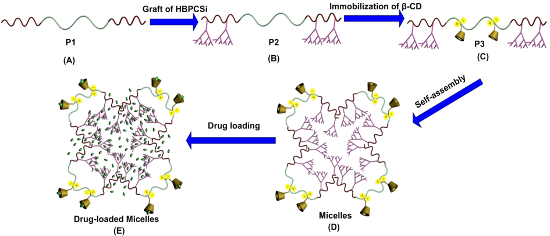
- accumulation of drug in the target site [8]. For this reason, the nanocarriers are required to combine various properties or functions in one system. Recently, the concept of multifunctional nanocarriers that can simultaneously perform multiple functions, such as longevity, targeting, stimuli sensitivity, and
- of targeting, prolonged blood circulation time, etc. Therefore, they have attracted much attention [6][15][16][17][18][19]. However, to develop an efficient DDS constructed from ABC micelles, it is essential to consider some important factors, such as high drug loading and controlled release. Many of


A small azide-modified thiazole-based reporter molecule for fluorescence and mass spectrometric detection
Beilstein J. Org. Chem. 2014, 10, 2470–2479, doi:10.3762/bjoc.10.258
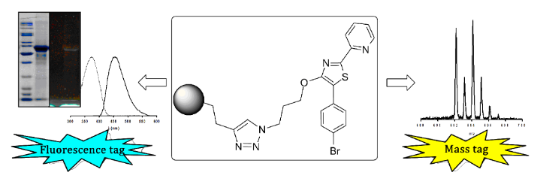
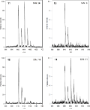
- . We show model experiments that demonstrate the suitability of the molecule in labeling small molecules and in ABPP investigations. Fluorescence and MS offer orthogonal opportunities for detection and make this reporter a universal tool for targeting molecules of different sizes and properties



Expanding the scope of cyclopropene reporters for the detection of metabolically engineered glycoproteins by Diels–Alder reactions
Beilstein J. Org. Chem. 2014, 10, 2235–2242, doi:10.3762/bjoc.10.232
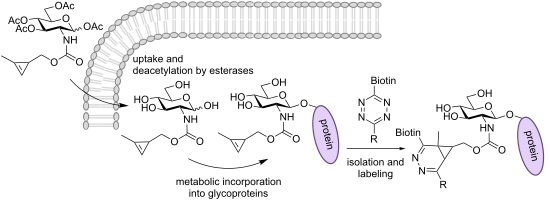
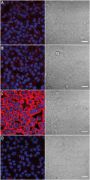
- significantly higher fluorescence staining of cell-surface glycoconjugates, Ac4GlcNCyoc (1) gave higher labeling efficiency with protein preparations containing also intracellular proteins, possibly by targeting O-GlcN-acylated proteins. Since O-GlcN-acylation of proteins is associated with numerous crucial



Expeditive synthesis of trithiotriazine-cored glycoclusters and inhibition of Pseudomonas aeruginosa biofilm formation
Beilstein J. Org. Chem. 2014, 10, 1981–1990, doi:10.3762/bjoc.10.206
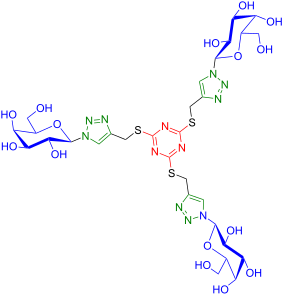
- particular due to the physical barrier created by surface-attached biofilms, thus limiting antibiotic penetration [4][5][6]. A challenging and useful task is therefore to develop novel strategies against PA colonies at this late stage of virulence. Among recent approaches, targeting biofilm formation or


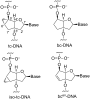
Structure/affinity studies in the bicyclo-DNA series: Synthesis and properties of oligonucleotides containing bcen-T and iso-tricyclo-T nucleosides
Beilstein J. Org. Chem. 2014, 10, 1840–1847, doi:10.3762/bjoc.10.194
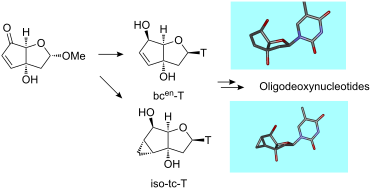
- ; Introduction Antisense oligonucleotides (ASOs) can interfere with gene expression via various biological mechanisms, depending on the nature of the cellular RNA target [1]. First and foremost they can inhibit translation by targeting a mature mRNA in either its coding or non-coding part of the sequence by a
- steric block or an RNase H dependent degradation mechanism. Furthermore, it has recently been shown that ASOs can alter RNA splicing when targeting exon/intron junctions or splice enhancer or silencer binding sites on pre-mRNAs, thus leading to alternative splicing [2][3], to exon skipping [4][5] or to
- growing number of micro RNAs (miRNAs) that are involved in genetic and epigenetic regulation of gene expression. Their misregulation stays at the onset of various forms of cancer and other metabolic diseases, and targeting of such miRNAs with ASOs (antimirs or anatagomirs) has been shown in the recent



Efficient routes toward the synthesis of the D-rhamno-trisaccharide related to the A-band polysaccharide of Pseudomonas aeruginosa
Beilstein J. Org. Chem. 2014, 10, 1488–1494, doi:10.3762/bjoc.10.153
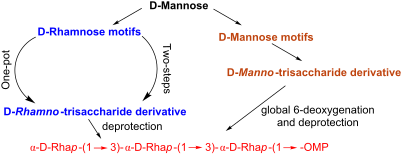
- and O-6 positions but also sets up the model on which various deoxygenation protocols may be tried. The linkage pattern and stereochemistry at the glycosidic positions on the target dictate the presence of acyl protection on the O-2 position as shown in Scheme 1. We began our synthesis targeting two


Carbohydrate PEGylation, an approach to improve pharmacological potency
Beilstein J. Org. Chem. 2014, 10, 1433–1444, doi:10.3762/bjoc.10.147
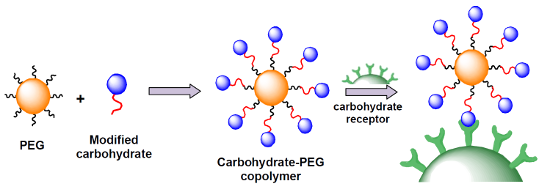
- increase solubility [8], prolong the in vivo action [9] or for targeting drug delivery [10] has been described. The potent anti-inflammatory drug dexamethasone was coupled to a multifunctional PEG, prepared by a click reaction, for treatment of rheumatoid arthritis [11]. A heterobifunctional PEG has been
- conjugated with both paclitaxel, a potent anticancer drug, and alendronate, a bone-targeting biphosphonate, in order to obtain strong bone tropism and fast drug release [12]. An enzymatic method using a microbial transglutaminase was described for PEGylation of human growth hormone [13]. Glycans have been
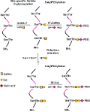
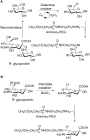
- by the use of a [3 + 2] cycloaddition reaction of an alkyne-bearing PEG reagent and an azide-functionalized tyrosine residue genetically incorporated on human superoxide dismutase-1 [30]. GlycoPEGylation, targeting carbohydrate sites, was conceived to produce a more homogeneous product with lower







Glycosystems in nanotechnology: Gold glyconanoparticles as carrier for anti-HIV prodrugs
Beilstein J. Org. Chem. 2014, 10, 1339–1346, doi:10.3762/bjoc.10.136
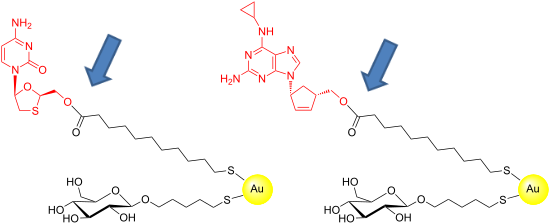
- application of gold nanoparticles as a DDS is an expanding field due to the inert properties of the gold core, their controlled fabrication, and multifunctionality [14]. This last property allows the design of particles simultaneously containing multiple chemotherapeutics and targeting moieties. Few studies
- ]. Our methodology for preparing GNPs allows the construction of particles simultaneously containing carbohydrates, peptides and targeting molecules in a controled way [21]. The use of biocompatible gold glyconanoparticles as scaffolds for the antiviral drugs could bring some important benefits such as


Human dendritic cell activation induced by a permannosylated dendron containing an antigenic GM3-lactone mimetic
Beilstein J. Org. Chem. 2014, 10, 1317–1324, doi:10.3762/bjoc.10.133
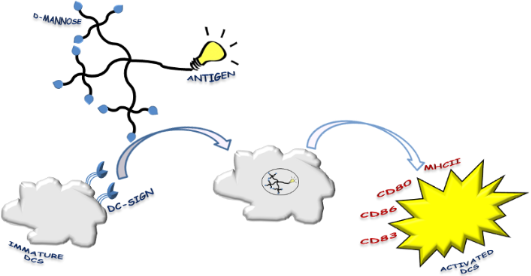
- residues of mannose for DC targeting and one residue of an immunogenic mimetic of a carbohydrate melanoma associated antigen. The immunological assays demonstrated that the glycodendron 5 is able to induce human immature DC activation in terms of a phenotype expression of co-stimulatory molecules
- expression and MHCII. Furthermore, DCs activated by the glycodendron 5 stimulate T lymphocytes to proliferate in a mixed lymphocytes reaction (MLR). Keywords: cancer immunotherapy; DC-SIGN; DC targeting; glycodendron; GM3-lactone mimetic; multivalent glycosystems; multivalent interactions; Introduction
- strategies is to arm DCs with tumor-specific antigens. This issue has successfully been achieved by either culturing ex vivo DCs [16][17] from bone marrow precursors or more recently by targeting in vivo DC receptors with specific mAbs conjugated to tumor antigens [18][19]. In both cases, the development of



Synthesis, characterization and DNA interaction studies of new triptycene derivatives
Beilstein J. Org. Chem. 2014, 10, 1290–1298, doi:10.3762/bjoc.10.130
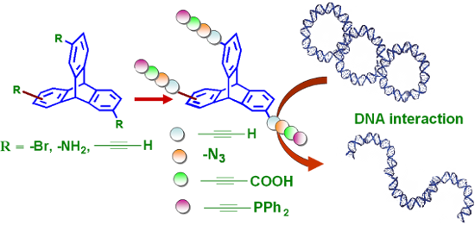
- functionalities) with DNA. According to a literature survey, many metal-free small molecules are known to modify structural organization of DNA through recognition, binding, cleavage or crosslinking and reportedly have widespread applications in biology [26]. Targeting of DNA by several DNA-damaging agents have


Atherton–Todd reaction: mechanism, scope and applications
Beilstein J. Org. Chem. 2014, 10, 1166–1196, doi:10.3762/bjoc.10.117





Polyglycerol-functionalized nanodiamond as a platform for gene delivery: Derivatization, characterization, and hybridization with DNA
Beilstein J. Org. Chem. 2014, 10, 707–713, doi:10.3762/bjoc.10.64
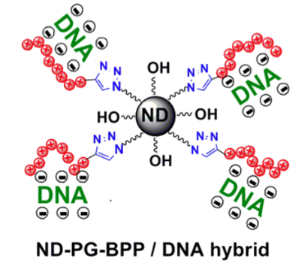
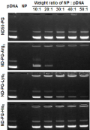
- immobilize DNA, more functions such as enough dispersibility and targeting efficacy are required to use ND in vivo as a gene vector. Therefore, a more reliable and general process is desired to add sufficient functions for ND-based gene vectors. Herein a conjugation of ND-PG with basic polypeptides (Arg8


Synthesis of (2S,3R)-3-amino-2-hydroxydecanoic acid and its enantiomer: a non-proteinogenic amino acid segment of the linear pentapeptide microginin
Beilstein J. Org. Chem. 2014, 10, 667–671, doi:10.3762/bjoc.10.59
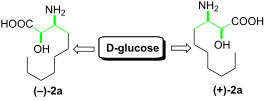
- ]. While targeting the synthesis of 2a, the Wittig olefination of 3a with n-hexyltriphenylphosphonium bromide and t-BuOK gave olefin 4a as a diasteromeric mixture of Z and E-isomers in the ratio 9.5:0.5 as shown by 1H NMR of the crude product. The catalytic hydrogenation of alkene 4a with 10% Pd/C in


New sesquiterpene hydroquinones from the Caribbean sponge Aka coralliphagum
Beilstein J. Org. Chem. 2014, 10, 613–621, doi:10.3762/bjoc.10.52
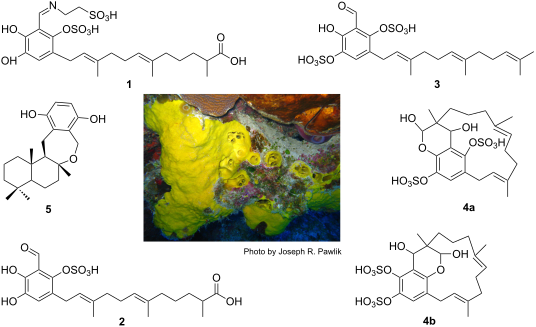
- , targeting cell lines L929 mouse fibroblasts, KB-31 epidermoid carcinoma, MCF-7 breast cancer, and FS4-LTM conditional immortalization human fibroblasts, respectively. The FS4-LTM cell line was incubated for 24 hours with the tested substances. The other cell lines were incubated for 5 days with the tested





