Search results
Search for "protein–protein interaction" in Full Text gives 17 result(s) in Beilstein Journal of Organic Chemistry.
Advantages of PROTACs in achieving selective degradation of homologous protein families
Beilstein J. Org. Chem. 2026, 22, 628–661, doi:10.3762/bjoc.22.49
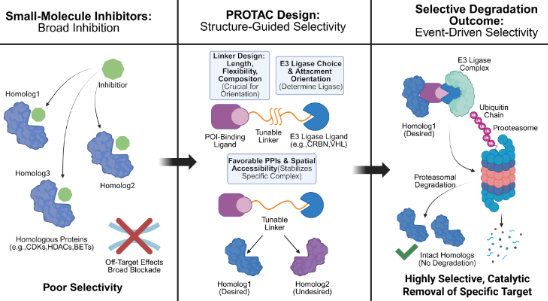
- ; PROTAC; protein–protein interaction; selectivity; ubiquitination; Introduction The cell is the fundamental unit of structure and function in the human body [1][2]. More than 20,000 proteins act in concert to regulate the entire cellular life process [1]. To date, dysregulated protein function has been
- other non-enzymatic proteins [7] are essentially undruggable using conventional inhibitor-based approaches [4][8]. Consequently, protein–protein interaction (PPI)-based targeted protein degradation (TPD) strategies have attracted increasing attention over the past two decades [9][10]. Among them
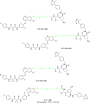
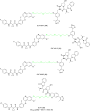
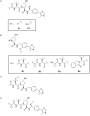
- . NanoBRET and ITC experiments indicated that compound 37 induces a stable protein–protein interaction interface between BRD4BD2 and VHL through linker-mediated conformational locking, achieving a cooperativity factor (α) of 117, which is significantly higher than those of compounds 35 and 36. Its co-crystal


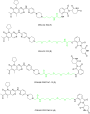

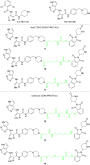






Molecular tweezer–peptide conjugates disrupt the protein–protein interaction between survivin and histone H3 essential in mitosis
Beilstein J. Org. Chem. 2026, 22, 557–567, doi:10.3762/bjoc.22.41
- ; protein–protein interaction; mitosis; X-ray crystallography; Introduction The fundamental process of mitosis is controlled by a very large protein complex called the kinetochore, formed by self-assembly from hundreds of single protein components [1]. For the intricate regulation of the various phases of
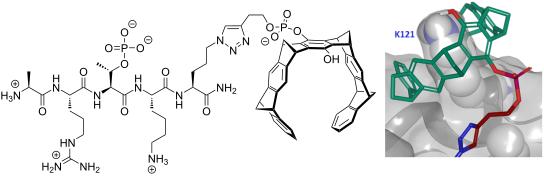
- bound tightly to each other by aligning their extended α-helices (Figure 1) [5]. Intriguingly, CPC recruitment hinges on a few very distinct protein contacts, involving borealin and the BIR domain of survivin. A very dominant protein–protein interaction (PPI) is the embedding of the N-terminus of
- and precisely the natural binding site in the wide 14-3-3-cleft [10]. These examples for designed protein–protein interaction (PPI) inhibitors demonstrated that short but highly flexible linkers are imperative to increase selectivity and minimize entropical penalty. The design was strongly supported


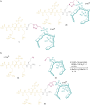


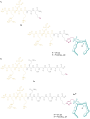
Improved deconvolution of natural products’ protein targets using diagnostic ions from chemical proteomics linkers
Beilstein J. Org. Chem. 2024, 20, 2323–2341, doi:10.3762/bjoc.20.199
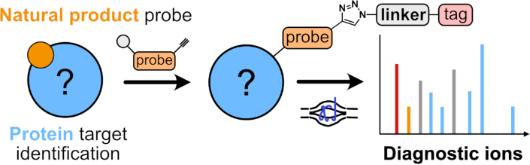
- forms a tight non-covalent complex with a glycoprotein called avidin or its non-glycosylated form streptavidin, from which the latter shows less of an unspecific protein–protein interaction due to missing glycan groups [93]. Streptavidin-coated paramagnetic agarose or acrylamide beads are used for pull


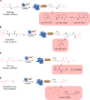


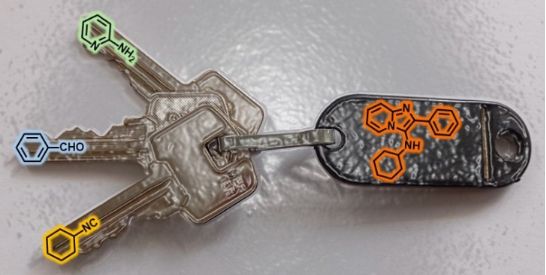
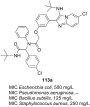
The Groebke–Blackburn–Bienaymé reaction in its maturity: innovation and improvements since its 21st birthday (2019–2023)
Beilstein J. Org. Chem. 2024, 20, 1839–1879, doi:10.3762/bjoc.20.162






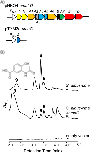
Identification of the p-coumaric acid biosynthetic gene cluster in Kutzneria albida: insights into the diazotization-dependent deamination pathway
Beilstein J. Org. Chem. 2024, 20, 1–11, doi:10.3762/bjoc.20.1
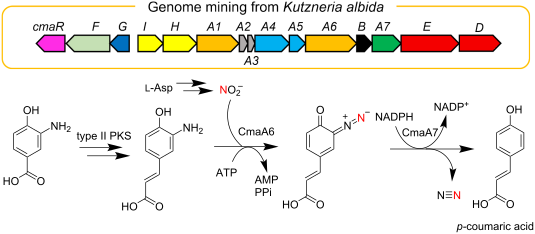
- protein–protein interaction between the carrier protein and AMP-dependent ligase and (ii) the chain length control of highly reducing type II PKSs. Experimental Strains, chemicals, and enzymes E. coli JM109 was used for DNA manipulation, and E. coli BL21(DE3) was used for expressing recombinant proteins


Functions of enzyme domains in 2-methylisoborneol biosynthesis and enzymatic synthesis of non-natural analogs
Beilstein J. Org. Chem. 2023, 19, 1452–1459, doi:10.3762/bjoc.19.104
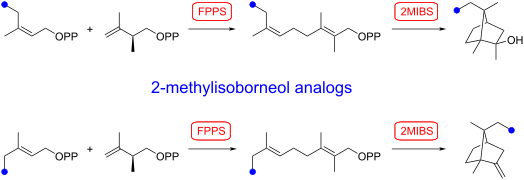
- needs a covalent bond between the two domains A and B, as indicated by a similar precipitation of domain B alone and domain B in the presence of domain A. In these experiments, the N-terminal His-tags at both domains A and B may influence protein–protein interaction with the consequence that the mixture


Strategies to access the [5-8] bicyclic core encountered in the sesquiterpene, diterpene and sesterterpene series
Beilstein J. Org. Chem. 2023, 19, 245–281, doi:10.3762/bjoc.19.23
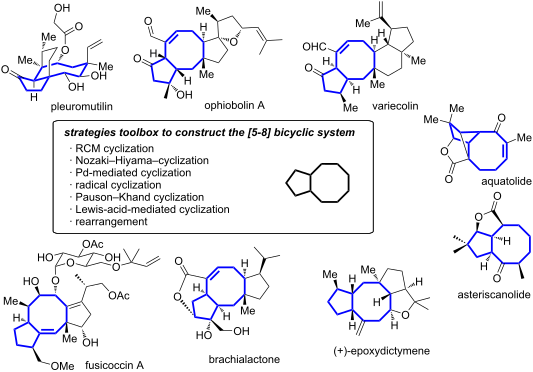
- against human myeloid leukemia cells, and stabilizes the 14-3-3 – TASK3 protein–protein interaction [29][30]. Sugita et al. investigated the synthesis of the core structure of cotylenol (50) first through an RCM approach on the advanced intermediate 47 (Scheme 7) [31]. Despite many attempts, the authors


Facile and diastereoselective arylation of the privileged 1,4-dihydroisoquinolin-3(2H)-one scaffold
Beilstein J. Org. Chem. 2022, 18, 1070–1078, doi:10.3762/bjoc.18.109
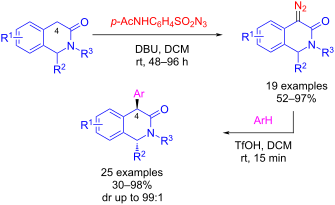
- receptors 1 [3], AChE and BACE-1 inhibitor 2 [4], inhibitor of oncogenic p53-MDM2 protein–protein interaction 3 [5], positive allosteric modulator of ionotropic glutamate receptor NMDA-1 4 [6], insulin-like growth factor 1 receptor inhibitor 5 [7], and metabotropic glutamate receptor 7 modulator 6 [8


NMR Spectroscopy of supramolecular chemistry on protein surfaces
Beilstein J. Org. Chem. 2020, 16, 2505–2522, doi:10.3762/bjoc.16.203
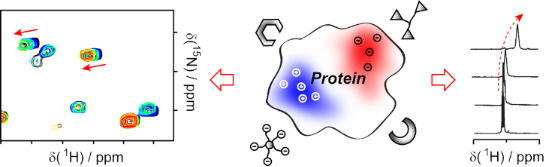
- combination of two or more GCP moieties with variable linkers enables the construction of multivalent ligands geared towards a specific spot on protein surface, which by design can lead to either stabilization [42][43][44][45] or inhibition [46] of a given protein–protein interaction. The inhibition of the
- indeed recognize the highly positively charged area on cytochrome c (Cyt c) that binds Cyt c peroxidase. The inhibition of this protein–protein interaction was demonstrated as well using a luminescence quenching assay. The protein surface recognition of two porphyrin ligands bearing carboxylate
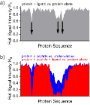
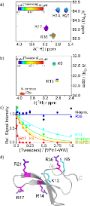
- great examples how the relative NMR signal intensities (bound form relative to free form of the observed protein) from 1H,15N-HSQC or TROSY-HSQC spectra can be used to identify the binding site and characterize the influence of a ligand on the protein–protein interaction. A hypothetical example to



Design of indole- and MCR-based macrocycles as p53-MDM2 antagonists
Beilstein J. Org. Chem. 2019, 15, 513–520, doi:10.3762/bjoc.15.45
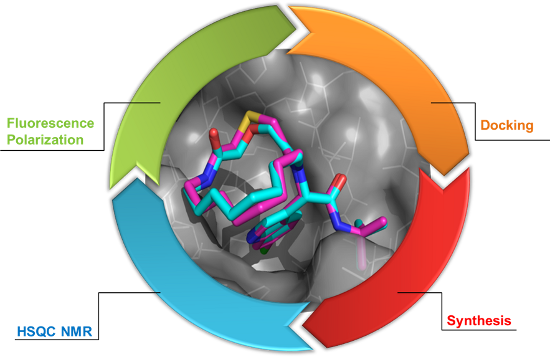
- Modares University, P.O. Box 14155-4838, Tehran, Iran Faculty of Chemistry, Jagiellonian University, Gronostajowa 2, 30-387 Krakow, Poland 10.3762/bjoc.15.45 Abstract Macrocycles were designed to antagonize the protein–protein interaction p53-MDM2 based on the three-finger pharmacophore F19W23L25. The
- MDM2–p53 interaction could enable p53 and reverse tumor formation [26][27][28]. Based on our knowledge to antagonize the oncogenic protein–protein interaction p53–MDM2 [23][29][30][31][32][33][34][35][36][37][38][39][40] we designed macrocyclic inhibitors in continuation of our previous work [13][23


Protein–protein interactions in bacteria: a promising and challenging avenue towards the discovery of new antibiotics
Beilstein J. Org. Chem. 2018, 14, 2881–2896, doi:10.3762/bjoc.14.267
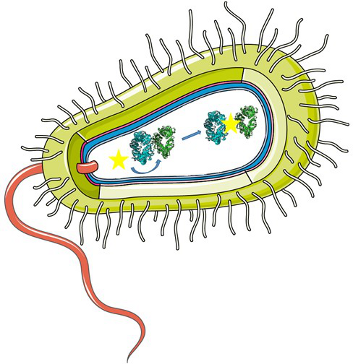
- vast majority of protein–protein interaction modulators execute their activity through inhibition, stabilization of specific protein complexes could also be therapeutically beneficial [23][24]. Even though historically PPIs have been considered to be “undruggable”, recent remarkable medicinal chemistry
- of rapamycin) [34]. This natural product, isolated from Streptomyces hygroscopicus, was one of the first protein–protein interaction stabilizers reported: it first binds to its receptor (i.e., FKBP12) with high affinity, after which the FKBP12-rapamycin complex will associate with TOR resulting in
- inhibition of the catalytic activity of the enzyme [23]. All these drug discovery successes have validated PPIs as a target and, in conjunction with the elucidation and reconstruction of protein–protein interaction networks in bacteria, have paved the way towards the development of novel and promising




Peptide–polymer ligands for a tandem WW-domain, an adaptive multivalent protein–protein interaction: lessons on the thermodynamic fitness of flexible ligands
Beilstein J. Org. Chem. 2015, 11, 837–847, doi:10.3762/bjoc.11.93
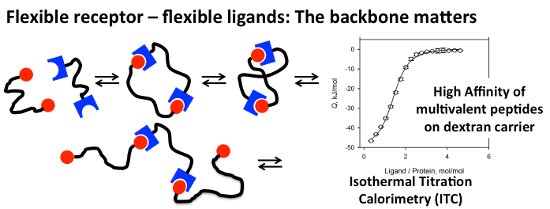
- biocompatible polymers, namely linear poly(N-2-hydroxypropyl)methacrylamide (pHPMA), hyperbranched polyglycerol (hPG), and linear 2-carboxyethyldextran are suited for the construction of peptide–polymer conjugates, which can be used as potent multivalent ligands for a flexible protein–protein interaction site
- crosslinking ligands for protein–protein interaction sites and whether the ligands active in the protein binding assay can be further developed toward intracellularly delivered and intracellularly active PPI-inhibitors of the tandem WW-domain. Comparing the entropy loss during ligand–receptor interactions in


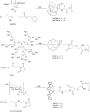


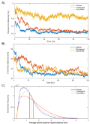

Exploring monovalent and multivalent peptides for the inhibition of FBP21-tWW
Beilstein J. Org. Chem. 2015, 11, 701–706, doi:10.3762/bjoc.11.80
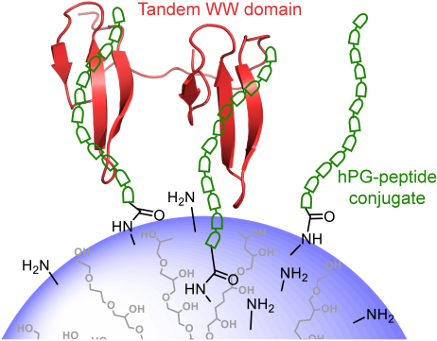
- release of the dendritic polymer into the cytoplasm [13]. These polymeric scaffolds have been explored well for tumor targeting by using polymer-drug conjugates or polyplexes with genes or siRNA [14], but also have the potential to inhibit protein–protein interaction in cells, by displaying multiple


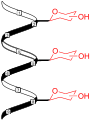
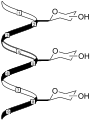
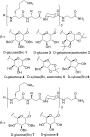
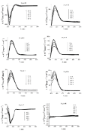
Molecular architecture with carbohydrate functionalized β-peptides adopting 314-helical conformation
Beilstein J. Org. Chem. 2014, 10, 948–955, doi:10.3762/bjoc.10.93
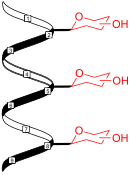
- -like structures and can be used for helical self-association towards protein-like assemblies mimicking secondary structures and eventually acting as inhibitors for protein–protein interaction [13][14]. In addition, β-peptide 314-helices furnish an ideal structural backbone for the well-organized


Synthesis and physicochemical characterization of novel phenotypic probes targeting the nuclear factor-kappa B signaling pathway
Beilstein J. Org. Chem. 2013, 9, 900–907, doi:10.3762/bjoc.9.103
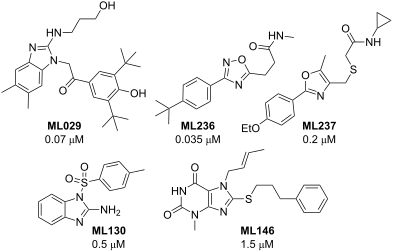
- -factor receptors yet is still upstream of IKKγ, potentially by inhibition of a new target protein or novel protein–protein interaction. Using cell-based HTS reporter gene assays, a series of chemical probes were identified that selectively inhibit this unique PKC-induced NF-κB pathway without modulating


Peptides presenting the binding site of human CD4 for the HIV-1 envelope glycoprotein gp120
Beilstein J. Org. Chem. 2012, 8, 1858–1866, doi:10.3762/bjoc.8.214
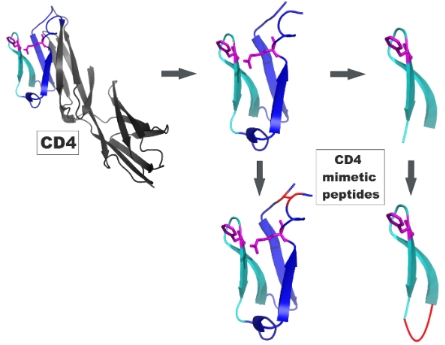
- , which in turn will increase their affinity to the complementary protein, and, consequently, their ability to interfere with the native protein–protein interaction. Experimental Peptide synthesis Peptides were synthesized as C-terminal amides by Fmoc/t-Bu-based solid-phase synthesis on 100 mg TentaGel S


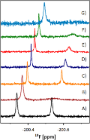
Synthesis of fluorinated maltose derivatives for monitoring protein interaction by 19F NMR
Beilstein J. Org. Chem. 2012, 8, 448–455, doi:10.3762/bjoc.8.51
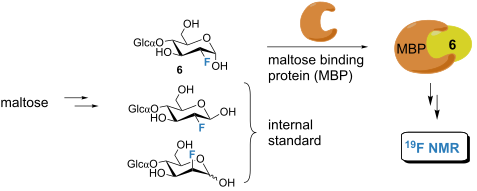
- relaxation properties of a small-molecular-weight reporter ligand that reversibly binds to a ligand binding domain, which in turn is fused to the interacting protein of interest. Subsequent protein–protein interaction leads to an additional increase of the molecular weight of the complex and can efficiently