Search results
Search for "2D material" in Full Text gives 47 result(s) in Beilstein Journal of Nanotechnology.
Sustainable fabrication of 2D-based devices through reuse of substrates with microfabricated electrodes
Beilstein J. Nanotechnol. 2026, 17, 818–827, doi:10.3762/bjnano.17.58
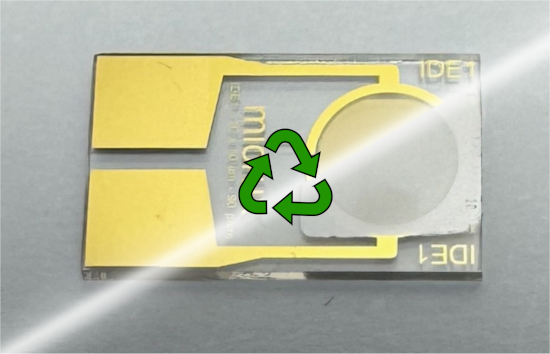
- signatures of the transferred 2D material, retain a largely homogeneous surface-potential distribution, and preserve comparable electrical performance after reuse. By extending the lifetime of pre-patterned chips, this approach can reduce substrate consumption and lower the cost of 2D device prototyping
- reliable method for cleaning and reusing these devices would be valuable for achieving more cost-effective 2D material-based device fabrication. Several recent studies have explored substrate reuse strategies to mitigate fabrication costs and improve sustainability in device prototyping [16][17][18]. For
- have mainly focused on epitaxial growth or electrochemical sensing applications. In contrast, this work addresses the reuse of substrates for 2D material-based electronic devices. The cleaning process consists of an ultrasonic bath in N-methyl-2-pyrrolidone (NMP) [23][24] at 50 °C, followed by acetone


Substrate-dependent pore formation in molybdenum disulfide monolayers under ion irradiation
Beilstein J. Nanotechnol. 2026, 17, 769–780, doi:10.3762/bjnano.17.54
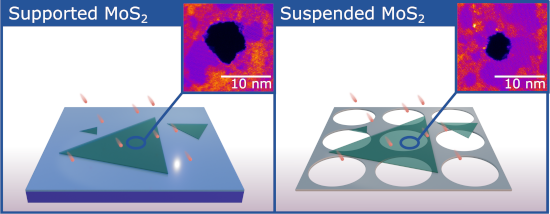
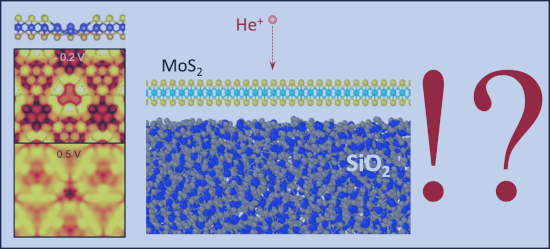
- formation have largely focused on suspended 2D materials [13][25][28][29], practical applications typically require the 2D material to be supported by a substrate. Direct investigation of ion-irradiated supported 2D materials, however, remains experimentally challenging for several reasons. For example
- of the target 2D material, independent of the materials electronic properties. In the case of this study, we therefore expect to deliver potential energy in the range of ≈12–36 keV to the monolayer. Linking the charge exchange to pore formation, Grossek et al. [44] introduced a model for nanopore
- formation in graphene that centers around the target’s charge carrier mobility. They argue that the high electron mobility of graphene leads to a fast charge dissipation in the 2D material, effectively suppressing pore formation. As a consequence, HCI irradiation does not create pores in graphene (with a


Probing tribological evolution in atomically thin MoS2 at different scales
Beilstein J. Nanotechnol. 2026, 17, 586–597, doi:10.3762/bjnano.17.40
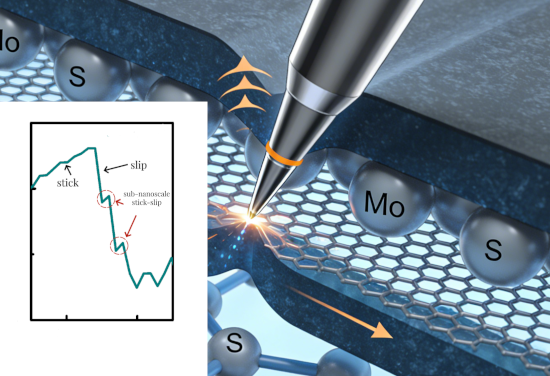
- -nanoscale stick–slip motion and reduces slip distance. Furthermore, the load-dependent sub-nanoscale stick–slip motion is closely correlated with changes in tip–MoS2 contact area and contact geometry, both modulated by load and MoS2 layer thickness. These findings advance 2D material tribology from the
- loads. We experimentally determined the sub-nanoscale stick–slip motion and quantified its dependence on load and layer thickness. The corresponding mechanisms were proposed to explain the friction behaviors. This work bridges the gap between MD simulations and experiments, advancing 2D material
- advance the understanding of 2D material tribology from the nanoscale to the sub-nanoscale, providing a framework for predicting and controlling friction in atomically thin materials. The load-layer thickness phase diagram for MoS2 friction behaviors offers critical guidance for the development of low


Defects and defect-mediated engineering of two-dimensional materials: challenges and open questions
Beilstein J. Nanotechnol. 2026, 17, 454–488, doi:10.3762/bjnano.17.31
- formation of metastable defect complexes with sub-stoichiometric compositions, namely, the post-synthesis reaction of the 2D material with an element that is desired to be incorporated. This may be accomplished by modifying 2D sheets with vapor-deposited atoms, for example, the reaction of MoSe2 with excess
- range, still allowing for a moderate degree of ionization [133]. However, if the 2D material is surrounded by vacuum, the reduced screening is expected to increase the ionization energy to the 0.5–1.0 eV range. This is comparable to the experimentally extracted exciton binding energies, a correspondence
- example, point defects can act as single-photon emitters or as qubits in quantum computing [4][5]. If one were able to position the defects precisely, all over a wafer-scale-sized 2D material, integrating the functionality of these defects into devices using subsequent lithographic processing steps would





Advancing nanolithography: a comprehensive review of materials for local anodic oxidation with AFM
Beilstein J. Nanotechnol. 2026, 17, 275–291, doi:10.3762/bjnano.17.19
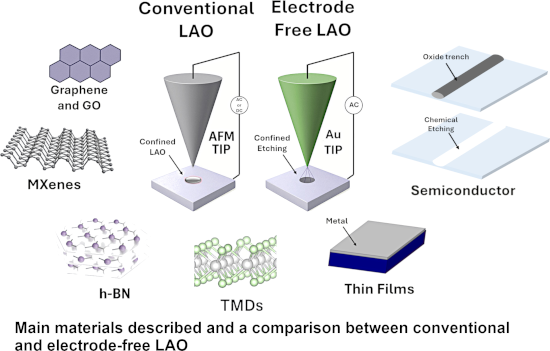
- influences the outcomes of LAO processes. For instance, oxidation can lead to local protrusions significantly taller than the thickness of a single atomic layer due to the formation of an oxide bump in the conductive substrate beneath the 2D material. When a layered material is placed on an insulating
- substrate (such as SiO2) and contacted from the top, oxidation can disrupt lateral conductivity, effectively isolating the 2D material and leading to unwanted defects. Bernal-stacked graphene allows for uniform oxidation across layers, while non-Bernal stacked graphene limits oxidation to the topmost layer


Ambient pressure XPS at MAX IV
Beilstein J. Nanotechnol. 2025, 16, 1677–1694, doi:10.3762/bjnano.16.118
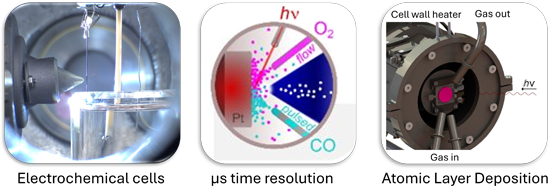
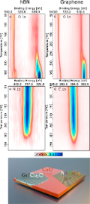
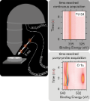
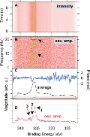
- , often lowering activation energies and altering reaction pathways [23][24][25]. A particularly interesting case is “undercover catalysis”, where the void space between a 2D material and a catalytic surface is exploited. Materials such as graphene [26][27][28], hexagonal boron nitride (hBN) [29], and





Transient electronics for sustainability: Emerging technologies and future directions
Beilstein J. Nanotechnol. 2025, 16, 1545–1556, doi:10.3762/bjnano.16.109

- strategies are essential. Research needs to explore lateral integration architectures, precise microscale wiring techniques, and 2D material-based heterojunctions. These innovations will serve as a technological foundation not only for extending device functionality but also for achieving practical system


Piezoelectricity of hexagonal boron nitrides improves bone tissue generation as tested on osteoblasts
Beilstein J. Nanotechnol. 2025, 16, 1068–1081, doi:10.3762/bjnano.16.78
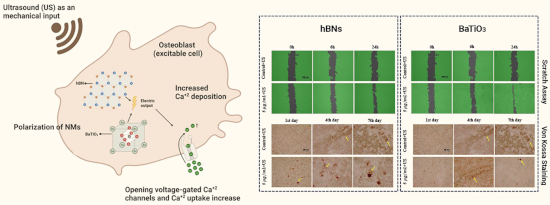
- -dimensional (2D) material, structurally similar to graphene, consisting of alternating boron and nitrogen atoms arranged in a hexagonal lattice. It is well known for its excellent thermal stability, electrical insulation, chemical inertness, and mechanical strength. Importantly, hBN exhibits piezoelectric


Soft materials nanoarchitectonics: liquid crystals, polymers, gels, biomaterials, and others
Beilstein J. Nanotechnol. 2025, 16, 1025–1067, doi:10.3762/bjnano.16.77






Strain-induced bandgap engineering in 2D ψ-graphene materials: a first-principles study
Beilstein J. Nanotechnol. 2024, 15, 1440–1452, doi:10.3762/bjnano.15.116
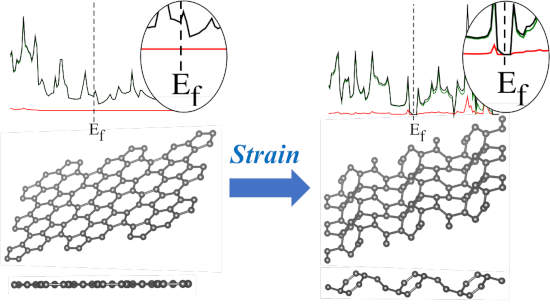
- two-dimensional (2D) material, consisting of a single layer of sp2-hybridized carbon atoms arranged together in a hexagonal lattice [1]. Because of its extraordinary electrical and thermal conductivity, large surface area, and easy chemical functionalization, it provides a variety of applications in
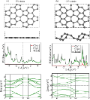
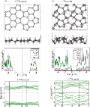
- in Table 1. From Table 1 and Figure 1, it is clear that, while ψ-graphene is a flat 2D material, ψ-graphone and ψ-graphane are buckled sheets, and their buckling heights are 1.79 and 0.85 Å, respectively. Structural and electronic properties of ψ-graphene with strain We tabulate the structural


Quantum-to-classical modeling of monolayer Ge2Se2 and its application in photovoltaic devices
Beilstein J. Nanotechnol. 2024, 15, 1153–1169, doi:10.3762/bjnano.15.94
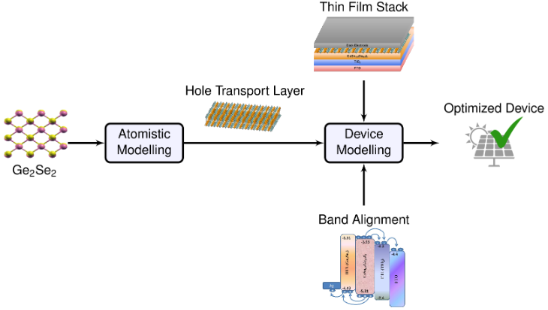
- implication. After getting the value of the deformation potential using Kawaji theory [80], we can formulate the phonon-limited mobility (μ2D) because of the interaction of the charge carriers with low acoustic phonons as [81]: where C denotes the elastic constant of a 2D material and is the geometric mean




Exploring surface charge dynamics: implications for AFM height measurements in 2D materials
Beilstein J. Nanotechnol. 2024, 15, 767–780, doi:10.3762/bjnano.15.64
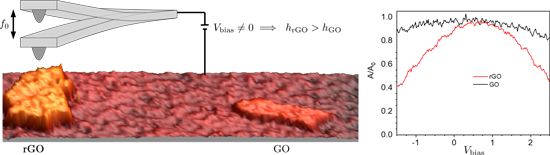
- experimental results confirm that, in addition to the well-known dissipative interaction due to capillary forces, in 2D materials, there is another dissipative interaction, whose magnitude is tightly related to the tip–sample voltage and strongly depends on the 2D material itself. Moreover, this mechanism
- achieves nanoscale resolution and is sensitive to local heterogeneities in the material’s properties. We also show that this effect is particularly relevant whenever the 2D material is supported on an insulating substrate and can be an important source of error when determining its thickness. According to
- voltage depends on the geometry of the problem and the conductivity of each media. Solutions of this kind will exist regardless of the model used for the tip. In our model, a 2D material supported on an insulating substrate is described by setting σ1, σ2 ≈ 0, that is, bulk conduction is negligible, but


Exfoliation of titanium nitride using a non-thermal plasma process
Beilstein J. Nanotechnol. 2024, 15, 631–637, doi:10.3762/bjnano.15.53
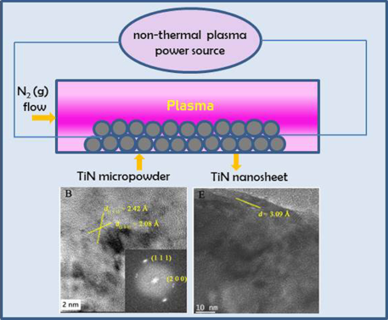
- electrostatically driven exfoliation of WO3 powder using bovine serum albumin as an exfoliating agent at pH 4 [8]. Subsequently, in 2018, Balan et al. [9] achieved the synthesis of hematene, a n-vdW 2D material, from natural iron ore hematite (α-Fe2O3) using liquid exfoliation. Unlike hematite, hematene exhibited



Unveiling the nature of atomic defects in graphene on a metal surface
Beilstein J. Nanotechnol. 2024, 15, 416–425, doi:10.3762/bjnano.15.37
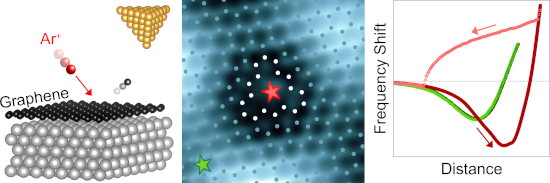
- , defects profoundly impact, in a beneficial or detrimental manner, characteristic properties of 2D materials [2]. A prominent 2D material is graphene. Intact graphene, the 2D sp2 arrangement of C atoms in a honeycomb mesh, is well known for its appealing electronic and mechanical properties [3][4]. However


Graphene removal by water-assisted focused electron-beam-induced etching – unveiling the dose and dwell time impact on the etch profile and topographical changes in SiO2 substrates
Beilstein J. Nanotechnol. 2024, 15, 190–198, doi:10.3762/bjnano.15.18
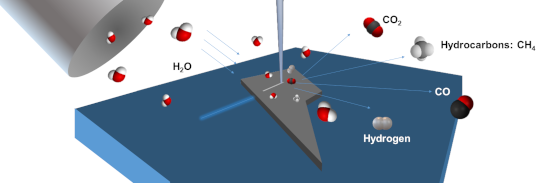
- : direct writing; dwell time; electron dose; etching; graphene; maskless lithography; nanopatterning; Introduction The discovery of extraordinary and controllable electrical conductivity in graphene back in 2004 made it the most recognized 2D material [1]. The newly discovered phenomena, such as


Analytical and numerical design of a hybrid Fabry–Perot plano-concave microcavity for hexagonal boron nitride
Beilstein J. Nanotechnol. 2022, 13, 1030–1037, doi:10.3762/bjnano.13.90
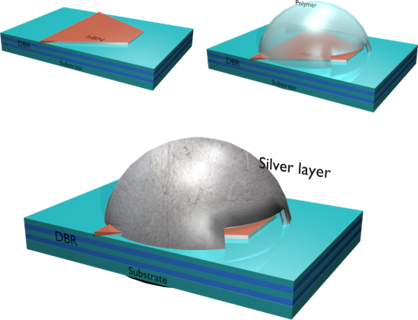
- , followed by a transfer matrix model used to find the resonant modes of the microcavity, which are then corroborated by FDTD simulations. Results and Discussion Fabrication design Hybrid plano-concave microcavity By using a quarter-wavelength DBR with a multilayer 2D material on top (Figure 2a), we designed
- our system (2D material + DBR stack) to have a maximum reflectivity at the center wavelength of 637 nm. The selected wavelength of our system falls within the typical emission rates of the zero-phonon line (ZPL) of SPEs in hBN (500–800 nm). A quarter-wavelength thickness is conveniently chosen for the
- hBN where its value falls between experimentally achievable thicknesses of multilayer 2D materials [6]. A 3D concave shape polymer then could be fabricated on top of the 2D material (Figure 2b) by a direct laser writing system (e.g., Photonic Professional, Nanoscribe GmbH) by use of a 2PP process


Self-assembly of C60 on a ZnTPP/Fe(001)–p(1 × 1)O substrate: observation of a quasi-freestanding C60 monolayer
Beilstein J. Nanotechnol. 2022, 13, 857–864, doi:10.3762/bjnano.13.76
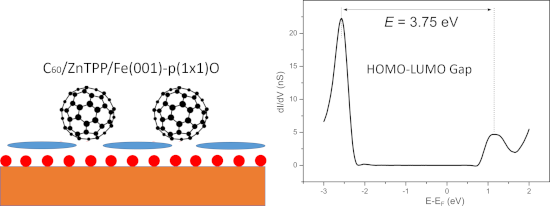
- layer of 2D material, such as graphene [27][28], hexagonal boron nitride [29][30][31] and MoS2 [32][33]. Moreover, an organic layer inserted between the substrate and the overlayer has been shown to be effective in improving the order of the molecular film [34][35] or restoring its original electronic


Optimizing PMMA solutions to suppress contamination in the transfer of CVD graphene for batch production
Beilstein J. Nanotechnol. 2022, 13, 796–806, doi:10.3762/bjnano.13.70
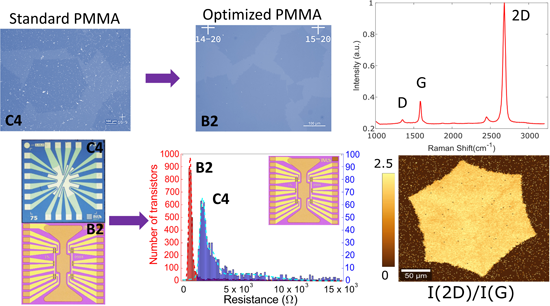
- a wide range of 2D material-based devices and heterostructures, especially in optoelectronics [7][8][9]. At present, one of the remaining challenges in the fabrication of graphene-based devices lies in the reproducibility: More than the CVD itself, the transfer process from the growth substrate (e.g




Reliable fabrication of transparent conducting films by cascade centrifugation and Langmuir–Blodgett deposition of electrochemically exfoliated graphene
Beilstein J. Nanotechnol. 2022, 13, 666–674, doi:10.3762/bjnano.13.58
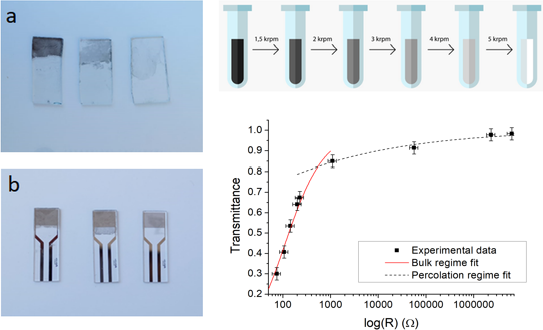
- with lateral sizes larger than 1 µm are preferred [23]. On the other hand, thinner (thus also laterally smaller [24]) flakes have a higher transparency, with potential use in transparent conductors. Size selection of 2D material flakes in solution has thus become a key challenge for the practical use


Molecular assemblies on surfaces: towards physical and electronic decoupling of organic molecules
Beilstein J. Nanotechnol. 2021, 12, 950–956, doi:10.3762/bjnano.12.71
- inertness and the low density of states near the Fermi level. However, the electronic decoupling efficiency also depends on the electronic structure of the 2D material. Sometimes, only molecular states in the bandgap of the 2D material can be decoupled. Moreover, ultrathin organic spacer layers can
- due to the lattice mismatch between 2D material and its substrate might serve as structural templates for molecular adsorption and self-assembly [79][80][81][82]. The electronic decoupling depends on the electronic properties of the 2D materials as they can be insulators, semiconductors, semimetals
- . The significantly reduced resonance width allowed for resolving vibronic states in both frontier orbitals on graphene/Pt(111) by STS. The semiconducting 2D material MoS2 may act as a decoupling layer for molecules from the underlying metal substrate if the molecular resonances lie within the MoS2
The role of convolutional neural networks in scanning probe microscopy: a review
Beilstein J. Nanotechnol. 2021, 12, 878–901, doi:10.3762/bjnano.12.66
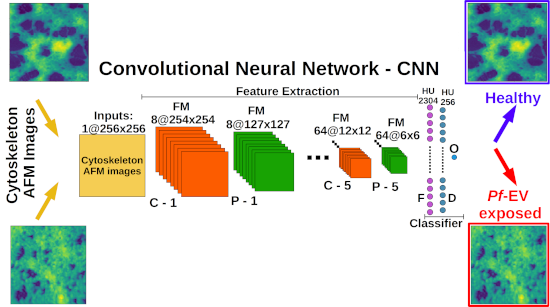
- classification task. AutoSiM was shown to yield results nearly equivalent to manual selection in much shorter time. Masubuchi et al. developed a deep learning-based, autonomous robotic system for exfoliated 2D material detection in a motorized optical microscope. Efficient detection of various exfoliated 2D







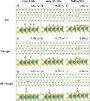
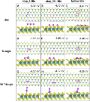
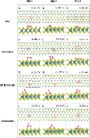
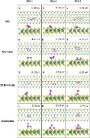
Prediction of Co and Ru nanocluster morphology on 2D MoS2 from interaction energies
Beilstein J. Nanotechnol. 2021, 12, 704–724, doi:10.3762/bjnano.12.56
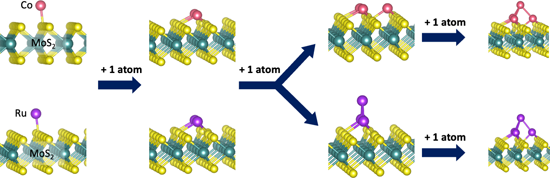
- materials, which often differ from their bulk equivalent, as well as the flexibility in fabrication afforded by an ultrathin material [17]. The majority of applications are built on an interaction between a metal and the 2D material. There are multiple studies in this regard that involve the adsorption of
- or doping with transition metals [4][5][18][19][20][21][22], alkali and alkali earth metals [23][24][25], and non-metals [25] on MoS2 and other 2D materials. While experimental studies can be used to probe the performance of the 2D material in a device or some of the interfacial interactions between



A review of defect engineering, ion implantation, and nanofabrication using the helium ion microscope
Beilstein J. Nanotechnol. 2021, 12, 633–664, doi:10.3762/bjnano.12.52


The patterning toolbox FIB-o-mat: Exploiting the full potential of focused helium ions for nanofabrication
Beilstein J. Nanotechnol. 2021, 12, 304–318, doi:10.3762/bjnano.12.25
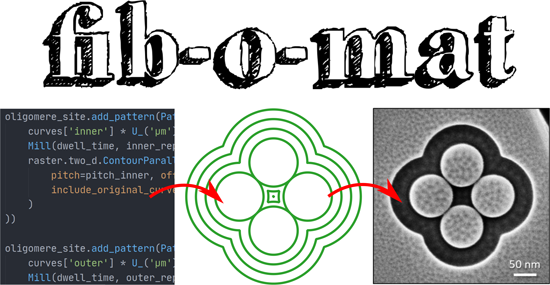
- curvatures in the beam path, use the local dose optimization to achieve a uniform target depth. To demonstrate the capabilities of FIB-o-mat, three different 2D material systems were patterned. Multilayers of Co/Pt were modified regarding their local magnetic response without changing their topography


Nanomechanics of few-layer materials: do individual layers slide upon folding?
Beilstein J. Nanotechnol. 2020, 11, 1801–1808, doi:10.3762/bjnano.11.162
- carbon nanotubes [13][14]. The interlayer slip is also intimately related to the dependence of κ on the thickness or the number of layers of a 2D material, which, in the case of very thin 2D materials, may be very different from that obtained from classical theories [12]. The quantification and
- small force or mass changes [16]. It is important to emphasize that the quality factor of the resonator depends on its maximum resonant frequency, which is intrinsically related to the flexural properties of the employed 2D material. As an example of an application based on the folds of a 2D material
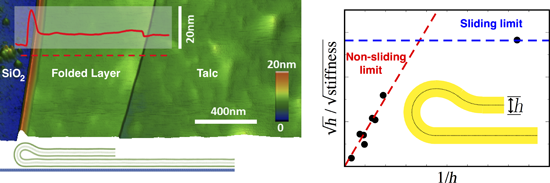
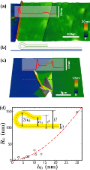
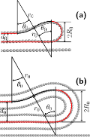
- number of layers [34]. In this work, we present a method to obtain interlayer and 2D material/substrate adhesion energies and the bending stiffness of 2D materials by experimentally probing the mechanical response of folded edges to deformation. A folded edge is defined as an edge region of the 2D

![[Graphic 5]](/bjnano/content/inline/2190-4286-11-162-i8.svg?max-width=637&scale=1.18182) =
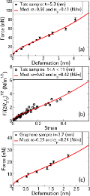
= ![[Graphic 6]](/bjnano/content/inline/2190-4286-11-162-i9.svg?max-width=637&scale=1.18182) as a function of 1/h for the nine measured talc samples. h is a directly measured ...
as a function of 1/h for the nine measured talc samples. h is a directly measured ...