


Search results
Search for "Ag" in Full Text gives 668 result(s) in Beilstein Journal of Nanotechnology. Showing first 200.
Nanoglasses: a trail towards uncharted regions of vitreous materials and their properties?
Beilstein J. Nanotechnol. 2026, 17, 1047–1062, doi:10.3762/bjnano.17.72



Materials challenges in solid-state sensors for continuous monitoring of ions in water
Beilstein J. Nanotechnol. 2026, 17, 935–973, doi:10.3762/bjnano.17.66
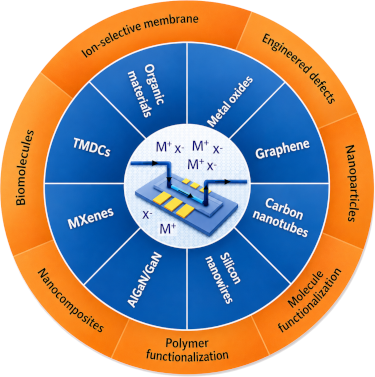
- -gate FET (EG-FET) configuration. An EG-FET is a conventional MOSFET device with the gate contact electrically connected to an external sensing electrode, which may consist of glass, Ag/AgCl, or oxide materials, and can also be coated with an ion-selective membrane (Figure 1i). The sensing element is



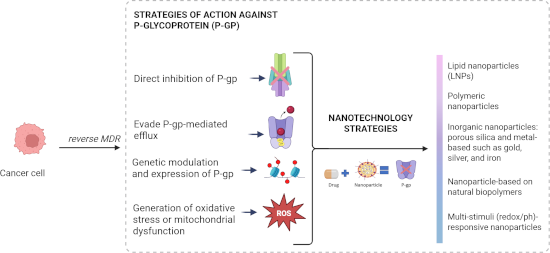
Nanocarrier strategies to overcome P-glycoprotein-mediated drug resistance in cancer therapy
Beilstein J. Nanotechnol. 2026, 17, 882–921, doi:10.3762/bjnano.17.64


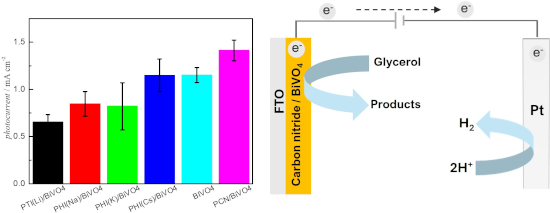
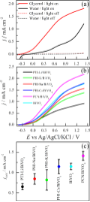
Glycerol photoelectrochemical oxidation reaction at carbon nitrides/BiVO4 materials
Beilstein J. Nanotechnol. 2026, 17, 806–817, doi:10.3762/bjnano.17.57
- (III) nitrate (Sigma-Aldrich, ACS reagent, 99.99%) solution (0.02 mol·L−1 in ethylene glycol) by applying a −1.8 V vs Ag/AgCl/KClsat potential for five cycles (2 s at open circuit between the cycles) until reaching a charge density of −0.04 C·cm−2 at each cycle (total charge of −0.2 C·cm−2) [33]. The
- electrode (WE), a platinum sheet as the counter electrode, and a Ag/AgCl/KClsat electrode as potential reference. The light source was provided by solar simulator (Oriel, LCS-100, AM-1.5G) with 100 mW·cm−2 of irradiance illuminating the back side of the WE through a lateral quartz window in the
- electrochemical cell (Supporting Information File 1, Figure S1). Linear sweep voltammetry (LSV) curves were acquired in the dark and under simulated solar exposure, ranging from −0.6 to 1.4 V vs Ag/AgCl/KClsat at 50 mV·s−1. Results and Discussion Physical characterization The CNs thermostability was evaluated by




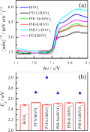

Tuning the electronic properties of defect-rich MoS2
Beilstein J. Nanotechnol. 2026, 17, 796–805, doi:10.3762/bjnano.17.56
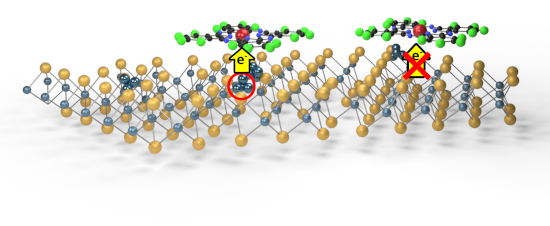
- strong local interactions accompanied by (integer) charge transfer [9]. A convenient side effect of this heterostructure is the strong interaction of the central Co atom of CoPcF16 with many metals such as Au, Ag, Cu, or Ni [11][12][13][14][15][16] such that it can be used as a probe for PES studies of
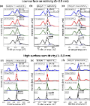
- GmbH) and a hemispherical analyzer (Phoibos 150, SPECS). The energy was calibrated to the binding energies of Au 4f7/2 (84.00 eV), Ag 3d5/2 (368.21 eV) and Cu 2p3/2 (932.63 eV) using Ar-ion sputtered foils of Au, Ag, and Cu (Goodfellow Cambridge Ltd.). At the LowDosePES endstation the samples were
- contamination-free surface could be confirmed. The samples were sputtered with a IQE 10 ion source (SPECS GmbH, Berlin, Germany) using Ar and Ne gas (purity: 4.5, Linde plc, Dublin, Ireland and Westfalen AG, Münster, Germany). The pressure in the vacuum chamber was maintained at a constant level of 5 × 10⁻⁵


Restorative potential of laser-synthesized silver nanoparticles with Salvia officinalis for periodontal disease treatment: an in vitro study
Beilstein J. Nanotechnol. 2026, 17, 781–795, doi:10.3762/bjnano.17.55
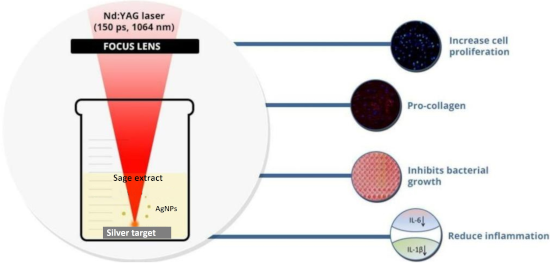
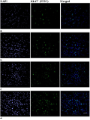
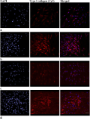
- important for AgNP synthesis and stabilization since it possesses potent reducing properties to convert Ag+ ions to AgNPs [25]. This reduction is enhanced by caffeic acid, which acts synergistically to facilitate nanoparticle formation and stabilization [31][32], suggesting that the sage extract obtained in
- significantly lower cytotoxic effects than their uncoated counterparts, probably by attenuating the release of Ag+ ions and through sage’s inherent antioxidant activity that helps scavenge ROS, thus decreasing oxidative cellular damage [45][46]. In biological media, silver speciation is highly dynamic due to
- interactions with proteins and ions, which makes direct quantification of free Ag+ ions challenging [47]. Interestingly, SageAgNPs6mJ demonstrated toxicity toward bacterial cells without decreasing the viability of GFCs at the same concentration, thus achieving antimicrobial efficacy without cellular damage



Tailoring Ag–Pt nanoalloys through solid-state dewetting: structural and optical insights
Beilstein J. Nanotechnol. 2026, 17, 748–759, doi:10.3762/bjnano.17.52

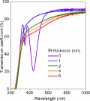
- .17.52 Abstract In this work, a cost-effective method for fabricating silver–platinum nanoalloys through thermally activated dewetting of thin metallic films is demonstrated. Ag and Pt bilayers with a total thickness of 8 nm were deposited using DC magnetron sputtering, followed by annealing at 650 °C
- homogeneous elemental distribution, as measured by energy dispersive spectroscopy. Additionally, X-ray photoelectron spectroscopy measurements confirmed the coexistence of both metals in metallic states, with a slight Ag deficiency attributed to its higher instability and desorption during the annealing
- -electron contribution of platinum, which suppresses plasmonic oscillations. The obtained results demonstrate that thermally activated dewetting enables the synthesis of homogeneous Ag–Pt nanoalloys at the nanoscale, both in volume and on the surface of nanostructures, overcoming miscibility limitations of




Environmental applications of silver nanoparticles: state-of-the-art review and emerging trends
Beilstein J. Nanotechnol. 2026, 17, 697–736, doi:10.3762/bjnano.17.49
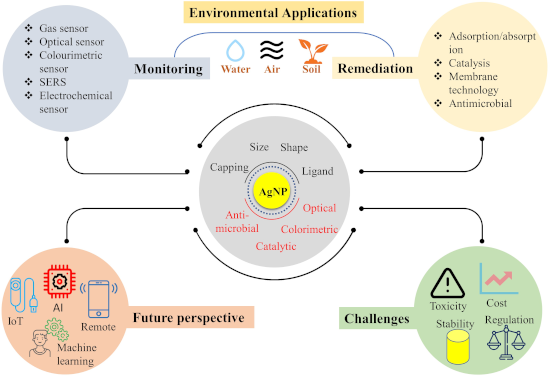
- irreproducibility, ecotoxicological risks arising from Ag+ ion release and environmental persistence, and the current absence of harmonised regulatory frameworks for AgNP deployment, are critically discussed. This review provides a structured, evidence-based foundation for researchers and engineers working toward
- pseudo-first-order reaction kinetics [25]. The addition of AgNPs to a matrix may improve their efficiency in removing various contaminants via adsorption mechanisms, which can be ionic or covalent, depending on the nanocomposite surface chemistry [26]. In a study, Ag-decorated reduced graphene oxide was
- safety and the risks associated with environmental applications, in particular regarding the cytotoxicity of Ag+ ions [31]. The mechanisms underlying the toxicity of AgNPs towards various organisms, including humans, must be elucidated to inform risk assessment and mitigation strategies [32]. The AgNPs


Two-step laser synthesis of Ag@TiO2 nanomaterials for the photocatalytic degradation of rhodamine B
Beilstein J. Nanotechnol. 2026, 17, 622–634, doi:10.3762/bjnano.17.43
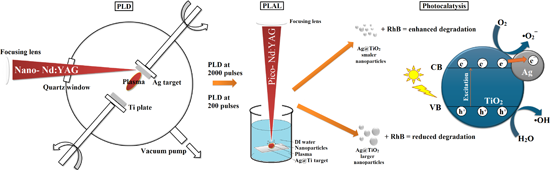
- Techniques, Institute of Physics, Bijenička Cesta 46, 10000 Zagreb, Croatia 10.3762/bjnano.17.43 Abstract This study presents a novel, chemical-free approach for the synthesis of Ag-modified TiO2 (Ag@TiO2) nanoparticles by combining the two laser-based ablation techniques pulsed laser deposition (PLD) and
- evaluated using rhodamine B (RhB) under UV irradiation; while RhB showed minimal self-degradation, the Ag@TiO2 200p and 2000p NPs samples achieved degradation rates of 75.8% and 88.4%, respectively. The main novelty of this work is the combination of two laser techniques in a chemical-free process, which
- provides an efficient and environmentally friendly route for the fabrication of Ag@TiO2 photocatalysts. Keywords: Ag@TiO2 nanomaterials; photocatalytic degradation; pulsed laser ablation in liquids; pulsed laser deposition; rhodamine B; Introduction Titanium dioxide has long been recognized as perhaps


Recent progress in enhancing built-in electric fields of perovskite solar cells via junction engineering
Beilstein J. Nanotechnol. 2026, 17, 602–621, doi:10.3762/bjnano.17.42
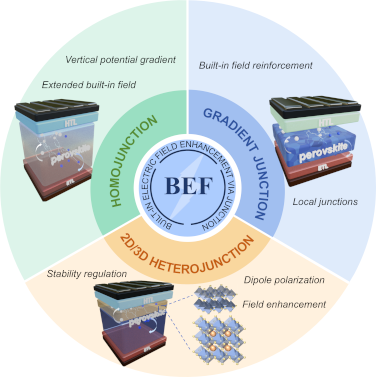
- NiOx/NiOx p/p+ homojunction by introducing Ag+ dopants. On the one hand, Ag+ doping increases the hole concentration and coordinates with lattice oxygen, thereby reducing defect states. On the other hand, it shifts the valence-band maximum (VBM) of NiOx from −5.40 eV to −5.46 eV, thereby enhancing band
- days, followed by 260 h of light exposure in a nitrogen atmosphere, Ag+ doping in sol–gel NiOx p/p+ homojunctions mitigated iodine vacancy formation and Pb2+ migration, preventing degradation pathways and reducing PCE loss from 40% to 10%. In sequential molecular doping systems, a common problem is
- and surface modification, they enhance the BEF, reduce interfacial defects, and prevent degradation. For example, Ag-doped NiOx/NiOx p/p+ homojunctions have been shown to reduce defect clusters and prevent halide ion migration, improving stability. However, challenges like phase separation and ion




Defects and defect-mediated engineering of two-dimensional materials: challenges and open questions
Beilstein J. Nanotechnol. 2026, 17, 454–488, doi:10.3762/bjnano.17.31





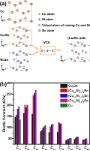
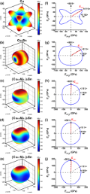
First-principles study on elastic properties of Cu, (Cu1−x,Nix)3Sn and interfacial mechanical properties of (Cu1−x,Nix)3Sn/Cu in the lead-free solder joint
Beilstein J. Nanotechnol. 2026, 17, 428–439, doi:10.3762/bjnano.17.29
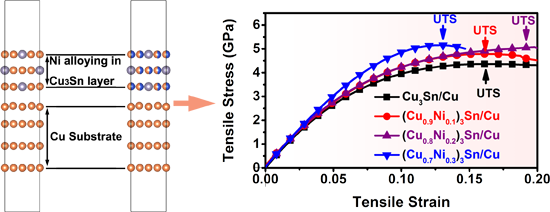
- , wettability, melting point, corrosion resistance, and mechanical and electrical properties [1][2]. A series of binary alloy solders, like Sn-Zn alloys [3], Sn-Cu alloys [4], Sn-Ag alloys [5], and Sn-Bi alloys [6], have been extensively investigated. Moreover, ternary and quaternary alloys have recently
- received considerable attention, and the Sn-Ag-Cu ternary alloy is considered as a promising candidate to substitute conventional lead-containing solder alloys [7]. Driven by the miniaturization of electronic devices and their widespread application in harsh environments such as high temperature and high
- reliability of lead-free solder joints by Ni alloying. For instance, Zhang et al. observed that the corrosion resistance of Sn-Zn solder can be enhanced by alloying with Ni, Cr, Cu, or Ag; the higher corrosion resistance follows the order Ag < Cu < Cr < Ni [11]. El-Taher et al. demonstrated that the ductility


Biomimetic nanoparticles in cancer photodynamic therapy: a review of targeted delivery systems and therapeutic outcomes
Beilstein J. Nanotechnol. 2026, 17, 396–422, doi:10.3762/bjnano.17.27
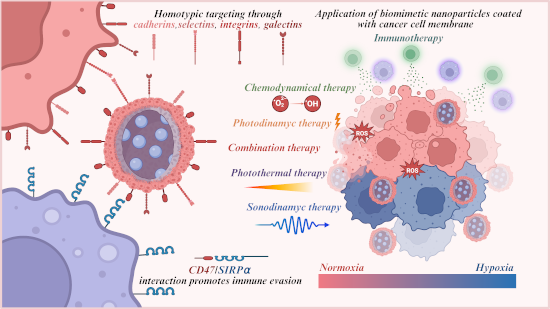
- PSs bearing conjugatable functional groups (e.g., carboxyl) onto the surface of bioinspired nanoparticles such as noble metal nanoparticles (Ag and Au). Stable ester bond formation secures the PS to the nanocarrier surface, offering hydrophilicity, biocompatibility, and enhanced biological delivery


Ferroelectric nanodot reservoir for neuromorphic computing
Beilstein J. Nanotechnol. 2026, 17, 352–364, doi:10.3762/bjnano.17.24
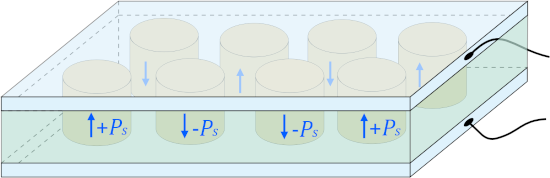
- Institute for Intelligent Materials, Southern Federal University, Rostov-on-Don, Russia Terra Quantum AG, St. Gallen, Switzerland L. D. Landau Institute for Theoretical Physics, Moscow, Russia 10.3762/bjnano.17.24 Abstract We present a ferroelectric-based data reservoir designed for neuromorphic computing
- and readout realized via atomic or piezoresponse force microscopy. Funding This research was funded by the European Union HORIZON action MSCA-SE-3D-TOPO (project number 101236483). A.R. acknowledges the Slovenian Research Agency support (P1-0125). The work of V.V. was supported by Terra Quantum AG.


Beam shaping techniques for pulsed laser ablation in liquids: Unlocking tunable control of nanoparticle synthesis in liquids
Beilstein J. Nanotechnol. 2026, 17, 309–342, doi:10.3762/bjnano.17.22
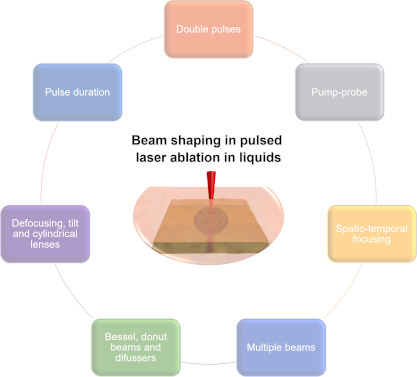
- lenses in PLAL can lead to the formation of nanoribbons [140], and this may be attributed to two main mechanisms. First, the initially formed Ag nanospheres could undergo nanowelding under the influence of a line-shaped light sheet produced by cylindrical focusing, leading to chain- or ribbon-like
- 1.2 mJ pulse energy, the fabrication of Ag nanoribbons longer than 0.6 µm were synthesised (Figure 7). External elements for spatial beam shaping. The spatial profile of a beam plays a crucial role in laser–matter interaction, influencing the efficiency, precision, and morphology of the ablated
- laser beam has been shown to allow for better control of NP size and to offer an advantage in terms of alignment and reproducibility due to the long length of the central lobe of the Bessel beam [142]. A narrow size distribution of Ag NPs obtained by femtosecond Bessel beam irradiation of a silver







Durable antimicrobial activity of fabrics functionalized with zeolite ion-exchanged nanomaterials against Staphylococcus aureus and Escherichia coli
Beilstein J. Nanotechnol. 2026, 17, 262–274, doi:10.3762/bjnano.17.18
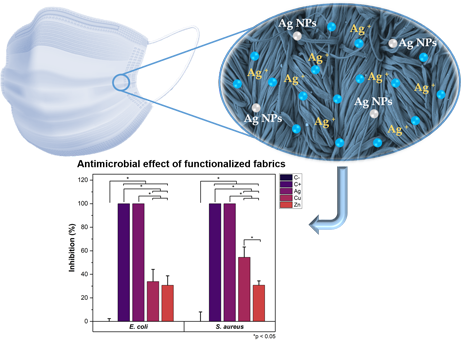
- , silver (Ag+), copper (Cu2+), and zinc (Zn2+) cations are ion-exchanged with Y-type zeolite (CBV-600) and subsequently applied to cotton fabrics using the pad–dry–cure method, with an acrylic resin serving as binder. The resulting functionalized fabrics, containing metal cation concentrations of 1.0–1.5
- different components, fiber material composites, nanoscale fibers, and immersion in NPs solutions with a binder. Nanoparticles such as Ag, Au, TiO2, ZnO, Se, SiO2, CuO, and Pt are widely used for textile functionalization [25]. Common methods for incorporating Ag and Cu NPs into cotton textiles involve
- fabrics. In this process, crosslinking reactant, catalyst, softener, and other components are dried onto the fabric before the crosslinking reaction takes place during the curing stage [26][27][28]. Lateef et al. applied the pad–dry–cure method to functionalize commercial cotton and silk with Ag NPs using




Multilayered hyperbolic Au/TiO2 nanostructures for enhancing the nonlinear response around the epsilon-near-zero point
Beilstein J. Nanotechnol. 2026, 17, 251–261, doi:10.3762/bjnano.17.17
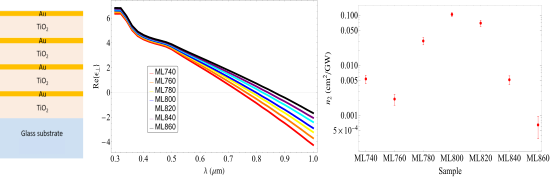
- layered Ag/TiO2 and determined via spectroscopy that its ENZ point laid within the visible spectrum [7]. Since then, a wide array of layered metal–dielectric configurations have been demonstrated, including silver-based combinations such as Ag/SiO2 [1], Ag/Al2O3 [6], Ag/LiF [8], Ag/TiO2 [9], Ag/Ge [10
- ], Ag/MgF2 [11], and Ag/Ti3O5 [12]. Gold-based systems have also been prominent, such as Au/Al2O3 [13][14][15], Au/SiO2 [16], Au/TiO2 [17], and optical filters based on Au/TiO2 multilayers [18]. Beyond classic metal–dielectric structures, research has explored ZnO/Al:ZnO [19] and doped semiconductors


Gold nanoparticle-decorated reduced graphene oxide as a highly effective catalyst for the selective α,β-dehydrogenation of N-alkyl-4-piperidones
Beilstein J. Nanotechnol. 2026, 17, 218–238, doi:10.3762/bjnano.17.15


Chiral plasmonic nanostructures fabricated with circularly polarized light
Beilstein J. Nanotechnol. 2025, 16, 2245–2264, doi:10.3762/bjnano.16.154
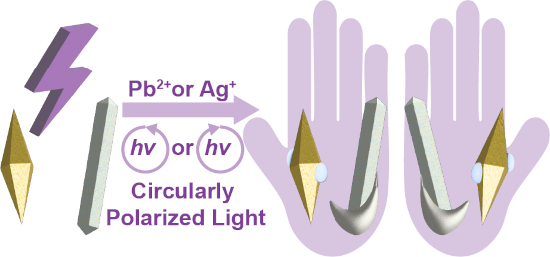
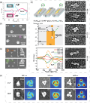
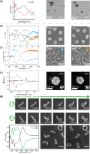
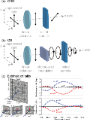
- electron sink, and the hot holes oxidize Pb2+ in solution to form PbO2. The TiO2 substrate is very efficient in removing the unwanted hot electrons to suppress carrier recombination. Ag+ in the reaction mixture eventually consumes these hot electrons. Previous studies have shown that the oxidation of Pb(II
- vicinity of the Au nanostructures [56]. However, the drawback of the Au/PbO2 heterostructures is evident: PbO2 is an indirect-bandgap semiconductor and, therefore, does not significantly contribute to the total extinction cross section of the nanostructure compared to Ag and Au. It would be more beneficial
- to use pure metallic cPNSs to enhance the interaction between cPNSs and CPL. 2.3 Metallic chiral nanostructures created with CPL The light-mediated synthesis of Ag and Au NCs highlights the complexity in harnessing photoexcited hot carriers for photoredox chemistry [93][94][95][96][97][98][99][100





Optical bio/chemical sensors for vitamin B12 analysis in food and pharmaceuticals: state of the art, challenges, and future outlooks
Beilstein J. Nanotechnol. 2025, 16, 2207–2244, doi:10.3762/bjnano.16.153
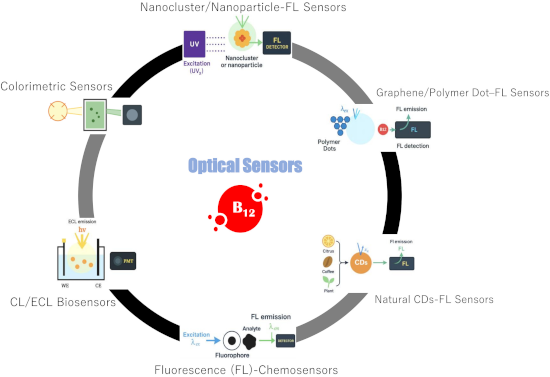
- quantification of VB12, utilizing the chemiluminescent reaction between luminol and AgNO3, catalyzed by AuNPs, where VB12 served as the recognition analyte, luminol acted as the indicator luminophore, and the strong CL emission revealed the sensing signal. In this system, Ag+ served as a chemiluminescent oxidant


Rapid synthesis of highly monodisperse AgSbS2 nanocrystals: unveiling multifaceted activities in cancer therapy, antibacterial strategies, and antioxidant defense
Beilstein J. Nanotechnol. 2025, 16, 2105–2115, doi:10.3762/bjnano.16.145
- h [17]. In another study, the antibacterial effects of Ag, Ag2S, and Ag2Se NCs on gram-negative and gram-positive bacteria were investigated [15]. As a result of the literature review, biomedical applications of silver-based NCs were exemplified above. As can be seen from these studies, biomedical
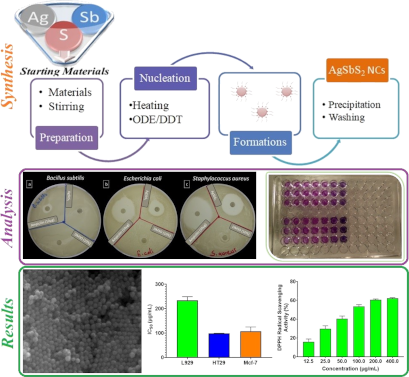
- 4000–400 cm−1 to investigate the functional groups and chemical bond structures of the synthesized AgSbS2 NCs. The vibrational peaks observed in Figure 1d, appearing at 520–650 cm−1, were assigned to Ag–S bonds, whereas those in the 890–1040 cm−1 range were attributed to C=C–H bonds [34][35]. In
- uptake, are expected to be within the range typically reported for Ag-based chalcogenides exhibiting stable dispersions. Antioxidant activity of AgSbS2 NCs The DPPH radical scavenging activity of AgSbS2 NCs in the assay using ascorbic acid as a positive control is revealed in Figure 5. The synthesized


Laser ablation in liquids for shape-tailored synthesis of nanomaterials: status and challenges
Beilstein J. Nanotechnol. 2025, 16, 1963–1997, doi:10.3762/bjnano.16.137
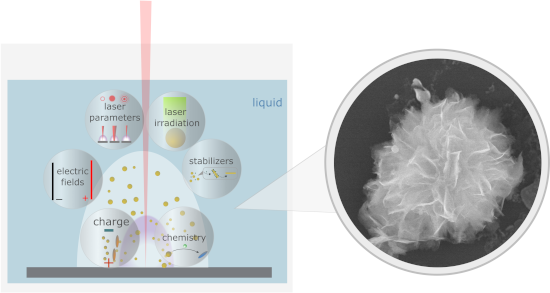
- concentration the growth of spherical NPs is favourable. As a mechanism, the authors suggest the coordination of the interaction of Ag species, ejected from the target with Br ions from the solution by the CTAB stabilizer molecules. Similar action during NP growth can be expected upon addition of some metal
- ions (Ag+, Fe3+, Co+) and complexes (W(CO)6) [41]. These additives are known to promote growth of nonspherical shapes in colloidal chemical synthesis by preferential adsorption on specific crystalline planes. Another example of the influence of ligand concentration on nanoparticle shape is given in [42
- enlarged aggregates were observed. The changes in the structure were observed even at slightly elevated temperatures (35 °C), which indicates high sensitivity of the growth mechanisms to temperature increase. A similar effect has been shown by Haram et al. in [47], who observed formation of Ag and Au


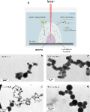



Evaluating metal-organic precursors for focused ion beam-induced deposition through solid-layer decomposition analysis
Beilstein J. Nanotechnol. 2025, 16, 1942–1951, doi:10.3762/bjnano.16.135
- = CF3, C2F5, C3F7, t-Bu, or C(Me)2Et, showed that these carboxylates can be dissociated via focused electron beams, yielding deposits with satisfying metal content (purity up to 76 atom % Ag). However, for the copper(II) carboxylate [Cu2(μ-O2CC2F5)4], the fabricated materials have only up to 23 Cu atom
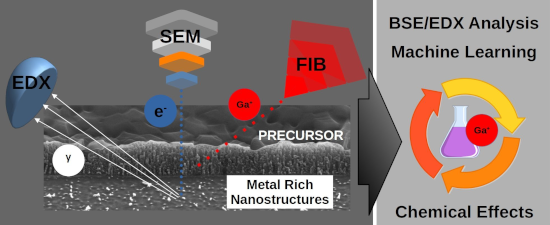
- C, O, F, and Si, as well as the Ag Lα map (see Supporting Information File 1, Figure S2–S4 for other precursors). In all cases, the maps show that the formed structures are enriched in metal. In the next step, the EDX data were processed by machine learning NMF as described in details in Jany and
- decomposition of four Cu or Ag metal-organic precursors (i.e., ([Cu2(μ-O2Ct-Bu)4] (1), [Cu2(NH2(NH=)CC2F5)2(µ-O2CC2F5)4] (2), [Cu2(µ-O2CC2F5)4] (3), and [Ag2(μ-O2CC2F5)2] (4)) exposed to 30 keV gallium FIB irradiation. Individual precursor layers were deposited onto silicon substrates via sublimation and


On the road to sustainability – application of metallic nanoparticles obtained by green synthesis in dentistry: a scoping review
Beilstein J. Nanotechnol. 2025, 16, 1851–1862, doi:10.3762/bjnano.16.128
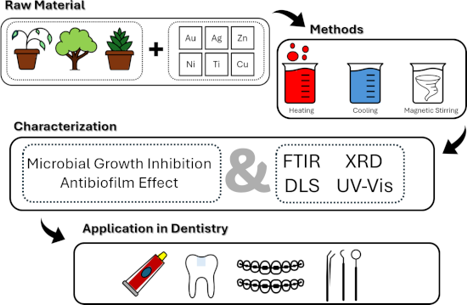
- iron oxide nanoparticles doped with silver (Ag-Fe2O3) exhibited dual properties, that is, antimicrobial protection and stimulation of osteoblastic activity. In prosthodontics, biogenic nanoparticles have been incorporated into denture base resins and soft liners, demonstrating significant antifungal


Electrical, photocatalytic, and sensory properties of graphene oxide and polyimide implanted with low- and medium-energy silver ions
Beilstein J. Nanotechnol. 2025, 16, 1794–1811, doi:10.3762/bjnano.16.123
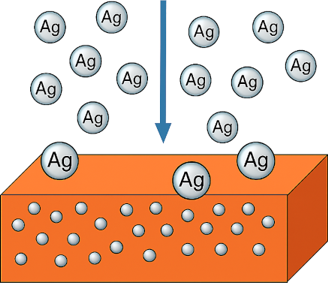
- implantation provides a controllable alternative for tuning surface properties at the nanoscale, enabling the targeted introduction of functional species without chemical reagents. This work investigates the effects of low-energy (20 keV) and medium-energy (1.5 MeV) Ag+ ion implantation on the electrical
- for the precise introduction of implanted atoms into the surface layers without the need for subsequent chemical modification, thus opening new possibilities in the development of functional thin films. In this study, Ag ions were used to modify polymer matrices to improve chemical and electronic
- properties of the modified materials. In our previous studies, light ions such as Cu [1][2] and C [3] were implanted into GO, PI, and other polymers. In contrast, the implantation of heavier ions like Ag interacts with the target material through different mechanisms. Owing to its higher mass, Ag has a





