Search results
Search for "agglomeration" in Full Text gives 284 result(s) in Beilstein Journal of Nanotechnology. Showing first 200.
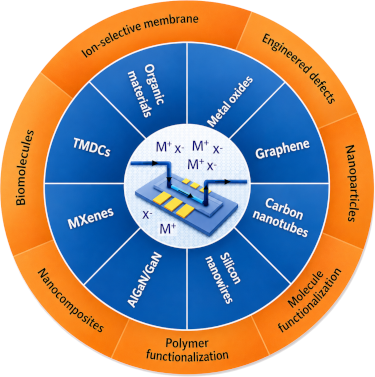
Materials challenges in solid-state sensors for continuous monitoring of ions in water
Beilstein J. Nanotechnol. 2026, 17, 935–973, doi:10.3762/bjnano.17.66


Light-driven ammonia electrooxidation via carbon nitride–ruthenium molecular interfaces
Beilstein J. Nanotechnol. 2026, 17, 854–862, doi:10.3762/bjnano.17.61
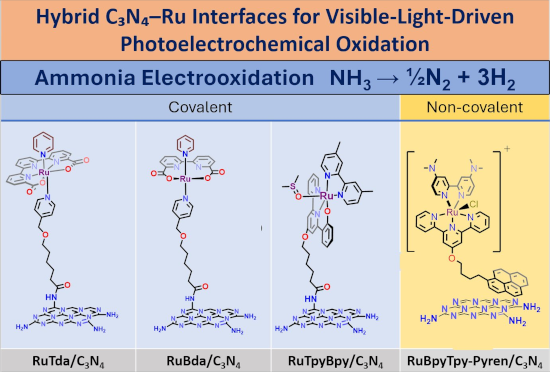
- electronic coupling between antenna and catalytic centre while eliminating the need for a discrete linker or pyrene-functionalized ligand. Open challenges include metal atom migration and agglomeration under prolonged irradiation, and the difficulty of distinguishing genuine single-atom activity from sub


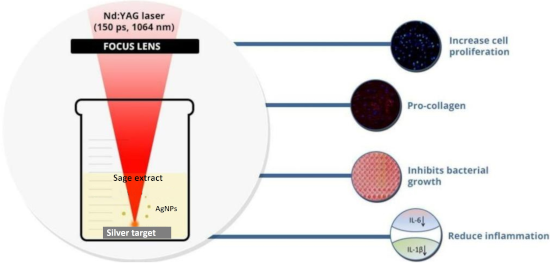
Restorative potential of laser-synthesized silver nanoparticles with Salvia officinalis for periodontal disease treatment: an in vitro study
Beilstein J. Nanotechnol. 2026, 17, 781–795, doi:10.3762/bjnano.17.55
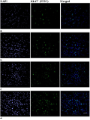
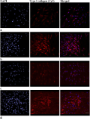
- , respectively, underwent TEM analysis. SageAgNPs6mJ were well dispersed, spherical, and in the narrow size range from 2.1 to 16.3 nm, with an average particle size of 7.98 ± 2.90 nm. Minor agglomeration after one month was observed, suggesting high stability of the nanoparticles (Figure 1a,b). dwAgNPs6mJ were
- spherical and pseudospherical in shape, with particle diameters ranging from 9.0 to 48.8 nm, with an average particle size of 24.59 ± 8.25 nm, with minor agglomeration that was more pronounced after one month (Figure 1d,e). Antibacterial testing The primary step in exploring the AgNPs’ potential in
- agglomeration in suspension, which was confirmed by TEM imaging. Stronger agglomeration of dwAgNPs6mJ one month after synthesis compared to SageAgNPs6mJ confirmed that sage acts as a potent reducing and stabilizing agent during the synthesis. As mentioned above, this phenomenon is probably a result of high



Environmental applications of silver nanoparticles: state-of-the-art review and emerging trends
Beilstein J. Nanotechnol. 2026, 17, 697–736, doi:10.3762/bjnano.17.49
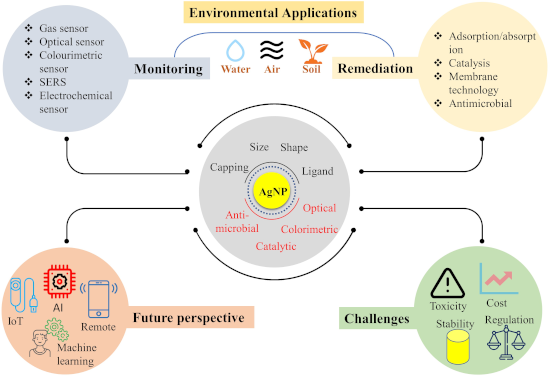
- . Selecting the appropriate capping agent from polymers, surfactants, biomolecules, and green extracts is essential to ensure long-term stability and prevent agglomeration, thereby making it suitable for environmental applications [63]. In addition, surface functionalization or coating with biocompatible


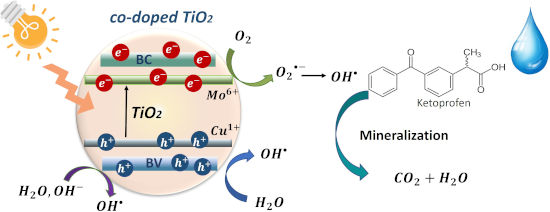
Synthesis of Cu–Mo/TiO2 and Co–Mo/TiO2 photocatalysts for the efficient degradation of organic pollutants in water
Beilstein J. Nanotechnol. 2026, 17, 559–570, doi:10.3762/bjnano.17.37
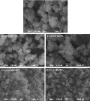
- increase in copper concentration (0.5 wt %) resulted in a decrease in particle size and their agglomeration, leading to particles of undefined shape. In contrast, the incorporation of 0.2 wt % of cobalt resulted in smaller particles forming agglomerations. When the cobalt content is increased, particles



Upcycling agroindustrial waste into graphene oxide supports for gold nanoparticles: toward sustainable nanomaterials
Beilstein J. Nanotechnol. 2026, 17, 489–504, doi:10.3762/bjnano.17.32
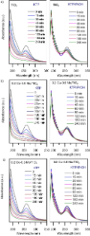
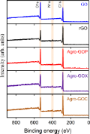
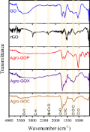
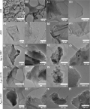
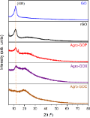
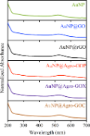
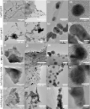
- samples; each row corresponds to a specific sample. The images reveal clear morphological differences among the graphene-based materials depending on their synthesis route. The GO sample (Figure 6a–d) exhibits thin, translucent, and wrinkled sheets with minimal agglomeration, which reflects a high
- AuNPs with moderate clustering, while preserving the structural integrity of the GO sheets. In contrast, AuNP@rGO (Figure 10e–h) shows pronounced AuNP agglomeration, likely resulting from the lower availability of oxygen-containing functional groups following hydrazine reduction. AuNP@Agro-GOP (Figure
- Agro-GOX are mostly available at the borders rather than across the basal surface, limiting AuNP anchoring to the sheet edges and preventing homogeneous dispersion. Finally, AuNP@Agro-GOC (Figure 10q–t) shows a much lower density and greater agglomeration of AuNPs. This poor performance as a nucleation



Defects and defect-mediated engineering of two-dimensional materials: challenges and open questions
Beilstein J. Nanotechnol. 2026, 17, 454–488, doi:10.3762/bjnano.17.31
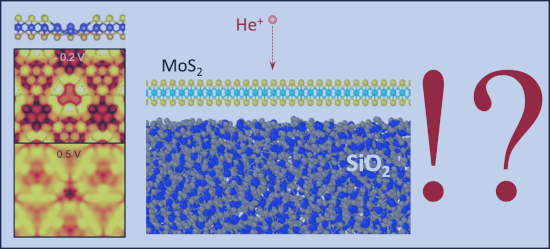
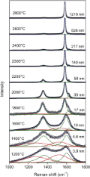
- vacancies can appear. At the same time, annealing always removes (at least partially, when agglomeration of material occurs) adatoms and organic molecules from the surface of a 2D system, which can also be referred to as defects. The optimum annealing temperature depends on the sublimation energy and is





Durable antimicrobial activity of fabrics functionalized with zeolite ion-exchanged nanomaterials against Staphylococcus aureus and Escherichia coli
Beilstein J. Nanotechnol. 2026, 17, 262–274, doi:10.3762/bjnano.17.18
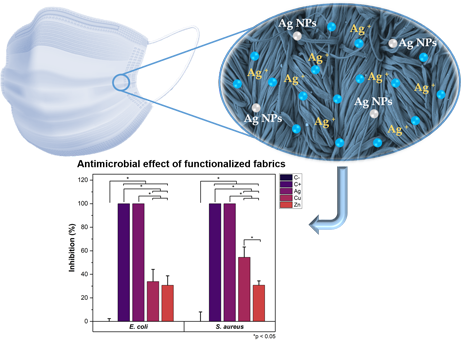
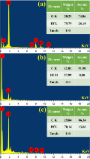
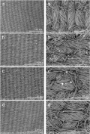
- copper and zinc (0.3 wt %) on the surface of textile (see Table 1 and Figure 1, right panel). The slight increase in silver content on the functionalized fabrics may be explained by the agglomeration of nanomaterials on the surface of fabrics and superficial nature of the EDS method. However, the content




Safe and sustainable by design with ML/AI: A transformative approach to advancing nanotechnology
Beilstein J. Nanotechnol. 2026, 17, 176–185, doi:10.3762/bjnano.17.11
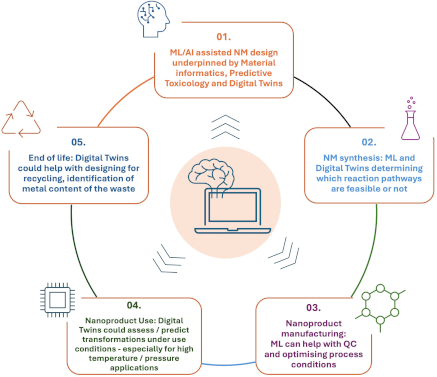
- , beginning with raw material synthesis and continuing through usage, recycling, and eventual disposal. ENMs may undergo transformations such as agglomeration, chemical reactions, or changes in surface properties. These transformations may happen in different environmental and biological contexts, including


Influence of surface characteristics on the in vitro stability and cell uptake of nanoliposomes for brain delivery
Beilstein J. Nanotechnol. 2026, 17, 139–158, doi:10.3762/bjnano.17.9
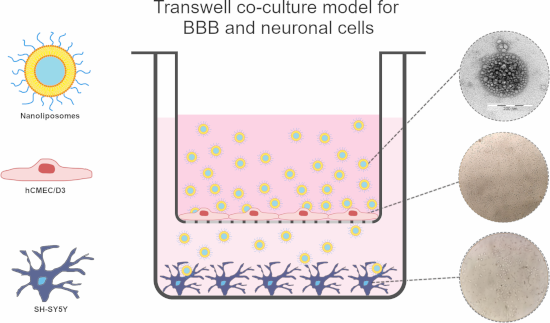
- , focusing rate and duration, sample loading, and carrier conditions. The composition of the carrier buffer, as well as its ionic strength and pH are crucial considerations for stabilizing the structures, preventing agglomeration or sedimentation, and avoiding interference with analytes and the membrane [23




Ultrathin water layers on mannosylated gold nanoparticles
Beilstein J. Nanotechnol. 2025, 16, 2183–2198, doi:10.3762/bjnano.16.151
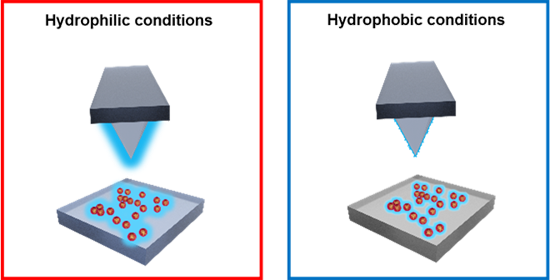
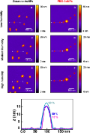
- , we observed a very small number of NPs and higher agglomeration than on APDMES (Figure 6E,F,K,L). Like on APDMES, PEG AuNPs are less uniformly distributed than dimanno-AuNPs. The differences are likely due to the delicate balance between capillary flow and surface interactions. The flow is likely the
- , ligands that stretch out parallel to the surface in contact with it, and free ligands merely attached to the NPs. For the PEG AuNPs, DLS gave an extreme value of 41.1 nm, corresponding to three times the AFM height value (13.3 nm). We conclude that we here observe particle agglomeration in solution
- . Previous studies have shown such clusters for PEG AuNPs in solution [41], and their size is strongly reduced by adding albumin. In our case, the addition of dimannose would lead to the case of the dimanno-AuNPs, for which we do find much decreased agglomeration. Generally, nanoparticles produced inside a



Laser ablation in liquids for shape-tailored synthesis of nanomaterials: status and challenges
Beilstein J. Nanotechnol. 2025, 16, 1963–1997, doi:10.3762/bjnano.16.137
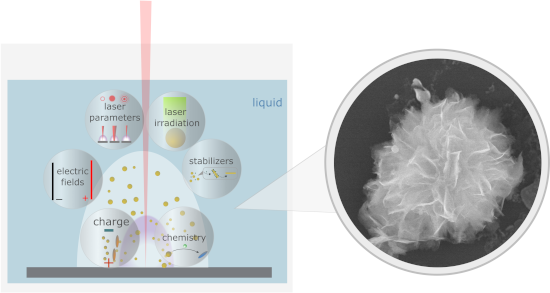
- modification and oxidation, and influencing the processes of ageing, oxidation, aggregation, and agglomeration. As a result, in [36], the increase of the ambient temperature was demonstrated to induce oriented growth of the NPs with the formation of nanospindles, whereas at room temperature only isotropic
- their growth are largely restricted to agglomeration only along the vortex direction. As a result, coalescence of the atoms and clusters in the vortices results in the production of filament-like nanostructures and growth of nanowires with length up to several centimetres [48]. This approach has shown




Electrical, photocatalytic, and sensory properties of graphene oxide and polyimide implanted with low- and medium-energy silver ions
Beilstein J. Nanotechnol. 2025, 16, 1794–1811, doi:10.3762/bjnano.16.123
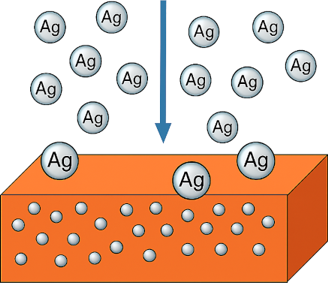
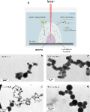
- chemical changes occurring during ion implantation. In reality, Ag+ implantation into GO and PI induces carbonization, changes in local density, and possible diffusion or agglomeration of Ag atoms, which can lead to a redistribution of silver compared to the initial ballistic projection. Moreover, surface


Ambient pressure XPS at MAX IV
Beilstein J. Nanotechnol. 2025, 16, 1677–1694, doi:10.3762/bjnano.16.118
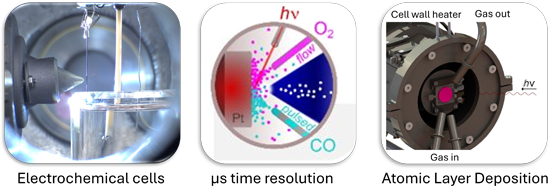
- agglomeration, especially at elevated temperatures, requires advanced strategies. Accordingly, diverse approaches have been developed to realize stable SACs across a wide range of metals and supports. Among these, site-selective atomic layer deposition [16], supported catalytically active liquid metal solutions


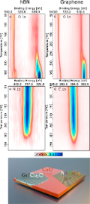
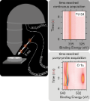

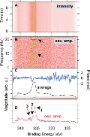


Laser processing in liquids: insights into nanocolloid generation and thin film integration for energy, photonic, and sensing applications
Beilstein J. Nanotechnol. 2025, 16, 1428–1498, doi:10.3762/bjnano.16.104
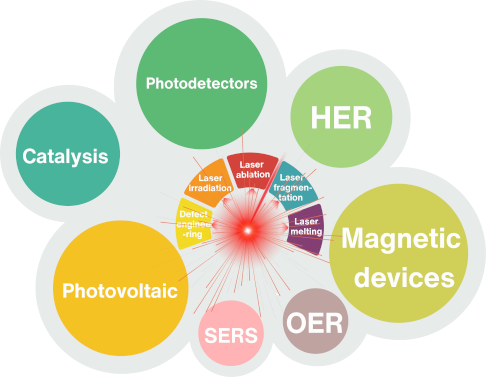
- increasing surface area and inducing fracture planes. One of the few publications on the formation mechanism of gold SMPs [45] clearly depicts the laser irradiation mechanism and how the process of agglomeration affects the particle formation. Laser irradiation causes a redshift in the localized plasmon band






Multifunctional properties of bio-poly(butylene succinate) reinforced with multiwalled carbon nanotubes
Beilstein J. Nanotechnol. 2025, 16, 1014–1024, doi:10.3762/bjnano.16.76
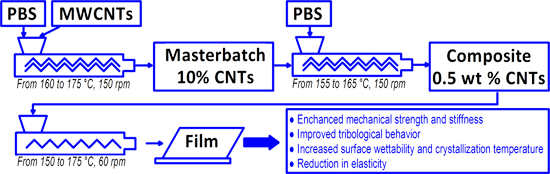
- content of 0.3 wt %. These nanocomposites also exhibited a uniform MWCNTs distribution without significant agglomeration. This study aimed to conduct a comprehensive investigation into the effect of a small addition of pure MWCNTs on the morphology, rheological, tribological, physicomechanical, and



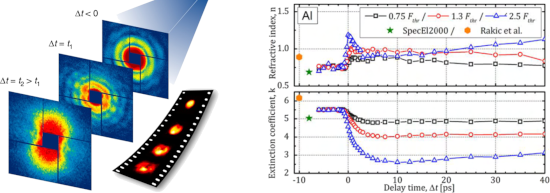
Time-resolved probing of laser-induced nanostructuring processes in liquids
Beilstein J. Nanotechnol. 2025, 16, 968–1002, doi:10.3762/bjnano.16.74


Supramolecular hydration structure of graphene-based hydrogels: density functional theory, green chemistry and interface application
Beilstein J. Nanotechnol. 2025, 16, 806–822, doi:10.3762/bjnano.16.61
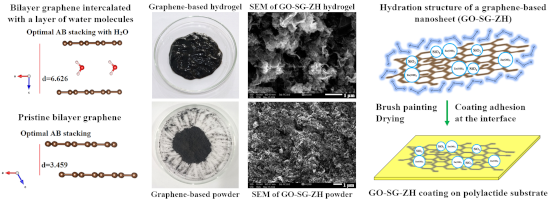
- plays an important role in the stability and functionality of nanoscale structures. Van der Waals forces are supramolecular intermolecular interactions that govern the agglomeration of nanomaterials. Carbon nanostructures with π-conjugated systems (fullerene, carbon nanotube, and graphene) have π–π
- interactions, a type of van der Waals force, for supramolecular attraction [9]. Particularly, graphene sheets with a large surface area and π-conjugated network are likely to stack together through hydrophobic agglomeration and π–π interaction. Although π–π interactions are generally weaker than hydrogen


Morphology and properties of pyrite nanoparticles obtained by pulsed laser ablation in liquid and thin films for photodetection
Beilstein J. Nanotechnol. 2025, 16, 785–805, doi:10.3762/bjnano.16.60
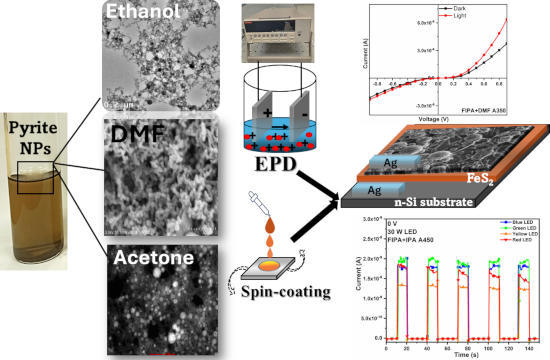
- corresponds to (200) plane of FeS2. The (206) plane of FeS at 2.65 Å is also identified. In the case of TEM and STEM images of NPs in DMF (Figure 3a,d–f), the majority of the analyzed regions resemble agglomerated ultrafine powders. This agglomeration may be attributed to the higher boiling point of DMF (153
- °C), which causes it to evaporate more slowly, allowing more time for the particles to aggregate. In contrast, alcohols (boiling point range: 64–78 °C) and acetone (56 °C) evaporate much more quickly, significantly reducing the influence of the solvent and leading to less agglomeration in the samples
- of a magnetic field by laser ablation in liquids. SEM and TEM images of FeS2 nanoparticles prepared without a magnetic field revealed spherical particles with varying sizes, aggregation and agglomeration with an average size of approximately 40 nm [38]. In contrast to this, the average particle sizes






Size control of nanoparticles synthesized by pulsed laser ablation in liquids using donut-shaped beams
Beilstein J. Nanotechnol. 2025, 16, 407–417, doi:10.3762/bjnano.16.31
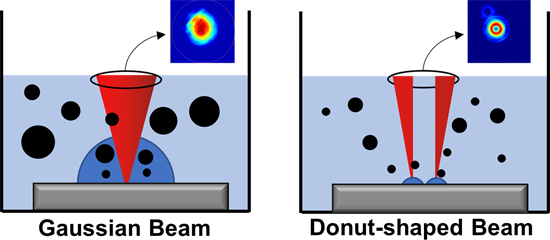
- for particle formation and reducing the particle growth and agglomeration tendencies. The cavitation bubble created by the donut beam forms a toroidal structure that overruns the ring-shaped ablation site, temporally leaving that spot uncovered (Figure 5b,c), unlike the quasi-hemispherical bubble
- the hydrodynamics of the melt within the spot. Preliminary observations suggest that the distinct cavitation bubble dynamics produced by donut-shaped pulses may also play a role in preventing nanoparticle growth and agglomeration. These results indicate that donut-shaped laser pulses offer a promising


Pulsed laser in liquid grafting of gold nanoparticle–carbon support composites
Beilstein J. Nanotechnol. 2025, 16, 349–361, doi:10.3762/bjnano.16.26
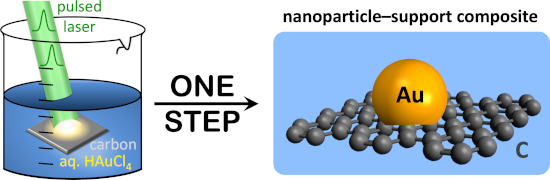
- reactions and can create unwanted side products [7]. Long-term surfactant stability and associated catalyst agglomeration or detachment are another issue. Post-synthetic attachment of catalyst nanoparticles is poorly scalable, creates large amounts of organic hazardous waste, and results in wastage of


Fabrication and evaluation of BerNPs regarding the growth and development of Streptococcus mutans
Beilstein J. Nanotechnol. 2025, 16, 308–315, doi:10.3762/bjnano.16.23
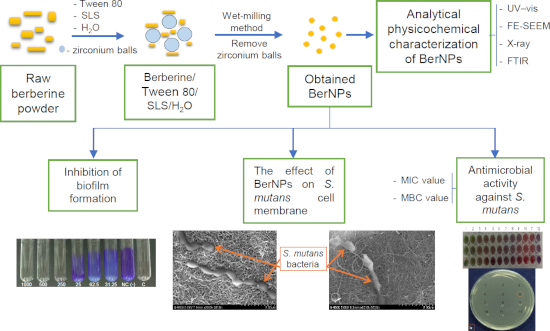
- each other, reducing the likelihood of agglomeration and deposition, and enhancing the stability of the suspension [21][22]. Consequently, a suspension of the BerNPs was produced with uniform particle sizes, predominantly ranging from 40 to 65 nm (Figure 1B,C). In our study, the rotary grinding method




Preferential enrichment and extraction of laser-synthesized nanoparticles in organic phases
Beilstein J. Nanotechnol. 2025, 16, 254–263, doi:10.3762/bjnano.16.20
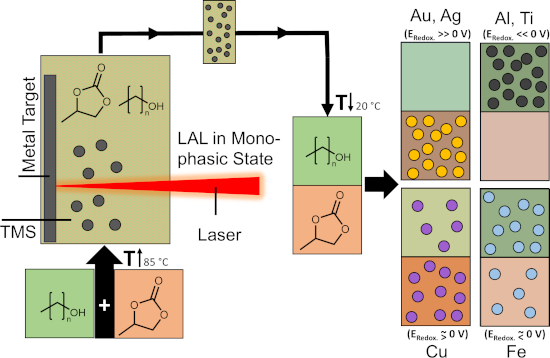
- phase separation which, in turn, can lead to different physical effects on the particles (such as, e.g., agglomeration). Second, it is possible that the nanoparticles inherently prefer a solvent polarity that lies between the polarity of the alcohol and propylene carbonate phases. Rather than a




A review of metal-organic frameworks and polymers in mixed matrix membranes for CO2 capture
Beilstein J. Nanotechnol. 2025, 16, 155–186, doi:10.3762/bjnano.16.14
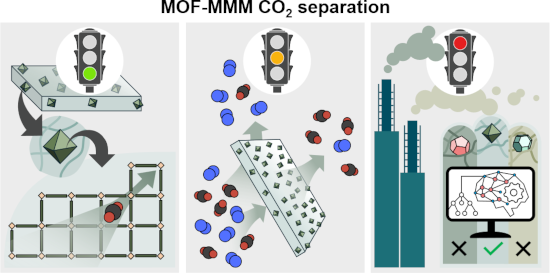
- . High loadings of up to 50 wt % UiO-66 and its functionalized derivatives (UiO-66-NH2 and UiO-66-(COOH)2) were achieved without MOF agglomeration in the thin, selective layers. When successfully prepared, these novel HFMMMs can express improved separation efficiency, increased mechanical strength, and




Fabrication of hafnium-based nanoparticles and nanostructures using picosecond laser ablation
Beilstein J. Nanotechnol. 2024, 15, 1639–1653, doi:10.3762/bjnano.15.129
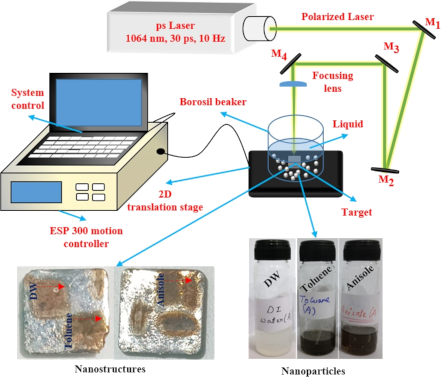
- ][47][48], leading to the formation of nanoparticles [43]. Some of these nuclei with abundant hafnium oxide molecules around grow like crystals [45][48]. The agglomeration [47] of such crystals leads to the observed polycrystalline state in the NPs [43][46]. The formation of the observed amorphous NPs