


Search results
Search for "barrier" in Full Text gives 566 result(s) in Beilstein Journal of Nanotechnology. Showing first 200.
Nanoglasses: a trail towards uncharted regions of vitreous materials and their properties?
Beilstein J. Nanotechnol. 2026, 17, 1047–1062, doi:10.3762/bjnano.17.72

- this effect is sparse, the following discussion on the kinetic stability of GGIs is regarded as a hypothesis. Based on the high amount of excess volume within the glass–glass interfaces, structural rearrangements are more viable as steric hindrances are reduced, giving rise to lower effective barrier
- meta-basins corresponding to the glass grains, as schematically depicted in Figure 1. These states are separated from the meta-basin corresponding to the glass–glass interfaces by high barriers, and barrier-crossing is thus improbable. In order to form glass–glass interfaces inside a uniform bulk glass
- , excess volume would also need to be transported from the outside of the material to localized regions inside, involving long-range transport and thus requiring time scales that might be prohibitive, specifically with respect to the barrier heights along the transport pathway and concerning the


Vibration-induced dynamic structural superlubricity on MoS2/Au(111) under ultrahigh vacuum
Beilstein J. Nanotechnol. 2026, 17, 1039–1046, doi:10.3762/bjnano.17.71
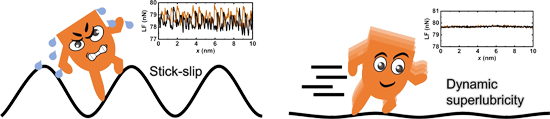
- vibration amplitude is equivalent to a lowering in the effective normal load or barrier height. The external energy provided by the vibration promotes tip escape from the atomic potential wells, effectively suppressing the stick–slip instability and leading to the robust friction reduction as observed


Synthesis and characterization of RF-sputtered ZnTe/Cu2−xTe thin films for solar cell applications
Beilstein J. Nanotechnol. 2026, 17, 1016–1027, doi:10.3762/bjnano.17.69
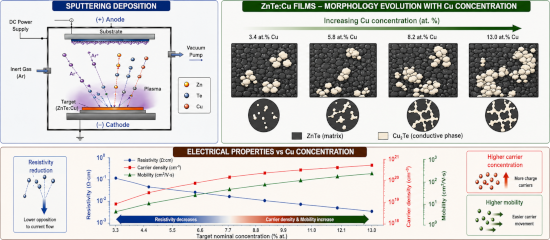
- conventional metals. As a consequence, Schottky barrier formation at the CdTe/metal interface may occur, leading to rollover effects and device degradation [1]. Copper-containing compounds have been widely employed to mitigate this issue as Cu acts as an acceptor dopant and promotes the formation of a hole
- region at the CdTe surface, reducing the barrier height. However, uncontrolled Cu diffusion through grain boundaries and toward the CdS/CdTe junction has been associated with long-term instability and performance degradation. Therefore, controlling Cu incorporation while minimizing its diffusion remains



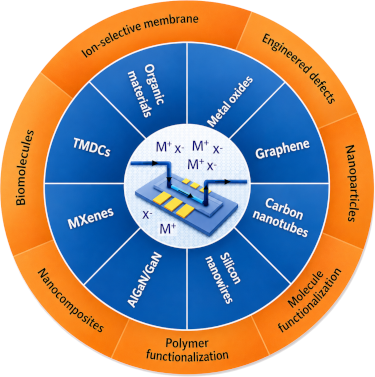
Materials challenges in solid-state sensors for continuous monitoring of ions in water
Beilstein J. Nanotechnol. 2026, 17, 935–973, doi:10.3762/bjnano.17.66



Nanocarrier strategies to overcome P-glycoprotein-mediated drug resistance in cancer therapy
Beilstein J. Nanotechnol. 2026, 17, 882–921, doi:10.3762/bjnano.17.64
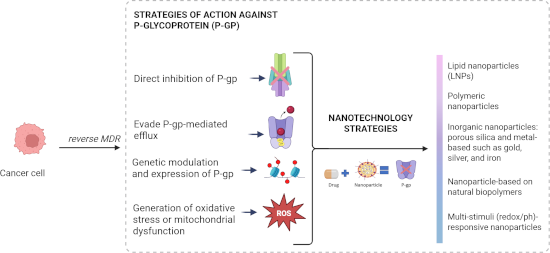
- City of Buenos Aires, Argentina 10.3762/bjnano.17.64 Abstract Multidrug resistance (MDR) remains a major barrier to successful cancer chemotherapy, frequently resulting in therapeutic failure, tumor relapses, and poor clinical outcomes. Among the diverse mechanisms underlying MDR, the overexpression
- refractory to conventional chemotherapy regimens [5]. P-gp-mediated efflux constitutes a significant therapeutic barrier in this context, and the complex tumor microenvironment (TME), partly characterized by acidic gastric conditions, further complicates drug delivery and intracellular retention [6]. 1.1.4
- reduces the cytosolic availability of chemotherapeutics independently of P-gp, but pH-responsive nanocarriers engineered for endosomal escape indirectly address this barrier. EMT-associated phenotypic shifts alter membrane composition and uptake pathways in ways that affect nanoparticle internalization


Light-driven ammonia electrooxidation via carbon nitride–ruthenium molecular interfaces
Beilstein J. Nanotechnol. 2026, 17, 854–862, doi:10.3762/bjnano.17.61
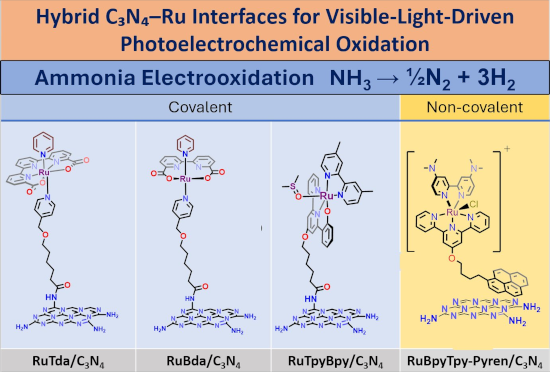
- carrier. Its oxidation requires significantly less energy than water splitting, only 33 MJ per kg H2 at −0.092 V vs NHE, compared to 180 MJ per kg H2 at 1.23 V vs NHE for the oxygen evolution reaction, representing a substantially lower thermodynamic barrier. Combined with its high volumetric energy


Nanoparticle delivery systems for HIV pre-exposure prophylaxis (PrEP): advances and challenges
Beilstein J. Nanotechnol. 2026, 17, 839–853, doi:10.3762/bjnano.17.60
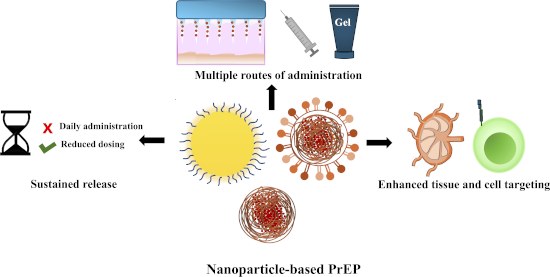
- solutions [55]. This effect may be attributed to mannose receptor-mediated uptake into macrophages, but the exact mechanism of blood–brain barrier (BBB) transfer has not been determined. Lipid-based nanoparticles LBNPs, including liposomes, LNPs, SLNs, and NLCs, represent a well-established class of


Interface-engineered Caco-2 cell culture on a collagen-coated liquid–liquid interface in a microfluidic device
Beilstein J. Nanotechnol. 2026, 17, 760–768, doi:10.3762/bjnano.17.53
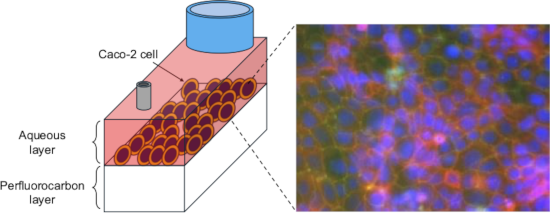
- intestinal epithelial cells are cultured to establish a polarized epithelial barrier. Although porous membranes enable compartmentalization, they may also impose non-physiological diffusion barriers and mechanical constraints. Liquid–liquid interfaces provide a mechanically soft and dynamically
- investigation of epithelial barrier formation, transport functions, and mechanobiological responses that are otherwise difficult to isolate in conventional solid-supported systems. Moreover, when functionalized with extracellular matrix proteins, such interfaces can support uniform epithelial maturation and
- substrates for epithelial cell culture and highlight their potential for the development of flexible, multiphase microfluidic models of epithelial barrier. Results and Discussion Liquid–liquid interface formation in the microfluidic device The liquid–liquid interface was formed by first filling the


Environmental applications of silver nanoparticles: state-of-the-art review and emerging trends
Beilstein J. Nanotechnol. 2026, 17, 697–736, doi:10.3762/bjnano.17.49
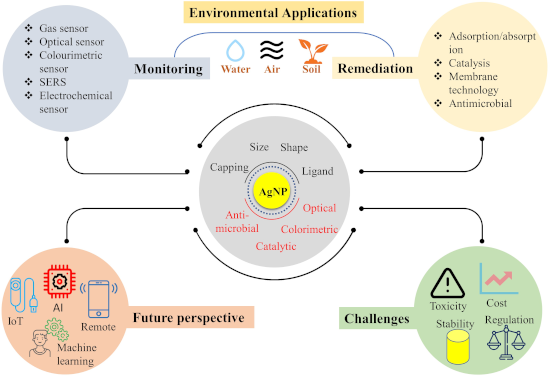
- , donating electrons that lower the activation energy barrier for hydride ion transfer to the substrate. This process follows pseudo-first-order kinetics, with smaller particle sizes (higher surface-to-volume ratio) and electron-rich surfaces (modulated by capping agents) yielding higher apparent rate
- constants [122][123]. In plasmonic photocatalytic systems, AgNPs and Ag–semiconductor composites harness LSPR via two dominant mechanisms. First, hot-electron injection, where LSPR decay produces energetic electrons that inject across the Schottky barrier into the conduction band of the coupled


Recent progress in enhancing built-in electric fields of perovskite solar cells via junction engineering
Beilstein J. Nanotechnol. 2026, 17, 602–621, doi:10.3762/bjnano.17.42
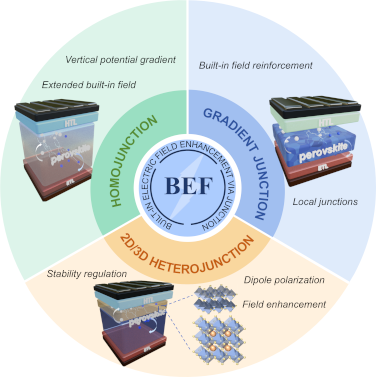
- continuous barrier-reducing channel across the film [15], a strategy that emphasizes longitudinal potential continuity and a “capacitive accumulation” effect, which maintains an effective driving force over a larger thickness and is often accompanied by improved crystallinity and stress release
- -dimensional phase to a low-bandgap, high-dimensional phase across the thickness of the film. The dimensional gradient, which aligns with the BEF and establishes a continuously decreasing potential barrier across the film thickness, allows carriers to migrate in an energetically favorable direction
- limitations of various device architectures and precisely designing vertical or interfacial band gradients to optimize carrier dynamics in a customized manner [54]. Yang et al. [48] tackled charge localization and barrier-blocking issues in perovskite quantum dot (PeQD) devices caused by long-chain ligands by



Laser–material interactions in liquids for the synthesis of nanomaterials: current status and perspectives
Beilstein J. Nanotechnol. 2026, 17, 571–575, doi:10.3762/bjnano.17.38
- industrial relevance, the cost of high-power and high-repetition-rate laser systems remains a significant barrier, despite the ongoing decrease in their price. Emerging strategies aim to increase productivity while reducing system complexity and cost. One promising approach is multiple-beam LAL (MB-LAL
Upcycling agroindustrial waste into graphene oxide supports for gold nanoparticles: toward sustainable nanomaterials
Beilstein J. Nanotechnol. 2026, 17, 489–504, doi:10.3762/bjnano.17.32
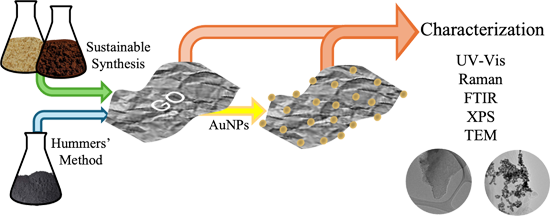
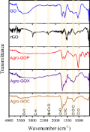
- alternatives based on low-temperature and rapid pyrolysis of biowaste have been proposed [20]. Previous studies have shown that organometallic catalysts can lower the energetic barrier for carbon domain formation, enabling carbonization at temperatures significantly below those required for conventional



Defects and defect-mediated engineering of two-dimensional materials: challenges and open questions
Beilstein J. Nanotechnol. 2026, 17, 454–488, doi:10.3762/bjnano.17.31
- . Moreover, 2D materials are known to oxidize when exposed to oxygen gas and water [52][53]. The reaction of molecular oxygen with the surfaces of 2D materials has attracted significant interest [54]. The reaction barrier for O2 dissociation on a TMD surface is almost halved comparing a pristine surface with
- surface of WS2, resulting in rapid desorption from the surface at room temperature. The short residence time limits encounters with reactive defect sites, leading to a small effective reaction cross section for vacancy dimers and trimers; dissociation requires overcoming a finite barrier (see Figure 1
- vacancies exhibit reduced effective charges and are more chemically active. This enables barrier-less reactions of O2, explaining the rapid oxidation at larger vacancy clusters. Additional uncertainty in modelling oxidation kinetics arises from the possibility of changes in the spin state of the O2 molecule





Nanocarrier-integrated multilayer films produced by 3D printing for improved skin adhesion and curcumin photostability
Beilstein J. Nanotechnol. 2026, 17, 440–453, doi:10.3762/bjnano.17.30
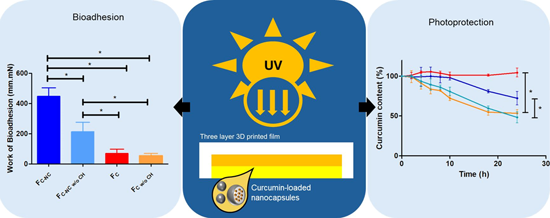
- SSE 3D printing could be strategically employed to construct multilayer topical films capable of addressing two key limitations of curcumin for cutaneous delivery, namely, (i) its pronounced photosensitivity, which necessitates a protective barrier and (ii) its limited affinity for the skin surface
- , which requires enhanced bioadhesion to maintain residence time. To test this hypothesis, we designed a trilayer architecture in which a chitosan-rich lower layer provides muco- and bioadhesive properties, while a TiO2-containing upper layer acts as a physical photoprotective barrier, and curcumin is
- photoprotective function of this external barrier. Notably, while nanoencapsulation alone did not fully prevent photodegradation in the absence of TiO2, FC-NC w/o TiO2 showed slightly improved retention compared with FC w/o TiO2, suggesting that nanocarrier confinement may provide partial protection by


First-principles study on elastic properties of Cu, (Cu1−x,Nix)3Sn and interfacial mechanical properties of (Cu1−x,Nix)3Sn/Cu in the lead-free solder joint
Beilstein J. Nanotechnol. 2026, 17, 428–439, doi:10.3762/bjnano.17.29
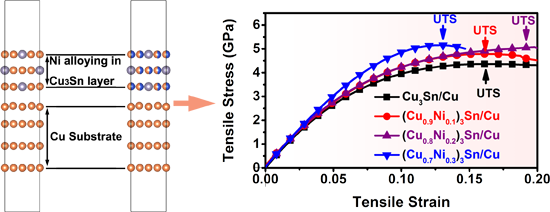
- humidity, the reliability of solder joints has become a major issue in practice [2][8]. As far as lead-containing solders are concerned, the high quality of solder joints can be attributed to the formation of a continuous Pb layer, serving as a barrier layer to separate the intermetallics in solders from
- the substrate [9]. In contrast to the barrier layer formed with lead-containing solder, the lead-free solder forms a compact interface between the intermetallics and the substrate without a barrier layer [9]. The compact interface could result in poor resistance to high temperatures and thermal shocks


Biomimetic nanoparticles in cancer photodynamic therapy: a review of targeted delivery systems and therapeutic outcomes
Beilstein J. Nanotechnol. 2026, 17, 396–422, doi:10.3762/bjnano.17.27
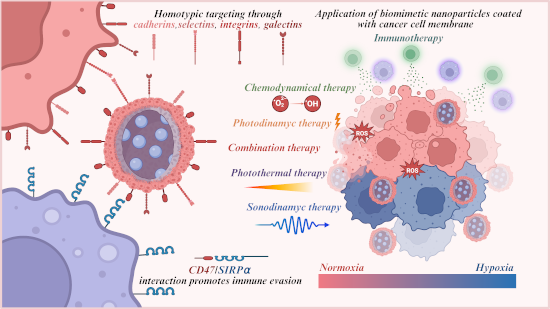
- . Beyond delivery, BNPs address hypoxia [5], a critical barrier to PDT efficacy, through oxygen-carrying systems like hemoglobin-based nanostructures, which retain the oxygen-binding capacity of hemoglobin and can effectively transport and release oxygen within the hypoxic tumor microenvironment (TME
- . These properties are particularly valuable for treating inflammatory diseases and targeting tumors. Crossing the blood–brain barrier (BBB) remains a significant challenge for nanomedicine. BNPs coated with membranes from cells capable of BBB penetration, such as neutrophils or cancer cells, show


Eco-efficient materials for agricultural crops based on a mineral rich in MOR- and HEU-type zeolites
Beilstein J. Nanotechnol. 2026, 17, 381–395, doi:10.3762/bjnano.17.26
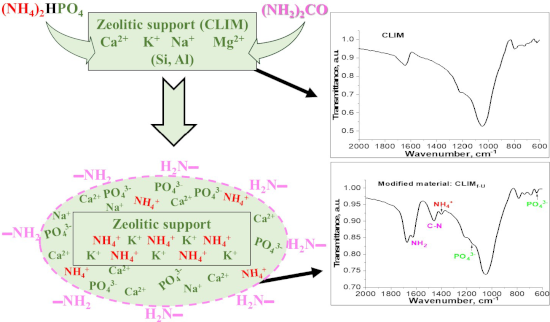
- observed; height and stem diameter of plants fertilized with CLIMf2-U5M and CLIMf3.5-U5M materials were larger than in those materials modified with DAP alone. This behaviour is consistent with the proposed surface coating mechanism of urea, where it acts as a physical barrier to limit the disproportionate



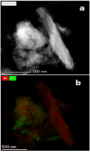
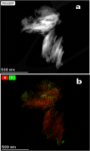

Fast vortex dynamics and relaxation times in NbRe-based heterostructures
Beilstein J. Nanotechnol. 2026, 17, 292–302, doi:10.3762/bjnano.17.20
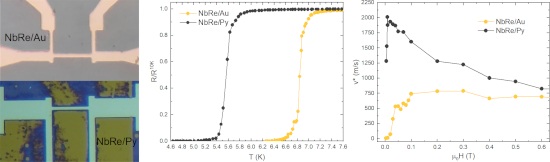
- to extract the quasiparticle energy relaxation time. For external magnetic field values for which edge barrier pinning is dominant and thermal effects are negligible, the relaxation times are about 150 ps and 24 ps for NbRe/Au and NbRe/Py bilayers, respectively. These results indicate that NbRe/Py
- the flux-flow instability is strongly influenced by the quality of the sample edges, the estimation of an intrinsic quasiparticle relaxation time from Equation 1 is justified only when the field dependence of the critical current evidences a dominant edge-barrier pinning mechanism. In this regime, the
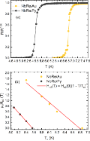
- , respectively. For sufficiently low values of the magnetic field, the experimental data follow the linear dependence (B) = Jc(B = 0)(1 − B/Bs) (see red lines). The magnetic field Bs determines the point at which vortices overcome the edge barrier and enter the material, and it is expressed by the equation Bs


Time of flight secondary ion mass spectrometry imaging of contaminant species in chemical vapour deposited graphene on copper
Beilstein J. Nanotechnol. 2026, 17, 200–213, doi:10.3762/bjnano.17.13
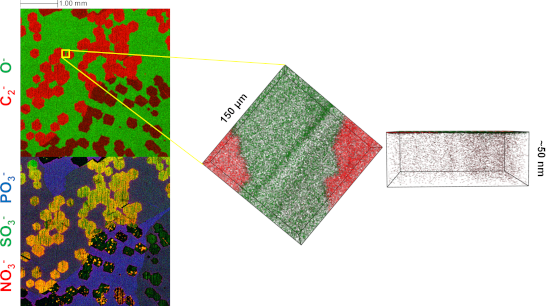
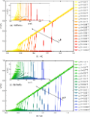
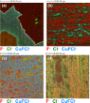
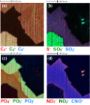
- substrate, depending on processing conditions employed and the chemical species present on the surface. This has implications for the gas permeation barrier properties of this material, graphene transfer mechanisms, as well as the effectiveness of using the oxidation of the copper foil as a rapid graphene
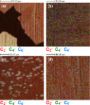
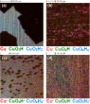
- evidence of the substrate Cu signal, specifically the signal related to Cu oxide. The gas permeation barrier properties of graphene are well known [47][48], and as such it is possible to compare the level of oxidation of the Cu foil after graphene growth by comparing the regions where the Cu surface is





Influence of surface characteristics on the in vitro stability and cell uptake of nanoliposomes for brain delivery
Beilstein J. Nanotechnol. 2026, 17, 139–158, doi:10.3762/bjnano.17.9
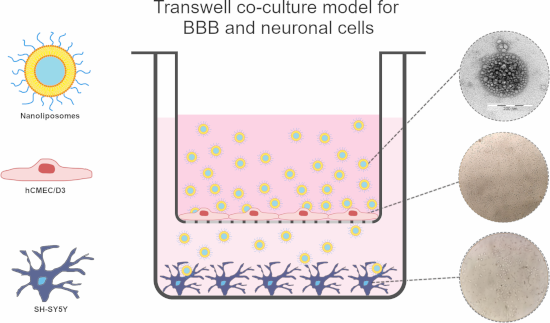
- evolution of physicochemical characteristics and surface properties of NLs in biorelevant media. Additionally, in order to point out the influence of specific characteristics on the brain targeting potential of these formulations, we investigated interactions between NLs and blood–brain barrier (BBB, hCMEC
- neurons (ranging from 25.17% to 27.54%). Fluorescence and confocal microscopy micrographs revealed that, once internalized, NLs were concentrated in the perinuclear cell regions. Keywords: blood–brain barrier; cell co-culture; cell uptake; internalization; nanoliposomes; stability; surface
- barrier (BBB) and target specific brain regions [2][3]. However, despite these advantages, only few NLs formulations for brain diseases have completed clinical trials and are commercially available [4]. Among other limitations, one of the most underestimated steps especially in early formulation stages




Capabilities of the 3D-MLSI software tool in superconducting neuron design
Beilstein J. Nanotechnol. 2026, 17, 122–138, doi:10.3762/bjnano.17.8

- is not an impassable barrier on the way to implementation of superconducting neurons. Increasing the neuron integration density in practical devices can be achieved by expanding the screen to cover the entire substrate area. In this case, the actual size of each neuron will be determined by the outer



Development and in vitro evaluation of liposomes and immunoliposomes containing 5-fluorouracil and R-phycoerythrin as a potential phototheranostic system for colorectal cancer
Beilstein J. Nanotechnol. 2026, 17, 97–121, doi:10.3762/bjnano.17.7
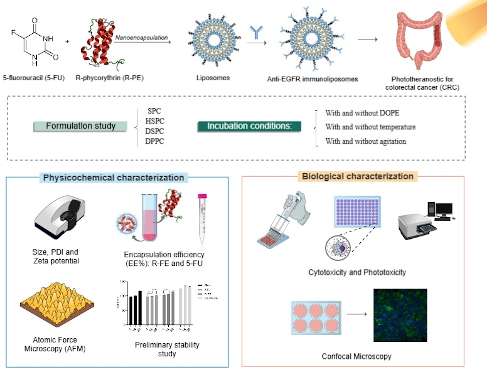
- and demonstrate that both R-PE and 5-FU were effectively incorporated into the nanocarriers. Moreover, the observed spectral modifications suggest that the lipid bilayer not only acted as a physical barrier to immediate diffusion but also provided a stabilizing microenvironment that preserved the
- exhibited greater colloidal stability, with slight variations in hydrodynamic size and PDI throughout the incubation period. This behavior suggests that the lipid composition employed provided an efficient steric barrier, minimizing nonspecific interactions with serum proteins. The presence of the PEG



Functional surface engineering for cultural heritage protection: the role of superhydrophobic and superoleophobic coatings – a comprehensive review
Beilstein J. Nanotechnol. 2026, 17, 63–96, doi:10.3762/bjnano.17.6
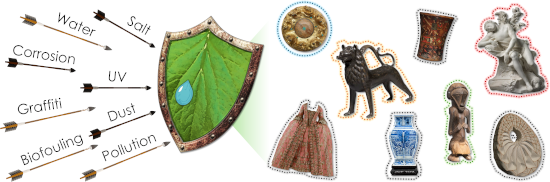
- coating density and physical barrier performance (ZIF-8 helps prevent Ti3C2Tx aggregation and chemically cross-links with WPU, enhancing mechanical integrity). The final cross-linked coating had a water contact angle of about 154°, indicating high water repellency and self-cleaning capabilities. More




Terahertz-range on-chip local oscillator based on Josephson junction arrays for superconducting quantum-limited receivers
Beilstein J. Nanotechnol. 2025, 16, 2296–2305, doi:10.3762/bjnano.16.158
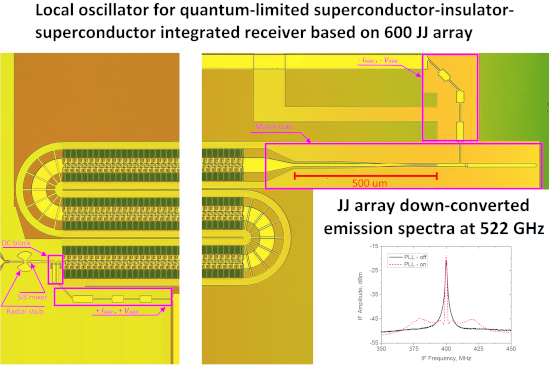
- tunneling through the tunnel barrier increases. This leads to a rise in current at voltages below the gap and the emergence of the so-called quasiparticle steps. This process is known as photon-assisted tunneling. The magnitude of the current on a quasiparticle step within the investigated range is linearly


Geometry-controlled engineering of the low-temperature proximity effect in normal metal–superconductor junctions
Beilstein J. Nanotechnol. 2025, 16, 2265–2273, doi:10.3762/bjnano.16.155
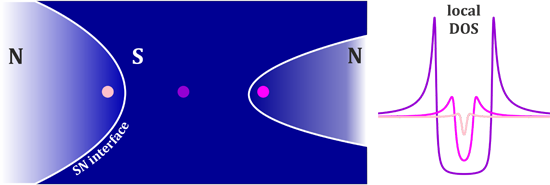
- geometric variations modify the amplitude and spatial profile of the Cooper pair wave function, as well as the effective barrier potential at the interface. These geometric effects influence the balance between Andreev reflection and quasiparticle scattering, modulate pair-breaking mechanisms, and thus





