Search results
Search for "characterization" in Full Text gives 1432 result(s) in Beilstein Journal of Nanotechnology. Showing first 200.
Sustainable fabrication of 2D-based devices through reuse of substrates with microfabricated electrodes
Beilstein J. Nanotechnol. 2026, 17, 818–827, doi:10.3762/bjnano.17.58
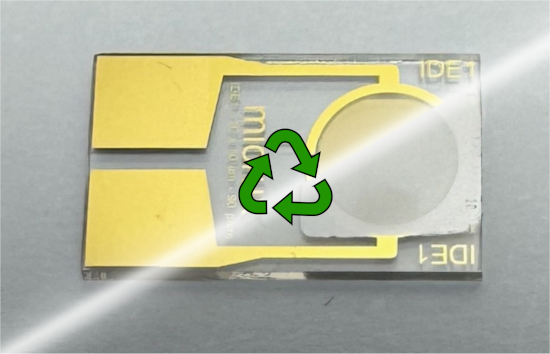
- repeated substrate reuse, we performed multiple cycles of device fabrication, electrical characterization, and subsequent cleaning on a microfabricated SiO2/Si chip with Ti/Au electrodes. MoS2 flakes obtained via roll-to-roll mechanical exfoliation were sequentially transferred onto the same pre-patterned
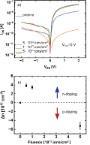
- electrodes to fabricate three FETs [32][37]. After each fabrication, the drain–source current versus bias voltage (I–V) characteristics were measured at different gate voltages, as shown in Figure 3a–c. Following the electrical characterization, the samples underwent the cleaning process, and the substrates
- were tested to verify the absence of any electrical connections between the electrodes. The insets in Figure 3a–c show the electrical characterization after each cleaning process, confirming the absence of residual conductivity between the electrodes, indicating effective removal of the conductive


Glycerol photoelectrochemical oxidation reaction at carbon nitrides/BiVO4 materials
Beilstein J. Nanotechnol. 2026, 17, 806–817, doi:10.3762/bjnano.17.57
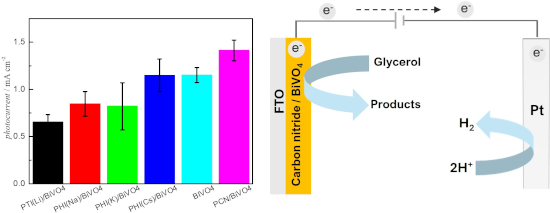
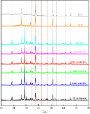
- °C·min−1 up to 500 °C and held for 2 h. After completing this step, the films were soaked into NaOH solution (1.0 mol·L−1) for 30 min to remove the excess of unreacted vanadium, washed with distilled water, and dried at ambient temperature. Characterization of materials Prior to deposition on FTO
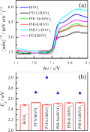
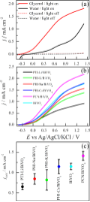
- (Supporting Information File 1, Equation S1) [34]. The photoelectrochemical characterization was carried out using a potentiostat/galvanostat (PGSTAT302N, Autolab, Metrohm). Measurements were performed in a three-electrode cell containing a Na2SO4 solution (0.5 mol·L−1, pH 6.8), BiVO4 or CN/BiVO4 as working
- electrochemical cell (Supporting Information File 1, Figure S1). Linear sweep voltammetry (LSV) curves were acquired in the dark and under simulated solar exposure, ranging from −0.6 to 1.4 V vs Ag/AgCl/KClsat at 50 mV·s−1. Results and Discussion Physical characterization The CNs thermostability was evaluated by




Restorative potential of laser-synthesized silver nanoparticles with Salvia officinalis for periodontal disease treatment: an in vitro study
Beilstein J. Nanotechnol. 2026, 17, 781–795, doi:10.3762/bjnano.17.55
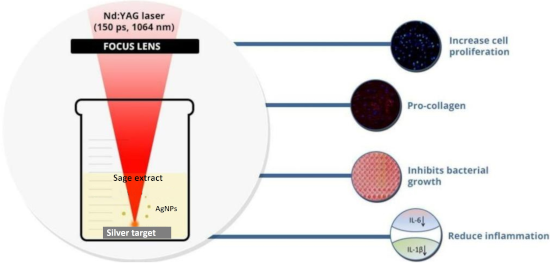
- , collagen production, and inflammatory responses. This approach aims to explore the potential effects of PLAL-generated AgNPs in sage extract for improved periodontal treatment strategies. Materials and Methods Preparation and characterization of aqueous sage leaf extract Aqueous sage leaf extract (sage
- conditions. After synthesis, characterization of the AgNP samples was performed. AgNP characterization The total concentration of silver in obtained colloidal solutions was determined using inductively coupled plasma optical emission spectroscopy (ICP-OES, iCap7400 DUO, Thermo Fisher, USA) and expressed as
- distribution was measured manually, measuring at least 1000 nanoparticles using the image capture software (SemAfore, Version 5.21, Finland). Following the AgNP characterization, antibacterial testing, as well as the assessment of their effects on human GFCs was performed. Experimental design and treatments



Substrate-dependent pore formation in molybdenum disulfide monolayers under ion irradiation
Beilstein J. Nanotechnol. 2026, 17, 769–780, doi:10.3762/bjnano.17.54
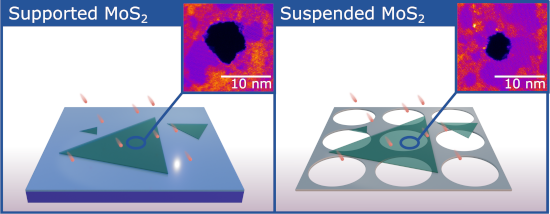
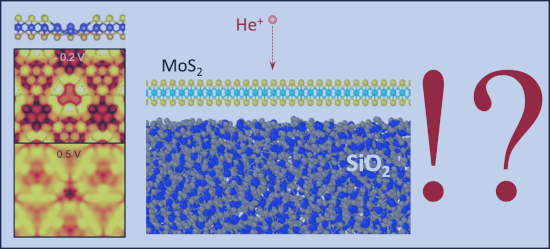
- to MoS2 on SiO2. As shown previously [13], even modest threshold shifts can strongly affect the pore formation efficiency. The inferred efficient out-of-plane dissipation from MoS2 into Au is consistent with the well-known strong MoS2–Au interfacial coupling. Our own Raman and PL characterization of
- placing a droplet of water near the grid, the water can intercalate between the flakes and the substrate, lifting off the MoS2 in the process and pressing it against the QUANTIFOIL® holey carbon mesh. Sample preparation and characterization are schematically shown in Figure 6. To investigate the
- Au, the monolayers have to be transferred onto TEM grids for STEM characterization. For this purpose, a thin polystyrene (PS) layer is spin-coated onto the sample. The sample is then immersed in a preheated KI/I2 etching solution (4 g KI, 1 g I2, 150 mL H2O) at 40 °C. After approximately 1 h, the Au


Tailoring Ag–Pt nanoalloys through solid-state dewetting: structural and optical insights
Beilstein J. Nanotechnol. 2026, 17, 748–759, doi:10.3762/bjnano.17.52

- of Pt. Experimental Corning 1737 glass and Si (111) substrates covered by a native oxide layer were used for the deposition of platinum/silver bilayers. Samples on Si substrates were used for detailed characterization of surface morphology and chemical composition, whereas Corning glass substrates




Oxidative atmosphere-driven formation of single-phase spinel CuRh2O4 nanofibers for alkaline water oxidation
Beilstein J. Nanotechnol. 2026, 17, 737–743, doi:10.3762/bjnano.17.50
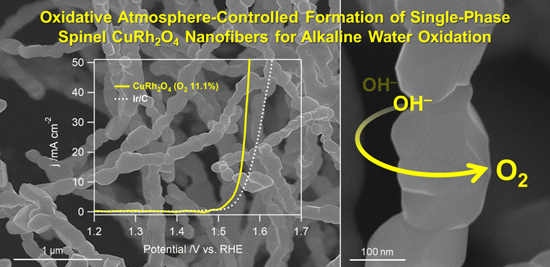
- characterization Morphology and elemental composition of the synthesized nanomaterials were examined using field-emission scanning electron microscopy (FE-SEM; JEOL JSM-6700F) and high-resolution transmission electron microscopy (HRTEM; JEOL JEM-2100F). Surface chemical states and crystallographic structures were
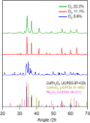
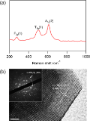
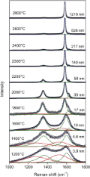
- as-prepared nanomaterials synthesized under different O2 concentrations. Peaks marked with • indicate the presence of secondary copper oxide phases (Cu2O). Deconvoluted AR-XPS spectra of Cu–Rh bimetallic oxides in the (a) Cu 2p and (b) Rh 3d regions. (a) Raman characterization and (b) HRTEM image of




Environmental applications of silver nanoparticles: state-of-the-art review and emerging trends
Beilstein J. Nanotechnol. 2026, 17, 697–736, doi:10.3762/bjnano.17.49


Molecular engineering of individual dye-based nanoparticle photostability for ultrabright two-photon fluorescence
Beilstein J. Nanotechnol. 2026, 17, 688–696, doi:10.3762/bjnano.17.48
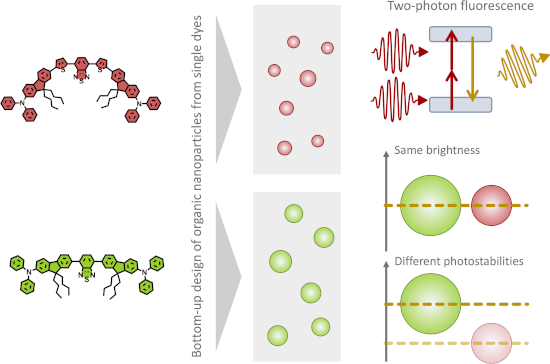
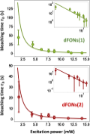
- excitation, their single-particle properties under two-photon excitation remain to be evaluated. Here, we perform a comprehensive optical characterization of two distinct dFONs designed to exhibit the same two-photon brightness but with different photostabilities. Saturation measurements of individual
- dominant mechanism responsible for the accelerated photobleaching of dFONs(2) [36]. Conclusion The comprehensive optical characterization of individual dFONs(1) and dFONs(2) confirms that both systems exhibit the expected comparable brightness under 2P excitation at λ = 1030 nm, despite differences in
- . Such insights are essential for optimizing fluorophore-based nanoparticles in nonlinear microscopy and other bioimaging applications where brightness and stability must be carefully balanced. Experimental Nanoparticle preparation The synthesis and characterization of the dyes are described in details


afspm: A framework for manufacturer-agnostic automation in scanning probe microscopy
Beilstein J. Nanotechnol. 2026, 17, 653–667, doi:10.3762/bjnano.17.45
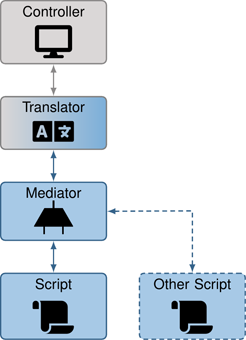
- , preparing, running, and analyzing such experiments requires significant domain knowledge and expertise. Dozens of works over the past decade have investigated SPM automation. Some have shown probe tip conditioning to ensure proper surface characterization and/or manipulation [2][3][4]. Others have
- system, we highlight [13], where atomic-level characterization is achieved via, among other processes, a thermal drift correction approach first described in [14]. Despite promising results, a lingering issue common to all these techniques is reusability. In most cases, the source code is written for a




Two-step laser synthesis of Ag@TiO2 nanomaterials for the photocatalytic degradation of rhodamine B
Beilstein J. Nanotechnol. 2026, 17, 622–634, doi:10.3762/bjnano.17.43
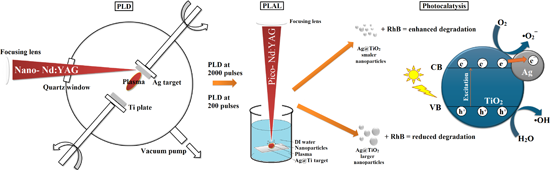
- pulsed laser ablation in liquids (PLAL). Initially, silver was ablated using 200 and 2000 pulses and deposited onto titanium targets via PLD. Subsequently, these modified targets were submerged in water and processed using PLAL to generate the final nanomaterials. Characterization through HRTEM, EDS, and
- characterization was performed using scanning electron microscopy (SEM) and transmission electron microscopy (TEM) with energy-dispersive spectroscopy (EDS), aiming to establish a clear correlation between synthesis parameters, nanostructure features, and photocatalytic activity. In our previous studies [6][7][21


Recent progress in enhancing built-in electric fields of perovskite solar cells via junction engineering
Beilstein J. Nanotechnol. 2026, 17, 602–621, doi:10.3762/bjnano.17.42
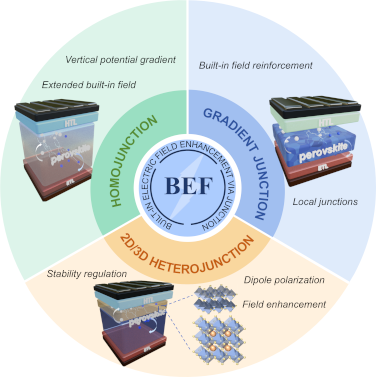
- , significantly lowering migration barriers and enhancing charge-separation efficiency. SEM and GIWAXS characterization of the SnAc2 + DMS-treated perovskite film is shown in Figure 2. Accordingly, the devices demonstrated exceptional performance, with carrier lifetimes extended to 812 ns and a PCE increased to



Towards targeted drugs and next generation of nanomedicines
Beilstein J. Nanotechnol. 2026, 17, 598–601, doi:10.3762/bjnano.17.41

- used for vaccination are composed of a complex mixture of different lipids, all of which have a particular function. Additionally, inorganic nanoparticles can be made with controlled size and shape out of many different materials. Nanotechnology has also made standardized characterization and quality
Probing tribological evolution in atomically thin MoS2 at different scales
Beilstein J. Nanotechnol. 2026, 17, 586–597, doi:10.3762/bjnano.17.40
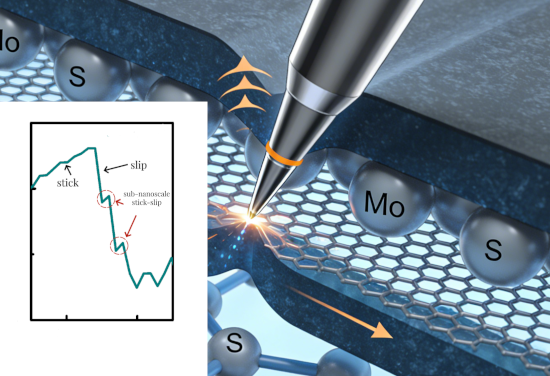
- sequentially in acetone, ethanol, and deionized water via ultrasonic cleaning and then dried with high-purity nitrogen. Sample characterization MoS2 layer thickness was determined via AFM (MFP-3D, Asylum Research) and Raman spectroscopy (inVia Reflex, Renishaw). AFM topographic images were acquired in tapping
- is qualitatively inferred to intensify with increasing load. For quantitative characterization of this load dependence, the lateral force peak values within each stick–slip cycle during the strengthening stage were extracted. Figure 3c and Figure 3d depict these extracted peak values corresponding
- details of individual sub-nanoscale events are not resolvable, the load-dependent variation trend of slip distance still accurately characterizes the evolution of sub-nanoscale stick–slip activity (i.e., the frequency and intensity of sub-nanoscale events). This spatial characterization is sufficient to


Impacts of annealing on structural and photophysical properties of zinc phthalocyanine adsorbed on graphene
Beilstein J. Nanotechnol. 2026, 17, 576–585, doi:10.3762/bjnano.17.39
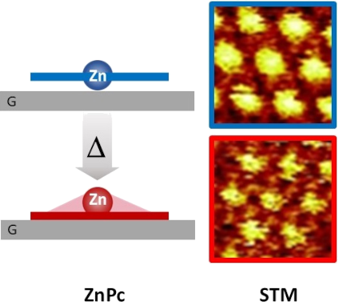
- experienced by ZnPc self-assembled monolayer on graphene or HOPG. Single ZnPc molecules are guest-isolated within the nanocavities of a self-assembled 2D host matrix, preventing intermolecular interactions and allowing for individual characterization. This phase change, induced by annealing, is discussed in
- combination of spectral and structural characterization techniques (absorption, Raman micro-spectroscopy, STM, absorption anisotropy) which reveal marked changes upon annealing. We tentatively interpret those changes as a transition of the adsorbed ZnPc molecules, individualized inside TSB35-C12 pores, from a


Laser–material interactions in liquids for the synthesis of nanomaterials: current status and perspectives
Beilstein J. Nanotechnol. 2026, 17, 571–575, doi:10.3762/bjnano.17.38
- [25][26][27][28], nanoparticle fragmentation intertwined with the generation and collapse of nanobubbles in LFL [29], as well as defect generation during laser-induced melting and resolidification in liquids [30][31]. Experimental investigation of these processes, however, requires characterization
Synthesis of Cu–Mo/TiO2 and Co–Mo/TiO2 photocatalysts for the efficient degradation of organic pollutants in water
Beilstein J. Nanotechnol. 2026, 17, 559–570, doi:10.3762/bjnano.17.37
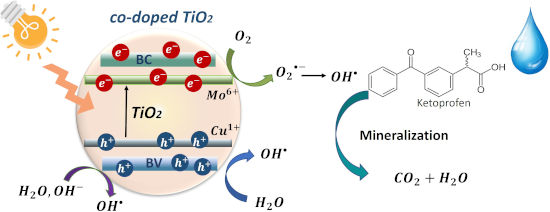
- , copper and cobalt, were added at 0.2–0.5 wt %. The co-doped TiO2 photocatalysts were characterized by XRD, SEM, N2 physisorption, UV–vis diffuse reflectance spectroscopy, and photoluminescence spectroscopy. The structural characterization showed stabilization of the anatase phase, and lattice distortion
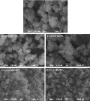
- was evidenced after dopant incorporation into the TiO2 structure. Morphological characterization showed poorly defined spherical particles that decreased in size with increasing Cu and Co concentrations. PL spectra showed an additional signal attributed to the ability of the metal dopants to capture
- environmental remediation processes. This research project reports the synthesis and characterization of two photocatalyst systems not reported before for water remediation, namely, co-doped photocatalysts Cu–Mo/TiO2 and Co–Mo/TiO2 synthesized by the sol–gel method. The structural, optical, and morphological



Advances in nanotechnology applied to natural products
Beilstein J. Nanotechnol. 2026, 17, 555–558, doi:10.3762/bjnano.17.36
- , hybrid, and inorganic platforms, reflecting the interdisciplinarity of the field, from nanosystem synthesis and physicochemical characterization to biomedical, pharmaceutical, cosmetic, and environmental applications. Among the nanostructures, lipid-based carriers, including nanoemulsions, microemulsions
Electrochemical determination of ciprofloxacin using a MIL-101/reduced graphene oxide-modified electrode
Beilstein J. Nanotechnol. 2026, 17, 541–554, doi:10.3762/bjnano.17.35
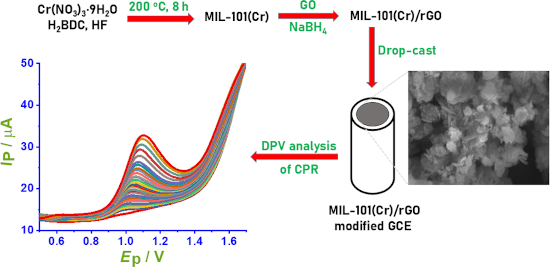
- , reproducibility, selectivity, and stability of the sensor were evaluated using relative standard deviation (RSD) values. Results and Discussion Materials characterization Figure 1a presents the XRD patterns of GO, rGO, and pristine MIL-101, while Figure 1b shows the diffraction patterns of MIL-101/rGO composites


Probing internal continua and atomic ultrafast charge transfer within size-controlled nanoparticles by post-collision interaction in core-hole clock spectroscopy
Beilstein J. Nanotechnol. 2026, 17, 505–514, doi:10.3762/bjnano.17.33
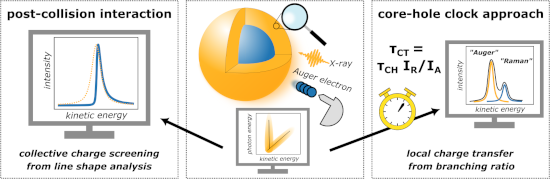
- characterization of the QDs with UV–vis absorption spectroscopy, hard X-ray photoelectron spectroscopy (HAXPES), and near-edge X-ray absorption fine structure (NEXAFS) spectroscopy has been performed by us to verify the size-dependence of quantum confinement (see further details in Supporting Information File 1
- charge transfer and collective dielectric response. The PCI core-hole clock analysis is, thus, a synchrotron approach of general relevance to the characterization of materials involving bound-state continua. S KL2,3L2,3 resonant Auger measurements of core–shell nanoparticles (core: 3.5 nm CdSe, shell: 7
- gray area is governed by the S 3p atomic resonance. Supporting Information Supporting Information File 2: Experimental details, sample characterization (UV–vis/HAXPES/NEXAFS), fitting procedure and details about PCI line shape not included in the main text. Acknowledgements We thank the Helmholtz



Upcycling agroindustrial waste into graphene oxide supports for gold nanoparticles: toward sustainable nanomaterials
Beilstein J. Nanotechnol. 2026, 17, 489–504, doi:10.3762/bjnano.17.32
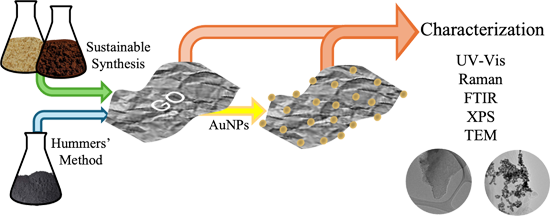
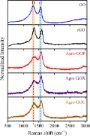
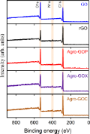
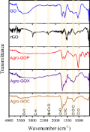
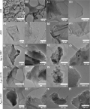
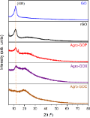
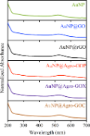
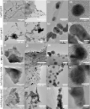
- synthesized from peanut shells and spent coffee grounds via a ferrocene-assisted green pyrolysis–oxidation approach. The resulting materials were compared with GO prepared via the Marcano-modified Hummers' method and its hydrazine-reduced counterpart (rGO). Comprehensive characterization was performed using
- for 24 h and ground in an agate mortar to obtain a fine powder suitable for further characterization. The Agro-GO materials derived from peanut shells, coffee waste from Xilitla, and commercial coffee waste are referred to as Agro-GOP, Agro-GOX, and Agro-GOC, respectively. Reduction of graphene oxide
- , ozone-free emission in the 310–450 nm range, λmax = 360 nm) for 60 min under continuous stirring. A purple dispersion was obtained, confirming the formation of AuNPs. Characterization techniques The optical properties of the samples were analyzed by ultraviolet–visible (UV–vis) spectroscopy with a Cary



Defects and defect-mediated engineering of two-dimensional materials: challenges and open questions
Beilstein J. Nanotechnol. 2026, 17, 454–488, doi:10.3762/bjnano.17.31
- graphene, local versus extended defect-induced potential [110], p versus n substitutional doping atoms, [111], and armchair versus zigzag edges [112] can be differentiated. A fundamental characterization enabled by Raman spectroscopy was the distinction between defect dimensionalities. Geometrically, a 2D
- , promise to further enhance defect characterization and accelerate the development of high-performance materials for various applications. The fundamental principle of XPS lies in its ability to probe the binding energies of core electrons, which are influenced by the local electronic environment
- defects in 2D materials under various environmental conditions [187][188][189][190][191][192]. Despite its strengths, XPS has several limitations that must be addressed for accurate defect characterization. One major challenge is surface contamination, which can obscure defect signals. Hydrocarbon





Nanocarrier-integrated multilayer films produced by 3D printing for improved skin adhesion and curcumin photostability
Beilstein J. Nanotechnol. 2026, 17, 440–453, doi:10.3762/bjnano.17.30
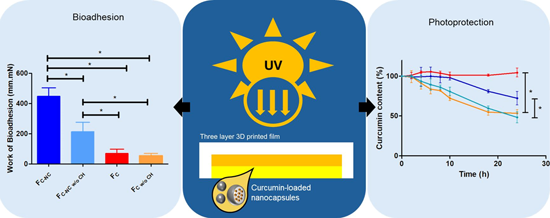
- 2 provides a summary of results from physicochemical characterization. Printing ink During the 3D printing process, the rheological behaviour of a printing ink is directly related to printability and the ability to form stable, structured layers, in order to avoid collapse after addition of


Biomimetic nanoparticles in cancer photodynamic therapy: a review of targeted delivery systems and therapeutic outcomes
Beilstein J. Nanotechnol. 2026, 17, 396–422, doi:10.3762/bjnano.17.27
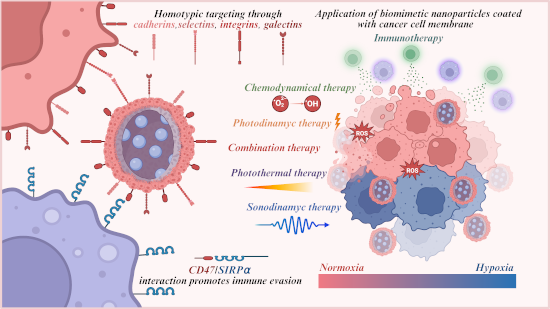
- coating thickness, core material, and release mechanisms. Addressing these challenges through standardized production protocols, improved characterization, and enhanced biocompatibility will be critical to advancing BNPs toward clinical application. Biomimetic nanocarriers, designed to replicate structure


Eco-efficient materials for agricultural crops based on a mineral rich in MOR- and HEU-type zeolites
Beilstein J. Nanotechnol. 2026, 17, 381–395, doi:10.3762/bjnano.17.26
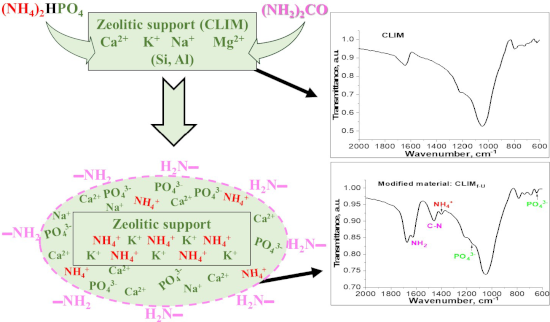
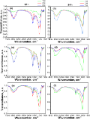
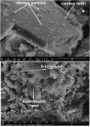
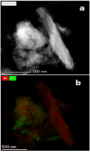
- microscopy (SEM), scanning transmission electron microscopy (STEM), N2 physisorption, and other research methods. Results and Discussion Characterization of DAP-modified zeolite CLIM The chemical compositions of natural zeolite (CLIM) from the San Andrés deposit and its modified forms (CLIMf) with ammonium
- movement. The treatments were applied following a procedure similar to that described in [13][14]. Characterization The elemental composition of CLIM and modified materials resulting from the applied treatments was determined by X-ray fluorescence analysis (XRF), with the exception of nitrogen, which was
- Materials Science and Technology (IMRE) – University of Havana for the characterization of the samples.




Polycatecholamine nanocoatings on stainless steel: the effect on attachment of human fibroblasts and platelets
Beilstein J. Nanotechnol. 2026, 17, 365–380, doi:10.3762/bjnano.17.25
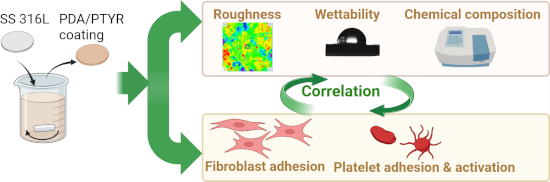
- layers on stainless steel 316L via a novel in situ oxidation process and evaluated their physicochemical properties and cellular interactions at the nano/microscale. Surface characterization revealed that the polymeric coatings formed a homogenous layer with distinct topographical features and thickness