Search results
Search for "composite materials" in Full Text gives 130 result(s) in Beilstein Journal of Nanotechnology.
Nanoglasses: a trail towards uncharted regions of vitreous materials and their properties?
Beilstein J. Nanotechnol. 2026, 17, 1047–1062, doi:10.3762/bjnano.17.72

- glasses can now be tackled and need to be addressed to establish the structure–property correlations for this new class of amorphous composite materials. Are glass–glass interfaces, shear bands, and ion tracks related? As indicated above, similarities might exist between glass–glass interfaces and


Enhanced erosion resistance and radiation stability of WC–WO3 nanocomposite films under 100 keV Kr+ ion irradiation
Beilstein J. Nanotechnol. 2026, 17, 922–934, doi:10.3762/bjnano.17.65
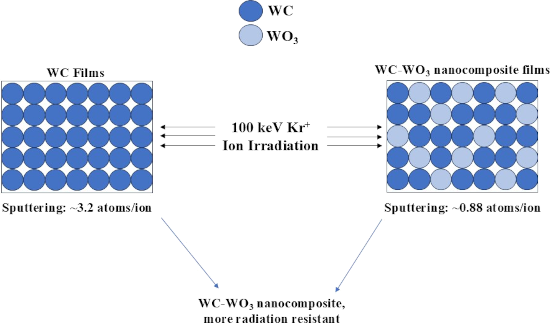
- aircrafts, satellites, automobiles, and sporting goods [25][26][27][28]. The potential of utilizing composite materials for efficient shielding/protection and enhanced radiation tolerance has also been explored lately [29][30][31][32][33][34][35][36][37][38][39][40][41][42][43]. Plasma-facing structural
- defects as compared to grain boundaries in the single-component material [33][68]. Some recent studies of ion induced effects in composite materials are tabulated in Table 1. From the extensive literature review discussed in Table 1, it can be seen that none of the studies have explored ion-induced
- ) 1 × 10¹⁶ ions/cm2; (c) 3 × 10¹⁶ ions/cm2. Ion irradiation studies of composite materials. Sample details. Areal concentrations obtained from SIMNRA fitting of the pristine and irradiated WC–WO3 nanocomposite (S1) films. Comparison of sputter rate in samples S1 and S2 as estimated from SIMNRA



Glycerol photoelectrochemical oxidation reaction at carbon nitrides/BiVO4 materials
Beilstein J. Nanotechnol. 2026, 17, 806–817, doi:10.3762/bjnano.17.57
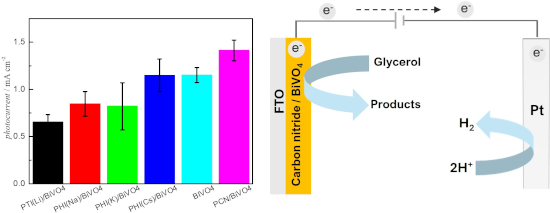
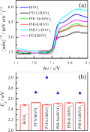
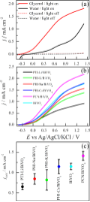
- glycerol was also tested (Supporting Information File 1, Figure S8b) in the same experimental conditions and released photocurrent of ca. 1 μA·cm−2. Therefore, the positive effects observed on composite materials come from the synergy between BiVO4 and CN. Long-term electrolysis experiments were performed





Environmental applications of silver nanoparticles: state-of-the-art review and emerging trends
Beilstein J. Nanotechnol. 2026, 17, 697–736, doi:10.3762/bjnano.17.49


Cellulose as a photocatalyst support material: extraction, structural features, and environmental applications
Beilstein J. Nanotechnol. 2026, 17, 635–652, doi:10.3762/bjnano.17.44
- solubility, improved compatibility with biological systems, and the ability to be tuned or functionalized for the development of advanced composite materials [68][69]. These forms of cellulose are particularly valuable in producing highly purified wound dressings that promote tissue regeneration, especially
- engineered composites that combine strong durability with full environmental sustainability [79]. The growing interest in isolating and utilizing MCC fibers in composite materials arises from their remarkable mechanical strength, stiffness, and lightweight characteristics, as well as their renewable and
- conditions, thereby improving the colloidal stability of the nanofibers. Through this modification, nanocellulose gains the ability to form stronger interactions with hydrogels and composite materials, which further enhances its reinforcing performance and widens its potential applications [80][81]. CNCs


Functional surface engineering for cultural heritage protection: the role of superhydrophobic and superoleophobic coatings – a comprehensive review
Beilstein J. Nanotechnol. 2026, 17, 63–96, doi:10.3762/bjnano.17.6

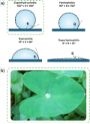
- , pollutants, and oily substances. These functional surfaces, often based on coatings consisting of polymeric, ceramic, and composite materials, can provide durable, non-invasive protection tailored to specific substrate weaknesses and exposure environments (indoor and outdoor). Objective of this review





Microplastic pollution in Himalayan lakes: assessment, risks, and sustainable remediation strategies
Beilstein J. Nanotechnol. 2025, 16, 2144–2167, doi:10.3762/bjnano.16.148
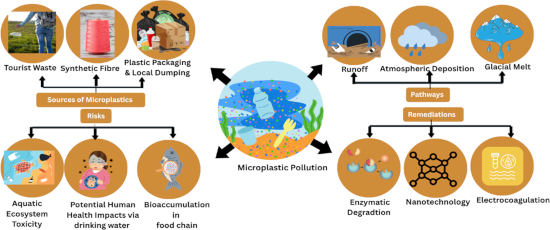
- more surface area, allowing for better interaction with MPs [76]. The incorporation of GO in composite materials not only improves photocatalytic activity, but it also serves a second purpose by adsorbing MPs prior to degradation. The utilization of photocatalysts that have been engineered with defects


Piezoelectricity of layered double hydroxides: perspectives regarding piezocatalysis and nanogenerators
Beilstein J. Nanotechnol. 2025, 16, 1812–1817, doi:10.3762/bjnano.16.124

- piezoelectric properties of the ZnCo/Al-LDH-catalyst accelerated carrier transport and promoted regeneration of the Co2+ catalytic active center. Another variety of LDH-based catalysts are composite materials produced from constituent materials with LDHs as one of them. When combined with BaTiO3, Zn/Al-LDH

Transient electronics for sustainability: Emerging technologies and future directions
Beilstein J. Nanotechnol. 2025, 16, 1545–1556, doi:10.3762/bjnano.16.109
- the mechanical and crystalline properties of such natural waxes, blended composite materials (e.g., candelilla/beeswax or candelilla/PBTPA mixtures) have been investigated for their potential use as barrier coatings [86]. A 300 μm thick edge-encapsulated mixture film was found to protect a 300 nm


Laser processing in liquids: insights into nanocolloid generation and thin film integration for energy, photonic, and sensing applications
Beilstein J. Nanotechnol. 2025, 16, 1428–1498, doi:10.3762/bjnano.16.104






Synthesis and antibacterial properties of nanosilver-modified cellulose triacetate membranes for seawater desalination
Beilstein J. Nanotechnol. 2025, 16, 1380–1391, doi:10.3762/bjnano.16.100
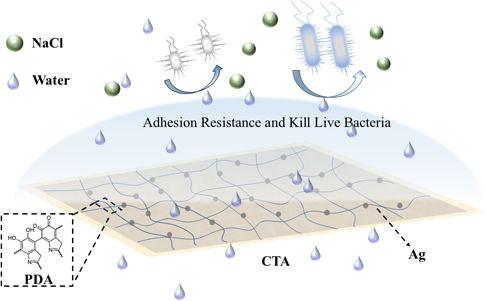
- the low content of the modifying agents (PDA and Ag) relative to the CTA matrix. This low concentration results in negligible changes in the overall thermal behavior of the composite materials, as detected by TGA. This observation also suggests that the interaction between Ag and CTA or between PDA


Functional bio-packaging enhanced with nanocellulose from rice straw and cinnamon essential oil Pickering emulsion for fruit preservation
Beilstein J. Nanotechnol. 2025, 16, 1234–1245, doi:10.3762/bjnano.16.91
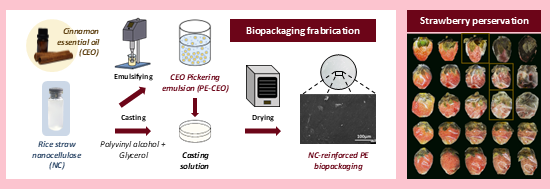
- develop composite materials with superior properties. Compared to other inorganic nanomaterials, nanocellulose (NC) has been noted to be a highly potential sustainable and bio-based filler that can be obtained from otherwise wasted agricultural byproducts like rice straw [11][19]. NC can enhance polymer




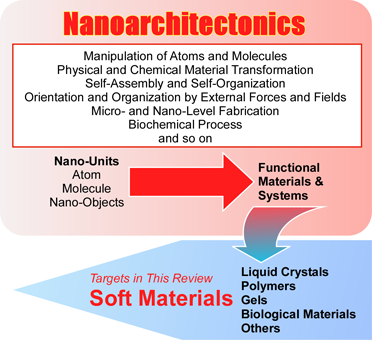
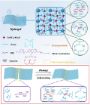
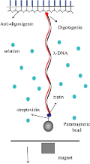
Soft materials nanoarchitectonics: liquid crystals, polymers, gels, biomaterials, and others
Beilstein J. Nanotechnol. 2025, 16, 1025–1067, doi:10.3762/bjnano.16.77






Polyurethane/silk fibroin-based electrospun membranes for wound healing and skin substitute applications
Beilstein J. Nanotechnol. 2025, 16, 591–612, doi:10.3762/bjnano.16.46
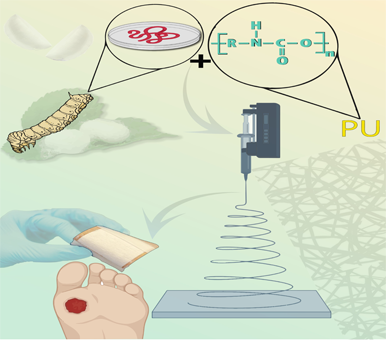
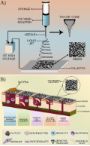
- synergistic composite. A wide range of composite materials, with both chitosan and PU, have been thoroughly studied. The findings show that these two materials work well together, each making up for the deficiencies of the other material [159][160]. PU-based scaffolds were also investigated as a platform for




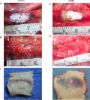
Retrieval of B1 phase from high-pressure B2 phase for CdO nanoparticles by electronic excitations in CdxZn1−xO composite thin films
Beilstein J. Nanotechnol. 2025, 16, 551–560, doi:10.3762/bjnano.16.43

- and gamma radiation can induce lattice defects and lower the device efficiency [7]. Swift heavy ion (SHI) irradiation experiments provide valuable insights into the radiation stability of the transformed B2 phase, which is essential for the future utilization of these composite materials in space


Pulsed laser in liquid grafting of gold nanoparticle–carbon support composites
Beilstein J. Nanotechnol. 2025, 16, 349–361, doi:10.3762/bjnano.16.26
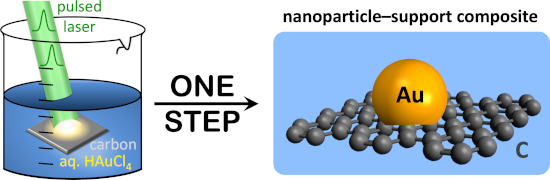
- activation is too short-lived to prevail on the timescales of conventional nanoparticle–support composite preparation of seconds to hours. Therefore, conventionally prepared composite materials generally suffer from microscopic surface contaminations that impair the physical and electrical contact of


Emerging strategies in the sustainable removal of antibiotics using semiconductor-based photocatalysts
Beilstein J. Nanotechnol. 2025, 16, 264–285, doi:10.3762/bjnano.16.21
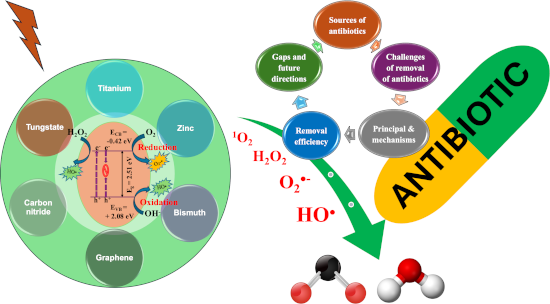
- with a suitable transition metal and synthesizing composite materials. Several advanced photocatalysts have been developed and successfully used to prevent antibiotics contamination, a list of which is shown below in Table 1. These modifications have led to improved charge separation rates, reduced



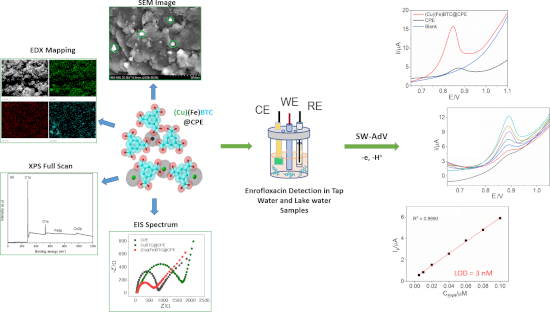
Electrochemical nanostructured CuBTC/FeBTC MOF composite sensor for enrofloxacin detection
Beilstein J. Nanotechnol. 2024, 15, 1522–1535, doi:10.3762/bjnano.15.120
- Polymer and Composite Materials, Ho Chi Minh City University of Technology, Vietnam National University, Ho Chi Minh City, 70000, Vietnam Center for High Technology Research and Development, Vietnam Academy of Science and Technology, 18 Hoang Quoc Viet Street, Cau Giay District, Ha Noi, Vietnam 10.3762




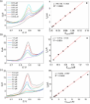

Effect of radiation-induced vacancy saturation on the first-order phase transformation in nanoparticles: insights from a model
Beilstein J. Nanotechnol. 2024, 15, 1453–1472, doi:10.3762/bjnano.15.117

- Aram Shirinyan Yuriy Bilogorodskyy “Laboratory of composite materials for nuclear-hydrogen energy”, Department of nuclear-physical research, Institute of Applied Physics of National Academy of Sciences of Ukraine (Sumy), room 606, building 3, Nauki avenue, 46, 03028, Kyiv - 28, Ukraine 10.3762
- in an inert environment, can be considered highly dispersed composite materials (HDCMs). HDCMs exhibit potential for the use under conditions of high temperatures and radiation exposure, making them promising materials for new-generation modular nuclear reactors, advanced charge storage applications


On the mechanism of piezoresistance in nanocrystalline graphite
Beilstein J. Nanotechnol. 2024, 15, 376–384, doi:10.3762/bjnano.15.34
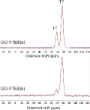
- strain within the grains remains constant even though the externally applied strain increased to ca. 0.4%. In an attempt to model piezoresistance in NCG, we have used the tunneling + destruction model for composite materials [24]: The model with five free parameters was fitted to the data as shown in
- tunneling distance, d. The model has been used to explain the piezoresistance for several composite materials [29][30]. Zhao et al. [24] used the model to explain the piezoresistance in nanographene films, although the material is comparable to ours and not a composite material in the original sense. NCG


Modification of graphene oxide and its effect on properties of natural rubber/graphene oxide nanocomposites
Beilstein J. Nanotechnol. 2024, 15, 168–179, doi:10.3762/bjnano.15.16
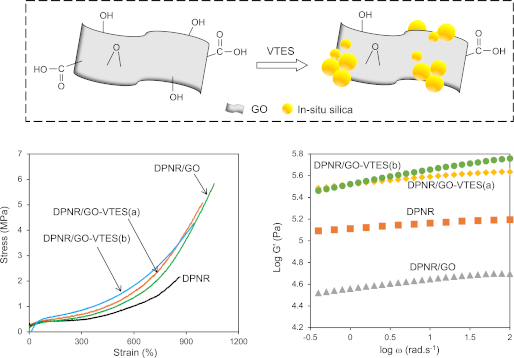
- storage for composite materials. The G' values seemed to depend on the silica content; the higher the silica content, the higher the storage modulus. The dependence of loss modulus (G'') on frequency for DPNR, DPNR/GO, DPNR/GO-VTES(a), and DPNR/GO-VTES(b) exhibited a little difference as shown in Figure






Influence of conductive carbon and MnCo2O4 on morphological and electrical properties of hydrogels for electrochemical energy conversion
Beilstein J. Nanotechnol. 2024, 15, 57–70, doi:10.3762/bjnano.15.6
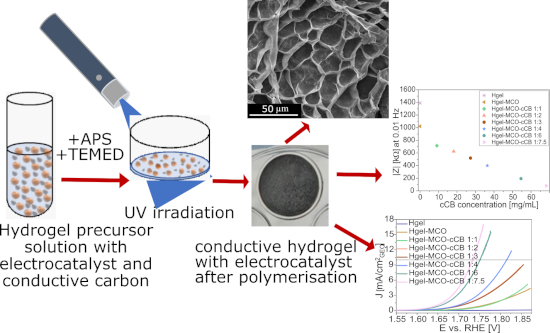
- composite acted as an electrocatalyst in the oxygen evolution reaction. Morphological studies confirmed that the added particles were incorporated and, in the case of a higher concentration of cCB particles, also bound to the surface of the structure of the hydrogel matrix. The produced composite materials


Nanoarchitectonics of photothermal materials to enhance the sensitivity of lateral flow assays
Beilstein J. Nanotechnol. 2023, 14, 988–1003, doi:10.3762/bjnano.14.82
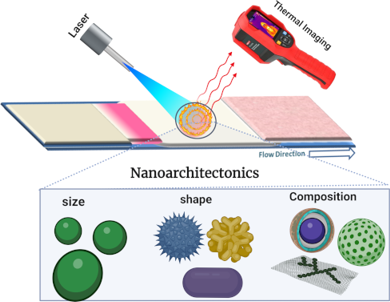
- because of their remarkable ability to absorb light across a broad spectrum and their high PCE. The main classes of photothermal carbon-based nanomaterials are carbon nanotubes, graphene-based nanomaterials, carbon quantum dots, and carbon-based composite materials. Among these, carbon nanotubes have the


Photoelectrochemical water oxidation over TiO2 nanotubes modified with MoS2 and g-C3N4
Beilstein J. Nanotechnol. 2022, 13, 1541–1550, doi:10.3762/bjnano.13.127
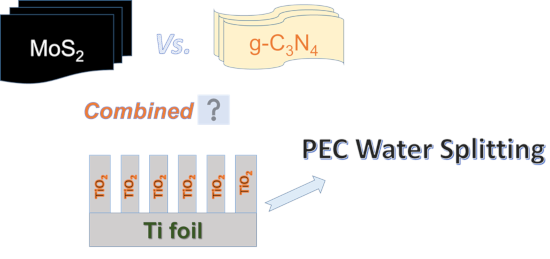
- explain clearly the difference between these composite materials Experimental Materials and chemicals Chemicals and materials for the synthesis and characterization include Ti foil (1 cm × 2 cm), hydrochloric acid (HCl), sodium hydroxide (NaOH), DI water, acetone ((CH3)2CO), ethanol (C2H5OH), ammonium


Studies of probe tip materials by atomic force microscopy: a review
Beilstein J. Nanotechnol. 2022, 13, 1256–1267, doi:10.3762/bjnano.13.104
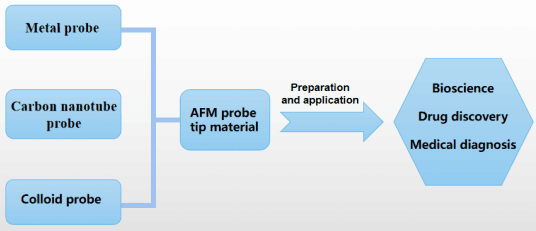
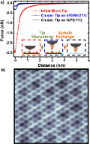
- probe Manufacturing nanoprobes that meet the requirements for cutting-edge mechanical properties, dimensions, and morphology is practically challenging. Modern technology has made it possible to produce macroscopic materials with certain functions by combining several components into composite materials