Search results
Search for "convergence" in Full Text gives 134 result(s) in Beilstein Journal of Nanotechnology.
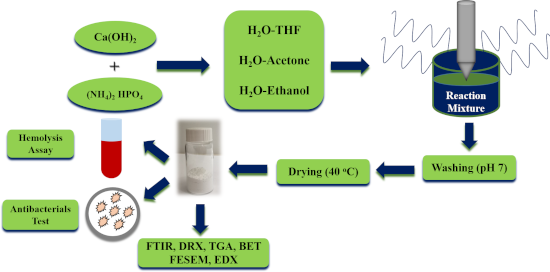
Ultrasonic irradiation in the synthesis of nanohydroxyapatite: a chemically friendly technique for improving hemocompatibility and antibiofilm applications
Beilstein J. Nanotechnol. 2026, 17, 991–1015, doi:10.3762/bjnano.17.68




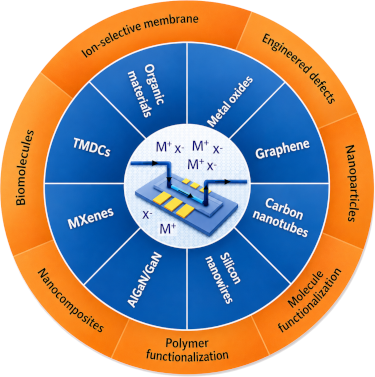
Materials challenges in solid-state sensors for continuous monitoring of ions in water
Beilstein J. Nanotechnol. 2026, 17, 935–973, doi:10.3762/bjnano.17.66



Nanocarrier strategies to overcome P-glycoprotein-mediated drug resistance in cancer therapy
Beilstein J. Nanotechnol. 2026, 17, 882–921, doi:10.3762/bjnano.17.64
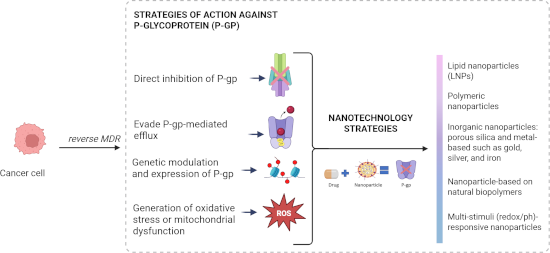
- , mitochondrial disruption via MTS-R8H3, and efflux inhibition via TPGS. The convergence of these strategies supports the development of modular nanocarriers that maximize intratumoral drug delivery while minimizing systemic toxicity, paving the way for future combinations with immunotherapies and tumor


Fractional shot noise of an SU(N) Kondo system
Beilstein J. Nanotechnol. 2026, 17, 515–540, doi:10.3762/bjnano.17.34
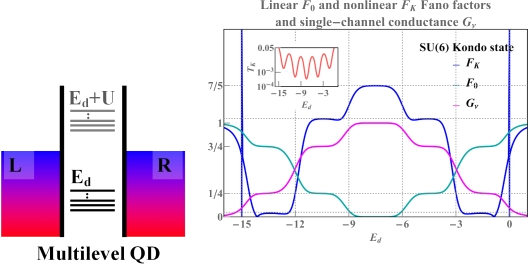
- plateaus of conductance with unitary values and, correspondingly, also flat lines of Fano coefficients in Kondo regimes and convergence of Wilson ratios to the values 1/(N − 1). The assumed ratio of coupling strength and Coulomb interaction parameter are within the range of experimental data. The value of


![[Graphic 127]](/bjnano/content/inline/2190-4286-17-34-i187.svg?max-width=637&scale=1.18182)

Defects and defect-mediated engineering of two-dimensional materials: challenges and open questions
Beilstein J. Nanotechnol. 2026, 17, 454–488, doi:10.3762/bjnano.17.31



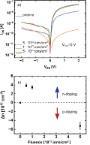


First-principles study on elastic properties of Cu, (Cu1−x,Nix)3Sn and interfacial mechanical properties of (Cu1−x,Nix)3Sn/Cu in the lead-free solder joint
Beilstein J. Nanotechnol. 2026, 17, 428–439, doi:10.3762/bjnano.17.29
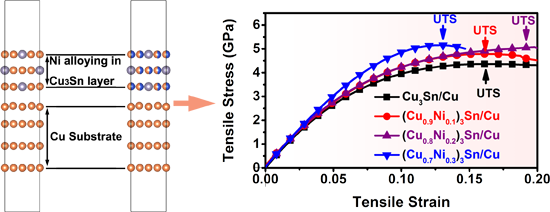
- kinetic energy cutoff of 30 Hartree, a k-point mesh of 8 × 8 × 8 and a potential residual V(r) of less than 10−8 Hartree were used to achieve self-consistent convergence. Based on the optimized crystal structures, the elastic constants of FCC Cu and orthorhombic (CuxNi1−x)3Sn were calculated by finite
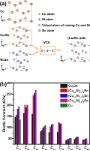
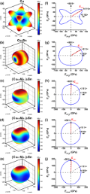
- Hartree were used to achieve self-consistent convergence. Results and Discussions Elastic properties of Cu and (CuxNi1−x)3Sn Figure 1a presents the optimized crystal structures of Cu and (CuxNi1−x)3Sn, where Cu crystallizes into the face-centered cubic (FCC) structure, and the (CuxNi1−x)3Sn crystallizes


Safe and sustainable by design with ML/AI: A transformative approach to advancing nanotechnology
Beilstein J. Nanotechnol. 2026, 17, 176–185, doi:10.3762/bjnano.17.11

- to fostering a transparent, socially responsible nanotechnology landscape. Through the convergence of hybrid modelling, digital twins, and informed policy, SSbD can continue to evolve into a powerful catalyst for safer, more sustainable innovation in the nanoscale area. Conclusion ML and AI, in


Capabilities of the 3D-MLSI software tool in superconducting neuron design
Beilstein J. Nanotechnol. 2026, 17, 122–138, doi:10.3762/bjnano.17.8

- implemented, for example, in the SuperVoxHenry tool (e.g., fast-Fourier tensor acceleration, Tucker decompositions, fast multipoles method, and the AGMG-based sparse preconditioner for fast convergence). Instead of that, 3D-MLSI FEM brings the solution to the direct filling of two dense matrices of large size



Microscopic study of the intermediate mixed state in intertype superconductors
Beilstein J. Nanotechnol. 2026, 17, 57–62, doi:10.3762/bjnano.17.5
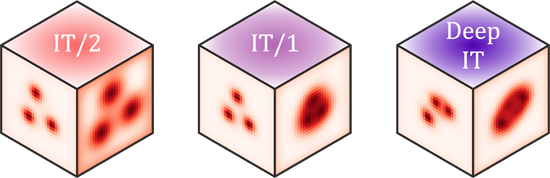
- regimes and shows their convergence at a single Bogomolnyi point, consistent with earlier predictions of extended Ginzburg–Landau theory. Additionally, we identify a deep IT region of irregular vortex configurations apparently dominated by many-body vortex effects. The results establish a fully
- calculations we set u,v = 0 at the boundaries of the system often referred to as “open boundary conditions”. We consider a sample with the relatively small linear size of N = 31 due to the high computational cost of achieving convergence with respect to both the superconducting gap and the magnetic field


Subdigital integumentary microstructure in Cyrtodactylus (Squamata: Gekkota): do those lineages with incipiently expressed toepads exclusively exhibit adhesive setae?
Beilstein J. Nanotechnol. 2026, 17, 38–56, doi:10.3762/bjnano.17.4



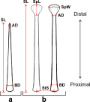
Geometry-controlled engineering of the low-temperature proximity effect in normal metal–superconductor junctions
Beilstein J. Nanotechnol. 2025, 16, 2265–2273, doi:10.3762/bjnano.16.155
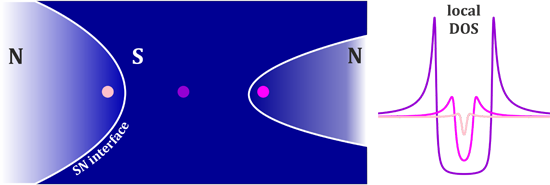
- repeated until convergence is reached at each site [51][52][53]. In the following, all energy values are given in terms of the hopping amplitude t, and all distances in terms of the lattice constant. To investigate the influence of NS junction geometry on the superconducting proximity effects, we consider


Hartree–Fock interaction in superconducting condensate fractals
Beilstein J. Nanotechnol. 2025, 16, 2177–2182, doi:10.3762/bjnano.16.150
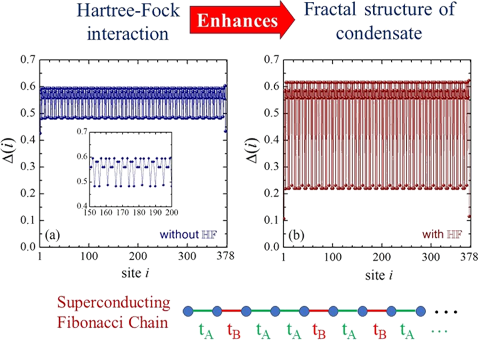
- the entire procedure is repeated until convergence is achieved. The calculation is considered converged when the relative changes in the order parameter and the HF field are below 10−7. To model quasicrystal superconducting properties, as the first step, we consider a finite Fibonacci sequence


Electron transport through nanoscale multilayer graphene and hexagonal boron nitride junctions
Beilstein J. Nanotechnol. 2025, 16, 2132–2143, doi:10.3762/bjnano.16.147
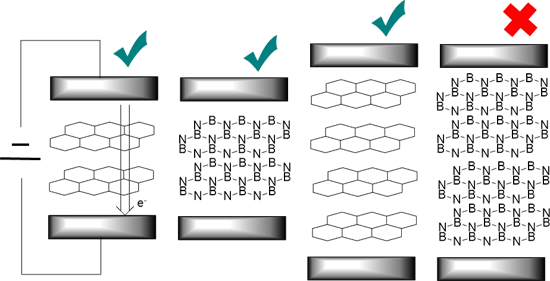
- layers of h-BN with convergence at four layers to the bulk values [24]. Electron transport through two layers of graphene and h-BN was investigated with the non-equilibrium Green’s function (NEGF) method combined with DFT [25]. The results show similar tunneling currents for graphene and h-BN. This work


Mechanical property measurements enabled by short-term Fourier-transform of atomic force microscopy thermal deflection analysis
Beilstein J. Nanotechnol. 2025, 16, 1952–1962, doi:10.3762/bjnano.16.136
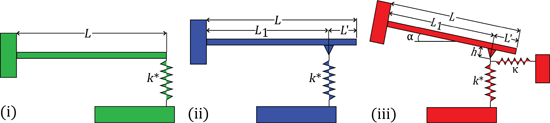
- for tip and substrate and fitted the radius of the probes using contact mechanics models. In many cases, the fits did not converge, so we used the best fit values near convergence and plotted the expected model variations for k* and normal force in Figure 5 with a red dashed line, with the




On the road to sustainability – application of metallic nanoparticles obtained by green synthesis in dentistry: a scoping review
Beilstein J. Nanotechnol. 2025, 16, 1851–1862, doi:10.3762/bjnano.16.128
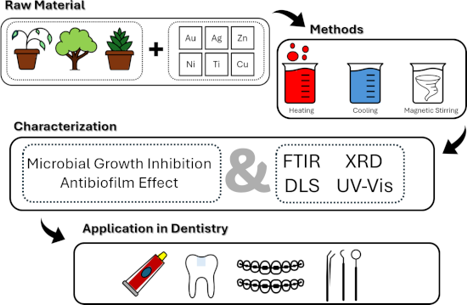
- stringent regulatory oversight. The prominent use of silver and zinc oxide nanoparticles, produced through environmentally sustainable phytochemical-mediated synthesis, underscores a convergence of advanced antimicrobial functionality, enhanced biocompatibility, and alignment with global sustainability


Further insights into the thermodynamics of linear carbon chains for temperatures ranging from 13 to 300 K
Beilstein J. Nanotechnol. 2025, 16, 1818–1825, doi:10.3762/bjnano.16.125
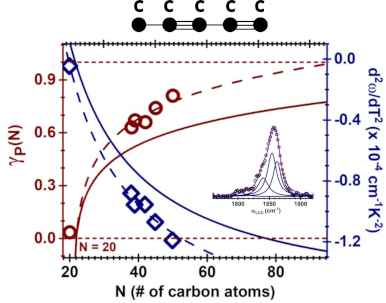
- the length of the chain, there is a convergence of the data as the temperature decreases. Consequently, εT as a function ΔωLCC (see Figure 2f) also converges when ωLCC → . Note that in both cases, once again, the experimental data follow the Debye model up to 300 K. According to the data and the


![[Graphic 23]](/bjnano/content/inline/2190-4286-16-125-i25.svg?max-width=637&scale=1.18182)
Beyond the bilayer: multilayered hygroscopic actuation in pine cone scales
Beilstein J. Nanotechnol. 2025, 16, 1695–1710, doi:10.3762/bjnano.16.119
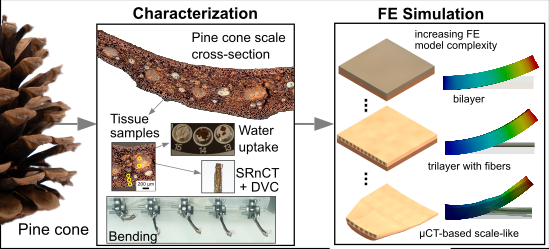
- , respectively. The resulting mesh comprised 3,927,014 nodes and 2,681,955 elements. The maximum deformation of the scale changed from 4.5617 to 4.5574 mm, corresponding to a relative change of about 0.1%). Thus, mesh convergence can be assumed. Additional analysis of the impact of expansion coefficient variance


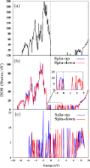
Modeling magnetic properties of cobalt nanofilms used as a component of spin hybrid superconductor–ferromagnetic structures
Beilstein J. Nanotechnol. 2025, 16, 1557–1566, doi:10.3762/bjnano.16.110
- small nanoscale system (500 atoms) consisting of cobalt atoms was solved. The purpose of this stage of computational experiment was to check the convergence of the solution and compare the obtained data with the results of other studies. The performed calculations and satisfactory correspondence to the
- checking the convergence of the obtained numerical solutions. The second task investigated the self-organization of atomic spins in cobalt thin films and analyzed the dependence of nanofilm magnetic properties on their thickness. In both problems, there was no external magnetic field in the system, and the
- fact that in [22] the modeling was carried out within the framework of the microcanonical ensemble, while in the present work a stochastic approach based on the Landau–Lifshitz–Hilbert equation was used. For further analysis of the convergence of the numerical solutions and the influence of the time


Transient electronics for sustainability: Emerging technologies and future directions
Beilstein J. Nanotechnol. 2025, 16, 1545–1556, doi:10.3762/bjnano.16.109

- electronic devices has created fertile ground for the convergence of flexible electronics with lifetime-controllable material systems [13]. This confluence has given rise to the emerging field of transient electronics, that is, devices engineered to function over a defined time window before undergoing
- electronic systems seamlessly interact with their environment, fulfill their intended functions, and then disappear without residue or retrieval. As the field matures, the convergence of materials science, device engineering, and systems integration will be essential to unlock the full potential of these


Influence of laser beam profile on morphology and optical properties of silicon nanoparticles formed by laser ablation in liquid
Beilstein J. Nanotechnol. 2025, 16, 1533–1544, doi:10.3762/bjnano.16.108
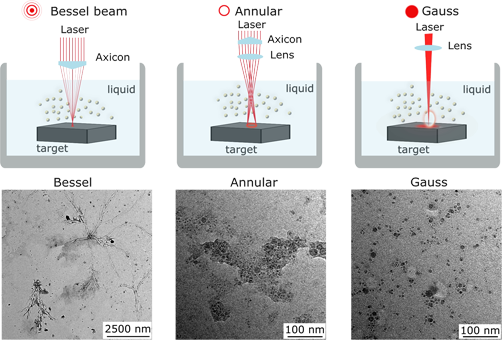
- excitation at 265, 300, and 370 nm. Supporting Information Supporting Information File 18: Additional experimental results and analysis of the produced Si NPs. Funding The work was partially financed by the National Academy of Sciences of Belarus under project Convergence 2.2.05 and by the Belarusian


Enhancing the therapeutical potential of metalloantibiotics using nano-based delivery systems
Beilstein J. Nanotechnol. 2025, 16, 1350–1366, doi:10.3762/bjnano.16.98
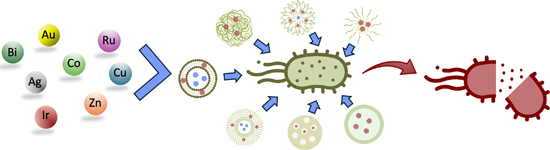
- rational design of new metal-based complexes and optimize their delivery systems. These technologies can provide valuable insights into target interactions, predict pharmacokinetic behavior, and guide the development of safer, more effective therapeutic candidates. Altogether, the convergence of


Electronic and optical properties of chloropicrin adsorbed ZnS nanotubes: first principle analysis
Beilstein J. Nanotechnol. 2025, 16, 1184–1196, doi:10.3762/bjnano.16.87
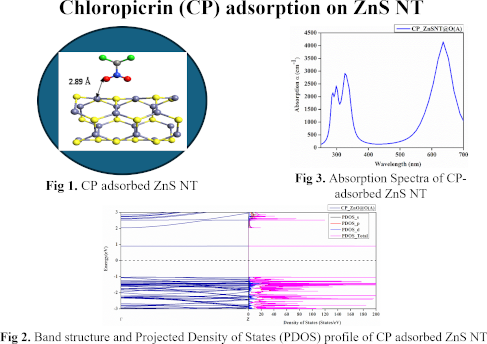
- was performed with stringent convergence criteria: a maximum force tolerance of 0.05 eV/Å and a stress tolerance of 0.05 eV/Å3. These parameters ensured the reliability and accuracy of the resulting structural configurations for subsequent electronic and transport property analyses. To study the


Soft materials nanoarchitectonics: liquid crystals, polymers, gels, biomaterials, and others
Beilstein J. Nanotechnol. 2025, 16, 1025–1067, doi:10.3762/bjnano.16.77
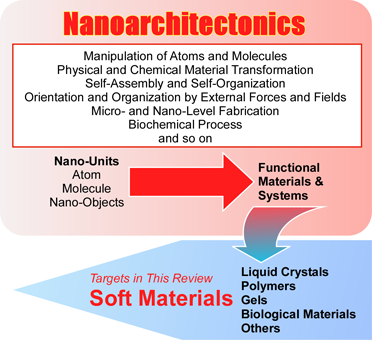
- construction of functional materials from nanoscale units using a variety of materials processes (Figure 1) [125]. It is evident that the integration of knowledge and technology from both nanotechnology and materials sciences is imperative. Nanoarchitectonics may be regarded as a convergence of nanotechnology
- can be applied to the creation of all materials. If the ultimate theory of physics is the theory of everything [131], then nanoarchitectonics could be said to be the method for everything in materials science [132][133]. As previously outlined, nanoarchitectonics represents the convergence of






Time-resolved probing of laser-induced nanostructuring processes in liquids
Beilstein J. Nanotechnol. 2025, 16, 968–1002, doi:10.3762/bjnano.16.74
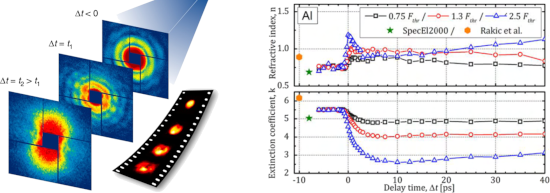
- demanding studies that eventually show convergence with experimental results. Generally, the classification of the mechanisms in LSPC identifies three main pathways that are pictured schematically in Figure 1: (i) thermal processes, where the condensed matter is heated to high lattice temperatures, leading


Theoretical study of the electronic and optical properties of a composite formed by the zeolite NaA and a magnetite cluster
Beilstein J. Nanotechnol. 2025, 16, 44–53, doi:10.3762/bjnano.16.5
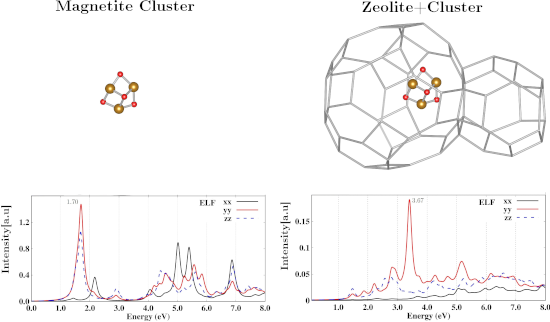
- , 1.60, 1.90, and 1.70 for aluminum, oxygen, silicon, sodium, and sulfur, respectively; the convergence number, that is, the smallest muffin-tin radii times the plane wave cutoff parameter, is set at RmtKmax = 6.0; the maximum l value for partial waves used inside atomic spheres is lmax = 10; and the
- properties. For the energy convergence criterion, we consider a value of 1 × 10⁻⁴ Ry. For a valid comparison, the same values were used to calculate the electronic and optical properties of the isolated magnetite cluster. Finally, spin polarization was considered for both calculations (zeolite-cluster and