


Search results
Search for "doping" in Full Text gives 427 result(s) in Beilstein Journal of Nanotechnology. Showing first 200.
Glycerol photoelectrochemical oxidation reaction at carbon nitrides/BiVO4 materials
Beilstein J. Nanotechnol. 2026, 17, 806–817, doi:10.3762/bjnano.17.57
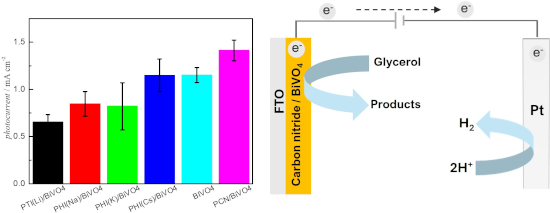
- film was also included. Interestingly, the onset potential for glycerol oxidation does not depend on the CN type used on the heterojunction, suggesting no doping effect on BiVO4. On the other hand, at higher applied potentials, the photocurrent density strongly depends on the CN type. The materials PTI




Tuning the electronic properties of defect-rich MoS2
Beilstein J. Nanotechnol. 2026, 17, 796–805, doi:10.3762/bjnano.17.56
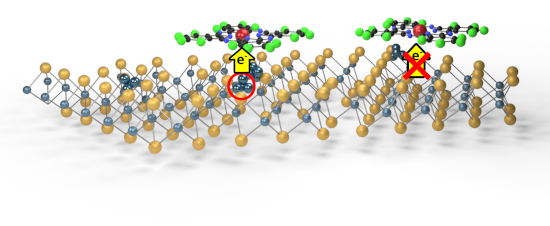
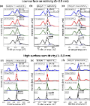
- fabrication of ultrafast photodetectors [4][5]. To tune their electronic structure for such applications, the adsorption of organic molecules is a versatile strategy [6][7], resulting, for example, in dipole-induced doping or (complex) charge transfer [8]. Photoelectron spectroscopy (PES), X-ray absorption
- techniques, heterostructuring with (fluorinated) transition metal phthalocyanines (TMPcs) has been shown to modify the interfacial electronic properties of pristine TMDCs [8][9][10]. For the interface between CoPcF16 and defect-free MoS2, a slight doping in the TMDC was recently observed, however without
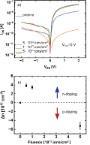
- levels and the signal is not limited to the uppermost atoms only, we discuss them in the following in the frame of a shift of the reference (Fermi) level due to band bending. This change in the Fermi level is referred to as (relative) p- or n-doping. It is important to note the varying initial Fermi


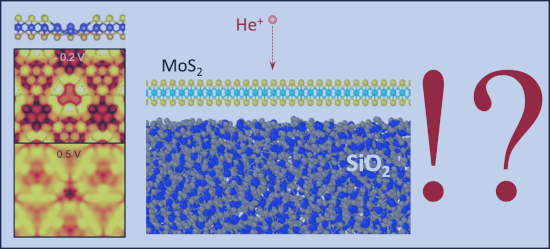
Substrate-dependent pore formation in molybdenum disulfide monolayers under ion irradiation
Beilstein J. Nanotechnol. 2026, 17, 769–780, doi:10.3762/bjnano.17.54
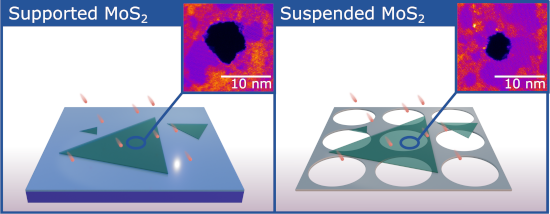
- ); Introduction Ion beams provide a controllable route to engineer defects in two-dimensional (2D) materials, enabling property tuning from doping to nanopore formation [1][2][3][4]. Because kinetic energy, charge state, and mass can be varied over wide ranges, ion irradiation offers a large parameter space for


Environmental applications of silver nanoparticles: state-of-the-art review and emerging trends
Beilstein J. Nanotechnol. 2026, 17, 697–736, doi:10.3762/bjnano.17.49
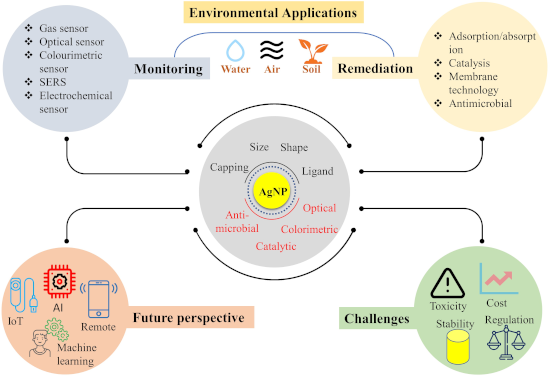
- synergistic effect of doping. Upon doping, Ag was observed to be dispersed on the nanotube surface, either as Ag or Ag2O nanoparticles [116]. Another study confirmed similar results on Ag-doped titanium dioxide, where 100% degradation of polyethene (125–150 μM) was achieved at 100 ppm in 120 min of UV
- exposure [117]. Microplastics, such as polyamide 66, were degraded by Ag-doped TiO2, with increased efficiency observed with Ag doping [118]. 1.5% Ag/TiO2 achieved a 58.9% removal, which significantly increased to 100% upon increasing the catalyst dose (3:1) after 4 h of UV-A exposure. The underlying


Decontamination from water pollutants and pathogens by electrospun nanofibers doped with heavy-atom-free borafluorene-BODIPY photosensitizers
Beilstein J. Nanotechnol. 2026, 17, 668–682, doi:10.3762/bjnano.17.46
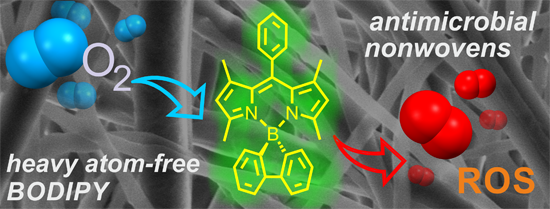
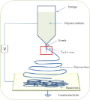
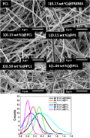
- European Medicines Agency (EMA); it is also commonly applied in medicine. Doping concentration effect in PCL-based materials In the next step, we examined three different concentrations of 1 in the PCL matrixes, that is, 0.15, 0.50, and 1.00 wt %. The morphology of the mats was investigated with SEM, while
- in concentrations and light irradiance, both materials show comparable photoactivity. In the next step, the photocatalytic decomposition of cimetidine was studied at various doping concentrations. The reaction profiles are very similar (Figure 10a), indicating that the reaction rate is not limited by



Cellulose as a photocatalyst support material: extraction, structural features, and environmental applications
Beilstein J. Nanotechnol. 2026, 17, 635–652, doi:10.3762/bjnano.17.44
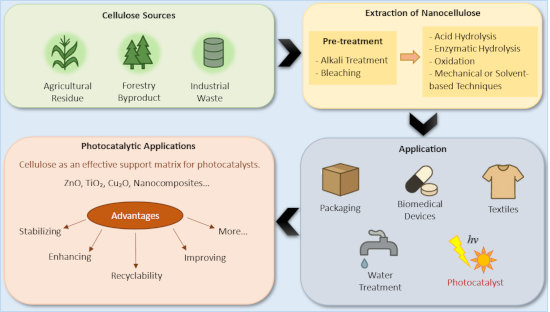
- reduction and doping, which enhance their reactivity and overall performance [86]. Widely used examples include ZnO, TiO2, and iron oxide, which support a broad range of catalytic applications, and researchers have explored several production methods for these nanoparticles, with the sol–gel process relying


Two-step laser synthesis of Ag@TiO2 nanomaterials for the photocatalytic degradation of rhodamine B
Beilstein J. Nanotechnol. 2026, 17, 622–634, doi:10.3762/bjnano.17.43
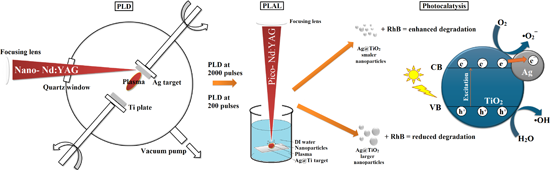
- a state of initial instability. Influence of Ag on the bandgap energy of TiO2 UV–vis spectroscopy was employed to investigate the effect of Ag doping on TiO2 and to determine the bandgaps of both TiO2 and Ag@TiO2 samples. Figure 7a displays the absorption spectra of TiO2 and Ag-modified TiO2 samples
- facilitate improved separation of photogenerated charge carriers and extend light absorption toward the visible region, which together contribute to the enhanced photocatalytic performance of Ag@TiO2 compared to bare TiO2. Liza et al. [27] showed that TiO2 doping with a transition metal such as Ag may result


Recent progress in enhancing built-in electric fields of perovskite solar cells via junction engineering
Beilstein J. Nanotechnol. 2026, 17, 602–621, doi:10.3762/bjnano.17.42
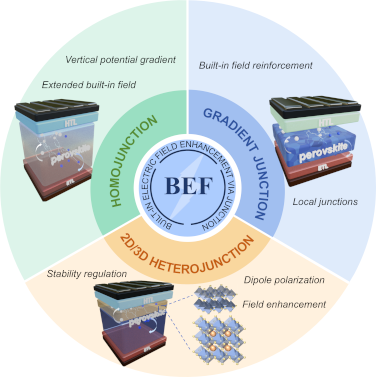
- controlled doping and orientation modulation, thereby suppressing nonradiative recombination and improving carrier extraction. Gradient junctions introduce continuous compositional or bandgap tilts across the film thickness, enabling depth-extended electric fields and improved spatial continuity of charge
- groundwork for the present review. Homojunctions focus on constructing continuous band bending and Fermi level gradients within the same material system using methods such as doping, surface reconstruction, or orientation induction, thereby smoothly extending the BEF from the interface into the bulk. Their
- challenges and future directions in this field. Review Homojunctions In perovskites, homojunctions are electrically non-uniform regions created by controlled doping, targeted chemical modification, or process optimization, which induce band bending and generate localized BEFs throughout the bulk of the film




Synthesis of Cu–Mo/TiO2 and Co–Mo/TiO2 photocatalysts for the efficient degradation of organic pollutants in water
Beilstein J. Nanotechnol. 2026, 17, 559–570, doi:10.3762/bjnano.17.37
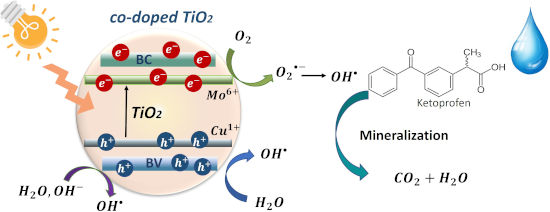
- the complete degradation of ketoprofen and 90% of mineralization. It was determined that HO· radicals play an important role in the oxidation reactions. Keywords: co-doping; photocatalysis; titanium dioxide; water remediation; Introduction Water is an essential part of every living entity
- developed to overcome these limitations, including doping, noble-metal deposition, heterogeneous structures, and surface sensitization. Doping is a widely employed method to generate impurity states in the forbidden region or to reduce the effective bandgap. Doping TiO2 with transition metal ions can adjust
- new bands generated by doping can be passivated, and they will not act as charge recombination centers if the semiconductor oxide is co-doped with two different elements [5]. TiO2 co-doping can be achieved by incorporating combinations of metal/metal, non-metal/metal, and non-metal/non-metal dopants



Upcycling agroindustrial waste into graphene oxide supports for gold nanoparticles: toward sustainable nanomaterials
Beilstein J. Nanotechnol. 2026, 17, 489–504, doi:10.3762/bjnano.17.32
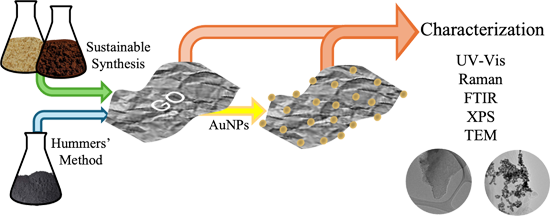
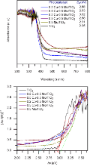
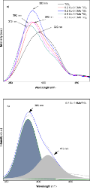
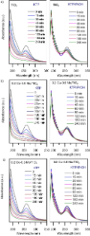
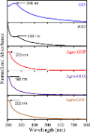
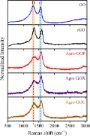
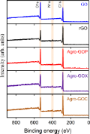
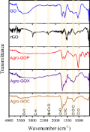
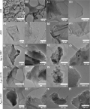
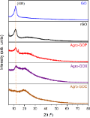
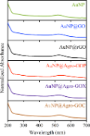
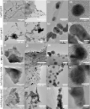
- , rGO and Agro-GO present a blueshift in the G band. This may be related to phonon stiffening caused by lattice strain and p-type doping; in rGO, this arises from reduction-induced defect restructuring, while, in Agro-GO, it originates from extensive oxidation and the strong confinement of small sp2



Defects and defect-mediated engineering of two-dimensional materials: challenges and open questions
Beilstein J. Nanotechnol. 2026, 17, 454–488, doi:10.3762/bjnano.17.31
- the context of doping or single-photon quantum emitters [4][5]. Moreover, irradiation of 2D materials with energetic particles, that is, ions and electrons, has been demonstrated to be a suitable approach for tailoring their properties through the controllable creation of defects and the introduction
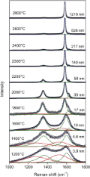
- -active modes of the host material regarding peak position, lineshape, and the relative intensities of peaks. The position and relative intensities are affected by strain and doping induced by defects. In addition, relaxation of the translation symmetry leads to activation of modes that would otherwise be
- among defects as several defects can yield similar strain, doping, or mode activation. In principle, defects might be separated by comparing the effects on all observed peaks [94]. Unfortunately, many common 2D materials only show a few Raman-active peaks under non-resonant conditions; this problem can





Interconnection morphology effects on the radio frequency response of carbon nanotube sponges
Beilstein J. Nanotechnol. 2026, 17, 343–351, doi:10.3762/bjnano.17.23
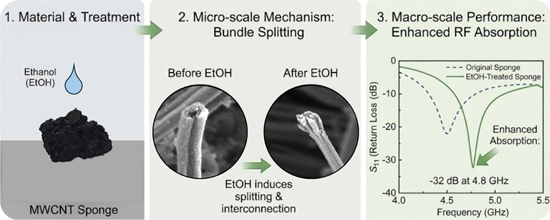
- ethanol treatment yielded excellent results, enhancing the efficiency of the CNS in absorbing RF signals and serving as a signal receptor. We explained the observed improvement by the structural modifications in the CNT assembly induced by ethanol. Compared with other doping strategies or external field



Safe and sustainable by design with ML/AI: A transformative approach to advancing nanotechnology
Beilstein J. Nanotechnol. 2026, 17, 176–185, doi:10.3762/bjnano.17.11

- – such as surface functionalization, doping strategies, or substituting alternative compounds – are implemented prior to commercialization. Overall, the synergy between predictive toxicology and SSbD underscores a forward-looking commitment to responsible, sustainable nanotechnology, as these


Reduced graphene oxide paper electrode for lithium-ion cells – towards optimized thermal reduction
Beilstein J. Nanotechnol. 2026, 17, 24–37, doi:10.3762/bjnano.17.3
- a composite lithium cobalt oxide electrode [55]. Furthermore, the introduction of defects as a result of iodine doping reported by Li et al. resulted in improved sodium ion storage and electron transport [56]. The carbon lattice in rGO flakes provides electrical conductivity, while defects and



Optical bio/chemical sensors for vitamin B12 analysis in food and pharmaceuticals: state of the art, challenges, and future outlooks
Beilstein J. Nanotechnol. 2025, 16, 2207–2244, doi:10.3762/bjnano.16.153


Microplastic pollution in Himalayan lakes: assessment, risks, and sustainable remediation strategies
Beilstein J. Nanotechnol. 2025, 16, 2144–2167, doi:10.3762/bjnano.16.148

- is TiO2, which is known for being stable, effective, and able to produce ROS when exposed to UV light [43]. The effectiveness of TiO2 has been improved recently by doping it with nonmetals like sulfur and nitrogen or combining it with carbon-based compounds like graphene. According to Xiao et al


Electron transport through nanoscale multilayer graphene and hexagonal boron nitride junctions
Beilstein J. Nanotechnol. 2025, 16, 2132–2143, doi:10.3762/bjnano.16.147
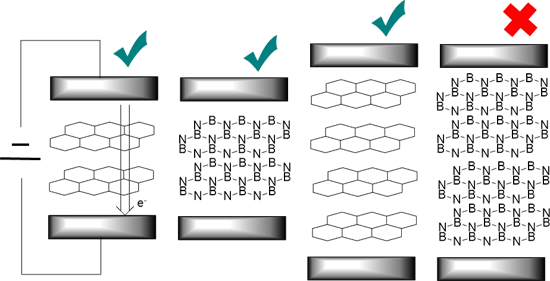
- perpendicular to the layers in the stacking direction. We compared the decay of the current with the number of layers and evaluated the ability of h-BN to filter currents as a material coating. To investigate the effect of disorder, we included two major defects in the graphene lattice, namely, nitrogen doping
- and Stone–Wales defects. Nitrogen doping transforms graphene from a zero-bandgap semiconductor to a metal, while Stone–Wales defects open the bandgap. For h-BN, we considered Stone–Wales defects. A detailed comparison of electron transport through five materials, that is, multilayer nanoscale graphene
- band structure are calculated. The graphitic nitrogen doping is performed for a 4 × 4 × 1 supercell with one nitrogen atom substituting one carbon atom per layer. Figure 1 shows the unit cell of graphite, the DOS of graphite, the band structure of graphite, the unit cell of h-BN, the DOS of h-BN, the


Piezoelectricity of layered double hydroxides: perspectives regarding piezocatalysis and nanogenerators
Beilstein J. Nanotechnol. 2025, 16, 1812–1817, doi:10.3762/bjnano.16.124

- /Al-LDHs. The crystal structure of LDHs is fairly flexible, enabling adjustment of their cationic composition. One widely used method for preparing LDH-based catalysts is cation doping further increasing their catalytic activity. A cobalt-doped Zn/Al-LDH (ZnCo/Al-LDH) piezoelectric catalyst was used
- ? In one case, doping a binary LDH with third cation improved its electroactive performance. Which dopants would be most efficient for improving piezoelectric properties? Will new unexpected results emerge from multication LDHs? Only by addressing abovementioned points and questions can this field move

Transient electronics for sustainability: Emerging technologies and future directions
Beilstein J. Nanotechnol. 2025, 16, 1545–1556, doi:10.3762/bjnano.16.109

- silicon, while amorphous silicon exhibits the highest degradation rate among them [45]. Interestingly, doping can lead to a retardation of degradation [42], resembling the etch-stop phenomenon in the potassium hydroxide process. This newfound understanding of biodegradability of electronic-grade silicon


Laser processing in liquids: insights into nanocolloid generation and thin film integration for energy, photonic, and sensing applications
Beilstein J. Nanotechnol. 2025, 16, 1428–1498, doi:10.3762/bjnano.16.104






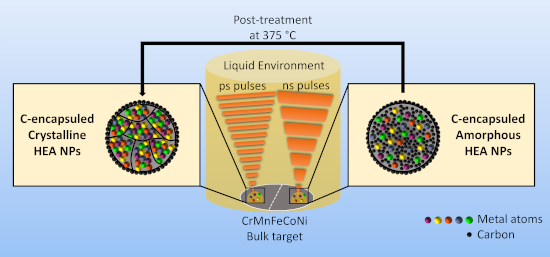
Crystalline and amorphous structure selectivity of ignoble high-entropy alloy nanoparticles during laser ablation in organic liquids is set by pulse duration
Beilstein J. Nanotechnol. 2025, 16, 1141–1159, doi:10.3762/bjnano.16.84




Single-layer graphene oxide film grown on α-Al2O3(0001) for use as an adsorbent
Beilstein J. Nanotechnol. 2025, 16, 1082–1087, doi:10.3762/bjnano.16.79
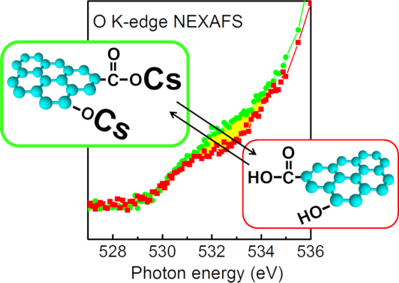
- XPS spectra of SLG/α-Al2O3(0001) is shifted to the lower binding energies by 1.0 eV compared with that of graphite (284.4 eV) [23]. This is due to p-type doping of SLG associated with a strong electrostatic interaction between SLG and the α-Al2O3(0001) at the interface [18]. In SLGO, on the other hand


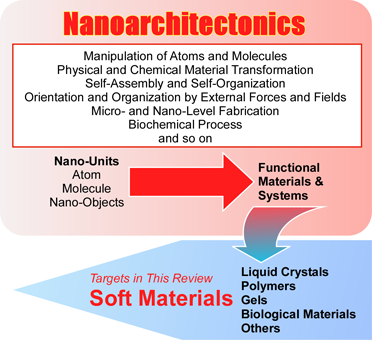
Soft materials nanoarchitectonics: liquid crystals, polymers, gels, biomaterials, and others
Beilstein J. Nanotechnol. 2025, 16, 1025–1067, doi:10.3762/bjnano.16.77
- aforementioned example. It is also anticipated that soft materials nanoarchitectonics using polymers will be applied in other fields, including the control of the functions of polymer semiconductors. The process of chemical doping of molecular semiconductors is based on electron transfer reactions between the
- between benzoquinone and hydroquinone is precisely controlled by pH, in accordance with the Nernst equation. In order to compensate for the charge carriers in the semiconductor, dopant ions must be supplied through the redox reaction. The efficient doping of polymeric organic semiconductor thin films is
- achieved through the synergistic reaction of the proton coupling electron transfer reaction and the insertion of hydrophobic ions. This process has enabled the efficient doping of crystalline organic semiconductor thin films at room temperature. By examining the conditions, it is possible to achieve strong






Ar+ implantation-induced tailoring of RF-sputtered ZnO films: structural, morphological, and optical properties
Beilstein J. Nanotechnol. 2025, 16, 872–886, doi:10.3762/bjnano.16.66
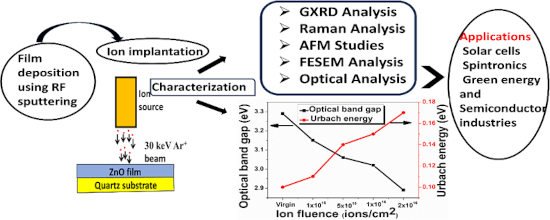
- 23 keV co-implanted (H+ and N+ ions) ZnO films. But in these two above-quoted reports nitrogen ions were used for implantation. Nitrogen ions act as n-type doping and can alter the stoichiometry of ZnO films, which is not desirable in certain optoelectronic devices [10][11]. Hence, we have used Ar






Synchrotron X-ray photoelectron spectroscopy study of sodium adsorption on vertically arranged MoS2 layers coated with pyrolytic carbon
Beilstein J. Nanotechnol. 2025, 16, 847–859, doi:10.3762/bjnano.16.64
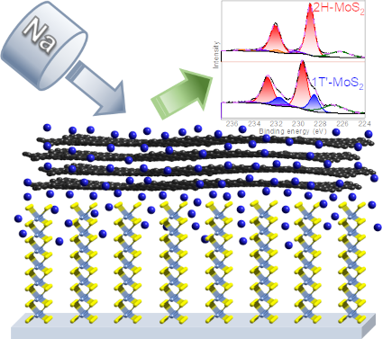
- -MoS2 are retained, but their positions shift toward higher energies as compared to the spectra of the initial samples. The shift value of the Mo 3d and S 2p components of 2H-MoS2 increases with the deposited sodium concentration because of increased charge doping. The intensity of Mo 3d and S 2p
- between the MoS2 layers leads to a 2H–1T′ transition and electron charge doping from sodium. The Na/Mo ratio decreases after annealing of the sodiated MoS2 film because of the partial removal of sodium, primarily from the film surface. After annealing, the sodiated MoS2 film still contains a high





