


Search results
Search for "electrode" in Full Text gives 612 result(s) in Beilstein Journal of Nanotechnology. Showing first 200.
Supramolecular one-dimensional conducting nanofibers from a C3-symmetric tetrathiafulvalene derivative
Beilstein J. Nanotechnol. 2026, 17, 872–881, doi:10.3762/bjnano.17.63
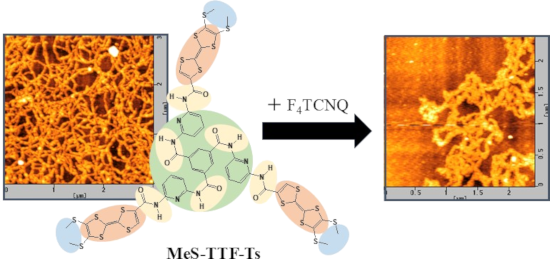
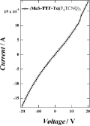
- contacts were made by attaching gold wires (25 μm in diameter) using silver paste. Temperature-dependent DC conductivity was measured using a Keithley 6517 electrometer, with an applied voltage in the range of −100 to +100 V. The electrode gap and electrode length were 60 μm and 0.6 cm, respectively
- concentration of 6 mM. The solution (4 μL) was cast onto a mica substrate equipped with gold electrodes (gap: 50 μm, electrode length: 6 mm) fabricated by vacuum deposition, followed by solvent evaporation to form nanofiber structures. Electrical conductivity measurements of the resulting nanofibers exhibited a


Light-driven ammonia electrooxidation via carbon nitride–ruthenium molecular interfaces
Beilstein J. Nanotechnol. 2026, 17, 854–862, doi:10.3762/bjnano.17.61
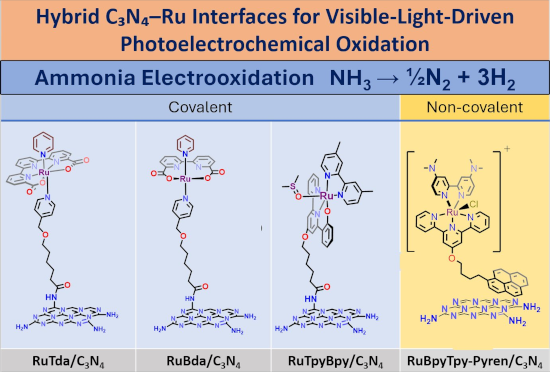
- , Germany 10.3762/bjnano.17.61 Abstract The homogeneous–heterogeneous catalysis gap remains an unresolved challenge in solar fuels research. Molecular catalysts offer unique selectivity and mechanistic transparency but suffer from poor electrode contact and limited recyclability, while heterogeneous
- , nanoparticles, and carbon supports) are manufactured into electrodes or serve as the electrode itself, industrially scalable, but with poorly understood active sites and inactive bulk material [1][2][3][4][5]. In practice, however, bridging these two families is not straightforward. A homogeneous catalyst
- dissolved in solution faces a fundamental limitation: Only a tiny fraction of dissolved molecules is ever close enough to an electrode surface to participate in electron transfer at any given moment. The rest drifts idly in solution, increasing precious metal loading without contributing to the reaction


Sustainable fabrication of 2D-based devices through reuse of substrates with microfabricated electrodes
Beilstein J. Nanotechnol. 2026, 17, 818–827, doi:10.3762/bjnano.17.58
- . Keywords: 2D device fabrication; microfabricated electrode; N-methyl-2-pyrrolidone; substrate reuse; ultrasonic cleaning; Introduction Nanoscience research often needs the fabrication of proof-of-concept devices to demonstrate applications of novel nanomaterials or to study their fundamental properties [1
- and identified optimal techniques that allow for their reuse in electrochemical applications, preserving electrode performance [20]. Furthermore, Fakhr et al. explored cleaning methods for gold electrodes on diverse substrates and found that chemical treatments such as KOH and H2O2 effectively restore
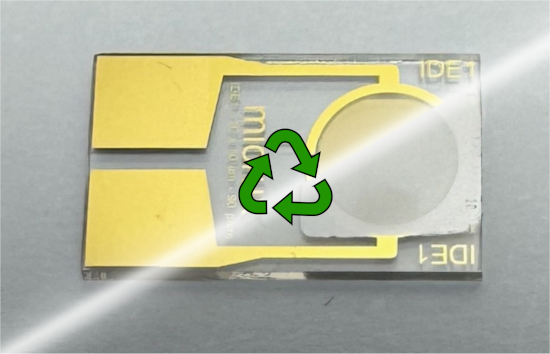
- different electrode layouts and metal stacks. Figure 2 presents different pre-patterned electrode configurations before and after the cleaning process. Figure 2a,b shows drain–source electrode structures pre-patterned on a SiO2/Si substrate using a Cr/Au stack, commonly used in field-effect transistor (FET


Glycerol photoelectrochemical oxidation reaction at carbon nitrides/BiVO4 materials
Beilstein J. Nanotechnol. 2026, 17, 806–817, doi:10.3762/bjnano.17.57
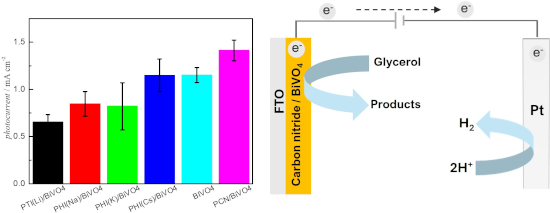
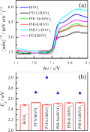
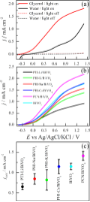
- hydrogen electrode (RHE) upon glycerol addition. Clearly, the type of nitride employed in the heterojunctions influences the activity of the material for glycerol oxidation, with the photocurrent at 1.23 V vs RHE following the order: PCN/BiVO4 > BiVO4 ≈ PHI-Cs/BiVO4 > PHI-K/BiVO4 ≈ PHI-Na/BiVO4 > PTI(Li
- (Supporting Information File 1, Equation S1) [34]. The photoelectrochemical characterization was carried out using a potentiostat/galvanostat (PGSTAT302N, Autolab, Metrohm). Measurements were performed in a three-electrode cell containing a Na2SO4 solution (0.5 mol·L−1, pH 6.8), BiVO4 or CN/BiVO4 as working
- electrode (WE), a platinum sheet as the counter electrode, and a Ag/AgCl/KClsat electrode as potential reference. The light source was provided by solar simulator (Oriel, LCS-100, AM-1.5G) with 100 mW·cm−2 of irradiance illuminating the back side of the WE through a lateral quartz window in the




Oxidative atmosphere-driven formation of single-phase spinel CuRh2O4 nanofibers for alkaline water oxidation
Beilstein J. Nanotechnol. 2026, 17, 737–743, doi:10.3762/bjnano.17.50
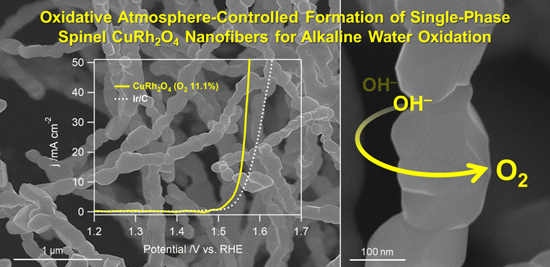
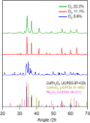
- 1.0 M NaOH (aq) using a standard three-electrode configuration. As shown in the iR-corrected linear sweep voltammetry (LSV) curves in Figure 6a, the phase-pure CuRh2O4 nanofibers prepared under 11.1% O2 exhibit superior OER activity compared to samples containing secondary phases, demonstrating the
- polarization curves (Figure 6b) [1]. The smaller Tafel slope observed for the sample prepared under 22.2% O2 (42.9 mV·dec−1) indicates a more favorable OER process, suggesting that the catalyst-modified electrode requires a lower overpotential to achieve higher current densities. Additionally, the
- The as-prepared nanofibers and commercial Ir/C catalyst were separately dispersed in deionized water to obtain catalyst inks with a concentration of 2 mg·mL−1. An aliquot (6 μL) of each well-dispersed ink was drop-cast onto a glassy carbon (GC) disk electrode (3 mm diameter) and dried in an oven at 60




Environmental applications of silver nanoparticles: state-of-the-art review and emerging trends
Beilstein J. Nanotechnol. 2026, 17, 697–736, doi:10.3762/bjnano.17.49


Recent progress in enhancing built-in electric fields of perovskite solar cells via junction engineering
Beilstein J. Nanotechnol. 2026, 17, 602–621, doi:10.3762/bjnano.17.42
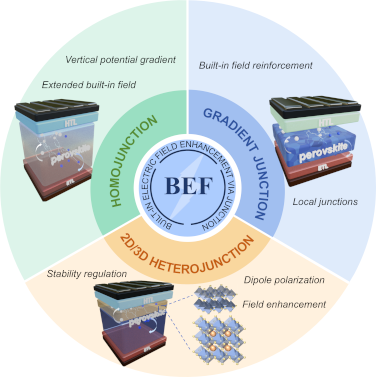
- -surface post-treatments can form a homojunction at the top of the perovskite layer. In particular, HTL-free systems, such as those employing porous carbon electrodes, similar control can be achieved near the electrode–perovskite interface through interfacial modification. Chen et al. [36] employed a
- cyclopentylmethylamine (CMA) post-treatment to induce homojunction formation at the lateral microinterfaces between the carbon electrode and the perovskite. After crystallization, the perovskite within the mesoscopic framework forms numerous microcontacts with the carbon electrode. CMA infiltration from the carbon side
- stability and compatibility with low-temperature processing remains challenging [49][50]. Liu et al. [40] embedded SnI2 into the PEDOT:PSS bottom electrode and annealed the layer. During the deposition of FA0.7MA0.3Sn0.5Pb0.5I3, this treatment induced a vertical redistribution of Sn2+ and Pb2+, forming a




Electrochemical determination of ciprofloxacin using a MIL-101/reduced graphene oxide-modified electrode
Beilstein J. Nanotechnol. 2026, 17, 541–554, doi:10.3762/bjnano.17.35
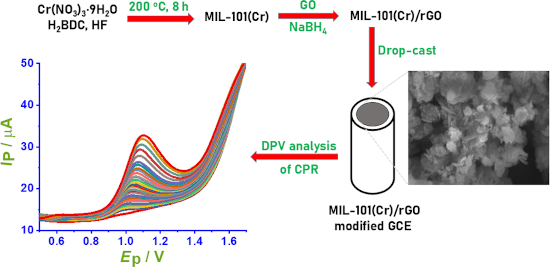
- ciprofloxacin (CPR) was developed using a glassy carbon electrode modified with MIL-101/reduced graphene oxide (MIL-101/rGO). MIL-101/rGO was synthesized via a facile ultrasonic-assisted method and characterized by various physicochemical techniques. The synergistic combination of MIL-101 with rGO significantly
- enhanced the electrocatalytic activity toward CPR oxidation. The electrochemical behavior of CPR on the MIL-101/rGO-modified electrode was systematically investigated using cyclic voltammetry and differential pulse voltammetry. Under optimized experimental conditions, the proposed sensor exhibited a linear
- , yielding acceptable recoveries. These results indicate that the MIL-101/rGO-modified electrode provides a promising and efficient platform for the electrochemical sensing of CPR in pharmaceutical and environmental analysis. Keywords: ciprofloxacin; electrochemical analysis; MIL-101; reduced graphene oxide


Fractional shot noise of an SU(N) Kondo system
Beilstein J. Nanotechnol. 2026, 17, 515–540, doi:10.3762/bjnano.17.34
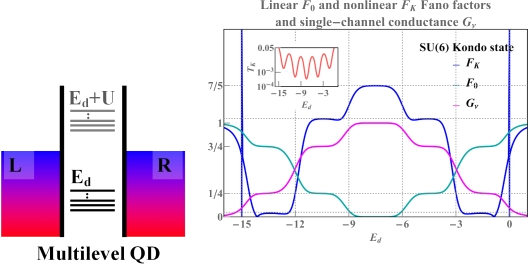
- assuming Coulomb parameter U = 3 and coupling to the leads Γ = 0.025. Before we get to the results, let us mention that the assumption of weak electrode coupling (U/Γ = 120) ensures achieving Kondo’s unitary limits in calculations for all the analyzed symmetries, which manifests in the occurrence of flat
- related to the fact that, for n = N/2, the electrode channels link with the largest number of local states M (M > N). This indicates that the number of states participating in fluctuations or the number of relevant bosonic fields decisively influence on the values of coefficients (Equation 40) and


![[Graphic 127]](/bjnano/content/inline/2190-4286-17-34-i187.svg?max-width=637&scale=1.18182)

Defects and defect-mediated engineering of two-dimensional materials: challenges and open questions
Beilstein J. Nanotechnol. 2026, 17, 454–488, doi:10.3762/bjnano.17.31
- arrays of field-effect transistors (FETs), of which one is schematically sketched in Figure 10e [160][164]. The beauty of the use of MTBs in 2D FETs results from the fact that the construction of the FETs is much simpler than in previous ultrashort-gate FETs [165][166] since the gate electrode, the MTB





Ferroelectric nanodot reservoir for neuromorphic computing
Beilstein J. Nanotechnol. 2026, 17, 352–364, doi:10.3762/bjnano.17.24
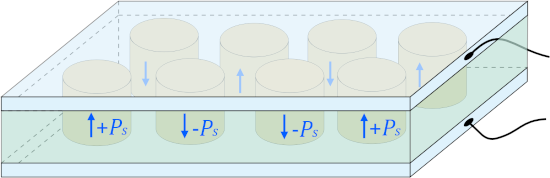
- a network of parallel connected capacitors, either through a wired interconnection or via a shared common electrode. Upon receiving the common input signal x(t), the polarization states of the nanodots evolve collectively, producing a high-dimensional internal state. This internal state is projected
- , ensuring that the internal electric field across each nanodot, E = −Q/ε0εfS, is uniform. Here ±Qe is the externally applied charge and S = ΣiSi is the total electrode area. The condition of the uniformly constant electric field throughout the array is a crucial feature for simultaneous control of
- upper electrode of the ferroelectric reservoir. The time-integrated current produces a sequence of charge pulses Q(t) = ∫I(t)dt, effectively driving the reservoir with a controlled temporal charge profile. The lower electrode is grounded. This setup ensures that the data is encoded as variations in


Advancing nanolithography: a comprehensive review of materials for local anodic oxidation with AFM
Beilstein J. Nanotechnol. 2026, 17, 275–291, doi:10.3762/bjnano.17.19
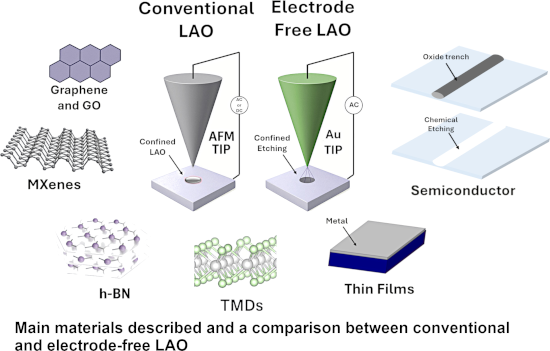
- dichalcogenides, demonstrate unique oxidation behaviors, enabling high-resolution applications in electronics and quantum devices. Recent advancements, such as electrode-free LAO, have expanded the range of applicable materials and improved the precision and scalability of the process. This paper also aims to
- materials considered and illustrating a comparison between conventional and electrode-free LAO (EFLAO). 2 Principles of local anodic oxidation (LAO) As already said, LAO is a nanoscale fabrication technique that utilizes an AFM to generate precise oxidation patterns on a substrate. The process is based on
- MoS2 flakes can spatially confine the oxidation process, enabling the formation of well-controlled dot-shaped features [21]. 2.3 Advanced techniques Recent advancements have expanded the capabilities of LAO to the electrode-free EFLAO [23]. This technique employs high-frequency AC fields to induce


Capabilities of the 3D-MLSI software tool in superconducting neuron design
Beilstein J. Nanotechnol. 2026, 17, 122–138, doi:10.3762/bjnano.17.8

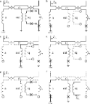
- layer (M1) served both as a superconducting ground plane and the bottom electrode of the Josephson junctions. The second (M2) and third (M3) layers formed interferometers loops, control lines, and wiring. Overlap areas between layers M2 and M3 provided inductive coupling between elements. The



Reduced graphene oxide paper electrode for lithium-ion cells – towards optimized thermal reduction
Beilstein J. Nanotechnol. 2026, 17, 24–37, doi:10.3762/bjnano.17.3
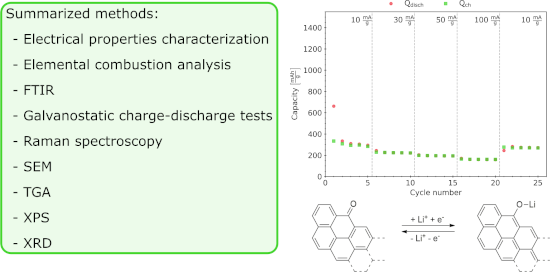
- electrode material in lithium-ion cells. Mildly reduced graphene oxide paper underwent further thermal reduction steps. The structural and chemical properties of the obtained materials were determined using Raman and Fourier-transform infrared spectroscopies and elemental combustion analysis. The morphology
- . Keywords: electrode material; graphene paper; lithium-ion batteries; reduced graphene oxide; thermal reduction; Introduction Electrode materials comprising reduced graphene oxide (rGO) for energy storage in lithium-ion-based or sodium-ion-based technologies have been the subject of over 3800 publications
- specific surface area, and low bulk density [3][4]. The role of rGO in electrode materials can be considered in two ways. It can be applied as a conductive additive, improving transport properties and, as a result, enhancing capacity [5]. It can also be the active material itself [6][7]. To mention just a



Terahertz-range on-chip local oscillator based on Josephson junction arrays for superconducting quantum-limited receivers
Beilstein J. Nanotechnol. 2025, 16, 2296–2305, doi:10.3762/bjnano.16.158
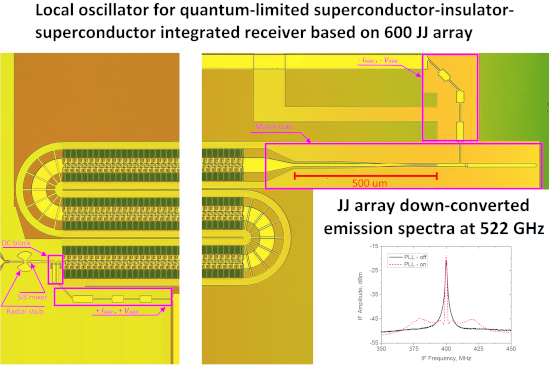
- , Moscow Region, 141701, Russian Federation 10.3762/bjnano.16.158 Abstract In this paper we present the results of the development, fabrication, measurements, and analysis of terahertz-range oscillators based on Josephson junction arrays embedded into the central electrode of a coplanar line. The
- , demonstrating the possibility of generating frequencies from 150 to 800 GHz with power ranging from 0.2 to 10 μW. In recent papers [38][39], we have suggested a new type of JJ arrays where the junctions are embedded into the central electrode of the coplanar transmission line (CPW). For a local oscillator in a
- heterodyne receiver, continuous frequency tuning is crucial. For this reason, the junctions are spaced at distances much smaller than the wavelength. We suppose that the choice of such topology where the array is in the central electrode of the CPW enabled the synchronization between the junctions by high


Optical bio/chemical sensors for vitamin B12 analysis in food and pharmaceuticals: state of the art, challenges, and future outlooks
Beilstein J. Nanotechnol. 2025, 16, 2207–2244, doi:10.3762/bjnano.16.153
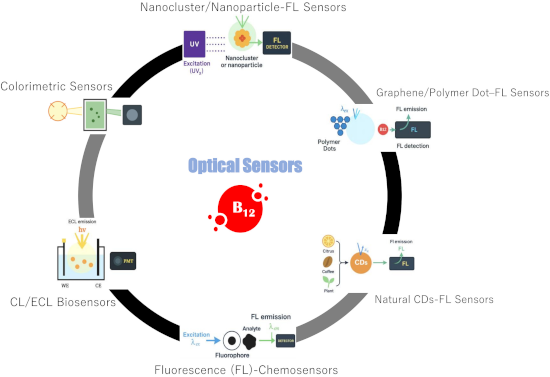
- photons (light) when they return to their ground state [97]. In contrast, electrochemiluminescence (ECL) sensors integrate electrochemical and chemiluminescent principles. The light-emitting reaction is started by applying an electrical voltage that triggers redox reactions on the electrode surface. Here
- , the recognition relies on analyte–electrode interactions, the electrode or surface-bound luminophore acts as the indicator, and the signal is the electrochemically induced light emission. These reactions generate excited states that emit light as they relax back to lower energy levels [98]. Therefore
- hydrogen peroxide (H2O2). The H2O2 is electrochemically produced in real-time by utilizing a negative bias to an electrode, which converts dissolved oxygen in the flow cell. The linear range, LOD, and RSD for the detection of VB12 were 0.001–10 mg/L, 0.0035 mg/L, and less than 3.5%, respectively [102


Electron transport through nanoscale multilayer graphene and hexagonal boron nitride junctions
Beilstein J. Nanotechnol. 2025, 16, 2132–2143, doi:10.3762/bjnano.16.147
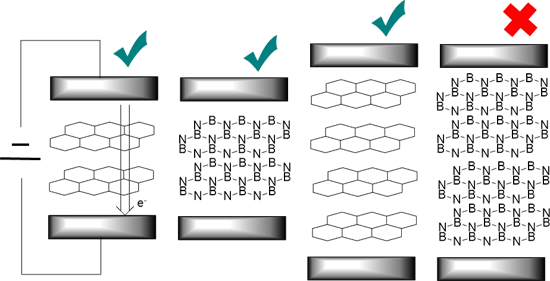
- enabled us to extrapolate trends for electron transport in thicker multilayer carbon and h-BN materials. Keywords: NEGF; DFT; nano-junction; Introduction Multilayer graphene nanomaterials exhibit interesting electronic properties and find application in battery electrode materials [1], electrocatalysis
- in far-ultraviolet light-emitting devices. These applications leverage h-BN’s properties like high temperature stability, electrical insulation, and chemical resistance [18][20][21]. An interesting application of multilayer h-BN is its deposition on electrode surfaces as an electron blocking layer
- which the current through the device quantum levels is estimated [28]. In this work, we approach the quantum transport through metal/multilayer graphene/metal nanojunctions and compare it to the transport through metal/multilayer h-BN/metal nanojunctions. The choice of the metal electrode is platinum as


Calibration of piezo actuators and systems by dynamic interferometry
Beilstein J. Nanotechnol. 2025, 16, 2086–2091, doi:10.3762/bjnano.16.143
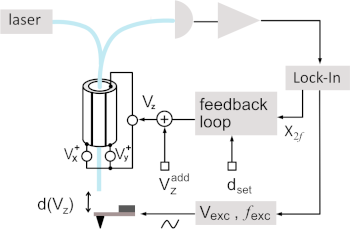
- long as the respective stabilization loop of interferometer alignment is active [16], this adjustment is maintained even in the presence of drift or piezo creep by the automatic adjustment of the voltage applied between the fiber tube piezo inner electrode and the common potential of the tube piezo
- thickness, respectively. According to the widely used convention, the piezo tube is poled so that a negative potential applied to the inner electrode Vz,f < 0 results in an extension ΔL > 0 that translates into a reduction of the cavity length Δd = derr = −ΔL < 0. From d31 and the geometry parameters of the


Laser ablation in liquids for shape-tailored synthesis of nanomaterials: status and challenges
Beilstein J. Nanotechnol. 2025, 16, 1963–1997, doi:10.3762/bjnano.16.137





Quantum circuits with SINIS structures
Beilstein J. Nanotechnol. 2025, 16, 1931–1941, doi:10.3762/bjnano.16.134
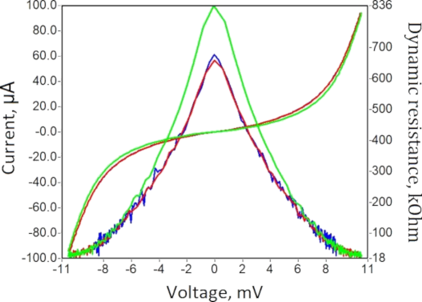
- nanostructure consisting of a T-shaped normal metal electrode (copper), an insulating tunnel layer (aluminum oxide), and a superconducting fork (aluminum), Figure 2a. Tunnel junction size is 0.2 × 0.2 µm, loop area 2, 4, 8, or 10 µm2. The transport characteristics of the fabricated interferometers were studied
- quasiparticles out of the normal electrode, which leads to electron cooling, as in a Peltier element. In a single SINIS structure, it is possible to reduce the electron temperature from 260 to 90 mK [31]. Cascaded NIS coolers can be efficient refrigerators for cooling from 1 K to below 100 mK [32]. One of the


Phytol-loaded soybean oil nanoemulsion as a promising alternative against Leishmania amazonensis
Beilstein J. Nanotechnol. 2025, 16, 1826–1836, doi:10.3762/bjnano.16.126

- analyses, samples were appropriately diluted at a 1:100 (v/v) ratio. Assessment of hydrogenic potential (pH) The pH value was determined by the potentiometric method by inserting the electrode (Digimed, mod. DM-22) directly into the samples. In this assay, the NE were used in triplicates at room


Piezoelectricity of layered double hydroxides: perspectives regarding piezocatalysis and nanogenerators
Beilstein J. Nanotechnol. 2025, 16, 1812–1817, doi:10.3762/bjnano.16.124

- authors’ claims have been excluded from the table and the figure but left in the text. A Ni/Fe-LDH piezoelectric nanogenerator was used to charge an asymmetric supercapacitor made from the as-prepared Ni/Fe-LDH and biomass-derived activated carbon as the positive and negative electrode [7]. The Ni/Fe-LDH

Multifunctional anionic nanoemulsion with linseed oil and lecithin: a preliminary approach for dry eye disease
Beilstein J. Nanotechnol. 2025, 16, 1711–1733, doi:10.3762/bjnano.16.120
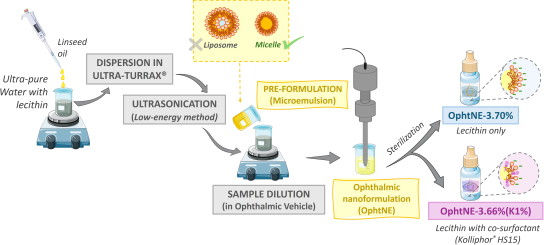
- digital pH meter (HI2221, Hanna Instruments, BR) equipped with a calibrated glass electrode and a temperature sensor. The electrode and sensor were immersed in the samples, and pH readings were recorded once the measurements stabilized. Transmission electron microscopy The morphology of the nanoemulsions



Ambient pressure XPS at MAX IV
Beilstein J. Nanotechnol. 2025, 16, 1677–1694, doi:10.3762/bjnano.16.118
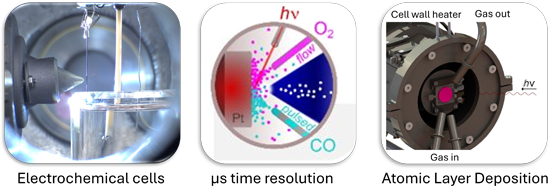
- electrochemical (EC) cell; a liquid microjet is also used to a smaller extent. In the EC setup, a three-electrode setup is immersed and retracted from a beaker of liquid electrolyte, forming a thin, electrochemically active meniscus on the working electrode that can be probed using APXPS or XAS, see Figure 1
- APXPS measurements at the vapor pressure of the electrolyte. This method is used mostly for corrosion studies. In the second case, the potential is held during the XPS analysis, and a thin electrolyte film (meniscus) is maintained at the interface of the working electrode (WE) during measurement. This
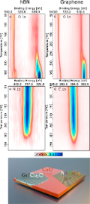
- thick liquid films can be used to infer charge transfer processes, since the emitted kinetic energy of a photoelectron is dependent on the potential of the probed liquid relative to the grounded working electrode [69][70]. Specifically, the interfaces of gold, copper oxide, and LiNi1/3Mn1/3Co1/3O2 with





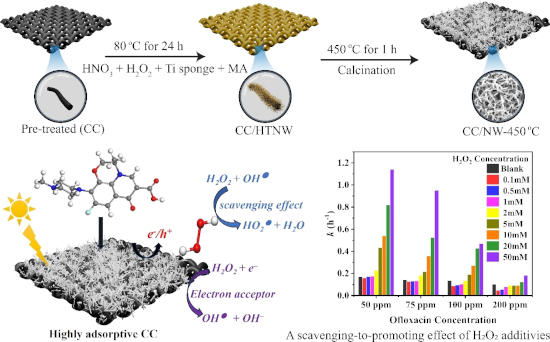
Photocatalytic degradation of ofloxacin in water assisted by TiO2 nanowires on carbon cloth: contributions of H2O2 addition and substrate absorbability
Beilstein J. Nanotechnol. 2025, 16, 1567–1579, doi:10.3762/bjnano.16.111
- % acetic acid in ultrapure water, with a flow rate set at 1.0 mL·min−1 and an injection volume of 10 μL. Every hour, 0.2 mL of OFL solution was sampled. The photocurrent was tested using a three-electrode system on an electrochemical workstation (CHI600E, Shanghai Chenhua), in which the carbon cloth (2 cm
- × 2 cm in size) was taken as working electrode, the Pt electrode as counter electrode (3 cm × 3 cm in size), and a saturated calomel electrode as reference electrode; the electrolyte is 0.5 mol/L aqueous Na2SO4 solution. No bias potential was applied for the photocurrent evaluations. Results and





