


Search results
Search for "environmental impact" in Full Text gives 40 result(s) in Beilstein Journal of Nanotechnology.
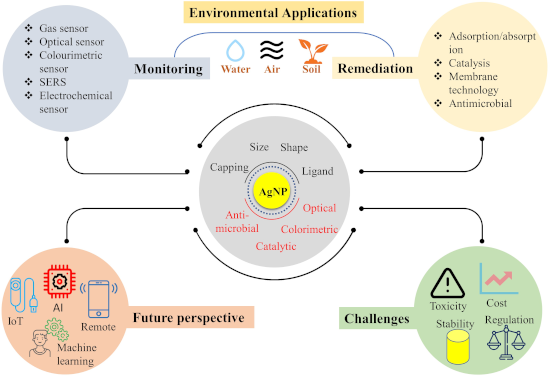
Environmental applications of silver nanoparticles: state-of-the-art review and emerging trends
Beilstein J. Nanotechnol. 2026, 17, 697–736, doi:10.3762/bjnano.17.49


Cellulose as a photocatalyst support material: extraction, structural features, and environmental applications
Beilstein J. Nanotechnol. 2026, 17, 635–652, doi:10.3762/bjnano.17.44
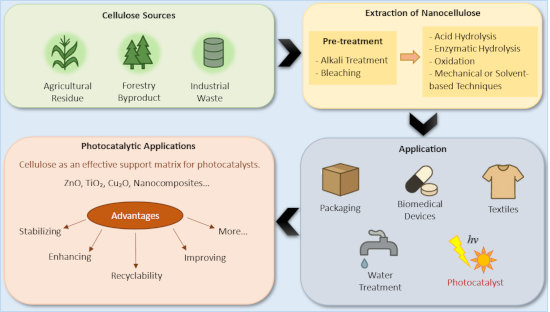
- oxidation [41] or using mild acid hydrolysis in combination with steam explosion [25]. These integrated approaches help balance speed, cost, and environmental impact while at the same time improving the overall quality and performance of the extracted CNCs. Comparison among methods. To fully assess these
- extraction methods, we must transition from a small-scale synthesis to commercial manufacturing that requires balancing yield and particle quality against environmental impact, reagent costs, and energy consumption. Despite its significant environmental drawbacks, sulfuric acid hydrolysis remains the major
- cellulose nanofibers as a highly promising alternative. Unlike plastic, this nano-paper is more environmentally sustainable because it originates from natural materials, while its unique fibrous nanocellulose structure not only reduces environmental impact but also introduces new functionalities that can


Beam shaping techniques for pulsed laser ablation in liquids: Unlocking tunable control of nanoparticle synthesis in liquids
Beilstein J. Nanotechnol. 2026, 17, 309–342, doi:10.3762/bjnano.17.22
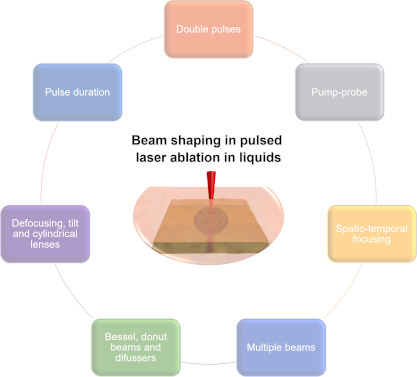
- indeed eco-friendly and offer advantages like low toxicity and reduced environmental impact; however, they generally offer less control over NP properties. Moreover, other physical methods such as milling, pyrolysis, sputtering, and arc discharge, or gas-phase processes such as flame spray pyrolysis or







From shield to spear: Charge-reversible nanocarriers in overcoming cancer therapy barriers
Beilstein J. Nanotechnol. 2026, 17, 159–175, doi:10.3762/bjnano.17.10
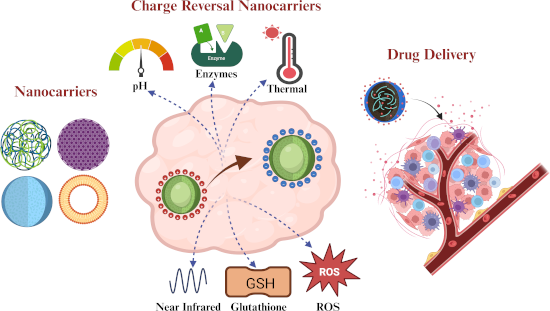
- , comprehensive environmental impact assessments are vital to promote safe, ethical, and sustainable applications of CRNs in clinical practice. 6 Future perspectives Future development of charge-reversible nanocarriers must prioritize translating proof-of-concept systems into clinically viable drug delivery


Functional surface engineering for cultural heritage protection: the role of superhydrophobic and superoleophobic coatings – a comprehensive review
Beilstein J. Nanotechnol. 2026, 17, 63–96, doi:10.3762/bjnano.17.6

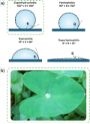
- safety through the replacement of hazardous BTA with less toxic inhibitors, with partial but promising reversibility. Importantly, the latter study also explicitly integrated sustainability by reducing environmental impact through nontoxic additives and light stabilizers, thus moving closer to fulfilling





Current status of using adsorbent nanomaterials for removing microplastics from water supply systems: a mini review
Beilstein J. Nanotechnol. 2025, 16, 1837–1850, doi:10.3762/bjnano.16.127
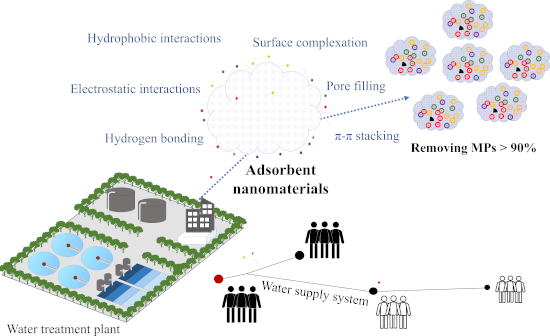
- in anti-fouling technologies can enhance nanomaterial reusability, reducing costs and environmental impact. Although there are problems, such as the high cost of MOFs, their low stability in powder form, and the lack of standard tests for assessing nanomaterial toxicity [117]. Additionally, the long
- challenge; thus, pilot-scale studies and field trials are crucial to assess the practicality, cost-effectiveness, and environmental impact of nanomaterials in various water treatment settings. Evaluating the potential toxicity, bioaccumulation, and environmental persistence of nanomaterials is vital to


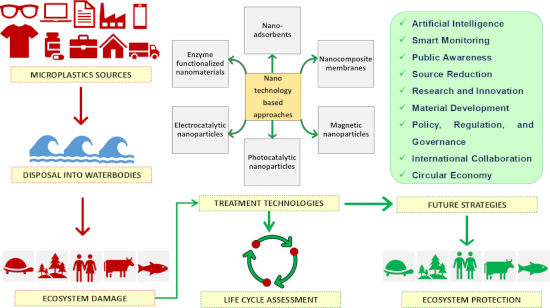
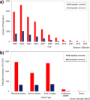
Nanotechnology-based approaches for the removal of microplastics from wastewater: a comprehensive review
Beilstein J. Nanotechnol. 2025, 16, 1607–1632, doi:10.3762/bjnano.16.114


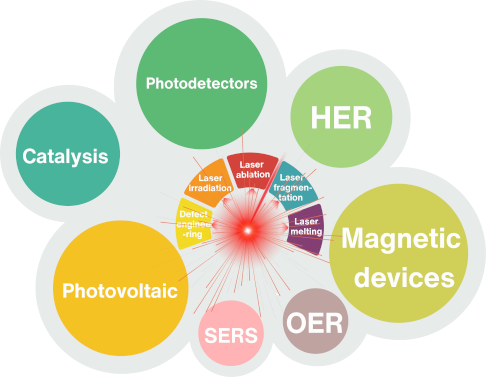
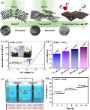
Laser processing in liquids: insights into nanocolloid generation and thin film integration for energy, photonic, and sensing applications
Beilstein J. Nanotechnol. 2025, 16, 1428–1498, doi:10.3762/bjnano.16.104




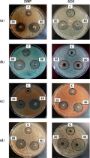


Colloidal few layered graphene–tannic acid preserves the biocompatibility of periodontal ligament cells
Beilstein J. Nanotechnol. 2025, 16, 664–677, doi:10.3762/bjnano.16.51
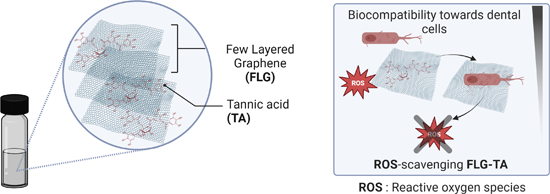
- and environmental impact, limiting their practical use [10][11][14]. This has sparked growing interest in more sustainable and biocompatible alternatives. Tannic acid (TA), a naturally derived polyphenolic compound, has shown promise as a bio-derived surfactant for graphene exfoliation [14][15





Quantification of lead through rod-shaped silver-doped zinc oxide nanoparticles using an electrochemical approach
Beilstein J. Nanotechnol. 2025, 16, 422–434, doi:10.3762/bjnano.16.33
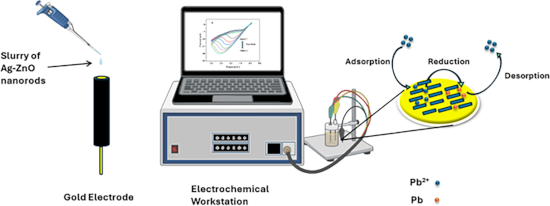
- , environmental impact, can cause electrode corrosion, enhances interference, and is incompatible with real-life or biological samples. Therefore, PBS with pH 7 has been used for electrochemical studies since it provides a stable pH, which is crucial for maintaining consistent electrochemical conditions during
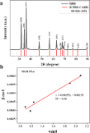


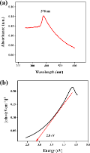


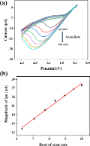
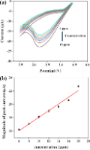

Engineered PEG–PCL nanoparticles enable sensitive and selective detection of sodium dodecyl sulfate: a qualitative and quantitative analysis
Beilstein J. Nanotechnol. 2025, 16, 385–396, doi:10.3762/bjnano.16.29
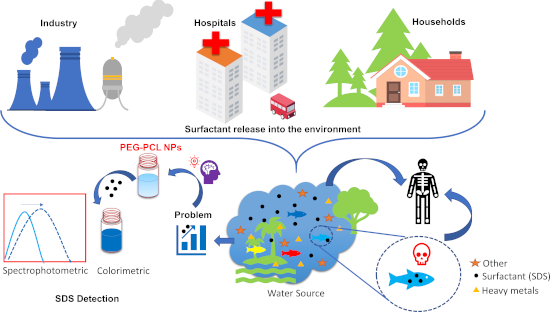
- need to develop qualitative and quantitative methods for its detection. The SDS estimation is necessary due to its harmful environmental impact, as its use has significantly increased. Exposure to varying concentrations of sodium dodecyl sulfate elicited morphological alterations in the kidney and


A review of metal-organic frameworks and polymers in mixed matrix membranes for CO2 capture
Beilstein J. Nanotechnol. 2025, 16, 155–186, doi:10.3762/bjnano.16.14
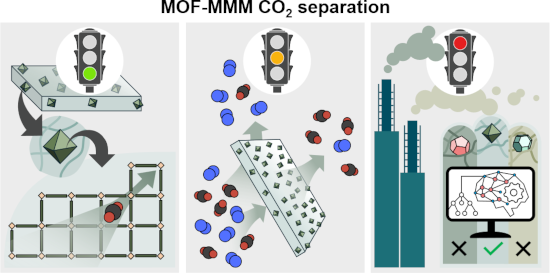
- unprecedented climate change with profound ecological and environmental consequences [1]. Therefore, the urgency of mitigating the environmental impact of elevated CO2 levels raises a strong motivation to achieve large-scale reduction of CO2 emissions [2]. In this context, CO2 capture processes have received




Quantum-to-classical modeling of monolayer Ge2Se2 and its application in photovoltaic devices
Beilstein J. Nanotechnol. 2024, 15, 1153–1169, doi:10.3762/bjnano.15.94
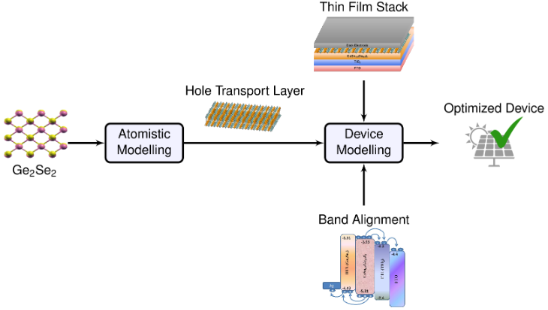
- theory; hole transport layer; optical properties; solar cells; Introduction Reducing fossil fuels and their harmful environmental impact requires improvements in green, sustainable energy sources. Among the various sources of green energy generation, solar energy has been identified as the most




Electrospun polysuccinimide scaffolds containing different salts as potential wound dressing material
Beilstein J. Nanotechnol. 2024, 15, 781–796, doi:10.3762/bjnano.15.65
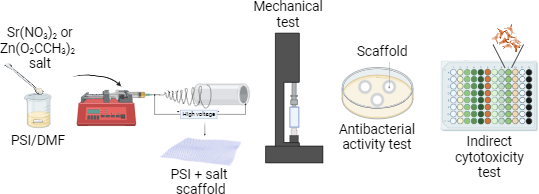
- polymeric scaffold containing polysuccinimide (PSI) and antibacterial salts. Antibacterial agents for therapeutical purposes mostly contain silver ions which are associated with high environmental impact and, in some cases, may cause undesired immune reactions. In our work, we prepared nanofibrous systems
- to apply silver ions, which are frequently used in clinical practice. However, they can cause a large environmental burden [26][27] and, in some cases, allergies [28]. Since urgent actions are needed to stop AMR and avoid the negative environmental impact, developing other agents and treatment



Green synthesis of biomass-derived carbon quantum dots for photocatalytic degradation of methylene blue
Beilstein J. Nanotechnol. 2024, 15, 755–766, doi:10.3762/bjnano.15.63
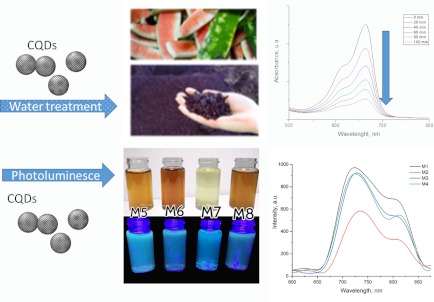
- to provide a greener and more efficient solution for wastewater treatment in the textile industry, reducing environmental impact and conserving clean water resources. This research represents a significant step towards addressing water pollution caused by the textile industry, and highlights the


Mixed oxides with corundum-type structure obtained from recycling can seals as paint pigments: color stability
Beilstein J. Nanotechnol. 2023, 14, 467–477, doi:10.3762/bjnano.14.37
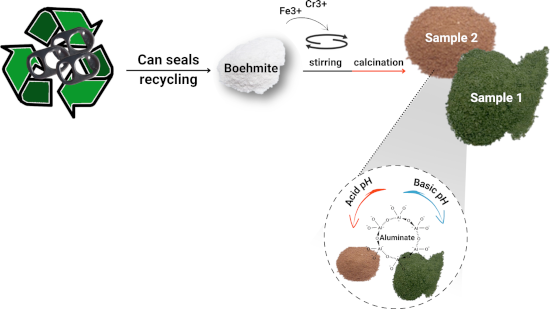
- a reduction to 5% in greenhouse gas emissions compared to the direct synthesis, reducing the environmental impact. Besides, one ton of recycled aluminium saves up to eight metric tons of bauxite [3][4]. The amount of recycled aluminium packaging depends on individual national recycling policies




Non-stoichiometric magnetite as catalyst for the photocatalytic degradation of phenol and 2,6-dibromo-4-methylphenol – a new approach in water treatment
Beilstein J. Nanotechnol. 2022, 13, 1531–1540, doi:10.3762/bjnano.13.126
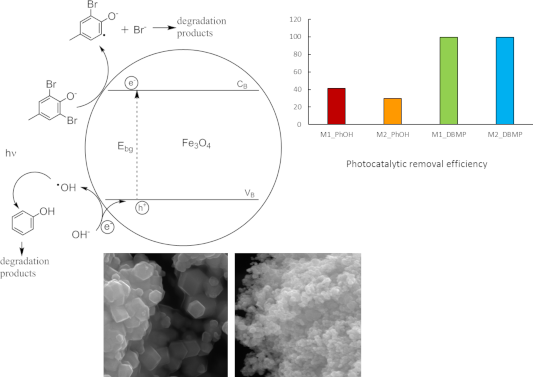
- environmental impact. The progress of the reaction was monitored by measuring the organic compound concentration. In order to determine the efficiency of the photocatalytic process, the organic compounds were also degradated through ozonolysis. Results and Discussion The selected catalysts were characterized by


Progress and innovation of nanostructured sulfur cathodes and metal-free anodes for room-temperature Na–S batteries
Beilstein J. Nanotechnol. 2021, 12, 995–1020, doi:10.3762/bjnano.12.75
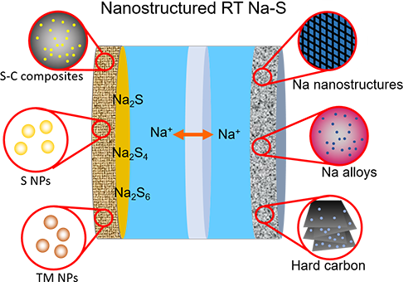
- The revival of Na–S batteries has triggered enormous research within this field. Important drivers are, besides the high theoretical capacity and energy density values, aspects of sustainability, environmental impact, and geo-economic concerns. Sodium and sulfur are amongst the most abundant elements





The role of deep eutectic solvents and carrageenan in synthesizing biocompatible anisotropic metal nanoparticles
Beilstein J. Nanotechnol. 2021, 12, 924–938, doi:10.3762/bjnano.12.69
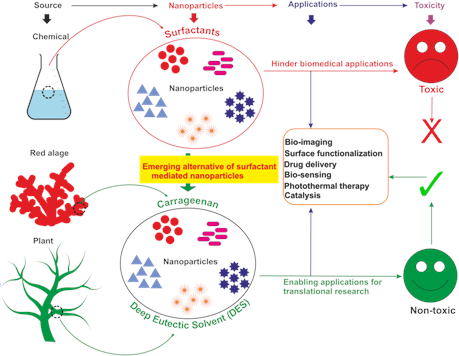
- of CTAB-capped gold nanorods on estuarine model systems (consisting of sediments, plants, microbial films, fish, and snails) for observing ecological and environmental impact [71]. The results showed that the biofilms were the primary route through which gold nanorods enters the food chain. It is


ZnO and MXenes as electrode materials for supercapacitor devices
Beilstein J. Nanotechnol. 2021, 12, 49–57, doi:10.3762/bjnano.12.4
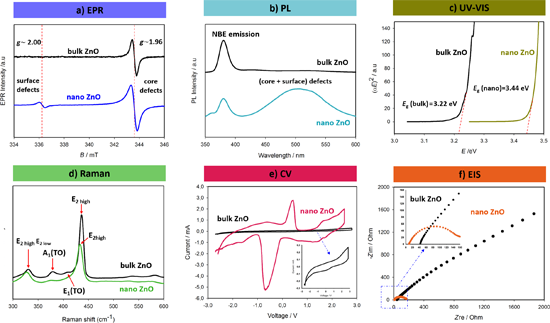
- MXenes as electrode material for their use in supercapacitor devices. MXenes as electrode material in supercapacitors Today, there is a great interest in renewable energy sources, such as solar and wind, for various reasons, such as the depletion of fossil fuels and the smaller environmental impact [15
Antimicrobial metal-based nanoparticles: a review on their synthesis, types and antimicrobial action
Beilstein J. Nanotechnol. 2020, 11, 1450–1469, doi:10.3762/bjnano.11.129
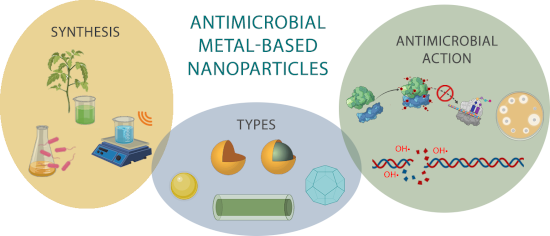
- received significant attention regarding their low environmental impact compared to other procedures [12][13]. There are different routes in which the green synthesis methods are applied through the use of microorganisms and plants in a safe, efficient, and profitable manner [14]. Different types of metal
- synthesis method, which is attracting much attention lately due to its reduced environmental impact. Most nanoparticles are based on metal and metal-oxide compounds, and the strategies used to control their delivery and to increase their antimicrobial activity have been related to the use of silica


Recent progress in perovskite solar cells: the perovskite layer
Beilstein J. Nanotechnol. 2020, 11, 51–60, doi:10.3762/bjnano.11.5

- continue to emerge [63]. Although some progress on the stability and scalability has been made, these two issues will still be the main challenges of commercializing PSCs in the future. In addition, the environmental impact of lead pollution from Pb-based perovskite materials also limits the large-scale


Nontoxic pyrite iron sulfide nanocrystals as second electron acceptor in PTB7:PC71BM-based organic photovoltaic cells
Beilstein J. Nanotechnol. 2019, 10, 2238–2250, doi:10.3762/bjnano.10.216
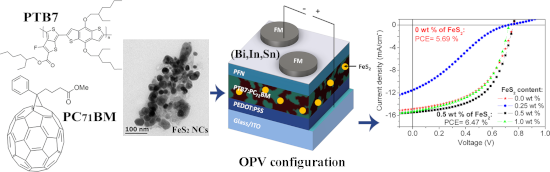
- have been widely studied due to their advantages such as low-cost, easy fabrication, flexibility, low environmental impact and semitransparency [21][22][23]. Nowadays, OPVs have already achieved a power conversion efficiency (PCE) of 17.3% in the tandem architecture [24]. Also, commercial OPV panels


Tailoring the stability/aggregation of one-dimensional TiO2(B)/titanate nanowires using surfactants
Beilstein J. Nanotechnol. 2019, 10, 1024–1037, doi:10.3762/bjnano.10.103
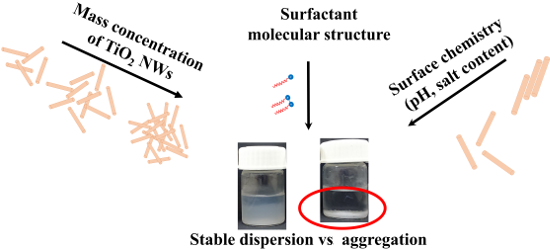
- environmental impact. Due to their high abundance in aqueous environments and their rich technological applicability, surfactants are among the most interesting compounds used for tailoring the stability. The aim of this paper is to determine the influence of surfactant molecular structure on TNW stability


Outstanding chain-extension effect and high UV resistance of polybutylene succinate containing amino-acid-modified layered double hydroxides
Beilstein J. Nanotechnol. 2019, 10, 684–695, doi:10.3762/bjnano.10.68
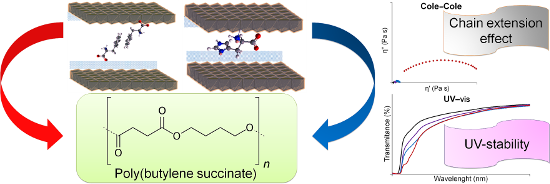
- ]. LDHs are considered to be “green” and low environmental impact fillers [12], biocompatible [13] and food compatible [14]. Indeed the choice of organo-modified LDH using amino acids, and among them the protein-building amino acids, has already been demonstrated [15]. Having in mind that UV stabilization





