Search results
Search for "gain" in Full Text gives 466 result(s) in Beilstein Journal of Nanotechnology. Showing first 200.
Synthesis and characterization of RF-sputtered ZnTe/Cu2−xTe thin films for solar cell applications
Beilstein J. Nanotechnol. 2026, 17, 1016–1027, doi:10.3762/bjnano.17.69
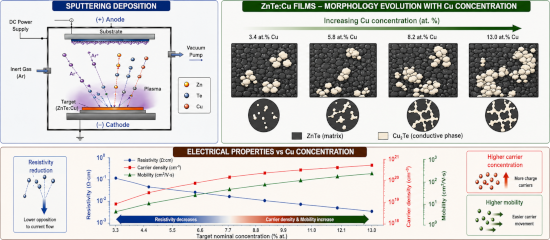
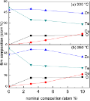
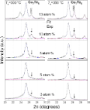
- enhanced crystallinity at higher substrate temperature. A more detailed analysis was performed around the main diffraction peak corresponding to the (111) plane of the cubic phase and the (200) plane of the hexagonal phase (Figure 3), in order to gain deeper insight into the structural modifications



Materials challenges in solid-state sensors for continuous monitoring of ions in water
Beilstein J. Nanotechnol. 2026, 17, 935–973, doi:10.3762/bjnano.17.66
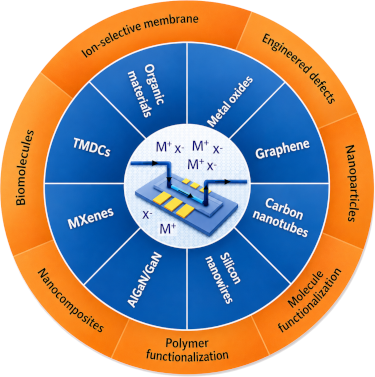
- , thereby enabling high transduction gain from small adsorption events [106]. The active layer of an electrochemical electrode should provide high electrochemical activity with efficient ion and electron transport, ensuring fast charge/discharge kinetics. It must also maintain chemical stability and


Nanocarrier strategies to overcome P-glycoprotein-mediated drug resistance in cancer therapy
Beilstein J. Nanotechnol. 2026, 17, 882–921, doi:10.3762/bjnano.17.64
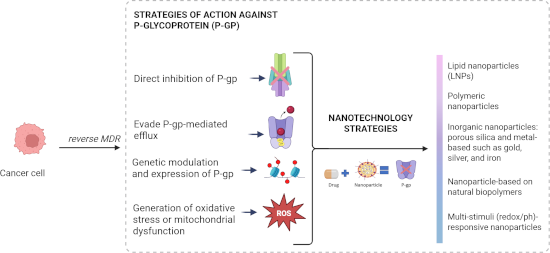
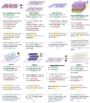
- microenvironment (e.g., acidic pH or elevated levels of reactive oxygen species (ROS)), to gain access to tumor cells. By entering through these routes, they may initially evade recognition by membrane-associated P-gp. However, once the drug is released into the cytosol, subsequent prevention of drug efflux


Nanoparticle delivery systems for HIV pre-exposure prophylaxis (PrEP): advances and challenges
Beilstein J. Nanotechnol. 2026, 17, 839–853, doi:10.3762/bjnano.17.60
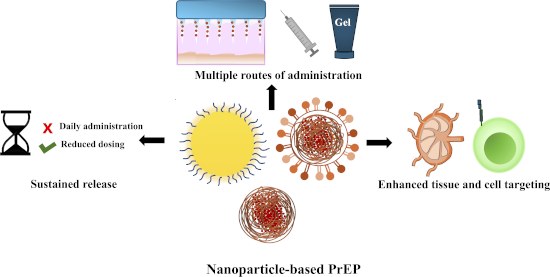
- gain in versatility that benefits the optimization of targeting and delivery properties. In closing, we summarize the versatility of nanoparticle applications for PrEP by highlighting selected examples from the four reviewed nanoparticle categories in Table 2. Nanoparticle-enhanced administration and


Tuning the electronic properties of defect-rich MoS2
Beilstein J. Nanotechnol. 2026, 17, 796–805, doi:10.3762/bjnano.17.56
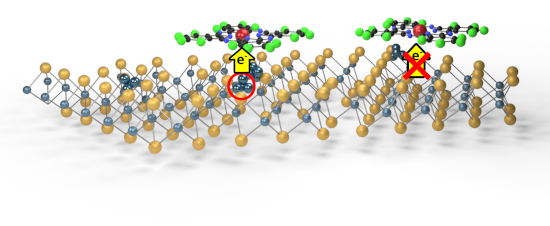
- CoPcF16 coverage (see Figure 2a–c), the largest intensity is observed at grazing beam incidence (θ = 25°) at feature A. Changing the angle of incidence to 45° and 90° strongly diminishes the intensity of feature A, while the features B1 and B2 gain relative intensity. Increasing the CoPcF16 thickness has


afspm: A framework for manufacturer-agnostic automation in scanning probe microscopy
Beilstein J. Nanotechnol. 2026, 17, 653–667, doi:10.3762/bjnano.17.45
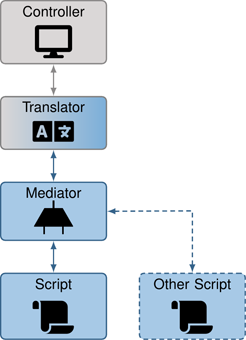
- , No Control”). At this point, a standard script can request and gain control of the microscope (“No Problem, In Control”). If there are no other scripts monitoring for experiment problems, the whole experiment may reside in this state. If a monitoring script exists and a problem is detected, it may
- configuring spectroscopies (the physical position where it is to be run), and configuring the z-height feedback (the proportional and integral gain parameters and setpoint value). Table 3 lists the generic data structures all microscope translators are expected to publish to connected processes and their
- Problem, No Control” state to “No Problem, In Control” when a script solving no specific problem requests control. If a problem is flagged, control is dropped and we transition to “Problem, No Control”. A script able to resolve the flagged problem can gain control, transitioning to “Problem, In Control




Probing internal continua and atomic ultrafast charge transfer within size-controlled nanoparticles by post-collision interaction in core-hole clock spectroscopy
Beilstein J. Nanotechnol. 2026, 17, 505–514, doi:10.3762/bjnano.17.33
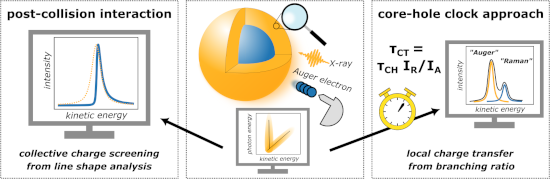
- higher kinetic energies at photon energies close to the resonance. While asymmetries towards lower kinetic energies are typical for photoemission spectroscopy and are readily explained by various energy loss processes, this kind of behavior requires some process resulting in energy gain. Typically, the
- different photon energies strongly suggests that the observed variations are indeed the result of a size-dependent process. To gain further insight into the PCI effect, we modeled the observed evolution of the asymmetry parameter as a function of the particle size. As previously discussed, the strength of
- states to gain or loose variable amounts of energy, which makes a continuous shift of the energy distribution possible. The fully established theoretical description of PCI in a vacuum continuum can be applied to a bound continuum like the conduction band by modifying the vacuum model of PCI through the



Defects and defect-mediated engineering of two-dimensional materials: challenges and open questions
Beilstein J. Nanotechnol. 2026, 17, 454–488, doi:10.3762/bjnano.17.31
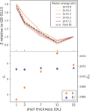
- next years, such investigations are likely to happen, and we can expect to gain deep insight into the physics of the created defects and defect arrays using high-resolution STS. However, it is obvious that the method lacks scalability. At least today, it is hard to envision how using an STM tip a





Interconnection morphology effects on the radio frequency response of carbon nanotube sponges
Beilstein J. Nanotechnol. 2026, 17, 343–351, doi:10.3762/bjnano.17.23
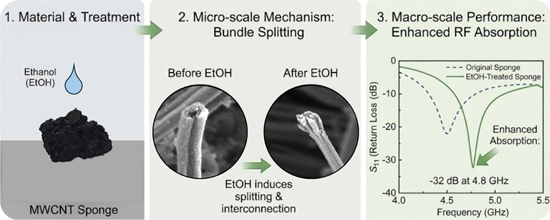
- , also an actual performance gain. The antenna built from CNSs shows an enhanced response gain compared with that of the MWCNT film, with both antennas having a maximum positioned around 4.8 GHz. After identifying the best CNT-based sample, the experiment focused on improving the CNS antenna’s response
- study on SWCNT antennas built on flexible substrates measured slight changes in the radiation efficiency gain from 80.0% for flat to 83.7% for bent configurations, demonstrating that CNTs are suitable for applications requiring non-standard shapes and surfaces [13]. MWCNTs possess larger physical
- increased from 0.5 to 5.0 μm, the gain changed from 14% up to 70% [19]. MWCNTs were also mixed with conductive polymers [20][21] or with metals [22], showing sizeable improvements in the response. More recently, a novel material based on a 3D self-standing CNT assembly, often denoted as carbon nanotube



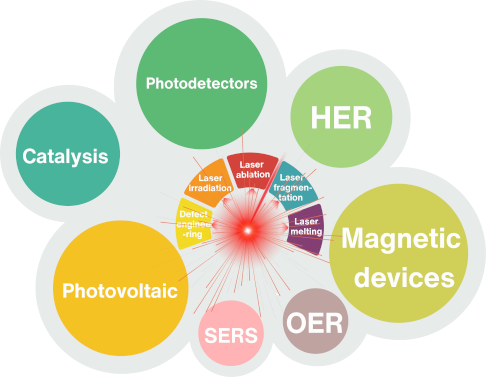
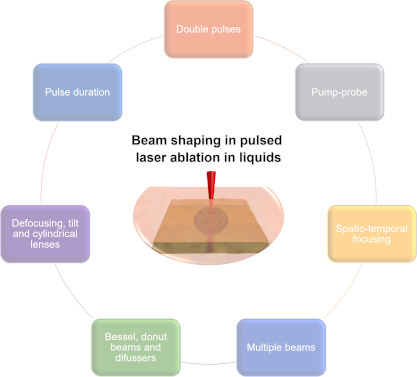
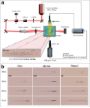
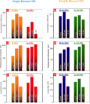
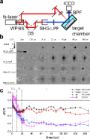
Beam shaping techniques for pulsed laser ablation in liquids: Unlocking tunable control of nanoparticle synthesis in liquids
Beilstein J. Nanotechnol. 2026, 17, 309–342, doi:10.3762/bjnano.17.22







Fast vortex dynamics and relaxation times in NbRe-based heterostructures
Beilstein J. Nanotechnol. 2026, 17, 292–302, doi:10.3762/bjnano.17.20
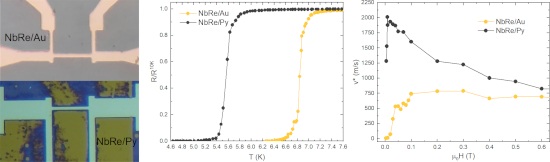
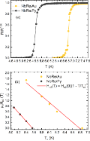
- magnetic field, HSAT, that is, the field beyond which the jumps disappear and the transition to the normal state occurs smoothly. The values are = 0.9 T and = 1.2 T. To gain insight into the pinning mechanism at play, the behavior of the critical current density Jc = Ic/wd as a function of the external


Comparative study on 3D morphologies of delignified, single tracheids and fibers of five wood species
Beilstein J. Nanotechnol. 2026, 17, 239–250, doi:10.3762/bjnano.17.16
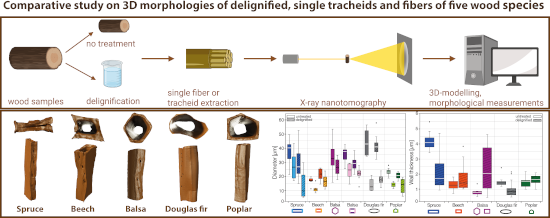
- applications [18][20][21], investigating the hierarchical structures in fibers and tracheids across different wood species and treatments is essential. By studying delignified fibers and tracheids, one can gain insights into the specific roles of lignin in maintaining tracheid shape, arrangement, and


Micro- and nanoscale effects in biological and bioinspired materials and surfaces
Beilstein J. Nanotechnol. 2026, 17, 214–217, doi:10.3762/bjnano.17.14

- ] provided insights into biological plant materials combining experiments with simulations that provide inspiration for biomimetic actuators. For animals, Jain et al. [20] applied a multiscale computational model to gain detailed insights into the molecular and mechanical behavior of gecko setae during
Safe and sustainable by design with ML/AI: A transformative approach to advancing nanotechnology
Beilstein J. Nanotechnol. 2026, 17, 176–185, doi:10.3762/bjnano.17.11
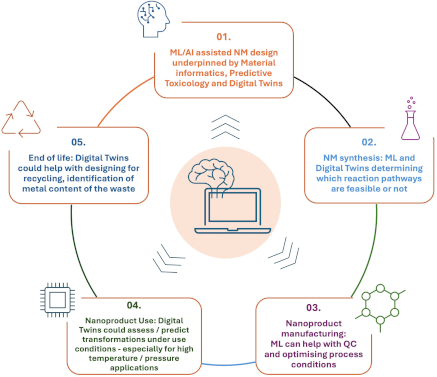
- new-approach methodologies or NAMs), and which include in silico (computational) assessment, can fully “open the box”, revealing mechanistic drivers and enabling establishment of dose-response relationships, read-across, and other insights that allows regulators to gain a deeper understanding in


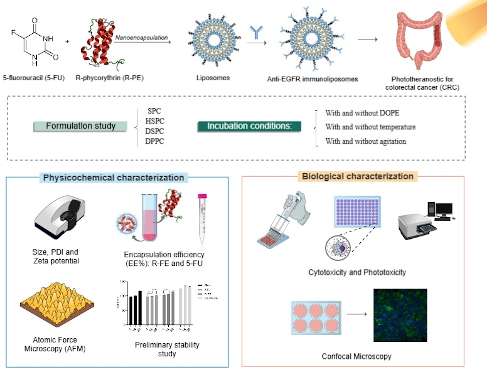
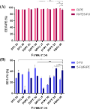
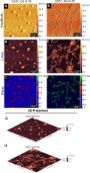
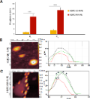
Development and in vitro evaluation of liposomes and immunoliposomes containing 5-fluorouracil and R-phycoerythrin as a potential phototheranostic system for colorectal cancer
Beilstein J. Nanotechnol. 2026, 17, 97–121, doi:10.3762/bjnano.17.7



Terahertz-range on-chip local oscillator based on Josephson junction arrays for superconducting quantum-limited receivers
Beilstein J. Nanotechnol. 2025, 16, 2296–2305, doi:10.3762/bjnano.16.158
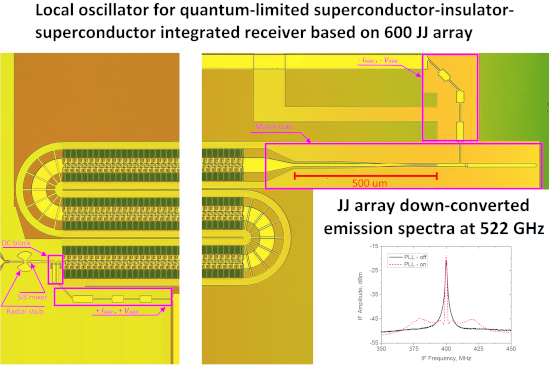
- junctions have ultimate characteristics unreachable to devices based on other principles [1][2][3]. The unique nonlinearity of the current–voltage characteristic (IVC) near the gap voltage of the junction enables the gain of the intermediate frequency (IF) signal after mixing with the radiation from the


Quality by design optimization of microemulsions for topical delivery of Passiflora setacea seed oil
Beilstein J. Nanotechnol. 2025, 16, 2116–2131, doi:10.3762/bjnano.16.146
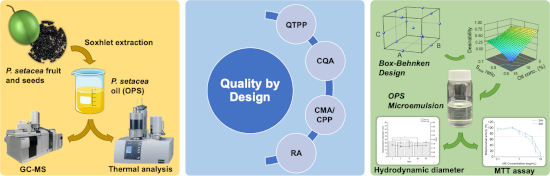
- , potentially offsetting the proliferative effects typically observed in keratinocytes such as HaCaT cells [2][52][53]. To gain a more comprehensive understanding of the therapeutic potential of OPS and its ME formulation in wound healing and topical applications, it is crucial to extend cytocompatibility


Stereodiscrimination of guests in chiral organosilica aerogels studied by ESR spectroscopy
Beilstein J. Nanotechnol. 2025, 16, 2034–2054, doi:10.3762/bjnano.16.140
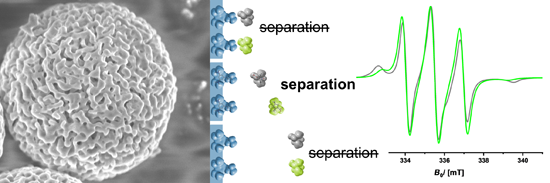
- , theoretical methods have helped to gain deeper insights, but there is still a gap in experimental data. Different experimental methods are used to investigate transport in porous media. Chromatography itself has to be counted as one method that delivers information about the macroscopic properties of a




Low-temperature AFM with a microwave cavity optomechanical transducer
Beilstein J. Nanotechnol. 2025, 16, 1873–1882, doi:10.3762/bjnano.16.130
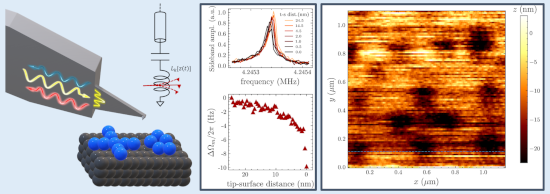
- of roughly 67 s/line. The choice of the integral gain is crucial for optimal surface tracking. Too large values of integral gain result in an overly responsive feedback that introduces noise on the topographic image and feedback oscillations. Too low values can lead to instability or loss of surface


Further insights into the thermodynamics of linear carbon chains for temperatures ranging from 13 to 300 K
Beilstein J. Nanotechnol. 2025, 16, 1818–1825, doi:10.3762/bjnano.16.125
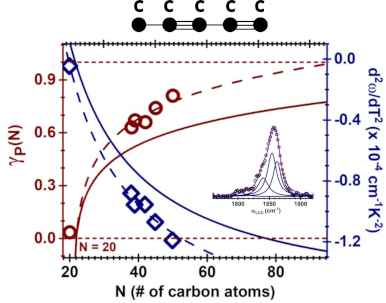
- phonons, and gain and loss of energy of carriers [1][2][10][17][24][25][26][27][28]. The phonon lifetime as well as the selection rules behind ph–ph and e–ph interactions determine the efficiency of such phonon emission and absorption [1][2][10][17][24][25][26][27][28]. Phonons need to be in an excited


![[Graphic 23]](/bjnano/content/inline/2190-4286-16-125-i25.svg?max-width=637&scale=1.18182)
Beyond the bilayer: multilayered hygroscopic actuation in pine cone scales
Beilstein J. Nanotechnol. 2025, 16, 1695–1710, doi:10.3762/bjnano.16.119
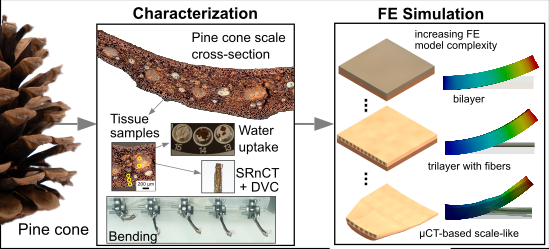
- threshold, a more nuanced study of the differences in water uptake between tissues is required to gain a better understanding of motion actuation. Quan et al. [24] also measured the gravimetric water uptake, revealing a hysteresis between uptake and evaporation, but without distinguishing between the scale


Ambient pressure XPS at MAX IV
Beilstein J. Nanotechnol. 2025, 16, 1677–1694, doi:10.3762/bjnano.16.118
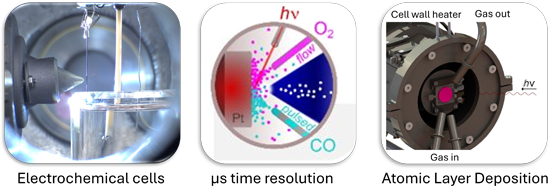
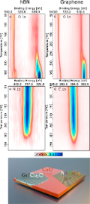
- is largely derived from ex situ surface analysis using XPS and scanning tunneling microscopy. However, the findings of UHV-XPS do not accurately represent the genuine passive film/electrolyte interface. APXPS is essential to observe the onset and progression of corrosion and to gain a fundamental





Cross-reactivities in conjugation reactions involving iron oxide nanoparticles
Beilstein J. Nanotechnol. 2025, 16, 1504–1521, doi:10.3762/bjnano.16.106
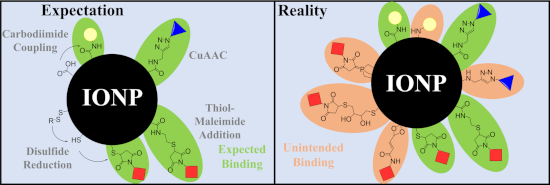
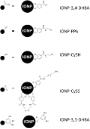
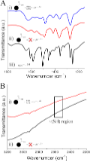
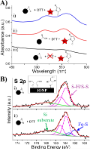
- correct, but does not tell the whole story. Interactions with IONP-3,5-DHBA To gain further insight into the nature of the interactions between amines, thiols, maleimides and the IONP surface, we performed EDC/NHS coupling controls with PPA and CySH, using IONP-3,5-DHBA. We chose the 3,5-DHBA ligand







Nanomaterials for biomedical applications
Beilstein J. Nanotechnol. 2025, 16, 1499–1503, doi:10.3762/bjnano.16.105
- be developed so that patients can access innovations safely. For these materials to be successfully used, it will be important for scientists, doctors, and regulators to communicate openly and gain the trust of the public. Nanomaterials may prove to be highly important in shaping the future of
Laser processing in liquids: insights into nanocolloid generation and thin film integration for energy, photonic, and sensing applications
Beilstein J. Nanotechnol. 2025, 16, 1428–1498, doi:10.3762/bjnano.16.104