


Search results
Search for "high spatial resolution" in Full Text gives 90 result(s) in Beilstein Journal of Nanotechnology.
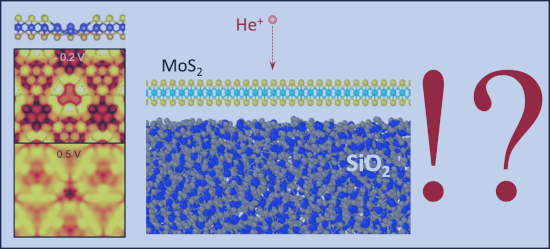
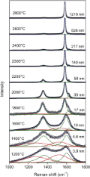
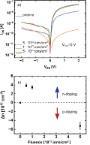
Defects and defect-mediated engineering of two-dimensional materials: challenges and open questions
Beilstein J. Nanotechnol. 2026, 17, 454–488, doi:10.3762/bjnano.17.31





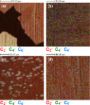
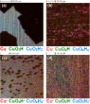
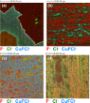
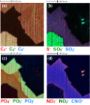
Time of flight secondary ion mass spectrometry imaging of contaminant species in chemical vapour deposited graphene on copper
Beilstein J. Nanotechnol. 2026, 17, 200–213, doi:10.3762/bjnano.17.13
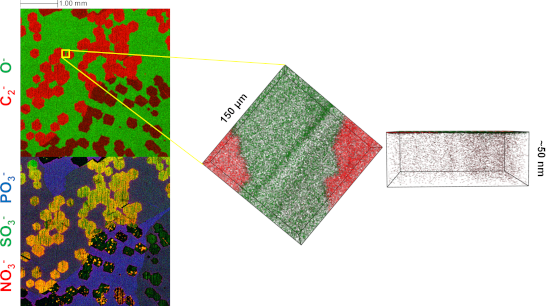
- characterisation techniques with the ability to distinguish different chemical species present, combined with surface sensitivity and suitably high spatial resolution. We here focus on time-of-flight secondary ion mass spectrometry (ToF-SIMS) imaging of Cu-catalysed graphene CVD samples. ToF-SIMS offers high





Internal 3D temperature mapping in biological systems using ratiometric light-sheet imaging and lipid-coated upconversion nanothermometers
Beilstein J. Nanotechnol. 2025, 16, 2306–2316, doi:10.3762/bjnano.16.159
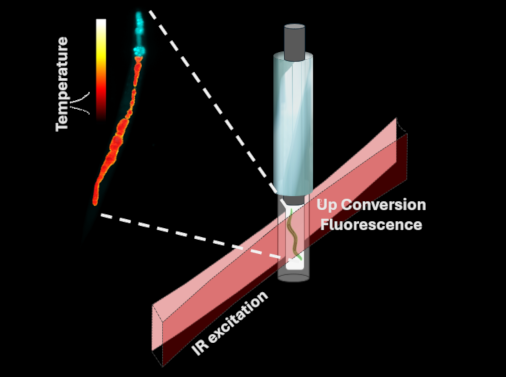
- ability to map temperature with high spatial resolution is a critical tool for probing disease mechanisms, potentially aiding in diagnostics and therapeutic evaluation. To address these limitations, luminescent nanomaterial-based thermometers (LNTs) have emerged as promising alternatives for biological


Evaluating metal-organic precursors for focused ion beam-induced deposition through solid-layer decomposition analysis
Beilstein J. Nanotechnol. 2025, 16, 1942–1951, doi:10.3762/bjnano.16.135
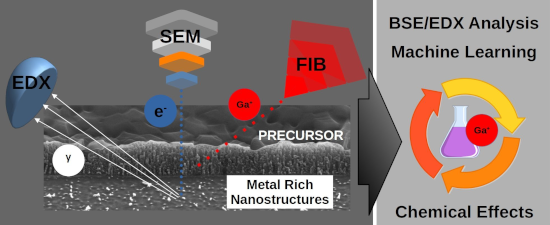
- or ion beam-induced deposition (FEBID/FIBID) allows for the precise fabrication of two- and three-dimensional nanostructures with well-defined shapes and dimensions ranging from 5 to 10 nm [1][5][6][7][8][9][10]. This high spatial resolution is achieved by precisely controlling the position and
- the fabrication or modification of cantilevers in AFM and scanning optical near-field microscopy, and as plasmonic materials [15][16][17][18][19]. FEBID/FIBID techniques combine the advantages of direct-write lithographic processes, for example, high spatial resolution, site-specificity, no need for


Parylene-coated platinum nanowire electrodes for biomolecular sensing applications
Beilstein J. Nanotechnol. 2025, 16, 1392–1400, doi:10.3762/bjnano.16.101
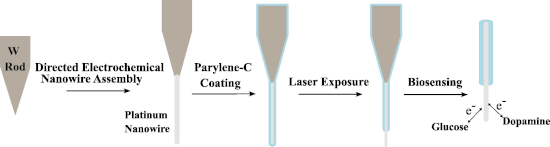
- advantage makes them suitable for biosensing applications with high spatial resolution involving single cells. The morphology and functionality of the electrodes were characterized through elemental analysis and copper deposition, demonstrating their capability for effective surface modification. Results


Automated collection and categorisation of STM images and STS spectra with and without machine learning
Beilstein J. Nanotechnol. 2025, 16, 1367–1379, doi:10.3762/bjnano.16.99
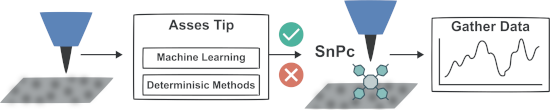
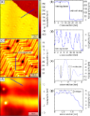
- Dylan Stewart Barker Adam Sweetman School of Physics and Astronomy, University of Leeds, Leeds LS2 9JT, United Kingdom 10.3762/bjnano.16.99 Abstract Atomic resolution scanning probe microscopy, and in particular scanning tunnelling microscopy (STM) allows for high-spatial-resolution imaging and
- properties of surfaces and molecules with atomic precision. This opens up the ability to map the local density of states (LDOS) of a sample with high spatial resolution [1][2][3]. Peaks within a map of the LDOS correspond to increases in conductance at specific bias values, revealing the energy levels of key
- misshaped tips cause averaging of contributions over larger areas, reducing the spatial resolution and potentially blending the electronic features between different sites. However, even for tips with high spatial resolution, different tip structures and probe terminations are known to influence these




Nanostructured materials characterized by scanning photoelectron spectromicroscopy
Beilstein J. Nanotechnol. 2025, 16, 700–710, doi:10.3762/bjnano.16.54
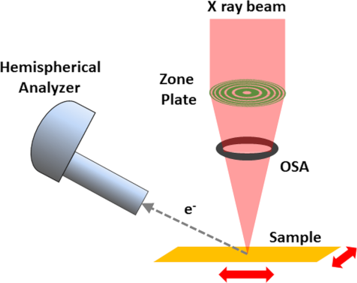
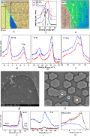
- high spatial resolution. We correlate that to the chemical surface composition, distinguishing between surface and bulk effects on the path towards improved surface properties of nanowire solar cells with further enhanced efficiency. Furthermore, they demonstrate the large suitability of SPEM for


Nanoscale capacitance spectroscopy based on multifrequency electrostatic force microscopy
Beilstein J. Nanotechnol. 2025, 16, 637–651, doi:10.3762/bjnano.16.49

- method for nanoscale capacitance characterization at arbitrary frequencies above the second cantilever resonance. Besides a high spatial resolution, the key advantage of the multifrequency approach of MFH-EFM is that it measures the second-order capacitance gradient at almost arbitrary frequencies




Bolometric IR photoresponse based on a 3D micro-nano integrated CNT architecture
Beilstein J. Nanotechnol. 2024, 15, 1030–1040, doi:10.3762/bjnano.15.84
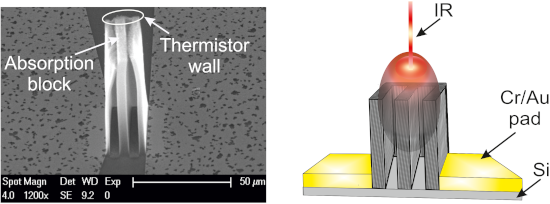
- integration techniques make it important for real-time broadband imaging systems. Keywords: 3D micro-nano architecture; blackbody absorption; CNT microbolometer; high responsivity; high spatial resolution; Introduction Non-cryogenic infrared (IR) microbolometers represent a cutting-edge technology with


AFM-IR investigation of thin PECVD SiOx films on a polypropylene substrate in the surface-sensitive mode
Beilstein J. Nanotechnol. 2024, 15, 603–611, doi:10.3762/bjnano.15.51
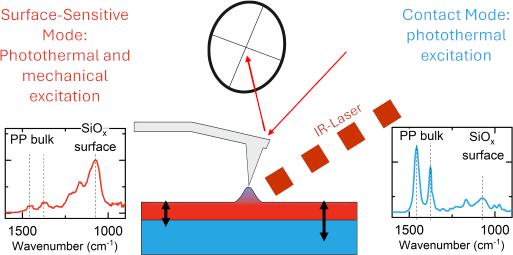
- Photothermal AFM-IR nanospectroscopy is a technique that combines the chemical information from infrared (IR) spectroscopy with the high spatial resolution of atomic force microscopy (AFM). For this, the sample is illuminated with a tunable IR laser [1]. When a suitable IR wavelength is chosen, resonant


Stiffness calibration of qPlus sensors at low temperature through thermal noise measurements
Beilstein J. Nanotechnol. 2024, 15, 580–602, doi:10.3762/bjnano.15.50
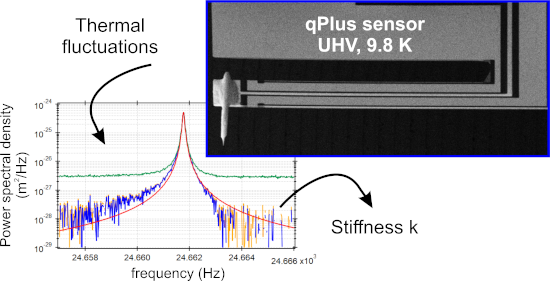
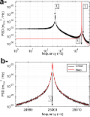
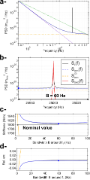
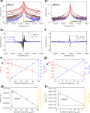
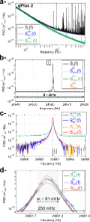
- possible to quantify the interatomic interaction forces that develop between the tip and the surface acquired in spectroscopic data cube modes [7][8] with both high sensitivity and high spatial resolution. Recently, the force sensitivity has been pushed forward, and forces as low as 100 fN have been

Graphene removal by water-assisted focused electron-beam-induced etching – unveiling the dose and dwell time impact on the etch profile and topographical changes in SiO2 substrates
Beilstein J. Nanotechnol. 2024, 15, 190–198, doi:10.3762/bjnano.15.18
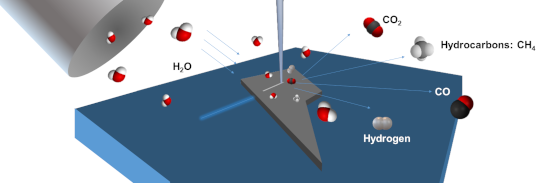
- , the data reveal phenomena emerging from electron-induced interactions of adsorbed water molecules with SiO2, which have not been reported up to now. We observe that at low electron doses, the method provides a high spatial resolution and induces a low amount of defects in nonexposed areas of graphene


TEM sample preparation of lithographically patterned permalloy nanostructures on silicon nitride membranes
Beilstein J. Nanotechnol. 2024, 15, 1–12, doi:10.3762/bjnano.15.1
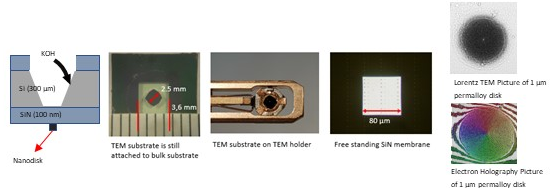
- –iron alloy (80 atom % Ni and 20 atom % Fe) that has a small coercive field (Hc) [17] and low magnetostriction (λs) [18], as well as high permeability and high saturation magnetization (Ms) [19]. TEM offers high spatial resolution for magnetic imaging. TEM-based magnetic imaging techniques such as


Dual-heterodyne Kelvin probe force microscopy
Beilstein J. Nanotechnol. 2023, 14, 1068–1084, doi:10.3762/bjnano.14.88
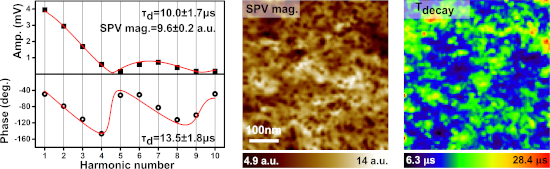
- dynamics (i.e., decay time-constant). In turn, this experiment confirms that DHe-KPFM allows an ac-demodulated imaging of the SPV (to within the K1 scalar constant) with a very high spatial resolution (a lateral resolution of a few nanometres has been achieved according to image cross-sections, not shown
- lower density of non-percolating PC71BM clusters (delaying the SPV decay less). Imaging weak surface photovoltage signals: CsPbBr3 nanosheets on HOPG We have just seen that images of SPV magnitude and dynamics can be obtained with high spatial resolution. In this final section, we will show that DHe




Industrial perspectives for personalized microneedles
Beilstein J. Nanotechnol. 2023, 14, 857–864, doi:10.3762/bjnano.14.70
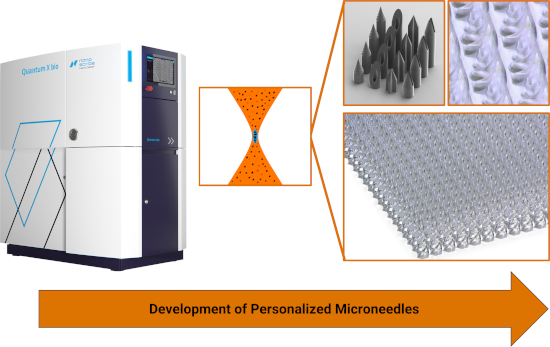
- dimensions with high spatial resolution, which lends itself to continuous rather than discrete printing [59][61]. A key result of 2PP grayscale printing is that the technique is, on average, five to ten times faster than the common 2PP layer-by-layer approach [52]. Thiel et al. successfully applied 2GL® to


Cross-sectional Kelvin probe force microscopy on III–V epitaxial multilayer stacks: challenges and perspectives
Beilstein J. Nanotechnol. 2023, 14, 725–737, doi:10.3762/bjnano.14.59
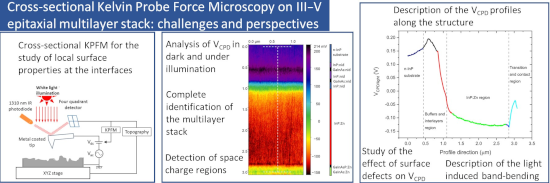
- the overall VOC. Nevertheless, these considerations need further investigations and further support from modelling. Conclusion In this contribution, it is shown that KPFM under ambient conditions is a valuable tool to investigate III–V multilayer stacks with high spatial resolution of down to 20 nm


The steep road to nonviral nanomedicines: Frequent challenges and culprits in designing nanoparticles for gene therapy
Beilstein J. Nanotechnol. 2023, 14, 351–361, doi:10.3762/bjnano.14.30

- throughput and high spatial resolution (in parallel) should be considered as best practice for the purposes of accuracy, statistical relevance, and comparisons between studies. An in-depth mechanistic understanding of NP uptake will be required to improve the design of NP-based delivery platforms. The sole

High–low Kelvin probe force spectroscopy for measuring the interface state density
Beilstein J. Nanotechnol. 2023, 14, 175–189, doi:10.3762/bjnano.14.18
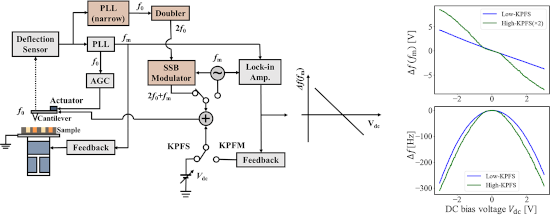
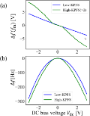
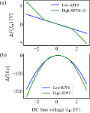
- of the effects of semiconductor interface states with high spatial resolution using high and low AC bias frequencies compared with the cutoff frequency of the carrier transfer between the interface and bulk states. Information on the energy spectrum of the interface state density is important for
- known as a method that can measure the contact potential difference (CPD) between a tip and a sample with high spatial resolution [4][5]. KPFM is based on the detection of the electrostatic force between a tip and a sample using atomic force microscopy (AFM) [6][7][8]. CPD and topographic measurements



Characterisation of a micrometer-scale active plasmonic element by means of complementary computational and experimental methods
Beilstein J. Nanotechnol. 2023, 14, 110–122, doi:10.3762/bjnano.14.12
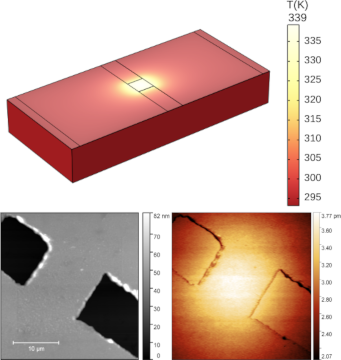
- method therefore investigates the thermal response of this active plasmonic element at a high spatial resolution. Knowledge of the distribution leads to predictions on how the near field will be locally affected, which is key for understanding the behaviour of the active plasmonic element. The heating




Studies of probe tip materials by atomic force microscopy: a review
Beilstein J. Nanotechnol. 2022, 13, 1256–1267, doi:10.3762/bjnano.13.104
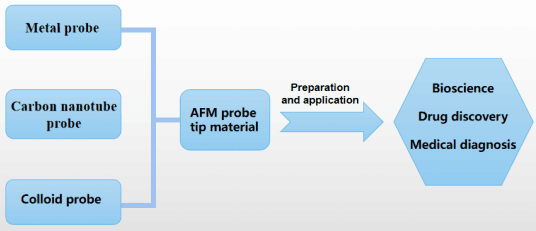
- structure [37][38]. Due to these unique properties, CNT-AFM probes offer a longer lifetime, high spatial resolution, and unprecedented sensitivity than their conventional silicon counterparts. Carbon nanotubes are generally prepared by assembled and grown methods. Assembled carbon nanotube probe Nishijima
A cantilever-based, ultrahigh-vacuum, low-temperature scanning probe instrument for multidimensional scanning force microscopy
Beilstein J. Nanotechnol. 2022, 13, 1120–1140, doi:10.3762/bjnano.13.95
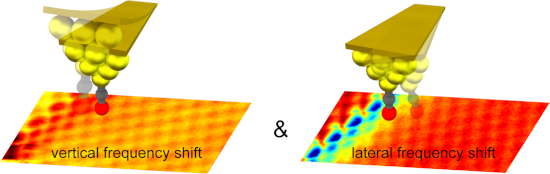
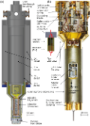
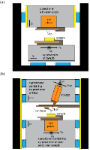
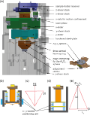
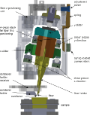
- not limited by detector noise at room temperature. Such an extremely high force derivative sensitivity is key for MFM experiments with high spatial resolution (and also to minimize the influence of the tip stray field on the sample by employing low magnetic moment tips). In addition, such a





Theranostic potential of self-luminescent branched polyethyleneimine-coated superparamagnetic iron oxide nanoparticles
Beilstein J. Nanotechnol. 2022, 13, 82–95, doi:10.3762/bjnano.13.6
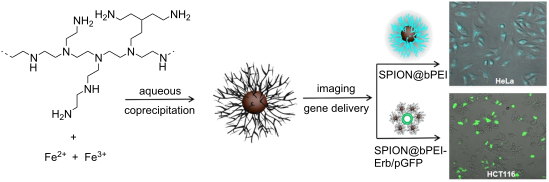
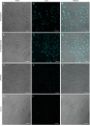
- growing demand for a combination of different imaging modalities to improve the detection limit and to provide image-guided therapies [41][42]. Both MRI and optical imaging are noninvasive imaging modalities. Magnetic resonance imaging provides high spatial resolution but lacks sensitivity. Optical




A review of defect engineering, ion implantation, and nanofabrication using the helium ion microscope
Beilstein J. Nanotechnol. 2021, 12, 633–664, doi:10.3762/bjnano.12.52
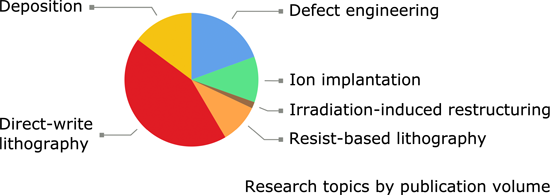
- , namely site-specific ion-enhanced etching with high spatial resolution. Similarly, site-selective etching of MoS2 has been demonstrated using helium ion irradiation to create defective regions that become activated for oxygen adsorption and subsequent oxidative etching when heated in air [68]. Helium ion


A review on nanostructured silver as a basic ingredient in medicine: physicochemical parameters and characterization
Beilstein J. Nanotechnol. 2021, 12, 440–461, doi:10.3762/bjnano.12.36
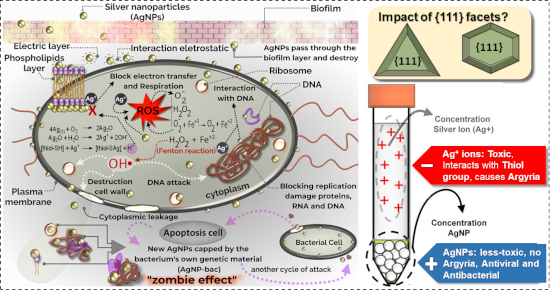
- complementary way, the size, distribution, shape heterogeneity, morphology, dispersion, and aggregation can be directly evaluated via TEM in which the high spatial resolution facilitates the investigation of the electronic structure and chemical composition [156]. However, the disadvantages other than the


Intracranial recording in patients with aphasia using nanomaterial-based flexible electronics: promises and challenges
Beilstein J. Nanotechnol. 2021, 12, 330–342, doi:10.3762/bjnano.12.27
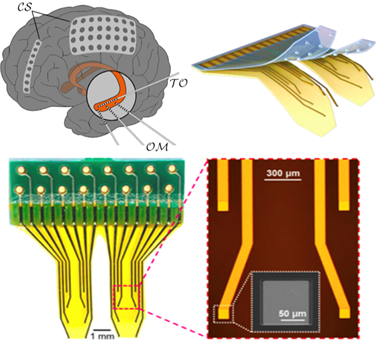
- data from patients who suffered from pharmacoresistant focal epilepsies [45]. ECoG offers high spatial resolution. The ECoG grid and strip electrodes can cover a large area of the cortex, and as many as 100–200 electrodes can be used [42]. However, in actual applications, the clinical needs of the





