


Search results
Search for "optics" in Full Text gives 283 result(s) in Beilstein Journal of Nanotechnology. Showing first 200.
Restorative potential of laser-synthesized silver nanoparticles with Salvia officinalis for periodontal disease treatment: an in vitro study
Beilstein J. Nanotechnol. 2026, 17, 781–795, doi:10.3762/bjnano.17.55
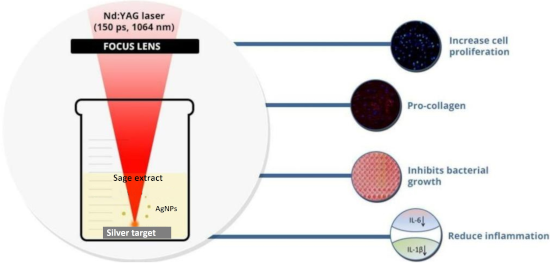
- mg·L−1 ± SD. The hydrodynamic diameters (dH) of the obtained nanoparticles were analyzed by using the dynamic light scattering (DLS) technique using a Zetasizer NanoZS90 (Malvern Panalytical, UK) with a 633 nm He–Ne laser source and 90° detection optics. The measurements were performed in disposable



Impacts of annealing on structural and photophysical properties of zinc phthalocyanine adsorbed on graphene
Beilstein J. Nanotechnol. 2026, 17, 576–585, doi:10.3762/bjnano.17.39
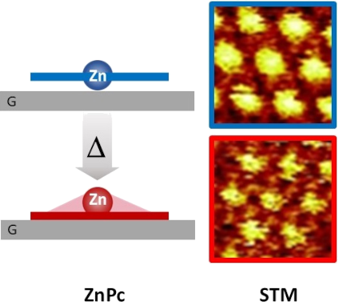
- resolved absorption Absorption spectra at various incidence angles were recorded on a QE-Pro Ocean Optics spectrophotometer. White light (MWWHL4, ThorLabs) was expanded and collimated using an achromatic doublet (AC254-100-A-ML, ThorLabs). Then, a diaphragm was used to obtain a beam size of 1 mm diameter


Beam shaping techniques for pulsed laser ablation in liquids: Unlocking tunable control of nanoparticle synthesis in liquids
Beilstein J. Nanotechnol. 2026, 17, 309–342, doi:10.3762/bjnano.17.22
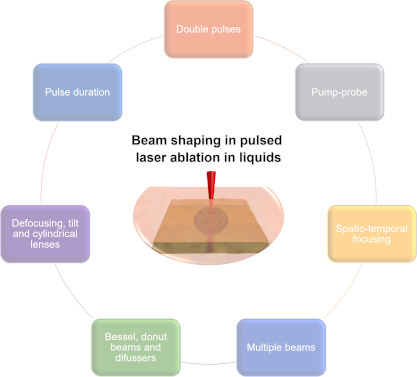
- synthesis and the underlying optical mechanisms including its influence on ablation efficiency, size control, and colloidal stability. Refractive elements rely on the interaction of light with a transparent material with a different refractive index than air. Standard refractive optics elements such as
- lenses often suffer from aberrations and can introduce temporal pulse broadening due to the wavelength dependence of the refractive index. Alternative refractive optics technologies include dynamic lenses and freeform optics (both in refraction and reflection) [100]. Unlike traditional lenses, freeform
- optics can generate complex and exotic light structures that go beyond simple focusing, allowing for custom-shaped intensity distributions at the target. This technology permits the creation of arbitrary beam shapes, enabling more intricate control of the laser interaction with the material, which is







Multilayered hyperbolic Au/TiO2 nanostructures for enhancing the nonlinear response around the epsilon-near-zero point
Beilstein J. Nanotechnol. 2026, 17, 251–261, doi:10.3762/bjnano.17.17
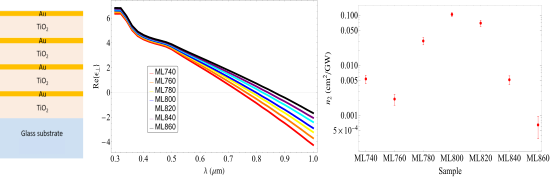
- Fernando Arturo Araiza-Sixtos Mauricio Gomez-Robles Rafael Salas-Montiel Raul Rangel-Rojo Department of Optics, Applied Physics Division, Centro de Investigación Científica y de Educación Superior de Ensenada, B.C., México Laboratoire Lumière, nanomatériaux, nanotechnologies - L2n CNRS UMR 7076
- , a value that is comparable to other ENZ materials in literature. Keywords: epsilon-near-zero (ENZ); hyperbolic metamaterials; nonlinear optics (NLO); Introduction In recent years, the invention of new techniques to fabricate nanostructured materials led to the creation of metamaterials. These new


Micro- and nanoscale effects in biological and bioinspired materials and surfaces
Beilstein J. Nanotechnol. 2026, 17, 214–217, doi:10.3762/bjnano.17.14

- Chimica, Biologia e Biotecnologie, University of Perugia, Via Elce di Sotto 8, 06121 Perugia, Italy 10.3762/bjnano.17.14 Keywords: adhesion; bioengineering; functional morphology; material properties; medical coatings; microstructures; nanostructures; optics; structure–function relationships; Micro- and
Structure-dependent thermochromism of PAZO thin films: theory and experiment
Beilstein J. Nanotechnol. 2026, 17, 186–199, doi:10.3762/bjnano.17.12
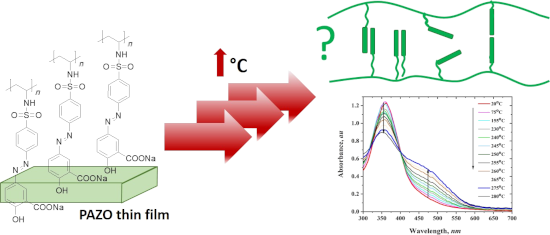
- chemical resistance, making them ideal for specialized applications [3]. Their cost-effectiveness, lightness, flexibility, and unique physical and chemical characteristics make them suitable for a wide range of industry applications including energy, optics, sensors, and microelectronics. The properties of
- ) and the spectrophotometer (Ocean Optics) detector system (Figure 10А). Birefringence measurement A classic setup with a polarimeter, as shown in Figure 10B, was used to measure birefringence. This setup included a light source, a polarizer, a birefringent sample, and a polarimeter to measure the


Internal 3D temperature mapping in biological systems using ratiometric light-sheet imaging and lipid-coated upconversion nanothermometers
Beilstein J. Nanotechnol. 2025, 16, 2306–2316, doi:10.3762/bjnano.16.159
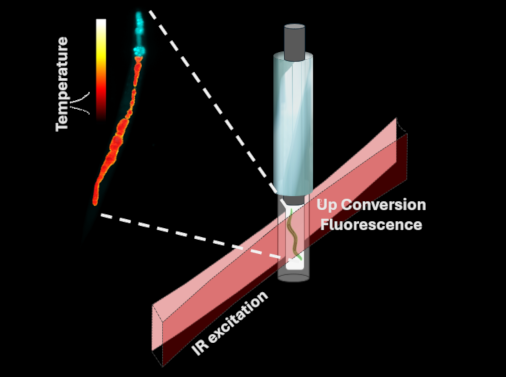
- figure stand for cylindrical optics (1), sample (2), collection objective (3), and optical filter set (4). Figure 3 was adapted from [40] (© 2023 D. Barron-Ortiz et al., published by MDPI, distributed under the terms of the Creative Commons Attribution 4.0 International License, https


Chiral plasmonic nanostructures fabricated with circularly polarized light
Beilstein J. Nanotechnol. 2025, 16, 2245–2264, doi:10.3762/bjnano.16.154
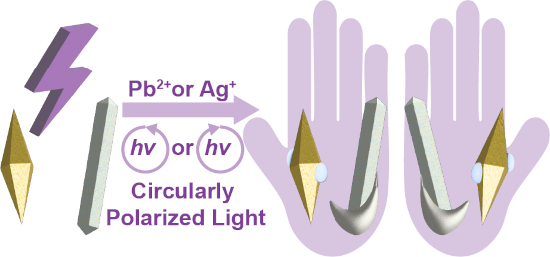
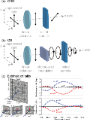
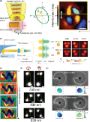
- Applications based on the circular differential extinction of cPNSs The strong interaction between cPNSs and CPL makes them ideal for polarization optics [27][136][137]. Figure 9a shows an example of a broadband circular polarizer made with arrays of Au helices. CPL illuminating the metamaterial with the same
- ]. Ohmic losses and the high fabrication cost of large-scale cPNSs pose potential challenges for their use in polarizers or photodetectors. CPL-induced cPNSs are promising for reducing the fabrication costs of polarization optics based on plasmonic nanostructures. The ohmic loss can be partly mitigated by





Calibration of piezo actuators and systems by dynamic interferometry
Beilstein J. Nanotechnol. 2025, 16, 2086–2091, doi:10.3762/bjnano.16.143
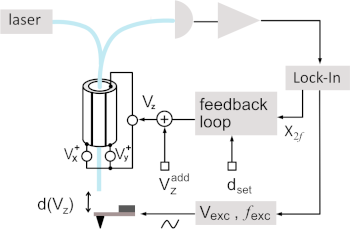
- parts with high accuracy. This is commonly accomplished by piezo actuators, for instance, in the form of tube piezos for positioning the tip or optics. For their calibration, we propose an approach based on the dynamic response signal from a fiber interferometer used for cantilever displacement


Ambient pressure XPS at MAX IV
Beilstein J. Nanotechnol. 2025, 16, 1677–1694, doi:10.3762/bjnano.16.118
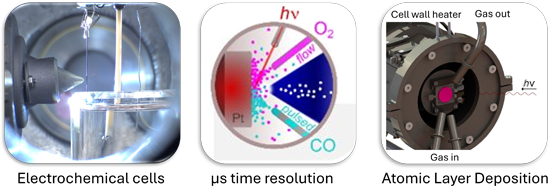
- energy range of 30–1500 eV with variable polarization and high photon flux in the low photon energy range [9]. The optics provide a moderately focused beam (~100 µm). The beamline covers an energy resolution typical for soft X-ray beamlines of resolving power values of the order of 5000–10000 over nearly
- permanently installed endstation dedicated to APXPS, that is, one for solid–gas experiments (SGE) and one primarily, but not limited to, for solid–liquid studies (SLE). The optics provide a spot size of 65 µm × 25 µm on the SGE and 60 µm × 50 µm on the SLE and a resolving power up to 35000. The SGE branch





Influence of laser beam profile on morphology and optical properties of silicon nanoparticles formed by laser ablation in liquid
Beilstein J. Nanotechnol. 2025, 16, 1533–1544, doi:10.3762/bjnano.16.108
- its prominent optical and electronic properties, is the most widely used semiconductor material in many fields of microelectronics, optics, photovoltaics, and molecular sensing. Nevertheless, even despite its widespread application, the interest in silicon-based structures, especially having sizes in
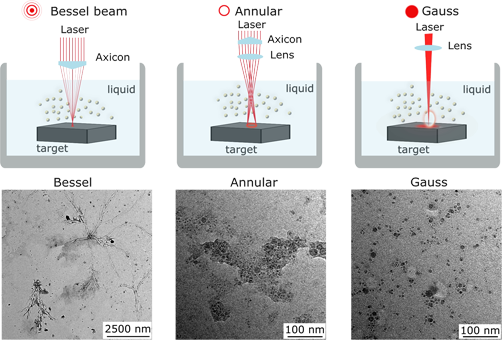
- , operating at 1064 nm (energy 80 mJ per pulse, repetition rate 10 Hz, pulse duration 10 ns, laser beam diameter 6 mm, ablation time 20 min) in a double-pulse mode with an interpulse delay of 1 μs [7][10]. These parameters were maintained for all three cases of focusing optics forming spatial profiles of


Laser processing in liquids: insights into nanocolloid generation and thin film integration for energy, photonic, and sensing applications
Beilstein J. Nanotechnol. 2025, 16, 1428–1498, doi:10.3762/bjnano.16.104
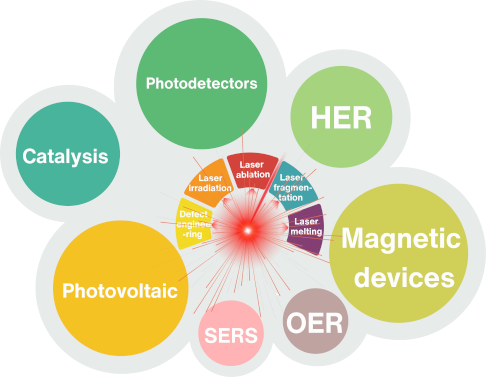
- (e.g., nanoparticles, nanocubes, nanorods, and nanocomposites) [5]. The developments in LAL have demonstrated its ability to synthesize functionalized nanostructures with special morphologies, microstructures, and phases, which hold promise for applications in optics, detection, and biological fields
- , including the ability to produce nanomaterials with precise control over size, shape, and composition, all under environmentally friendly conditions. The ability to generate complex nanostructures, from NPs to hybrid nanomaterials, is particularly valuable for advancing fields like optics, bioelectronics






Parylene-coated platinum nanowire electrodes for biomolecular sensing applications
Beilstein J. Nanotechnol. 2025, 16, 1392–1400, doi:10.3762/bjnano.16.101
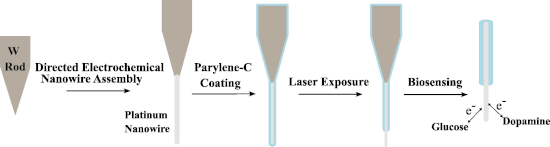
- setup (Figure 7a) and a diagram of the exposure process (Figure 7b). The laser beam spot size was reduced to 35 µm diameter by a 100× long working distance objective lens (Boli Optics MT02513831). A 30R/70T beam splitter and a MU800 camera were used to place the focused laser beam spot on the tip of the


Deep-learning recognition and tracking of individual nanotubes in low-contrast microscopy videos
Beilstein J. Nanotechnol. 2025, 16, 1316–1324, doi:10.3762/bjnano.16.96
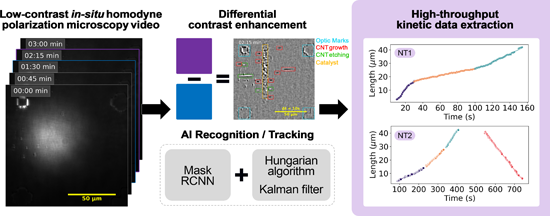
- localization precision of the optical setup is 0.33 µm. Frames were then aligned using a template matching algorithm from the OpenCV Python library. Shade correction was applied to compensate for uneven illumination caused by the optics. Residual noise was reduced using fast Fourier transform (FFT) band-pass


Crystalline and amorphous structure selectivity of ignoble high-entropy alloy nanoparticles during laser ablation in organic liquids is set by pulse duration
Beilstein J. Nanotechnol. 2025, 16, 1141–1159, doi:10.3762/bjnano.16.84




Towards a quantitative theory for transmission X-ray microscopy
Beilstein J. Nanotechnol. 2025, 16, 1113–1128, doi:10.3762/bjnano.16.82
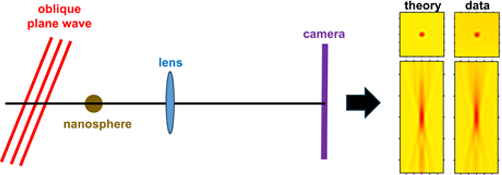
- Propagation of light through the zone plate to the detector plane Zone plates are diffractive optics with a defined periodic pattern of clear and opaque rings whose transmission function Z(x′,y′) can be written as a cosine series [17]: where rzp is the radius of the zone plate, which defines its NA. Expanding

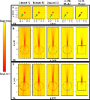


Influence of ion beam current on the structural, optical, and mechanical properties of TiO2 coatings: ion beam-assisted vs conventional electron beam evaporation
Beilstein J. Nanotechnol. 2025, 16, 1097–1112, doi:10.3762/bjnano.16.81
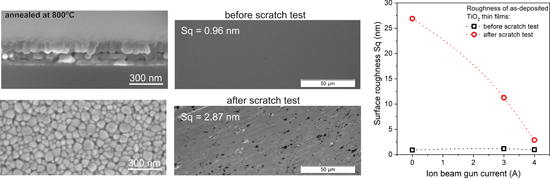
- Fisher Scientific Raman Microscope), and SEM imaging (FEI Nova NanoSEM 230) were carried out to evaluate the structural properties and morphology of the prepared coatings. The optical characteristics of the prepared films were investigated with the use of an Ocean Optics QE65000 spectrophotometer in the




Fabrication of metal complex phthalocyanine and porphyrin nanoparticle aqueous colloids by pulsed laser fragmentation in liquid and their potential application to a photosensitizer for photodynamic therapy
Beilstein J. Nanotechnol. 2025, 16, 1088–1096, doi:10.3762/bjnano.16.80
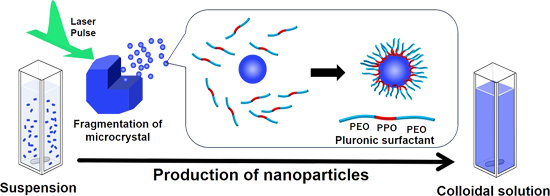
- starrer during the laser irradiation. The absorption spectrum of the sample was measured with a modular USB spectrometer (USB2000, Ocean Optics), and the sample was irradiated with a laser until the absorption spectrum stopped changing. The laser fluence of 140 mJ·cm−2 per pulse was chosen after


Time-resolved probing of laser-induced nanostructuring processes in liquids
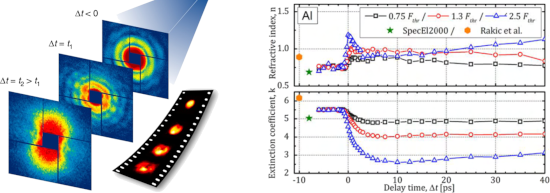
Beilstein J. Nanotechnol. 2025, 16, 968–1002, doi:10.3762/bjnano.16.74


Thickness dependent oxidation in CrCl3: a scanning X-ray photoemission and Kelvin probe microscopies study
Beilstein J. Nanotechnol. 2025, 16, 749–761, doi:10.3762/bjnano.16.58
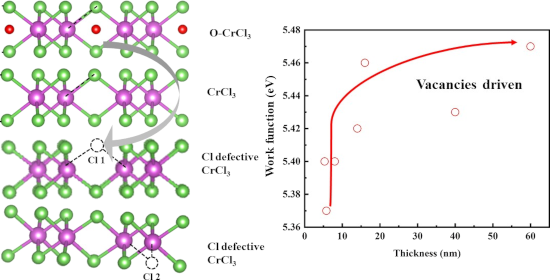
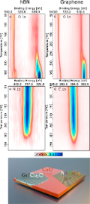
- photoemission spectra from the particular SPEM map. Figure 3 shows the schematic setup of the focusing optics and the hemispherical photoelectrons detector arrangement of the SPEM system. Atomic force microscopy images were acquired with the NanoObserver (CSI) AFM system in resonant mode using an n-type Si



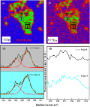


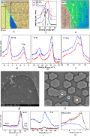
Nanostructured materials characterized by scanning photoelectron spectromicroscopy
Beilstein J. Nanotechnol. 2025, 16, 700–710, doi:10.3762/bjnano.16.54
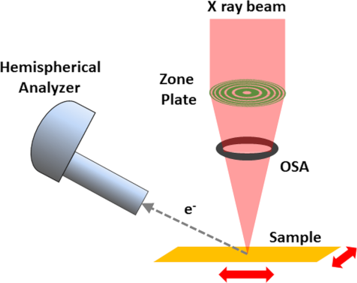
- hemispherical analyzers, while guaranteeing adequate energy resolutions. Experimental The SPEM hosted at the ESCA microscopy beamline at Elettra uses diffraction optics to focus the incoming X-ray beam shaped by the photon transport optics to a 130 nm Gaussian-shaped spot. As shown with a sketch in Figure 4
- , focusing optics are composed by a zone plate (ZP) and an order sorting aperture which selects one of the diffracted spots generated by the ZP. The focal distance depends on the geometrical parameters of the ZP and on the photon energy. At the experimental conditions of the experiments reported in this
- crowded area around the sample where the sample and optics holders and analyzer nose must be located within a space of a few millimeters. The further displacement of the electron analyzer increases the natural surface sensitivity of XPS; depending on the kinetic energy of the detected photoelectrons, the


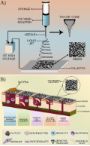
Polyurethane/silk fibroin-based electrospun membranes for wound healing and skin substitute applications
Beilstein J. Nanotechnol. 2025, 16, 591–612, doi:10.3762/bjnano.16.46

- functionalization of SF facilitate its usage in optics as a biosensor and implantable device [92]. Malinowski et al. showed that conventional transparent films often lack adequate haze, but SF films exhibit ultrahigh optical transparency (>93%) and transmission haze (>65%). In this study, soft lithography was used



Performance optimization of a microwave-coupled plasma-based ultralow-energy ECR ion source for silicon nanostructuring
Beilstein J. Nanotechnol. 2025, 16, 484–494, doi:10.3762/bjnano.16.37

- the gas reservoir. The entire length of the ion source is around 130 cm. The extraction of ion beams is accomplished by a three-grid ion optics system, as seen in Figure 2. The extraction voltage is applied to the grid to enable the extraction of an intense beam with different diameters. The circular
- power required for ion–electron pair generation decreases. The Ar-ion beam is extracted via a three-grid ion optics system [35][36][37]. The beam current and the beam profile depend on the potential applied at the grid and the target. The change in beam current with the ion extraction voltage recorded
- current with the target position, known as the beam profile, is also presented in Figure 4e. The beam profile is Gaussian for concave grid beam extraction optics. Nanostructuring on Si surface by 450 eV Ar-ion bombardment The morphological evolution of Si after the off-normal bombardment with 450 eV Ar


Impact of adsorbate–substrate interaction on nanostructured thin films growth during low-pressure condensation
Beilstein J. Nanotechnol. 2025, 16, 473–483, doi:10.3762/bjnano.16.36

- ], sensors [5], and catalysts [6][7][8]. Nanostructured thin films grown via low-pressure deposition methods have garnered significant attention because of their diverse applications in electronics, optics, catalysis, and sensors [9]. The ability to precisely control properties such as morphology


Effect of additives on the synthesis efficiency of nanoparticles by laser-induced reduction
Beilstein J. Nanotechnol. 2025, 16, 464–472, doi:10.3762/bjnano.16.35
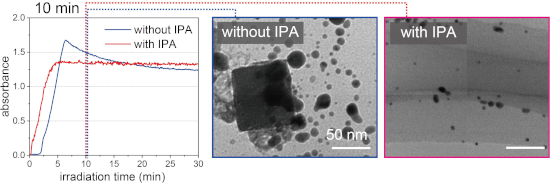
- solution during laser irradiation with a wavelength range from 300 to 800 nm was measured every 5 s using a fiber multi-channel spectrometer (FRAME-T, Ocean Optics Inc.). The nanoparticles synthesized by laser irradiation were observed using a transmission electron microscope (TEM, JEM-2100Plus, JEOL Ltd





