Search results
Search for "paper" in Full Text gives 1026 result(s) in Beilstein Journal of Nanotechnology. Showing first 200.
Nanoglasses: a trail towards uncharted regions of vitreous materials and their properties?
Beilstein J. Nanotechnol. 2026, 17, 1047–1062, doi:10.3762/bjnano.17.72

- compared with conventional homogeneous glasses, giving rise to unique structural and functional properties. Additionally, the interfaces between the glass cores and the glass–glass interfaces need to be considered, as the specific interface areas are large. In this perspective paper, we discuss the


Materials challenges in solid-state sensors for continuous monitoring of ions in water
Beilstein J. Nanotechnol. 2026, 17, 935–973, doi:10.3762/bjnano.17.66
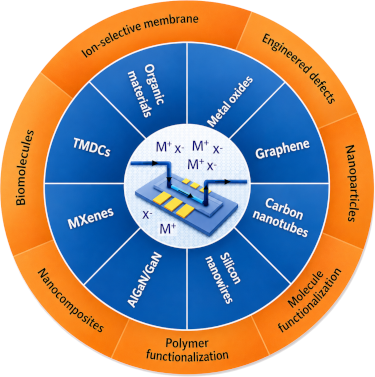
- ][56][57][58][59]. In industrial wastewater, anion monitoring is especially critical in semiconductor manufacturing (fluoride, chloride, sulfate) [60][61], pulp and paper (chloride, sulfate) [62], textile dyeing (chloride, sulfate) [63], petrochemical and refinery operations (chloride, sulfate) [64
- in electroplating, battery manufacturing, semiconductor production, mining/metallurgy, chemical synthesis, pulp and paper, fertilizer production, petroleum refining, and textile dyeing, where metal concentrations can fluctuate rapidly and effluent limits are often extremely stringent (frequently <10


Light-driven ammonia electrooxidation via carbon nitride–ruthenium molecular interfaces
Beilstein J. Nanotechnol. 2026, 17, 854–862, doi:10.3762/bjnano.17.61
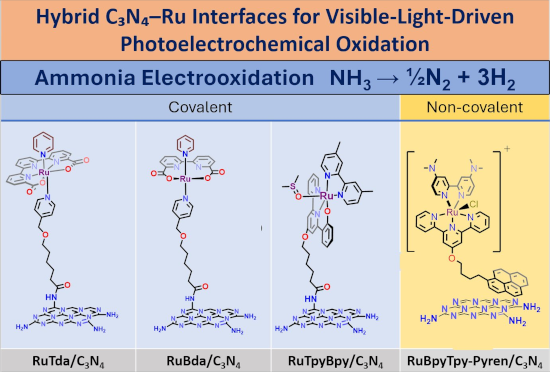
- conveniently used for surface anchoring, and its low water oxidation onset potential of 1.1 V vs NHE is among the lowest reported for any molecular catalyst [22][24]. When non-covalently attached to carbon paper electrodes through C–H···π interactions, RuBda achieves a turnover number of 7500 and Faradaic
- ], which confirms the compatibility of the hybrid architecture with the PEC configuration, and the electrocatalytic ammonia oxidation activity of RuBda on carbon paper [26], which confirms that molecular Ru catalysts retain their AOC function upon surface anchoring. The intersection of these two lines of


Cross-scale design of chemosensor arrays: from molecular self-assembly in water to paper-based devices for metal ion detection
Beilstein J. Nanotechnol. 2026, 17, 828–838, doi:10.3762/bjnano.17.59
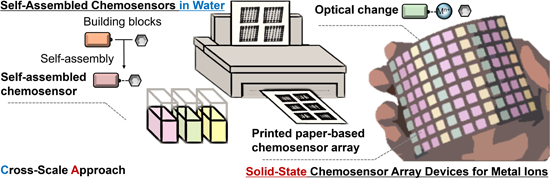
- synthetic effort. Furthermore, integration of these self-assembled chemosensors into paper substrates enables portable detection platforms for on-site analysis without using stationary laboratory instruments. This cross-scale design strategy provides a promising approach for simultaneous detection of metal
- ions in various water environments across microscopic and macroscopic scales. Keywords: chemosensor; metal ion; paper device; pattern recognition; self-assembly; Introduction Metal ions are essential species in biological systems; however, heavy metal ions act as pollutants and can damage organs and
- structures. Paper substrates, which are commonly used in daily life, are eco-friendly and highly processable materials for disposable analytical devices [20][21][22][23][24][25]. In particular, the fiber structures of paper substrates provide unique functional nanoarchitectures [26][27]. Regarding analytical


Tailoring Ag–Pt nanoalloys through solid-state dewetting: structural and optical insights
Beilstein J. Nanotechnol. 2026, 17, 748–759, doi:10.3762/bjnano.17.52

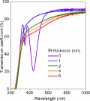
- disintegration can be used to fabricate single-metal nanostructures, nanoalloys, and nanocomposites on various substrates [23][24][25][26]. In this paper, we present a method for manufacturing Ag–Pt nanoalloys by thermal disintegration of thin metallic films. This nanoalloy system is particularly significant due




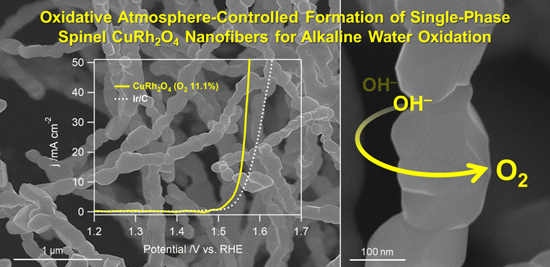
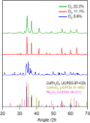
Oxidative atmosphere-driven formation of single-phase spinel CuRh2O4 nanofibers for alkaline water oxidation
Beilstein J. Nanotechnol. 2026, 17, 737–743, doi:10.3762/bjnano.17.50
- that could have appeared to influence the work reported in this paper.




Environmental applications of silver nanoparticles: state-of-the-art review and emerging trends
Beilstein J. Nanotechnol. 2026, 17, 697–736, doi:10.3762/bjnano.17.49
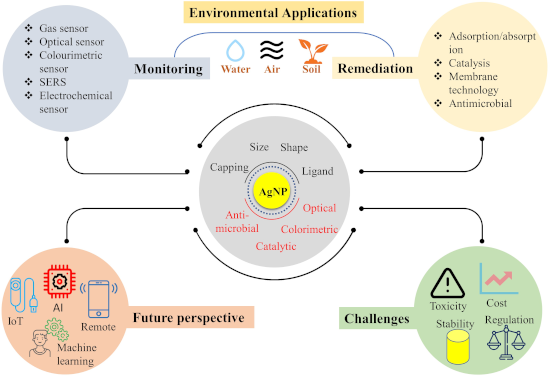
- antibacterial activity. The membrane removed 99.25% of PM2.5 and inhibited 98.7% of E. coli growth. The membrane showed 95% removal efficiency after five cycles [152]. A recent study developed air filter paper using hardwood pulp and glass fibre, incorporating AgNPs to inhibit the growth of E. coli and S


Molecular engineering of individual dye-based nanoparticle photostability for ultrabright two-photon fluorescence
Beilstein J. Nanotechnol. 2026, 17, 688–696, doi:10.3762/bjnano.17.48
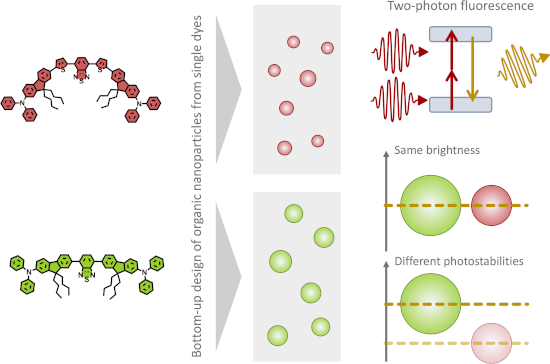
- excitation rate. While several studies have investigated the 2P-excited photobleaching of organic dyes, to the best of our knowledge, no statistical analysis has addressed the possibility to engineer the photobleaching of individual dFONs under 2P excitation. In this paper, we selected two families of dFONs
- H7650 at 80 kV. dFONs were deposited on copper grids previously charged (positively) by glow discharge technique. A drop of the dFONs colloidal solution was left on the charged grid for 1 min, and the excess of liquid was gently removed with a paper by capillarity. Then, a drop of aqueous uranyl acetate
- ], and even up to 3 near an absorption resonance [35], α is between 2 and 13. We point out the fact that local fields exist also in the measurements of σ2 and Φ from Table 1. The corrections change, however, depending on the dFONs environment. As a result, the values of α measured in the paper cannot be


afspm: A framework for manufacturer-agnostic automation in scanning probe microscopy
Beilstein J. Nanotechnol. 2026, 17, 653–667, doi:10.3762/bjnano.17.45
- contrast with that paper, we did not evaluate the ultimate precision and stability of our corrector; rather, we focused on validating that it tracked correctly and minimized drift between scans. A sample of images collected over the duration of the experiment can be found in Figure 11. The collected




Cellulose as a photocatalyst support material: extraction, structural features, and environmental applications
Beilstein J. Nanotechnol. 2026, 17, 635–652, doi:10.3762/bjnano.17.44
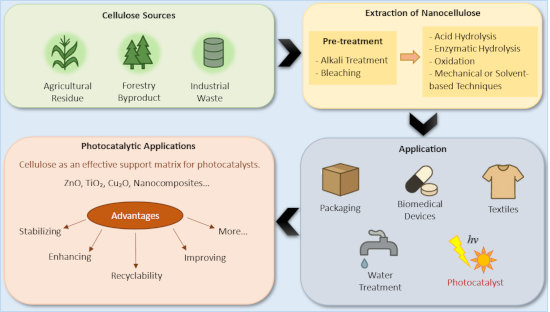
- used paper products. Polysaccharides serve as the primary source of biopolymers, forming the main structural components of both woody and nonwoody materials, and they are composed of long carbohydrate chains that consist primarily of monosaccharide units. Unlike fossil-based alternatives, these natural
- chemical properties [5]. Cellulose occurs naturally in cotton and wood, where it has long provided essential resources for clothing and shelter. Also, through chemical and mechanical processing, pulp fibers can be extracted from these sources to serve as the primary raw material for paper production. Pulp
- need for cutting down trees [30]. Another valuable source of cellulose comes from different types of waste such as old newspapers, office paper, and cardboard boxes, which can be recycled into cellulose through proper treatment and extraction steps [31]. Beyond paper waste, a wide range of food


Recent progress in enhancing built-in electric fields of perovskite solar cells via junction engineering
Beilstein J. Nanotechnol. 2026, 17, 602–621, doi:10.3762/bjnano.17.42
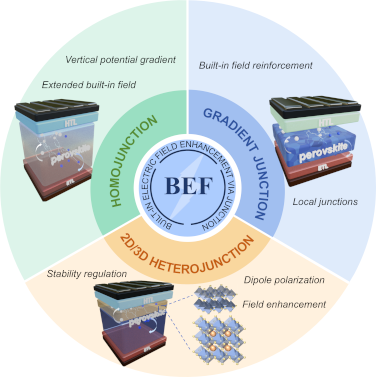
- , their wide bandgaps and the insulating nature of organic spacer layers often limit charge transport. The organic spacer molecules used in the 2D/3D heterojunctions discussed in this paper are illustrated in Figure 3. Coupling these 2D phases with a 3D bulk to form 2D/3D heterojunctions can, on one hand



Impacts of annealing on structural and photophysical properties of zinc phthalocyanine adsorbed on graphene
Beilstein J. Nanotechnol. 2026, 17, 576–585, doi:10.3762/bjnano.17.39
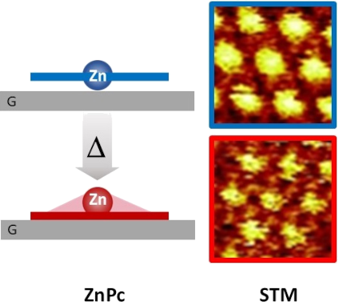
- , application in interface structure management, and impact on electronic or photonic properties are still poorly understood. In this paper, focusing on ZnPc, we report the demonstration and analysis by combined STM operated at the air–solid interface and optical microspectroscopy of a 2D phase change


Fractional shot noise of an SU(N) Kondo system
Beilstein J. Nanotechnol. 2026, 17, 515–540, doi:10.3762/bjnano.17.34
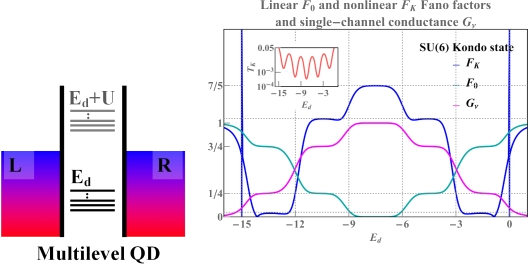
- paper on the analysis of this quantity. Despite high theoretical interest [58][59], relatively little experimental studies of shot noise are available [60][61][62][63][64][65]. The noise measurements are technically more difficult than the conventional conductance examinations; one of the reasons is a
- paper, we show that SBMFA, which, in the strong coupling limit, satisfactorily describes strong correlations, can be used for a discussion of linear conductance and partition noise. This approach, however, as the mean-field approximation uses the picture of independent, dressed quasiparticles, neglects
- nonlinear transport properties of the system. Let us now give an overview of the most important topics of this article. The paper comprehensively analyzes the linear and nonlinear transport and thermodynamic properties of Kondo systems with SU(N) symmetries up to N = 6 with emphasis on the discussions of


![[Graphic 127]](/bjnano/content/inline/2190-4286-17-34-i187.svg?max-width=637&scale=1.18182)

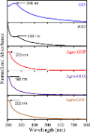
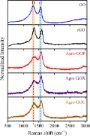
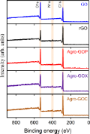
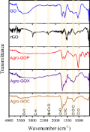
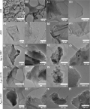
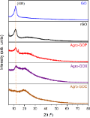
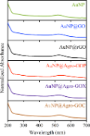
Upcycling agroindustrial waste into graphene oxide supports for gold nanoparticles: toward sustainable nanomaterials
Beilstein J. Nanotechnol. 2026, 17, 489–504, doi:10.3762/bjnano.17.32
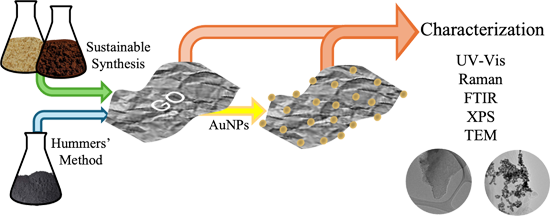
- influenced the work reported in this paper.



Nanocarrier-integrated multilayer films produced by 3D printing for improved skin adhesion and curcumin photostability
Beilstein J. Nanotechnol. 2026, 17, 440–453, doi:10.3762/bjnano.17.30
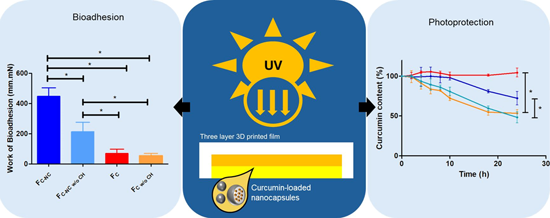
- with absorbent paper. Skin samples were fixed to the equipment probe with instantaneous adhesive, while films were fixed to the equipment’s platform with double-sided tape. The equipment promoted contact between the skin sample and the film, with a force of 290 mN for 3 min. The probe holding the skin


Nanoinformatics: spanning scales, systems and solutions
Beilstein J. Nanotechnol. 2026, 17, 423–427, doi:10.3762/bjnano.17.28
- perspectives, and one review paper) that provide a snapshot of recent exciting developments in nanoinformatics, and is an output from the Beilstein Nanotechnology symposium [1] of the same name, held in October 2022. The advances presented are clustered around four key needs, including (i) prediction of

Interconnection morphology effects on the radio frequency response of carbon nanotube sponges
Beilstein J. Nanotechnol. 2026, 17, 343–351, doi:10.3762/bjnano.17.23
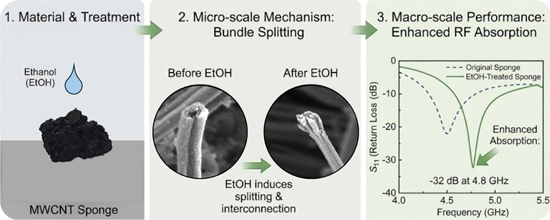
- porosity, low weight, good mechanical response, and good conductivity [25]. The properties of CNSs have been exploited in many different applications that include mechanical transducers [26], water filtration [27], and others [28]. In this paper, we tested our synthesized CNSs as active material for the



Advancing nanolithography: a comprehensive review of materials for local anodic oxidation with AFM
Beilstein J. Nanotechnol. 2026, 17, 275–291, doi:10.3762/bjnano.17.19
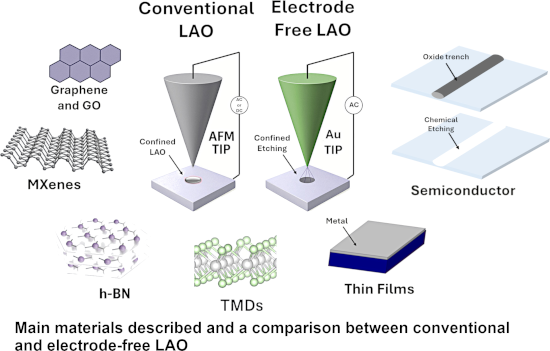
- dichalcogenides, demonstrate unique oxidation behaviors, enabling high-resolution applications in electronics and quantum devices. Recent advancements, such as electrode-free LAO, have expanded the range of applicable materials and improved the precision and scalability of the process. This paper also aims to


Comparative study on 3D morphologies of delignified, single tracheids and fibers of five wood species
Beilstein J. Nanotechnol. 2026, 17, 239–250, doi:10.3762/bjnano.17.16
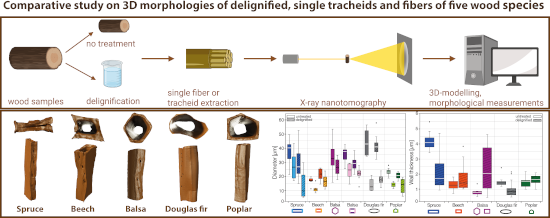
- a key role in preventing cell collapse under high tensile stress or/and inner pressure exerted by the water column during transpiration [8]. Wood delignification is a crucial process in various industries, particularly pulp and paper production, biofuel generation, and the development of advanced
- biological approaches [11][15][16]. The applications of delignified wood are diverse and expanding; they include, for example, the production of high-quality paper or of nanocellulose with applications in electronics, biomedical devices, and advanced composites [11][14]. Recent research has focused on


Gold nanoparticle-decorated reduced graphene oxide as a highly effective catalyst for the selective α,β-dehydrogenation of N-alkyl-4-piperidones
Beilstein J. Nanotechnol. 2026, 17, 218–238, doi:10.3762/bjnano.17.15
- , recycling, and reuse of the catalyst, which also concerns the stability of the catalyst. This was tested for the most active rGO-based catalysts over four runs. The catalysts were separated by filtration using standard filter paper, then thoroughly washed and dried before being reused in subsequent reaction
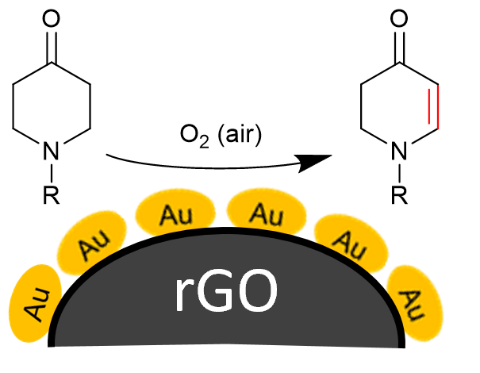
- , which were not retained by the used MN 615 1/4 cellulose filter paper with 4.0–12.0 µm pore sizes [53]. These results unambiguously demonstrate that the reaction proceeds via a truly heterogeneous catalytic mechanism, with Au nanoparticles remaining immobilized on the rGO support throughout the reaction


Micro- and nanoscale effects in biological and bioinspired materials and surfaces
Beilstein J. Nanotechnol. 2026, 17, 214–217, doi:10.3762/bjnano.17.14
- for sharing their work using this paper collection and to the reviewers for their critical input, which substantially strengthened the quality of the manuscripts. We hope that the articles in this collection motivate researchers and developers to push biomimetic design further, opening new angles in
Safe and sustainable by design with ML/AI: A transformative approach to advancing nanotechnology
Beilstein J. Nanotechnol. 2026, 17, 176–185, doi:10.3762/bjnano.17.11
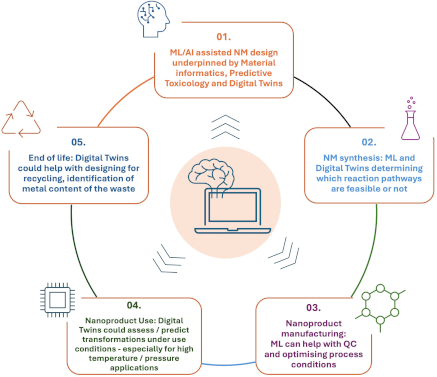
- enhance public confidence, fostering an innovation ecosystem where safety and sustainability are fundamental to technological progress. While ML models are often referred to as being a black box, a recent paper up-ended this conception, suggesting that the current gold-standard of in vivo apical end-point


From shield to spear: Charge-reversible nanocarriers in overcoming cancer therapy barriers
Beilstein J. Nanotechnol. 2026, 17, 159–175, doi:10.3762/bjnano.17.10
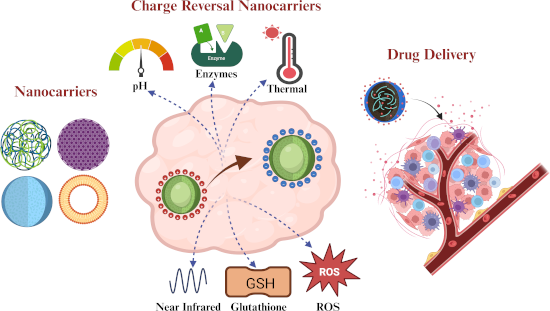
- that could have appeared to influence the work reported in this paper.


Functional surface engineering for cultural heritage protection: the role of superhydrophobic and superoleophobic coatings – a comprehensive review
Beilstein J. Nanotechnol. 2026, 17, 63–96, doi:10.3762/bjnano.17.6
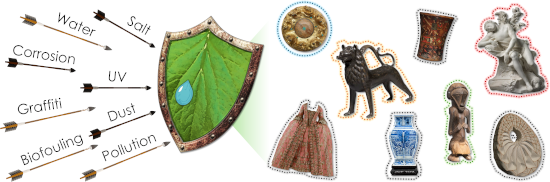
- the analysis of the statue of Darius from Susa, in modern Iran [13]. The statue was found in Egypt in 1972, and was then transferred to Teheran, Iran. The paper by Shahrokh reveals how a combination of natural wear, such as erosion and structural stress, and anthropogenic damage, including the loss of




Reduced graphene oxide paper electrode for lithium-ion cells – towards optimized thermal reduction
Beilstein J. Nanotechnol. 2026, 17, 24–37, doi:10.3762/bjnano.17.3
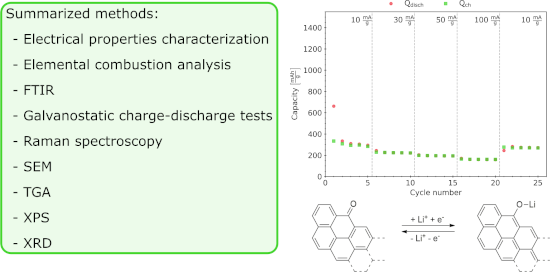
- Technologies Research Group, Łukasiewicz Research Network – Institute of Microelectronics and Photonics, al. Lotników 32/46, 02-668, Warsaw, Poland 10.3762/bjnano.17.3 Abstract This work introduces the results of characterizing free-standing reduced graphene oxide paper, given its potential use as an
- electrode material in lithium-ion cells. Mildly reduced graphene oxide paper underwent further thermal reduction steps. The structural and chemical properties of the obtained materials were determined using Raman and Fourier-transform infrared spectroscopies and elemental combustion analysis. The morphology
- and thickness were determined with scanning electron microscopy imaging. This paper also reveals electrical and electrochemical properties of the material. The conductivity of the material obtained at 800 °C reached ≈70 S/cm, and the discharge capacity reached ≈160 mAh/g at 100 mA/g current density