Search results
Search for "synthesis methods" in Full Text gives 113 result(s) in Beilstein Journal of Nanotechnology.
Ultrasonic irradiation in the synthesis of nanohydroxyapatite: a chemically friendly technique for improving hemocompatibility and antibiofilm applications
Beilstein J. Nanotechnol. 2026, 17, 991–1015, doi:10.3762/bjnano.17.68
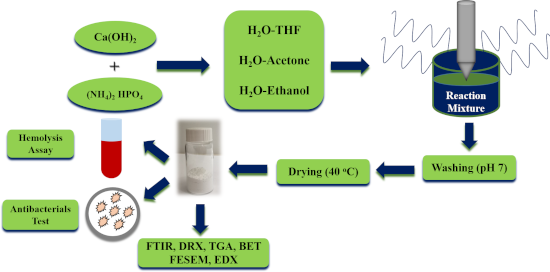
- stability [44]. However, high-frequency ultrasound provides enough energy to promote this process, which would likely be more difficult using other synthesis methods [45]. Type-A substitution (carbonate ions for hydroxide ions) was only observed in nHA obtained from W/ACET and W/THF mixtures; it was not
- /ACET it was obtained with an excess of calcium. These results demonstrate the significant influence of the solvent type and UI time on the formation of nHA. Similar findings have been reported by other authors using different synthesis methods [48][49]. Another important result is the appearance of
- can be prepared in shorter periods than those used in conventional synthesis methods such as hydrothermal, precipitation, and sol–gel. For the W/THF mixtures, the optimum time for maximum yield was 30 min. Using W/ACET and W/ETOH, the maximum yields were achieved after 45 min of irradiation. These




Environmental applications of silver nanoparticles: state-of-the-art review and emerging trends
Beilstein J. Nanotechnol. 2026, 17, 697–736, doi:10.3762/bjnano.17.49


Two-step laser synthesis of Ag@TiO2 nanomaterials for the photocatalytic degradation of rhodamine B
Beilstein J. Nanotechnol. 2026, 17, 622–634, doi:10.3762/bjnano.17.43
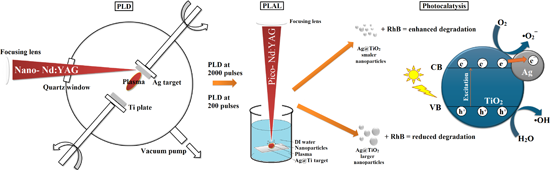
- . Although maximum degradation efficiencies of up to 100% (Table 5) have been reported in the studies by Hussain et al. [31] and Liang et al. [20], these results were typically obtained using longer irradiation times, higher initial RhB concentrations (10 mg·L−1), different synthesis methods (e.g., UV


Defects and defect-mediated engineering of two-dimensional materials: challenges and open questions
Beilstein J. Nanotechnol. 2026, 17, 454–488, doi:10.3762/bjnano.17.31
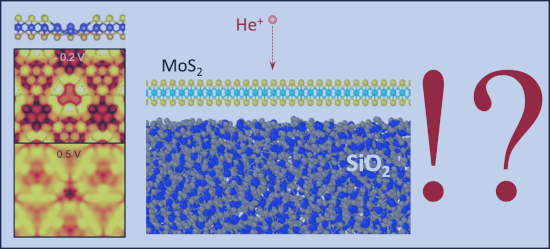
- graphene or h-BN) defect formation energies prevent low defect concentrations in monolayer sheets? How can synthesis methods for monolayer materials be modified to control defect species and concentration? We note that, in TMDs, not only chalcogen vacancies, but also transition metal vacancies and





Durable antimicrobial activity of fabrics functionalized with zeolite ion-exchanged nanomaterials against Staphylococcus aureus and Escherichia coli
Beilstein J. Nanotechnol. 2026, 17, 262–274, doi:10.3762/bjnano.17.18
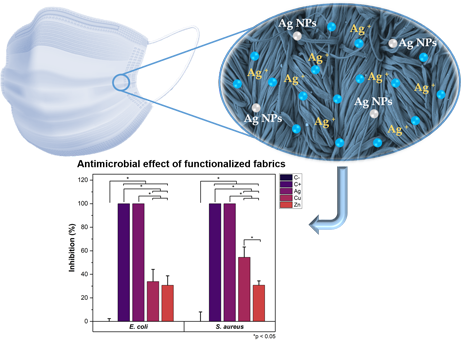
- synthesis methods, and relatively low cost [4][10][11]. One of the most extensively studied nanomaterials in terms of antimicrobial properties is colloidal silver as its antimicrobial action affects various parts of microorganisms. In addition to silver, copper has attracted significant attention for its




Gold nanoparticle-decorated reduced graphene oxide as a highly effective catalyst for the selective α,β-dehydrogenation of N-alkyl-4-piperidones
Beilstein J. Nanotechnol. 2026, 17, 218–238, doi:10.3762/bjnano.17.15
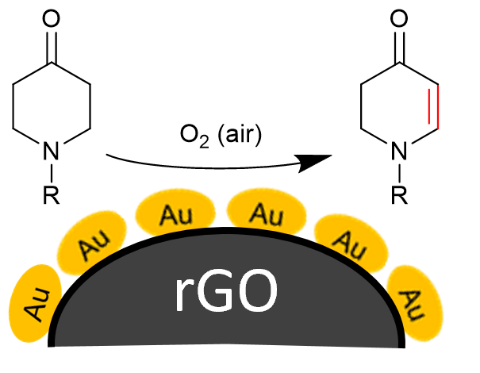
- its reaction product N-methyl-2,3-dihydropyridin-4(1H)-one is highly valuable (>1000 €·g−1) in contrast to the inexpensive starting material (0.15 €·g−1). Various synthesis methods were employed to prepare AuNPs supported on different carbon materials, including reduced graphene oxide (rGO), activated


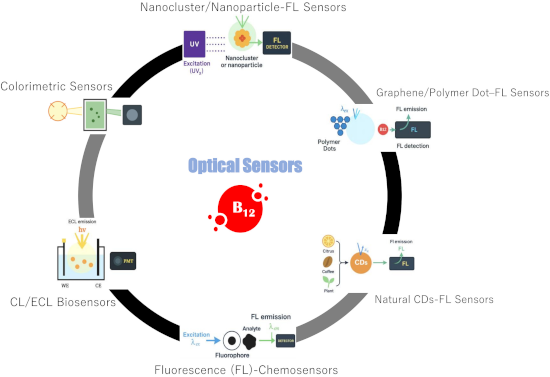
Optical bio/chemical sensors for vitamin B12 analysis in food and pharmaceuticals: state of the art, challenges, and future outlooks
Beilstein J. Nanotechnol. 2025, 16, 2207–2244, doi:10.3762/bjnano.16.153


Microplastic pollution in Himalayan lakes: assessment, risks, and sustainable remediation strategies
Beilstein J. Nanotechnol. 2025, 16, 2144–2167, doi:10.3762/bjnano.16.148
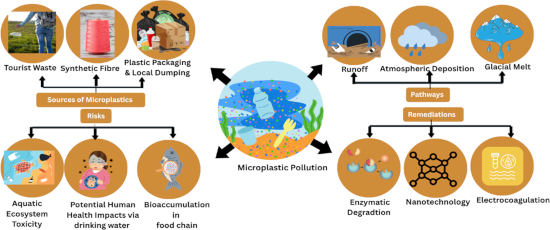
- . According to Goh et al., these results are especially important for expanding MP remediation technology to industrial applications [43]. Tables 4–6 presents a comprehensive comparison of various nanomaterials explored for MP remediation, detailing their synthesis methods, target pollutants, removal


Toward clinical translation of carbon nanomaterials in anticancer drug delivery: the need for standardisation
Beilstein J. Nanotechnol. 2025, 16, 2092–2104, doi:10.3762/bjnano.16.144

- CNMs for drug delivery presents several practical and economic challenges. These include high equipment and raw material costs, limited yields, quality control issues, and environmental and safety concerns. Addressing these barriers requires targeted innovation in synthesis methods, improved




Laser ablation in liquids for shape-tailored synthesis of nanomaterials: status and challenges
Beilstein J. Nanotechnol. 2025, 16, 1963–1997, doi:10.3762/bjnano.16.137
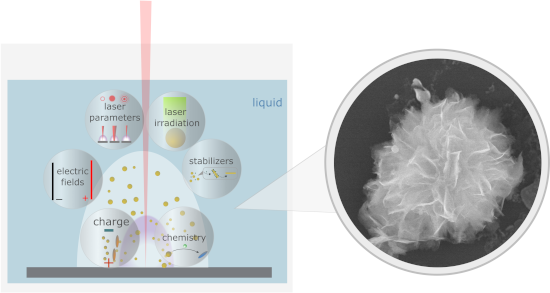
- . Despite many synthesis methods are still mainly focused on the production of near-spherical NPs, a number of emerging applications require nanomaterials of nonspherical shape and developed surface, which determine the functional performance of nanostructured devices. Laser ablation in liquids has been




On the road to sustainability – application of metallic nanoparticles obtained by green synthesis in dentistry: a scoping review
Beilstein J. Nanotechnol. 2025, 16, 1851–1862, doi:10.3762/bjnano.16.128
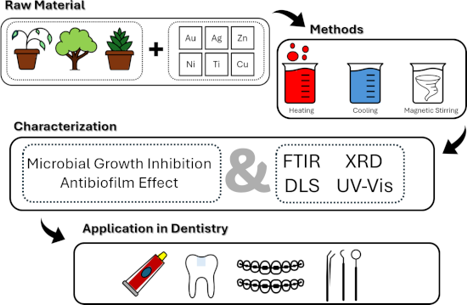
- energy consumption, and hazardous reducing agents; also, they result in environmental waste, in addition to producing nanoparticles that may be toxic and poorly biocompatible [3][7]. Given the limitations of conventional synthesis methods, the green synthesis of nanoparticles has emerged as a sustainable
- -friendly innovation, particularly in healthcare [30][31]. The economic feasibility and simplicity of green synthesis methods also align well with the resource-limited infrastructure often encountered in academic laboratories across developing nations. India’s high burden of oral and systemic infectious
- . We highlighted that 68.80% (n = 51) of the studies describing nanoparticle synthesis methods employed stirring. Other reported methods included heating (27.30%; n = 21) and cooling (3.90%; n = 3). Stirring is a widely used method in the green synthesis of metallic nanoparticles because it plays a


Current status of using adsorbent nanomaterials for removing microplastics from water supply systems: a mini review
Beilstein J. Nanotechnol. 2025, 16, 1837–1850, doi:10.3762/bjnano.16.127
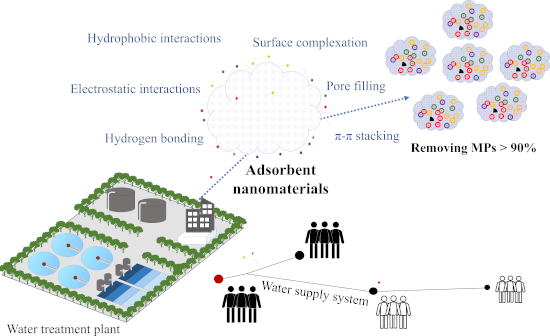
- , leading to cellular damage [111]. According to Thirunavukkarasu et al., the interactions between these nanomaterials and other contaminants are not fully understood. While some studies suggest that different synthesis methods can reduce toxicity, they still pose a significant threat to end-users [112


Exploring the potential of polymers: advancements in oral nanocarrier technology
Beilstein J. Nanotechnol. 2025, 16, 1751–1793, doi:10.3762/bjnano.16.122
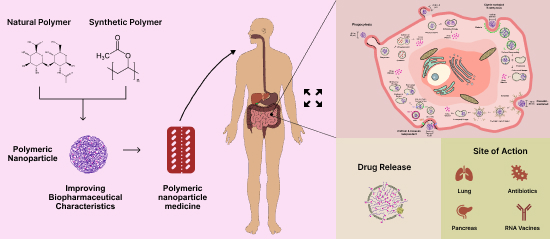
- permeability, critical factors for effective oral drug delivery, are discussed in detail. Furthermore, nanoparticle synthesis methods that enable controlled release profiles, optimized biodistribution, and improved therapeutic efficacy are also explored. Thus, polymers represent a dynamic platform for
- other and produced through polymerization reactions such as addition, condensation, ring-opening polymerization, emulsion, precipitation, and others [57]. Monomers determine the decomposition products of polymers in the body and, consequently, their toxicity and biocompatibility. This is why synthesis
- methods are developed to control the rapid and reversible activation and deactivation of propagation chains. As a result, polymers with low polydispersity and controllable molecular weights are obtained, generating unimodal NPs with increasingly functional designs and satisfactory release profiles [58][59


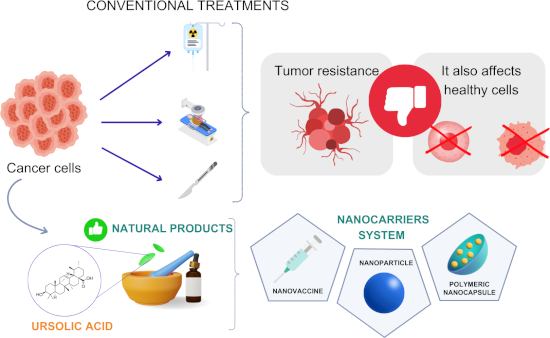
Prospects of nanotechnology and natural products for cancer and immunotherapy
Beilstein J. Nanotechnol. 2025, 16, 1644–1667, doi:10.3762/bjnano.16.116


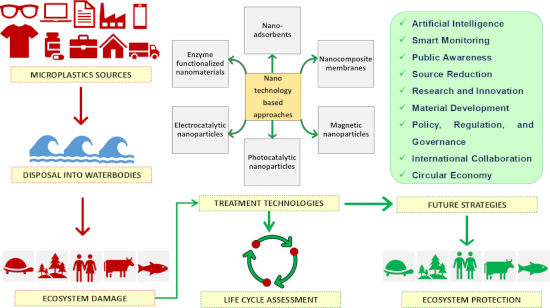
Nanotechnology-based approaches for the removal of microplastics from wastewater: a comprehensive review
Beilstein J. Nanotechnol. 2025, 16, 1607–1632, doi:10.3762/bjnano.16.114


Influence of laser beam profile on morphology and optical properties of silicon nanoparticles formed by laser ablation in liquid
Beilstein J. Nanotechnol. 2025, 16, 1533–1544, doi:10.3762/bjnano.16.108
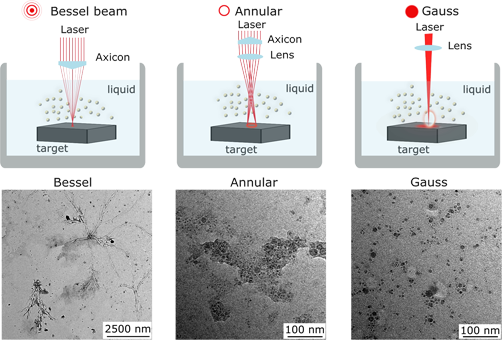
- certain progress in this field, there is still a need for reliable and controlled synthesis methods for silicon-based nanostructures. Nowadays, pulsed laser ablation in liquids (PLAL) has been recognized as a general and important route for the synthesis of nanoparticles (NPs) with tuned optical and


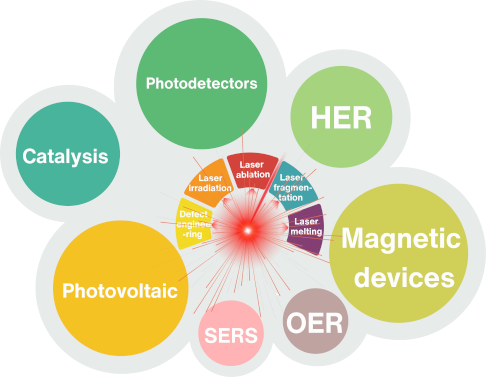
Laser processing in liquids: insights into nanocolloid generation and thin film integration for energy, photonic, and sensing applications
Beilstein J. Nanotechnol. 2025, 16, 1428–1498, doi:10.3762/bjnano.16.104
- has emerged as a powerful approach to fabricate advanced heterostructures and integrated electrode architectures, which are challenging to achieve through conventional synthesis methods in the development of high-performance energy storage and conversion devices [85][88][92][93][94][95][96]. The






Photochemical synthesis of silver nanoprisms via green LED irradiation and evaluation of SERS activity
Beilstein J. Nanotechnol. 2025, 16, 1417–1427, doi:10.3762/bjnano.16.103
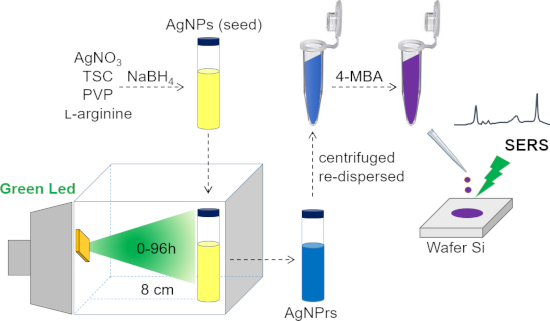
- experimental conditions, small spherical silver nanoparticle seeds had been almost completely converted into silver nanoprisms. Unlike conventional chemical synthesis methods, the photochemical LED-based approach does not produce fragmented or etched structures, resulting in well-formed AgNPrs. Additionally


The role of biochar in combating microplastic pollution: a bibliometric analysis in environmental contexts
Beilstein J. Nanotechnol. 2025, 16, 1401–1416, doi:10.3762/bjnano.16.102
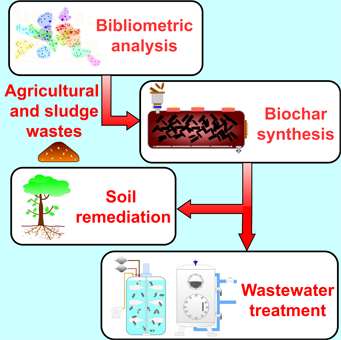
- . This underscores the necessity of interdisciplinary research integrating material science, agriculture, and microbiology in biochar–MP–plant interactions. Three primary research trajectories emerge from the keyword analysis: Investigating how different biochar synthesis methods influence
- removal efficiency in wastewater treatment applications. Biochar synthesis techniques and functional optimization Biochar synthesis The synthesis methods for biochar, as illustrated in Figure 4, encompass traditional hydrolysis techniques and modified approaches utilizing materials such as magnetic



Deep-learning recognition and tracking of individual nanotubes in low-contrast microscopy videos
Beilstein J. Nanotechnol. 2025, 16, 1316–1324, doi:10.3762/bjnano.16.96
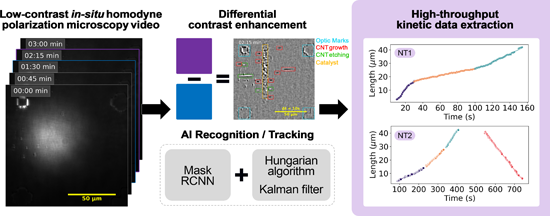
- . However, the widespread application of CNTs is hindered by the lack of control over their structure during growth. Therefore, developing highly selective synthesis methods is crucial for advancing CNT-based devices. This requires a deep understanding of the relationship between nanotube structure and


Piezoelectricity of hexagonal boron nitrides improves bone tissue generation as tested on osteoblasts
Beilstein J. Nanotechnol. 2025, 16, 1068–1081, doi:10.3762/bjnano.16.78
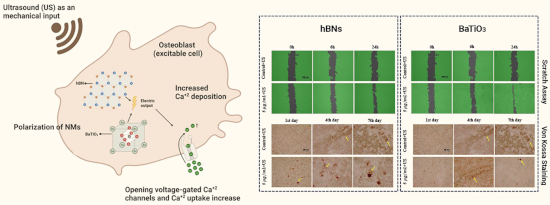
- exfoliation) and bottom-up (chemical or physical atom assembly) synthesis methods, with chemical vapor deposition (CVD) standing out as a promising approach for large-area production [38]. This study aims to investigate novel, noninvasive stimulation of osteoblasts using commercial BaTiO3 and CVD-synthesized


Insights into the electronic and atomic structures of cerium oxide-based ultrathin films and nanostructures using high-brilliance light sources
Beilstein J. Nanotechnol. 2025, 16, 860–871, doi:10.3762/bjnano.16.65

- applications. Studies on cerium oxide nanostructures and powders prepared by chemical synthesis methods are quite numerous, and they are typically carried out on systems with a marked and often unexplored complexity [14][15][16][17]. For studies on cerium oxide as model systems, such as low-index surfaces
- refined understanding of cerium oxide-based materials, particularly when examined in the form of well-controlled thin films and nanostructures prepared by physical synthesis methods. Review Studies by X-ray photoelectron spectroscopy and related techniques Synchrotron radiation-based X-ray photoelectron


Colloidal few layered graphene–tannic acid preserves the biocompatibility of periodontal ligament cells
Beilstein J. Nanotechnol. 2025, 16, 664–677, doi:10.3762/bjnano.16.51
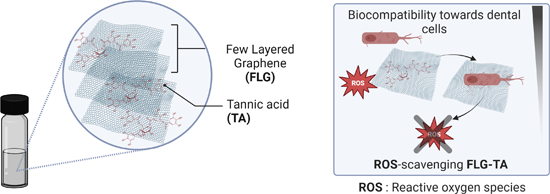
- significantly lower than the ratios reported for alternative synthesis methods in earlier studies [15]. In fact, polyphenolic compounds, such as TA, can act as electron donors [15][22], consequently triggering a change in the G band intensity. This change is likely due to the incorporation of electron donor




Effect of additives on the synthesis efficiency of nanoparticles by laser-induced reduction
Beilstein J. Nanotechnol. 2025, 16, 464–472, doi:10.3762/bjnano.16.35
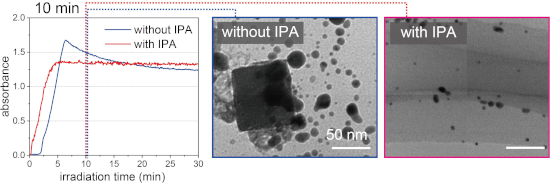
- agents and can form nano- and submicron particles at room temperature and atmospheric pressure, has attracted much attention as a simple and environmentally friendly particle synthesis technique. Laser-based particle synthesis methods can be roughly divided into two categories depending on whether the


Emerging strategies in the sustainable removal of antibiotics using semiconductor-based photocatalysts
Beilstein J. Nanotechnol. 2025, 16, 264–285, doi:10.3762/bjnano.16.21
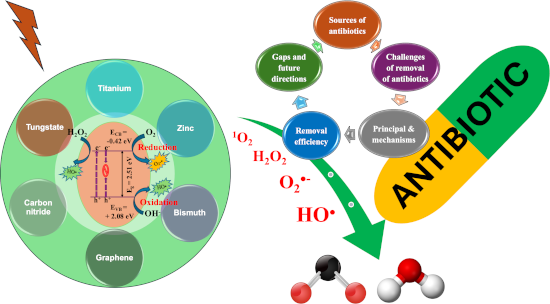
- derivatives possess two notable drawbacks. They are more expensive than other carbon compounds, and their normal synthesis procedure requires using dangerous oxidizing and reducing agents [110]. Therefore, it is crucial to utilize direct, secure, economical, and eco-friendly synthesis methods to use these