Search results
Search for "thermodynamics" in Full Text gives 61 result(s) in Beilstein Journal of Nanotechnology.
Fractional shot noise of an SU(N) Kondo system
Beilstein J. Nanotechnol. 2026, 17, 515–540, doi:10.3762/bjnano.17.34
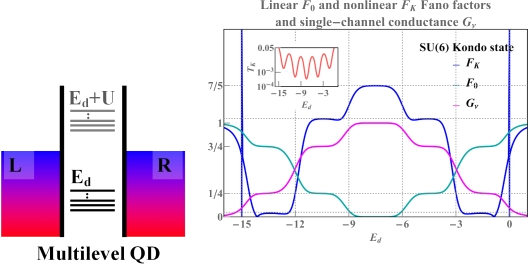
- the calculation of non-diagonal correlators occurring for interacting systems, we use a simple extrapolation of the Wilson coefficient from the case of an isolated system to a system weakly coupled to electrodes. This allows us to determine the FL free energy and, hence, the thermodynamics and


![[Graphic 127]](/bjnano/content/inline/2190-4286-17-34-i187.svg?max-width=637&scale=1.18182)

Defects and defect-mediated engineering of two-dimensional materials: challenges and open questions
Beilstein J. Nanotechnol. 2026, 17, 454–488, doi:10.3762/bjnano.17.31
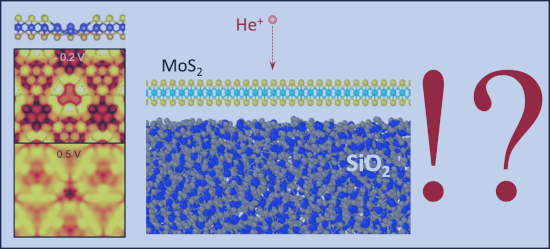
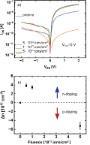
- ; Introduction Defects, which appear in crystalline solids at finite temperatures due to the second law of thermodynamics, are also present in two-dimensional (2D) systems, an important class of materials that have recently received enormous amount of attention due to their unique properties [1]. Moreover, many

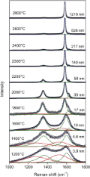




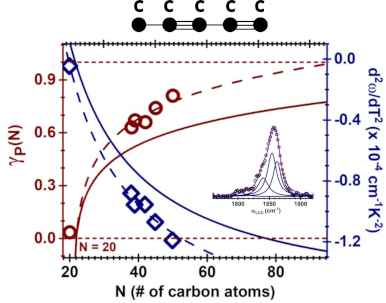
Further insights into the thermodynamics of linear carbon chains for temperatures ranging from 13 to 300 K
Beilstein J. Nanotechnol. 2025, 16, 1818–1825, doi:10.3762/bjnano.16.125


![[Graphic 23]](/bjnano/content/inline/2190-4286-16-125-i25.svg?max-width=637&scale=1.18182)
Dendrimer-modified carbon nanotubes for the removal and recovery of heavy metal ions from water
Beilstein J. Nanotechnol. 2025, 16, 1522–1532, doi:10.3762/bjnano.16.107

- of trace heavy metals from aqueous solutions explaining the kinetics and thermodynamics of adsorption process. Results and Discussion Dendrimerized CNTs have been fabricated by pre-functionalizing the CNTs with MA via Diels–Alder reaction, excluding harmful chemicals and energy-intensive processes


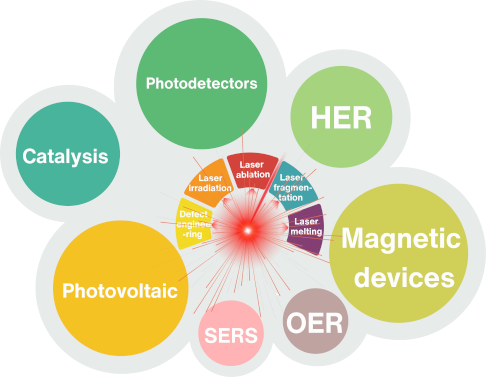
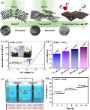
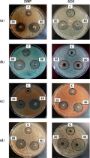
Laser processing in liquids: insights into nanocolloid generation and thin film integration for energy, photonic, and sensing applications
Beilstein J. Nanotechnol. 2025, 16, 1428–1498, doi:10.3762/bjnano.16.104






Time-resolved probing of laser-induced nanostructuring processes in liquids
Beilstein J. Nanotechnol. 2025, 16, 968–1002, doi:10.3762/bjnano.16.74
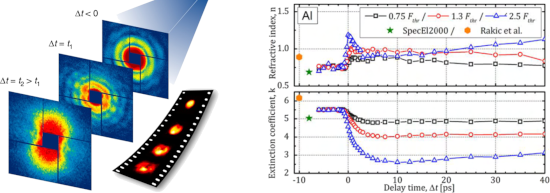
- orders of magnitude timing lag, a phenomenon that demands paradigm-shifting insights supported by direct experimental evidence, unconstrained by traditional equilibrium thermodynamics. Alongside the ongoing effort to understand ultrafast laser–matter interactions, focused research on manipulating phase


Effect of radiation-induced vacancy saturation on the first-order phase transformation in nanoparticles: insights from a model
Beilstein J. Nanotechnol. 2024, 15, 1453–1472, doi:10.3762/bjnano.15.117

- materials. Keywords: α-phase; β-phase; chemical rate theory; Fe; nanoparticle; nucleation; phase stability diagram; polymorphic phase transision; radiation stability; thermodynamics; vacancy saturation; Introduction Solid metal or ceramic nanoparticles with a diameter in the range of 1–100 nm, when placed
- on the model of α→β phase transition and the reverse β→α phase transition from a thermodynamics perspective. Finally, section “Discussion” discusses the effects of size and irradiation, justifying their relevance to metals and ceramics, and presents the particular case of Fe nanoparticles. Theory In
- -state concentrations of these defects under given irradiation conditions. In this approach, the rates of defect formation and annihilation are described by kinetic equations, which may be derived from fundamental principles such as the laws of thermodynamics and statistical mechanics. These equations


Antibody-conjugated nanoparticles for target-specific drug delivery of chemotherapeutics
Beilstein J. Nanotechnol. 2023, 14, 912–926, doi:10.3762/bjnano.14.75

- binding is a highly selective interaction because both enthalpy and entropy are involved in the binding thermodynamics [73]. In case of multivalent particles, the entropy loss on binding is less than that of the two molecules in free solution. The multivalent NPs are very specific for the corresponding




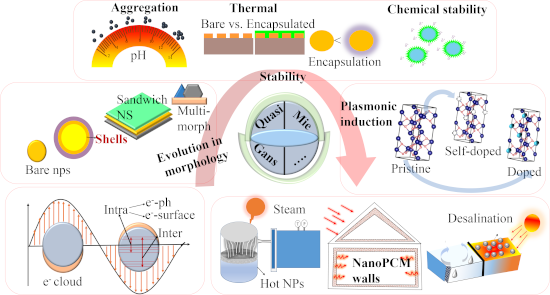
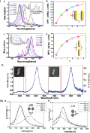
Plasmonic nanotechnology for photothermal applications – an evaluation
Beilstein J. Nanotechnol. 2023, 14, 380–419, doi:10.3762/bjnano.14.33




Polymer nanoparticles from low-energy nanoemulsions for biomedical applications
Beilstein J. Nanotechnol. 2023, 14, 339–350, doi:10.3762/bjnano.14.29
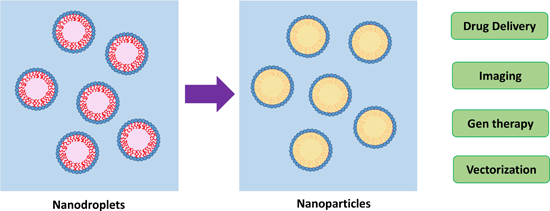
- liquid phase. They are out-of-equilibrium nanocolloids in which phase separation is expected from thermodynamics, but is delayed by the presence of surfactants adsorbed on the droplets surface. Accordingly, nanoemulsion formation depends on the way the sample is prepared, for example, on the order of




Role of titanium and organic precursors in molecular layer deposition of “titanicone” hybrid materials
Beilstein J. Nanotechnol. 2022, 13, 1240–1255, doi:10.3762/bjnano.13.103
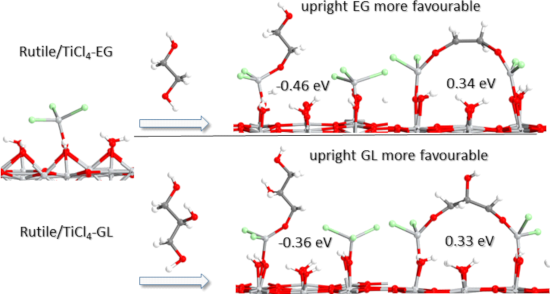
- calculated interaction energies on the anatase TiO2, rutile TiO2 and the Al2O3 surfaces are −0.88 eV, −0.74 eV and −1.47 eV, respectively. Thus, Ti(DMA)4 adsorbs favourably on the three oxide surfaces. Next, the thermodynamics of the first, second and third ligand loss reactions of the Ti(DMA)4 precursor are


Recent advances in nanoarchitectures of monocrystalline coordination polymers through confined assembly
Beilstein J. Nanotechnol. 2022, 13, 763–777, doi:10.3762/bjnano.13.67

- clusters (PNCs), transition phases, and actual second building units (SBUs) in the prenucleation and growth steps (Figure 1). Transition and attachment of these species are not only controlled by thermodynamics but also strongly depend on kinetics. The decisive factors involve diffusion, local flow, and
- through self-assembly [130]. The assembly process is usually driven by thermodynamics to form entropy-favored periodic arrangements. The periodically assembled monocrystalline coordination polymers have unique features. For instance, the assembly of polyhedral coordination polymers can form a more complex






Criteria ruling particle agglomeration
Beilstein J. Nanotechnol. 2021, 12, 1093–1100, doi:10.3762/bjnano.12.81
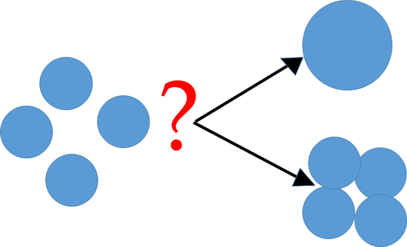
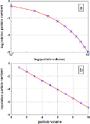
- principle of a minimum of free enthalpy. This means that one has to introduce additional criteria for a complete description of the system. The principle of maximum entropy is based on either the Boltzmann entropy or the Gibbs entropy of mixing. In the description of the thermodynamics of sufficiently large
- of Thermodynamics”, which does not allow a reduction of the entropy to occur. Therefore, Mishin [15] had to put this into a broader theoretical framework. One of the fundamental rules for the entropy in a fluctuating system requires to distinguish between an average level and a maximum level, which
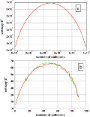
- [1]. Within the current study, the influence of thermodynamics was discussed by systematic analyses of the different thermodynamic functions. Looking at the maximum of the entropy, the simulations show that the particle size distribution follows perfectly an exponential function. The parameters found




Colloidal particle aggregation: mechanism of assembly studied via constructal theory modeling
Beilstein J. Nanotechnol. 2021, 12, 413–423, doi:10.3762/bjnano.12.33
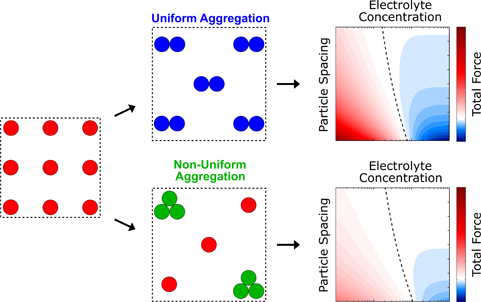
- (global) currents that flow through it” [1]. The main distinction between the classical laws of thermodynamics and constructal law is the former only describes the final equilibrium state of the system while the latter describes how and through what pathway(s) the system naturally progresses to achieve


ZnO and MXenes as electrode materials for supercapacitor devices
Beilstein J. Nanotechnol. 2021, 12, 49–57, doi:10.3762/bjnano.12.4
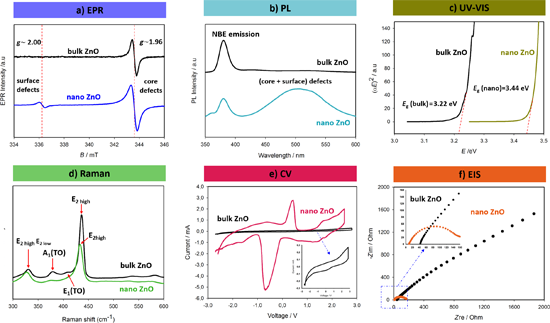
- play a vital role in the creation of the defect centers. Different routes may create different size distributions. The defects may have different thermodynamics and kinetics. Also, secondary phases may occur, and impurities and morphology may change. All these facts affect the creation of defects
Magnetohydrodynamic stagnation point on a Casson nanofluid flow over a radially stretching sheet
Beilstein J. Nanotechnol. 2020, 11, 1303–1315, doi:10.3762/bjnano.11.114
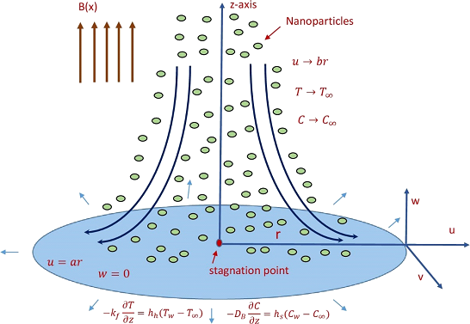
- and medical science in the last decades Since heat energy provides society with several benefits, the field of thermodynamics is applicable to and effectively connected with other fields. Heat transport processes plays a fundamental role in building design [1], fuel-filling systems [2], air compressor


Agglomerates of nanoparticles
Beilstein J. Nanotechnol. 2020, 11, 854–857, doi:10.3762/bjnano.11.70
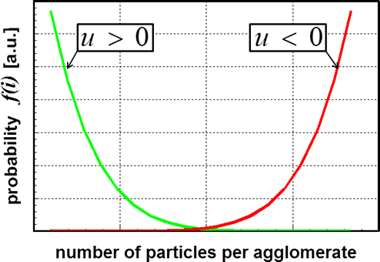
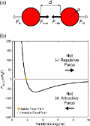
- Dieter Vollath NanoConsulting, Primelweg 3, Stutensee 76297, Germany 10.3762/bjnano.11.70 Abstract Nanoparticles tend to agglomerate. The process of agglomeration is ruled by thermodynamics. Depending on the sign of the enthalpy of interaction, ensembles consist of (repelling) poorly agglomerated


Comparison of fresh and aged lithium iron phosphate cathodes using a tailored electrochemical strain microscopy technique
Beilstein J. Nanotechnol. 2020, 11, 583–596, doi:10.3762/bjnano.11.46
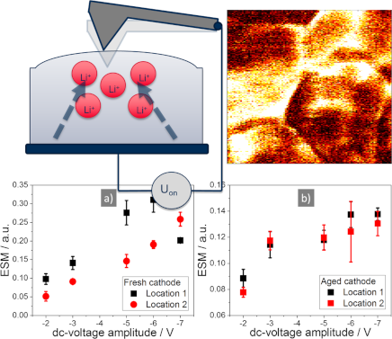
- Matthias Simolka Hanno Kaess Kaspar Andreas Friedrich University of Applied Sciences Esslingen, Faculty of Basic Sciences, 73728 Esslingen, Germany German Aerospace Center (DLR), Institute of Engineering Thermodynamics, Pfaffenwaldring 38–40, 70569 Stuttgart, Germany University of Stuttgart



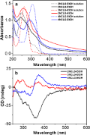
Chiral nanostructures self-assembled from nitrocinnamic amide amphiphiles: substituent and solvent effects
Beilstein J. Nanotechnol. 2019, 10, 1608–1617, doi:10.3762/bjnano.10.156
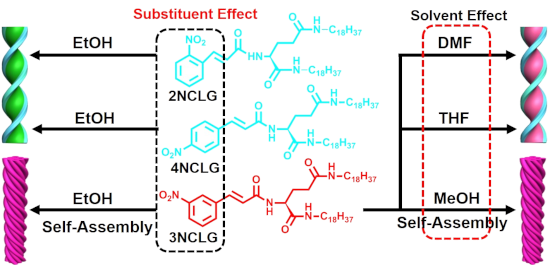
- Hejin Jiang Huahua Fan Yuqian Jiang Li Zhang Minghua Liu Beijing National Laboratory for Molecular Science (BNLMS), CAS Laboratory of Colloid, Interface and Chemical Thermodynamics, Institute of Chemistry, Chinese Academy of Sciences, Beijing 100190, China University of Chinese Academy of Sciences




Selective gas detection using Mn3O4/WO3 composites as a sensing layer
Beilstein J. Nanotechnol. 2019, 10, 1423–1433, doi:10.3762/bjnano.10.140
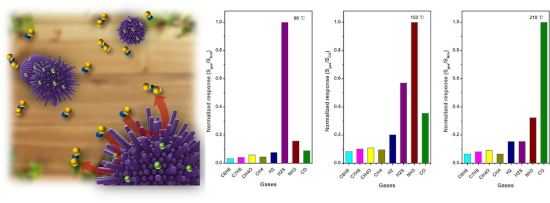
- temperature further increases. For the detection of H2S, NH3 and CO for all four sensors, the maximum response values were achieved at 90 °C, 150 °C and 210 °C, respectively. The thermodynamics and kinetics of the gas adsorption and desorption on the surface of WO3 could be responsible for this “increased


Mechanical and thermodynamic properties of Aβ42, Aβ40, and α-synuclein fibrils: a coarse-grained method to complement experimental studies
Beilstein J. Nanotechnol. 2019, 10, 500–513, doi:10.3762/bjnano.10.51
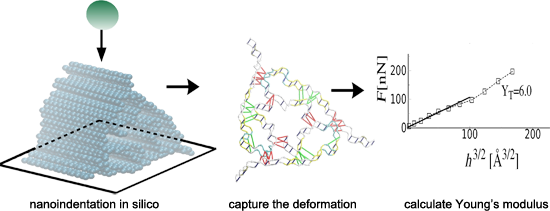
- , shear, and indentation processes. Mechanical and thermodynamics characterization through a CG model In our previous work [36], we have constructed a computational protocol for performing several types of mechanical deformation in silico (Figure 3). Such processes can be carried out at constant speed or


Bidirectional biomimetic flow sensing with antiparallel and curved artificial hair sensors
Beilstein J. Nanotechnol. 2019, 10, 32–46, doi:10.3762/bjnano.10.4
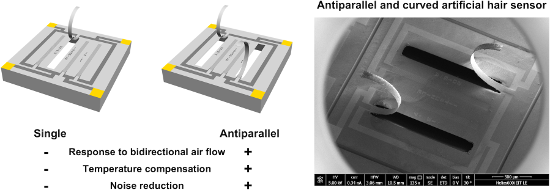
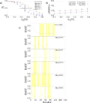
- situated directly beneath the flow sensor for 10 minutes, while the offset voltage of the Wheatstone bridge was recorded. The built-in Wheatstone bridge circuit was excited with Vexc = +5.0 V DC. To eliminate additional highly complex thermodynamics, measurements were performed without air flow. A high


Nanostructured liquid crystal systems and applications
Beilstein J. Nanotechnol. 2018, 9, 2644–2645, doi:10.3762/bjnano.9.245

- crystals are simply fantastic and beautiful materials. The investigation of liquid crystals makes an important contribution to the development of new scientific methods and approaches in mathematics, computer science, molecular-statistical physics, thermodynamics, electrodynamics, etc. The methods derived
Block copolymers for designing nanostructured porous coatings
Beilstein J. Nanotechnol. 2018, 9, 2332–2344, doi:10.3762/bjnano.9.218
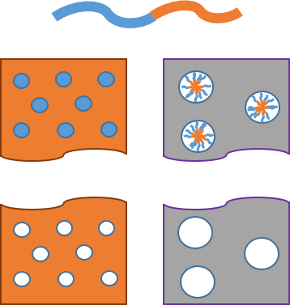
- –disorder transition at a certain value of χN [43]. In detail, the Flory–Huggins model relies on the thermodynamics of polymer solutions by considering the Gibbs free energy for mixing polymer with solvents. According to the Flory–Huggins theory, to calculate the Flory–Huggins interaction parameter, it must


Surface energy of nanoparticles – influence of particle size and structure
Beilstein J. Nanotechnol. 2018, 9, 2265–2276, doi:10.3762/bjnano.9.211
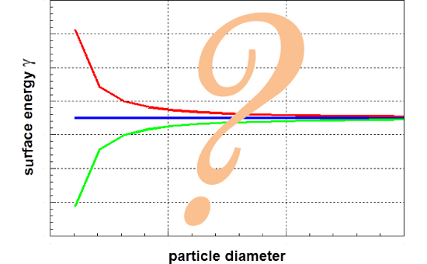
- .9.211 Abstract The surface energy, particularly for nanoparticles, is one of the most important quantities in understanding the thermodynamics of particles. Therefore, it is astonishing that there is still great uncertainty about its value. The uncertainty increases if one questions its dependence on
- particle size. Different approaches, such as classical thermodynamics calculations, molecular dynamics simulations, and ab initio calculations, exist to predict this quantity. Generally, considerations based on classical thermodynamics lead to the prediction of decreasing values of the surface energy with
- particle size is found. The main conclusion of this work is that surface energy values for the equivalent bulk materials should be used if detailed data for nanoparticles are not available. Keywords: ab initio calculations; classical thermodynamics; molecular dynamics simulation; surface energy; surface