


Search results
Search for "SEM" in Full Text gives 1114 result(s) in Beilstein Journal of Nanotechnology. Showing first 200.
Multilayered hyperbolic Au/TiO2 nanostructures for enhancing the nonlinear response around the epsilon-near-zero point
Beilstein J. Nanotechnol. 2026, 17, 251–261, doi:10.3762/bjnano.17.17
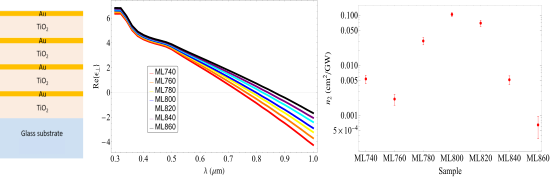
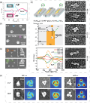
- the deposited layers. In Table 1, we can see that we have widths for every stack that are different from the ones proposed for the simulated ENZ points. This change in thickness was also seen in scanning electron microscopy (SEM). In Figure 4a we present a SEM image of the ML800 structure; we see that


Comparative study on 3D morphologies of delignified, single tracheids and fibers of five wood species
Beilstein J. Nanotechnol. 2026, 17, 239–250, doi:10.3762/bjnano.17.16
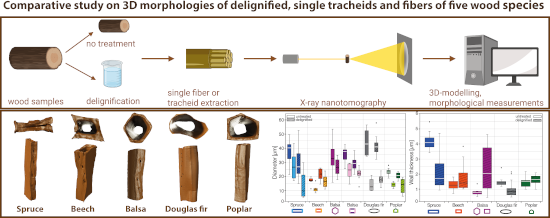
- nitrogen and subsequent lyophilization overnight (−45 °C, 0.080 mbar, Christ Alpha 2–4 LDplus, Christ, Osterode, Germany). Scanning electron microscopy Air-dried wood samples of each of the five species (untreated and delignified) were glued onto metal (SEM) stubs and sputter-coated with a 10 nm layer of
- gold–palladium (Leica Bal-TEC SCD500, Leica, Wetzlar, Germany). The samples were then visualized using a scanning electron microscope (SEM) Hitachi S-4800 (Hitachi, Tokyo, Japan) at an accelerating voltage of 1.5 kV. Nanotomography and 3D reconstruction Single fibers and tracheids were easily
- size resulted from the quality of the scans, as some scans were not of sufficient quality for the purpose of this study. We therefore only worked with the scans with sufficient quality (16 in total). Moreover, the diameter and wall thickness were additionally measured from SEM images of the untreated


Gold nanoparticle-decorated reduced graphene oxide as a highly effective catalyst for the selective α,β-dehydrogenation of N-alkyl-4-piperidones
Beilstein J. Nanotechnol. 2026, 17, 218–238, doi:10.3762/bjnano.17.15
- , scanning electron microscopy (SEM) and nitrogen gas sorption surface area analysis using the Brunauer–Emmett–Teller (BET) theory were employed to evaluate the surface structure, porosity, and overall texture of the materials. The SEM image in Figure 2a reveals the typical structure of AC, characterized by
- small particles. The nitrogen sorption isotherms and their hysteresis loops in Figure 3 supplement the SEM analysis of the three carbon materials in terms of specific BET surface area, and pore volume and size. AC features a reversible almost type-I isotherm, given by microporous materials with narrow


Time of flight secondary ion mass spectrometry imaging of contaminant species in chemical vapour deposited graphene on copper
Beilstein J. Nanotechnol. 2026, 17, 200–213, doi:10.3762/bjnano.17.13
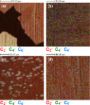
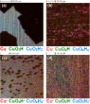
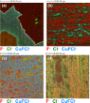
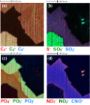
- a Wyko NT1100 White Light Optical Profiling System using a 20× magnification in vertical scanning interferometry (VSI) mode. Scanning electron microscopy (SEM) was carried out with a Carl Zeiss SIGMA VP at an acceleration voltage of 2 kV to ensure sample consistency. Four separate Cu foil samples





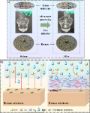
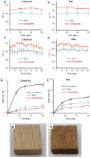
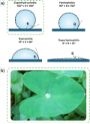
Functional surface engineering for cultural heritage protection: the role of superhydrophobic and superoleophobic coatings – a comprehensive review
Beilstein J. Nanotechnol. 2026, 17, 63–96, doi:10.3762/bjnano.17.6




Subdigital integumentary microstructure in Cyrtodactylus (Squamata: Gekkota): do those lineages with incipiently expressed toepads exclusively exhibit adhesive setae?
Beilstein J. Nanotechnol. 2026, 17, 38–56, doi:10.3762/bjnano.17.4
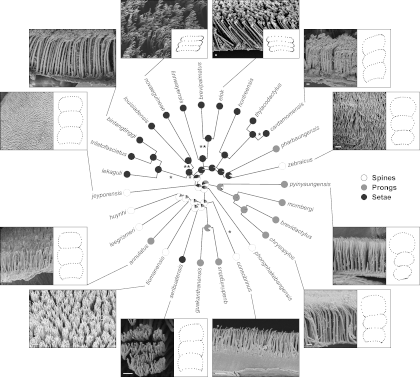
- early-stage development of macroscopically visible incipient toepads. Using SEM and phylogenetic comparative analyses, our objectives were to (a) clarify how integumentary microstructural traits relate to the presence of incipient toepads and (b) identify potential adaptations linked to specific habitat
- variation of digital form within this genus, from species with ancestrally small, round subdigital scales to macroscopically defined incipient toepads (broadened lamella-like subdigital scales). We employed scanning electron microscopy (SEM) and phylogenetic comparative methods to (a) explore the
- for SEM to characterize and measure the microstructures of the ventral scale surface. Six morphometric traits of the epidermal microstructures were quantified using ImageJ, and effective bending stiffness was estimated. To explore evolutionary and ecological patterns, phylogenetic comparative analyses


Reduced graphene oxide paper electrode for lithium-ion cells – towards optimized thermal reduction
Beilstein J. Nanotechnol. 2026, 17, 24–37, doi:10.3762/bjnano.17.3
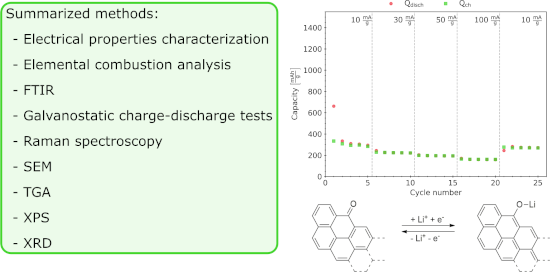
- . SEM imaging The morphological properties of the rGO paper were described based on SEM imaging (Phenom ProX). The thicknesses of the obtained sheets were determined from SEM images of the samples’ cross sections as an averaged value calculated over 50 length readings. TGA TGA Q5000 equipment was
- Discussion SEM images are presented in Figure 2a–c. With these, the rGO paper sheet thickness was determined (Table 1), reaching from 4.95 μm for the initial M300 material [34] up to 36.48 μm after the thermal treatment. The expansion of the fabricated films originates from thermal exfoliation [42]. The
- reduced graphene oxide flake structure with examples of oxygen functionalities, that is, ketone (C=O), epoxide (C–O–C), carboxyl (COOH), hydroxy (OH), and aldehyde (CHO) groups. (b) Suggested redox reaction scheme [6][24][25]. This scheme was prepared with the help of the ChemDraw Ultra tool [26]. SEM



Visualizing nanostructures in supramolecular hydrogels: a correlative study using confocal and cryogenic scanning electron microscopy
Beilstein J. Nanotechnol. 2025, 16, 2274–2284, doi:10.3762/bjnano.16.156
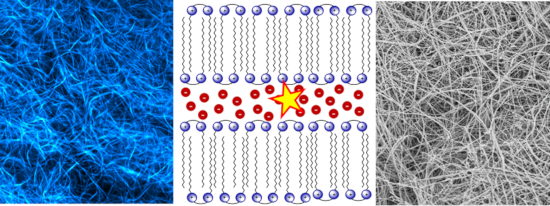
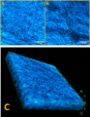
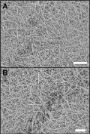
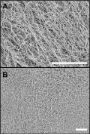
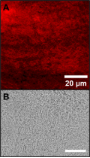
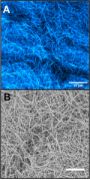
- ) fluorophores were imaged using confocal laser scanning microscopy (CLSM) of fully solvated gels and cryogenic scanning electron microscopy (cryo-SEM) was used to observe the corresponding xerogels. The DPP@Gel systems exhibit strong fluorescence and are effectively imaged using CLSM, with fibre morphologies
- that closely correlate with those seen with cryo-SEM. In contrast, the analogous imidazolium gel system containing a sulfonated zinc phthalocyanine (ZnPc@Gel) yields poor CLSM images because of the relatively weak emission and sample disruption during compression, whereas cryo-SEM enables clear
- visualization of the native fibrous network. These results demonstrate the complementary nature of CLSM and cryo-SEM and highlight the value of cryo-SEM as a very useful tool for imaging soft nanomaterials with low fluorescence or limited optical contrast. Keywords: anion binding; colloid; fluorophore



Chiral plasmonic nanostructures fabricated with circularly polarized light
Beilstein J. Nanotechnol. 2025, 16, 2245–2264, doi:10.3762/bjnano.16.154
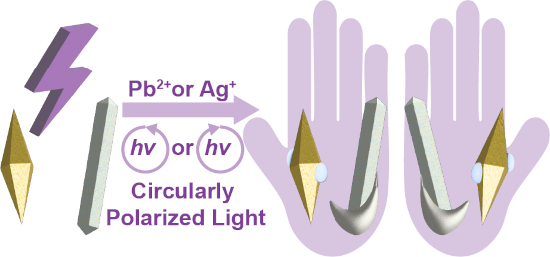
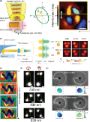
- nanocubes exhibiting complex shapes in SEM images were synthesized using an aqueous solution of HAuCl4, methanol, and PVP with CPL [59]. The optical activity of the nanocubes was observed clearly in single-particle differential circular dichroism scattering spectra, as shown in Figure 4d. Optically chiral
- features of the cPNSs into the simulation software. The morphological features are typically obtained from TEM or SEM. Ideally, electron tomography can generate accurate 3D morphological information of the cPNSs to feed into the simulation, although such analysis on nanocrystals is still far from routine





Ultrathin water layers on mannosylated gold nanoparticles
Beilstein J. Nanotechnol. 2025, 16, 2183–2198, doi:10.3762/bjnano.16.151
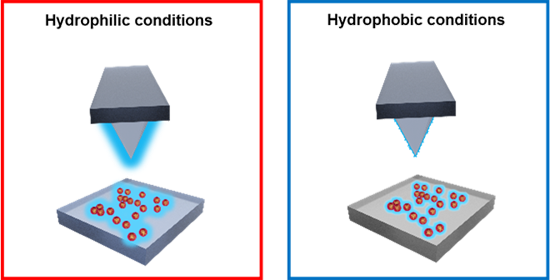
- short oligo(ethylene glycol) chains. The particles were first characterized by dynamic light scattering (DLS) and zeta potential (ZP) measurements in solution, and by scanning electron microscopy (SEM) and scanning transmission electron microscopy (STEM) in vacuum. Samples were adsorbed on flat
- either case the NPs will expand. We will, however, demonstrate the role of the ligand conformation. We obtained detailed spatial characterization by SEM, to measure size and shape, and to detect aggregation upon adsorption on surfaces of different hydrophilicity (see Supporting Information File 1
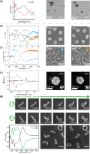
- concentration of carboxylate) exhibit a lower ZP (approx. −45 mV) at the same pH [1]. To obtain a clearer view of the size distribution, we used SEM to evaluate particle sizes and morphologies in high vacuum (i.e., for completely dried samples). By adjusting a Gaussian fit to the histograms (Figure 3), the



Microplastic pollution in Himalayan lakes: assessment, risks, and sustainable remediation strategies
Beilstein J. Nanotechnol. 2025, 16, 2144–2167, doi:10.3762/bjnano.16.148
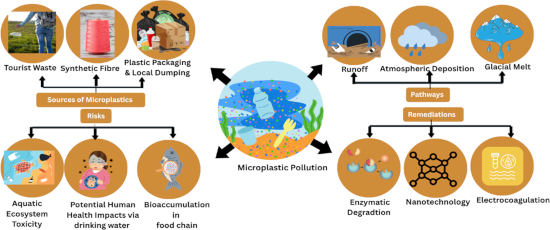
- microscopy (SEM) produces high-resolution images of particle shapes. It also indicates surface wear and tear patterns that reflect how old the MP is and how long it has been in the environment [38]. Ease of operation and minimal cost of optical microscopy make it widely used, despite being less sophisticated
- than SEM. It is particularly useful in morphological examination, size grading, and rapid particle identification. The combination of optical microscopes and modern digital imaging techniques allows for automatic particle classification and counting, which greatly decreases the extent of human
- intervention and possibility of error [39]. Microscopy and spectroscopy tend to be combined to increase reliability. For instance, Raman or FTIR spectroscopy is applied to identify polymers following SEM to examine the shape of particles. This ensures both chemical and physical characteristics are captured [40


Rapid synthesis of highly monodisperse AgSbS2 nanocrystals: unveiling multifaceted activities in cancer therapy, antibacterial strategies, and antioxidant defense
Beilstein J. Nanotechnol. 2025, 16, 2105–2115, doi:10.3762/bjnano.16.145
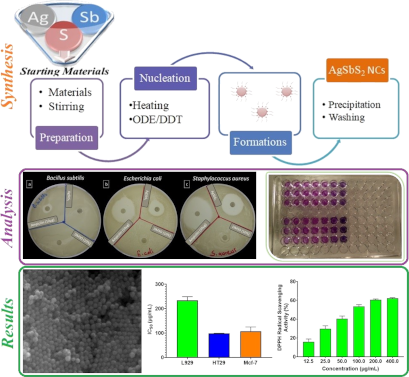
- ) planes of the AgSbS2 phase. TEM and SEM techniques were used to comprehensively characterize the NCs. The results showed that spherical NCs were predominantly formed, with an average diameter of approximately 32 ± 10 nm. Cytotoxicity studies demonstrated a significant inhibitory effect of the NCs
- bonds [34][35]. The characterization of AgSbS2 NCs involved a comprehensive analysis using TEM and SEM techniques, as depicted in Figure 2. Within the SEM and TEM images presented in Figure 2a,b, predominantly spherical NCs are observed, measuring approximately 32 ± 10 nm in diameter. Notably, these
- . Both crystal structure images were created by using the VESTA software [33]. The TEM (a), HRTEM (b), SEM (c) images and SAED (d) patterns of AgSbS2 NCs. Zones of inhibition produced by AgSbS2 NCs against tested bacterial strains. Cytotoxic effects of AgSbS2 NCs on different cell lines (a), IC50 values


Molecular and mechanical insights into gecko seta adhesion: multiscale simulations combining molecular dynamics and the finite element method
Beilstein J. Nanotechnol. 2025, 16, 2055–2076, doi:10.3762/bjnano.16.141
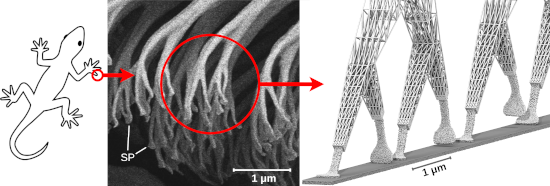
- to more spatula–substrate sites is straightforward but would increase runtime. Models Multiscale seta–spatula model A seta branches into spatulae as seen in scanning electron microscopy (SEM) images of gecko setae (Figure 1). A single seta on a gecko’s foot can have dozens of sub-branches, which
- . Spatulae and substrate: particles Mesoscale spatula model The mesoscale spatula model was derived from prior research. Its shape is based on SEM images [23], and the force field was derived bottom-up from united-atom gecko keratin simulations [12]. The keratin proteins in gecko seta and spatulae form a






Stereodiscrimination of guests in chiral organosilica aerogels studied by ESR spectroscopy
Beilstein J. Nanotechnol. 2025, 16, 2034–2054, doi:10.3762/bjnano.16.140
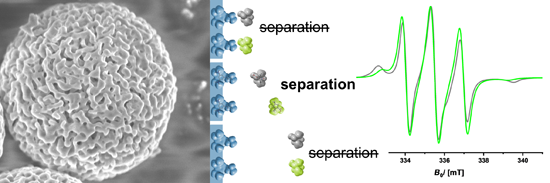
- prepare chiral oSILs by co-condensation of Si(OiPr)4 with a sol–gel precursor that already contains the amino acid. An example is an Ala-modified 1,3-bis(triisopropoxysilyl)aniline [45][49] as shown in Scheme 1. The resulting material was characterized by scanning electron microscopy (SEM; Figure 2a); it




Beyond the shell: exploring polymer–lipid interfaces in core–shell nanofibers to carry hyaluronic acid and β-caryophyllene
Beilstein J. Nanotechnol. 2025, 16, 2015–2033, doi:10.3762/bjnano.16.139
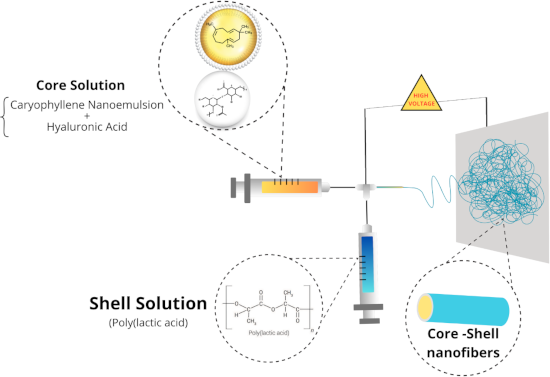
- core–shell structure indicates the absence of core material at the surface, and that the shell structure does not possess pores that would allow permeation or direct contact of water molecules with the core, as evidenced by scanning electron microscopy (SEM) images. Electrospun nanofibers organize into
- SEM imaging of the cross-section of the HA+NE2/PLA sample was performed before and after core removal to observe the core–shell structure. For core removal, a portion of the sample was washed multiple times with distilled water, followed by ethanol, and then dried at room temperature. Samples, both
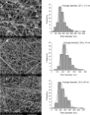
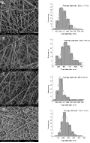
- distribution of β-caryophyllene nanoemulsion measured by DLS: (A) intensity distribution and (B) volume distribution. SEM images of nanofibers obtained from the composition: (A) PLA 20%(w/w) and HA 1%(w/w); (B) PLA 20%(w/w), HA 1%(w/w), and NE 5%(w/w); (C) PLA 20%(w/w), HA 1%(w/w), and NE 2%(w/w); and (D




The cement of the tube-dwelling polychaete Sabellaria alveolata: a complex composite adhesive material
Beilstein J. Nanotechnol. 2025, 16, 1998–2014, doi:10.3762/bjnano.16.138
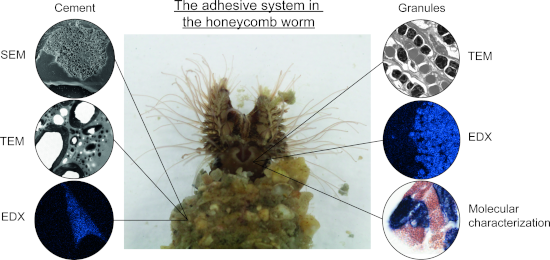
- . Transverse sections through the tubes could be imaged with high resolution in SEM (JEOL JSM-7200F), showing the arrangement of cement spots binding mineral particles together. The epoxy resin embedding technique provided excellent preservation of the cement spot structure. Honeycomb worms embedded in Spurr
- resin (TEM samples) were used for the observation of cement gland secretory granules. All SEM images were acquired in low vacuum mode (50 Pa), with the backscattered electron detector. X-ray microanalysis and elemental mapping were performed using an Oxford X-MaxN energy-dispersive spectrometer (EDS
- ) equipped with an 80 mm2 silicon drift detector. Acquisition conditions on the SEM were 15 kV, 10 mm working distance, and 10 s live time acquisition at approximately 30–40% dead time. The spectra were acquired with an AZtec (Oxford Instrument) EDS data processing software. Transmission electron microscopy



Laser ablation in liquids for shape-tailored synthesis of nanomaterials: status and challenges
Beilstein J. Nanotechnol. 2025, 16, 1963–1997, doi:10.3762/bjnano.16.137




Mechanical property measurements enabled by short-term Fourier-transform of atomic force microscopy thermal deflection analysis
Beilstein J. Nanotechnol. 2025, 16, 1952–1962, doi:10.3762/bjnano.16.136
- spectral analysis techniques, can sufficient temporal resolution of the oscillatory changes in the AFM cantilever within a single experiment be captured to perform such mechanical analysis and allow for the limits of the analytical models to be better validated. Figure 6 shows SEM images of two of the tips




Evaluating metal-organic precursors for focused ion beam-induced deposition through solid-layer decomposition analysis
Beilstein J. Nanotechnol. 2025, 16, 1942–1951, doi:10.3762/bjnano.16.135
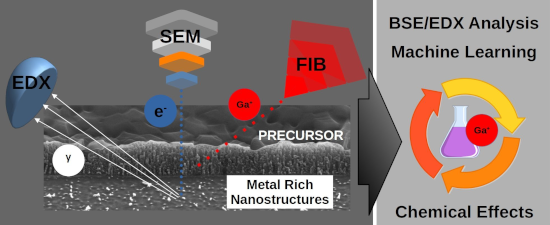
- create a new precursor, extensive testing using specialized gas injection systems is required along with time-consuming and costly chemical analysis typically conducted using scanning electron microscopy (SEM). This process can be quite challenging due to its complexity and expense. Here, the response of
- new metal-organic precursors, in the form of supported thick layers, to the ion beam irradiation is studied through analysis of the chemical composition and morphology of the resulting structures. This is done using SEM backscattered electron/energy-dispersive X-ray spectroscopy along with machine
- -dispersive X-ray spectroscopy (EDX); focused ion beam (FIB); focused ion beam-induced deposition (FIBID); machine learning; scanning electron microscopy (SEM); Introduction A variety of nanomanufacturing techniques, such as optical and electron-beam lithography, nanoimprint lithography, atomic layer


Quantum circuits with SINIS structures
Beilstein J. Nanotechnol. 2025, 16, 1931–1941, doi:10.3762/bjnano.16.134
- thin film of normal metal (the absorber is an element sensitive to incoming radiation) and two NIS junctions that act as a thermometer. An SEM view of the SINIS detector was shown in Figure 1a–f. Often SINIS detectors are considered as classical devices with the optical response equivalent to the
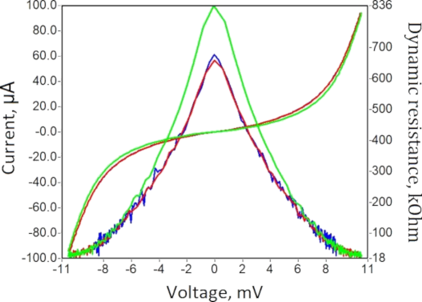
- magnetron sputtering with separate lithography, and (f) single SINIS detector with suspended Hf absorber. Aharonov–Bohm structure. (а) SEM image of the sample made by Manhattan-type SINIS fabrication and (b) I–V curve and dynamic resistance of the Aharonov–Bohm interferometer at 330 mK. NIS thermometer
- series array. (a) Schematic view of a thermometer with a chain of 20 NIS junctions and SEM images of thermometers made by (b) Manhattan technology and (c) magnetron sputtering with separate lithography technology. (a) Ratio of resistance at zero bias to the asymptotic resistance using Equation 7


Low-temperature AFM with a microwave cavity optomechanical transducer
Beilstein J. Nanotechnol. 2025, 16, 1873–1882, doi:10.3762/bjnano.16.130
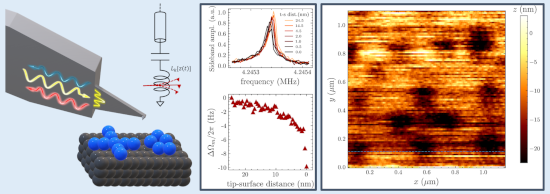
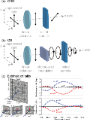
- on a silicon substrate. Each unit cell in the pattern contains different shapes as shown in the SEM image in Figure 6a. The tapered arms of crosses and ribbons shrink to reach a nominal minimum feature size of 20 nm. Figure 6b shows a FM-AFM image of the 1 µm × 1 µm scan area corresponding to the
- Δf. (a) SEM image of the second test sample. The zoomed inset highlights the area imaged with FM-AFM in (b). (c) Fast-Fourier transform of the error signal for a single scan line. The x-axis of the plot is converted to frequency through the pixel acquisition rate Δf = 112 Hz. (d) Single scan line


On the road to sustainability – application of metallic nanoparticles obtained by green synthesis in dentistry: a scoping review
Beilstein J. Nanotechnol. 2025, 16, 1851–1862, doi:10.3762/bjnano.16.128
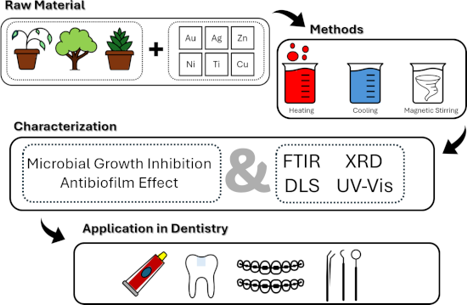
- potential cytotoxicity of these nanoparticles within the complex and dynamic oral environment [15][20]. A significant number of selected studies (n = 23; 24.1%) also failed to perform advanced physicochemical characterizations, such as FTIR, SEM, or XRD, which are essential for confirming nanoparticle


Current status of using adsorbent nanomaterials for removing microplastics from water supply systems: a mini review
Beilstein J. Nanotechnol. 2025, 16, 1837–1850, doi:10.3762/bjnano.16.127
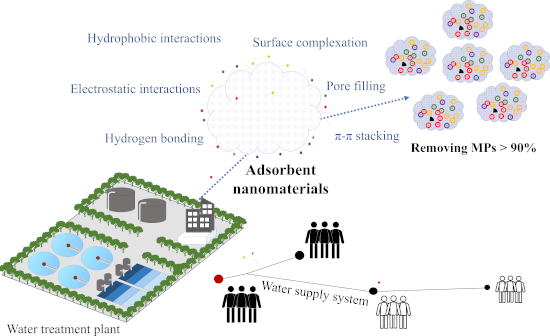
- scalability, adsorbent nanomaterials offer a strong foundation for sustainable solutions that safeguard both human health and aquatic ecosystems. Sources and distribution of MPs in environmental systems. An illustration of the four main groups and mechanisms of adsorbent nanomaterials. SEM and TEM image of
- synthesized Co-MOFs for removing MPs. SEM images of (a) CeO2, (b) CeO2 3D flower-spheres, (c, d) ZIF-67 before and after calcination at 500 °C, (e, f) ZIF-67-90@CeO2, and (g, h) Co–N/C-90@CeO2 composites. TEM images of (i) CeO2 3D flower-spheres, (j) Co–N/C-90@CeO2 composite. (k) Enlarged TEM image of Co–N/C


Prospects of nanotechnology and natural products for cancer and immunotherapy
Beilstein J. Nanotechnol. 2025, 16, 1644–1667, doi:10.3762/bjnano.16.116

- CXCL9/10 expression in Schwann cells [114]. Particle size and stability of the formulation in the patent were characterized using scanning electron microscopy (SEM). The nanoparticles demonstrated enhanced uptake in HepG2 cells, as confirmed by flow cytometry and confocal microscopy, and achieved a
- cell cycle arrest, regulate oxidative stress, enhance metabolic reprogramming, inhibit invasion and metastasis, and modulate immunity and inflammation [129]. The developed nanoparticles underwent physicochemical characterization by SEM, UV–vis spectroscopy, and encapsulation testing, in which the


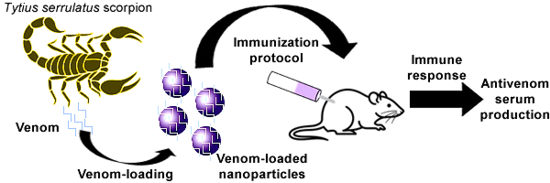
Venom-loaded cationic-functionalized poly(lactic acid) nanoparticles for serum production against Tityus serrulatus scorpion
Beilstein J. Nanotechnol. 2025, 16, 1633–1643, doi:10.3762/bjnano.16.115
- nanoparticles at 1.0% (NPs + Tsv 1.0%). Acknowledgements The authors acknowledge the Department of Materials and Engineering of the Federal University of Rio Grande do Norte for the SEM and AFM analyses. Funding The authors are grateful for the financial support from the National Council for Scientific and





