


Search results
Search for "Si(100)" in Full Text gives 83 result(s) in Beilstein Journal of Nanotechnology.
Highly sensitive detection of estradiol by a SERS sensor based on TiO2 covered with gold nanoparticles
Beilstein J. Nanotechnol. 2020, 11, 1026–1035, doi:10.3762/bjnano.11.87
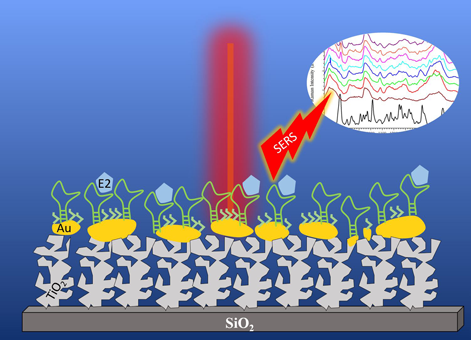
- Si(100) and soda-lime glass substrates, which were mounted on a sample holder at a fixed target-to-substrate distance of 5 cm. Changing the background pressure within the deposition chamber allowed for a tuning of the film morphology (i.e., a higher pressure resulted in a higher film porosity) [28
- perform morphological characterizations of the films deposited on Si(100) substrates. The average size distribution of Au NPs was estimated through statistical analysis of top-view SEM images with the open source software ImageJ®. Since the shape of the Au NPs was not always perfectly circular, their area
- the composite TiO2/Au 6 nm sensor with that of a bare Si(100) substrate on which the same equivalent thickness of Au (6 nm) was evaporated and annealed at 500 °C for 2 h. Figure 6 shows a clearly larger enhancement for both MBA peaks on the TiO2/Au sensor. The resulting EF is about one order of



Structural optical and electrical properties of a transparent conductive ITO/Al–Ag/ITO multilayer contact
Beilstein J. Nanotechnol. 2020, 11, 695–702, doi:10.3762/bjnano.11.57
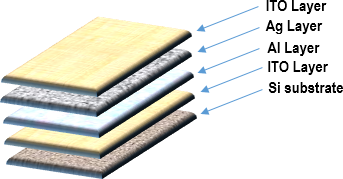
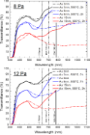
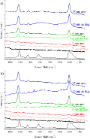
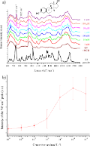
- deposition of ITO films. Aluminium (Al) and silver (Ag) targets of 99.999% purity were purchased and used for the deposition of the Al–Ag interlayer between top and bottom ITO layers. Silicon wafers [Si(100), n-type, phosphorous, 1–10 Ω·cm and 525 ± 25 μm] or commercial soda-lime glass (for optical


Electromigration-induced directional steps towards the formation of single atomic Ag contacts
Beilstein J. Nanotechnol. 2020, 11, 680–687, doi:10.3762/bjnano.11.55
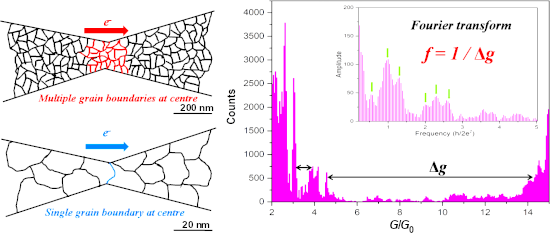
- detail previously. Contrary to most EM experiments with thin metallic films on insulating substrates, the Ag/Si(100) system is unique in the sense that the first Ag layer wets the hydrogen-terminated Si(100) surface [25]. This improves the thermal contact so that thermally assisted processes during EM
- histogram of Figure 4 exhibits finer peak spacings in comparison to Figure 2, which gives a different weight to the overtones between 1.5 and 3 in Figure 5. Conclusion The EM process in ultrathin nanocrystalline Ag structures on Si(100) was investigated for structures that had a narrowest constriction of
- ultrathin Ag films. Experimental Low-doped Si(100) substrates (1000 Ω·cm at 300 K), which are good insulators at temperatures around 100 K, were used. Structuring was carried out by a three-step process. As a first step, we patterned the contact pads by photolithography. Secondly, electron beam lithography


Formation of nanoripples on ZnO flat substrates and nanorods by gas cluster ion bombardment
Beilstein J. Nanotechnol. 2020, 11, 383–390, doi:10.3762/bjnano.11.29
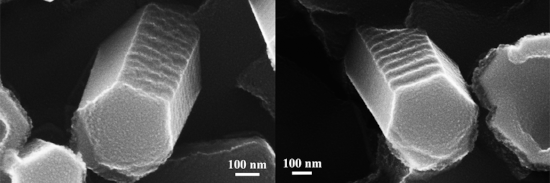
- discussed. The results obtained in this study are of interest in the application of ZnO nanostructures for, e.g., gas sensing, solar cells, or field emitters, where controlled surface morphologies are required. Experimental We have grown ZnO nanorods on Si(100) substrates (HF-Kejing Materials Technology Co



Growth dynamics and light scattering of gold nanoparticles in situ synthesized at high concentration in thin polymer films
Beilstein J. Nanotechnol. 2019, 10, 1768–1777, doi:10.3762/bjnano.10.172
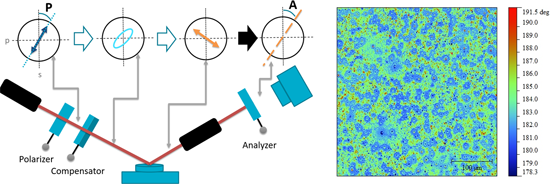
- + cations was spin-coated using a Laurell WS-650-23B coater on RCA-cleaned Si(100) wafers fragments (2000 rpm, 90 s). Based on an average volume mass for PVA of 1.26 g/cm3, the 2% gold-to-PVA mass ratio corresponds to a volume fraction of fAu = 0.13% in the dry film. Optical scattering measurements Optical


CuInSe2 quantum dots grown by molecular beam epitaxy on amorphous SiO2 surfaces
Beilstein J. Nanotechnol. 2019, 10, 1103–1111, doi:10.3762/bjnano.10.110
- preparation The samples presented in this work were grown in a molecular beam epitaxy system (Omicron EVO 50) by evaporating high-purity solid precursors. Nanodots were grown on Si(100) with an approximately 1.6 nm thick layer of native SiO2. The substrates were outgassed at 600 °C for 10 min before the
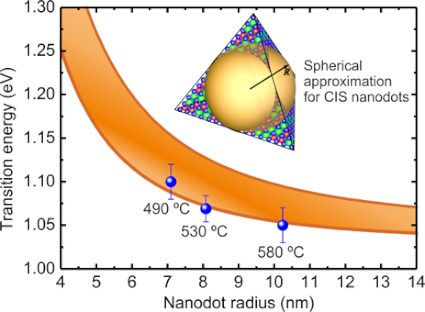
- typically produces films with a thickness of 50–70 nm. Results and Discussion We prepared three samples grown on Si(100) substrates with a ca. 1.6 nm layer of native SiO2 using exactly the same evaporation fluxes but at different substrate growth temperatures (TG) of 490, 530, and 580 °C. Figure 1 shows


On the transformation of “zincone”-like into porous ZnO thin films from sub-saturated plasma enhanced atomic layer deposition
Beilstein J. Nanotechnol. 2019, 10, 746–759, doi:10.3762/bjnano.10.74
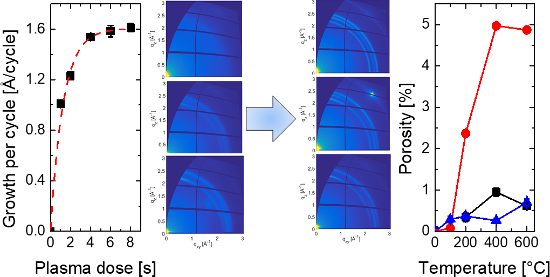
- , process windows for the formation of highly porous materials are presented. Similar studies are missing for Zn-based materials. Experimental A custom-built direct plasma ALD reactor was used to deposit the zincone-like thin films on one-side polished c-Si (100) substrates (Siegert Wafer). The reactor was


Ultrathin hydrophobic films based on the metal organic framework UiO-66-COOH(Zr)
Beilstein J. Nanotechnol. 2019, 10, 654–665, doi:10.3762/bjnano.10.65
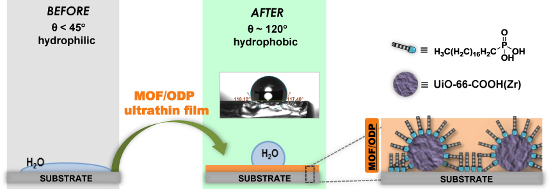
- OPD/MOF ultrathin films have been fabricated onto glass, calcium fluoride, quartz crystal microbalance (QCM), Si(100) substrates and mica and characterized using scanning electron microscopy (SEM), Fourier transform infrared spectroscopy (FTIR), X-ray diffraction (XRD), atomic force microscopy (AFM
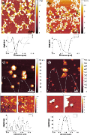
- of the MOF, grazing incidence X-ray diffraction (GIXRD) studies were performed both on LB and drop-cast samples deposited onto Si(100) substrates (Figure 4 and Supporting Information File 1, Figure S7). The GIXRD patterns of LB samples confirm the main peaks of UiO-66-COOH(Zr), at 7.4°, 8.5°, 12.1
- deposited onto Si(100) wafers was done using a high-resolution Empyrean diffractometer (PANalytical) operating at 45 kV (generator voltage) and a tube current of 40 mA (Cu Kα radiation). A Pixcell 1D medipix3 detector operating in the open detector mode was used. An optimization of the grazing incidence


Biocompatible organic–inorganic hybrid materials based on nucleobases and titanium developed by molecular layer deposition
Beilstein J. Nanotechnol. 2019, 10, 399–411, doi:10.3762/bjnano.10.39
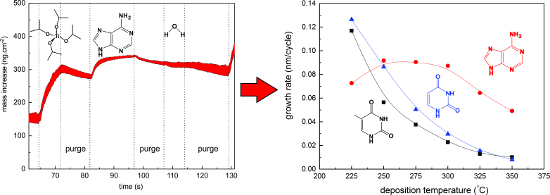
- density of the systems were measured after 15 minutes of water treatment (Table 3), indicating some variations in index of refraction, but relatively small variations in film density between the different systems. The surface topography of films as-deposited on Si(100) and after being immersed in water
- precleaned single crystal substrates cut from Si(100) wafers. The growth dynamics were investigated in situ by a quartz crystal microbalance (QCM) using a Maxtek TM400 unit and homemade crystal holders. A change in resonance frequency of the crystal is linearly proportional to the mass of the deposited film
- purging system. An uncoated Si(100) substrate was used to collect the background. Atomic force microscopy (AFM) measurements were performed in contact mode using a Park XE70 device. The data were analyzed using the Gwyddion 2.44 SPM visualization tool. The contact angle measurements were performed using a


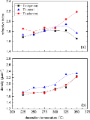


Sub-wavelength waveguide properties of 1D and surface-functionalized SnO2 nanostructures of various morphologies
Beilstein J. Nanotechnol. 2019, 10, 379–388, doi:10.3762/bjnano.10.37
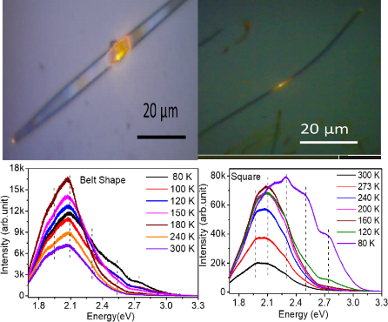
- of SnO2 QDs was discussed in our earlier report [18]. In the case of VLS growth, a mixture of SnO2 QDs of diameter 2.4 nm and graphite powder (Alfa Aesar, 99.9995%) in a 3:1 weight ratio was placed in a high purity Al2O3 (99.99 %) boat. Au-coated Si (100) was used as the substrate. A Au film of 3 nm
- thickness was coated on the Si (100) substrate by using the thermal evaporation (Hind Vacuum, India) technique under a base pressure of 5.0 × 10⁻⁶ mbar. The Si substrate coated with the Au film, used as a catalyst in the growth of SnO2 NWs, was placed 10 mm away from the precursor material in the Al2O3 boat


Size limits of magnetic-domain engineering in continuous in-plane exchange-bias prototype films
Beilstein J. Nanotechnol. 2018, 9, 2968–2979, doi:10.3762/bjnano.9.276
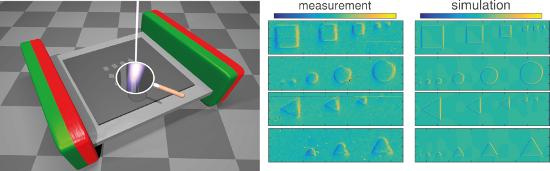
- prototypical in-plane EB layer system Ir17Mn83 (30 nm)/Co70Fe30 (10 nm) was grown by RF sputtering at a power of 160 W and an argon gas flux of 155 sccm on a naturally oxidized 5 nm × 5 nm Si(100) wafer, with Cu (5 nm) buffer and Ta (10 nm) capping. EB at the interface between the antiferromagnetic (AF) and




![[Graphic 63]](/bjnano/content/inline/2190-4286-9-276-i63.svg?max-width=637&scale=1.18182) .
. ![[Graphic 64]](/bjnano/content/inline/2190-4286-9-276-i64.svg?max-width=637&scale=1.18182) is the angle between the domain wall (DW) normal vector
is the angle between the domain wall (DW) normal vector ![[Graphic 65]](/bjnano/content/inline/2190-4286-9-276-i65.svg?max-width=637&scale=1.18182) and the local unidirectio...
and the local unidirectio...
Investigation of CVD graphene as-grown on Cu foil using simultaneous scanning tunneling/atomic force microscopy
Beilstein J. Nanotechnol. 2018, 9, 2953–2959, doi:10.3762/bjnano.9.274
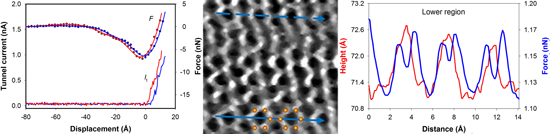
- insight on relative contrast mechanisms in STM and AFM, on a graphene surface. In the past, we used this small-amplitude STM/AFM technique in order to investigate surfaces such as Si(100) [28], Cu(100) [29], Si(111) [30], and more recently Si(111) again, with an improved force resolution [31
- interactions with a larger range. When we compare the range of interactions in the tunnel current and force measurements, we see a different situation to that reported on other surfaces in previous studies. Based on previous works on semiconductors such as Si(111) and Si(100), the onset of tunnel current is


Magnetic properties of Fe3O4 antidot arrays synthesized by AFIR: atomic layer deposition, focused ion beam and thermal reduction
Beilstein J. Nanotechnol. 2018, 9, 1728–1734, doi:10.3762/bjnano.9.164
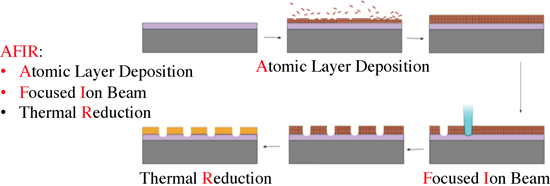
- material, such new Fe3O4 antidot arrays are of interest for the future development of nano-scale biosensors. Experimental Figure 1 shows the outline of the AFIR process. Si(100) wafers with a native layer of SiO2 were coated with hematite (Fe2O3) in a Savannah S100 ALD reactor from Ultratech operated at
- to manufacture square and hexagonal antidot arrays of magnetic oxides among other geometries, and with variable lattice parameters. Outline of the AFIR process. Si(100) wafers with a native layer of SiO2 were coated with Fe2O3. Antidot arrays were directly etched in the continuous films of Fe2O3




Friction force microscopy of tribochemistry and interfacial ageing for the SiOx/Si/Au system
Beilstein J. Nanotechnol. 2018, 9, 1647–1658, doi:10.3762/bjnano.9.157
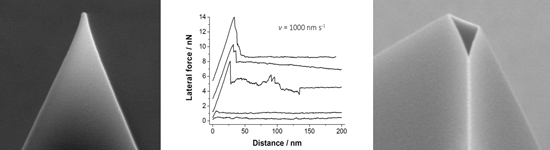
- Christiane Petzold Marcus Koch Roland Bennewitz INM – Leibniz Institute for New Materials, Campus D2 2, 66123 Saarbrücken, Germany 10.3762/bjnano.9.157 Abstract Friction force microscopy was performed with oxidized or gold-coated silicon tips sliding on Au(111) or oxidized Si(100) surfaces in
- was observed for oxidized silicon tips sliding on Au(111) or on oxidized Si(100) surfaces. We therefore deliberately increased the adhesive forces between probes and surfaces. In an attempt to allow for the successive formation of chemical bonds in contact ageing experiments, we removed passivating
- cantilevers before use. A Au(111) single crystal (MaTeck GmbH, Jülich, Germany) was prepared by repeating a sputter–heating cycle (20 min Ar sputtering at 25 μA/1 keV followed by 1 h annealing at 850 °C) until a sharp (111) pattern was observed by low-energy electron diffraction (LEED). The n-Si(100) sample




Field-controlled ultrafast magnetization dynamics in two-dimensional nanoscale ferromagnetic antidot arrays
Beilstein J. Nanotechnol. 2018, 9, 1123–1134, doi:10.3762/bjnano.9.104
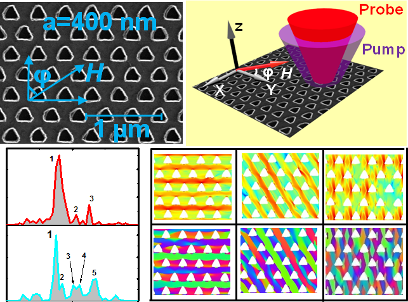
- -dimensional arrays of Py antidots with triangular holes arranged in a hexagonal lattice have been fabricated by a combination of electron-beam lithography, electron-beam evaporation and ion milling. The 20 nm-thick Py film was deposited on a commercially available self-oxidized Si(100) substrate and a 60-nm



Comparative study of sculptured metallic thin films deposited by oblique angle deposition at different temperatures
Beilstein J. Nanotechnol. 2018, 9, 954–962, doi:10.3762/bjnano.9.89
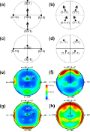
- maxima, revealing a polycrystalline fiber-texture contribution. The four sharp peaks in Figure 2e and 2g, respectively, originate from the Si(100) substrate. The presence of an 800 nm thick oxide layer on the substrate prohibits an epitaxial relationship between the columns and the substrate. In summary



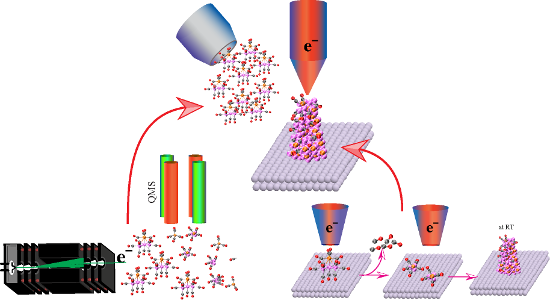
Electron interactions with the heteronuclear carbonyl precursor H2FeRu3(CO)13 and comparison with HFeCo3(CO)12: from fundamental gas phase and surface science studies to focused electron beam induced deposition
Beilstein J. Nanotechnol. 2018, 9, 555–579, doi:10.3762/bjnano.9.53


Design of polar self-assembling lactic acid derivatives possessing submicrometre helical pitch
Beilstein J. Nanotechnol. 2018, 9, 333–341, doi:10.3762/bjnano.9.33
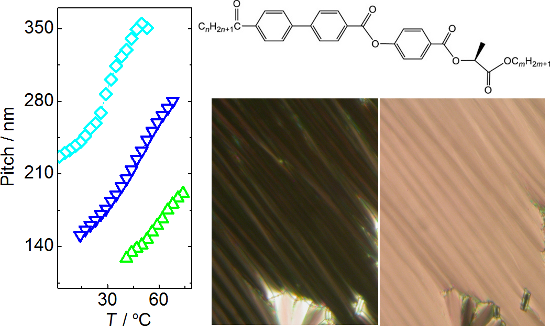
- checked by HPLC analysis (high-pressure pump ECOM Alpha; column WATREX Biospher Si 100, 250 × 4 mm, 5 µm; detector WATREX UVD 250) and were found to be >99.8% with the mixture of 99.9% of toluene and 0.1% of methanol as an eluent using a UV–vis detector (λ = 290 nm). The optical rotation was measured in


Dielectric properties of a bisimidazolium salt with dodecyl sulfate anion doped with carbon nanotubes
Beilstein J. Nanotechnol. 2018, 9, 164–174, doi:10.3762/bjnano.9.19
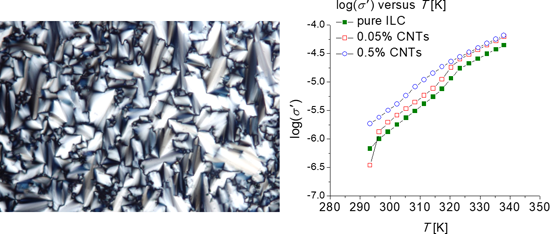
- Si(100) plate, heated to the isotropic state and then cooled down to room temperature prior to data acquisition Dielectric spectroscopy The dielectric spectroscopy measurements were performed using a broadband dielectric spectrometer, NOVOCONTROL, with an Alpha-A high-performance frequency analyzer


Atomic layer deposition and properties of ZrO2/Fe2O3 thin films
Beilstein J. Nanotechnol. 2018, 9, 119–128, doi:10.3762/bjnano.9.14
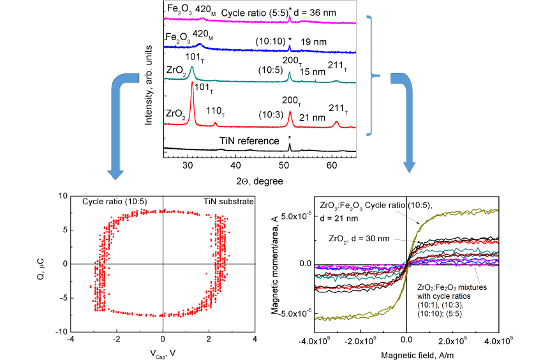
- terms of the chemical composition. Altogether, 220–235 ALD cycles were deposited to obtain each thin film. The films were grown on various substrates: Si(100) and highly doped conductive Si substrates covered by a 10 nm TiN film grown by chemical vapor deposition. Before deposition, the Si(100) was
- rinsed in a mixture of H2SO4/H2O2 5:2 and heated on a hot plate at 80 °C. After that, the Si(100) was cleaned with distilled water in an ultrasound container. The next step was to clean the samples with a 7% solution of HF and again clean with distilled water under ultrasound. During the time after
- cleaning and before placing the samples in a reactor, a SiO2 layer of a few nanometers thick grew on the sample because of contact with surrounding air. Selected samples on Si(100) were annealed at 850 °C and 1000 °C in air for 15 and 10 minutes, respectively. For electrical measurements, the films


Localized growth of carbon nanotubes via lithographic fabrication of metallic deposits
Beilstein J. Nanotechnol. 2017, 8, 2592–2605, doi:10.3762/bjnano.8.260
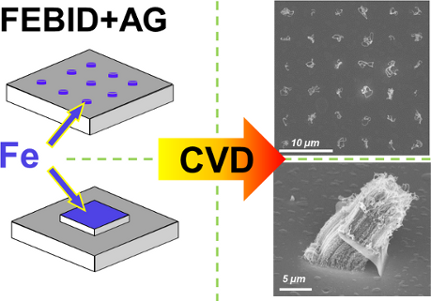
- localized fabrication of CNTs at FEBIP deposits works with our approach as proposed. Figure 1 depicts the result of an exploratory experiment to locally synthesize CNTs via CVD on SiOx/Si(100) using Fe-containing deposits (Figure 1b) as CVD catalysts. The latter were fabricated via EBID (1.2 nC/point) and
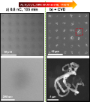
- ], nanoscale actuators [38], and on-chip coolers [5]. A CNT forest is defined as CNTs grown with high density and vertical alignment. Therefore, it is necessary to increase the number of the CNTs grown per surface area. Corresponding attempts on the native oxide surface on Si(100) used for the results
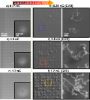
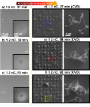
- corresponding CVD experiment was carried out at 1073 K, at which no CNT growth was observed on the SiOx/Si(100) substrate with identically fabricated Fe squares. The detailed images in Figure 6 illustrate two clear trends: an increased CNT yield with increasing square size (right column) and an increasing yield



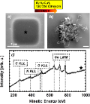

Growth and characterization of textured well-faceted ZnO on planar Si(100), planar Si(111), and textured Si(100) substrates for solar cell applications
Beilstein J. Nanotechnol. 2017, 8, 1939–1945, doi:10.3762/bjnano.8.194
- and Center for Nanoscience and Nanotechnology, National Sun Yat-Sen University, Kaohsiung, Taiwan, R.O.C 10.3762/bjnano.8.194 Abstract In this work, textured, well-faceted ZnO materials grown on planar Si(100), planar Si(111), and textured Si(100) substrates by low-pressure chemical vapor deposition
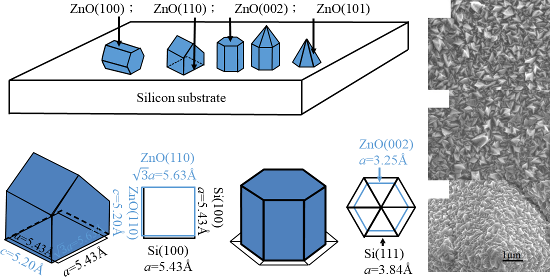
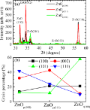
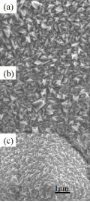
- (LPCVD) were analyzed by X-ray diffraction (XRD), scanning electron microscopy (SEM), atomic force microscopy (AFM), and cathode luminescence (CL) measurements. The results show that ZnO grown on planar Si(100), planar Si(111), and textured Si(100) substrates favor the growth of ZnO(110) ridge-like, ZnO
- (002) pyramid-like, and ZnO(101) pyramidal-tip structures, respectively. This could be attributed to the constraints of the lattice mismatch between the ZnO and Si unit cells. The average grain size of ZnO on the planar Si(100) substrate is slightly larger than that on the planar Si(111) substrate



![[Graphic 2]](/bjnano/content/inline/2190-4286-8-194-i4.png?max-width=637&scale=1.18182) × lattice constant a) by 5.20 Å (l...
× lattice constant a) by 5.20 Å (l...


(Metallo)porphyrins for potential materials science applications
Beilstein J. Nanotechnol. 2017, 8, 1786–1800, doi:10.3762/bjnano.8.180
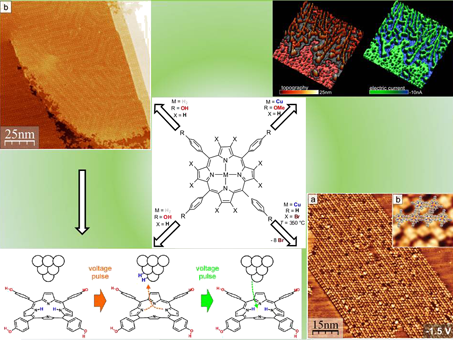
- rate 5 Å/min, temperature 325 °C) on a 30 nm thick nickel bottom electrode on top of a Si(100)/SiO2 wafer (Figure 2). Here, Ni substrates were selected for the growth of CuTPP(OMe)4 in order to investigate a system that may possess valuable possibilities for future device applications, in which the






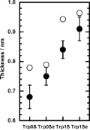
Triptycene-terminated thiolate and selenolate monolayers on Au(111)
Beilstein J. Nanotechnol. 2017, 8, 892–905, doi:10.3762/bjnano.8.91
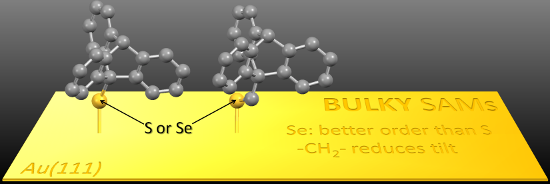
- Supporting Information File 1). Substrates with Au(111) surfaces For the investigation of the SAMs with infrared spectroscopy and electron spectroscopy, single-crystalline Si(100) wafer (Wacker) pieces with evaporated gold layers were used as substrates. Metal deposition was carried out using a commercial




Synthesis of coaxial nanotubes of polyaniline and poly(hydroxyethyl methacrylate) by oxidative/initiated chemical vapor deposition
Beilstein J. Nanotechnol. 2017, 8, 872–882, doi:10.3762/bjnano.8.89
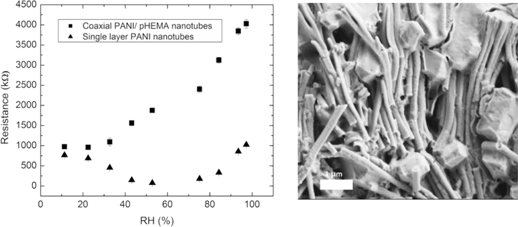
- pentachloride (99%, Sigma Aldrich) (SbCl5) were used as received. Aniline was heated in a metal jar up to 60 °C while SbCl5 was kept at room temperature in a glass jar. Both chemicals were delivered to the system in vapor phase through different ports facing the substrate surface. Glass slides, Si(100) wafers
- originating from the Si(100) planes. Each measurement took 4 h for an adequate signal-to-noise ratio. Thickness of the films on Si wafer and glass substrates was measured with a spectroscopic ellipsometer (M-2000, J. A. Woollam) at 65, 70, and 75° within a range of 300–800 nm. For electrical characterization





