


Search results
Search for "TiN" in Full Text gives 200 result(s) in Beilstein Journal of Nanotechnology.
Properties of tin oxide films grown by atomic layer deposition from tin tetraiodide and ozone
Beilstein J. Nanotechnol. 2023, 14, 1085–1092, doi:10.3762/bjnano.14.89
- implied the formation of single-phase oxide in the films grown at temperatures above 300 °C. Appropriateness of the mentioned precursor system to the preparation of SnO2 films was established. Keywords: atomic layer deposition; tin oxide; tin tetraiodide; Introduction Atomic layer-deposited SnO2 films
- authors aim to provide a comprehensive description of said process and the resulting films. Experimental The films studied in this work were grown in a low-pressure flow-type ALD reactor [16]. Tin(IV) iodide, SnI4 (99.999%, Sigma-Aldrich), used as the tin precursor was evaporated at 83 °C from a half-open
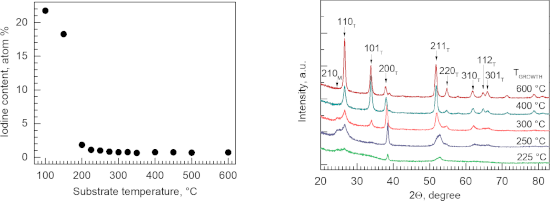
- , stabilized at an appreciably low level of 0.7–0.8 atom % (Figure 7). Since the relatively high oxygen content below a deposition temperature of 200 °C did not arise from increased oxygen amounts in the film, but from decreased tin amounts, one can propose that, at the lowest deposition temperatures, I2O5


Ni, Co, Zn, and Cu metal-organic framework-based nanomaterials for electrochemical reduction of CO2: A review
Beilstein J. Nanotechnol. 2023, 14, 904–911, doi:10.3762/bjnano.14.74
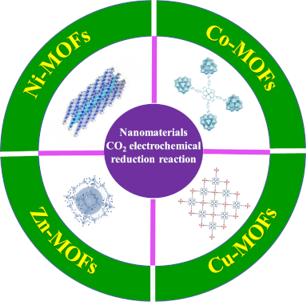
- catalyst for CO2RR. The author postulated that Co(II) is converted into Co(I), which acts as a redox center for the reduction of CO2 into CO (Figure 3c,d). Because of their poor conductivity, Co-MOFs are typically grown on conductive templates, such as fluorine-doped tin oxide (FTO), carbon cloth, and


Plasmonic nanotechnology for photothermal applications – an evaluation
Beilstein J. Nanotechnol. 2023, 14, 380–419, doi:10.3762/bjnano.14.33




Electrical and optical enhancement of ITO/Mo bilayer thin films via laser annealing
Beilstein J. Nanotechnol. 2022, 13, 1589–1595, doi:10.3762/bjnano.13.133
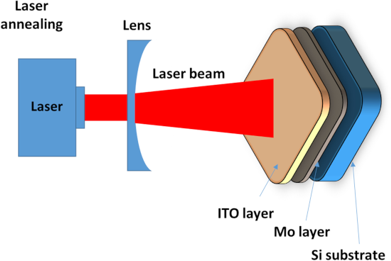
- 17.6 × 10⁻³ Ω−1 of the the annealed structure. The results indicate that the laser annealing could improve the efficiency of the transparent conductive layer, which can be potentially applied in optoelectronic devices. Keywords: indium tin oxide (ITO); laser annealing; molybdenum (Mo); Nd:YAG
- to improve the performance of optoelectronic devices. One of these materials is indium tin oxide (ITO), which combines high transparency with high conductivity [7][8]. However, a single layer of as-deposited ITO shows a high resistivity. Consequently, inserting a very thin metal film layer can


From a free electron gas to confined states: A mixed island of PTCDA and copper phthalocyanine on Ag(111)
Beilstein J. Nanotechnol. 2022, 13, 1572–1577, doi:10.3762/bjnano.13.131
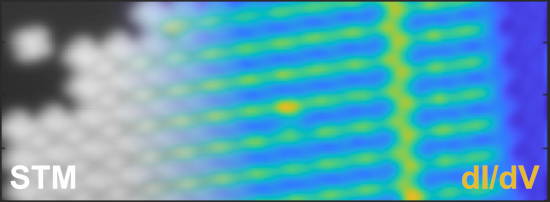
- mixed phase with a phthalocyanine molecule that exhibits different electrical properties, such as has been reported for a mixed phase of tin phthalocyanine (SnPc) with PTCDA [28]. SnPc acts very similarly to CuPc, except the aforementioned F-LUMO is not completely depleted but remains partially filled


Role of titanium and organic precursors in molecular layer deposition of “titanicone” hybrid materials
Beilstein J. Nanotechnol. 2022, 13, 1240–1255, doi:10.3762/bjnano.13.103
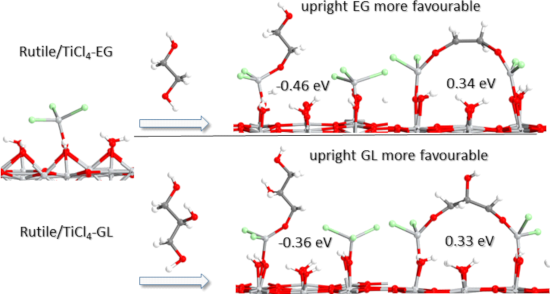
- widely used in ALD for the deposition of TiO2 and TiN films by thermal and plasma-enhanced processes [35][36]. As described above, TiCl4 and Ti(DMA)4 were successfully employed in MLD of titanicone films [30][33]. While TiCl4 is a small halide molecule that has Ti–Cl bonds, Ti(DMA)4 is a bulkier molecule
- the deposition of TiO2 [35] and TiN [36] ALD films and titanicone MLD films [33]. Ti(DMA)4 is a metalorganic precursor containing Ti–N bonds to the organic ligands, dimethylamino (DMA, N(CH3)2), and with a much larger molecular size when compared to TiCl4. It offers some advantages as a precursor


Temperature and chemical effects on the interfacial energy between a Ga–In–Sn eutectic liquid alloy and nanoscopic asperities
Beilstein J. Nanotechnol. 2022, 13, 817–827, doi:10.3762/bjnano.13.72
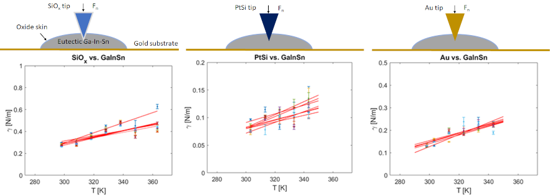
- –substrate interfaces, which promotes the wetting of the gallium melt [14][15]. Similarly, room-temperature-liquid eutectic Ga–In and eutectic Ga–In–Sn alloys have been reported to reactively wet thin indium and tin foils [16]. Also in [16], the authors demonstrated that the wetting of the same liquid alloys
- and calculate the corresponding work of adhesion Wad as suggested in [19] for solid interfaces. The authors measured the adhesion between atomically smooth quasicrystalline surfaces of TiN-coated AFM tips in ultrahigh vacuum by analyzing the pull-off force during atomic force spectroscopy measurements
- that these contributions arose from contamination by the ambient, we excluded them from our calculations of the surface chemical composition. Figure 6 shows that the surface oxide on the melt mainly consists of gallium and tin oxides, with a minor contribution from indium oxide. After heating at 100 °C



Hierarchical Bi2WO6/TiO2-nanotube composites derived from natural cellulose for visible-light photocatalytic treatment of pollutants
Beilstein J. Nanotechnol. 2022, 13, 745–762, doi:10.3762/bjnano.13.66
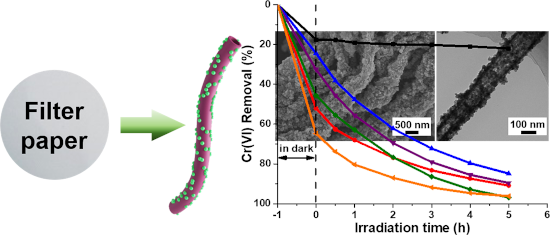
- ultrasonically dispersed in ethanol (1.0 mL) with the addition of a PVDF solution (100.0 μL, 10.0 mg·mL−1, using N-methylpyrrolidone as the solvent), which was then spin-coated on a conducting indium tin oxide (ITO) glass, followed by the calcination process at 100 °C for 24 h, giving the relevant working


Reliable fabrication of transparent conducting films by cascade centrifugation and Langmuir–Blodgett deposition of electrochemically exfoliated graphene
Beilstein J. Nanotechnol. 2022, 13, 666–674, doi:10.3762/bjnano.13.58
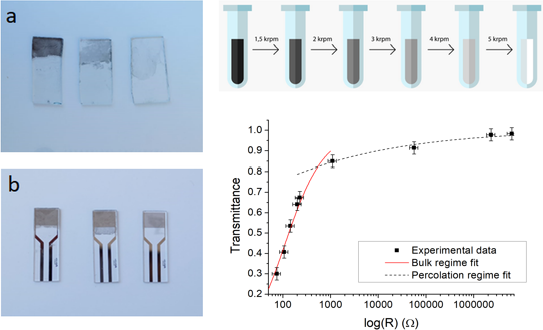
- substrates with dimensions of ca. 2 cm × 1 cm (Figure 2a). Although a great number of different types of substrate materials have been used, such as silica [37], chromium [38], tin [39], silver [40], or platinum [41], glass substrates were used in this paper. Glass is generally a popular choice, not just


Fabrication and testing of polymer microneedles for transdermal drug delivery
Beilstein J. Nanotechnol. 2022, 13, 629–640, doi:10.3762/bjnano.13.55
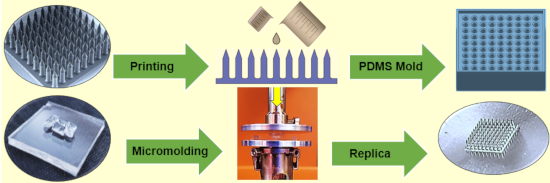
- photoresist was drop cast onto an indium tin oxide (ITO) glass substrate prior to starting the printing process. A dip-in laser lithography (DiLL) objective (25× magnification, NA = 0.8) was used for printing, after which the MN array was washed in propylene glycol methyl ether acetate (PGMEA) for 10 minutes



Influence of thickness and morphology of MoS2 on the performance of counter electrodes in dye-sensitized solar cells
Beilstein J. Nanotechnol. 2022, 13, 528–537, doi:10.3762/bjnano.13.44
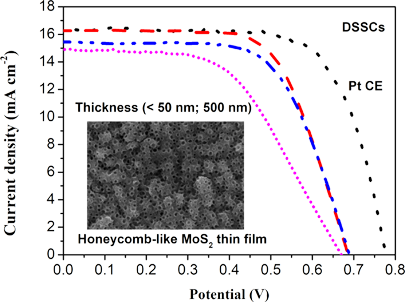
- disulfide (MoS2) was prepared on substrates coated with fluorine-doped tin oxide (FTO) to substitute the platinum counter electrode (CE) for dye-sensitized solar cells (DSSCs). Herein, we synthesized layered and honeycomb-like MoS2 thin films via the cyclic voltammetry (CV) route. Thickness and morphology
- , 25 μm), 18NR-T transparent titania paste (particle size of 20 nm), 18NR-AO active opaque titania paste (particle sizes of 20 and 450 nm), fluorine-doped tin oxide (FTO, TEC8 glass plates, 8 Ω·cm−2, 2.2 mm thickness), and N719 industry standard dye (N719) were purchased from Dyesol (Australia). All


Selected properties of AlxZnyO thin films prepared by reactive pulsed magnetron sputtering using a two-element Zn/Al target
Beilstein J. Nanotechnol. 2022, 13, 344–354, doi:10.3762/bjnano.13.29
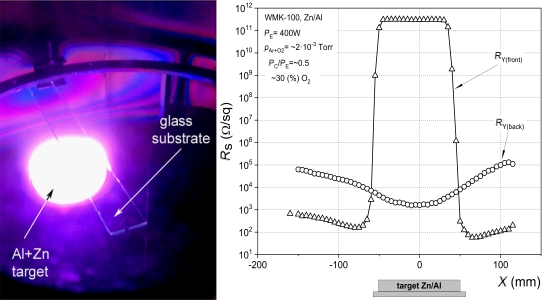
- : aluminium zinc oxide; magnetron sputtering; thin film; transparent conducting oxide; transparent electronics; Introduction Aluminium-doped zinc oxide (AZO) is a potential alternative to indium tin oxide (ITO) for transparent conducting oxide (TCO) electrodes in transparent electronic and photovoltaic



Investigation of a memory effect in a Au/(Ti–Cu)Ox-gradient thin film/TiAlV structure
Beilstein J. Nanotechnol. 2022, 13, 265–273, doi:10.3762/bjnano.13.21
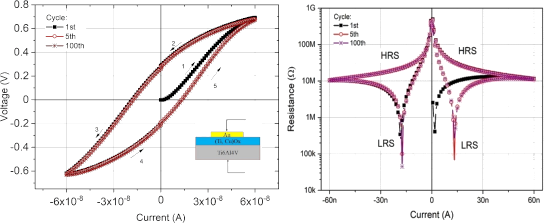
- ]. The most commonly used material in resistive switching devices is TiO2−x [33][34][35][36][37][38]. In addition to the oxide layers, the material used for metal electrodes plays another crucial role in the resistive switching mechanism. Usually, materials such as Au, Ag, Ni, Ti, W, TiN, or ITO are used



Engineered titania nanomaterials in advanced clinical applications
Beilstein J. Nanotechnol. 2022, 13, 201–218, doi:10.3762/bjnano.13.15
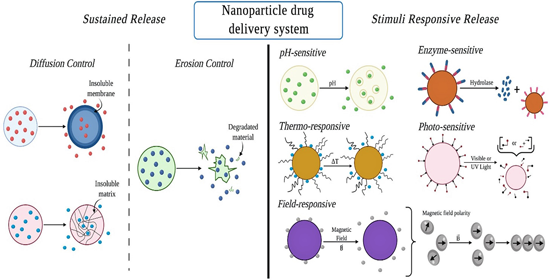
- , titanium nitride (TiN) coating has been licensed by the FDA to be used in titanium alloy components for enhancing durability and corrosion resistance in surgical steel, orthodontics, hip prostheses, and cardiovascular biomaterials [69]. A titania/glass ceramic (TiGC) scaffold was fabricated and coated with


A comprehensive review on electrospun nanohybrid membranes for wastewater treatment
Beilstein J. Nanotechnol. 2022, 13, 137–159, doi:10.3762/bjnano.13.10





Tin dioxide nanomaterial-based photocatalysts for nitrogen oxide oxidation: a review
Beilstein J. Nanotechnol. 2022, 13, 96–113, doi:10.3762/bjnano.13.7
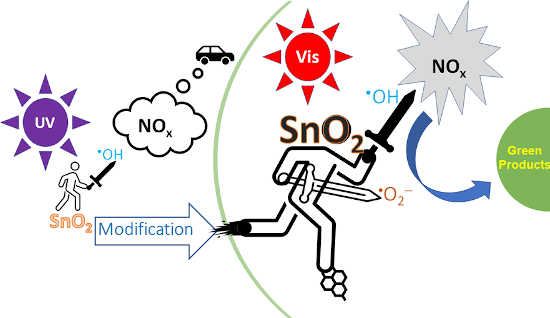
- ] (see Equations 1–10). Recently, research on tin dioxide (SnO2) materials has increased significantly, which expresses the potential of SnO2 materials for the scientific community (Figure 2a). SnO2 is one of the most extensively investigated n-type semiconductors. It is known as tin(VI) oxide or stannic
- oxide (not to be confused with stannous oxide with tin in the oxidation state of 2+ [13], also known as cassiterite [14]. SnO2 materials have many interesting properties. For instance, the structure and electronic structure can be manipulated easily due to the highly tunable valence state and oxygen
- is the most common surface, and it is also thermodynamically the most stable [48]. In the rutile phase of SnO2 in Figure 4b, the (110) plane contains all surface bridging oxygens (1), bridging OVs (2), and oxygen coordinated three- or fivefold (3, 4) with surface tin atoms (Sn 5f). The dual valency


Sputtering onto liquids: a critical review
Beilstein J. Nanotechnol. 2022, 13, 10–53, doi:10.3762/bjnano.13.2

- reported in [56] where zinc (Zn) and tin/copper (Sn/Cu) targets are both co-sputtered in a reactive H2S/Ar reactive plasma for the synthesis of Cu2ZnSnS4 (CZTS) coatings. In the case of reactive sputtering, MFCs manage the flow (usually expressed in standard cubic centimeters per minute, sccm). This is a
- publications, besides Ti+, molecules such as TiN+ or TiO+ and TiO2+ but also reactive gas molecules, atoms, and ions (N2, N2+, N+) were detected in the gas phase. Interestingly, AuO molecules were observed when sputtering Au in an Ar/O2 mixture [65], highlighting the rich gas-phase chemistry of sputtering






Enhancement of the piezoelectric coefficient in PVDF-TrFe/CoFe2O4 nanocomposites through DC magnetic poling
Beilstein J. Nanotechnol. 2021, 12, 1262–1270, doi:10.3762/bjnano.12.93
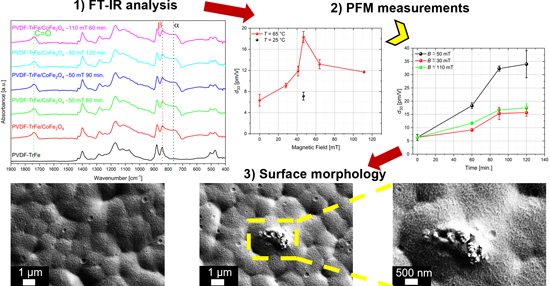
- for 30 min and then spin coated (30 s with a spin speed of 2000 rpm) onto polyethylene terephthalate/indium tin oxide (PET/ITO, Sigma-Aldrich, Rs = 60 Ω/sq). The obtained melt was cured in the oven at 120 °C for 2 h. After curing, the nanostructured thin film was placed over a heated mat reaching 65


Morphology-driven gas sensing by fabricated fractals: A review
Beilstein J. Nanotechnol. 2021, 12, 1187–1208, doi:10.3762/bjnano.12.88
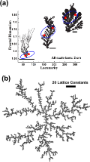
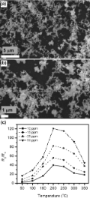
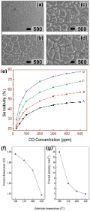
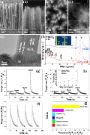
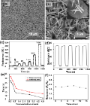
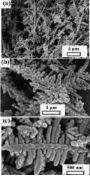
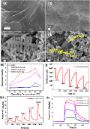
- to some excellent articles on hierarchical gas sensors that address such geometries [8][30][33][37]. Tin oxide-based fractals Yin et al. reported SnO2 nanoparticles with and without platinum (Pt) decoration synthesized using a sol–gel hydrothermal technique for gas sensing applications [63]. Figure
- pits. The self-organization of structures was attributed to tin chloride, which led to a larger size of the pits, while copper oxide led to the formation of hillocks in the film. The D values of the samples were in the range of 2.00–2.24. For the Sn/Cu = 6 ratio, the fractal dimension was 2.0, and the
- . Gracheva and co-workers prepared gas-sensitive fractal structures based on SnO2 and silicon dioxide (SiO2) by a sol–gel technique [57][69][70]. The evolution of fractal aggregates of tin and silicon dioxides resulted in the formation of spherical, labyrinth, and percolation network structures. The










First-principles study of the structural, optoelectronic and thermophysical properties of the π-SnSe for thermoelectric applications
Beilstein J. Nanotechnol. 2021, 12, 1101–1114, doi:10.3762/bjnano.12.82
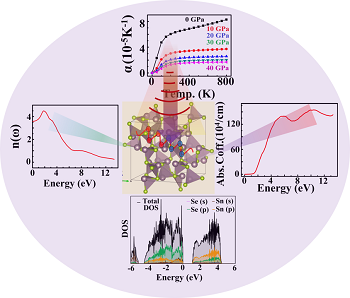
- Abstract Tin selenide (SnSe) has thermoelectric (TE) and photovoltaic (PV) applications due to its exceptional advantages, such as the remarkable figure of merit (ZT ≈ 2.6 at 923 K) and excellent optoelectronic properties. In addition, SnSe is nontoxic, inexpensive, and relatively abundant. These aspects
- make SnSe of great practical importance for the next generation of thermoelectric devices. Here, we report structural, optoelectronic, thermodynamic, and thermoelectric properties of the recently experimentally identified binary phase of tin monoselenide (π-SnSe) by using the density functional theory
- is exceptionally promising for the next generation of photovoltaic and thermoelectric devices at room and high temperatures. Keywords: density functional theory (DFT); electronic properties; lattice thermal conductivity; optical properties; thermodynamic properties; thermoelectric properties; tin


Assessment of the optical and electrical properties of light-emitting diodes containing carbon-based nanostructures and plasmonic nanoparticles: a review
Beilstein J. Nanotechnol. 2021, 12, 1078–1092, doi:10.3762/bjnano.12.80
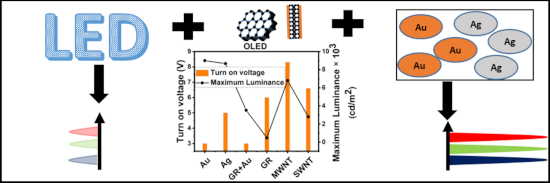
- a large scale. For this purpose, transparent conducting oxides (TCO), such as thin films of In2O3, SnO2, ZnO, and their mixtures have been extensively studied [30][31][32][33][34]. The most widely studied TCO is indium tin oxide (ITO), which possesses good physical properties, such as high optical


Progress and innovation of nanostructured sulfur cathodes and metal-free anodes for room-temperature Na–S batteries
Beilstein J. Nanotechnol. 2021, 12, 995–1020, doi:10.3762/bjnano.12.75
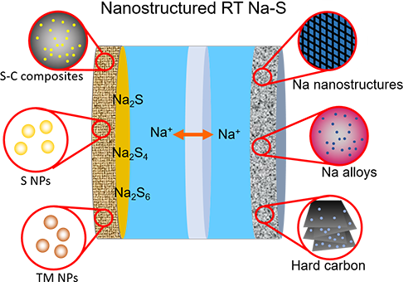
- safely in intermetallic anodes, from which Na ions are reversibly released during discharging and charging processes. Among the most common alloying elements in SiBs are tin [74], antimony [75], and to a lesser degree phosphorous [76]. These elements can be either directly sodiated to form Na alloys or
- anode delivered 625 mAh·g−1 [26]. Also, silicon itself is also another promising material for sodium alloy anodes as its theoretical Na storage capacity of 954 mAh·g−1 (NaSi phase) even exceeds the one of tin (847 mAh·g−1) [26]. The low electrochemical reactivity and structural stability of crystalline





9.1% efficient zinc oxide/silicon solar cells on a 50 μm thick Si absorber
Beilstein J. Nanotechnol. 2021, 12, 766–774, doi:10.3762/bjnano.12.60
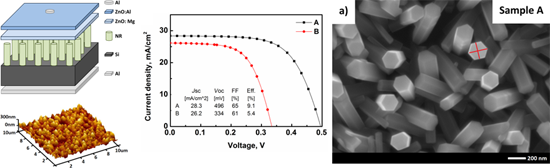
- inexpensive alternatives for indium tin oxide (ITO) [9]. In this work, we used ALD to deposit zinc oxide nanoseeds, magnesium-doped zinc oxide (MZO) layers and aluminium-doped zinc oxide films. We thus continue our interest on photovoltaic structures based on thin films of ZnO. Recently, there have been


A review of defect engineering, ion implantation, and nanofabrication using the helium ion microscope
Beilstein J. Nanotechnol. 2021, 12, 633–664, doi:10.3762/bjnano.12.52


High-yield synthesis of silver nanowires for transparent conducting PET films
Beilstein J. Nanotechnol. 2021, 12, 624–632, doi:10.3762/bjnano.12.51
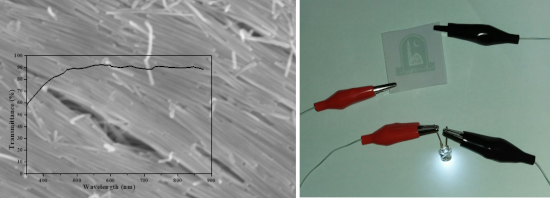
- flexibility after the ink coating. The maximum transmittance value of as-prepared PET films in the visible region was estimated to be about 92.5% with a sheet resistance value of ca. 20 Ω/sq. This makes the films a potential substitute to commonly used expensive indium tin oxide (ITO) in the field of flexible
- electrodes made of sputtered indium tin oxide (ITO) films [1][2][3]. These films are widely used because of their high transmittance, low sheet resistance, and high electrical conductivity. Yet, they still have some major drawbacks such as high cost, intrinsic brittleness due to the ceramic nature [4], and





