


Search results
Search for "X-ray photoelectron spectroscopy (XPS)" in Full Text gives 269 result(s) in Beilstein Journal of Nanotechnology. Showing first 200.
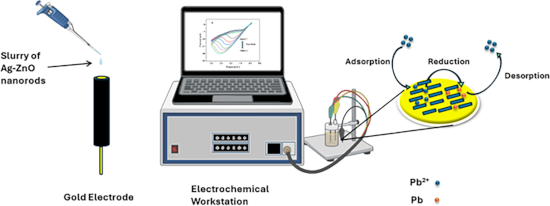
Quantification of lead through rod-shaped silver-doped zinc oxide nanoparticles using an electrochemical approach
Beilstein J. Nanotechnol. 2025, 16, 422–434, doi:10.3762/bjnano.16.33
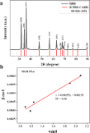
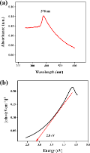
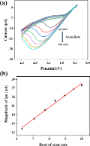
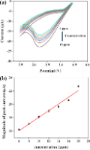
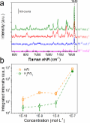
- with XRD results of secondary phase formations [22][23][24]. X-ray photoelectron spectroscopy study of Ag@ZnO nanorods The physical state and chemical compositions of Ag@ZnO NRs were analyzed using X-ray photoelectron spectroscopy (XPS). Figure 7a represents the scan results of the binding energy. The





Pulsed laser in liquid grafting of gold nanoparticle–carbon support composites
Beilstein J. Nanotechnol. 2025, 16, 349–361, doi:10.3762/bjnano.16.26
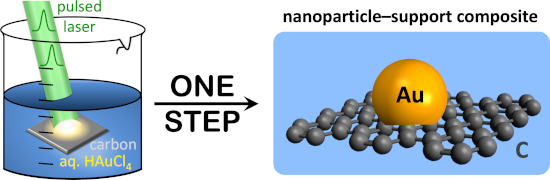
- scattering by the carbon fibers. The pulsed laser-grafted gold nanoparticles exhibited cauliflower morphology with approximately 200 nm diameter and no detectable carbonaceous shells (Figure 2B and cf. X-ray photoelectron spectroscopy (XPS) data below). Assembly of gold nanoparticles by nanosecond laser


A review of metal-organic frameworks and polymers in mixed matrix membranes for CO2 capture
Beilstein J. Nanotechnol. 2025, 16, 155–186, doi:10.3762/bjnano.16.14

- MOF-based MMM system that perturb the crystallinity in the membrane will be discernable through XRD [121][129]. Energy-dispersive X-ray spectroscopy (EDX), and X-ray photoelectron spectroscopy (XPS) are commonly used to supplement the chemical analysis of MOF-based MMMs [113][137][143]. EDX can




Clays enhanced with niobium: potential in wastewater treatment and reuse as pigment with antibacterial activity
Beilstein J. Nanotechnol. 2025, 16, 141–154, doi:10.3762/bjnano.16.13
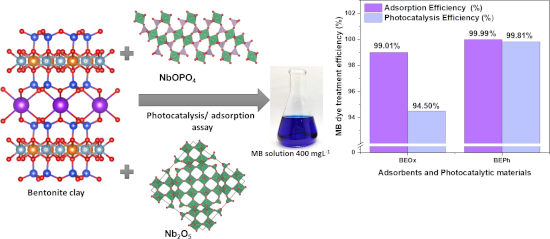
- mode. Powder and paint-applied samples were analyzed by colorimetry, based on the CIEL*a*b* system, using a portable colorimeter (NR60CP – 3NH). The oxidation state and elemental composition of the samples were evaluated using X-ray photoelectron spectroscopy (XPS) with a PHI Genesis instrument from



TiO2 immobilized on 2D mordenite: effect of hydrolysis conditions on structural, textural, and optical characteristics of the nanocomposites
Beilstein J. Nanotechnol. 2025, 16, 128–140, doi:10.3762/bjnano.16.12
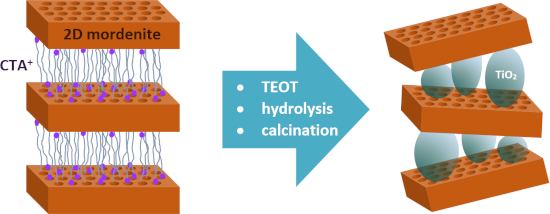
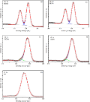
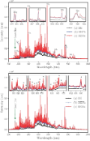
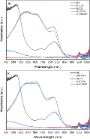
- and TEOT, studied in our previous work [5], for which even after hydrolysis for 12 h in water the long-range order of the lamellae was preserved. The results of the elemental analysis using energy dispersive X-ray (EDX) and X-ray photoelectron spectroscopy (XPS) of the parent lamellar sample and TiO2



Electrochemical nanostructured CuBTC/FeBTC MOF composite sensor for enrofloxacin detection
Beilstein J. Nanotechnol. 2024, 15, 1522–1535, doi:10.3762/bjnano.15.120
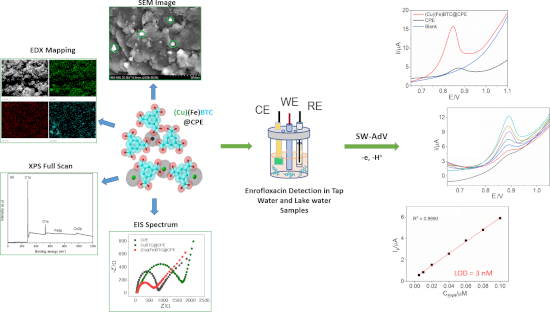
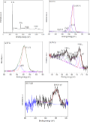
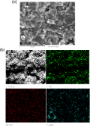
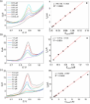
- -ray spectroscopy (EDX, Horiba 7593-H, England), and X-ray photoelectron spectroscopy (XPS, Thermo VG Multilab 2000). Synthesis of CuBTC, FeBTC MOFs CuBTC and FeBTC were synthesized using the solvothermal method as described in our previous reports [37][38]. Specifically, 12 mmol of trimesic acid was





Ion-induced surface reactions and deposition from Pt(CO)2Cl2 and Pt(CO)2Br2
Beilstein J. Nanotechnol. 2024, 15, 1427–1439, doi:10.3762/bjnano.15.115

- under steady-state conditions. X-ray photoelectron spectroscopy (XPS) and mass spectrometry data from monolayer thick films of Pt(CO)2Cl2 and Pt(CO)2Br2 exposed to 3 keV Ar+, He+, and H2+ ions indicate that deposition is initiated by the desorption of both CO ligands, a process ascribed to momentum



A biomimetic approach towards a universal slippery liquid infused surface coating
Beilstein J. Nanotechnol. 2024, 15, 1376–1389, doi:10.3762/bjnano.15.111
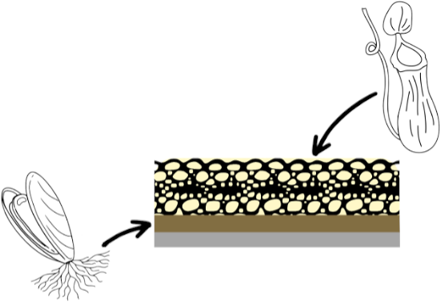
- force microscopy (AFM), sum frequency generation spectroscopy (SFG), and X-ray photoelectron spectroscopy (XPS). Measuring static water contact angles is a straightforward method to determine the relative wettability of a material and allows for a quick check if our surface modifications were successful




Green synthesis of carbon dot structures from Rheum Ribes and Schottky diode fabrication
Beilstein J. Nanotechnol. 2024, 15, 1369–1375, doi:10.3762/bjnano.15.110
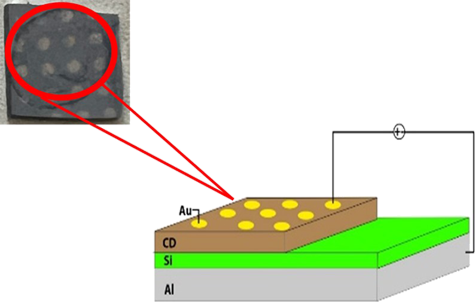
- Cary Eclipse fluorescence spectrophotometer were used for transmission electron microscopy (TEM), zeta potential measurements, X-ray diffractometry (XRD), Fourier-transform infrared spectroscopy (FTIR), X-ray photoelectron spectroscopy (XPS), micro-Raman spectroscopy, PVD thermal evaporation, scanning




Interaction of graphene oxide with tannic acid: computational modeling and toxicity mitigation in C. elegans
Beilstein J. Nanotechnol. 2024, 15, 1297–1311, doi:10.3762/bjnano.15.105

- complete characterization of the GO sample is available in [36]. Atomic force microscopy (AFM), Raman spectroscopy, and X-ray photoelectron spectroscopy (XPS) were used to assess size, morphology, number of layers, and surface chemistry of GO. The GO sample used in this study consists of single layers with
- composition analyzed by X-ray photoelectron spectroscopy (XPS) is 68% of carbon and 32% of oxygen. The functional groups and bonds of carbon are distributed among epoxy/hydroxy (C–O) (52%), carboxyl/esters (C=O) (9.4%), and π–π* (4.2%) moieties, besides graphitic/aromatic carbon (C sp2) (5.7%) and aliphatic
- , to 1.02 ± 0.01 and 1.05 ± 0.005 when the material was incubated in EPA medium without and with TA, respectively (Figure 2b). All Raman spectra were normalized to the intensity of the respective G bands. X-ray photoelectron spectroscopy (XPS) presented the composition of GO surface in the presence of


Facile synthesis of Fe-based metal–organic frameworks from Fe2O3 nanoparticles and their application for CO2/N2 separation
Beilstein J. Nanotechnol. 2024, 15, 897–908, doi:10.3762/bjnano.15.74
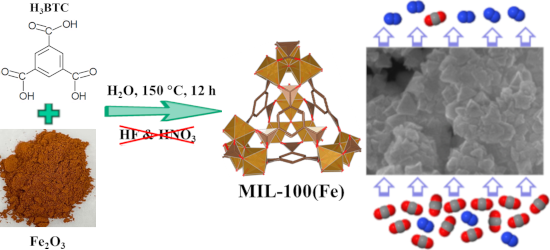
- and yield of the as-prepared MIL-100(Fe) materials, including thermogravimetric analysis (TGA), Fourier-transform infrared (FTIR) spectroscopy, powder X-ray diffraction (PXRD) measurements, determination of textural properties, scanning electron microscopy (SEM), and X-ray photoelectron spectroscopy
- (XPS). Subsequently, the gas separation performance of the as-prepared MIL-100(Fe) samples was assessed by studies regarding CO2 and N2 adsorption isotherms at various temperatures with pressures up to 1 bar. Experimental Materials Iron(III) oxide (Fe2O3, 96%) and benzene-1,3,5-tricarboxylic acid





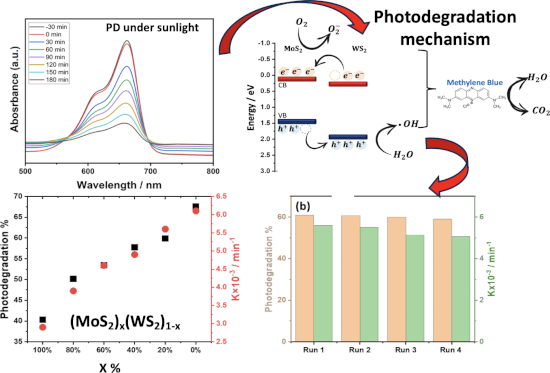
Intermixing of MoS2 and WS2 photocatalysts toward methylene blue photodegradation
Beilstein J. Nanotechnol. 2024, 15, 817–829, doi:10.3762/bjnano.15.68
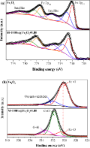
- additional peaks observed in all XRD diagrams at ≈37° and ≈69° positions are due to the silicon substrate. The X-ray photoelectron spectroscopy (XPS) survey scans and high-resolution scans for all samples are presented in Figure 3a–j. All XPS analyses were first calibrated using the C 1s peak of carbon at


Effect of repeating hydrothermal growth processes and rapid thermal annealing on CuO thin film properties
Beilstein J. Nanotechnol. 2024, 15, 743–754, doi:10.3762/bjnano.15.62
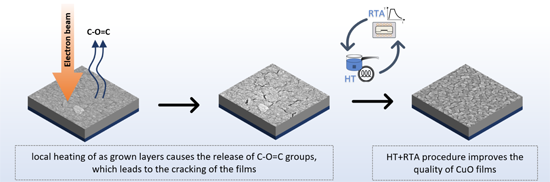
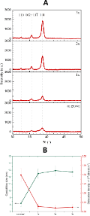
- underwent structural analysis using a high-resolution X-ray diffractometer X’Pert Pro MRD (Panalytical) equipped with a Cu anode (λ = 1.54060 Å). X-ray photoelectron spectroscopy (XPS) measurements were conducted utilizing a Scienta R4000 hemispherical analyzer with a pass energy of 200 eV and monochromatic




Controllable physicochemical properties of WOx thin films grown under glancing angle
Beilstein J. Nanotechnol. 2024, 15, 350–359, doi:10.3762/bjnano.15.31
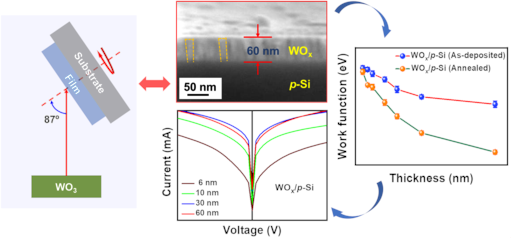
- identified using X-ray photoelectron spectroscopy (XPS) measurements (PHI 5000 VersaProbeII, ULVAC – PHI, INC) with a monochromatic Al Kα source (hν = 1486.6 eV), and a microfocus (100 µm, 15 kV, 25 W) arrangement along with a multichannel detector and a hemispherical analyser. The microstructure of the WOx


Low temperature atomic layer deposition of cobalt using dicobalt hexacarbonyl-1-heptyne as precursor
Beilstein J. Nanotechnol. 2023, 14, 951–963, doi:10.3762/bjnano.14.78
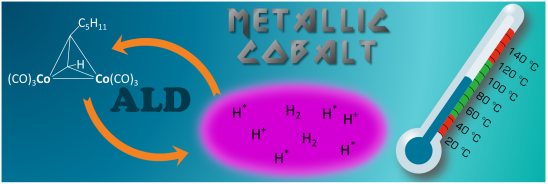
- metallic cobalt according to Ward [24] combined with a Tauc–Lorentzian model for possible occurrences of oxidised cobalt [25][26]. The film compositions were measured ex situ by X-ray photoelectron spectroscopy (XPS) on a PRECAV sp. Z. o. o. XPS system using a MX-650 Al X-ray source and a R3000 analyser


Upscaling the urea method synthesis of CoAl layered double hydroxides
Beilstein J. Nanotechnol. 2023, 14, 927–938, doi:10.3762/bjnano.14.76
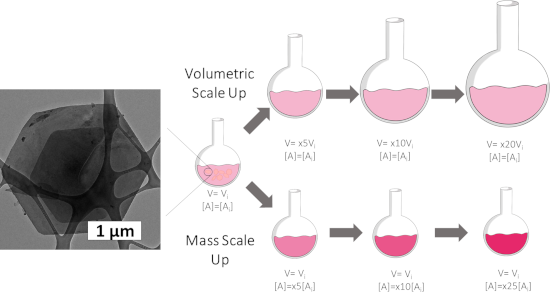
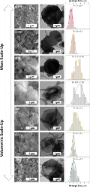
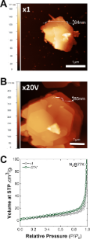
- identity of the impurity observed in sample x25M, X-ray photoelectron spectroscopy (XPS) was conducted (Figure 1C). In the case of reference x1, the observed main peaks at 781.23 eV (Co 23/2) and 797.36 eV (Co 21/2), as well as their satellites at 783.13 and 798.83 eV, confirm the occurrence of CoII [15
- total reflectance Fourier-transform infrared spectroscopy (ATR-FTIR) spectra were collected on a Bruker alpha II FTIR spectrometer in the 4000–400 cm−1 range. X-ray photoelectron spectroscopy (XPS) measurements were recorded on a Thermo Scientific™ K-alpha X-ray photoelectron spectrometer. Al Kα


Titania nanoparticles for photocatalytic degradation of ethanol under simulated solar light
Beilstein J. Nanotechnol. 2023, 14, 616–630, doi:10.3762/bjnano.14.51
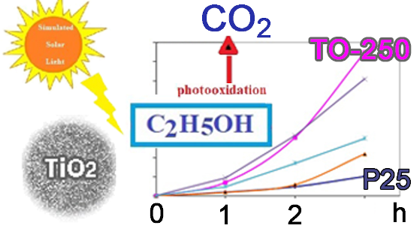
- correlation between specific surface area and particle/crystallite size is most obvious when comparing the TO-850-a sample with those synthesized at lower pressures. When the average particle size increases, the surface area diminishes. X-ray photoelectron spectroscopy (XPS) analysis was performed, and the




On the use of Raman spectroscopy to characterize mass-produced graphene nanoplatelets
Beilstein J. Nanotechnol. 2023, 14, 509–521, doi:10.3762/bjnano.14.42
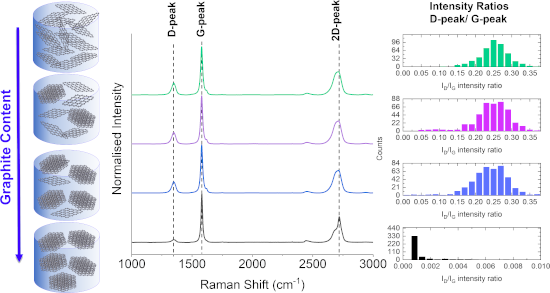
- %), transmission electron microscopy (TEM) (7.2%) or X-ray photoelectron spectroscopy (XPS) (5.6%). It has the advantages of relatively low cost, simple sample preparation, quick measurements, and automated analysis, offering clear benefits for quality control applications. It has been demonstrated in several


Mixed oxides with corundum-type structure obtained from recycling can seals as paint pigments: color stability
Beilstein J. Nanotechnol. 2023, 14, 467–477, doi:10.3762/bjnano.14.37
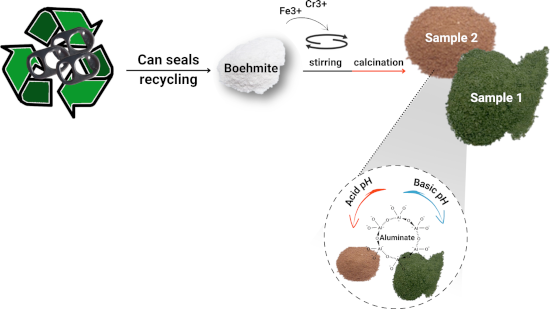
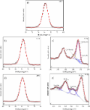
- characteristic of α-Fe2O3 nanoparticles [21]. The same morphology was observed for concentrations of 5 and 20 wt % of coloring ions (Figure S2, Supporting Information File 1). X-ray photoelectron spectroscopy (XPS) The elemental composition of the samples evaluated by the analysis of XPS spectra is shown in
- -performance detector, with a power of 300 W. A scanning electron microscope Hitachi SU8020 SEM (Tokyo, Japan) was used to obtain morphology information. The oxidation state and composition of the chemical elements at the surface were evaluated by X-ray photoelectron spectroscopy (XPS) (Versaprobe PHI 5000




A novel approach to pulsed laser deposition of platinum catalyst on carbon particles for use in polymer electrolyte membrane fuel cells
Beilstein J. Nanotechnol. 2023, 14, 190–204, doi:10.3762/bjnano.14.19
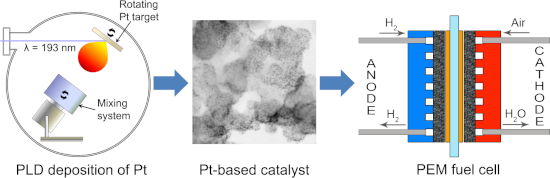
- the prepared platinum-coated carbon support, X-ray photoelectron spectroscopy (XPS) was used (Prevac, Poland) with an R3000 VG analyzer (Scienta, Sweden) and an X-ray source with an Al Kα anode (Prevac, Poland) emitting X-rays with a photon energy of 1486.6 eV. The analysis of the XPS spectra



Combining physical vapor deposition structuration with dealloying for the creation of a highly efficient SERS platform
Beilstein J. Nanotechnol. 2023, 14, 83–94, doi:10.3762/bjnano.14.10
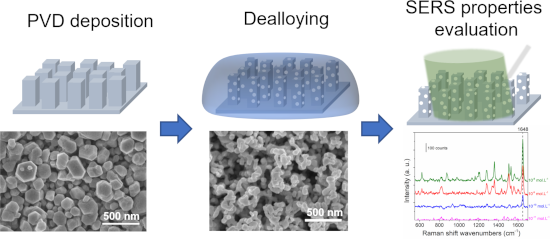
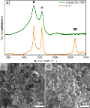
- SERS properties of the nanoporous structure. Using scanning electron microscopy (SEM) and X-ray photoelectron spectroscopy (XPS) the morphology and surface composition of each nanoporous structure were respectively evaluated and used to describe the SERS properties of the samples. Results and




Spindle-like MIL101(Fe) decorated with Bi2O3 nanoparticles for enhanced degradation of chlortetracycline under visible-light irradiation
Beilstein J. Nanotechnol. 2022, 13, 1038–1050, doi:10.3762/bjnano.13.91
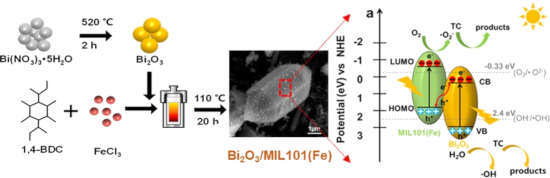
- , FEI-quanta 200, Japan Electronics, Japan), transmission electron microscopy (TEM, FEI-Tecnai F20, USA) and high-resolution transmission electron microscopy (HRTEM, JEOL 2100F, Japan). The element valence and chemical composition was investigated using X-ray photoelectron spectroscopy (XPS, Axis ultra


Theoretical investigations of oxygen vacancy effects in nickel-doped zirconia from ab initio XANES spectroscopy at the oxygen K-edge
Beilstein J. Nanotechnol. 2022, 13, 975–985, doi:10.3762/bjnano.13.85
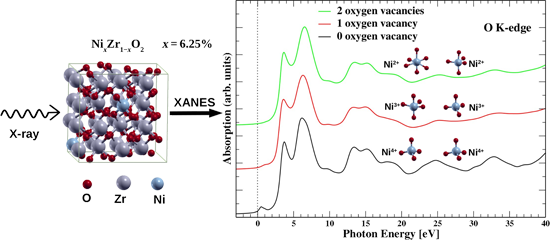
- photoelectron spectroscopy (XPS) [26], XANES spectra [27], and synchrotron radiation measurements [4], where it was suggested that for every two dopant atoms of Fe in zirconia, one single O vacancy is created. It is, thus, expected that in similarity to the effect of Fe doping in zirconia, substitutional Ni in
- TM atom usually occupies the Zr site substitutionally. However, due to the difference in the oxidation state of the TM atom and Zr, oxygen vacancies are created to maintain an overall charge neutrality. This is aptly demonstrated in the experimental investigations of Fe-doped zirconia using X-ray


Optimizing PMMA solutions to suppress contamination in the transfer of CVD graphene for batch production
Beilstein J. Nanotechnol. 2022, 13, 796–806, doi:10.3762/bjnano.13.70
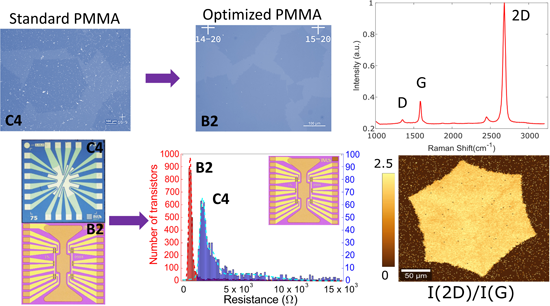
- mapping. In the maps, the intensity of D and 2D bands were normalized to the G band intensity. Corresponding statistics were extracted from the maps. X-ray photoelectron spectroscopy The chemical components of PMMA residues were analyzed by X-ray photoelectron spectroscopy (XPS, Thermo Scientific ESCALAB




Hierarchical Bi2WO6/TiO2-nanotube composites derived from natural cellulose for visible-light photocatalytic treatment of pollutants
Beilstein J. Nanotechnol. 2022, 13, 745–762, doi:10.3762/bjnano.13.66
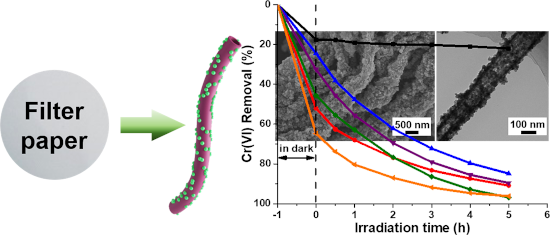
- (FTIR) spectra of the samples were recorded on the Nicolet iS10 spectrometer. The X-ray photoelectron spectroscopy (XPS) experiment was performed on the Thermo Scientific ESCALAB 250Xi spectrometer equipped with an Al Kα X-ray source at an energy value of 1486.6 eV. The XPS spectra were calibrated by





