Search results
Search for "absorption spectra" in Full Text gives 292 result(s) in Beilstein Journal of Nanotechnology. Showing first 200.
N2+-implantation-induced tailoring of structural, morphological, optical, and electrical characteristics of sputtered molybdenum thin films
Beilstein J. Nanotechnol. 2025, 16, 495–509, doi:10.3762/bjnano.16.38
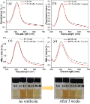
- curves derived from the fit process validate the results and offer a theoretical framework for understanding the optical properties of molybdenum thin films. Absorbance spectra The absorption spectra of Mo thin films in Figure 7 show the effects of nitrogen ion implantation and film thickness on the


Effect of additives on the synthesis efficiency of nanoparticles by laser-induced reduction
Beilstein J. Nanotechnol. 2025, 16, 464–472, doi:10.3762/bjnano.16.35
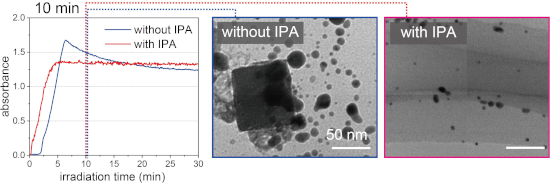
- by laser irradiation is low. We also investigated the effect of other additives other than IPA as radical scavengers. Figure 4 shows the change in absorbance at a wavelength of 520 nm in UV–vis absorption spectra of an Au solution with IPA, ethanol, and glycerin during laser irradiation. In all cases
- changed from 5.0 × 10⁻⁴ to 1.0 × 10⁻² mol/dm3, and laser was irradiated for 30 min. Figure 5 shows the absorption spectra of Au ion solutions with different concentrations a) without and b) with glycerin after laser irradiation. In this case, given that the absorbance of the solutions at concentrations of


Quantification of lead through rod-shaped silver-doped zinc oxide nanoparticles using an electrochemical approach
Beilstein J. Nanotechnol. 2025, 16, 422–434, doi:10.3762/bjnano.16.33
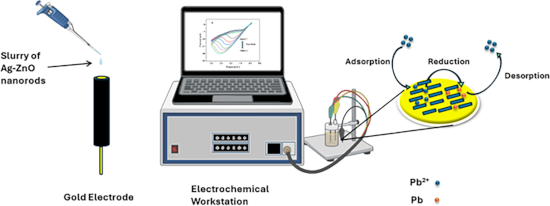
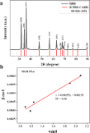
- ZnO frequently causes a reduction in the bandgap, leading to a shift toward longer wavelengths in the absorption spectra. The smaller bandgaps of the samples in optoelectronic devices provide a significant advantage [21]. Zeta potential of Ag@ZnO nanorods Surface properties of the synthesized Ag@ZnO





Engineered PEG–PCL nanoparticles enable sensitive and selective detection of sodium dodecyl sulfate: a qualitative and quantitative analysis
Beilstein J. Nanotechnol. 2025, 16, 385–396, doi:10.3762/bjnano.16.29
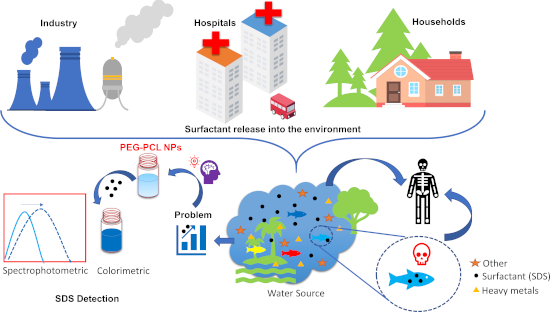
- specificity of the PEG–PCL nanoparticle system towards SDS detection, further experiments were performed to observe color changes and the absorption spectra of NPs in the presence and absence of SDS and other metals and surfactants. This investigation is essential because heavy metal ions often coexist with


Fabrication and evaluation of BerNPs regarding the growth and development of Streptococcus mutans
Beilstein J. Nanotechnol. 2025, 16, 308–315, doi:10.3762/bjnano.16.23
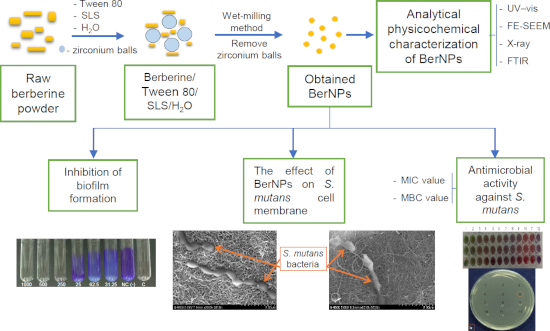
- analysis of BerNPs samples revealed four characteristic absorption peaks of berberine at 230, 266, 350, and 430 nm (Figure 2A). These peaks are consistent with previous studies on the characteristic absorption spectra of berberine [26][27]. According to the standard curve (Figure 2B), the pure berberine




Radiosensitizing properties of dual-functionalized carbon nanostructures loaded with temozolomide
Beilstein J. Nanotechnol. 2025, 16, 229–251, doi:10.3762/bjnano.16.18




Recent advances in photothermal nanomaterials for ophthalmic applications
Beilstein J. Nanotechnol. 2025, 16, 195–215, doi:10.3762/bjnano.16.16
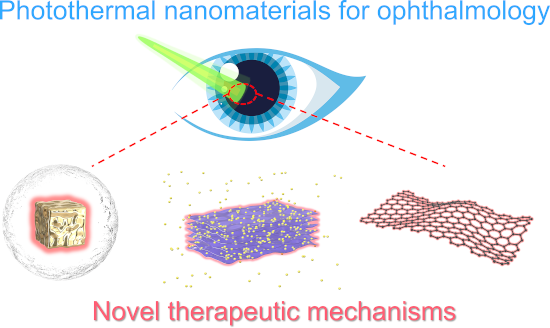
- via non-radiative relaxation, resulting in localized lattice heating [76][77]. Therefore, semiconductors with narrow bandgaps typically show broad absorption spectra and high efficiency in photon trapping. In contrast, wide-bandgap semiconductors have a more limited range of light absorption and less


Clays enhanced with niobium: potential in wastewater treatment and reuse as pigment with antibacterial activity
Beilstein J. Nanotechnol. 2025, 16, 141–154, doi:10.3762/bjnano.16.13
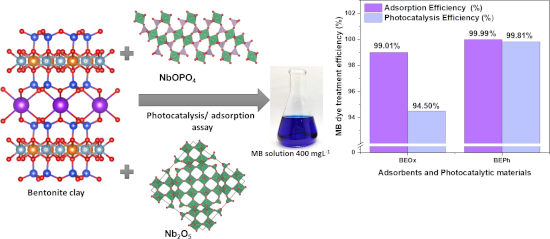
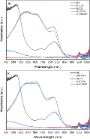
- ), BEPh(b) and BEOx (c). The absorption spectra in the visible region for the samples of bentonite and their modifications with niobium oxide (a) and niobium phosphate(b). Adsorption and photocatalysis efficiency (a) and UV–vis spectra following the digital images of the MB solutions after adsorption and



Characterization of ZnO nanoparticles synthesized using probiotic Lactiplantibacillus plantarum GP258
Beilstein J. Nanotechnol. 2025, 16, 78–89, doi:10.3762/bjnano.16.8
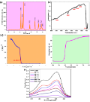
- + cations. These findings offer information about the structure and chemical interactions within the ZnO NPs (Figure 2b). UV–vis absorption The UV–Vis absorption spectra of ZnO NPs, presented in Figure 2c, establish a distinct absorption peak at 3.16 eV, revealing the characteristic bandgap energy for ZnO



Facile synthesis of size-tunable L-carnosine-capped silver nanoparticles and their role in metal ion sensing and catalytic degradation of p-nitrophenol
Beilstein J. Nanotechnol. 2024, 15, 1576–1592, doi:10.3762/bjnano.15.124
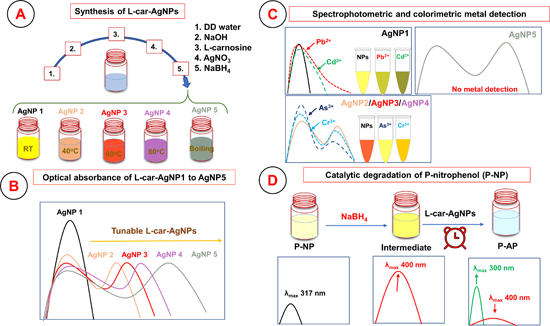
- 3a and Supporting Information File 1, Figure S1). The sequential increase in nanoparticle size confirms nanoparticle aggregation or formation of bigger particles and is consistent with the absorption spectra in Figure 2. The polydispersity index (PDI) is a dimensionless value that measures the width
- shows the absorption spectra of ʟ-car-AgNP1 mixed with various metal ions. The concentration of ʟ-car-AgNP1 was fixed in terms of optical density at 1 ± 0.2. Figure 5a shows the optical absorbance spectra of ʟ-car-AgNP1 after adding Cd2+ and Pb2+ and all other metals at a concentration of 0.5 ppm
- significant color change (yellow to brownish-yellow) in the presence of Cd2+ and Pb2+ (Figure 5c). The color and absorption spectra change can be attributed to the nanoparticles’ aggregation [31]. A slight increase in the intensity of ʟ-car-AgNPs after the addition of Cr3+ ions was also observed, possibly due




Green synthesis of carbon dot structures from Rheum Ribes and Schottky diode fabrication
Beilstein J. Nanotechnol. 2024, 15, 1369–1375, doi:10.3762/bjnano.15.110
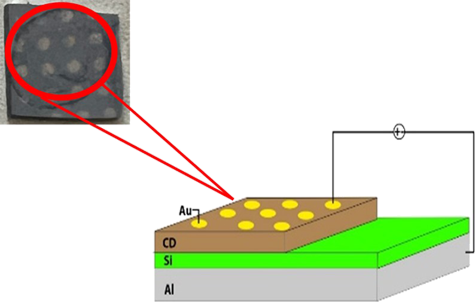
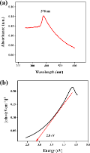
- various excitation wavelengths in the range from 300 to 400 nm. SEM image of Si/CDs/Au-based Schottky diode. (a) UV–vis absorption spectra and (b) bandgap of the CDs layer. I–V characteristics of the Si/CDs/Au-based Schottky diode. Acknowledgements We thank Assoc. Prof. Dr. Kübra Çınar Demir and Lecturer

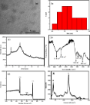

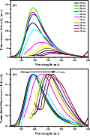

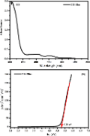

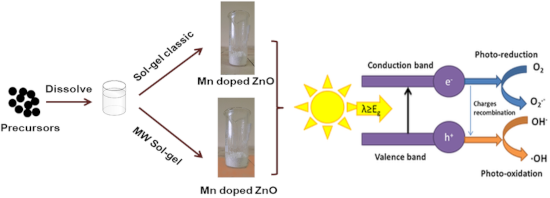
Mn-doped ZnO nanopowders prepared by sol–gel and microwave-assisted sol–gel methods and their photocatalytic properties
Beilstein J. Nanotechnol. 2024, 15, 1283–1296, doi:10.3762/bjnano.15.104
- –Halenda) model. Diffuse reflectance UV–vis spectra were recorded with a Perkin Elmer Lambda 35 spectrophotometer equipped with an integrating sphere. The analysis range was 200–1000 nm. Based on the Kubelka–Munk function, the collected reflectance data were transformed into absorption spectra. Eg was


Effect of wavelength and liquid on formation of Ag, Au, Ag/Au nanoparticles via picosecond laser ablation and SERS-based detection of DMMP
Beilstein J. Nanotechnol. 2024, 15, 1054–1069, doi:10.3762/bjnano.15.86

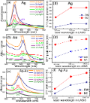
- solution, covering a wavelength range of 300–800 nm. In Figure 1, the optical absorption spectra of (a) Ag, (b) Au, and (c) Ag/Au NP solutions are presented for both environments obtained at 1064, 532, and 355 nm wavelengths in LASiS. All absorption spectra exhibit a distinct single surface plasmon
- wavelength for larger particles, which is evident from the absorption spectra depicted. Figure 2 depicts the pictures of Ag NPs synthesized using a laser wavelength of (d) 355 nm, (e) 532 nm, and (f) 1064 nm in an aqueous NaCl solution. The average particle size is 8.4 ± 0.4 nm at 355 nm, 13.3 ± 0.5 nm at
- ablation. This phenomenon led to lower NP production at 355 nm compared to that at 532 and 1064 nm laser wavelengths, this was also reflected in the absorption spectra. Consequently, there is a tendency for NP agglomeration and chain formation, which is evident from the TEM pictures depicted in Figure 3


Green synthesis of biomass-derived carbon quantum dots for photocatalytic degradation of methylene blue
Beilstein J. Nanotechnol. 2024, 15, 755–766, doi:10.3762/bjnano.15.63
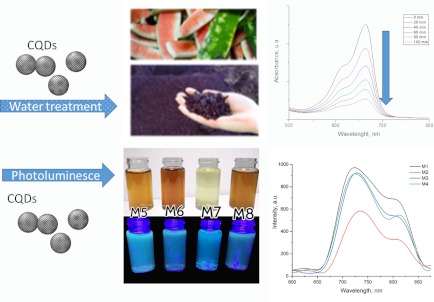
- optoelectronic characteristics of the synthesized CQDs, UV–vis absorption spectra were measured using a Thermo Scientific Evolution 220 spectrophotometer. The CQDs were dissolved in deionized water at a ratio of 1:10 (0.3 mg of CQDs per mL) and the measurements were taken in the range of 200–800 nm. A 1 cm path


Gold nanomakura: nanoarchitectonics and their photothermal response in association with carrageenan hydrogels
Beilstein J. Nanotechnol. 2024, 15, 678–693, doi:10.3762/bjnano.15.56

- prepared as shown in step 1 and were used subsequently in step 2 for the preparation of AuNMs. Figure 1b shows the absorption spectra of Au seed capped with different surfactants. Absorption spectra of CTAB-AuNM, MTAB-AuNM, and DTAB-AuNM in the range of visible to NIR are shown in Figure 1c. The absorption
- LSPR peak obtained at the NIR region in the case of CTAB-, MTAB-, and DTAB-capped gold nanomakuras were 670, 650, and 630 nm, respectively. The absorption spectra exhibited at the visible/NIR region clearly indicated the descending order of the long axes (LSPR) of the nanoparticles in this manner: CTAB
- indicated the incorporation of colloidal AuNMs, whereas colourless beads showed no incorporation of nanoparticles. The stability of the AuNMs in k-CG hydrogels was assessed through optical spectrophotometry as shown in Figure 3b–d. Time-dependent absorption spectra were recorded to ascertain any changes






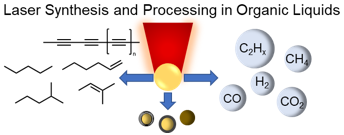
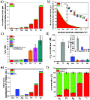
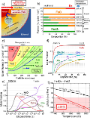
Laser synthesis of nanoparticles in organic solvents – products, reactions, and perspectives
Beilstein J. Nanotechnol. 2024, 15, 638–663, doi:10.3762/bjnano.15.54





AFM-IR investigation of thin PECVD SiOx films on a polypropylene substrate in the surface-sensitive mode
Beilstein J. Nanotechnol. 2024, 15, 603–611, doi:10.3762/bjnano.15.51
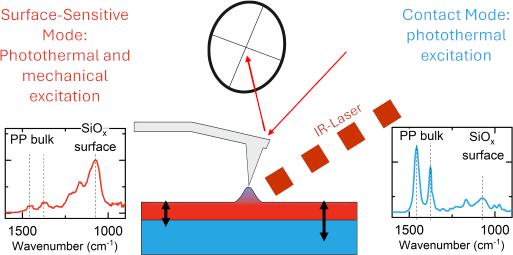
- correlation between the IR wavelength of the laser and the thermal expansion of the material enables the recording of IR absorption spectra with this technique which correspond to the spectra of bulk IR spectroscopy [2][3][4]. Compared to ATR-FTIR spectroscopy, AFM-IR provides a drastic improvement in terms


Photocatalytic degradation of methylene blue under visible light by cobalt ferrite nanoparticles/graphene quantum dots
Beilstein J. Nanotechnol. 2024, 15, 475–489, doi:10.3762/bjnano.15.43
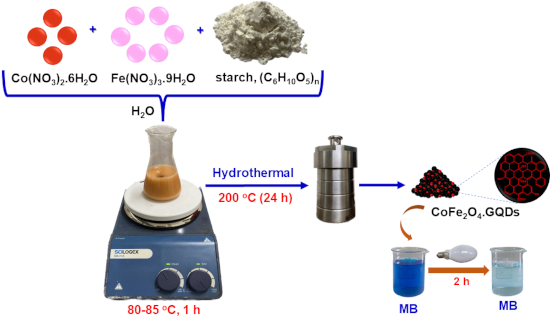
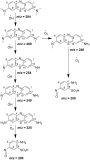
- electrons and holes. These results suggest that the CoFe2O4/GQD nanocomposite is a potential catalyst for methylene blue degradation and various environmental applications. XRD patterns of (a) CF and (b) CF/GQDs. (a) UV–vis absorption spectra of the GQD solution; inset: GQD solution under white light (left




CdSe/ZnS quantum dots as a booster in the active layer of distributed ternary organic photovoltaics
Beilstein J. Nanotechnol. 2024, 15, 144–156, doi:10.3762/bjnano.15.14
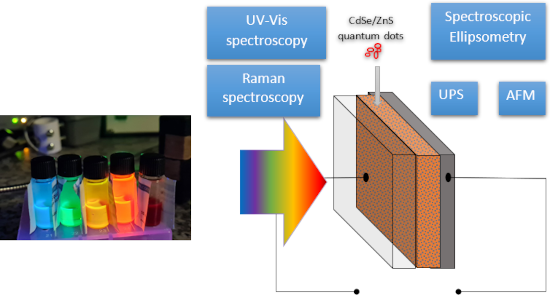
- -transporting layers [24], active absorbing layers, and other components [25][26]. Inorganic quantum dots are considered substitutes for fullerene acceptors. Their biggest advantages are a tunable band gap, various absorption spectra, and comparatively high mobility of carriers [27][28]. The application of
- in the millivolt region. The biggest change in performance concerned the short-circuit current. Conclusion Absorption spectra of the studied QDs indicate the role of a second acceptor (non-fullerene acceptor [62]) in the heterojunction volume. We may also consider QD materials as donors. By
- establish absorption spectra and confirm excited states proven by luminescence. The dispersive spectra of the refractive index and extinction coefficient of nanoshell nanolayers and nanoshell:donor:acceptor composites were also determined. The dopant QDs shifted the extinction maximum toward longer




Properties of tin oxide films grown by atomic layer deposition from tin tetraiodide and ozone
Beilstein J. Nanotechnol. 2023, 14, 1085–1092, doi:10.3762/bjnano.14.89
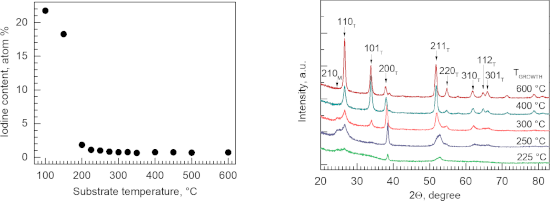
- eV binding energy, whereas the peak at 5 eV is not as dominant [28][29][35]. X-ray absorption spectra (Figure 11) were additionally recorded to possibly detect any differences between the samples. The Sn 3d XAS band is constituted by transitions from the 3d core orbital to the unoccupied p and f


A visible-light photodetector based on heterojunctions between CuO nanoparticles and ZnO nanorods
Beilstein J. Nanotechnol. 2023, 14, 1018–1027, doi:10.3762/bjnano.14.84
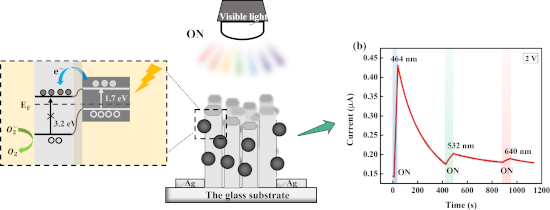
- JCPDS card No. 01-080-0076. This is proof of the existence of CuO NPs in the CuO NPs/ZnO NRs structure. Figure 2b shows the UV–vis absorption spectra of the pure ZnO NRs and ZnO NRs decorated with CuO NPs. Both samples containing ZnO NRs have absorption edges in a wavelength range from 300 to 380 nm due
- ) characteristics and current–time (I–t) curves (Keithley 2400). Visible detection measurements were performed using LEDs with different wavelengths (395, 464, 532, and 640 nm). FESEM images of (a) pure ZnO NRs and (b) CuO NPs/ZnO NRs; (c) EDS spectrum of CuO NPs/ ZnO NRs. (a) XRD patterns and (b) UV–vis absorption
- spectra of the pure ZnO NRs and CuO NPs/ZnO NRs. (a) I–V characteristics and (b) I–t curves of the photodetector based on CuO NPs/ZnO NRs heterojunctions under 395 nm exposure with different light intensities. I–t curves after three cycles under 395 nm visible-light illumination with two power densities


Nanoarchitectonics of photothermal materials to enhance the sensitivity of lateral flow assays
Beilstein J. Nanotechnol. 2023, 14, 988–1003, doi:10.3762/bjnano.14.82
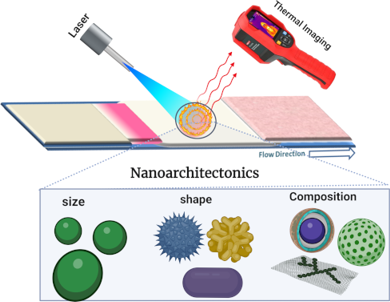
- to CC BY 4.0.). Comparison of absorption spectra of different sizes Au-nanorods (C). Maximum temperature raising profile with respect to absorption cross-section of Au-nanorods (D). (Figure 5C and D was reproduced from [48] (© 2022 J.-P. Sun et al., published by Elsevier, distributed under the terms


Isolation of cubic Si3P4 in the form of nanocrystals
Beilstein J. Nanotechnol. 2023, 14, 971–979, doi:10.3762/bjnano.14.80
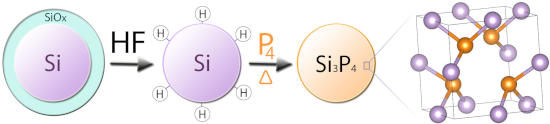
- agglomeration for at least a month. The synthesized samples were brown powders that formed brown sols in acetonitrile, quite similar in appearance to those of Si NPs. Upon examination of the UV–vis absorption spectra, a bandgap of 1.25 eV was established using Tauc plot (Figure 5). A simpler approach for a


Upscaling the urea method synthesis of CoAl layered double hydroxides
Beilstein J. Nanotechnol. 2023, 14, 927–938, doi:10.3762/bjnano.14.76
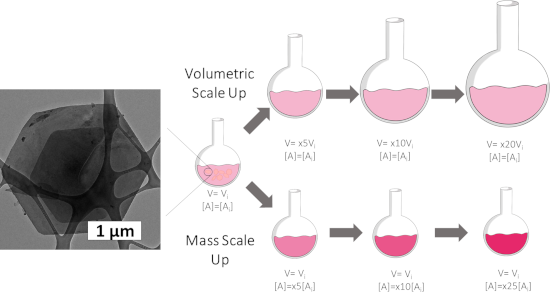
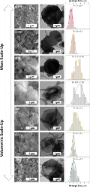
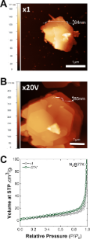
- , P2, S1, and S2, respectively. UV–vis absorption spectra of the solid samples were recorded in reflectance mode employing a Jasco V-670 spectrometer. Thermogravimetric analysis (TGA) was carried out on a Netzsch TG 209 F1 Libra instrument in the 30–900 °C temperature range. Magnetic data were


Silver-based SERS substrates fabricated using a 3D printed microfluidic device
Beilstein J. Nanotechnol. 2023, 14, 793–803, doi:10.3762/bjnano.14.65
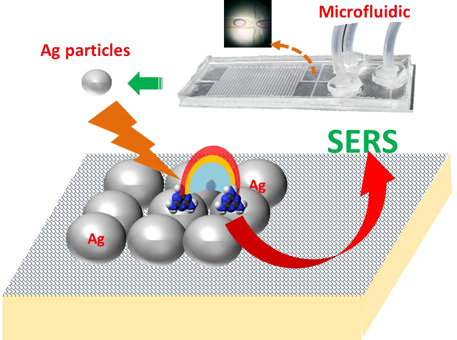
- , TESCAN). A UV–vis spectrometer (Agilent 8453, Agilent, USA) and a micro-Raman spectrometer (NS200, Nanoscope System, Republic of Korea) were used to record the absorption spectra and Raman spectra, respectively. Fabrication of the droplet-based microfluidic device The fabrication process of the