


Search results
Search for "alloy" in Full Text gives 216 result(s) in Beilstein Journal of Nanotechnology. Showing first 200.
Effect of radiation-induced vacancy saturation on the first-order phase transformation in nanoparticles: insights from a model
Beilstein J. Nanotechnol. 2024, 15, 1453–1472, doi:10.3762/bjnano.15.117

- . For example, a two-phase TiCr alloy undergoes phase transformation when irradiated with Kr+ ions with an energy of 1 MeV [13]. In another study, a bcc→fcc phase transition was observed in an α-FeNi alloy due to radiation of self-ions at 673 K and a dose of approximately 1.2 dpa [14]. Furthermore


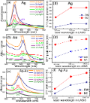
Effect of wavelength and liquid on formation of Ag, Au, Ag/Au nanoparticles via picosecond laser ablation and SERS-based detection of DMMP
Beilstein J. Nanotechnol. 2024, 15, 1054–1069, doi:10.3762/bjnano.15.86

- Abstract The present study investigates the effects of input wavelength (1064, 532, and 355 nm) and surrounding liquid environment (distilled water and aqueous NaCl solution) on the picosecond laser ablation on silver (Ag), gold (Au), and Ag/Au alloy targets. The efficacy of the laser ablation technique
- ) laser melting in liquid (LML), and (iii) laser defect engineering in liquid (LDL) [16]. In our previous work, we fabricated Ag–Cu alloy NPs using the femtosecond (fs) laser irradiation approach [17]. Similarly, Ag/Au alloy NPs were fabricated by laser ablation of single metal targets in water followed
- et al. [20] achieved size-controllable Au NPs in stable solutions via femtosecond laser fragmentation, tuning sizes by adjusting fluence. This technique is employed to create various categories of alloy NPs [21]. Alloying by LASiS can mitigate undesired features associated with plasmonic materials


Interface properties of nanostructured carbon-coated biological implants: an overview
Beilstein J. Nanotechnol. 2024, 15, 1041–1053, doi:10.3762/bjnano.15.85
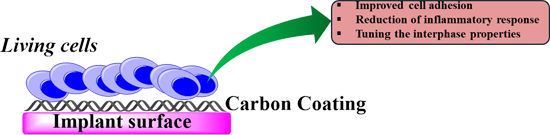
- formation, suggesting that, in the specific case, NDs act only as protective layer rather than influencing the immunological response. GO-modified surfaces exhibited better performance in tuning the immunological response, as reported by El-Kamel et al. [93], who coated AZ91E Mg alloy staples used for
- macrophages. The reduction of fibrotic formations on the implants is of capital relevance for preventing thrombosis [96]. Hassan et al. [97] investigated graphene coatings on a stainless steel implant to minimize the negative effect of metals contained into the alloy (i.e., Cr, Mo, and Ni). The authors used
- [110][111]. Romo-Rico et al. [112] used PVD to coat a medical-grade cobalt–chromium alloy with high-grade graphene. The authors reported an appreciable antibacterial activity against S. aureus and P. aeruginosa; also, adhesion was prevented. This study proved that the balance between surface polarity



Atomistic insights into the morphological dynamics of gold and platinum nanoparticles: MD simulations in vacuum and aqueous media
Beilstein J. Nanotechnol. 2024, 15, 995–1009, doi:10.3762/bjnano.15.81
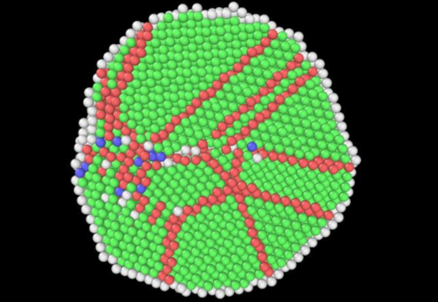
- NP are presented in Table 1. The potential energy of the NPs is described by the EAM/alloy force field; the parameters proposed by Grochola et al. [57] for the Au NPs and by O'Brien et al. [58] for the Pt NPs are adopted. For both force fields, files containing all required parameters in suitable


Effects of cutting tool geometry on material removal of a gradient nanograined CoCrNi medium entropy alloy
Beilstein J. Nanotechnol. 2024, 15, 925–940, doi:10.3762/bjnano.15.76
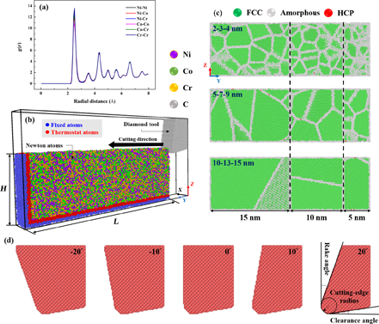
- attention and research [1][2]. Among them, the ternary medium-entropy alloy (MEA) CoCrNi and its derived five-element CoCrFeMnNi HEA [3][4] have been found to exhibit high strength and ductility. Weng et al. used laser-aided additive manufacturing to fabricate a CoCrNi MEA with a perfect combination of
- strength and ductility [5]. Zhang et al. fabricated a new transformable FeCoCrNiMn HEA with both face-centered cubic (FCC) and body-centered cubic (BCC) phases to enhance the strength and ductility of the HEA [6]. This has been attributed to the low stacking-fault energy of this type of alloy. The
- MEA, as shown in Figure 1. FCC phase GNG CoCrNi MEA substrates with dimensions of 3 nm × 30 nm × 10 nm were used for all cases in this study. The polycrystalline samples consist of randomly oriented grains. The MEA substrates contain 25,952 Co atoms, 26,628 Cr, and 26,746 Ni atoms. Hence, the alloy











Investigation on drag reduction on rotating blade surfaces with microtextures
Beilstein J. Nanotechnol. 2024, 15, 833–853, doi:10.3762/bjnano.15.70
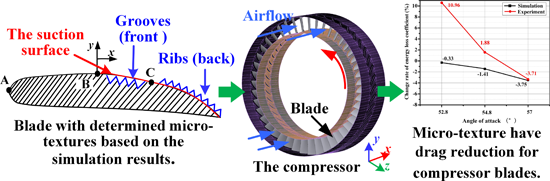
- microtextured blade surface Surface quality analysis of the microtextured blade The processed blade, composed of 7075 series aluminum alloy, is displayed in Figure 18. The blade surface quality was assessed using a JSZ6S trinocular stereo microscope; the results showed that the processed blade has high quality


Synthesis of silver–palladium Janus nanoparticles using co-sputtering of independent sources: experimental and theorical study
Beilstein J. Nanotechnol. 2024, 15, 808–816, doi:10.3762/bjnano.15.67
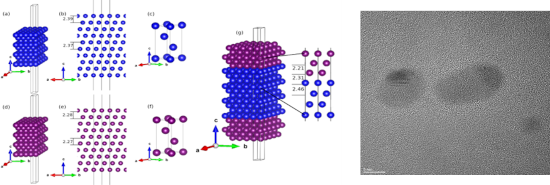
- addition, Pd–Ag alloys form during the Pd nucleation in an environment with Ag atoms. Therefore, other Janus nanoparticles can be composed of Ag/AgPd or Ag/AgPd/Pd, where the AgPd alloy could be on one side of the particle (labeled as Ag/AgPd) or between Ag and Pd (labeled as Ag/AgPd/Pd). Considering such
- circumstances, to model the AgPd alloy, an Ag(111)-(2 × 2 × 3) supercell made of 36 Ag atoms was used; then, Pd atoms were systematically incorporated one at a time by atomic substitutions. Each atomic position and lattice parameter were optimized, selecting the energetically most favorable configurations in
- each case. Pd was included in Ag until reaching a 1:1 ratio. The stability of the AgPd alloy models was studied by the formation energy (EForm, used to obtain the relative stability of models with different atomic contents) calculated as: EForm = (Eslab − (nAgμAg) − (nPdμPd))/ntotal, where Eslab is the




Laser synthesis of nanoparticles in organic solvents – products, reactions, and perspectives
Beilstein J. Nanotechnol. 2024, 15, 638–663, doi:10.3762/bjnano.15.54
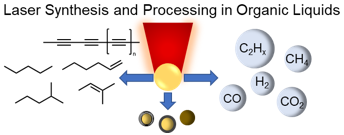
- mechanisms of organic liquid decomposition and carbon shell formation are highlighted and discussed regarding current challenges and future perspectives of LSPC using organic liquids instead of water. Keywords: alloy; photochemistry; pyrolysis; radicals; surface chemistry; Introduction Since the first
- , RLML, and LRL of various (base, noble, and alloy) metals and their possible use in the future. Marabotti et al., in contrast, focused on polyyne formation only, highlighting the different formation mechanisms, the effect of aqueous or organic solvents, the influence of the irradiated target, and
- oxidation of the alloy nanoparticles. The highest oxidation was found for the mixture of water and hydrogen peroxide, yielding AuFe nanoparticles with an oxide shell; hence, the authors declared the mixture as highly oxidizing. In contrast, ethanol and hydrogen peroxide brought forth AuFe nanoparticles





Electron-induced deposition using Fe(CO)4MA and Fe(CO)5 – effect of MA ligand and process conditions
Beilstein J. Nanotechnol. 2024, 15, 500–516, doi:10.3762/bjnano.15.45
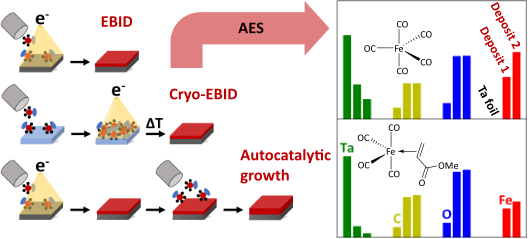
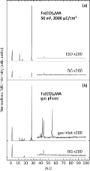
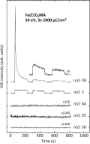
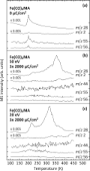
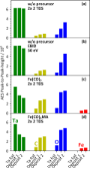
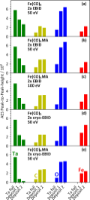
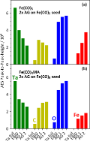
- ) trifluoroacetylacetonate (Au(tfac)Me2) [16] or neopentasilane (Si5H12) [17] to produce Fe–Au alloy nanostructures and Fe–Si binary compounds, respectively. More recently, diiron nonacarbonyl (Fe2(CO)9) has received particular attention [5][6][18][19][20]. With this precursor and applying high beam energies, nanopillars



Classification and application of metal-based nanoantioxidants in medicine and healthcare
Beilstein J. Nanotechnol. 2024, 15, 396–415, doi:10.3762/bjnano.15.36
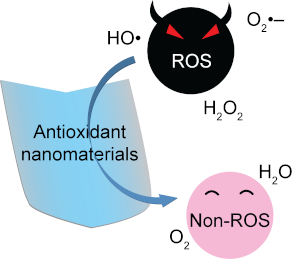
- . Subsequently, V−OH recovers to V=O by reacting with another H2O2 in the presence of GSH [43][44][45]. Recently, Liu et at. constructed a trimetallic alloy nanozyme of gold, copper, and platinum, which exhibits multiple enzyme activities including that of GPx [46]. In this nanocomposite, platinum and copper
- a bioresorbable magnesium alloy stent coated with an anti-proliferative drug, offering a dual benefit of mechanical support and localized drug release, leading to improved outcomes in atherosclerosis treatment [173][174]. Besides, since zinc has emerged as a promising candidate because of its anti


Design, fabrication, and characterization of kinetic-inductive force sensors for scanning probe applications
Beilstein J. Nanotechnol. 2024, 15, 242–255, doi:10.3762/bjnano.15.23
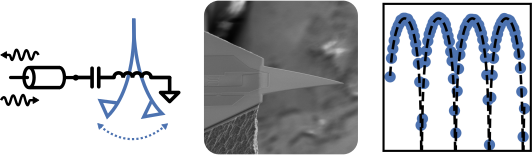
- microscopy (SPM), the tip plays a fundamental role in the achievable lateral resolution of the image. The focused electron-beam induced deposition (FEBID) [34] technique has been adapted to fabricate tips for SPM, for example, to enhance commercial platinum–iridium alloy (Pt-Ir)-coated conductive tips [35



TEM sample preparation of lithographically patterned permalloy nanostructures on silicon nitride membranes
Beilstein J. Nanotechnol. 2024, 15, 1–12, doi:10.3762/bjnano.15.1
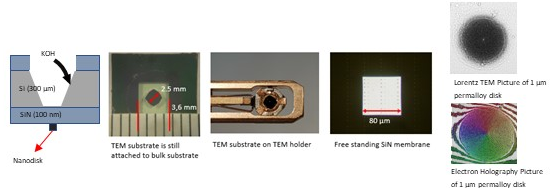
- –iron alloy (80 atom % Ni and 20 atom % Fe) that has a small coercive field (Hc) [17] and low magnetostriction (λs) [18], as well as high permeability and high saturation magnetization (Ms) [19]. TEM offers high spatial resolution for magnetic imaging. TEM-based magnetic imaging techniques such as


Combining physical vapor deposition structuration with dealloying for the creation of a highly efficient SERS platform
Beilstein J. Nanotechnol. 2023, 14, 83–94, doi:10.3762/bjnano.14.10
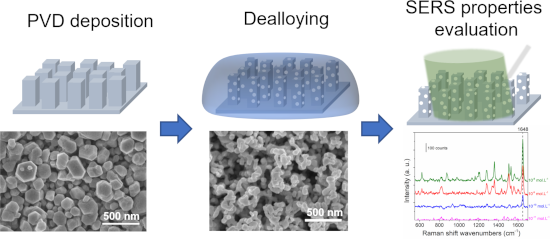
- alloy thin film to be dealloyed. After dealloying, the resulting silver nanoporous structures revealed two degrees of porosity: macroporosity, associated to the initial alloy morphology, and nanoporosity, related to the dealloying step. The resulting nanoporous columnar structure was finely optimized by
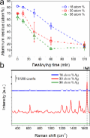
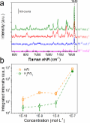
- tuning deposition (i.e., the alloy chemical composition) and dealloying (i.e., dealloying media) parameters to reach the best SERS properties. These are reported for samples dealloyed in HCl and with 30 atom % of silver at the initial state with a detection limit down to 10−10 mol·L−1 for a solution of
- of the less noble component of an alloy creating a skeleton made of the noble element [23]. Dealloying is usually accomplished through a chemical step in which the alloy is dipped into an etching solution to remove the less noble metal [24]. This process leads to highly homogenous, porous structure




Two-step single-reactor synthesis of oleic acid- or undecylenic acid-stabilized magnetic nanoparticles by thermal decomposition
Beilstein J. Nanotechnol. 2023, 14, 11–22, doi:10.3762/bjnano.14.2
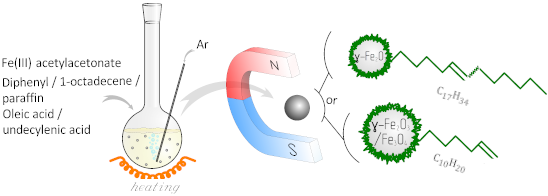
- shell material (ρOA = 0.89 g/cm3 – OA, ρUA = 0.912 g/cm3 – UA). Synthesis of iron oxide nanoparticles The synthesis of nanoparticles was carried out in a 100 mL three-necked glass reactor equipped with a reflux condenser and a mechanical stirrer. A Wood’s metal alloy bath with temperature control within


Supramolecular assembly of pentamidine and polymeric cyclodextrin bimetallic core–shell nanoarchitectures
Beilstein J. Nanotechnol. 2022, 13, 1361–1369, doi:10.3762/bjnano.13.112
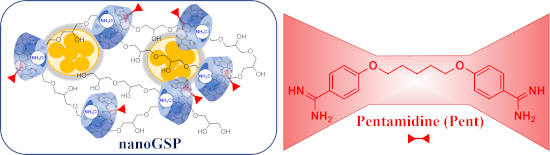
- distribution of the metallic element determines the structural characteristics of the resulting BMNPs (i.e., alloy, core–shell, or intermediate stages) [6]. The scientific value of noble MNPs and BMNPs has been recently highlighted by the development of novel antimicrobial agents with remarkable activity
- obtained by the “seeded growth method” which consists in the sequential reduction of gold and silver ions. The co-reduction of the two metal ions (i.e., Ag+ and Au3+) produces an alloy instead [13]. In our ongoing research program aimed to the discovery of new antimicrobials, we recently explored the


Laser-processed antiadhesive bionic combs for handling nanofibers inspired by nanostructures on the legs of cribellate spiders
Beilstein J. Nanotechnol. 2022, 13, 1268–1283, doi:10.3762/bjnano.13.105
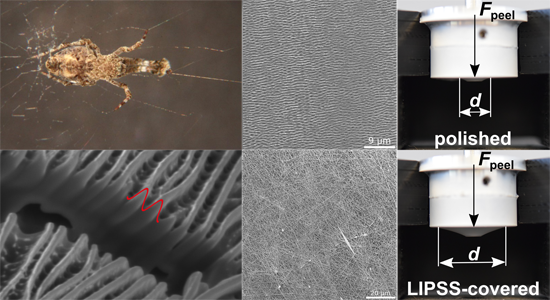
- ). Subsequently, by means of a newly established peel-off test, the adhesion of an electrospun polyamide fiber-based nonwoven was quantified on such LIPSS-covered aluminium alloy, steel, and titanium alloy samples, as well as on polished (flat) control samples as reference and, additionally, on samples with
- structures (LIPSS) [29] represent a technical analogon of the nanoripples found on the calamistrum of the spider. They were produced by ultrashort pulse laser processing on different technically relevant metal surfaces (aluminium alloy, steel, and titanium alloy) according to theoretical predictions
- fibers In order to test the theory derived above, electrospinning of polyamide 6 (PA-6) in a laboratory setup onto structured metal samples (aluminum alloy, steel, and titanium alloy) was performed and the peel-off forces were determined using a custom-made peel-test device. PA-6 has an elastic modulus E







Biomimetic chitosan with biocomposite nanomaterials for bone tissue repair and regeneration
Beilstein J. Nanotechnol. 2022, 13, 1051–1067, doi:10.3762/bjnano.13.92
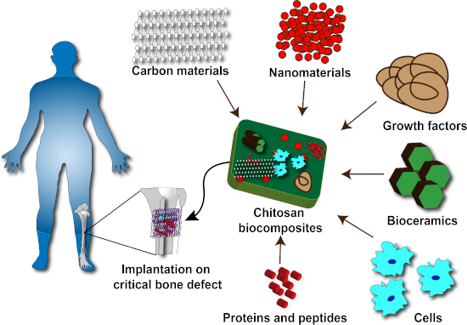
- nanocomposites Titanium and titanium-based alloy materials are often utilized in the biomedical field especially in bone tissue engineering due to several important properties which include excellent biocompatibility, higher resistance against corrosion, significant structural rigidity, and tolerance to body
- ) Cross-sectional histological photomicrographs from the chitosan/gelatin/ nanohydroxyapatite/nanocopper/zinc alloy nanocomposite scaffold stained with haematoxylin/eosin at seven and 14 days after surgery. (b) Haematoxylin/eosin-stained sections of scaffolds from in vivo biocompatibility assessments
Electrocatalytic oxygen reduction activity of AgCoCu oxides on reduced graphene oxide in alkaline media
Beilstein J. Nanotechnol. 2022, 13, 1020–1029, doi:10.3762/bjnano.13.89
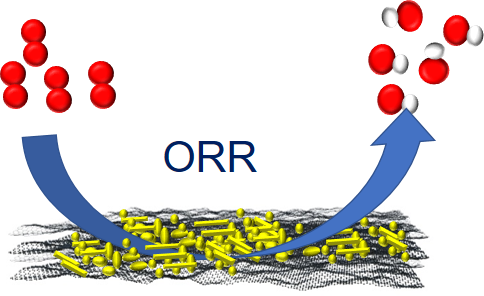
- the overall performance of the reaction [3][4]. There is an increasing use of platinum catalysts with diverse morphologies and the combination with noble and non-noble metal-based alloy/multimetallic nanoparticles (NPs) as potential electrocatalysts under extreme pH values [5][6][7][8][9][10][11][12
- electrodeposition. Among the combinations, the Ag–Cu (3:1) alloy showed the better electrode catalytic activity and the highest onset (0.85 V vs RHE) and half-wave potential (0.76 V vs RHE) with a limiting current density of 4.19 mA·cm−2, along with an electron transfer value of 3.86 in 0.1 M KOH [21]. Linic and co


Effects of focused electron beam irradiation parameters on direct nanostructure formation on Ag surfaces
Beilstein J. Nanotechnol. 2022, 13, 1004–1010, doi:10.3762/bjnano.13.87
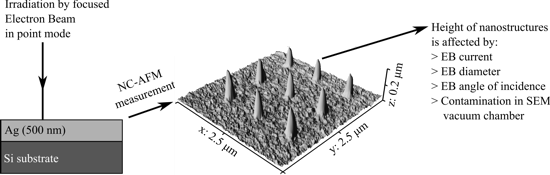
- subsequent study [31] of surface irradiation on a shape memory alloy Ni40Ti60 suggests that surface expansion might take place during the growth of the nanodots. An additional deformation of the surface was observed around nanodots on an Ni40Ti60 surface, which is believed to be caused by the surrounding


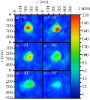


Ultrafast signatures of magnetic inhomogeneity in Pd1−xFex (x ≤ 0.08) epitaxial thin films
Beilstein J. Nanotechnol. 2022, 13, 836–844, doi:10.3762/bjnano.13.74
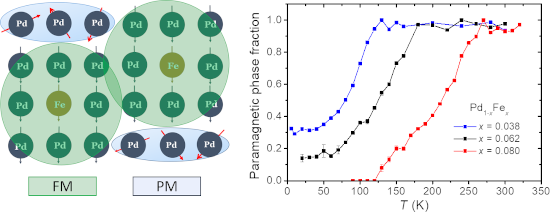
- Abstract A series of Pd1−xFex alloy epitaxial films (x = 0, 0.038, 0.062, and 0.080), a material promising for superconducting spintronics, was prepared and studied with ultrafast optical and magneto-optical laser spectroscopy in a wide temperature range of 4–300 K. It was found that the transition to the
- state in the Pd1−xFex alloy at low temperatures is about 7–8 atom %. Keywords: magnetic inhomogeneities; PdFe alloy; thin epitaxial films; time-resolved magneto-optical Kerr effect; time-resolved optical spectroscopy; Introduction Superconductor-based technologies are promising for exaflop-scale
- application. Among several candidates [1][2][3], palladium-rich Pd1−xFex alloys look attractive because of the noble-metal base robust against deterioration and the possibility to tune the magnetic properties of Pd1−xFex alloy films by varying the iron content x and the preparation conditions [29][30


Temperature and chemical effects on the interfacial energy between a Ga–In–Sn eutectic liquid alloy and nanoscopic asperities
Beilstein J. Nanotechnol. 2022, 13, 817–827, doi:10.3762/bjnano.13.72
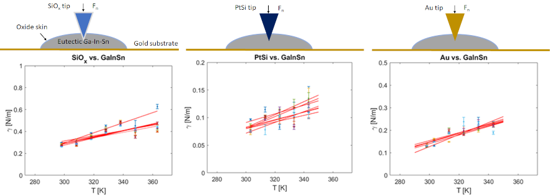
- interfacial energies between a eutectic Ga–In–Sn liquid alloy and single nanoscopic asperities of SiOx, Au, and PtSi have been determined in the temperature range between room temperature and 90 °C by atomic force spectroscopy. For all asperities used here, we find that the interfacial tension of the eutectic
- Ga–In–Sn liquid alloy is smaller than its free surface energy by a factor of two (for SiOx) to eight (for PtSi). Any significant oxide growth upon heating studied was not detected here, and the measured interfacial energies strongly depend on the chemistry of the asperities. We also observe a weak
- increase of the interfacial energy as a function of the temperature, which can be explained by the reactivity between SiOx and Ga and the occurrence of chemical segregation at the liquid alloy surface. Keywords: atomic force microscopy (AFM); interfacial energy; liquid alloy; Introduction Recently, room



Electrostatic pull-in application in flexible devices: A review
Beilstein J. Nanotechnol. 2022, 13, 390–403, doi:10.3762/bjnano.13.32
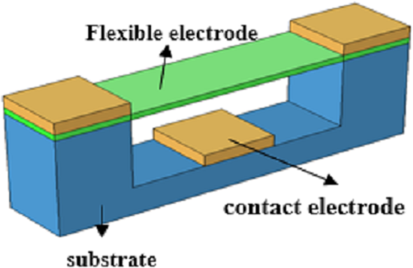
- for resonance detection of a GeSn alloy. Meija et al. [42] proposed the technique of using resonance aid to reduce the pull-in voltage of Ge0.91Sn0.09 NWs. By applying 610.8 kHz and 0.45 V AC voltage to a GeSn alloy nanowire, the pull-in voltage can be reduced from 13.8 to 5 V. This method can


Selected properties of AlxZnyO thin films prepared by reactive pulsed magnetron sputtering using a two-element Zn/Al target
Beilstein J. Nanotechnol. 2022, 13, 344–354, doi:10.3762/bjnano.13.29
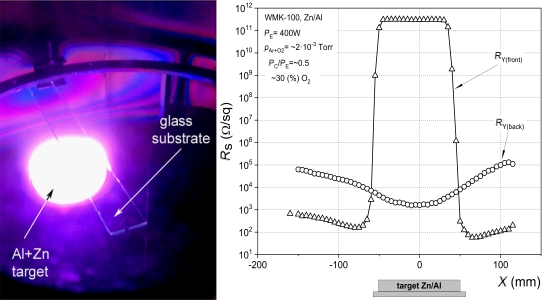
- prepared in this way have not been presented in the literature so far. In comparison to sintered or alloy targets, our approach of preparing the target is simple, and it is easy to introduce modifications of the target composition (i.e., the amount of added Al). Several preliminary sputtering processes



Controllable two- and three-state magnetization switching in single-layer epitaxial Pd1−xFex films and an epitaxial Pd0.92Fe0.08/Ag/Pd0.96Fe0.04 heterostructure
Beilstein J. Nanotechnol. 2022, 13, 334–343, doi:10.3762/bjnano.13.28
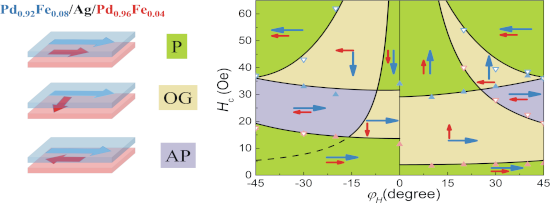
- alloy; thin epitaxial film; Introduction The generation of the long-range triplet component of the superconducting pairing at noncollinear orientations of magnetization in ferromagnetic layered systems is extensively studied in the framework of magnetic Josephson junctions (MJJs) ([1][2][3] for early
- easy-plane ferromagnets with four-fold anisotropy in the film plane [18][19]. Our conjecture is a possibility to switch the magnetic moment of a Pd1−xFex alloy film between the steady directions (90° apart) as it had been done with epitaxial iron films [20][21][22]. To realize this idea, it is
- is instructive to investigate the switching properties of Pd1−xFex films and heterostructures based on this alloy targeting the controllable non-collinear magnetic configurations in the bilayer structure. Experimental An epitaxial film of the Pd0.92Fe0.08 alloy with a thickness of 20 nm and an


Relationship between corrosion and nanoscale friction on a metallic glass
Beilstein J. Nanotechnol. 2022, 13, 236–244, doi:10.3762/bjnano.13.18
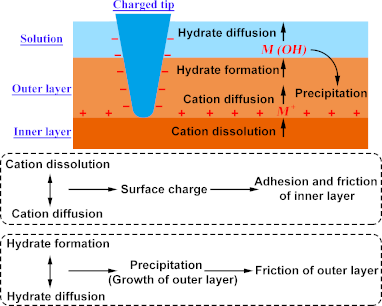
- nanoscale is crucially important. Microscale bearings made of Ni-based MGs lasted four times longer than those machined from sintered alloy [12]. Corrosive degradation, as one of the major failure mechanisms of metals and alloys, is an important issue in engineering applications of MGs. Protective oxide
- offers unique methods to resolve the microscopic corrosion process in situ. Although results were reported here for metallic glasses, we suggest that the study of surface layers and charges by nanotribology can be extended to the understanding of corrosion mechanisms in other metal and alloy systems





