


Search results
Search for "carboxylate" in Full Text gives 104 result(s) in Beilstein Journal of Nanotechnology.
Alcohol-perturbed self-assembly of the tobacco mosaic virus coat protein
Beilstein J. Nanotechnol. 2022, 13, 355–362, doi:10.3762/bjnano.13.30
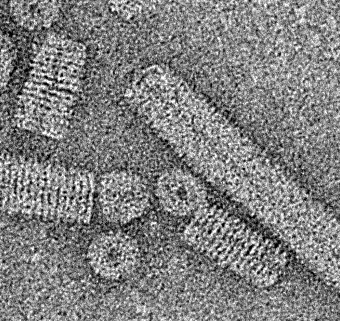
- surprising considering that protonation of Caspar carboxylate pairs around pH 6.5 reduces repulsion between disks, allowing for larger assemblies [41][42]. At higher pH of 6.8 and 7.5, the increased repulsion between subunits may discourage formation of stacked disks. In contrast, at pH 5.0, stacked disks


Self-assembly of amino acids toward functional biomaterials
Beilstein J. Nanotechnol. 2021, 12, 1140–1150, doi:10.3762/bjnano.12.85
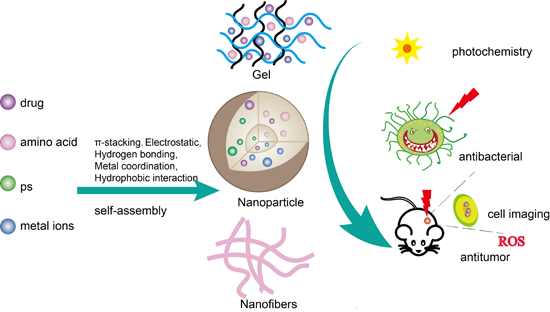
- pH values, which leads to inactive carboxylate forms [91][92]. Guo et al. [93] obtained water-soluble spiral nanofibers by coupling hydrophilic arginine and camptothecin. Self-assembly behavior is achieved by intermolecular π–π stacking and hydrophilic–hydrophobic interactions. The conjugates are

pH-driven enhancement of anti-tubercular drug loading on iron oxide nanoparticles for drug delivery in macrophages
Beilstein J. Nanotechnol. 2021, 12, 1127–1139, doi:10.3762/bjnano.12.84
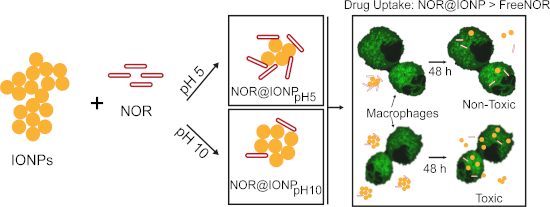
- ]. Furthermore, their interaction with IONPs may be via carboxylate groups, amine groups or by neither [27]. pH variations thus can play a key role in promoting interactions between amino acids and metal oxide surfaces [29]. NOR has also been reported to form stable complexes with Fe2+/3+ [22]. It was also
- of piperazinyl and O–H lie within the same wavenumber range, thus, the peak observed at 3422.9 cm−1 could be attributed to both NH from NOR and OH from the surface Fe–OH groups present in the sample. Fluoroquinolones are believed to chelate Fe ions through their carboxylate and amine groups [22]. The
- interaction would occur between IONP and the negatively charged carboxylate group of NOR, as carboxylate would be present on the zwitterionic NOR± molecule at this acidic pH. The percentage of zwitterionic NOR± form, estimated through the Henderson–Hasselbalch equation is only 5.9% (Supporting Information



Nanocasting synthesis of BiFeO3 nanoparticles with enhanced visible-light photocatalytic activity
Beilstein J. Nanotechnol. 2020, 11, 1822–1833, doi:10.3762/bjnano.11.164
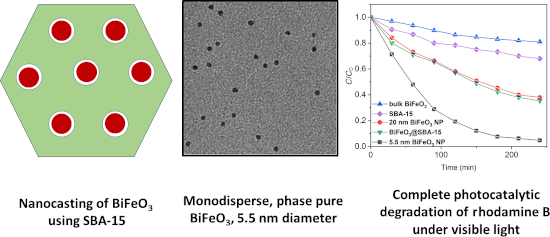
- synthesis of pure-phase BiFeO3 is the in situ formation of Fe/Bi mixed metal complexes by using different complexing agents such as carboxylic acids. During the calcination process the carboxylate ligands in the Fe/Bi complexes decompose to CO2 and BiFeO3 is formed [29]. This synthetic technique requires
- ]. However, significant amounts of impurities could be identified in the samples, which can be assigned to Bi2O3 (approx. 33%) and Bi2O2.7 (16.5%). It should be noted that the Bi/Fe carboxylate intermediates resulting from the mixing of the corresponding metal nitrate precursors and tartaric acid are mostly
- catalyst surfaces are negatively charged, which leads to a repulsion of the negatively charged carboxylate functional groups of the dye molecule [51][54][59]. In addition, due to electrostatic interactions, RhB dimers are formed, which affects the charge density throughout the molecule and possibly leads




Transient coating of γ-Fe2O3 nanoparticles with glutamate for its delivery to and removal from brain nerve terminals
Beilstein J. Nanotechnol. 2020, 11, 1381–1393, doi:10.3762/bjnano.11.122
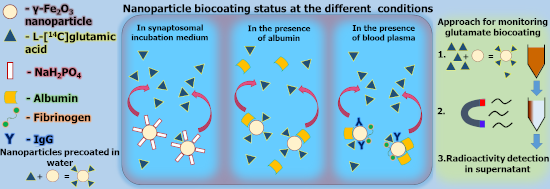
- ]glutamate adsorption. However, uptake and ambient level results were not adequate. Based on the literature data that carboxylic acids adsorbed on the oxide surface form a chelate-type bonds involving Fe(III) surface species and a carboxylate group [24], it was suggested that certain components of the


Photothermally active nanoparticles as a promising tool for eliminating bacteria and biofilms
Beilstein J. Nanotechnol. 2020, 11, 1134–1146, doi:10.3762/bjnano.11.98
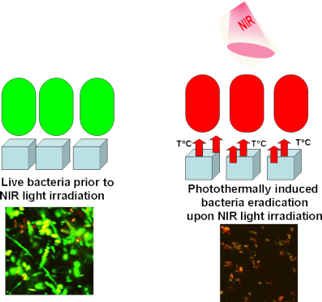
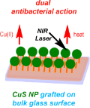
- application of gold-nanoparticle-coated surfaces and nanocomposite materials for antibacterial treatments. Gold nanoshells functionalized with carboxylate-terminated organosulfur ligands were attached to the surface of a model catheter and their effectiveness in eliminating adhering E. faecalis bacteria was


Internalization mechanisms of cell-penetrating peptides
Beilstein J. Nanotechnol. 2020, 11, 101–123, doi:10.3762/bjnano.11.10
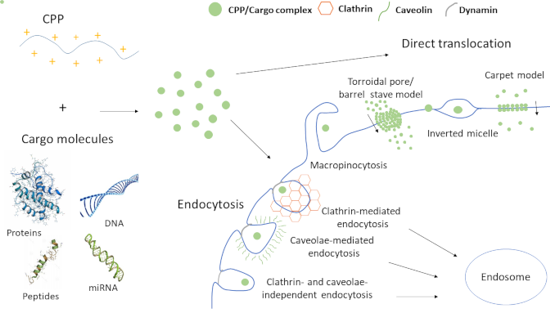
- partitioned into lipid phases from the aqueous phase in the presence of phosphatidylglycerol, a behavior of arginine often referred to as “arginine magic”. The guanidine group found on arginine has proven to form bidentate hydrogen bonds and electrostatic interaction with sulfate, phosphate and carboxylate


Charge-transfer interactions between fullerenes and a mesoporous tetrathiafulvalene-based metal–organic framework
Beilstein J. Nanotechnol. 2019, 10, 1883–1893, doi:10.3762/bjnano.10.183
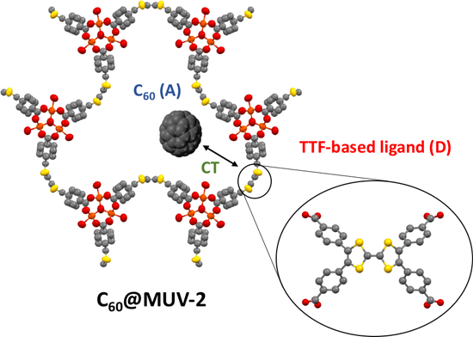
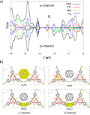
- in the terminal carboxylate groups for charge neutrality. Interaction energies were calculated for the previously PBC-optimized crystal structures as the energy difference between the dimer and the constituting monomers. The hybrid B3LYP [67] with the Grimme’s D3 dispersion correction [68] (B3LYP-D3




Layered double hydroxide/sepiolite hybrid nanoarchitectures for the controlled release of herbicides
Beilstein J. Nanotechnol. 2019, 10, 1679–1690, doi:10.3762/bjnano.10.163
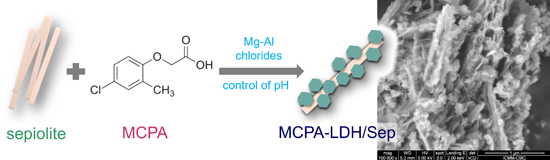
- cm−1 (symmetric and asymmetric stretching vibration of ionized COO− groups) [39] as the carboxylic group should be present as carboxylate. In fact, the spectra show a large band in the range of 1630–1600 cm−1 due to the overlap of such bands with the one ascribed to δHOH vibration modes of water


Materials nanoarchitectonics at two-dimensional liquid interfaces
Beilstein J. Nanotechnol. 2019, 10, 1559–1587, doi:10.3762/bjnano.10.153
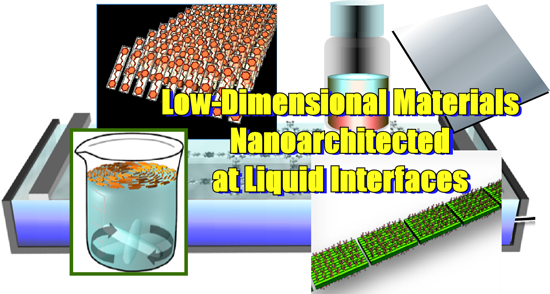
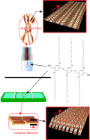
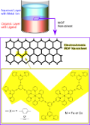
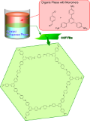
- ., crystallinity controlled two-dimensional patterns based on guanidinium/carboxylate molecular recognition [196] and the two-dimensional assembly of one-dimensional supramolecular polymers formed between alkylated melamine and aqueous barbiturate [197] have been also accomplished. Oishi and co-workers utilized
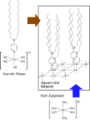
- the balance between two competitive interactions, the phase separation of fluorocarbons and hydrocarbons and the attractive interaction between guanidiuium and carboxylate, to fabricate nanoscopic domains within a two-dimensional mixture of hydrocarbon guanidinium and fluorocarbon carboxylic acid [198












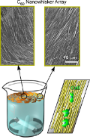

The effect of magneto-crystalline anisotropy on the properties of hard and soft magnetic ferrite nanoparticles
Beilstein J. Nanotechnol. 2019, 10, 1348–1359, doi:10.3762/bjnano.10.133
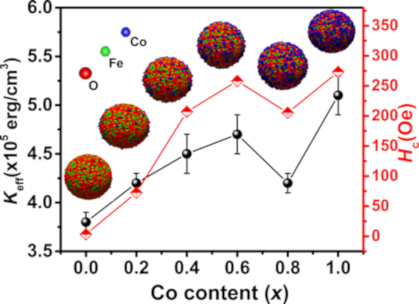
- deformation, N–H bending) [26] and the absorption peak at around 1330 cm−1 is related to the stretching vibration bands of the carboxylate group (C=O) [27]. The latter two peaks (1556 and 1330 cm−1) are observed in all samples and can be ascribed to the presence of some impurity in the KBr pellets, which is


Tungsten disulfide-based nanocomposites for photothermal therapy
Beilstein J. Nanotechnol. 2019, 10, 811–822, doi:10.3762/bjnano.10.81
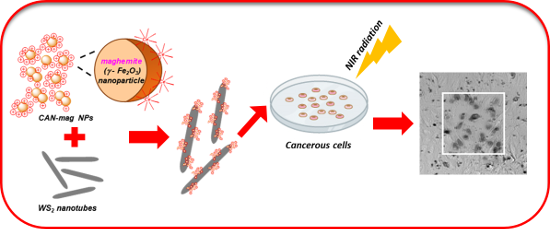
- −1 may be assigned to C–O stretching vibrations. The peaks at around 1400 cm−1 and 1540 cm−1 are assigned to symmetric and asymmetric stretching vibrations of carboxylate [O–C–O]− ions. The positions of the peaks indicate attachment of the polymer ligand to the surface of the maghemite nanoparticles
- through carboxylate groups. In the species –COO–Fe, these are shifted to slightly higher energies compared to non-attached carboxylates [57][58]. The peaks at 2850 cm−1, 2920 cm−1, and 2960 cm−1 are assigned to C–H stretching vibrations in the PAA chain. The broad peak at 3400 cm−1 is stronger compared to
- protonated amine groups, and the WS2-NT-CM-PEI composite becomes positively charged. PAA is negatively charged (carboxylate groups), shifting the composite from −9.90 mV to −21.4 mV. Figure 8 shows the magnetization spectra of WS2-NT, CAN-mag, and WS2-NT-CM nanocomposites, all taken at a temperature of 10 K






Ceria/polymer nanocontainers for high-performance encapsulation of fluorophores
Beilstein J. Nanotechnol. 2019, 10, 522–530, doi:10.3762/bjnano.10.53
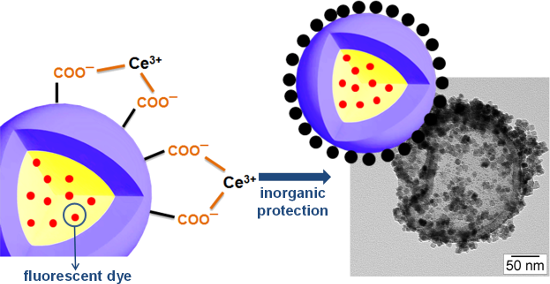
- an inorganic layer and a liquid core containing a fluorophore. The polymeric capsules are synthesized by free radical miniemulsion polymerization and contain covalently bound carboxylate surface functionalities that allow for the binding of metal ions through electrostatic interaction. A cerium(IV
- . The crystallization of cerium(IV) oxide nanoparticles on the surface of the polymer nanocapsules is depicted in Figure 1. First, the cerium ions from the precursor are complexed by the carboxylate functional groups and the crystallization occurs upon addition of NaOH at a controlled rate. The SEM and
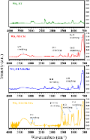
- atmosphere. The enhancement effect can be explained by the trapping of the quenching oxygen molecules on the metal oxide surface, which results in a reduction of the photo-oxidation. Schematic representation of the formation of cerium(IV) oxide on the surface of carboxylate functionalized fluorescent


Reduced graphene oxide supported C3N4 nanoflakes and quantum dots as metal-free catalysts for visible light assisted CO2 reduction
Beilstein J. Nanotechnol. 2019, 10, 448–458, doi:10.3762/bjnano.10.44
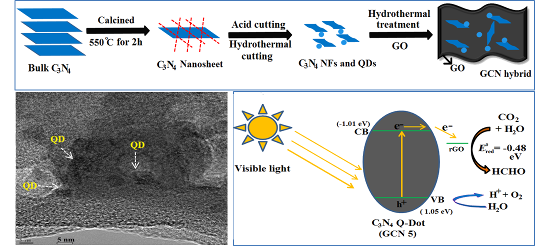
- , a sharp peak at 1380 cm−1 is observed, which can be ascribed to –C–O stretching vibrations of carboxylate groups, which are formed due to the breaking of some C–N bonds of triazine rings and their oxidation to carboxylic groups in the C3N4 NFs and QDs [19]. After the introduction of rGO to form GCN
- a small span of time (5 h). During the acid treatment process, some C–N bonds of the s-triazine units of the g-C3N4 sheet are oxidized and oxygen-containing carboxylate functional groups are generated at the edge and on the basal plane [19] as indicated by FTIR spectra (Figure 4). This results in



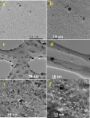
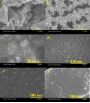


One-step nonhydrolytic sol–gel synthesis of mesoporous TiO2 phosphonate hybrid materials
Beilstein J. Nanotechnol. 2019, 10, 356–362, doi:10.3762/bjnano.10.35
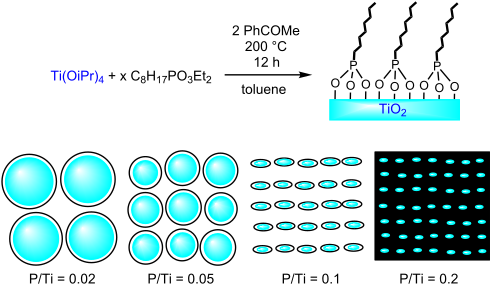
- case of metals, as M–C bonds are (in most cases) quite unstable, the organic groups can be linked to the metal oxide network via carboxylate or β-diketonate ligands [5][10][11]. Organophosphorus ligands such as phosphonates appear quite promising as they form strong ionocovalent M–O–P bonds with many


Removal of toxic heavy metals from river water samples using a porous silica surface modified with a new β-ketoenolic host
Beilstein J. Nanotechnol. 2019, 10, 262–273, doi:10.3762/bjnano.10.25
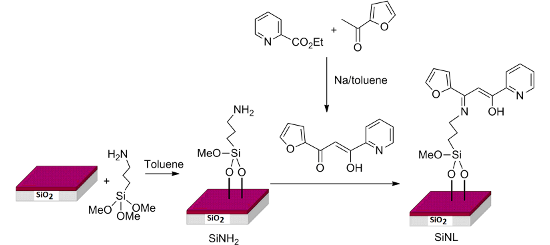
- from ethyl pyridine-2-carboxylate and 2-acetylfuran via in situ Claisen condensation reaction [49]. The reaction of the activated silica gel with (3-aminopropyl)trimethoxysilane in toluene afforded amino groups onto the silica surface (SiNH2), which were then reacted with L1 under gentle conditions


A novel polyhedral oligomeric silsesquioxane-modified layered double hydroxide: preparation, characterization and properties
Beilstein J. Nanotechnol. 2018, 9, 3053–3068, doi:10.3762/bjnano.9.284
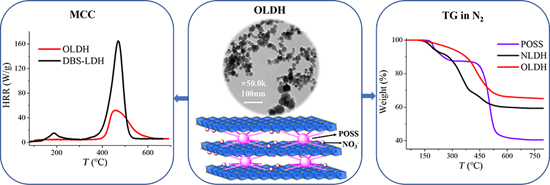
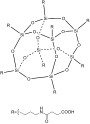
- carboxylate groups, which could counterbalance multiple positive sheet charges. (iii) The high hydrocarbon content of the intercalator is helpful in improving the affinity of LDH to carbon-based materials. The OPCS-modified LDH (OLDH) was designed and prepared using a one-step route, followed by the







Colloidal chemistry with patchy silica nanoparticles
Beilstein J. Nanotechnol. 2018, 9, 2989–2998, doi:10.3762/bjnano.9.278
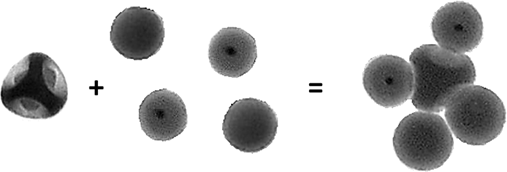
- -known approach consists in converting them into more reactive groups such as anhydrides. We chose to use TEA to deprotonate the carboxylic groups and ethyl chloroformate (ECF) to react with the resulting carboxylate groups to get mixed anhydrides [26]. The assemblies were performed in dry


Magnetic and luminescent coordination networks based on imidazolium salts and lanthanides for sensitive ratiometric thermometry
Beilstein J. Nanotechnol. 2018, 9, 2775–2787, doi:10.3762/bjnano.9.259
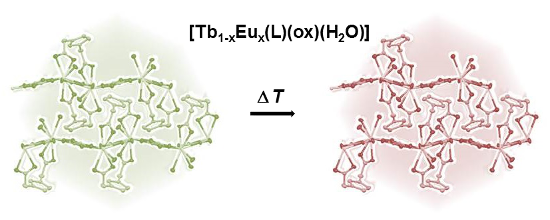
- carboxylate function of two different [L]− ligands, one from the water molecule and four from two different oxalate ligands. The coordination environment of Ln3+ ions is a tricapped trigonal prism (Figure S1, Supporting Information File 1) with Ln–O distances similar to those observed in structurally related
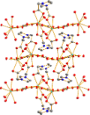
- oxalate ligand (Table S1, Supporting Information File 1). Two separate Ln3+ ions are connected through an oxalate ligand in a bis-bidentate bridging coordination mode forming undulating chains along the a-axis (Figure 2). The Ln3+ ions are connected to the carboxylate functions of the [L]− ligand in a
- bidentate chelate mode. The cohesion between these chains is realized through H bonding between H atoms of the coordinated water molecules and O atoms of the carboxylate functions. Beside the single crystal analysis, the homogeneity of the six samples was checked by powder X-ray diffraction. As shown in



Nanocellulose: Recent advances and its prospects in environmental remediation
Beilstein J. Nanotechnol. 2018, 9, 2479–2498, doi:10.3762/bjnano.9.232
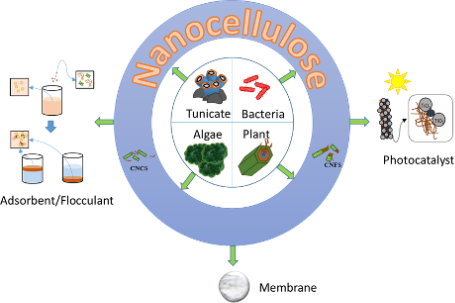
- the removal of toxic metal ions from wastewater. A carboxy group has two lone pairs of electrons on the oxygen, and hence it is required to form a chelate with a divalent metal. In this regard, Qiao et al. [101] synthesized a carboxylate-functionalized adsorbent by grafting maleic anhydride on primary


Nanocomposites comprised of homogeneously dispersed magnetic iron-oxide nanoparticles and poly(methyl methacrylate)
Beilstein J. Nanotechnol. 2018, 9, 1613–1622, doi:10.3762/bjnano.9.153
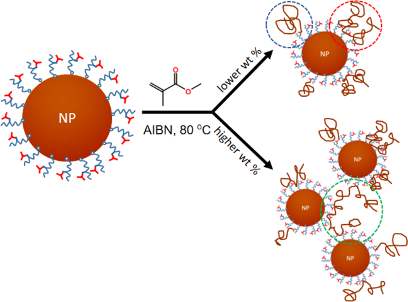
- the carbon–oxygen stretching vibration and the difference between the asymmetric and symmetric stretching-vibration frequencies relative to the free carboxylate ion are indicative of a mononuclear bidentate complex. The absorption peak at 1736 cm−1, indicative of ester groups, is significantly


Chemistry for electron-induced nanofabrication
Beilstein J. Nanotechnol. 2018, 9, 1317–1320, doi:10.3762/bjnano.9.124

- efforts [11]. Another approach is to identify molecular subunits that can form stable nonreactive and volatile products upon electron–precursor interaction. The carboxylate group is such a subunit [12][13][14][15][16]. It holds the promise that it may easily fragment to yield thermodynamically stable CO2
- during electron exposure and thus enhance precursor fragmentation. This expectation is met by a novel fluorinated silver carboxylate precursor that yields deposits with so far unprecedented silver content including 3D structures [15][16]. However, given a favorable structure, even large organic ligands
Towards the third dimension in direct electron beam writing of silver
Beilstein J. Nanotechnol. 2018, 9, 842–849, doi:10.3762/bjnano.9.78
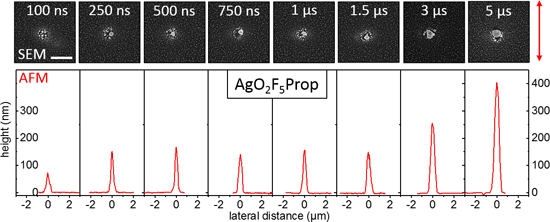
- towards the direct electron beam writing of three-dimensional plasmonic device parts from the gas phase. Keywords: carboxylate; electron beam induced deposition; silver; three-dimensional nanostructures; vertical growth rate; Introduction Focused electron beam induced deposition (FEBID) is a resistless
- silver nanostructures could be achieved. To address these issues AgO2Me2Bu was compared to another carboxylate compound. Silver pentafluoropropionate [Ag(µ-O2CC2F5)]2 (AgO2F5Prop) provides for a similar evaporation temperature and electron-beam sensitivity but also for slightly higher gas flux and
- stability leading to deposits of high silver contents [27]. This makes it ideally suited for a comparative study elucidating the deposition behavior of such carboxylate compounds. Depositions varying beam and current and dwell times were investigated concerning their morphology and composition. Finally


Anchoring Fe3O4 nanoparticles in a reduced graphene oxide aerogel matrix via polydopamine coating
Beilstein J. Nanotechnol. 2018, 9, 591–601, doi:10.3762/bjnano.9.55
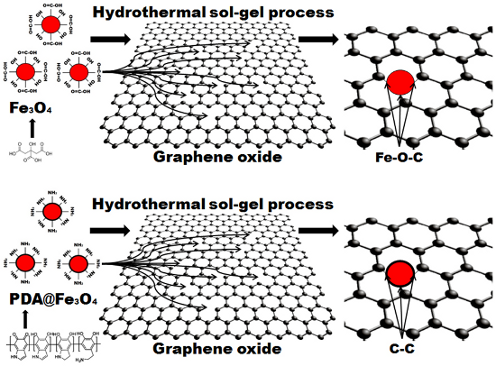
- ), respectively, which may originate from the presence of citric acid or polydopamine. The residual ether-type functional groups can be observed via C–O vibrational band at 1115 cm−1 (IX). The strong band at 1572 cm−1 (VI) could be attributed to a carboxylate C–O–Fe bond, which confirms covalent bonding between


Electron interaction with copper(II) carboxylate compounds
Beilstein J. Nanotechnol. 2018, 9, 384–398, doi:10.3762/bjnano.9.38
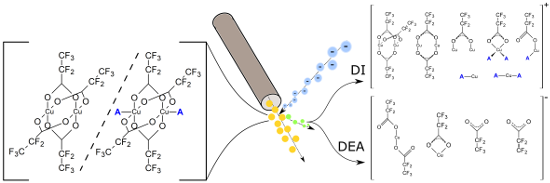
- Toruń, Gagarina 7, 87-100 Toruń, Poland 10.3762/bjnano.9.38 Abstract In the present study we have performed electron collision experiments with copper carboxylate complexes: [Cu2(t-BuNH2)2(µ-O2CC2F5)4], [Cu2(s-BuNH2)2(µ-O2CC2F5)4], [Cu2(EtNH2)2(µ-O2CC2F5)4], and [Cu2(µ-O2CC2F5)4]. Mass spectrometry was
- both the carboxylate ligands and/or the amine ligands from the complexes. Moreover, the fragmentation of the ligands themselves is visible in the mass spectrum below m/z 140. For the studied complexes the metallated ions containing both ligands, e.g., Cu2(O2CC2F5)(RNH2)+, Cu2(O2CC2F5)3(RNH2)2+ confirm
- studied for the first time on the following copper(II) pentafluoropropionate derivatives: [Cu2(t-BuNH2)2(µ-O2CC2F5)4], [Cu2(s-BuNH2)2(µ-O2CC2F5)4], [Cu2(EtNH2)2(µ-O2CC2F5)4], and [Cu2(µ-O2CC2F5)4] (Figure 1). The carboxylate copper(II) complexes with tert-butylamine ([Cu2(t-BuNH2)2(µ-O2CR)4], where R





