


Search results
Search for "commercialization" in Full Text gives 61 result(s) in Beilstein Journal of Nanotechnology.
Engineered titania nanomaterials in advanced clinical applications
Beilstein J. Nanotechnol. 2022, 13, 201–218, doi:10.3762/bjnano.13.15
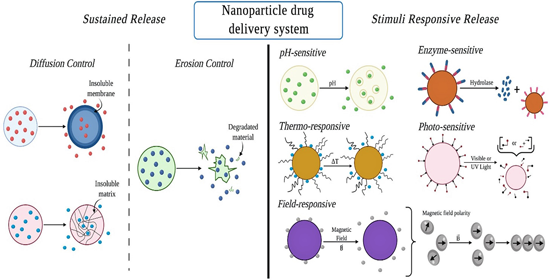
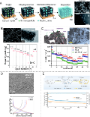
- translation and commercialization. Therefore, interdisciplinary research should be performed carefully to establish TiO2 as the next generation of nanotherapeutics. SEM images of titania structures. (A) Nanotubes. (Figure 1A was adapted with permission from [5], Copyright 2005 American Chemical Society. This


A comprehensive review on electrospun nanohybrid membranes for wastewater treatment
Beilstein J. Nanotechnol. 2022, 13, 137–159, doi:10.3762/bjnano.13.10
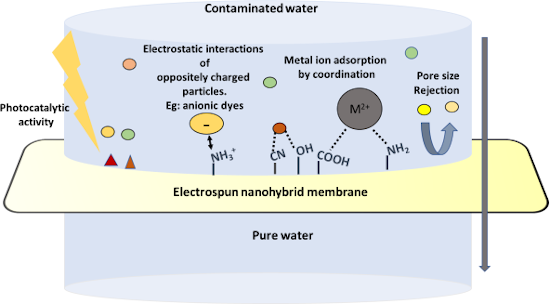





An overview of microneedle applications, materials, and fabrication methods
Beilstein J. Nanotechnol. 2021, 12, 1034–1046, doi:10.3762/bjnano.12.77
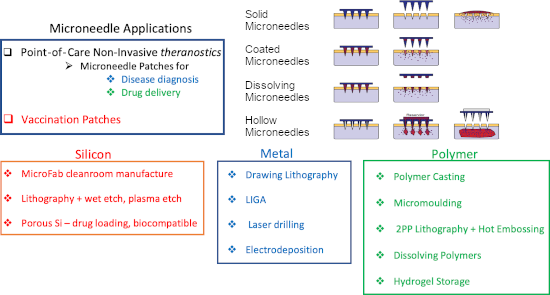
- microfluidic elements for point-of-care diagnostics or drug delivery. Recent commercialization of TPP microtechnology by companies such as Nanoscribe GmbH (Germany) has enabled precise and flexible fabrication with submicron resolution [5]. Other manufacturing processes for microneedle fabrication include


Progress and innovation of nanostructured sulfur cathodes and metal-free anodes for room-temperature Na–S batteries
Beilstein J. Nanotechnol. 2021, 12, 995–1020, doi:10.3762/bjnano.12.75
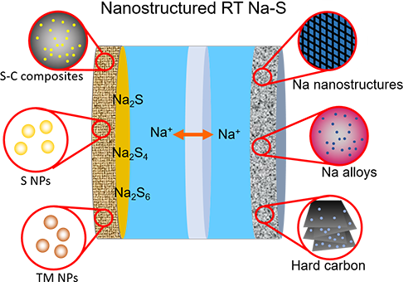
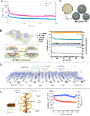
- performance and prevent their commercialization. The main drawbacks of these electrochemical devices are (1) the polysulfide shuttle effect, (2) the insulating nature of both sulfur and sodium sulfide, and (3) the large volume expansion of the cathode during the discharge process (Figure 2) [16]. Other
- successfully applying Na metal-free anode strategies for RT Na–S batteries. Relevant recent patents on RT Na–S batteries Patents are a useful indicator for the innovation capacity of a scientific area and the potential commercialization of a technology. Therefore, this review includes a patent review on RT Na




Comprehensive review on ultrasound-responsive theranostic nanomaterials: mechanisms, structures and medical applications
Beilstein J. Nanotechnol. 2021, 12, 808–862, doi:10.3762/bjnano.12.64


A review of defect engineering, ion implantation, and nanofabrication using the helium ion microscope
Beilstein J. Nanotechnol. 2021, 12, 633–664, doi:10.3762/bjnano.12.52
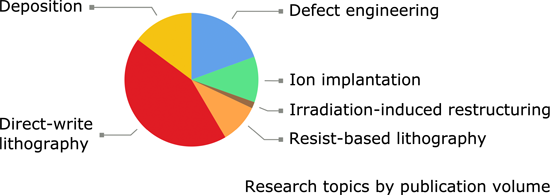
- paper reviews the materials modification research that has been enabled by the helium ion microscope since its commercialization in 2007, ranging from fundamental studies of beam–sample effects, to the prototyping of new devices with features in the sub-10 nm domain. Keywords: defect engineering


A review on the biological effects of nanomaterials on silkworm (Bombyx mori)
Beilstein J. Nanotechnol. 2021, 12, 190–202, doi:10.3762/bjnano.12.15
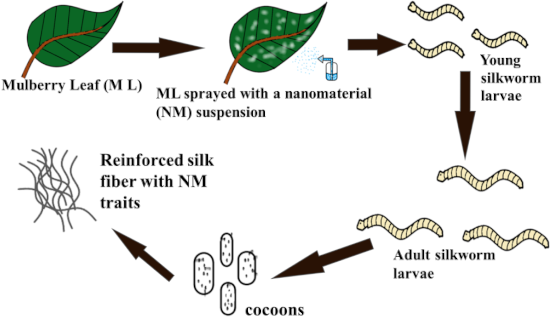
- the environment, as illustrated in Figure 1. Nanotechnology is in the commercialization exploration phase [52] and it is imperative to explore its benefits. Currently, food industries are interested in exploring the potential benefits of incorporating nanotechnology in food production and food


Walking energy harvesting and self-powered tracking system based on triboelectric nanogenerators
Beilstein J. Nanotechnol. 2020, 11, 1590–1595, doi:10.3762/bjnano.11.141
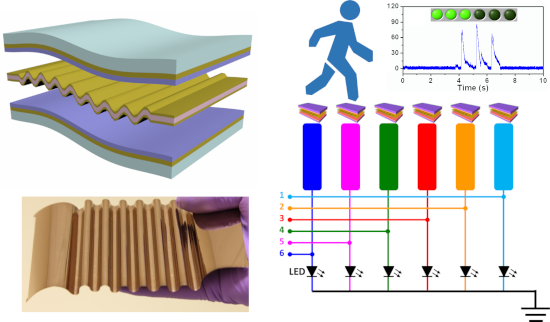
- transportation alternatives. Keywords: harvesting walking energy; internet of things; mechanical energy; pedestrian flow area; self-powered tracking system; triboelectric nanogenerator; Introduction With the fast progress in urbanization and commercialization, energy acquisition for powering wearable




Ultrasensitive detection of cadmium ions using a microcantilever-based piezoresistive sensor for groundwater
Beilstein J. Nanotechnol. 2020, 11, 1242–1253, doi:10.3762/bjnano.11.108
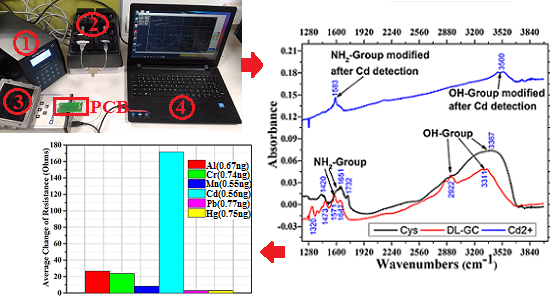
- with a limit of detection (LOD) of 0.56 ng (2.78 pM), which perfectly describes its excellent performance over other reported techniques. Many researchers used nanoparticle-based sensors for the detection of heavy metal ions, but daily increasing usage and commercialization of nanoparticles are rapidly
- , nanoparticles (NPs), and MEMS, to selectively target Cd(II) in the picomolar range. Also, excessive commercialization of nanoparticles leads to increasing their harmful effect on life and the environment by [44][45][46]. In this article, an attempt is made to expand the AuNP-based technology proposed by [34
- different ranges of concentrations. Both the colorimetric and the fluorescence techniques use NPs and lead to an excessive commercialization of nanoparticles, quickly expanding their harmful effect on life and environment, as discussed earlier. Conclusion The proposed microcantilever-based device was tested




Gas sorption porosimetry for the evaluation of hard carbons as anodes for Li- and Na-ion batteries
Beilstein J. Nanotechnol. 2020, 11, 1217–1229, doi:10.3762/bjnano.11.106
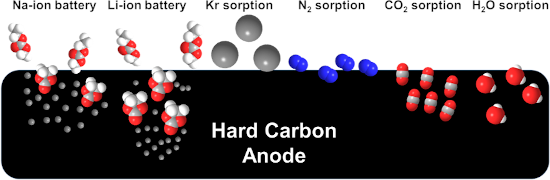
- weight of Na), the lower volumetric energy density (because of the need for the less dense disordered carbons), as well as the more complicated storage mechanism complicate the commercialization SIBs. With the current strong interest in electromotive driving and the transformation of the energy grid to
- of carbon materials for commercial application. Besides the remaining questions about the reversible capacity, the reduction of the irreversible capacity for disordered carbons is another important field of research crucial for commercialization. As already mentioned above, one of the reasons why HCs


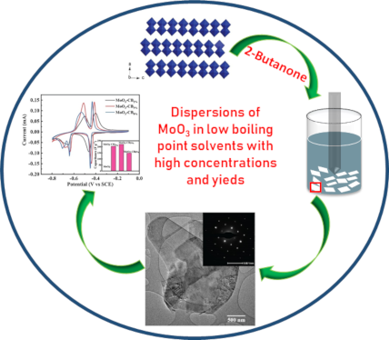
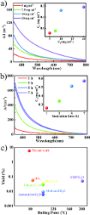
Exfoliation in a low boiling point solvent and electrochemical applications of MoO3
Beilstein J. Nanotechnol. 2020, 11, 662–670, doi:10.3762/bjnano.11.52
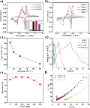
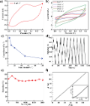
- change in slope, which could be due to the electrochemically reversible hydrogen intercalation, which was also seen in the voltammetry curves. The charge and discharge times were found to be 15 and 13 s at a current density of 1 A·g−1. Cycling stability is a key factor for the commercialization of

Recent progress in perovskite solar cells: the perovskite layer
Beilstein J. Nanotechnol. 2020, 11, 51–60, doi:10.3762/bjnano.11.5

- , paving the way for their commercialization. In the closing section of this review, some future critical challenges are outlined, and the prospect of commercialization of PSCs is presented. Keywords: coating techniques; perovskite layer; perovskite solar cells (PSCs); perovskite structure; photovoltaic
- that of recent commercial photovoltaic modules. However, the poor long-term ambient stability and the weak scalability of PSCs have been critical hurdles for their commercialization. In general, the competitiveness of solar cells is evaluated by efficiency, cost and lifetime, where scalability is
- closely related to cost and lifetime has much to do with stability. Achieving a balance of efficiency, cost and lifetime is the key to promote the commercialization of PSCs to grab a share of the energy market. Therefore, several research efforts are addressing these issues that are important for


Antimony deposition onto Au(111) and insertion of Mg
Beilstein J. Nanotechnol. 2019, 10, 2541–2552, doi:10.3762/bjnano.10.245
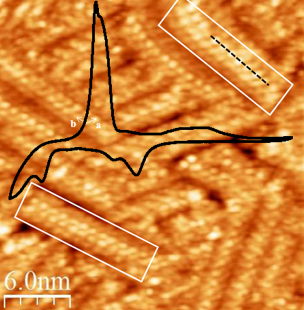
- formation of a solid electrolyte interface (SEI) layer in Li systems. One of the main challenges in the commercialization of Mg-ion batteries is the incompatibility of the magnesium anode with the electrolytes because of the formation of this Mg2+ film. Recently, Sb has been suggested as an alternative





Semitransparent Sb2S3 thin film solar cells by ultrasonic spray pyrolysis for use in solar windows
Beilstein J. Nanotechnol. 2019, 10, 2396–2409, doi:10.3762/bjnano.10.230
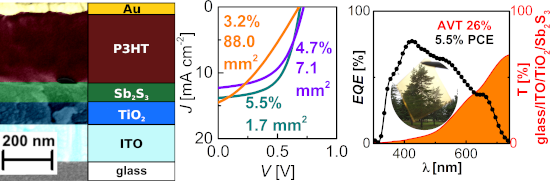
- ]. At present, tremendous research efforts have been allocated worldwide to increase the long-term stability of these solar cells [11]. As minimizing fabrication cost is crucial for commercialization, solar windows would benefit from a fully inorganic absorber that has superior stability towards
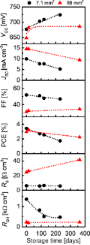
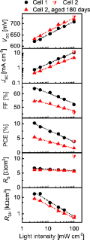
- absorber, the development of fabrication techniques to produce high quality Sb2S3 absorber layers, with few grain boundaries and intra-grain defects is essential to enable commercialization of Sb2S3-based solar cells [14][38]. The record PCE of 5.77% was achieved with a planar TiO2/Sb2S3/P3HT cell by



Flexible freestanding MoS2-based composite paper for energy conversion and storage
Beilstein J. Nanotechnol. 2019, 10, 1488–1496, doi:10.3762/bjnano.10.147
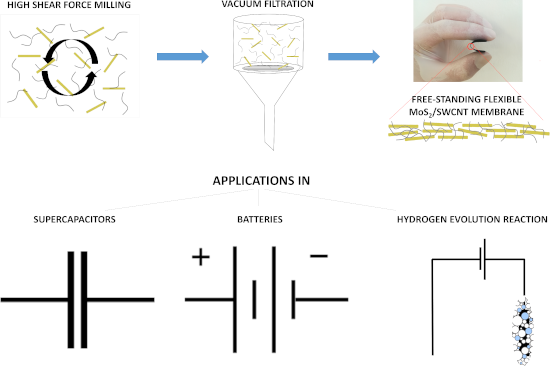
- graphite (372 mA·h·g−1) [6]. However, poor electrical conductivity, capacity fading and large volume changes upon charge and discharge make the commercialization of MoS2 in LIBs problematic [6][7]. In order to address this issue, the fabrication of MoS2 composites and carbonaceous support materials (such


Warped graphitic layers generated by oxidation of fullerene extraction residue and its oxygen reduction catalytic activity
Beilstein J. Nanotechnol. 2019, 10, 1391–1400, doi:10.3762/bjnano.10.137
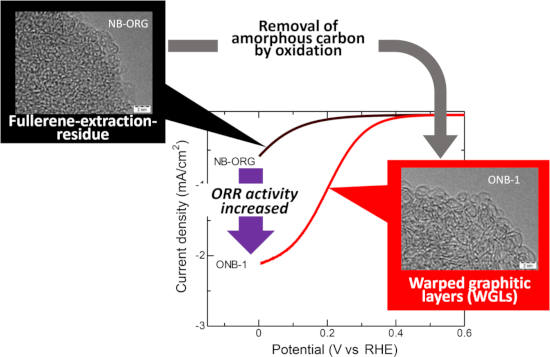
- ]. Improving an ORR catalyst by altering the catalyst design and preparation successfully led to the world's first commercialization of a portable fuel cell with a non-precious-metal catalyst [37][38]. Building on this success, we ultimately aim to apply our CACs to automobile and stationary device uses. These



Green fabrication of lanthanide-doped hydroxide-based phosphors: Y(OH)3:Eu3+ nanoparticles for white light generation
Beilstein J. Nanotechnol. 2019, 10, 1200–1210, doi:10.3762/bjnano.10.119
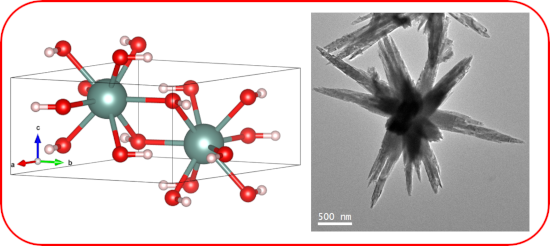
- , numerous methods for obtaining phosphors to be used either over blue LED or UV LED have been reported. However, these materials require harsh synthesis conditions such as high temperature and high pressure, and water-free solvents, which can restrict their commercialization. In this context, several



Quantitative analysis of annealing-induced instabilities of photo-leakage current and negative-bias-illumination-stress in a-InGaZnO thin-film transistors
Beilstein J. Nanotechnol. 2019, 10, 1125–1130, doi:10.3762/bjnano.10.112
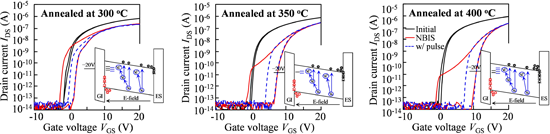
- commercialization has accelerated the development of consumption electronics and micromachining technology. One of the most successful modern-day microelectronic products are metal-oxide thin-film transistors (TFTs) that guarantee large-scale integrated circuits for applications in transparent and flexible flat


Nanocellulose: Recent advances and its prospects in environmental remediation
Beilstein J. Nanotechnol. 2018, 9, 2479–2498, doi:10.3762/bjnano.9.232


Nitrogen-doped carbon nanotubes coated with zinc oxide nanoparticles as sulfur encapsulator for high-performance lithium/sulfur batteries
Beilstein J. Nanotechnol. 2018, 9, 1677–1685, doi:10.3762/bjnano.9.159
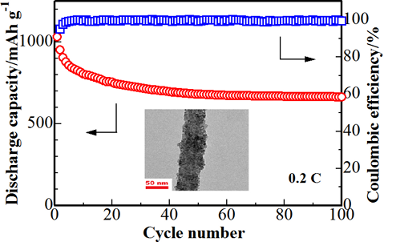
- lithium polysulfides (Li2Sn, 4 ≤ n ≤ 8) during battery operation [2]. This is one of the major challenges in the commercialization of Li/S batteries. To overcome this problem, a rational design of the sulfur-based cathode is required, such as the addition of porous conductive materials that could “attract


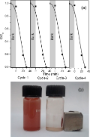
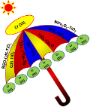
Cr(VI) remediation from aqueous environment through modified-TiO2-mediated photocatalytic reduction
Beilstein J. Nanotechnol. 2018, 9, 1448–1470, doi:10.3762/bjnano.9.137


Synthesis and characterization of two new TiO2-containing benzothiazole-based imine composites for organic device applications
Beilstein J. Nanotechnol. 2018, 9, 721–739, doi:10.3762/bjnano.9.67
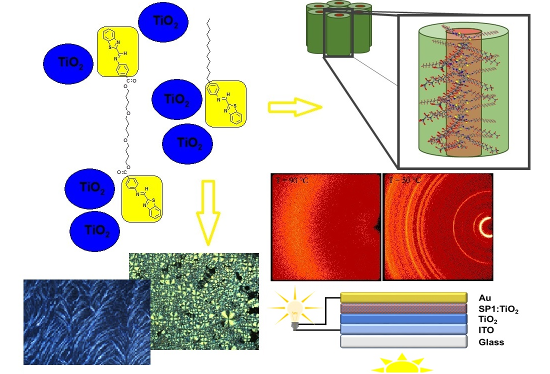
- conversion efficiency, lifetime) and luminescence parameters (e.g., quantum yield, lifetime) [7][8][9][10][11][12][13][14]. In recent years, the efficiency of bulk heterojunction organic solar cells has shown great improvement, from 2.5 to 13%. Such rapid progress brings us closer to actual commercialization




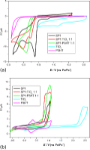


Systematic control of α-Fe2O3 crystal growth direction for improved electrochemical performance of lithium-ion battery anodes
Beilstein J. Nanotechnol. 2017, 8, 2032–2044, doi:10.3762/bjnano.8.204
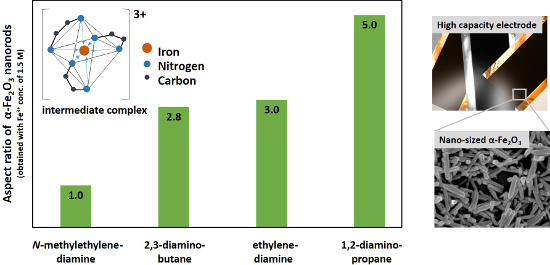
- density of the BEV power source must be increased by a factor of 2.5 by 2030 [5]. Since the commercialization of LIBs in 1991 by the Sony Cooperation [6][7], carbon-based materials such as graphite have predominantly been applied as negative electrodes. Although graphite is advantageous due to its high


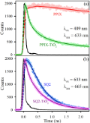
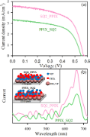
Three-in-one approach towards efficient organic dye-sensitized solar cells: aggregation suppression, panchromatic absorption and resonance energy transfer
Beilstein J. Nanotechnol. 2017, 8, 1705–1713, doi:10.3762/bjnano.8.171
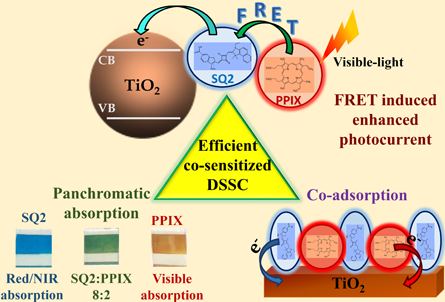
- . The use of PPIX as a green alternative of the conventional toxic and expensive sensitizers has been reported earlier [31], but the so far reported efficiencies of PPIX-sensitized DSSCs are poor from a commercialization point of view. In spite of having a high molar extinction coefficient in the
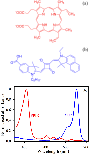



Development of a nitrogen-doped 2D material for tribological applications in the boundary-lubrication regime
Beilstein J. Nanotechnol. 2017, 8, 1476–1483, doi:10.3762/bjnano.8.147
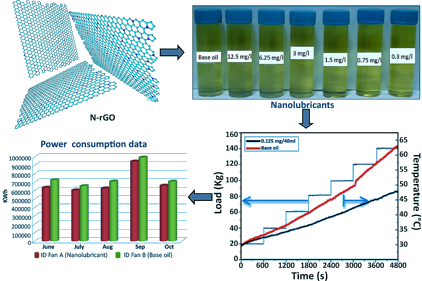
- thus proves the potential towards commercialization. The implementation of the prepared nanolubricants in the ID fan results a remarkable reduction in the power consumption. Experimental Synthesis of N-rGO The synthesis of graphene oxide using Hummers method is described in Supporting Information File





