


Search results
Search for "contaminants" in Full Text gives 196 result(s) in Beilstein Journal of Nanotechnology.
Better together: biomimetic nanomedicines for high performance tumor therapy
Beilstein J. Nanotechnol. 2025, 16, 1246–1276, doi:10.3762/bjnano.16.92
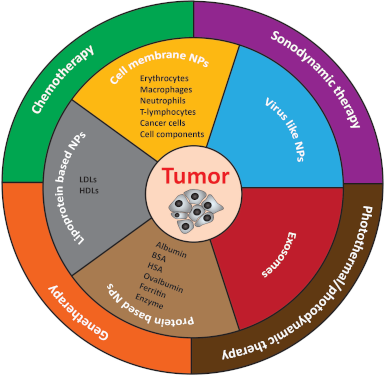
- [94]. Like BSA, ovalbumin can activate an immune response and the presence of endotoxin contaminants activates macrophages and dendritic cells [95]. Therefore, ovalbumin nanoparticles are generally limited to immunotherapeutic applications. 1.3.5 Ferritin-based biomimetic nanoparticles. Ferritin is an








Single-layer graphene oxide film grown on α-Al2O3(0001) for use as an adsorbent
Beilstein J. Nanotechnol. 2025, 16, 1082–1087, doi:10.3762/bjnano.16.79
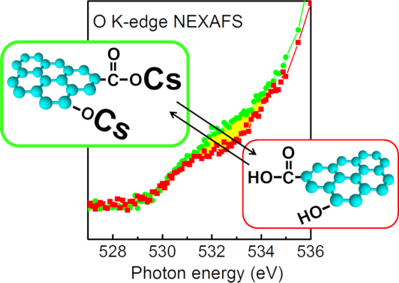
- of radioactive Cs contaminants from rocks and soils [21]. The resulting solution is a substantial quantity of low-level radioactive treated water. Therefore, the adsorbent needs to possesses high-adsorption performance, a rapid reaction rate, and cost-effectiveness in production. Romanchuk et al


Morphology and properties of pyrite nanoparticles obtained by pulsed laser ablation in liquid and thin films for photodetection
Beilstein J. Nanotechnol. 2025, 16, 785–805, doi:10.3762/bjnano.16.60
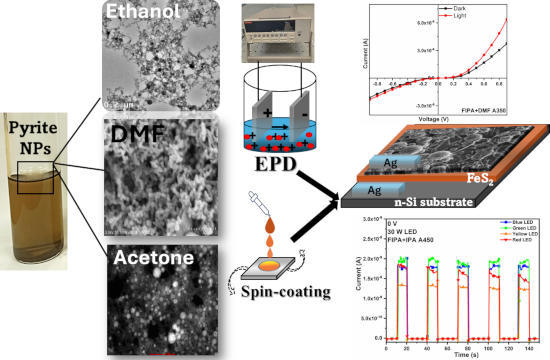
- related to FeS2 [3]. Pyrite has shown outstanding performance and a long shelf life as a high-capacity cathode and has been utilized in batteries [4]. Pyrite has also been identified as a promising material for effectively removing environmental contaminants in the environment near the surface of the






Feasibility analysis of carbon nanofiber synthesis and morphology control using a LPG premixed flame
Beilstein J. Nanotechnol. 2025, 16, 581–590, doi:10.3762/bjnano.16.45
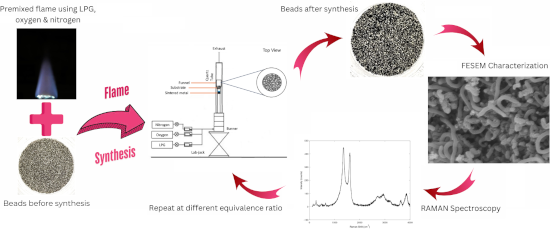
- impregnated beads Zirconia beads of 0.30 mm diameter were selected as a substrate. The beads were cleaned by sonication in ethanol followed by rinsing with distilled water; the rinsed beads were dried in an oven to remove contaminants. The cleaned zirconia beads were impregnated with nickel catalyst to be



Quantification of lead through rod-shaped silver-doped zinc oxide nanoparticles using an electrochemical approach
Beilstein J. Nanotechnol. 2025, 16, 422–434, doi:10.3762/bjnano.16.33
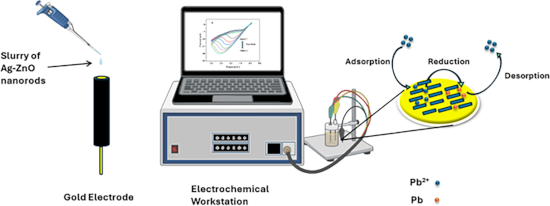
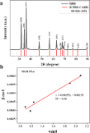
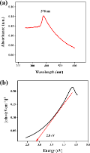
- of Ag@ZnO NRs has been calculated through the use of the Tauc's method, as shown in Figure 4b, and it is determined to be 2.8 eV. No further peak indicative of contaminants is observed in the aforementioned spectra, indicating the high purity of the synthesized nanorods. Incorporating Ag dopants into





Engineered PEG–PCL nanoparticles enable sensitive and selective detection of sodium dodecyl sulfate: a qualitative and quantitative analysis
Beilstein J. Nanotechnol. 2025, 16, 385–396, doi:10.3762/bjnano.16.29
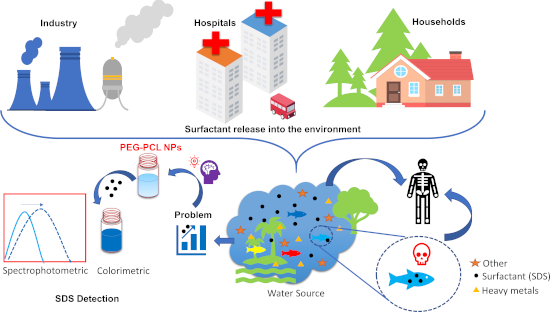
- delivery, targeting, sensing, and imaging [23]. Also, there are a wide variety of nanoparticles available for desired applications. In the case of detection of contaminants or sensing applications, carbon and metal nanoparticles are mostly preferable [24]. Despite their use, these nanoparticles possess
- inherent toxicity, and their post-synthesis functionalization is laborious for selective detection [25][26]. Furthermore, alternatives such as polymer nanoparticles emerged as potential candidates for detecting contaminants such as SDS. Fu et al. developed a method for detecting SDS using polyethyleneimine
- ions and surfactants, as well as in control samples with no added metals or surfactants. This lack of response in the absence of SDS highlights the specificity of the detection system, as it demonstrates that the PEG–PCL NPs do not respond to other potential contaminants or interfere with the detection


Pulsed laser in liquid grafting of gold nanoparticle–carbon support composites
Beilstein J. Nanotechnol. 2025, 16, 349–361, doi:10.3762/bjnano.16.26
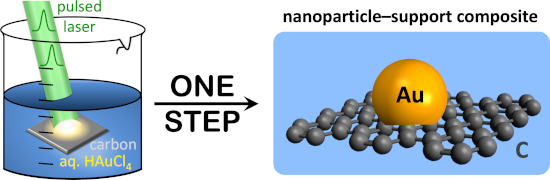
- at materials surfaces. These organics impede the adhesion and electrical contact of nanoparticles, even when the nanoparticles are surfactant-free. Regular nanosecond pulsed laser cleaning rids surfaces of organic deposits by the interaction of nanosecond laser pulses with surface contaminants via
- absorption and volatilization [35][36]. However, surfaces return to their initial state fast and cannot be kept microscopically clean because the removal of ubiquitous surface contaminants leaves unterminated, highly reactive surfaces with dangling bonds and, as a result, high surface energy, which is


Emerging strategies in the sustainable removal of antibiotics using semiconductor-based photocatalysts
Beilstein J. Nanotechnol. 2025, 16, 264–285, doi:10.3762/bjnano.16.21
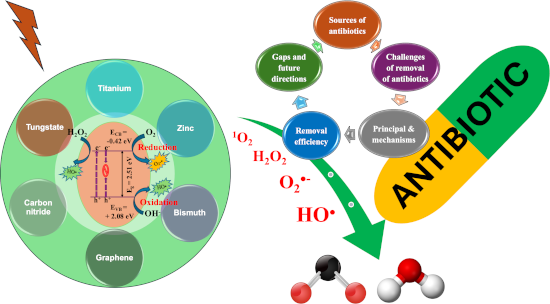
- studies and sustainable technologies, this study presents new insights into the complex relationship between contaminants and catalytic degradation processes. Compared to single and binary photocatalysts, modified ternary composites were found to have superior photodegradation performance under visible
- antibiotics has raised public concern, especially because they are environmental contaminants originating from human and animal waste [5]. These antibiotics can persist without change or as active metabolites in the environment, posing significant toxicity risks to aquatic and human life [6][7][8]. The
- contaminants, making it a versatile option for environmental remediation across various water and air treatment applications. These features collectively make photocatalysis an attractive approach for addressing pollution challenges in diverse settings. In recent years, several significant review papers have



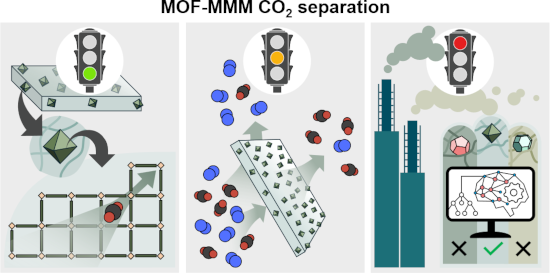
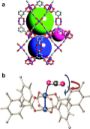
A review of metal-organic frameworks and polymers in mixed matrix membranes for CO2 capture
Beilstein J. Nanotechnol. 2025, 16, 155–186, doi:10.3762/bjnano.16.14





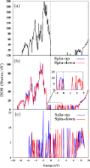
Theoretical study of the electronic and optical properties of a composite formed by the zeolite NaA and a magnetite cluster
Beilstein J. Nanotechnol. 2025, 16, 44–53, doi:10.3762/bjnano.16.5
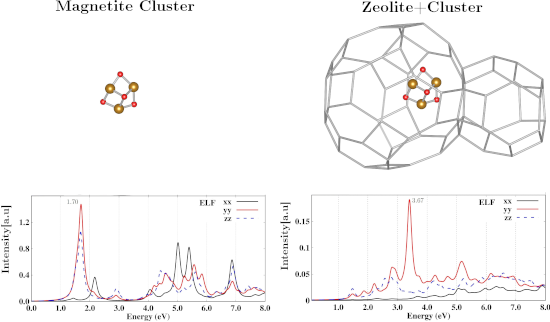
- introduction of magnetic nanoparticles into zeolite crystals so that the resulting composite can respond to an external magnetic field [33]. By imparting magnetic properties to such composites, they can be efficiently recovered after capturing contaminants such as heavy metals [34][35][36][37] and dyes [38][39
- nanoparticles, sodium Linde A Type (LTA) zeolite, also known as NaA zeolite, stands out for its remarkable capacity and selectivity to capture various types of metals commonly found as contaminants in drinking water. These metals include Ca, K, Mg, Mn, Co, Zn, Cu, Pb, Cd, Cs, and Sr [42][43][44][45][46




Attempts to preserve and visualize protein corona on the surface of biological nanoparticles in blood serum using photomodification
Beilstein J. Nanotechnol. 2024, 15, 1654–1666, doi:10.3762/bjnano.15.130

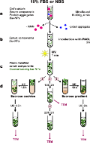
- , insert). The presence of contaminants on the grid and on the surface of bio-NPs made it difficult to visualize the latter after single UC. In the samples obtained by double UC, bio-NPs were scattered on the grids mainly individually and were the same types of bio-NPs as after single UC (Figure 3e–h
- contaminants. Thus, single and double UC for 2 h at 100,000g did not remove all serum components bound to the surface of bio-NPs. The next stage of our work was to study the effect of sera photomodification on the ultrastructure of bio-NPs isolated from FBS and NBS by single or double UC. Significant changes
- undoubtedly be useful to identify the mechanisms of this phenomenon. It was impossible to assess the proportion of EVs or different LPs carrying a protein corona in samples obtained by UC because of the presence of serum contaminants that can mask bio-NPs. Isolation of bio-NPs from sera by UC did not result



Facile synthesis of size-tunable L-carnosine-capped silver nanoparticles and their role in metal ion sensing and catalytic degradation of p-nitrophenol
Beilstein J. Nanotechnol. 2024, 15, 1576–1592, doi:10.3762/bjnano.15.124
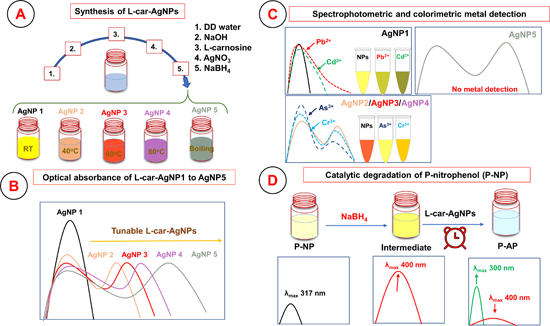
- with various contaminants. Keywords: catalysis; heavy metals; ʟ-carnosine; p-nitrophenol; silver nanoparticles; Introduction The persistent rise in environmental pollution, notably from heavy metal ions and organic pollutants, has propelled the development of innovative and efficient environmental
- biomagnification [1]. Similarly, organic pollutants such as p-nitrophenol (P-NP), from agricultural and industrial processes, are of significant concern because of their toxicity and resistance to degradation [2]. Consequently, detection and removal of these contaminants have become crucial for environmental
- environmental contaminants. DFT results The optimized geometries of ʟ-carnosine are shown in Supporting Information File 1, Figure S3. ʟ-Carnosine may exist in two H-bonded forms (Supporting Information File 1, Figure S3a,b) where the carboxylic acid and amino groups remain close, and the O–H moiety of the





Ion-induced surface reactions and deposition from Pt(CO)2Cl2 and Pt(CO)2Br2
Beilstein J. Nanotechnol. 2024, 15, 1427–1439, doi:10.3762/bjnano.15.115

- conditions after surface contaminants (carbon and oxygen) that unavoidably accrued as a result of sample transfer from the deposition chamber to the AES system were removed by Ar+ sputtering. This data is shown alongside the AES data of a sputter-cleaned Pt foil measured in the same chamber. This comparison



Hymenoptera and biomimetic surfaces: insights and innovations
Beilstein J. Nanotechnol. 2024, 15, 1333–1352, doi:10.3762/bjnano.15.107
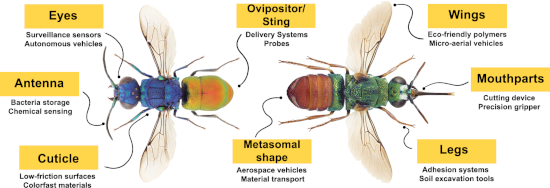
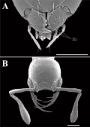
- surfaces can prevent the wear of moving parts in devices such as hard drives and printers, ensuring longer operational life and reliability. The mechanisms behind the cuticle’s friction-reducing properties also include the ability to repel dust and contaminants, which further extends the applications of







Nanoarchitectonics with cetrimonium bromide on metal nanoparticles for linker-free detection of toxic metal ions and catalytic degradation of 4-nitrophenol
Beilstein J. Nanotechnol. 2024, 15, 1312–1332, doi:10.3762/bjnano.15.106
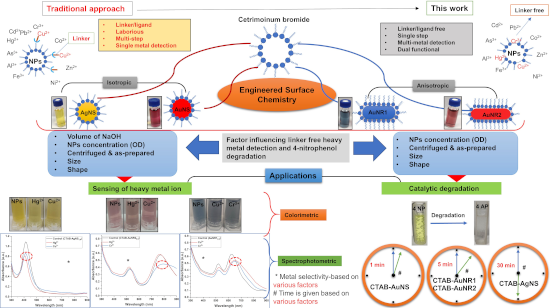
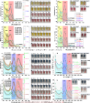
- does not allow for interactions with ligands via ion–ion interactions. Therefore, multiple surface modifications or linkers must be used for selective interaction between ligand and CTAB-capped gold and silver nanoparticles [7][9]. Contaminants in form of heavy metals and pollutant such as 4




Unveiling the potential of alginate-based nanomaterials in sensing technology and smart delivery applications
Beilstein J. Nanotechnol. 2024, 15, 1077–1104, doi:10.3762/bjnano.15.88

- early diagnosis and improved treatment outcomes [98]. In environmental monitoring, alginate nanoparticles have been employed for the detection of pollutants and contaminants in water and air, helping to ensure environmental safety [99]. The main factor for the sensing ability of alginate is the surface
- to detect a wide range of contaminants with high selectivity, accuracy, and sensitivity [101][102]. One of the main advantages of alginate-based nanoparticles is their biocompatibility and biodegradability, which make them ideal for use in environmental sensing. Furthermore, the availability of


Bolometric IR photoresponse based on a 3D micro-nano integrated CNT architecture
Beilstein J. Nanotechnol. 2024, 15, 1030–1040, doi:10.3762/bjnano.15.84
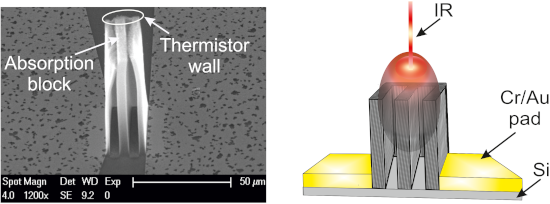
- 600 nm thick thermally oxidized SiO2 layer. The wafer was p-type and lightly boron-doped (Si-Mat, Silicon Materials). The substrate was thoroughly cleaned to remove impurities and contaminants to provide an ideal condition for CNT growth. Subsequently, an essential 30 nm aluminum oxide (AlOx) layer


Recent progress on field-effect transistor-based biosensors: device perspective
Beilstein J. Nanotechnol. 2024, 15, 977–994, doi:10.3762/bjnano.15.80
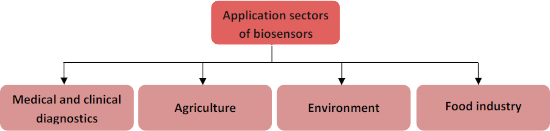
- , automation, and reducing costs and time. Biosensors have also been designed to detect chemical and biological substances in food items, which might be contaminants or undesirable elements [5][7][8][9]. The presence of chemicals is often considered an environmental problem as chemical species contaminate




Beyond biomimicry – next generation applications of bioinspired adhesives from microfluidics to composites
Beilstein J. Nanotechnol. 2024, 15, 965–976, doi:10.3762/bjnano.15.79
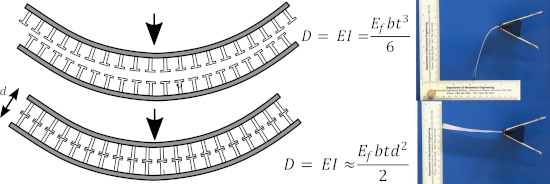
- surfaces: Unlike a gecko, the adhesive materials do not need to be overdesigned for potentially touching dirty, rough, wet surfaces but can always be in contact with an ideally suited surface. No contaminants: When contained within a composite, these adhesives can be almost entirely free of contaminants


Water-assisted purification during electron beam-induced deposition of platinum and gold
Beilstein J. Nanotechnol. 2024, 15, 884–896, doi:10.3762/bjnano.15.73
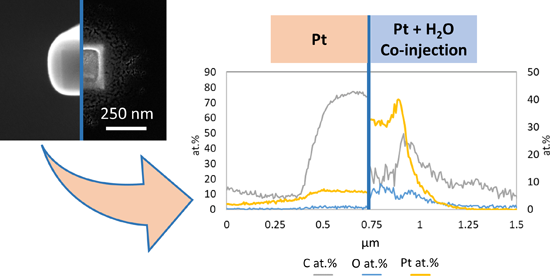
- -only experiments at lower exposure times, only a brightening of the patterning area is observed, indicating cleaning of the substrate, that is, removal of carbon contaminants. After increasing the number of passes to 100 (2.3 nA) or 500 (0.54 nA), the bright region extends outside of the patterning
- patterned area is seen, suggesting further oxidation of the Si substrate (similar to the observation presented in Figure 7) [57]. At the same time, at the perimeter of the BSE range, the formation of a dark halo is observed where the deposition of carbon from contaminants dominates the water-assisted
- some deposition of purified material occurs in the patterning area. The dark halo developing at the perimeter of the BSE range is due to the deposition of carbon-containing material from both the Pt precursor and contaminants in the system. At 5000 and 10000 passes (at 2.3 nA), a clear deposit becomes






Intermixing of MoS2 and WS2 photocatalysts toward methylene blue photodegradation
Beilstein J. Nanotechnol. 2024, 15, 817–829, doi:10.3762/bjnano.15.68
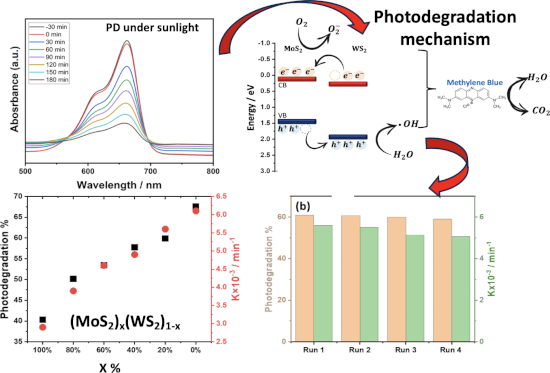
- generation of electron–hole pairs (EHPs) [21]. The generated EHPs react with oxygen and water molecules to produce highly reactive species, such as hydroxyl radicals, which oxidize and degrade MB contaminants. Hence, evaluating the PD processes in the case of MoS2 and WS2 as TMD materials is crucial for


Synthesis of silver–palladium Janus nanoparticles using co-sputtering of independent sources: experimental and theorical study
Beilstein J. Nanotechnol. 2024, 15, 808–816, doi:10.3762/bjnano.15.67
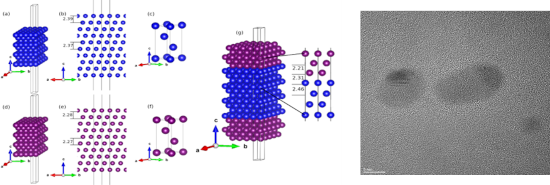
- drift”. Figure 4b presents the spectrum of elementary analysis; the two elements silver and palladium appear. All characterization techniques, as well as the calculation of the interplanar distances, showed only the presence of silver and palladium without any contaminants or other metals, which




Exploring surface charge dynamics: implications for AFM height measurements in 2D materials
Beilstein J. Nanotechnol. 2024, 15, 767–780, doi:10.3762/bjnano.15.64
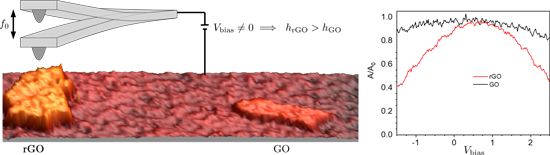
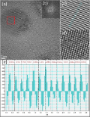
- ethanol and MQ water. Subsequently, the substrate was exposed to UV/ozone for 15 min to eliminate organic contaminants and promote the hydrophilicity of the SiO2 surface. GO (Graphenea), was employed without further treatment, while rGO was obtained through chemical reduction using hydrazine hydrate (50


Green synthesis of biomass-derived carbon quantum dots for photocatalytic degradation of methylene blue
Beilstein J. Nanotechnol. 2024, 15, 755–766, doi:10.3762/bjnano.15.63
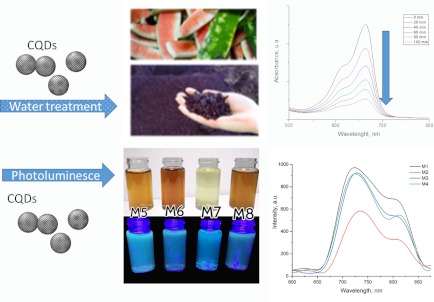
- industrial wastewater. Photocatalysis is an environmentally friendly water purification method that uses light-activated catalysts to destroy contaminants, offering an advantage over traditional methods that merely transfer contaminants between phases [17][18][19]. While some studies on CQDs involve costly


Functional fibrillar interfaces: Biological hair as inspiration across scales
Beilstein J. Nanotechnol. 2024, 15, 664–677, doi:10.3762/bjnano.15.55
- a self-cleaning paint called Lotusan®. Superhydrophic, fibrillar surfaces are also present in animals, such as insects, spiders, and geckos. Similar to plants, these structures help to maintain a clean body surface by enabling the rolling-off of water, which collects unwanted contaminants, or by
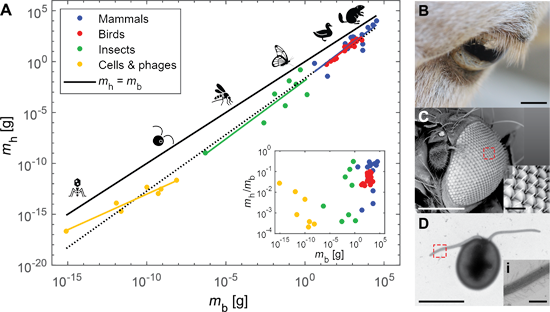
- see [5]. However, we will mention some of the cleaning functions of hairs here. Hairs around the eyes of mammals (eyelashes) and on the eyes of insects (interommatidial setae) have been found to minimize the deposition of particle-laden contaminants through aerodynamic interactions [42][43]. Hairs on
- honey bees have been found to facilitate both the collection and removal of pollen grains through the geometries of the hair arrays on their eyes and grooming appendages [44]. Mammalian fur effectively sheds contaminants because the hair deflects when exposed to a fluid flow. This deflection generates a





