Search results
Search for "cytotoxicity" in Full Text gives 227 result(s) in Beilstein Journal of Nanotechnology. Showing first 200.
Venom-loaded cationic-functionalized poly(lactic acid) nanoparticles for serum production against Tityus serrulatus scorpion
Beilstein J. Nanotechnol. 2025, 16, 1633–1643, doi:10.3762/bjnano.16.115
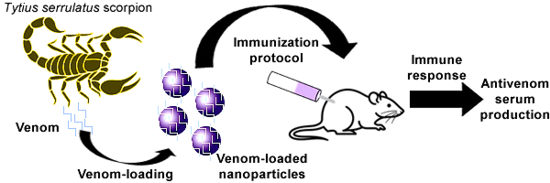
- carriers, further investigation is required to assess their safety profile. In vitro cytotoxicity assays on relevant cell lines, particularly immune or epithelial cells and long-term biocompatibility studies, including histopathological analysis following repeated administration, will be essential to


Nanotechnology-based approaches for the removal of microplastics from wastewater: a comprehensive review
Beilstein J. Nanotechnol. 2025, 16, 1607–1632, doi:10.3762/bjnano.16.114
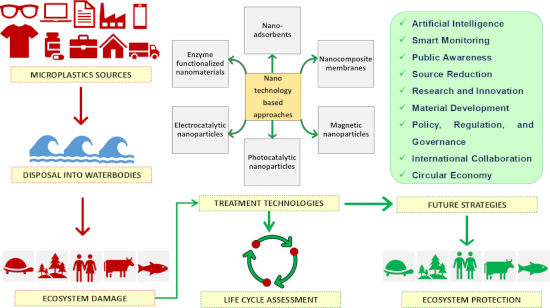
- barrier, while MPs of 20 μm can reach internal organs. Exposure occurs through inhalation, posing risks to adults, while children face dangers from MPs in contaminated drinking water. Once inside the body, MPs can trigger neurotoxicity, cytotoxicity, oxidative stress, immune response, metabolic disruption
- been linked to reproductive, immune, and digestive systems through inhalation, ingestion, and dermal exposure. Polystyrene and polyvinyl chloride have been detected in human implants and are associated with carcinogenic effects. These plastics can induce oxidative stress, cytotoxicity, DNA damage


Enhancing the therapeutical potential of metalloantibiotics using nano-based delivery systems
Beilstein J. Nanotechnol. 2025, 16, 1350–1366, doi:10.3762/bjnano.16.98
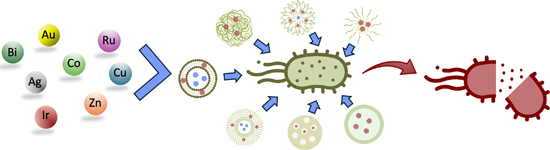
- steep decrease in the cytotoxicity of the liposomal formulation compared to free gold(III) metalloantibiotic was observed, resulting in an optimal therapeutic index. The formulation also minimized gold-induced cardiotoxicity and cytochrome inhibition, addressing some of the key limitations of gold-based
- tenfold increase in efficacy against M. smegmatis and M. bovis relative to the free Zn complex. Immunofluorescence analyses confirmed selective uptake of Zn-RIF-Tf-QDs by macrophages and dendritic cells, with minimal internalization by lung epithelial cells and no evidence of cytotoxicity or genotoxicity
- against E. coli, S. aureus, and L. monocytogenes. In addition, improved biofilm disruption and reduced cytotoxicity were also observed. Bismuth complexes Bismuth and its derivatives have been widely employed in biomedical applications [130]. Among their most prominent applications is the treatment of


Acrocomia aculeata oil-loaded nanoemulsion: development, anti-inflammatory properties, and cytotoxicity evaluation
Beilstein J. Nanotechnol. 2025, 16, 1277–1288, doi:10.3762/bjnano.16.93
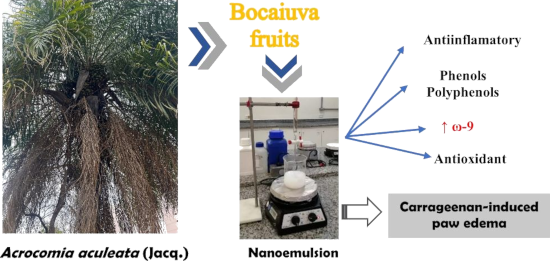
- : Acrocomia aculeata; cytotoxicity; hemolysis; inflammation; nanoemulsion; Introduction Acrocomia aculeata Jacq is a palm of the Arecaceae family, commonly known as bocaiúva or macaúba. It is widespread in South America and is particularly abundant in Mato Grosso do Sul, located in the Center-West region of
- potent hemolytic effect [50]. As shown in Figure 5A, AANE maintained erythrocyte membrane integrity across all tested concentrations, reinforcing its biocompatibility. Furthermore, cytotoxicity evaluation showed that AANE did not inhibit cell growth, as cellular viability remained at 100% across all
- showed a markedly greater anti-inflammatory effect compared to unformulated bocaiúva oil with an efficacy comparable to that of diclofenac. In addition, this nanoemulsion showed no cytotoxicity or hemolytic activity, indicating a favorable safety profile. These findings underscore the potential of the


Better together: biomimetic nanomedicines for high performance tumor therapy
Beilstein J. Nanotechnol. 2025, 16, 1246–1276, doi:10.3762/bjnano.16.92






Hydrogels and nanogels: effectiveness in dermal applications
Beilstein J. Nanotechnol. 2025, 16, 1216–1233, doi:10.3762/bjnano.16.90
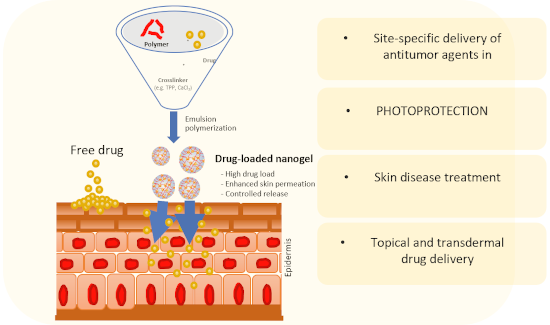
- temperature and polymer concentration [130]. Chitosan-based hydrogels have aroused a lot of interest in the health sciences field due to their biocompatibility, biodegradability, and low cytotoxicity [131]. This makes them attractive as a promising material for topical administration of biomolecules such as
- become attractive due to their high biocompatibility and long circulating time in the blood, as well as low cytotoxicity [73]. They can be prepared by various methods, including phase inversion [73], copolymerization [110][111], and double chemical cross-linking reaction [51]. Cellulose derivatives, such
- pH [213]. This microenvironment of skin tumors has been used to modulate site-specific drug delivery, which leads to an increase in the effectiveness of chemotherapy and also a reduction of the cytotoxicity of antineoplastic drugs [211][212]. The pH-responsive nanogel can be designed with cross


Chitosan nanocomposite containing rotenoids: an alternative bioinsecticidal approach for the management of Aedes aegypti
Beilstein J. Nanotechnol. 2025, 16, 1197–1208, doi:10.3762/bjnano.16.88
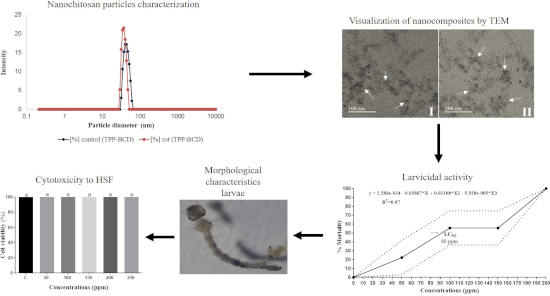
- , even when delivered via nanocomposites. The cytotoxicity analysis of natural rotenoids to HSF cells revealed no statistically significant differences in cell viability between the control group and the treatments with either in natura rotenoids or the CS/TPP-β-CD–rot nanocomposite (Figure 7; p > 0.05
- ). Both treatments maintained cell viability at levels comparable to the control, indicating the absence of cytotoxic effects. These findings demonstrate that the encapsulation of rotenoids into the CS/TPP-β-CD system does not induce cytotoxicity, similarly to the free compound, suggesting that the
- % improvement in the larvicidal activity rate of the rotenoids in their original forms. The nanocomposites caused morphological and biochemical alterations to the larvae similarly to those caused by in natura rotenoids, but with greater intensity. Cytotoxicity MTT assays using human skin fibroblasts



Piezoelectricity of hexagonal boron nitrides improves bone tissue generation as tested on osteoblasts
Beilstein J. Nanotechnol. 2025, 16, 1068–1081, doi:10.3762/bjnano.16.78
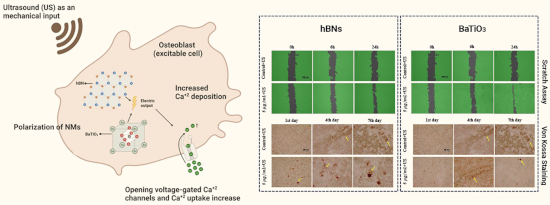
- interaction studies Cell viability assay The concentrations and exposure-time-dependent cell viability data for the cells treated with hBNs, hBNs+US, BaTiO3, and BaTiO3+US are shown in Figure 2. As observed, none of the tested concentrations of the NMs exhibited cytotoxicity on HOb cells over a 48 h period
- with PBS before adding the Alamar Blue reagent to the well [59]. However, no significant cytotoxicity was observed after 48 h, suggesting that cells recovered from the transient mechanical stress and restored their membrane function and viability over time. The use of low-intensity ultrasound (20–50 mW


A calix[4]arene-based supramolecular nanoassembly targeting cancer cells and triggering the release of nitric oxide with green light
Beilstein J. Nanotechnol. 2025, 16, 1003–1013, doi:10.3762/bjnano.16.75
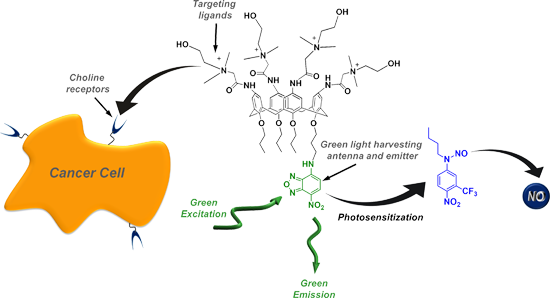
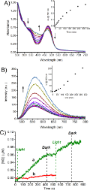
- room temperature for at least 48 h, as evidenced by the unaltered values of the hydrodynamic diameter and the unchanged absorption and emission features over this time window. Cytotoxicity and cell targeting properties of 1 The effects of the nanoassembly of 1 on cell viability were evaluated on
- dermal HuDe cells, whose different transporter expression level was confirmed by Wester blotting assay (Figure S10, Supporting Information File 1). Based on the cytotoxicity results, the cells were treated with a non-toxic amount of compound 1 (0.5 μM) for 1 h at 37 °C (see Experimental section). As


Efficiency of single-pulse laser fragmentation of organic nutraceutical dispersions in a circular jet flow-through reactor
Beilstein J. Nanotechnol. 2025, 16, 711–727, doi:10.3762/bjnano.16.55
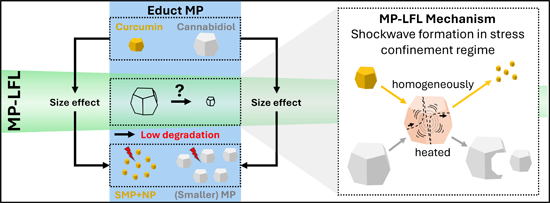
- particle surface and quantified regarding feedstock mass concentration and nutraceutical type. Cytotoxicity in HepG2 cancer cells was significantly reduced in cells treated with laser-processed curcumin in comparison to unirradiated curcumin controls, and antioxidant effects were proven, ensuring high
- greater intracellular uptake and increased cytotoxicity on rat C6 glioma cells [36]. Laser-generated nanoscale cinnamon was also synthesized and showed enhanced antibacterial activity against Gram-negative and Gram-positive bacteria after particle size reduction compared to the unirradiated educt [37


Colloidal few layered graphene–tannic acid preserves the biocompatibility of periodontal ligament cells
Beilstein J. Nanotechnol. 2025, 16, 664–677, doi:10.3762/bjnano.16.51
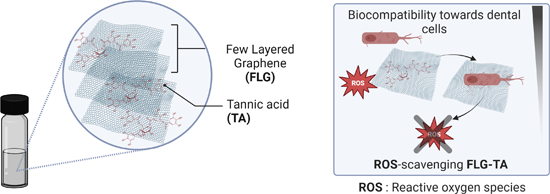
- , demonstrating no cytotoxicity to periodontal ligament cells up to 200 µg·mL−1 while promoting cellular adhesion and maintaining chromatin integrity. Overall, because of its favorable biocompatibility FLG–TA holds promise as a novel biomaterial for dental applications. Keywords: antioxidant properties
- , its production typically involves harsh chemical treatments, which can introduce defects and impurities. These alterations may negatively affect its desirable properties and compromise its biocompatibility. Previous assessments have demonstrated that the cytotoxicity of these products is mainly
- antioxidant characteristics. Given TA’s significant antioxidant potential due to its phenolic functional groups [17], it was hypothesized that graphene layers rich in phenols could serve as a biocompatible interface for PDL cells. Thus, the cytotoxicity of the FLG–TA biocomposite was evaluated by measuring




A formulation containing Cymbopogon flexuosus essential oil: improvement of biochemical parameters and oxidative stress in diabetic rats
Beilstein J. Nanotechnol. 2025, 16, 617–636, doi:10.3762/bjnano.16.48
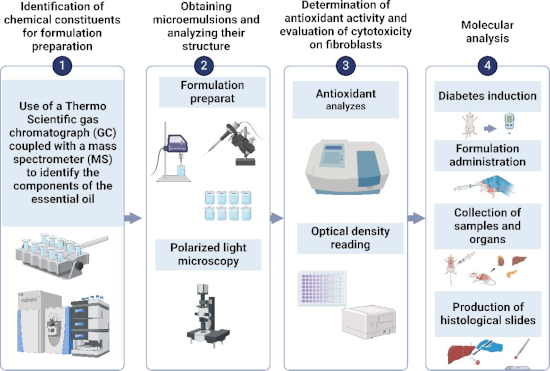
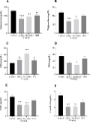
- cytotoxicity The cytotoxicity of M7-EOCF, EOCF, and S. Mix was assessed through cell viability measurements on L929 fibroblasts using the MTT method [MTT = 3-(4,5-dimethylthiazol-2yl)-2,5-diphenyltetrazoline bromide]. Figure 4 shows that EOCF was considered cytotoxic at all concentrations tested (50, 100, and
- 200 µg/mL), with cell viability values of less than 70% when compared to the control (100% viability). The cytotoxicity of EOCF was confirmed in the study by Al-Ghanayem [38], who showed viabilities in keratinocyte cells of 51.5% and 70.5% at concentrations of 1.25 and 0.6 µL/mL of EOCF, respectively
- . In contrast, S. Mix and the microemulsion (M7-EOCF) were considered non-cytotoxic at all concentrations tested, with cell viability values greater than 70%. In the study of Sá et al. [39], MEs containing the cytotoxic essential oil of C. zeylanicum also showed no cytotoxicity, even with a high




Nanomaterials in targeting amyloid-β oligomers: current advances and future directions for Alzheimer's disease diagnosis and therapy
Beilstein J. Nanotechnol. 2025, 16, 561–580, doi:10.3762/bjnano.16.44
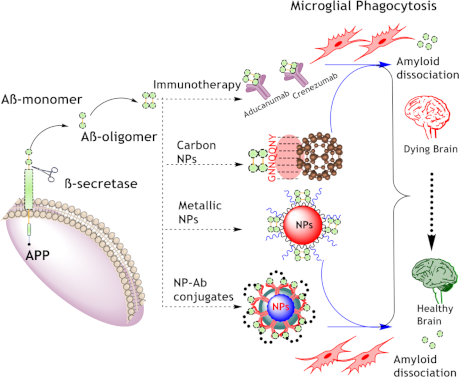
- receptor activator (XD4). These W20/XD4-SPIONs demonstrated promising results in mitigating the cytotoxicity induced by AβOs and enhancing microglial phagocytosis of these toxic aggregates [57]. Previously, the same NPs were found to show promising early diagnostic potential for AD [58]. Brambilla et al
- , exhibiting the greatest reduction in Aβ1–42 peptide-induced cytotoxicity in Neuro-2a cell lines. Structural studies indicate that these palladium complexes interact with both the fibrillar (PDB: 2BEG) and monomeric (PDB: 1IYT) forms of the Aβ1–42 peptide. This interaction occurs through a variety of binding
- eliminate these adverse effects. Multifunctional SPIONs conjugated with W20 and XD4, a class A scavenger receptor activator not only have diagnostic value but also retain the anti-amyloid properties of W20 and XD4, inhibiting amyloid aggregation, reducing cytotoxicity, and enhancing microglial phagocytosis


Synthetic-polymer-assisted antisense oligonucleotide delivery: targeted approaches for precision disease treatment
Beilstein J. Nanotechnol. 2025, 16, 435–463, doi:10.3762/bjnano.16.34

- potential in precision disease treatment. Synthetic polymers have shown significant promise in enhancing the delivery, stability, and therapeutic efficacy of ASOs by addressing key challenges such as cellular uptake, endosomal escape, and reducing cytotoxicity. The review highlights key studies from the
- effective complexation with ASOs and enhanced cellular uptake. Additionally, while these high-generation DPLs exhibited moderate cytotoxicity, complexation with ASOs was shown to reduce toxicity, making them a promising vehicle for gene therapy applications. Confocal microscopy further confirmed the ability
- for transfection, limiting its exploration in gene delivery [85]. Furthermore, while both PLO and PLL can induce cytotoxicity at elevated concentration, PLL’s toxicity has been more thoroughly studied and mitigated. This success has made PLL the preferred choice in many studies, reducing the impetus


Development of a mucoadhesive drug delivery system and its interaction with gastric cells
Beilstein J. Nanotechnol. 2025, 16, 371–384, doi:10.3762/bjnano.16.28

- rate. The mucoadhesive characteristic of the system was tested in situ and in vitro. In addition, the in vitro cytotoxicity and internalization of the nanoparticles by mucus-secreting gastric cells were also investigated. We believe that usage of the developed system may increase the retention time of
- cell line AGS (ATCC CRL-1739) were cultured under normal conditions (37 °C, 5% CO2) in RPMI medium, supplemented with 10% FBS, penicillin/streptomycin (1%) and 2 mM ʟ-glutamine. To analyze the cytotoxicity of EudAlg nanoparticles, cells (1 × 10⁵ cells/well) were seeded into 24-well plates and incubated


Graphene oxide–chloroquine conjugate induces DNA damage in A549 lung cancer cells through autophagy modulation
Beilstein J. Nanotechnol. 2025, 16, 316–332, doi:10.3762/bjnano.16.24
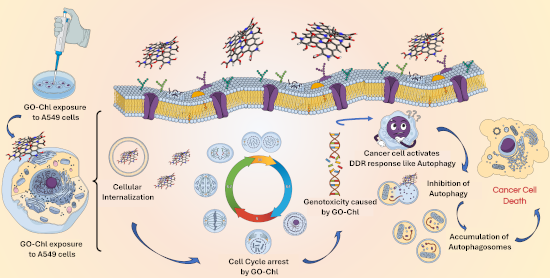
- , human lung epithelial carcinoma cells towards the genotoxic agent methyl methanesulphonate through disruption of the DDR process [13]. Recently, ZnO nanoparticles induced significant cytotoxicity and DNA double-strand breaks in SKOV3 cells, human ovarian epithelial cancer cells, through induction of
- factors such as the source of graphite, the weight equivalent of KMnO4, reaction time, and washing conditions [26][37]. Most importantly, the degree of oxidation of graphene oxide plays a crucial role in controlling the cytotoxicity of the material [38][39]. To achieve higher oxidation, six times weight



Radiosensitizing properties of dual-functionalized carbon nanostructures loaded with temozolomide
Beilstein J. Nanotechnol. 2025, 16, 229–251, doi:10.3762/bjnano.16.18
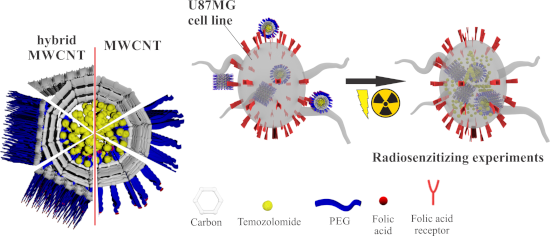
- aim to prepare nanocarriers with the potential to prolong the drug circulation time, cross the blood–brain–tumor barrier (BBTB), and provide targeted and controlled drug release in the brain tumor cells. Cytotoxicity and effects on cell membrane integrity of the blank and TMZ-loaded dual
- higher cytotoxicity of the hybrid CN. Additional decrease in the viability of cells was observed when GBM cells pre-treated with the corresponding CNs were exposed to irradiation, which could be ascribed to changes in size, surface charge, and release kinetics of TMZ and to irradiation-induced changes in
- the microenvironment and cell membranes that promote uptake of a larger volume of carriers in the GBM cells. The higher cytotoxicity observed in the hybrid carrier formulations could most likely be attributed to the length of the hybrid carrier and the higher proportion of planar surface, which




Recent advances in photothermal nanomaterials for ophthalmic applications
Beilstein J. Nanotechnol. 2025, 16, 195–215, doi:10.3762/bjnano.16.16
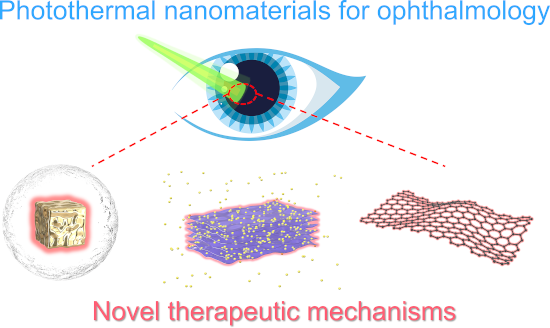
- excreted by penetrating the renal filtration barrier, but too small AuNPs may enter cell membranes and irreversibly bind to cellular biopolymers, leading to cytotoxicity [217]. Large AuNPs may accumulate in eye, liver, and spleen, causing long-term toxicity. Surfactants such as CTAB and CTAC used to assist


Characterization of ZnO nanoparticles synthesized using probiotic Lactiplantibacillus plantarum GP258
Beilstein J. Nanotechnol. 2025, 16, 78–89, doi:10.3762/bjnano.16.8
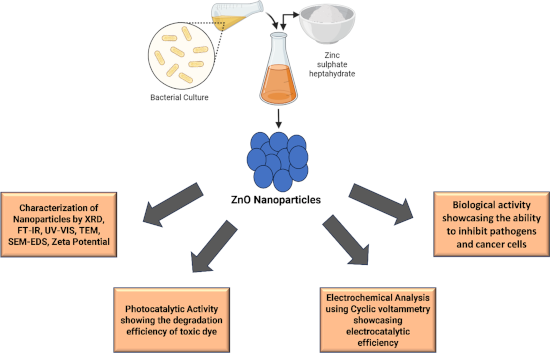
- was measured after the plates were incubated for 24 h at 37 °C. This experimental procedure was conducted in triplicates [23]. Cell cytotoxicity assay A colon cancer cell line (HT-29), obtained from NCCS (Pune, India), was treated with ZnO NPs to check their cytotoxicity by using 3-(4,5



Theoretical study of the electronic and optical properties of a composite formed by the zeolite NaA and a magnetite cluster
Beilstein J. Nanotechnol. 2025, 16, 44–53, doi:10.3762/bjnano.16.5
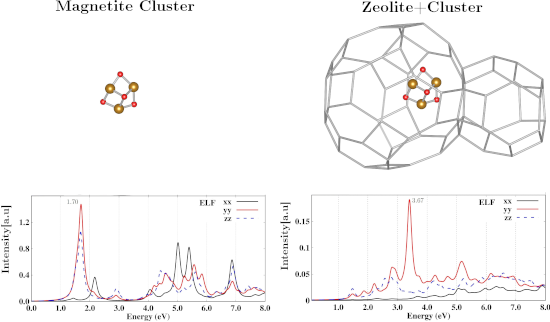
- ]. Magnetic nanoparticles have unique magnetic properties and the ability to function at the cellular and molecular level of biological interactions. Of course, the evaluation of cytotoxicity and bioapplicability of each substance is a crucial issue before its use in clinical practice. Although there are
- fewer studies on the cytotoxicity of nanoparticles on zeolite carriers than other mesoporous matrices, most articles report low cytotoxicity of zeolites. Zeolites are classified as “Safe Substances for Food and Feed Additives” by the European Food Safety Authorities [49] and are “Generally Recognized as




A nanocarrier containing carboxylic and histamine groups with dual action: acetylcholine hydrolysis and antidote atropine delivery
Beilstein J. Nanotechnol. 2025, 16, 11–24, doi:10.3762/bjnano.16.2

- ). Cytotoxicity and hemocompatibility According to the cytotoxicity investigation, p(Hist-CA), Hist-RA, and CA-RA were all found to be lowly toxic. Hist-RA showed IC50 values greater than 0.22 mM for the WI38 human embryonic lung cell line and the Chang liver human liver cell line (Table 2). The IC50 values for
- antidote delivery. Under healthy conditions, with a neutral pH and normal glucose concentrations, the nanocarrier is found to be stable. The employed resorcinarenes and the nanocarrier exhibit good hemocompatibility and low cytotoxicity with respect to human embryonic lung cells (WI38) and a healthy liver
- reduced pressure, and the residue was dissolved in 0.04% DMF in D2O. The analysis of the unreleased Atr amount was conducted similarly to the method described in the prior paragraphs. Cytotoxicity Based on fluorescence intensity, the cytotoxic effect was determined using the Cell Viability BioApp on the


Mechanistic insights into endosomal escape by sodium oleate-modified liposomes
Beilstein J. Nanotechnol. 2024, 15, 1667–1685, doi:10.3762/bjnano.15.131
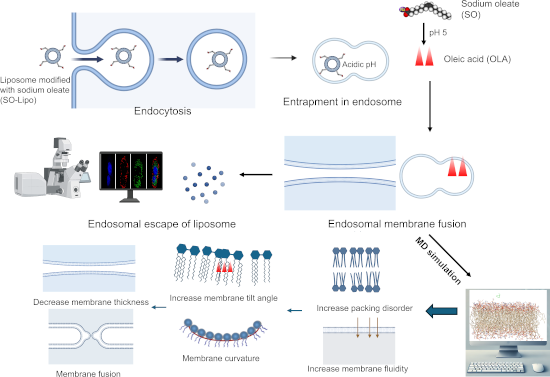
- membrane. Results demonstrated that SO-Lipo exhibited superior endosomal escape compared to Unmodified-Lipo, as evidenced by reduced colocalization with lysosomal markers, and achieved comparable efficacy to AUR-Lipo with lower cytotoxicity. Lipid mixing assays confirmed the potential fusogenic effect of
- mechanism, facilitating cytosolic delivery with reduced cytotoxicity. This approach offers a safer and more effective option for targeted drug delivery applications. Keywords: Aurein 1.2; endosomal escape; fusogenic effect; molecular dynamics simulation; sodium oleate; Introduction The quest for efficient
- ]. Cytotoxicity evaluation The cytotoxicity of Unmodified-Lipo, SO-Lipo, and AUR-Lipo was evaluated using a resazurin-based cell viability assay in a concentration range from 15.625 to 2000 µM, as illustrated in Figure 1. This assay is an established method for determining cell viability and based on the




Biomimetic nanocarriers: integrating natural functions for advanced therapeutic applications
Beilstein J. Nanotechnol. 2024, 15, 1619–1626, doi:10.3762/bjnano.15.127

- advancements nanocarriers have brought to medical sciences, particularly in cancer treatment, several challenges remain for their widespread application. Issues such as cytotoxicity, difficulties in management, encapsulation, and in vivo release pose barriers to the application of nanocarriers [16][17]. In
- nanoparticles (AuNPs) with polyoxometalate and the peptides POMD and LPFFD (AuNPs@POMD-pep) have shown inhibition of Aβ1 aggregation and Aβ-induced cytotoxicity. However, the inherent toxicity of this formulation, challenges in particle digestion, and the potential for triggering immune reactions remain


The round-robin approach applied to nanoinformatics: consensus prediction of nanomaterials zeta potential
Beilstein J. Nanotechnol. 2024, 15, 1536–1553, doi:10.3762/bjnano.15.121
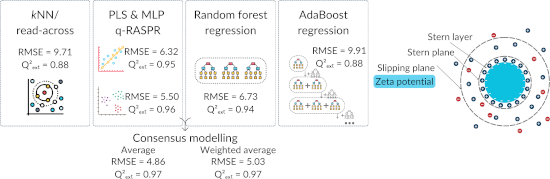
- -across and QSPR, has been recently introduced and applied to the prediction of NM cytotoxicity [44], power conversion efficiency of organic dyes in dye-sensitized solar cells [45][46], detonation heat for nitrogen containing compounds [47], and to the prediction of surface area of perovskite materials


Polymer lipid hybrid nanoparticles for phytochemical delivery: challenges, progress, and future prospects
Beilstein J. Nanotechnol. 2024, 15, 1473–1497, doi:10.3762/bjnano.15.118
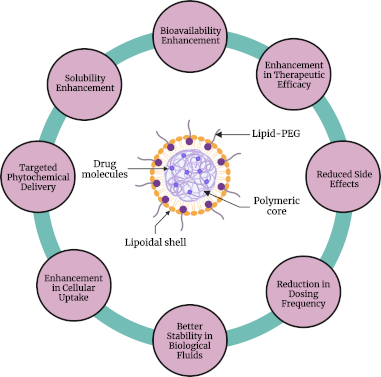
- -sensitive PLHNPs is represented in Figure 4B. The developed targeted PLHNPs exhibit excellent physicochemical characteristics and showed GSH-triggered drug release and significantly improved cytotoxicity against PC-9 cells in comparison to the non-targeted PLHNPs. In vivo studies suggested that the
- improved therapeutic delivery [108]. The developed RVT-PLHNPs were stable for a month and showed a controlled drug release. Biocompatibility and cytotoxicity of RVT-PLHNPs were examined by using Vero cells and MCF-7 cells. The results indicate excellent biocompatibility and a higher cytotoxicity of RVT
- (TNBC) [120]. IQN-PLHNPs exhibited high stability in the harsh GI milieu. Cell culture experiment suggested that the IQN-PLHNPs showed a nearly twofold increase in cell uptake in MDA-MB-231 cells thereby better cytotoxicity was achieved. IQN-PLHNPs are effectively absorbed from the GI tract and showed a