Search results
Search for "elasticity" in Full Text gives 137 result(s) in Beilstein Journal of Nanotechnology.
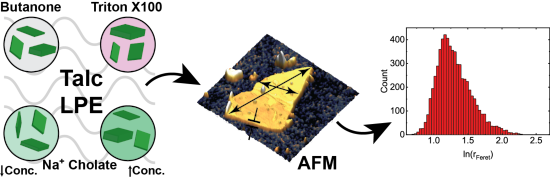
Liquid phase exfoliation of talc: effect of the medium on flake size and shape
Beilstein J. Nanotechnol. 2023, 14, 68–78, doi:10.3762/bjnano.14.8
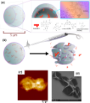
- pharmaceutical and cosmetics uses [17]. It was shown that monolayer talc has outstanding mechanical properties of the same order of magnitude as graphene [12]. The breaking strength for uniaxial deformations ranges from 29 to 33 N·m−1, and the two-dimensional elasticity modulus is E = 181 N·m−1. Also, talc’s



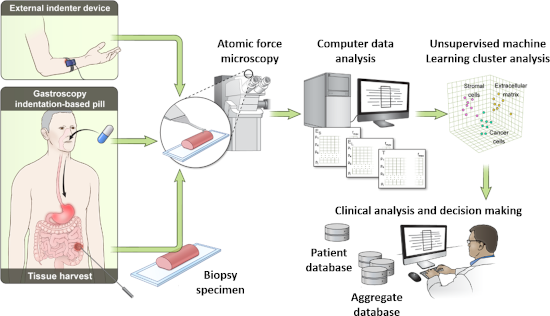
Frequency-dependent nanomechanical profiling for medical diagnosis
Beilstein J. Nanotechnol. 2022, 13, 1483–1489, doi:10.3762/bjnano.13.122
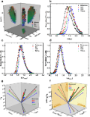
- than a single scalar quantity such as a modulus of elasticity, and from which traditional viscoelastic quantities can be obtained, such as the storage and loss modulus (which are also frequency dependent). Figure 3 provides an example of storage and loss modulus estimates for cancerous human melanoma


Bioselectivity of silk protein-based materials and their bio-inspired applications
Beilstein J. Nanotechnol. 2022, 13, 902–921, doi:10.3762/bjnano.13.81
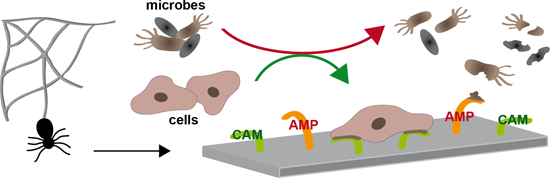
- higher elasticity [114]. The best-studied silk type is the major ampullate silk (MA) used by spiders for web radii and their dragline. It consists of several proteins known as major ampullate spidroins (MaSps). The most prominent spidroins are MaSp1 and MaSp2, differing mainly in their proline content


Micro-structures, nanomechanical properties and flight performance of three beetles with different folding ratios
Beilstein J. Nanotechnol. 2022, 13, 845–856, doi:10.3762/bjnano.13.75
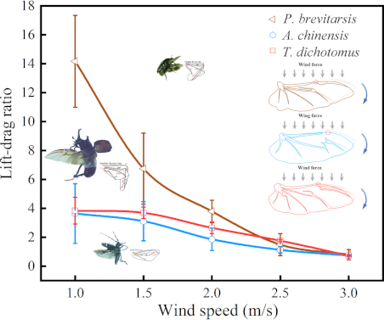
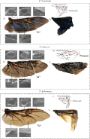
- that their flapping lifts were different because of the different sizes and shapes of the wings [20]. Additionally, the elasticity of insect wings also has an impact on the aerodynamic characteristics. By studying the flexible deformations and aerodynamic characteristics of cicada wings during flapping




Gelatin nanoparticles with tunable mechanical properties: effect of crosslinking time and loading
Beilstein J. Nanotechnol. 2022, 13, 778–787, doi:10.3762/bjnano.13.68
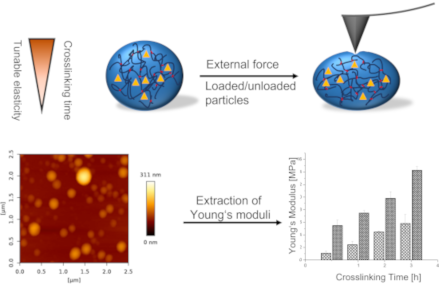
- nanoparticles intended to be used in drug delivery is of great interest. To this end, different potential formulations are developed since the particle elasticity is affecting the in vitro and in vivo performance of the nanoparticles. Here we present a method to determine the elasticity of single gelatin
- nanoparticles (GNPs). Furthermore, we introduce the possibility of tuning the elastic properties of gelatin nanoparticles during their preparation through crosslinking time. Young’s moduli from 5.48 to 14.26 MPa have been obtained. Additionally, the possibility to measure the elasticity of single nanoparticles
- . Keywords: atomic force microscopy; drug delivery; elasticity; gelatin nanoparticles; Young’s modulus; Introduction Developing nanoparticulate drug carriers for various diseases and application routes requires establishing controllable systems, matching the needs of the respective application to achieve


Fabrication and testing of polymer microneedles for transdermal drug delivery
Beilstein J. Nanotechnol. 2022, 13, 629–640, doi:10.3762/bjnano.13.55
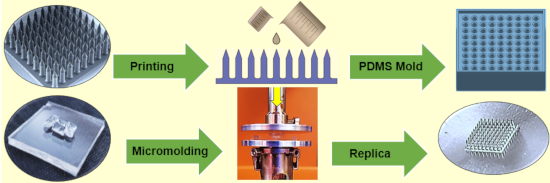
- skin may result in MN failure due to buckling. The skin’s irregular topology and inherent elasticity can also impose undesired lateral loads, resulting in transverse bending failure [14]. Prevention of possible failure scenarios can avoid MN breakage and reduce the risk of leaving residues in the skin
- force of the skin. Successful insertion is achieved upon reaching sufficient penetration depth and creating microchannels within the skin. However, the skin’s inherent elasticity and its irregular surface, with the tendency to fold around MN projections, result in unpredictable array penetration



Effects of substrate stiffness on the viscoelasticity and migration of prostate cancer cells examined by atomic force microscopy
Beilstein J. Nanotechnol. 2022, 13, 560–569, doi:10.3762/bjnano.13.47
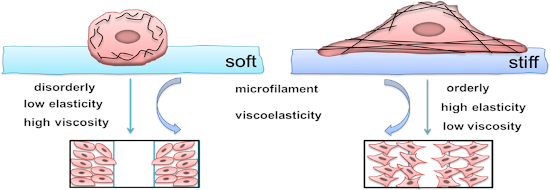
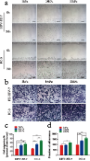
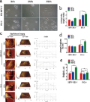
- . Analysis of AFM force–distance curves indicated that the elasticity of the cells cultured on 35 kPa substrates increased while the viscosity decreased. Wound-healing experiments showed that PCa cells cultured on 35 kPa substrates have higher migration potential. These phenomena suggested that the
- mechanical properties may be correlated with the migration of PCa cells. After actin depolymerisation, the elasticity of the PCa cells decreased while the viscosity increased, and the migration ability was correspondingly decreased. In conclusion, this study clearly demonstrated the relationship between
- cells themselves in response to the action of the substrate? Atomic force microscopy experiments at the nanoscale were used to measure changes in the elasticity of live cells in situ and to quantify the mechanical response of HPV-PZ-7 and PC-3 cells to the extracellular environment with different



Ethosomal (−)-epigallocatechin-3-gallate as a novel approach to enhance antioxidant, anti-collagenase and anti-elastase effects
Beilstein J. Nanotechnol. 2022, 13, 491–502, doi:10.3762/bjnano.13.41
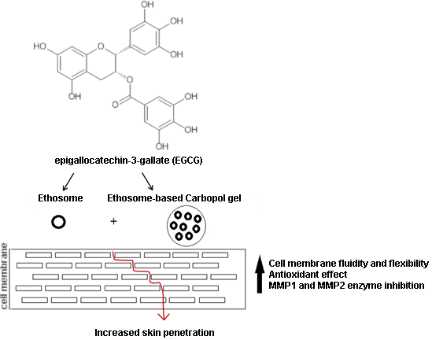
- ; ethosome; Introduction Skin aging is the result of biological changes, such as wrinkles, sagging, loss of elasticity, and thickening of the skin and it is caused by intrinsic (occur slowly and vary considerably between populations) and extrinsic factors. The main components of the connective tissue
- responsible for the elasticity and resistance of the skin in the dermis, (i.e., the middle layer of the skin) are collagen and elastin, and the changes in these two components play an important role in the skin aging process [1][2]. The production of reactive oxygen species (ROS) or free radicals through



Micro- and nanotechnology in biomedical engineering for cartilage tissue regeneration in osteoarthritis
Beilstein J. Nanotechnol. 2022, 13, 363–389, doi:10.3762/bjnano.13.31



Influence of magnetic domain walls on all-optical magnetic toggle switching in a ferrimagnetic GdFe film
Beilstein J. Nanotechnol. 2022, 13, 74–81, doi:10.3762/bjnano.13.5
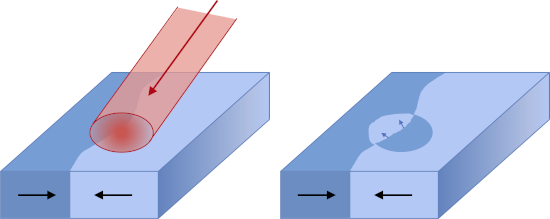
- to intrinsic effects related to the magnetic domain structure of the sample. The latter are, on the one hand, caused by magnetic domain wall elasticity, which leads to a reduction of the domain-wall length at features with sharp tips. These features appear after the optical switching at positions
- 2A4 reaches the most into the ellipse has either not switched or disappeared, similar to the other sharp domain features. These domain-wall motion events caused by domain-wall elasticity are observed independent of the temperature, at 50 K (Figure 1), 200 K (not shown), and at room temperature (Figure


Nanoscale friction and wear of a polymer coated with graphene
Beilstein J. Nanotechnol. 2022, 13, 63–73, doi:10.3762/bjnano.13.4
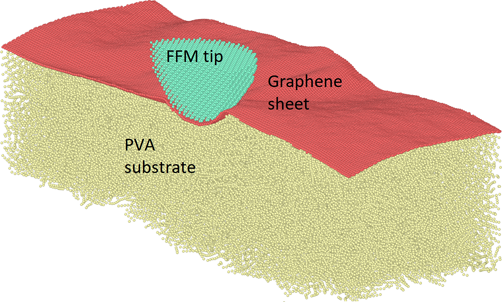
- external pressure. In the case of the crumpled graphene layer, we see a larger indentation depth compared to the flat graphene layer (Figure 7). The tip has more freedom to sink inside the material when the graphene sheet is crumpled (membrane buckling and elasticity) than in the case of flat graphene


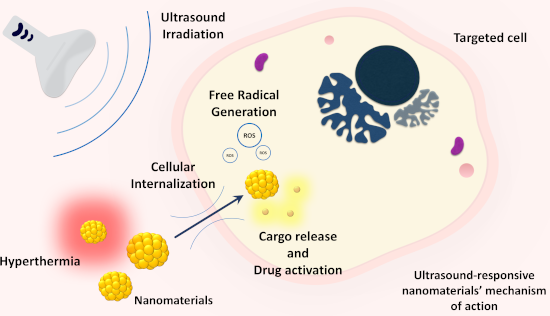
Comprehensive review on ultrasound-responsive theranostic nanomaterials: mechanisms, structures and medical applications
Beilstein J. Nanotechnol. 2021, 12, 808–862, doi:10.3762/bjnano.12.64


Physical constraints lead to parallel evolution of micro- and nanostructures of animal adhesive pads: a review
Beilstein J. Nanotechnol. 2021, 12, 725–743, doi:10.3762/bjnano.12.57
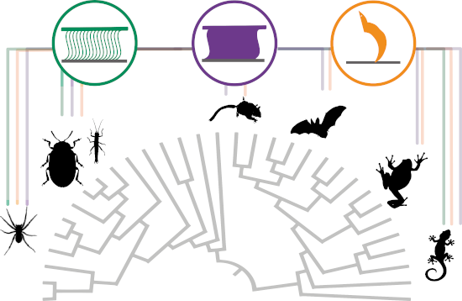
- principles of attachment pads with a special focus on insects, describe micro- and nanostructures, surface patterns, origin of different pads and their evolution, discuss the material properties (elasticity, viscoelasticity, adhesion, friction) and basic physical forces contributing to adhesion, show the


A stretchable triboelectric nanogenerator made of silver-coated glass microspheres for human motion energy harvesting and self-powered sensing applications
Beilstein J. Nanotechnol. 2021, 12, 402–412, doi:10.3762/bjnano.12.32
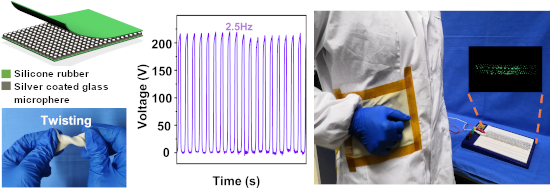
- process, (b) it shows stable output and long working life, which provides sustainable electricity, and (c) due to the unique structural design of the device and the high elasticity of the silicone rubber, the S-TENG can be stretched easily to 300% to realize a conformal assembly in stretchable electronic



The nanomorphology of cell surfaces of adhered osteoblasts
Beilstein J. Nanotechnol. 2021, 12, 242–256, doi:10.3762/bjnano.12.20
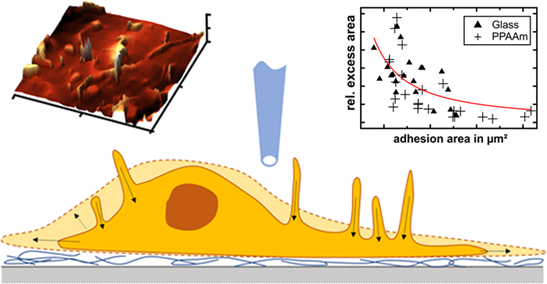
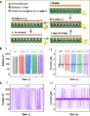
- current error appears counterintuitive regarding the material properties. However, considering the fin or springboard morphology of ruffles, the elasticity may not result from changes of material properties only but also from the flexible shape. Thus, the extremely low error probably points towards lower


Determination of elastic moduli of elastic–plastic microspherical materials using nanoindentation simulation without mechanical polishing
Beilstein J. Nanotechnol. 2021, 12, 213–221, doi:10.3762/bjnano.12.17
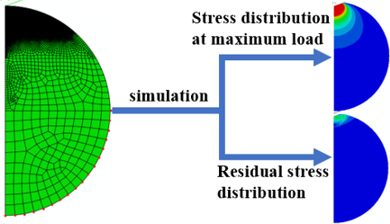
- different E/σy at indentation depths of 0.115 µm and 0.5 µm, respectively. As shown in Figure 3a and Figure 3c, the indenter displacement for E/σy = 200–1000 is plastic, and only a small portion of elasticity is recovered on unloading due to the fact that the deformation of materials with large E/σy is
- dominated by plasticity. The surface around the indenter piles up. However, the indenter displacement for E/σy = 10–50 is more elastic. Hence, a larger portion of elasticity is recovered on unloading. The surface around the indenter sinks in. For highly elastic solids, such as polymers, sink-in is often


Out-of-plane surface patterning by subsurface processing of polymer substrates with focused ion beams
Beilstein J. Nanotechnol. 2020, 11, 1693–1703, doi:10.3762/bjnano.11.151
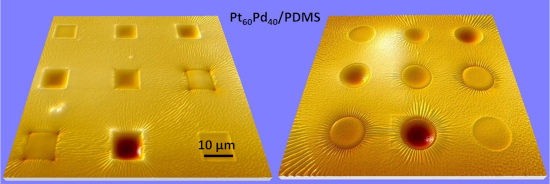
- mineral-organic polymer (its structure includes both carbon and silicon atoms). It is an elastomer and its elasticity can be tuned within a very broad range by changing the degree and the type of polymerization and by post-curing treatments [19][20]. The high and easily tunable elasticity, combined with
- irradiation dose, the PDMS material first shrinks, then swells, and then shrinks again. The concave shapes of the surface inside of the irradiated PDMS regions can, to a large extent, be attributed to the elasticity of this material. A very low Young’s modulus for the Sylgard-184 PDMS material, ranging from
- were observed in Pt60Pd40-coated PDMS samples irradiated with He+ ions. The formation of complex surface shapes in this case is attributed to the inherent elasticity of the PDMS material. The transition from polymer compacting to polymer swelling is explained by the irradiation-induced mechanical


Detecting stable adsorbates of (1S)-camphor on Cu(111) with Bayesian optimization
Beilstein J. Nanotechnol. 2020, 11, 1577–1589, doi:10.3762/bjnano.11.140
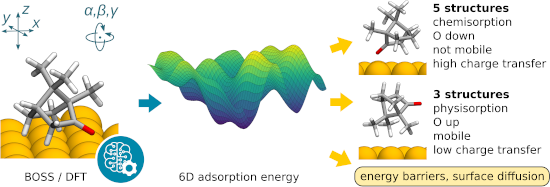
- been applied in modeling the PES to identify structures with minimum energy. GP regression has been used for example in local structure optimization [21], in finding minimum energy paths [22], and in predicting specific materials properties, such as melting temperature [23] or elasticity [24]. BO has


Protruding hydrogen atoms as markers for the molecular orientation of a metallocene
Beilstein J. Nanotechnol. 2020, 11, 1432–1438, doi:10.3762/bjnano.11.127
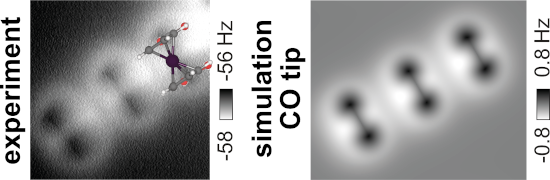
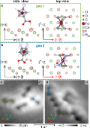
- molecule. (3) The tip end is atomically sharp. The third condition implies the stabilisation of the tip-terminating atom by one or very few bonds directed towards the tip apex. Such a bond will always exhibit sufficient lateral elasticity to yield a sharp contrast feature when the tip terminating atom


![[Graphic 10]](/bjnano/content/inline/2190-4286-11-127-i10.svg?max-width=637&scale=1.18182) row of FDCA molecules in geo 2. (a–c) Constant-height frequency-shi...
row of FDCA molecules in geo 2. (a–c) Constant-height frequency-shi...
On the frequency dependence of viscoelastic material characterization with intermittent-contact dynamic atomic force microscopy: avoiding mischaracterization across large frequency ranges
Beilstein J. Nanotechnol. 2020, 11, 1409–1418, doi:10.3762/bjnano.11.125
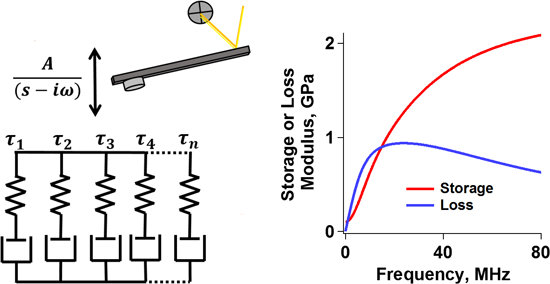
- ]) and band-excitation AFM [9][29], as well as dynamic methods based on multifrequency AFM [4][5] and multi-harmonic AFM [30][31] have also been implemented to measure an effective modulus of elasticity and an effective coefficient of dissipation (or analogous quantities) across the surface. All of these


Vibration analysis and pull-in instability behavior in a multiwalled piezoelectric nanosensor with fluid flow conveyance
Beilstein J. Nanotechnol. 2020, 11, 1072–1081, doi:10.3762/bjnano.11.92
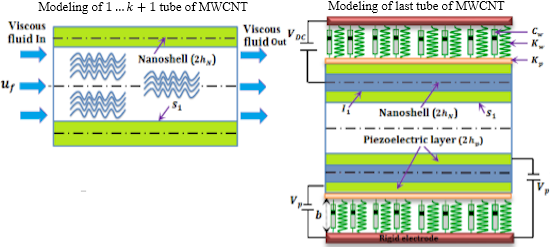
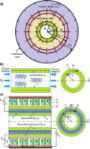
- and the study of vibration behavior are essential. Additionally, it is important that the size-dependent parameters for the dynamics analysis and mathematical modeling of these nanostructures be contained in the theoretical models. For this reason, surface/interface elasticity, which was addressed by
- piezoelectric doubly curved nanoshells and orthotropic piezoelectric cylindrical nanoshells [23][24]. Wang utilized surface strain gradient elasticity to study a meticulous solution to the anti-plane shear problem of a circular elastic inhomogeneity [25]. Nami et al. utilized nonlocal elasticity theory and
- a modified strain gradient theory (MSGT) and Gurtin–Murdoch surface elasticity to investigate the size-dependent nonlinear pull-in instability [28]. A new size-dependent nonlinear model for the analysis of the behavior of carbon nanotube resonators was introduced by Farokhi et al. based on modified


![[Graphic 46]](/bjnano/content/inline/2190-4286-11-92-i46.svg?max-width=637&scale=1.18182) on DNF of FC-MWPENS.
on DNF of FC-MWPENS.


![[Graphic 50]](/bjnano/content/inline/2190-4286-11-92-i50.svg?max-width=637&scale=1.18182) on DNF of SS FC-MWPENS.
on DNF of SS FC-MWPENS.


![[Graphic 54]](/bjnano/content/inline/2190-4286-11-92-i54.svg?max-width=637&scale=1.18182) on DNF of SS FC-MWPENS.
on DNF of SS FC-MWPENS.


![[Graphic 59]](/bjnano/content/inline/2190-4286-11-92-i59.svg?max-width=637&scale=1.18182) for fluid velocity
for fluid velocity ![[Graphic 60]](/bjnano/content/inline/2190-4286-11-92-i60.svg?max-width=637&scale=1.18182) on DNF of SS FC-MWPENS.
on DNF of SS FC-MWPENS.

![[Graphic 61]](/bjnano/content/inline/2190-4286-11-92-i61.svg?max-width=637&scale=1.18182) for pull-in voltage on DNF of SS FC-MWPENS.
for pull-in voltage on DNF of SS FC-MWPENS.

![[Graphic 67]](/bjnano/content/inline/2190-4286-11-92-i67.svg?max-width=637&scale=1.18182) for fluid velocity
for fluid velocity ![[Graphic 68]](/bjnano/content/inline/2190-4286-11-92-i68.svg?max-width=637&scale=1.18182) on DNF of SS FC-MWPENS.
on DNF of SS FC-MWPENS.

![[Graphic 69]](/bjnano/content/inline/2190-4286-11-92-i69.svg?max-width=637&scale=1.18182) for pull-in voltage on DNF of SS FC-MWPENS.
for pull-in voltage on DNF of SS FC-MWPENS.

![[Graphic 73]](/bjnano/content/inline/2190-4286-11-92-i73.svg?max-width=637&scale=1.18182) on DNF of SS FC-MWPENS.
on DNF of SS FC-MWPENS.


![[Graphic 75]](/bjnano/content/inline/2190-4286-11-92-i75.svg?max-width=637&scale=1.18182) on DNF of SS FC-MWPENS.
on DNF of SS FC-MWPENS.

Stochastic excitation for high-resolution atomic force acoustic microscopy imaging: a system theory approach
Beilstein J. Nanotechnol. 2020, 11, 703–716, doi:10.3762/bjnano.11.58
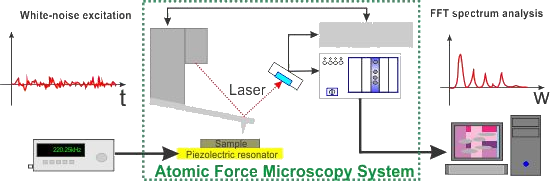
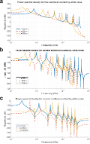
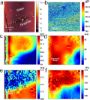
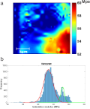
- harmonic oscillator model fit in which each pixel has an FFT spectrum with at least four resonance frequencies (Figure 2). In this manner, the FFT spectra are transformed into an indentation modulus mapping using a mathematical model based on the reduced elasticity modulus and the PSD model for a free



Comparison of fresh and aged lithium iron phosphate cathodes using a tailored electrochemical strain microscopy technique
Beilstein J. Nanotechnol. 2020, 11, 583–596, doi:10.3762/bjnano.11.46
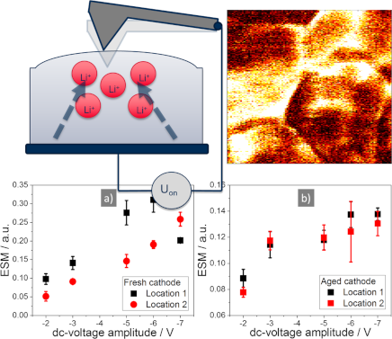
- additional mechanical (stiffness, elasticity), electrical (conductivity, surface potential), electrochemical (reactivity, mobility and activity), mechanoelectrical (piezoelectricity) and chemical (chemical bonding) material properties. In situ AFM imaging of the sample topography is often used to study the
- might result from material stiffness or elasticity because these material properties influence the volume expansion. Harder materials are assumed to show a smaller surface displacement (and thus smaller volume expansion) than softer materials. Analysis of the elasticity of the cathode materials was



Examination of the relationship between viscoelastic properties and the invasion of ovarian cancer cells by atomic force microscopy
Beilstein J. Nanotechnol. 2020, 11, 568–582, doi:10.3762/bjnano.11.45
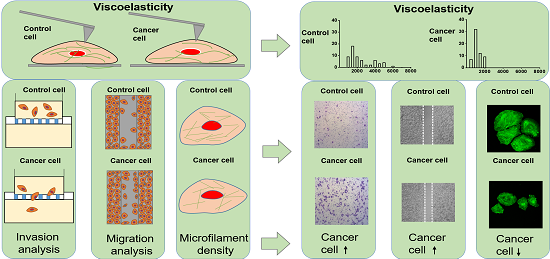
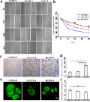
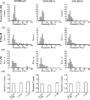
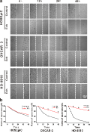
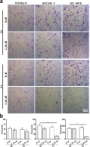
- the level of living single cells. Elasticity and viscosity of the ovarian cancer cells OVCAR-3 and HO-8910 are significantly lower than those of the human ovarian surface epithelial cell (HOSEpiC) control. Further examination found a dramatic increase of migration/invasion and an obvious decease of
- microfilament density in OVCAR-3 and HO-8910 cells. Also, there was a significant relationship between viscoelastic and biological properties among these cells. In addition, the elasticity was significantly increased in OVCAR-3 and HO-8910 cells after the treatment with the anticancer compound echinomycin (Ech
- significantly related with the elasticity of the cells. An increase of elasticity and a decrease of invasion were found in OVCAR-3 and HO-8910 cells after Ech treatment. Together, this study clearly demonstrated the association of viscoelastic properties with the invasion of ovarian cancer cells and shed a


Multilayer capsules made of weak polyelectrolytes: a review on the preparation, functionalization and applications in drug delivery
Beilstein J. Nanotechnol. 2020, 11, 508–532, doi:10.3762/bjnano.11.41