Search results
Search for "environment" in Full Text gives 1023 result(s) in Beilstein Journal of Nanotechnology. Showing first 200.
Nanoinformatics: spanning scales, systems and solutions
Beilstein J. Nanotechnol. 2026, 17, 423–427, doi:10.3762/bjnano.17.28

- questions including the prediction of (nano)materials (NM) functionality, nanomaterials fate in the environment, toxicity or therapeutic ability, and recyclability. As the properties of nanomaterials themselves span several scales, from electronic, atomistic, mesoscopic to continuum, and are highly dynamic

Eco-efficient materials for agricultural crops based on a mineral rich in MOR- and HEU-type zeolites
Beilstein J. Nanotechnol. 2026, 17, 381–395, doi:10.3762/bjnano.17.26
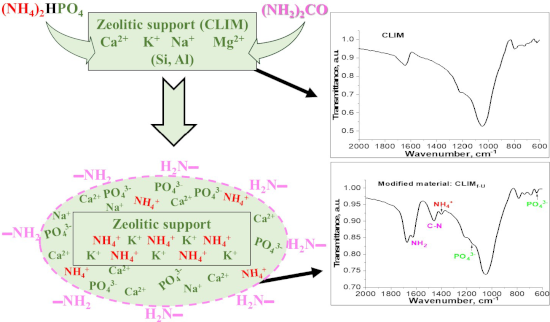
- consequent drag and infiltration under the action of irrigation water and rain [1]. This problem, which is also associated with volatilization and emission of NO, NH3, and other gases into the atmosphere, poses severe risks to the environment and causes serious damage to human health [2]. Minerals rich in
- the type of species present. These features affect the rate at which cations are delivered to the external environment. This aspect is relevant for agricultural applications, where zeolites are used as controlled-release fertilizers [28] for a range of nutrients. Besides this, most prior work has
- silanol groups [19]. For industrial applications, it is important to understand the environment surrounding NH4+ ions within zeolite cavities. In our case, according to the literature [18][27] and FTIR results, the interaction between ammonium molecules and the MOR structure allows for the formation of




Beam shaping techniques for pulsed laser ablation in liquids: Unlocking tunable control of nanoparticle synthesis in liquids
Beilstein J. Nanotechnol. 2026, 17, 309–342, doi:10.3762/bjnano.17.22
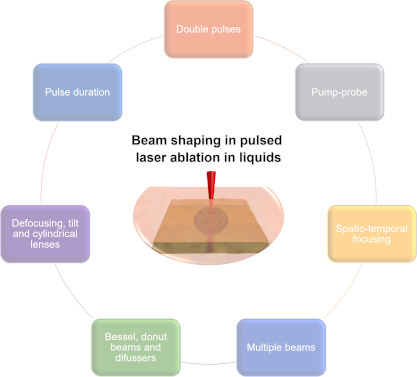
- , heating, and evaporation of the material, leading to plasma formation. The plasma cools down in the surrounding liquid releasing nanoparticles (NPs) into the liquid; the cooling process also generates gas bubbles from the liquid environment. These gas bubbles nucleate, forming a cavitation bubble (CB
- environment [9]. The early stages of laser ablation, along with variations in material density, temperature, and phase states, can be effectively modelled using large-scale atomistic simulations [26][27]. PLAL is a simple, fast, and versatile technique that has been employed to produce ligand-free NPs [28







Advancing nanolithography: a comprehensive review of materials for local anodic oxidation with AFM
Beilstein J. Nanotechnol. 2026, 17, 275–291, doi:10.3762/bjnano.17.19
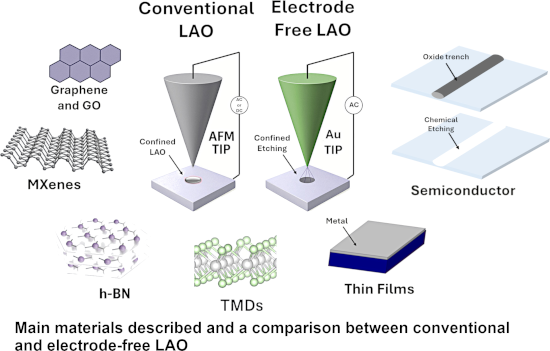
- -layer graphene flakes [22][98][99], epitaxial graphene [20][100], graphene grown by thermal decomposition of SiC [77], and graphite [101]. By applying local oxidation in a humid environment, the resulting reactive oxygen species, such as OH− and O2•−, oxidize the graphene surface, forming graphene oxide
- degradation during the oxidation process. Transitioning to t-SPL would ultimately enable operation in a dry nitrogen environment, thereby preventing oxidation, a capability recently demonstrated by Liu and coworkers [106]. It is to mention that also Shilov and coworkers focused on electrode-free
- nanopatterning of thick multilayer van der Waals (vdW) heterostructures [64]. This approach, which relies on applying a low-frequency (10 kHz) AC voltage between the AFM tip in contact mode and the grounded substrate, achieves high-resolution etching (down to ≈100 nm) without the need for a humid environment


Gold nanoparticle-decorated reduced graphene oxide as a highly effective catalyst for the selective α,β-dehydrogenation of N-alkyl-4-piperidones
Beilstein J. Nanotechnol. 2026, 17, 218–238, doi:10.3762/bjnano.17.15
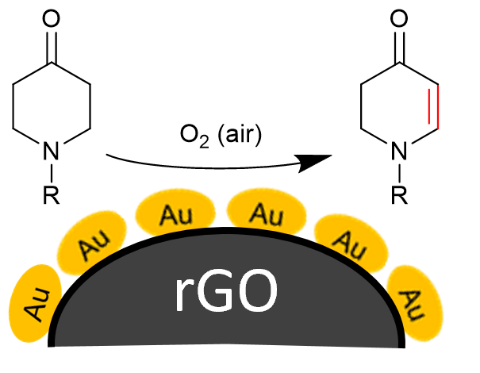
- volume. These features provide a more favorable environment for mass transport, reactant diffusion, and nanoparticle dispersion, making rGO a more effective catalyst support, so we expect a better catalytic activity with rGO. In addition to the morphological and textural properties of carbon supports
- environment for catalyst dispersion, thereby enhancing reaction kinetics. This is likely due to the residual oxygen content of rGO (Supporting Information File 1, Figure S6), which enables the effective anchoring of AuNPs and results in higher catalytic efficiency. In addition, the AC-based composites tend to
- metal–support interactions and a tendency for leaching over several cycles. Beyond the structural advantages of mentioned earlier, rGO also provides a unique electronic environment that further enhances catalytic activity. The superior catalytic performance of AuNPs–rGO compared to Au supported on CB or


Micro- and nanoscale effects in biological and bioinspired materials and surfaces
Beilstein J. Nanotechnol. 2026, 17, 214–217, doi:10.3762/bjnano.17.14
- surfaces of any living organism constantly engage with the environment and face a wide range of challenges. To meet these challenges, the surfaces of any organism must often simultaneously fulfil multiple functions and adapt to various environmental pressures, which involve complex interactions between
Safe and sustainable by design with ML/AI: A transformative approach to advancing nanotechnology
Beilstein J. Nanotechnol. 2026, 17, 176–185, doi:10.3762/bjnano.17.11
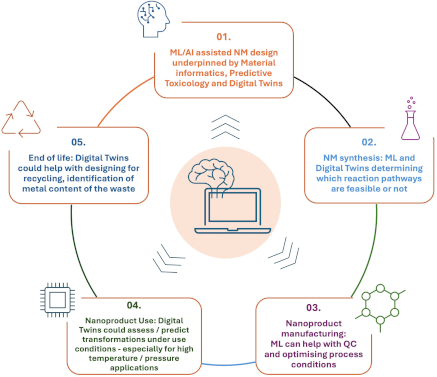
- potential EHS risks as they evolve, ensuring proactive rather than reactive risk management. Third, dynamic simulations – including digital twin technologies – provide a virtual environment for researchers to run “what if” scenarios, allowing them to explore the impact of variable parameters (e.g., pH
- properties that may be harmful to human health or the environment in particular groups of chemicals likely to be (eco)toxic, persistent, bio-accumulative, or mobile. Overall sustainability should be ensured by minimizing the environmental footprint of chemicals and materials in particular in relation to
- computational methods help deliver materials that meet performance demands without compromising human health or the environment. Materials informatics To date, materials informatics has been predominantly focussed on optimizing functionality, largely through materials acceleration platforms (MAPs) that combine


From shield to spear: Charge-reversible nanocarriers in overcoming cancer therapy barriers
Beilstein J. Nanotechnol. 2026, 17, 159–175, doi:10.3762/bjnano.17.10
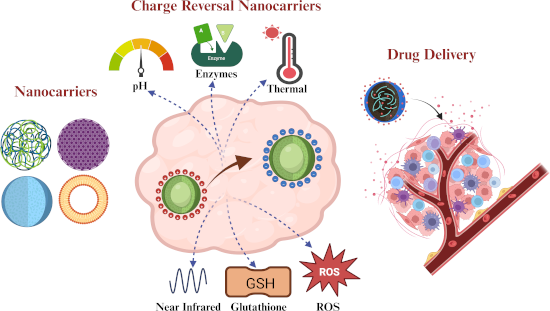
- enhancing the therapeutic efficacy and safety profiles of nanocarriers in clinical applications [15]. The functional mechanism of CRNs (Figure 2) is designed to enhance the selectivity and efficacy of anticancer drug delivery systems, along with their behaviour in response to the acidic environment of
- ]. These studies demonstrate how enzyme substrates embedded in nanocarriers enable the selective cleavage, charge reversal, and targeted delivery of drugs in response to cancer-associated enzymes. 2.3 Redox-sensitive nanocarriers Redox-sensitive nanocarriers exploit the distinct intracellular environment
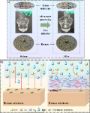
- to CC BY 4.0. Schematic representation of charge-reversible nanocarrier system for tumour therapy. a) In general mechanism of CRNs activated by various stimuli for targeted therapy, b) charge reversal of nanocarriers exhibiting responsiveness to the acidic environment in biofilms. The images of EMPTY


Influence of surface characteristics on the in vitro stability and cell uptake of nanoliposomes for brain delivery
Beilstein J. Nanotechnol. 2026, 17, 139–158, doi:10.3762/bjnano.17.9
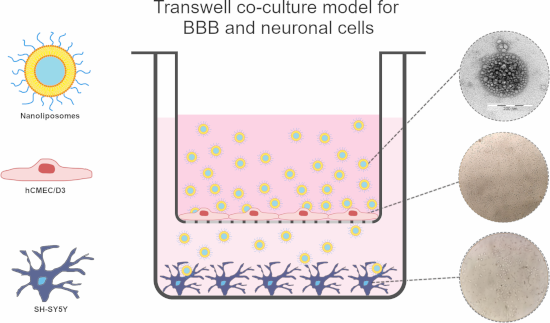
- lipid structure of NLs, leading to AC leakage, while plasma protein adsorption may cause particle aggregation [7]. In this sense, the presence of proteins in the tissue environment can alter cellular uptake of both cationic and anionic carriers [8]. In short, our understanding of how nanodelivery
- acidic environment (for visualization of endocytic pathways). Further, the cells were stained and visualized as described above. Internalization studies of nanoliposomes in hCMEC/D3 cells by confocal microscopy Confocal laser scanning microscopy (Carl Zeiss, Axiovert 200M Inverted Microscope) was
- nonexisting, and addition of cholesterol is needed in order to achieve conditions resembling normal neuronal environment with surrounding glial cells, as well as to promote the process of the SH-SY5Y neuroblastoma cell differentiation into a neuronal cell type [50]. Up to date, several findings reported the





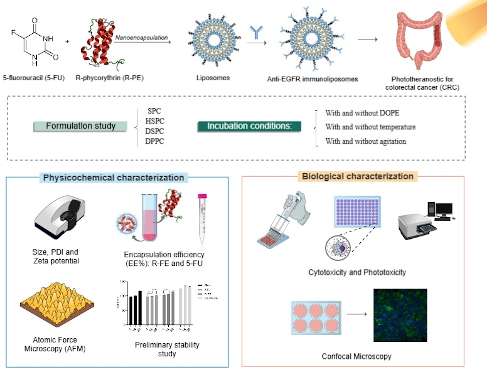
Development and in vitro evaluation of liposomes and immunoliposomes containing 5-fluorouracil and R-phycoerythrin as a potential phototheranostic system for colorectal cancer
Beilstein J. Nanotechnol. 2026, 17, 97–121, doi:10.3762/bjnano.17.7
- 50. This increase in negative surface charge may be attributed to changes in the distribution of surrounding counterions, possibly caused by the adsorption or ionization of functional groups at the liposomal surface [47]. Additionally, the exposure of the phosphate moiety to the aqueous environment
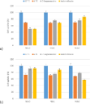
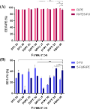
- the formulations, as PDI values remained within the acceptable range (<0.3 for monodisperse systems) [72]. Therefore, the results demonstrate that the developed formulation presents adequate stability under conditions that simulate the biological environment, an essential requirement for in vivo



Functional surface engineering for cultural heritage protection: the role of superhydrophobic and superoleophobic coatings – a comprehensive review
Beilstein J. Nanotechnol. 2026, 17, 63–96, doi:10.3762/bjnano.17.6
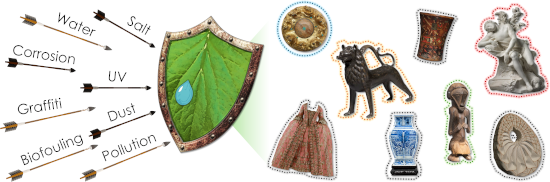
- textile) and their relative weaknesses and then discusses the threats, which depend on the environment in which the artwork is located (outdoor or indoor). This review article also aims to provide scholars and conservators with a comprehensive overview of current solutions, serving as a foundation for
- transparency and reversibility, while smoother substrates favor thinner, more controllable films. Furthermore, artworks having stone or inorganic surfaces, may experience erosion due to the effect of acid rain if in outdoor environment (limestone might shift to gypsum due to sulfur dioxide, becoming porous and
- water-absorbent) [53], while, if in indoor environment, they may experience biological fouling (fungi or bacteria) [54][55], which might initiate bio-deterioration [56]. If the substrate is metallic, corrosion caused by water (rain when outdoor and humidity fluctuation when indoor) is the main issue




Subdigital integumentary microstructure in Cyrtodactylus (Squamata: Gekkota): do those lineages with incipiently expressed toepads exclusively exhibit adhesive setae?
Beilstein J. Nanotechnol. 2026, 17, 38–56, doi:10.3762/bjnano.17.4
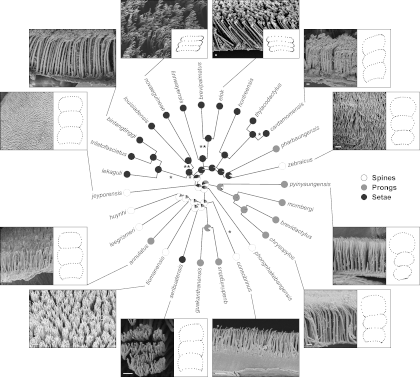
- utilize the environment that they inhabit have engendered considerable scientific interest. In several taxa, such as insects, spiders, some bats, frogs and lizards, adhesive structures at the distal ends of the limbs have independently evolved, allowing these animals to adhere to inclined or even inverted


Internal 3D temperature mapping in biological systems using ratiometric light-sheet imaging and lipid-coated upconversion nanothermometers
Beilstein J. Nanotechnol. 2025, 16, 2306–2316, doi:10.3762/bjnano.16.159
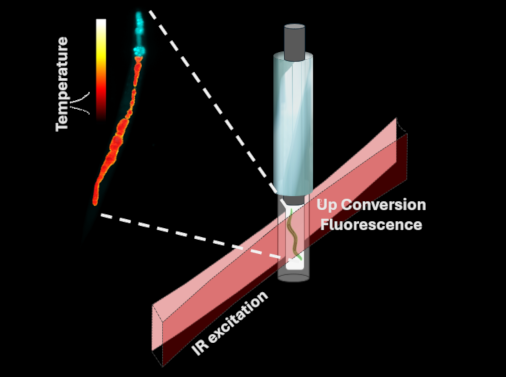
- to the luminal environment rather than intracellular regions, indicating that surface chemistry governs not only nanoparticle uptake but also the spatial interpretation of the thermal maps. This distinction is crucial, as it means our thermal maps report on the temperature within the digestive tract
- outer tissues. Aldehyde fixatives act at the organism’s surface without significantly altering the internal optical environment where the UC nanoparticles are located. Because upconversion luminescence arises from lanthanide ions shielded within the nanoparticle matrix, its emission is largely


Improving magnetic properties of Mn- and Zn-doped core–shell iron oxide nanoparticles by tuning their size
Beilstein J. Nanotechnol. 2025, 16, 2285–2295, doi:10.3762/bjnano.16.157
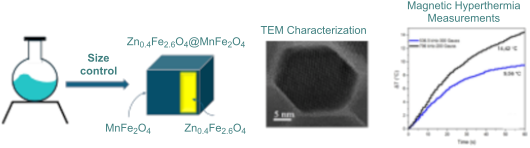
- environment, but its distinct vibrational modes are often indistinguishable due to overlap with the Fe–O modes, especially since Fe3+ has a higher mass and stronger dipole moment change than Zn2+ and Mn2+. Magnetic properties of the core–shell NPs The magnetic saturation as a function of magnetic field of



Visualizing nanostructures in supramolecular hydrogels: a correlative study using confocal and cryogenic scanning electron microscopy
Beilstein J. Nanotechnol. 2025, 16, 2274–2284, doi:10.3762/bjnano.16.156
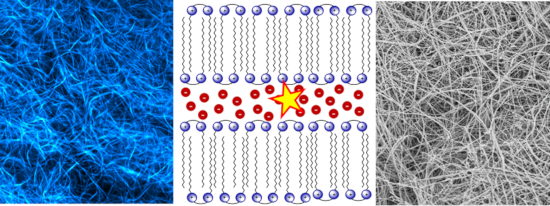
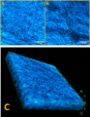
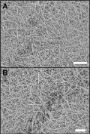
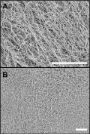
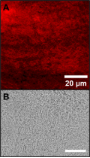
- PP3010. The gel sample underwent 5 min of etching via sublimation at −100 °C followed by sputtering in an argon environment using platinum for 60 s at a current of 10 mA. Once coated, the shuttle was transferred to the cryo-stage in the SEM chamber and maintained at −170 °C. Finally, the microstructure



Chiral plasmonic nanostructures fabricated with circularly polarized light
Beilstein J. Nanotechnol. 2025, 16, 2245–2264, doi:10.3762/bjnano.16.154
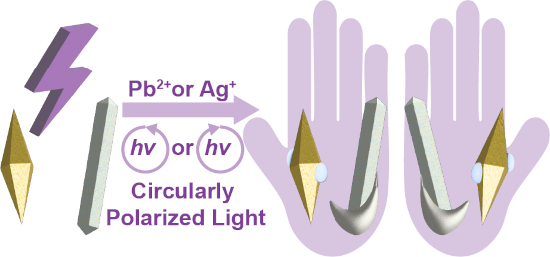
- organisms are almost exclusively left-handed, while sugars are predominantly right-handed [1][2]. This creates a chiral environment in the human body, where chiral drug molecules can exhibit enantioselective chemical and pharmacological behavior [3]. One example is the drug thalidomide, which was prescribed





Optical bio/chemical sensors for vitamin B12 analysis in food and pharmaceuticals: state of the art, challenges, and future outlooks
Beilstein J. Nanotechnol. 2025, 16, 2207–2244, doi:10.3762/bjnano.16.153
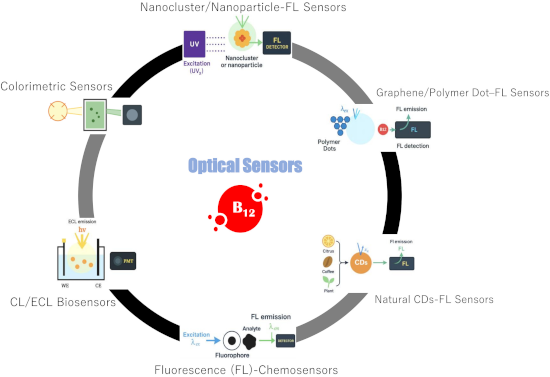
- of this vitamin from food matrices, initiating its active absorption into the body. A glycoprotein known as haptocorrin (HC; transcobalamin-I or R-binder), secreted by salivary and esophageal glands, binds to the released VB12 and shields it against the acidic environment of the stomach [47][51][52
- sensor could effectively oxidize Co2+ to Co3+ in almost entirely aqueous environment. Na et al. also showed that this chemosensor had a superb capacity to be an optical solid sensor [80]. Maity and Govindaraju earlier reported a colorimetric coumarin-conjugated thiocarbanohydrazone-based chemosensor
- the lucigenin-periodate reaction within an alkaline environment, where the Co2+ complex acted as the recognition unit, lucigenin served as the indicator, and the chemiluminescent response was the sensing signal. The CL emission under optimal conditions exhibited a direct linear relationship with Co2


Ultrathin water layers on mannosylated gold nanoparticles
Beilstein J. Nanotechnol. 2025, 16, 2183–2198, doi:10.3762/bjnano.16.151
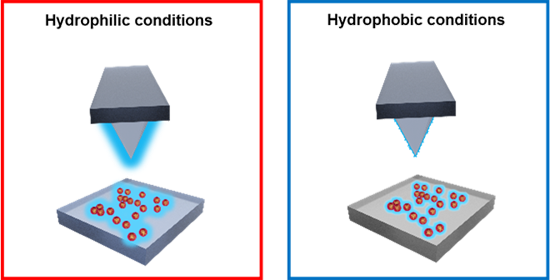
- in a realistic environment, the scientific bases are assumptions and analogies to chemically similar systems, rather than data. Several authors have synthesized and investigated (di)mannoside-coated AuNPs. While there are multiple applications [4], such NPs can also be seen as very crude models of
- . In other words, the nanoparticle has a non-centrosymmetric environment, which can simply be the presence of the gold surface. The noise-like feature at ~3400 cm−1 is assigned to hydrogen-bonded water as features above 3600 cm−1 should indicate non-hydrogen-bonded water. This is proof that water is
- concentrated carbohydrate solution (more than 40% of the total aqueous volume) provide a macromolecular crowding environment which diminishes particle interaction [42]. The dimanno-AuNPs used in this research were produced in a solution of ca. 50% dimannoside ligand, sufficient to decrease the agglomeration



Missing links in nanomaterials research impacting productivity and perceptions
Beilstein J. Nanotechnol. 2025, 16, 2168–2176, doi:10.3762/bjnano.16.149
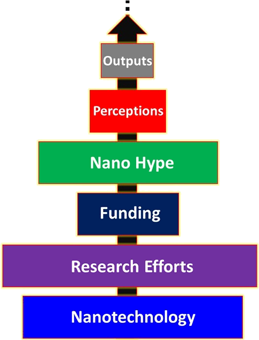
- Structures, School of Resources, Environment and Materials, Guangxi University, Nanning, Guangxi 530004, China 10.3762/bjnano.16.149 Abstract Herein we point out critical yet often overlooked barriers restraining the real-world impact and commercial viability of nanomaterials research. In spite of decades
- due to the inherent instability of 0D, 1D, and 2D nanomaterials [23]. That is why, in most cases, nanomaterials require a specific medium and controlled environment for stability. In the same line, due their high surface energy, large surface area, and small size, nanomaterials naturally tend to
- exposure of such chemicals (nanoscale systems) to the environment is very poorly managed worldwide, with the exception of a few countries, namely the UK, Germany, Sweden, Denmark, Netherlands, and Japan. Furthermore, the interaction of nanomaterials with biological systems remains poorly understood and
Microplastic pollution in Himalayan lakes: assessment, risks, and sustainable remediation strategies
Beilstein J. Nanotechnol. 2025, 16, 2144–2167, doi:10.3762/bjnano.16.148
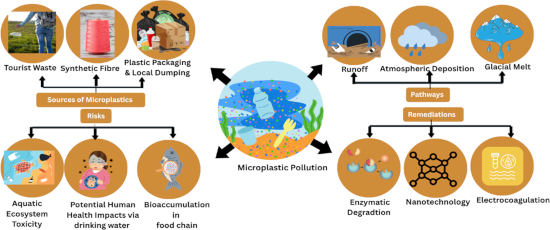
- , Tsomoriri, and Tsokar are typical instances of untouched alpine lakes that support indigenous species and lifestyles [1]. The Nainital lakes, including Naini Lake and Bhimtal Lake, are crucial to the region’s environment and tourism. The unique ecosystem of the lakes and rising anthropogenic pressures have
- microscopy (SEM) produces high-resolution images of particle shapes. It also indicates surface wear and tear patterns that reflect how old the MP is and how long it has been in the environment [38]. Ease of operation and minimal cost of optical microscopy make it widely used, despite being less sophisticated
- samples from the environment makes nanoscale plastics yet another challenge. Sophisticated methods such as thermal extraction desorption (TED) and gas chromatography-mass spectrometry (GC-MS) are now routinely used to detect these particles. But these methods involve a lot of expertise and equipment. The


Quality by design optimization of microemulsions for topical delivery of Passiflora setacea seed oil
Beilstein J. Nanotechnol. 2025, 16, 2116–2131, doi:10.3762/bjnano.16.146
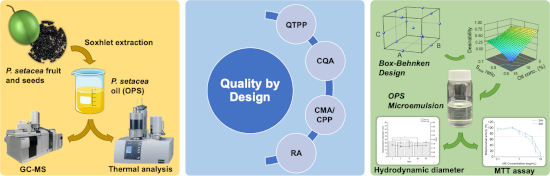
- , environment, and measurements, each contributing to formulation performance and quality consistency. Heatmap of the normalized risk scores (%) illustrating the impact of CMAs and CPPs on each element of the QTPP. Higher risk scores (darker shades) indicate stronger influence on final product quality and guide


Toward clinical translation of carbon nanomaterials in anticancer drug delivery: the need for standardisation
Beilstein J. Nanotechnol. 2025, 16, 2092–2104, doi:10.3762/bjnano.16.144
- the responsible development of these materials, supporting their use in innovative applications like drug delivery, while safeguarding health and the environment. Conclusion CNMs undeniably represent a promising frontier in drug delivery, offering a unique combination of high surface area, tuneable
- facilitated by the international dedicated agencies. Ultimately, by addressing these critical considerations and fostering a collaborative environment, the immense promise of CNMs as nanocarriers can be fully realised, paving the way for innovative and highly effective therapeutic interventions in cancer and




Calibration of piezo actuators and systems by dynamic interferometry
Beilstein J. Nanotechnol. 2025, 16, 2086–2091, doi:10.3762/bjnano.16.143
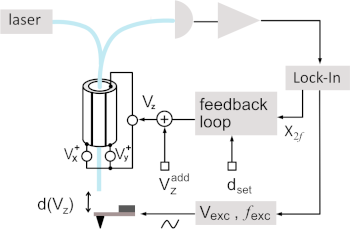
- microscopy (NC-AFM) operation in an ultrahigh-vacuum (UHV) environment at low temperature and has been developed tremendously over the last three decades [7][8][9][10][11][12]. In frequency-modulated NC-AFM, the cantilever is kept at oscillation with constant amplitude, yielding an interferometric signal
- stabilized so that the working point is the inflection point and center of symmetry of the time-dependent interferometer signal [16], implying that the mean cavity length is d0 = , where m is an odd integer and λ is the vacuum wavelength of the light used for interferometer operation in a UHV environment. As


Molecular and mechanical insights into gecko seta adhesion: multiscale simulations combining molecular dynamics and the finite element method
Beilstein J. Nanotechnol. 2025, 16, 2055–2076, doi:10.3762/bjnano.16.141
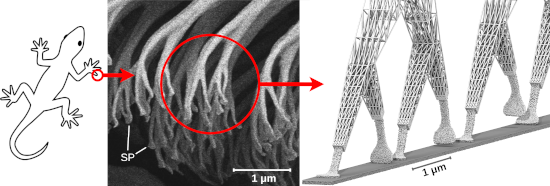
- [11][13]. Since the simulation assumed a frictionless vacuum environment, thermostats like dissipative particle dynamics and Langevin [53][54], which introduce implicit friction, are inherently unsuitable. In particular, Langevin dynamics led to unphysical effects such as loss of spatula jump-to






Stereodiscrimination of guests in chiral organosilica aerogels studied by ESR spectroscopy
Beilstein J. Nanotechnol. 2025, 16, 2034–2054, doi:10.3762/bjnano.16.140
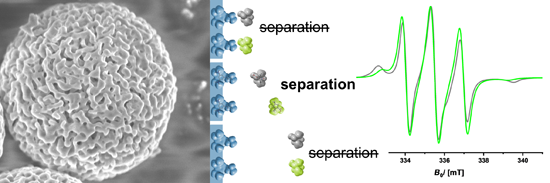
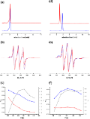
- enantiomers (+) and (−) experience a different chemical environment is key. Otherwise, there might be a dynamic equilibrium between surface-adsorbed and mobile spin probes without stereodifferentiation. With this knowledge, it was possible to reach higher selectivity values than for the commercial material. A
- detailed information about the local environment. Furthermore, dipolar coupling to other electron spins in the direct environment allows for the determination of distances from 0 to 10 nm [38][39]. Giamello et al. have discussed in detail how this effect can be used to characterize the interaction of spin
- be compared to a commercial chiral chromatography material. Finally, we try to explain the observations by a more detailed picture of the local environment of the spin probe. Results and Discussion Achiral materials Three achiral aerogel materials (containing no chiral centers) were prepared as