Search results
Search for "eye" in Full Text gives 188 result(s) in Beilstein Journal of Nanotechnology.
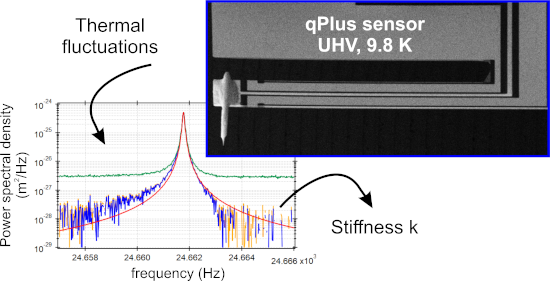
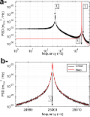
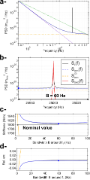
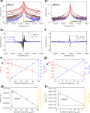
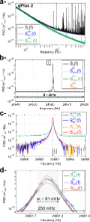
Stiffness calibration of qPlus sensors at low temperature through thermal noise measurements
Beilstein J. Nanotechnol. 2024, 15, 580–602, doi:10.3762/bjnano.15.50
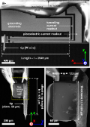

Sidewall angle tuning in focused electron beam-induced processing
Beilstein J. Nanotechnol. 2024, 15, 447–456, doi:10.3762/bjnano.15.40
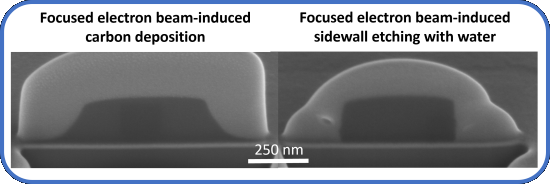
- array was performed by eye using the same field of view (8 μm) each time. As this is rather large, it is reasonable to assume that when the experiment was repeated for confirmation, even assuming that the deposits were identical, etching might have taken place at a somewhat different location in each
- result is encouraging because it suggests that if the sidewall evolution could somehow be monitored, one could begin etching at an arbitrary position (within a certain range, still determined by eye) and stop when the desired profile is attained. To demonstrate this, in the following experiment, SE




Unveiling the nature of atomic defects in graphene on a metal surface
Beilstein J. Nanotechnol. 2024, 15, 416–425, doi:10.3762/bjnano.15.37
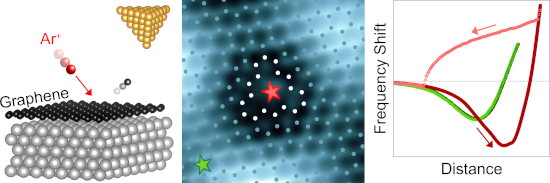
- ). Dotted lines serve as guides to the eye. Hysteresis loops in approach (filled symbols) and retraction (open symbols) Δf and I traces. Variations Δf(Δz) on (a) pristine graphene as well as atop (b) the defect-1 boundary and (c) its interior. The zero of Δf in (a) is marked Δz0 and corresponds to the point


Investigating ripple pattern formation and damage profiles in Si and Ge induced by 100 keV Ar+ ion beam: a comparative study
Beilstein J. Nanotechnol. 2024, 15, 367–375, doi:10.3762/bjnano.15.33
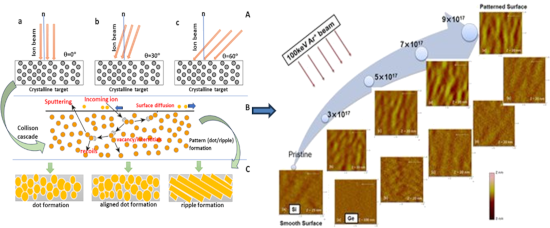
- structures. Although these structures may not be visible to the naked eye, they certainly have a visible impact on the mentioned applications. Nanopatterning is a very delicate procedure that is only possible with special techniques such as ion beam sputtering (IBS), with which one can achieve nanostructures


Comparative electron microscopy particle sizing of TiO2 pigments: sample preparation and measurement
Beilstein J. Nanotechnol. 2024, 15, 317–332, doi:10.3762/bjnano.15.29
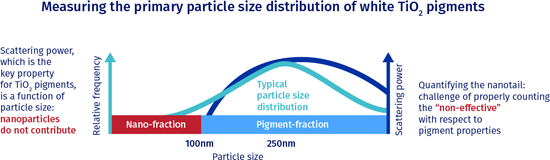
- , and M3 completely rely on particle edge detection by the human eye, which is the most accurate detection method assuming good laboratory practice. Methods M1, P1, and P6 rely on automated particle detection, the former using a model-free sizing algorithm and the latter two using a sizing algorithm


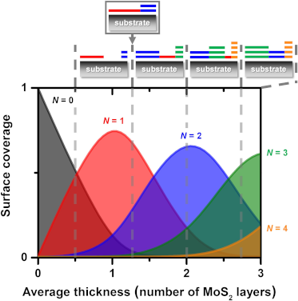
Determining by Raman spectroscopy the average thickness and N-layer-specific surface coverages of MoS2 thin films with domains much smaller than the laser spot size
Beilstein J. Nanotechnol. 2024, 15, 279–296, doi:10.3762/bjnano.15.26


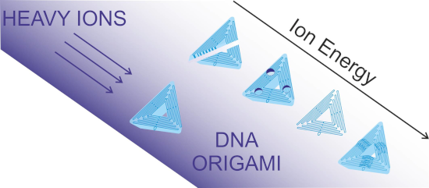
Ion beam processing of DNA origami nanostructures
Beilstein J. Nanotechnol. 2024, 15, 207–214, doi:10.3762/bjnano.15.20
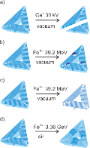
- fluence) and the lowest bound for the number of craters formed on DNA origami nanotriangles deposited on Si upon 56Fe10+ irradiation at various fluences in vacuum. Lines to guide the eye for the figures in (A) and (B) are shown to demonstrate the effect of the fluence. AFM image of a Si surface deposited


New application of bimetallic Ag/Pt nanoplates in a colorimetric biosensor for specific detection of E. coli in water
Beilstein J. Nanotechnol. 2024, 15, 95–103, doi:10.3762/bjnano.15.9
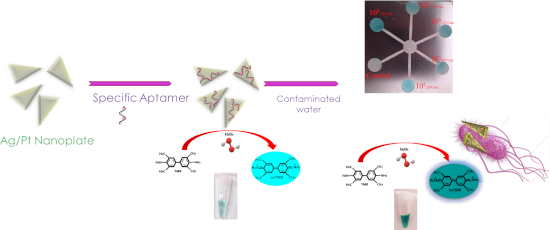
- can be completed in 30 min and the presence of E. coli levels can be distinguished with the naked eye. The absorbance at 652 nm is proportional to pathogen concentration from 10 to 108 CFU·mL−1, with a detection limit of 10 CFU·mL−1. The percent recovery for the water samples spiked with E. coli is 95
- modifications to increase its solubility [7]. Due to its low cost, simplicity, fast response, and the lack of expensive equipment required, the peroxidase-like activity has garnered significant attention in the detection of harmful microorganisms. The naked eye can easily observe the blue hue resulting from the
- popular and appealing since the presence of a specific pathogen can be easily observed by a simple change in color, which can be distinguished easily with the naked eye eliminating any use of expensive and complex types of equipment [29][30][31]. In this research, we provide a novel and highly sensitive


unDrift: A versatile software for fast offline SPM image drift correction
Beilstein J. Nanotechnol. 2023, 14, 1225–1237, doi:10.3762/bjnano.14.101
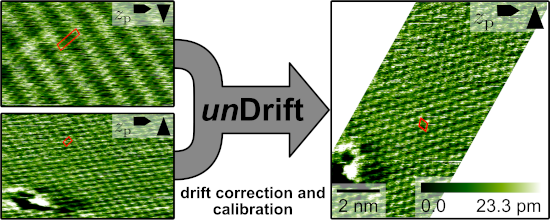
- , thus, hard to recognize by eye. Based on the autocorrelation function, however, unDrift can extract unit cell dimensions even from images with such weak contrast. The different dimensions of the unit cells extracted here (see red quadrangles in Figure 4j,k) reveal that these raw-data images are


Nanoarchitectonics of photothermal materials to enhance the sensitivity of lateral flow assays
Beilstein J. Nanotechnol. 2023, 14, 988–1003, doi:10.3762/bjnano.14.82
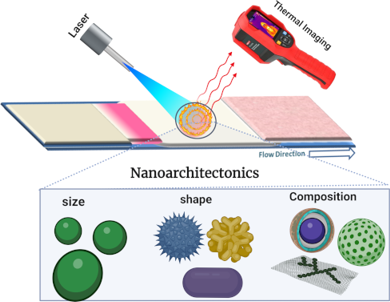
- over other POCT techniques, there is always a demand for improvement because LFAs are insufficient to detect analytes at low concentrations (i.e., below ng/mL) [9]. At such low concentrations, the change of colour of the test line cannot be distinguished by the naked eye. LFAs give a test result with


Industrial perspectives for personalized microneedles
Beilstein J. Nanotechnol. 2023, 14, 857–864, doi:10.3762/bjnano.14.70
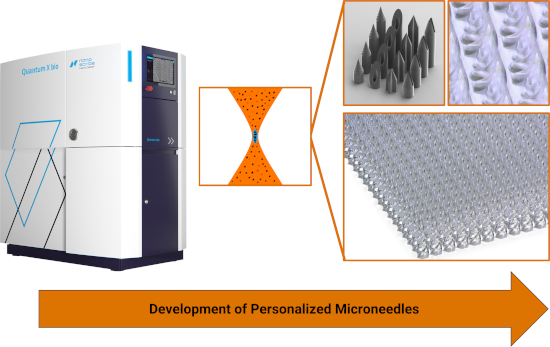
- etched and then used for mass production. One of the most common examples of commercialized TDD microneedles are over-the-counter anti-aging eye patches. Anti-aging eye patches consisting of 200–2000 dissolvable conical microneedles. These dissolvable microneedles are typically a variant of crosslinked


Metal-organic framework-based nanomaterials as opto-electrochemical sensors for the detection of antibiotics and hormones: A review
Beilstein J. Nanotechnol. 2023, 14, 631–673, doi:10.3762/bjnano.14.52
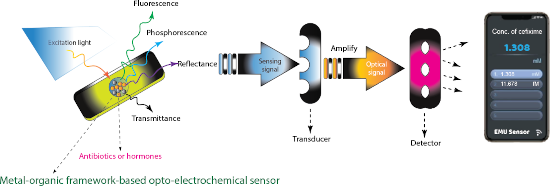
- quenching and self-quenching, however, has been virtually eliminated in MOFs since lanthanide ions are entrenched in the network of organic ligands. So strong is the luminescence produced by lanthanides in MOFs that it can even be seen with the naked eye. Also, actinide-containing MOFs exhibit luminescent


Thermal transport in kinked nanowires through simulation
Beilstein J. Nanotechnol. 2023, 14, 586–602, doi:10.3762/bjnano.14.49
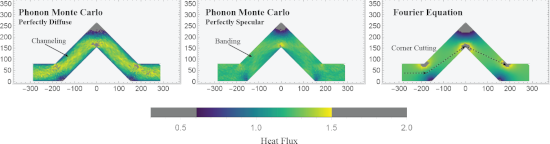
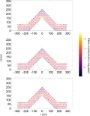
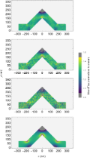
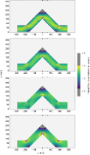
- PMC simulation the overall flux seems to be much more homogeneous. A careful eye might also note some faint patterning in the colours of the PMC results. As the colour scale for Figure 7 spans a large range, we can look to a more convenient visualization in Figure 8. Here we have clipped the colour




Quercetin- and caffeic acid-functionalized chitosan-capped colloidal silver nanoparticles: one-pot synthesis, characterization, and anticancer and antibacterial activities
Beilstein J. Nanotechnol. 2023, 14, 362–376, doi:10.3762/bjnano.14.31
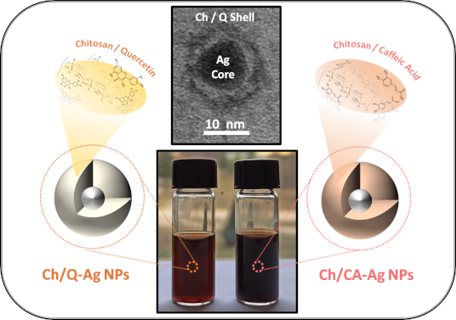
- medium [74]. Since NPs are exposed to various forces that affect their stability and size in such environments (containing electrolytes, proteins and lipids), they may tend to collapse and aggregate. Although no aggregation and turbidity were observed during the preparation stage with the naked eye and


Solvent-induced assembly of mono- and divalent silica nanoparticles
Beilstein J. Nanotechnol. 2023, 14, 52–60, doi:10.3762/bjnano.14.6
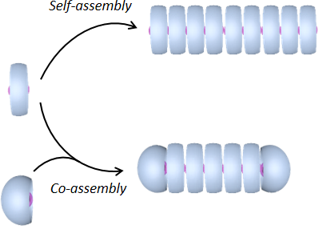
- ), dimers (magenta circles), trimers (blue triangles), and large clusters (grey diamonds), as determined by statistical analysis of TEM images for different PPSR values: d) 0.57; e) 0.45; f) 0.38; g) 0.30 or 0.23. Dotted lines are a guide to the eye. Representative TEM images of dimers, trimers, and large
- . Scale bars: 200 nm. Experimental conditions are displayed in Table 1. b) Time dependence of for 1-PSN/2-PSN = 0 (magenta), 0.5 (light blue), 1 (green), and 1.5 (blue). Curves are a guide to the eye. c) TEM image of a chain obtained by mixing 2-PSN with 1-PSN with a PPSR of 0.60 (1-PSN/2-PSN = 0.5


From a free electron gas to confined states: A mixed island of PTCDA and copper phthalocyanine on Ag(111)
Beilstein J. Nanotechnol. 2022, 13, 1572–1577, doi:10.3762/bjnano.13.131
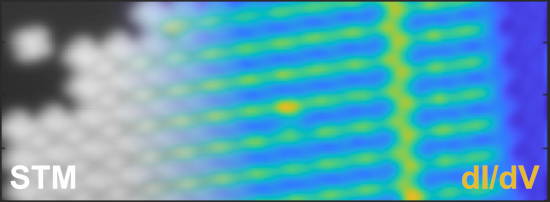
- ) Constant-height AFM image (plane-subtracted) above an area with two local stoichiometries: with two PTCDA molecules for each CuPc (P2C) and with a one-to-one mixture (PC). The unit cell of the PC phase is indicated by the green arrows. (b) The same image with ball-and-stick figures to guide the eye. (c


Roll-to-roll fabrication of superhydrophobic pads covered with nanofur for the efficient clean-up of oil spills
Beilstein J. Nanotechnol. 2022, 13, 1228–1239, doi:10.3762/bjnano.13.102
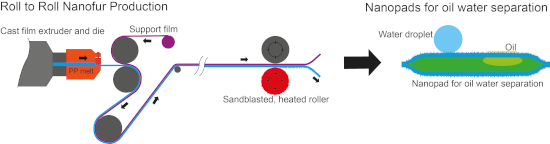
- account [30]. To illustrate the superhydrophobic properties of the nanofur, the video in Supporting Information File 1 shows water drops on a polypropylene sheet rolling around as the sheet is tilted. The high contact angle can be seen even with the naked eye. Since oil absorption is one of the


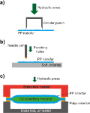


Microneedle-based ocular drug delivery systems – recent advances and challenges
Beilstein J. Nanotechnol. 2022, 13, 1167–1184, doi:10.3762/bjnano.13.98
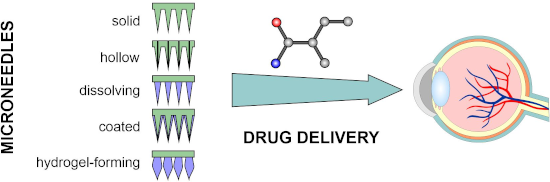
- Abstract Eye diseases and injuries constitute a significant clinical problem worldwide. Safe and effective delivery of drugs to the eye is challenging mostly due to the presence of ocular barriers and clearance mechanisms. In everyday practice, the traditional eye drops, gels and ointments are most often
- developments in microtechnology, in recent years, there has been a remarkable advance in the development of microneedle-based systems as an alternative, non-invasive form for administering drugs to the eye. This review summarizes the latest achievements in the field of obtaining microneedle ocular patches. In
- physiology of the eye are summarized and discussed. Keywords: eye; microneedles; ocular drug delivery; ophthalmic drugs; Review 1 Introduction Since its first appearance in biomedicine, microtechnology is rapidly entering the world of pharmaceutical sciences, including pharmaceutical technology [1][2][3][4


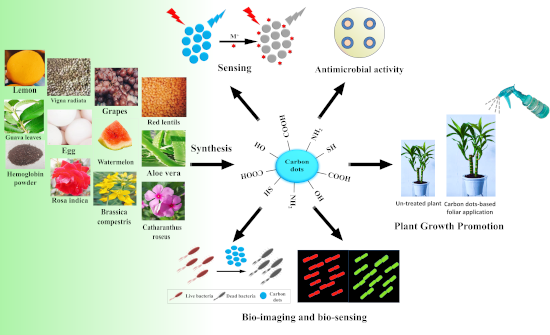
Recent advances in green carbon dots (2015–2022): synthesis, metal ion sensing, and biological applications
Beilstein J. Nanotechnol. 2022, 13, 1068–1107, doi:10.3762/bjnano.13.93




Design of a biomimetic, small-scale artificial leaf surface for the study of environmental interactions
Beilstein J. Nanotechnol. 2022, 13, 944–957, doi:10.3762/bjnano.13.83
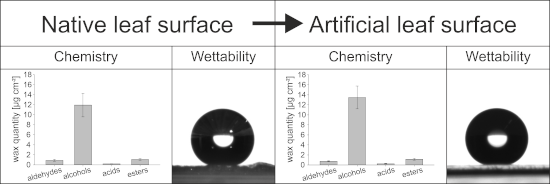
- not roll off even at a TA of 90°. In such samples, the wax layer was probably damaged or contaminated. Both wax alteration and contamination can lead to a change in wettability [75][79]. No damage or contamination was visible to the naked eye in the leaves used. SEM images of the leaves from the field
Stimuli-responsive polypeptide nanogels for trypsin inhibition
Beilstein J. Nanotechnol. 2022, 13, 538–548, doi:10.3762/bjnano.13.45
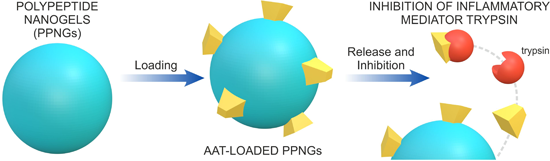
- value of DH (a) and zeta potential (b) of PHEG-Tyr nanogel at 25 (squares) and 37 °C (triangles). The lines are to guide the eye. Dependence on the pH value of DH (a) and zeta potential (b) of Nα-Lys-NG nanogel at 25 (squares) and 37 °C (triangles). The lines are to guide the eye. Release of 125I
- -radiolabeled albumin from PHEG-Tyr (a) and Nα-Lys-NG (b) nanogels at initial 125I-radiolabeled albumin concentrations of 1 mg/mL (squares), 0.75 mg/mL (circles), and 0.5 mg/mL (triangles). The lines are to guide the eye. Release of 125I-radiolabeled α-1-antitrypsin from PHEG-Tyr (a) and Nα-Lys-NG (b) nanogels
- at initial 125I-radiolabeled α-1-antitrypsin concentrations of 1 mg/mL (squares), 0.75 mg/mL (circles), and 0.5 mg/mL (triangles). The lines are to guide the eye. Spectrophotometric measurements of enzymatic assay of trypsin at trypsin/substrate ratio 1:50 (a) and 1:25 (b) using trypsin without


The role of sulfonate groups and hydrogen bonding in the proton conductivity of two coordination networks
Beilstein J. Nanotechnol. 2022, 13, 437–443, doi:10.3762/bjnano.13.36
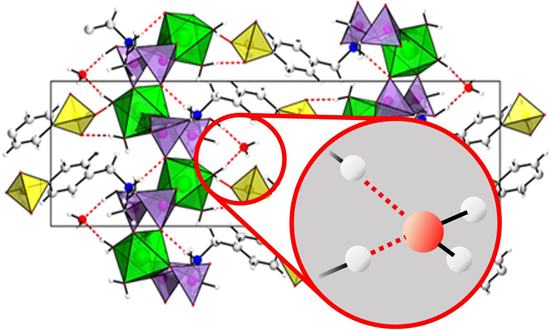
- obtained by using a modified equivalent circuit model, as mentioned above. A second semicircle, superimposing the first one, needs to be accounted for, though this is hardly distinguishable by the naked eye. This finding suggests that, in this case, proton conduction occurs by two distinct processes. The
- activation. Measurements were conducted at 22 °C and 90% r.h.; lines represent the fit results from using the equivalent circuits described in the text. Proton conductivity (dashed lines as a guide to the eye) of [Mg(H2O)2(H3L)]·H2O (Mg-CP) and [Pb2(HL)]·H2O (Pb-MOF) at variable relative humidity (22 °C
- 1). (a) Proton conductivity (dashed lines as guide to the eye) of [Mg(H2O)2(H3L)]·H2O (Mg-CP) and [Pb2(HL)]·H2O (Pb-MOF) at different temperatures (90% r.h.). (b) Arrhenius plot (with linear regression) of the same data. *The lower values for Mg-CP (gray) correspond to the conduction mode that is


Selected properties of AlxZnyO thin films prepared by reactive pulsed magnetron sputtering using a two-element Zn/Al target
Beilstein J. Nanotechnol. 2022, 13, 344–354, doi:10.3762/bjnano.13.29
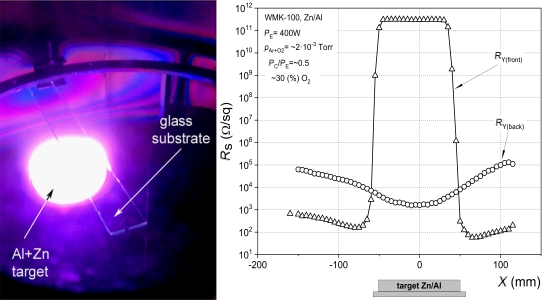
- deposited on both sides of the glass substrate as a function of the distance X from the Zn/Al target axis. The line is to guide the eye. Results of investigations on optical transmission: (a) transmission (T) spectra and (b) dependence of the cut-off wavelength on the distance X from the Zn/Al target axis
- . The line in (b) is to guide the eye. Dependence of thickness of thin films deposited on the front and back sides of the substrate as a function of the distance X from the Zn/Al target axis. The lines are to guide the eye. Distribution of the resistivity of thin films deposited on the front and back
- sides of the glass substrate as a function of the distance X from the Zn/Al target axis. The lines are to guide the eye. Results of the optical bandgap width estimated from optical measurements for thin films deposited at the front side of the substrate as a function of the distance X from the Zn/Al


A photonic crystal material for the online detection of nonpolar hydrocarbon vapors
Beilstein J. Nanotechnol. 2022, 13, 127–136, doi:10.3762/bjnano.13.9
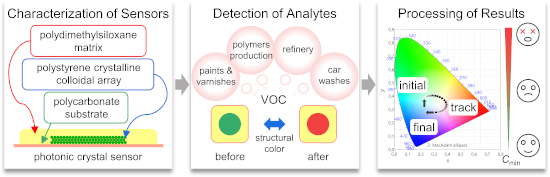
- SCI and SCE modes. The studies of kinetics have been carried out using a mini-spectrophotometer “eye-one Pro” (X-Rite, Inc., USA). The thickness of the stimuli-responsive layer (PDMS and CCA) has been measured by using a “Constant K5” thickness gauge (KONSTANTA LLC, Russia) with an ID2 induction
- polymer regarding material strength. Method Figure 8a shows the scheme of the experimental equipment. It consists of the spectrophotometer “eye-one Pro” and a peripheral device, which is made of black composite material based on epoxy resins for visible-light absorption and to elude backward reflection
- exposure to toluene vapor, red – at the response point, blue – 8 min after the exposure (data obtained with an “eye-one Pro” mini-spectrophotometer). (b, c) The starting position of the maximum reflection and initial photo images of the sensor before the next cycle of exposure to toluene vapor (data


Sputtering onto liquids: a critical review
Beilstein J. Nanotechnol. 2022, 13, 10–53, doi:10.3762/bjnano.13.2