Search results
Search for "fluorophore" in Full Text gives 55 result(s) in Beilstein Journal of Nanotechnology.
Green synthesis of fluorescent carbon dots from spices for in vitro imaging and tumour cell growth inhibition
Beilstein J. Nanotechnol. 2018, 9, 530–544, doi:10.3762/bjnano.9.51
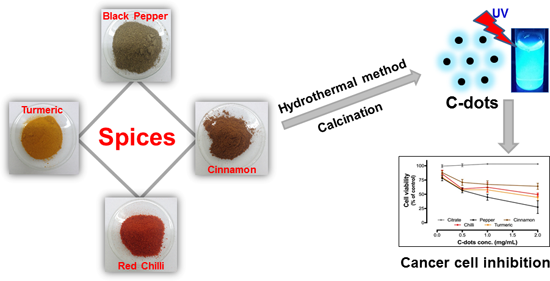
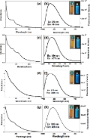
- fluorescence emission of the reference (quinine sulfate), As is the absorbance at the excitation wavelength of the sample, Ar is the absorbance at the excitation wavelength of the reference, QYs is the quantum yield of the sample, and QYr is the quantum yield of the reference fluorophore (quinine sulfate QY


Involvement of two uptake mechanisms of gold and iron oxide nanoparticles in a co-exposure scenario using mouse macrophages
Beilstein J. Nanotechnol. 2017, 8, 2396–2409, doi:10.3762/bjnano.8.239
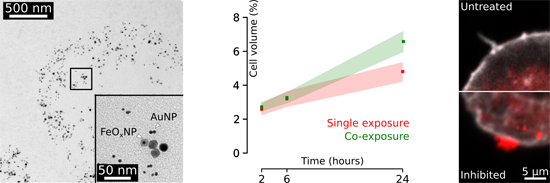
- ., AuNPs with 2% DY505 fluorophore, and FeOxNPs with 2% DY615 fluorophore integrated into the polymer shell were synthesized as previously described [44][45]. For both NPs the hydrodynamic radius (dh) was measured by dynamic light scattering (DLS) and a corresponding core diameter (dc = 2·rc) was extracted

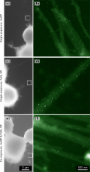


Carbon nano-onions as fluorescent on/off modulated nanoprobes for diagnostics
Beilstein J. Nanotechnol. 2017, 8, 1878–1888, doi:10.3762/bjnano.8.188
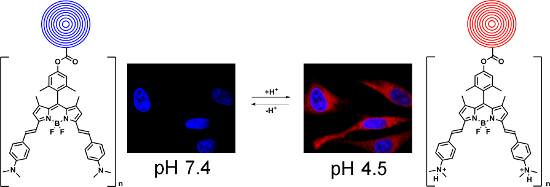
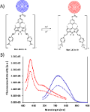
- , Scheme 1), which are capable of introducing photoinduced electron transfer (PET) [27] properties to the fluorophore, the dye molecule exhibited a bright red fluorescence with maximum emission centered at 637 nm in chloroform (Figure 1). These PET groups were activated in neutral or basic environment




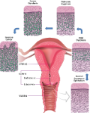
Optical techniques for cervical neoplasia detection
Beilstein J. Nanotechnol. 2017, 8, 1844–1862, doi:10.3762/bjnano.8.186
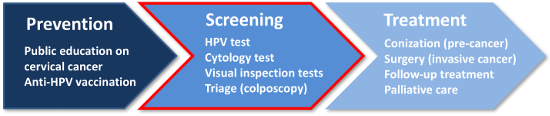
- fluorophore molecules in the tissue. Depending on the type of investigated fluorophores (endogenous, i.e., intrinsically present in biological tissue or synthesized after introducing a precursor molecule, or exogenous, i.e., administrated as drugs) light-induced fluorescence spectroscopy can be classified
- lesions with spectral autofluorescence measurements depends on several factors including (i) changes in autofluorescence background, which may influence the quantum yield of fluorophore, (ii) inhomogeneities in the optical properties of tissue, (iii) alterations of the tissue architecture (e.g., variable
- limitations of conventional fluorescence microscopy because FLIM results are insensitive to fluorophore concentration and excitation power of the laser. The growth of tumor in mice, inoculated with highly tumorigenic TC-1 cells immortalized using HPV type 16 proteins, was studied as a model of cervical cancer



Self-assembly of chiral fluorescent nanoparticles based on water-soluble L-tryptophan derivatives of p-tert-butylthiacalix[4]arene
Beilstein J. Nanotechnol. 2017, 8, 1825–1835, doi:10.3762/bjnano.8.184
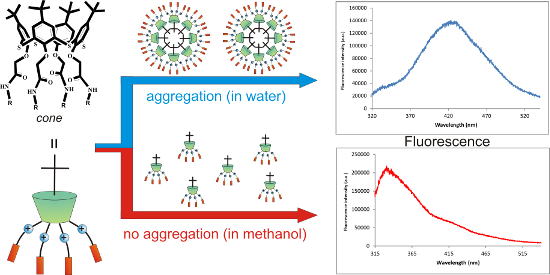
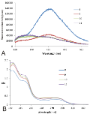
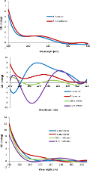
- feature of the compounds is the pronounced dependence of their spectral (emission and chiroptical) properties on the polarity of the solvent and the length of the linker between the macrocyclic and fluorophore parts of the molecule. Keywords: fluorescence; nanoparticles; self-assembly; thiacalixarene
- was established by a number of optical methods that these aggregates were fluorescently active and chiral. The pronounced dependence of their spectral (emission and chiroptical) properties on the polarity of the solvent and the length of the linker between the macrocyclic and fluorophore parts of the



Bright fluorescent silica-nanoparticle probes for high-resolution STED and confocal microscopy
Beilstein J. Nanotechnol. 2017, 8, 1283–1296, doi:10.3762/bjnano.8.130
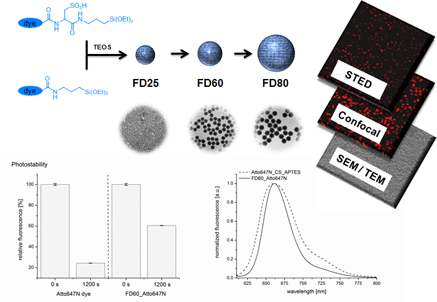
- molecules per silica particle as a function of size (filled square) and relative fluorescence intensity (open circles) as a function of the particle size. The ratio of fluorophore per particle was calculated based on the concentration of nanoparticles and the molar content of dye assuming a dye


Evaluation of quantum dot conjugated antibodies for immunofluorescent labelling of cellular targets
Beilstein J. Nanotechnol. 2017, 8, 1238–1249, doi:10.3762/bjnano.8.125
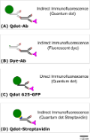
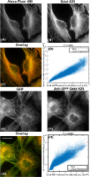
- once again found labelling which was comparable to samples (simultaneously or separately) labelled with Alexa Fluor 488 (Figure 3). To investigate whether the same structure (microtubules) could be labelled with a different fluorophore-antibody conjugate, direct ICC was performed using a Qdot 625




Phospholipid arrays on porous polymer coatings generated by micro-contact spotting
Beilstein J. Nanotechnol. 2017, 8, 715–722, doi:10.3762/bjnano.8.75
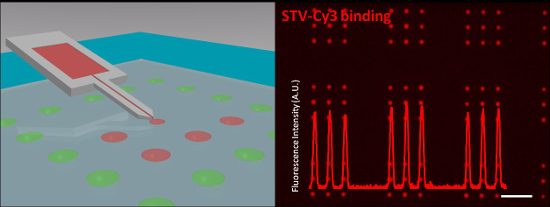
- fluorescence as the ink below the feature surface also contributes to the signal. Protein and antibody binding onto lipid arrays The selective binding of proteins to the lipid arrays on HEMA polymer was first tested using fluorophore labelled streptavidin (STV-FITC) for the coupling with biotin headgroups


Facile fabrication of luminescent organic dots by thermolysis of citric acid in urea melt, and their use for cell staining and polyelectrolyte microcapsule labelling
Beilstein J. Nanotechnol. 2016, 7, 1905–1917, doi:10.3762/bjnano.7.182
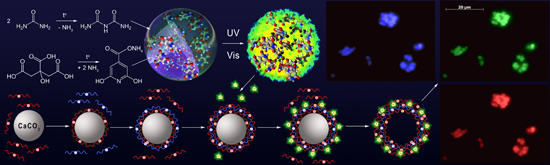
- temperature (up to 200 °C) causes the formation of polymerized species forming amorphous carbon dots with partial sp2 hybridization. Song et al. demonstrated [39] that the primary fluorophore of a carbon dot is an independent fluorescent molecule, or possibly a molecule linked to the surface or incorporated
- inside the carbon core. It is well known that IPCA is the derivative of citrazinic (2,6-dihydroxypyridine-4-carboxylic) acid. In our experiments, the primary fluorophore is probably the pristine citrazinic acid in the form of ammonium salt or amide, which is readily formed by thermolysis of the citric




The influence of phthalocyanine aggregation in complexes with CdSe/ZnS quantum dots on the photophysical properties of the complexes
Beilstein J. Nanotechnol. 2016, 7, 1018–1027, doi:10.3762/bjnano.7.94
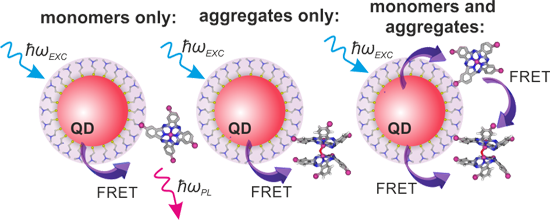
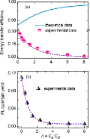
- molecules is applicable. The possible change in QY of the acceptor PL should be also taken into account. For this, we estimate a relative QY of the acceptor PL in complexes with QDs under direct photoexcitation using a comparative method [38][39]: where φ′ is the PL QY of the reference fluorophore, I is
- fluorophore. With this assumptions in place, we estimate the FRET efficiency from one quantum dot to multiple acceptor molecules in the mixture from the ratio between the QY of sensitized () and directly excited () PL of the acceptors bound to donors [38]: The quantities used in Equation 8, directly
- [38][39] using Rhodamine 6G in ethanol (φR = 0.95) [45] as a reference fluorophore. Photosens® has a PL QY of ca. 12% in aqueous solution [41]. The QD samples have a PL QY > 20% in hydrophobic solvents and of about 10% in aqueous solutions. Light with wavelengths of 475 and 640 nm was used for PL



Facile synthesis of water-soluble carbon nano-onions under alkaline conditions
Beilstein J. Nanotechnol. 2016, 7, 758–766, doi:10.3762/bjnano.7.67
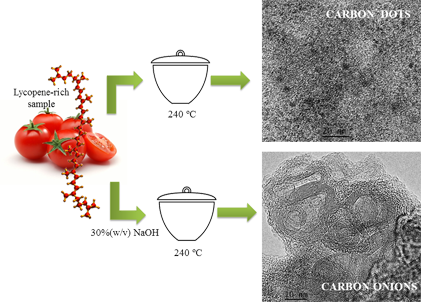
- index, A is the optical density (measured with a UV–vis spectrophotometer, Perkin Elmer, Lambda 900), and G is the gradient of a linear plot of F as a function of A. The subscripts “C” and “st” refer to C-dots (or C-onions) and the reference fluorophore, respectively. Quinine sulphate dissolved in 0.1 M


Early breast cancer screening using iron/iron oxide-based nanoplatforms with sub-femtomolar limits of detection
Beilstein J. Nanotechnol. 2016, 7, 364–373, doi:10.3762/bjnano.7.33
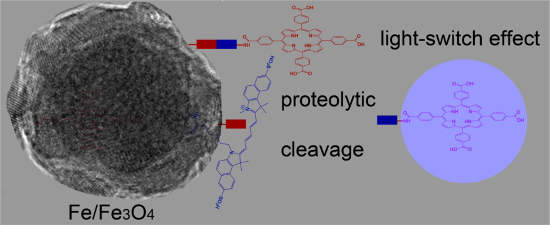
- the consensus sequence, its fluorescence will increase (for most of the nanoplatforms). The nanoplatforms for cancer detection are based on proteolytic cleavage of TCPP from the Fe/Fe3O4-core (Figure 2). Increasing the distance between the TCPP fluorophore and the nanoparticle decreases plasmon
- the nanoplatforms for uPA and MMP 9 detection defy the general paradigm: shorter consensus sequences and sequences permitting higher dynamics of the attached TCPP lead to fluorescence enhancement of the attached fluorophore due to enhanced plasmonic light scattering [24] of the Fe(0) core of the
- effect” upon proteolytic cleavage: the fluorophore is switched on due to the increase in distance between the Fe/Fe3O4 core/shell nanoparticle, leading to decreased Förster resonance energy transfer (FRET) [21][24], k1, and dipole–surface energy transfer (SET) [20][22], k2. Further explanations are


A versatile strategy towards non-covalent functionalization of graphene by surface-confined supramolecular self-assembly of Janus tectons
Beilstein J. Nanotechnol. 2015, 6, 632–639, doi:10.3762/bjnano.6.64
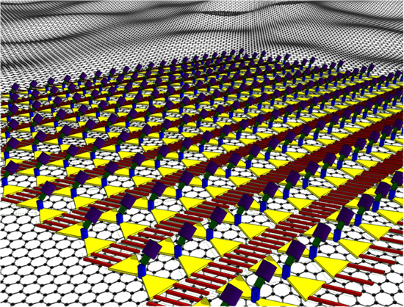
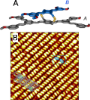
- ]dithiaparacyclophane unit. The lower deck of this two-story linker is end-capped with two molecular clips in order to form the pedestal (A face), while a functional molecule, namely a distyrylbenzene fluorophore (highlighted in blue), forms the upper level (B face). STM studies at the liquid–HOPG interface




Pulmonary surfactant augments cytotoxicity of silica nanoparticles: Studies on an in vitro air–blood barrier model
Beilstein J. Nanotechnol. 2015, 6, 517–528, doi:10.3762/bjnano.6.54
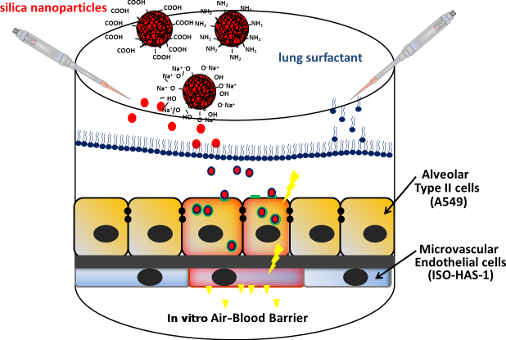
- nanoparticles (aSNP specification: spherical, unporous, ρ = 2 mg/cm3) in aqueous dispersion with a nominal diameter of 70 nm. They are commercially available from micromod Partikeltechnologie GmbH, Rostock, Germany (http://www.micromod.de). The particles are loaded with a fluorophore, namely Rhodamin B (Ex: 569


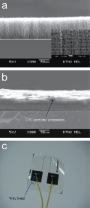
Synergic combination of the sol–gel method with dip coating for plasmonic devices
Beilstein J. Nanotechnol. 2015, 6, 500–507, doi:10.3762/bjnano.6.52
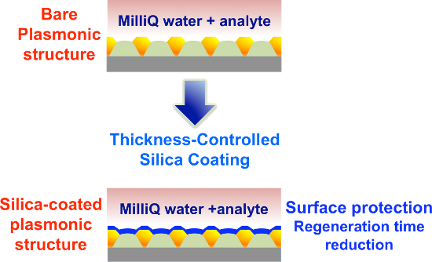
- sol–gel thin film behaved as a host matrix in which suitable vis or NIR fluorophore dopants could be dispersed. This is useful to couple the plasmonic and the emission signals, thus preventing undesirable metal-induced radiative emission quenching [17]. Finally, using organically modified alkoxides


Increasing throughput of AFM-based single cell adhesion measurements through multisubstrate surfaces
Beilstein J. Nanotechnol. 2015, 6, 157–166, doi:10.3762/bjnano.6.15
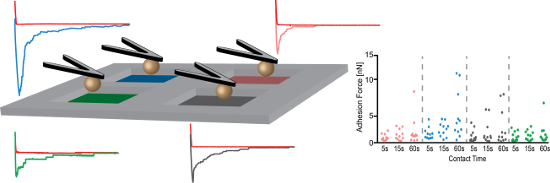
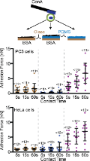
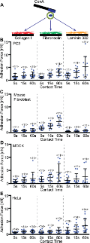
- (Sigma) were dissolved at a concentration of 20 µg/mL in PBS and absorbed as described above. For fluorophore bleaching, the laser power of the 488 or 555 nm laser was set to the maximum intensity. A limited area (20 × 20 µm2) was bleached using a single 156 × 156 pixel scan, before a 50 × 50 µm2 image


Functionalization of α-synuclein fibrils
Beilstein J. Nanotechnol. 2015, 6, 124–133, doi:10.3762/bjnano.6.12
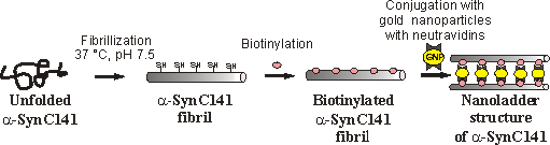
- fluorophore binds to the target and becomes highly fluorescent [42]. Reches and Gazit also demonstrated the chemical and biological decoration of aromatic dipeptide nanotubes with biotin moiety and avidin [43]. Finally, the functionalization of amyloids with enzymes and other tags that are suitable for the


Poly(styrene)/oligo(fluorene)-intercalated fluoromica hybrids: synthesis, characterization and self-assembly
Beilstein J. Nanotechnol. 2014, 5, 2450–2458, doi:10.3762/bjnano.5.254
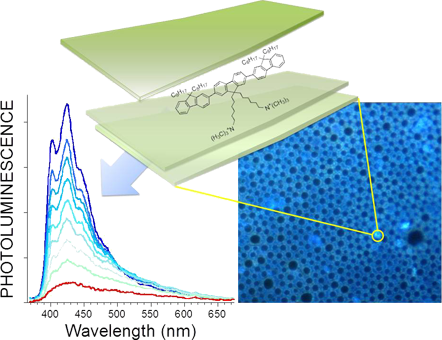
- Statale 14, 34149 Basovizza, Trieste, Italy 10.3762/bjnano.5.254 Abstract We report on the intercalation of a cationic fluorescent oligo(fluorene) in between the 2D interlayer region of a fluoromica type silicate. The formation of intercalated structures with different fluorophore contents is observed in




Nanobioarchitectures based on chlorophyll photopigment, artificial lipid bilayers and carbon nanotubes
Beilstein J. Nanotechnol. 2014, 5, 2316–2325, doi:10.3762/bjnano.5.240
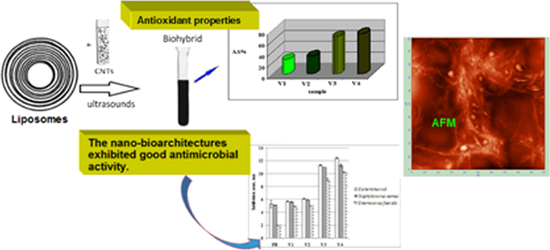
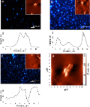
- lipid bilayers (below 41 °C), high values of anisotropy and low emission fluorescence intensities of Chla inserted into lipid membranes can be observed due to the fluorescence quenching of Chla in a more rigid environment. The cholesterol-containing samples exhibited high anisotropy and the fluorophore


Carbon nano-onions (multi-layer fullerenes): chemistry and applications
Beilstein J. Nanotechnol. 2014, 5, 1980–1998, doi:10.3762/bjnano.5.207
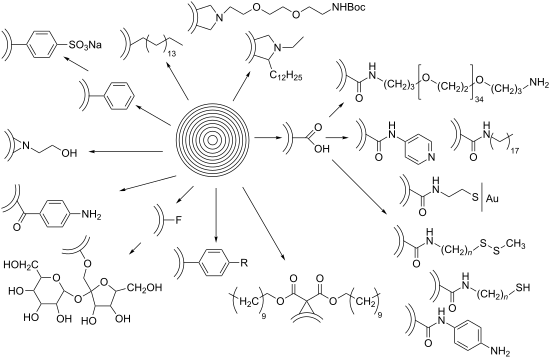
- -borondipyrromethenes (azaBODIPYs) were attached to the CNOs through an amidation reaction [40]. In another very recent study, we attached a meso-phenol-substituted borondipyrromethene (BODIPY) fluorophore on the same benzoic acid functionalized CNO nanomaterial through an esterification reaction [41]. These
- evidenced by a reduced secretion of the inflammatory cytokine IL-1β, and a pronounced decrease in the recruitment of neutrophils and monocytes following injection into mice. Subsequently, in two recent studies, we investigated the effects of two different, fluorophore functionalized CNOs on HeLa Kyoto [40
- with Zn-tetraphenylporphyrin (ZnTPP) [32]. Illustration of polymerization reactions on CNOs following initial [2 + 1] cycloaddition reaction of nitrenes [33]. “Tour” functionalization of CNOs and subsequent “click”-addition of a ZnTPP-derivative [37]. Fluorophore–CNO conjugates derived from benzoic


Carbon-based smart nanomaterials in biomedicine and neuroengineering
Beilstein J. Nanotechnol. 2014, 5, 1849–1863, doi:10.3762/bjnano.5.196
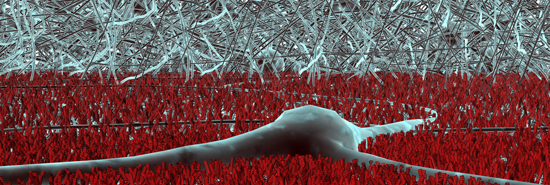
- the uptake of fluorophore-conjugated NDs by neuroblastoma cell line and observed that the fluorophore-conjugation was not affected by the different pH conditions encountered during the uptake process. In addition, NDs were described as localising mainly in endosomes, lysosome and in some cases, the


Ionic liquid-assisted formation of cellulose/calcium phosphate hybrid materials
Beilstein J. Nanotechnol. 2014, 5, 1553–1568, doi:10.3762/bjnano.5.167
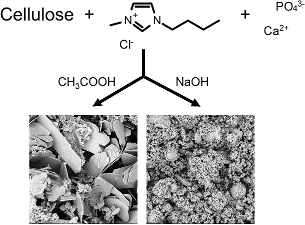
- towards the triggered nucleation of calcium phosphate on chitosan cast films [19]. Mineralization is induced by photoexcitation of fluorescein molecules grafted to the chitosan films. The authors claim that the formation of local positive charges by electron transfer from the fluorophore to reactive


In vitro interaction of colloidal nanoparticles with mammalian cells: What have we learned thus far?
Beilstein J. Nanotechnol. 2014, 5, 1477–1490, doi:10.3762/bjnano.5.161
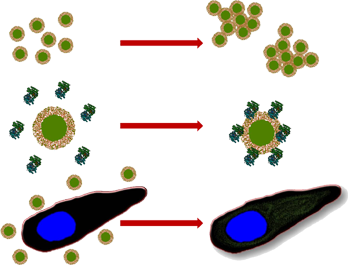
- internalized by an A549 lung cancer cell into an intracellular vesicle (here the lysosome [165]) and is thus clearly localized. The microparticle is filled with a pH-sensitive fluorophore (SNARF, from Invitrogen, now LifeTech) linked to dextran and the acidic pH of the lysosome is reported by the yellow
- fluorescence. b) After release of the pH-sensitive fluorophore linked to dextran to the cytosol (by photothermal heating), the fluorophore–dextran conjugates are freely dispersed, without any visible granular structure. Due to the neutral pH in the cytosol the fluorescence of the fluorophore–dextran conjugates


An insight into the mechanism of charge-transfer of hybrid polymer:ternary/quaternary chalcopyrite colloidal nanocrystals
Beilstein J. Nanotechnol. 2014, 5, 1235–1244, doi:10.3762/bjnano.5.137
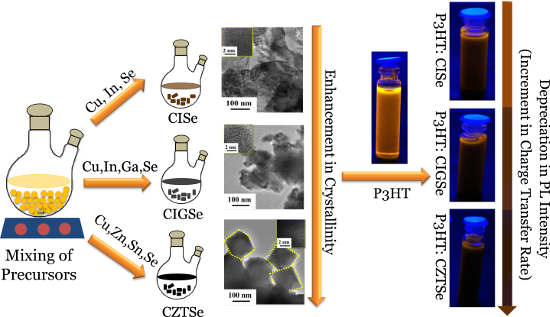
- ; ΔPL ≈ PLinitial−PLfinal) was 0.35, 0.48 and 0.54 for P3HT:CISe, P3HT:CIGSe and P3HT:CZTSe, respectively. The mechanism of quenching in polymer based nanocomposites is explained by the Stern–Volmer equation, which is related to the simplest case of collisional quenching of the fluorophore. The Stern


Antimicrobial nanospheres thin coatings prepared by advanced pulsed laser technique
Beilstein J. Nanotechnol. 2014, 5, 872–880, doi:10.3762/bjnano.5.99
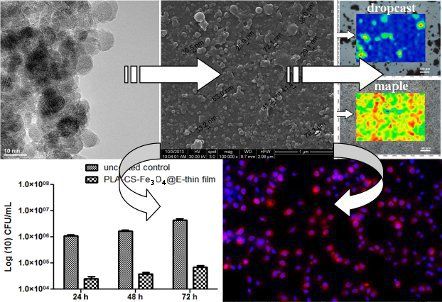
- Technology, Germany). RED CMTPX fluorophore (Life Technologies, Invitrogen, USA) is a cell tracker for the long-term tracing of living cells. The RED CMTPX dye was added to the culture medium at a final concentration of 5 µM, incubated for 30 min so that the dye is able to penetrate the cells. The cells were
- coatings containing spheres with diameters within the range of 180–1,000 nm [34][38]. Cytotoxicity assays revealed that the prepared nano-coatings have a great biocompatibility, and support the growth of endothelial cell cultures. The cell tracker RED CMTPX fluorophore showed that the endothelial cells are