


Search results
Search for "friction" in Full Text gives 203 result(s) in Beilstein Journal of Nanotechnology. Showing first 200.
Heat-induced morphological changes in silver nanowires deposited on a patterned silicon substrate
Beilstein J. Nanotechnol. 2024, 15, 435–446, doi:10.3762/bjnano.15.39
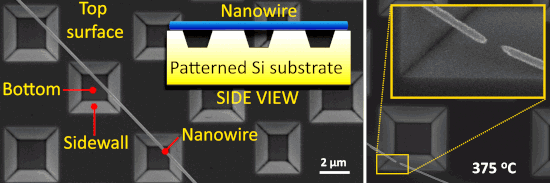
- exceed the ultimate strength of Ag NWs. Based on these facts, we expect that the thermal expansion of Ag NWs will compete with friction forces between the NWs and Si substrate, causing significant mechanical stresses inside the NWs, especially at the interface between the two materials. This may serve as


Insect attachment on waxy plant surfaces: the effect of pad contamination by different waxes
Beilstein J. Nanotechnol. 2024, 15, 385–395, doi:10.3762/bjnano.15.35
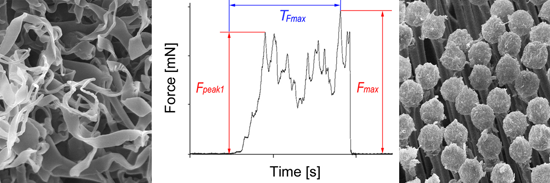
- substrate pulling the hair for ca. 30 s, while the friction (traction) force thus produced by the moving insect was registered. Since the insects walked parallel to the measurement axis of the sensor, the recorded force corresponded to the total traction force. Force–time curves obtained were used to




Determination of the radii of coated and uncoated silicon AFM sharp tips using a height calibration standard grating and a nonlinear regression function
Beilstein J. Nanotechnol. 2023, 14, 1200–1207, doi:10.3762/bjnano.14.99
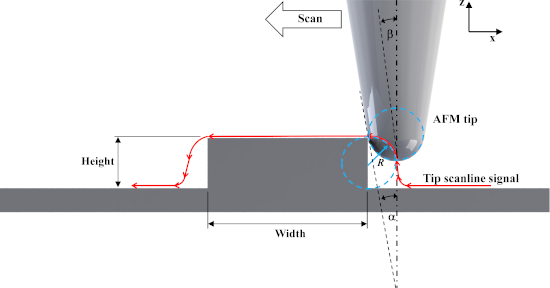
- nanostructured materials, for example, graphene, carbon nanotubes, nanoscale semiconductors, biomaterials, and molecules. Mechanical properties such as surface stiffness, adhesion, friction, electrostatics, and electrowetting can be measured [1][2][3][4]. In contact mode scanning, the contact area between the
- force curves with contact mechanics models and extracting the adhesion and friction forces [5][6]. If we do not know the exact value of the tip radius, the sample image with the observation of scanning frequency and the calculation results are not accurate. This indicates that the measurement results


Experimental investigation of usage of POE lubricants with Al2O3, graphene or CNT nanoparticles in a refrigeration compressor
Beilstein J. Nanotechnol. 2023, 14, 1041–1058, doi:10.3762/bjnano.14.86
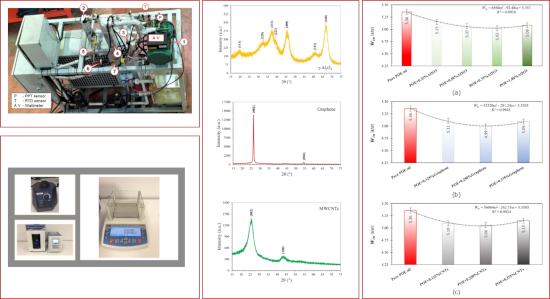
- -containing case. Results of viscosity measurement The literature indicates that the use of nanolubricants reduces power consumption and the coefficient of friction compared to the use of pure lubricant [43]. However, the addition of nanoparticles to the lubricant above the optimum mass fraction had a





A wearable nanoscale heart sound sensor based on P(VDF-TrFE)/ZnO/GR and its application in cardiac disease detection
Beilstein J. Nanotechnol. 2023, 14, 819–833, doi:10.3762/bjnano.14.67
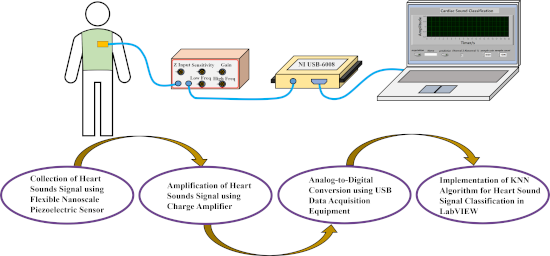
- advancement in wearable electronic devices within the healthcare field, leading to several noteworthy breakthroughs. For instance, D. Wan et al. [11] presented a groundbreaking development in the form of a flexible wearable friction patch. This innovative patch consists of a dual-layer PDMS membrane infused
- with hydrogel. It harnesses the energy generated from bodily movements and utilizes it to create an electric field between the friction patch and the surrounding body tissues, thereby promoting the expedited healing of wounds. Poly(vinylidene fluoride–trifluoroethylene) (P(VDF-TrFE)) is a piezoelectric


Current-induced mechanical torque in chiral molecular rotors
Beilstein J. Nanotechnol. 2023, 14, 711–721, doi:10.3762/bjnano.14.57
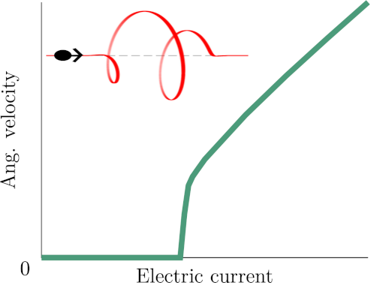
- different values of ρF and μ in Figure 7. The data collapses on a single curve, which saturates in the large impact velocity limit. Discussion First, we discuss some straightforward extensions of our model that account for (1) friction and (2) temperature effects. Then, we discuss the prospective
- applications as a switch and for information storage. The role of quantum effects is discussed at the end. Our model can be straightforwardly extended to include a friction term acting on the coordinate ϑ. Such friction can originate at the bearings of the rotor (at the entrance and exit of the path in our
- case). The projectile also experiences friction. Due to conservation laws, the loss of the angular momentum of the projectile is compensated by an increase of . Therefore, this friction is included in our formulation. Our results are valid when thermal fluctuations are small, that is, kBT ≪ ΔV. To




![[Graphic 29]](/bjnano/content/inline/2190-4286-14-57-i54.svg?max-width=637&scale=1.18182)


Suspension feeding in Copepoda (Crustacea) – a numerical model of setae acting in concert
Beilstein J. Nanotechnol. 2023, 14, 603–615, doi:10.3762/bjnano.14.50
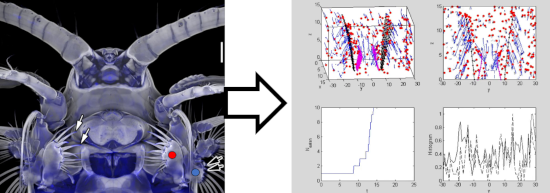
- liquid by a “mutual friction” between the particles and setae, which aims to reduce the difference between the particle and setae velocity at relatively short distances according to simple factors in the dynamic equations of motion. The particles move in an “empty space”, but interact with the flows
- potential (exponentially depending on the distance) interaction (interaction caused by a mutual friction, which tends to reduce a difference between velocities). The appropriate force from the setae acting on every particle is represented as a combination of the following velocity- and distance-dependent


Antimicrobial and mechanical properties of functionalized textile by nanoarchitectured photoinduced Ag@polymer coating
Beilstein J. Nanotechnol. 2023, 14, 95–109, doi:10.3762/bjnano.14.11
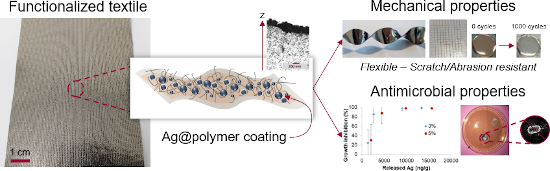
- component are also presented (Figure 7b). Before abrasion, the Ag@PEG600DA coating is highly reflective, with a total reflectance value of 97% at 700 nm, of which 52% comes from the diffuse component. The applied friction seems to polish the surface, increasing its mirror-like aspect. After 500 cycles, the
- total reflectance increased significantly between 400 and 580 nm, while dropping slightly (10%) in the 580–1000 nm range. The diffuse reflectance effectively decreased from 52 to 20% at 700 nm. Indeed, friction causes a localized rise in temperature between particles, which promotes a reduction in
- surface roughness, as can be seen in the SEM images (Figure 7c). Consequently, the diffuse reflectivity drops in favor of the specular reflectance. The particles are no longer simply juxtaposed but form a continuous silver layer, especially after 1000 friction cycles. The characteristic silver plasmon



Dry under water: air retaining properties of large-scale elastomer foils covered with mushroom-shaped surface microstructures
Beilstein J. Nanotechnol. 2022, 13, 1370–1379, doi:10.3762/bjnano.13.113
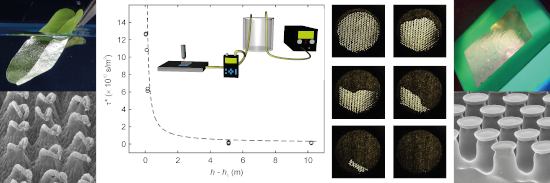
- between water and a solid surface might serve as friction reduction agents, fouling protectors, corrosion protectors or for other applications, such as sensors [11][12][13][14]. Biological examples for such air retaining surfaces with most stable and persistent air layers were found on the floating ferns
- function for biomimetic air retaining surfaces is drag reduction. If an air layer is mounted between a solid surface and water flowing over this surface, the air layer serves as slip agent [26][27][28]. Such a drag reducing coverage allows significant friction reduction (up to 30%) in applications, where


Bending and punching characteristics of aluminum sheets using the quasi-continuum method
Beilstein J. Nanotechnol. 2022, 13, 1303–1315, doi:10.3762/bjnano.13.108
- strength at a specific structural orientation [51]. Besides, Tran et al. studied the friction and scratch characteristics of pure aluminum by the QC method. The bump width to the bump pitch (W/P) value, scratch depth, surface roughness, and indenter radius were set as variables in order to explore the
- friction behaviors of different models [52]. Moreover, the QC method based on the embedded-atom method (EAM) potential was adopted to observe the fatigue crack growth and expansion characteristics of single-crystal metals under cyclic loading processes. The results showed that after compressive or shear
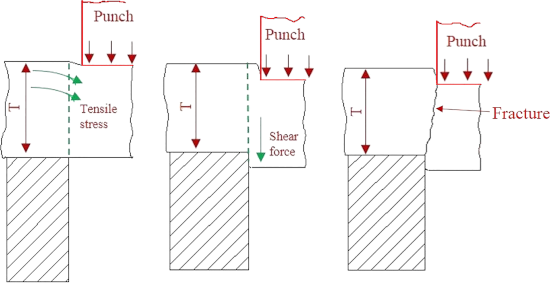
- of the coupled regions [54]. Results and Discussion In this section, the QC method was used to explore the effects of different crystal orientations, workpiece thickness, clearance, and taper angle on the nano-punching process. The friction characteristic of interface and residual flash phenomena





Interaction between honeybee mandibles and propolis
Beilstein J. Nanotechnol. 2022, 13, 958–974, doi:10.3762/bjnano.13.84
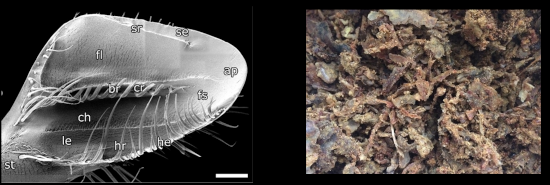
- morphology of the mandibles, as all examined mandibles had this characteristic. Anisotropic structures are also present on other animals such as snakes and were proposed to support anisotropic properties, for example, anisotropic friction [34]. The scales on bee mandibles are mostly oriented towards the apex


Micro-structures, nanomechanical properties and flight performance of three beetles with different folding ratios
Beilstein J. Nanotechnol. 2022, 13, 845–856, doi:10.3762/bjnano.13.75
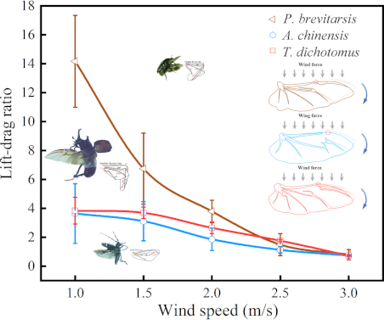
- induced drag Dind, profile drag Dpro, and parasite drag Dpar. Dind represents the cost of generating lift, Dpro is the drag of the wings and Dpar is due to skin friction and the drag from the body form [45]. It was found that the wingspan b and Sw of the hind wings decrease simultaneously when passive




Temperature and chemical effects on the interfacial energy between a Ga–In–Sn eutectic liquid alloy and nanoscopic asperities
Beilstein J. Nanotechnol. 2022, 13, 817–827, doi:10.3762/bjnano.13.72
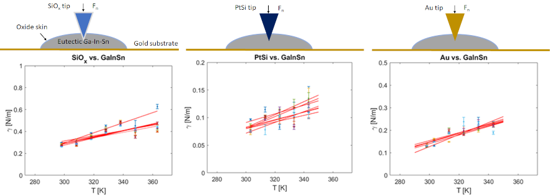
- and corresponds to friction. In our case, we attribute the observed hysteresis of the lateral force to the resistance to pull and drag a meniscus at the tip–metallic liquid interface. In principle, this resistance corresponds to the interfacial tension of the tip and metallic liquid. The occurrence of



Hierachical epicuticular wax coverage on leaves of Deschampsia antarctica as a possible adaptation to severe environmental conditions
Beilstein J. Nanotechnol. 2022, 13, 807–816, doi:10.3762/bjnano.13.71
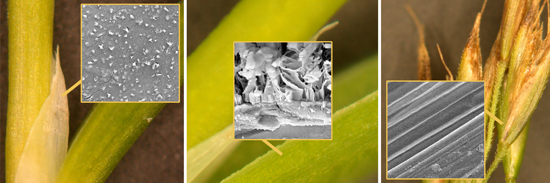
- /friction on the nanoscale rough surface is rather low [46][47]. Conclusion A cryo-SEM examination of the vegetative (leaf blade and ligule) and generative (pedicel and outer glume) organs in D. antarctica revealed a prominent epicuticular wax coverage on surfaces of both vegetative organs studied. Whereas




Fabrication and testing of polymer microneedles for transdermal drug delivery
Beilstein J. Nanotechnol. 2022, 13, 629–640, doi:10.3762/bjnano.13.55
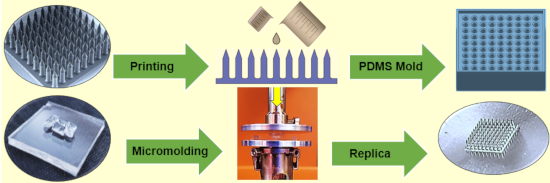
- algorithm was used to create fine elements at the tip of the MNs. The coefficient of friction between the contact surfaces was set to 0.42 [29]. Upon MN penetration, with a constant impact speed of 4.5 m/s, the force-displacement data were recorded to estimate the insertion force. To enable the skin


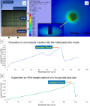

Electrostatic pull-in application in flexible devices: A review
Beilstein J. Nanotechnol. 2022, 13, 390–403, doi:10.3762/bjnano.13.32
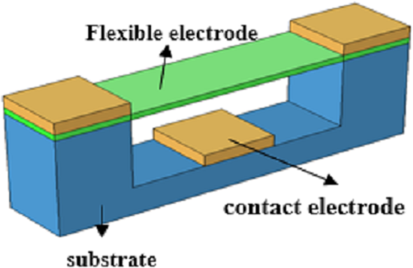
- microscale energy system. Triboelectric power generation: Two materials with different work functions will gain or lose electrons when they are in contact with each other, resulting in the triboelectric effect [90]. When the switch is closed, the electrode contact friction causes the surfaces to carry
- charges, forming a dielectric charging effect. Molinero et al. [52][53] characterized the dielectric charging when the switch electrodes were contacted and proved that the surface dielectric charging caused by friction would lead to a shift of the switch voltage and shorten the life cycles of the switch


Micro- and nanotechnology in biomedical engineering for cartilage tissue regeneration in osteoarthritis
Beilstein J. Nanotechnol. 2022, 13, 363–389, doi:10.3762/bjnano.13.31
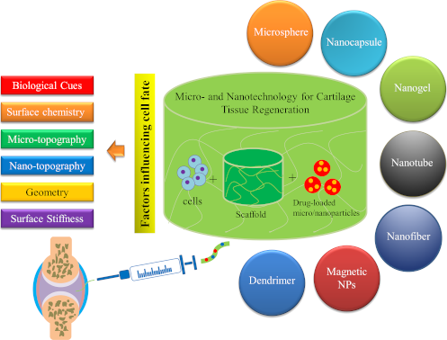
- -friction, wear resistant surface for joint motion [6][7]. It is an avascular, aneural, alymphatic, and hypocellular tissue consisting of a single cell type (chondrocyte) dispersed in a dense matrix [6]. Chondrocytes, which constitute only about 5% of the wet weight of the articular cartilage, are


The effect of metal surface nanomorphology on the output performance of a TENG
Beilstein J. Nanotechnol. 2022, 13, 298–312, doi:10.3762/bjnano.13.25
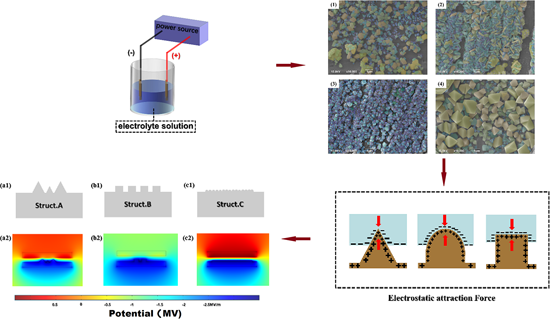
- principles of TENGs converting mechanical energy into electrical energy are the friction electrification effect and the electrostatic induction principle. When two materials with different electronegativity are physically contacted, positive and negative electrostatic charges are generated on each material
- 9). Generally, due to the increase of contact area and surface charge density a higher friction electrical output is produced. Large copper nanoparticles have full contact with the polymer, but small copper nanoparticles have insufficient contact with the polymer or even no contact at all. Therefore
- , the improvement of friction electrical output performance is not obvious. Experiments 4, 5, and 15, which are shown in Figure 5 and Figure 6, respectively, yielded pyramidal copper nanoparticles with sharp surfaces. Among them, experiments 4 and 5 improved the output performance only by 18% to 19




Relationship between corrosion and nanoscale friction on a metallic glass
Beilstein J. Nanotechnol. 2022, 13, 236–244, doi:10.3762/bjnano.13.18
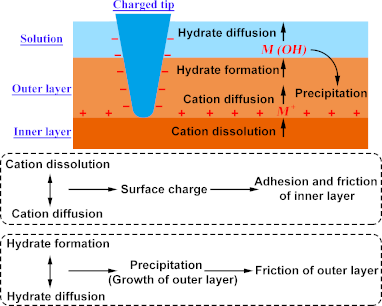
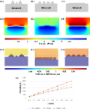
- are promising materials for microdevices, although corrosion and friction limit their effectiveness and durability. We investigated nanoscale friction on a metallic glass in corrosive solutions after different periods of immersion time using atomic force microscopy to elucidate the influence of
- corrosion on nanoscale friction. The evolution of friction upon repeated scanning cycles on the corroded surfaces reveals a bilayer surface oxide film, of which the outer layer is removed by the scanning tip. The measurement of friction and adhesion allows one to compare the physicochemical processes of
- surface dissolution at the interface of the two layers. The findings contribute to the understanding of mechanical contacts with metallic glasses under corrosive conditions by exploring the interrelation of microscopic corrosion mechanisms and nanoscale friction. Keywords: atomic force microscopy (AFM


Nanoscale friction and wear of a polymer coated with graphene
Beilstein J. Nanotechnol. 2022, 13, 63–73, doi:10.3762/bjnano.13.4
- Robin Vacher Astrid S. de Wijn Corrosion and tribology, SINTEF, Richard Birkelands vei 2B, 7034 Trondheim, Norway Institutt for maskinteknikk og produksjon, NTNU, Richard Birkelands vei 2B, 7034 Trondheim, Norway 10.3762/bjnano.13.4 Abstract Friction and wear of polymers at the nanoscale is a
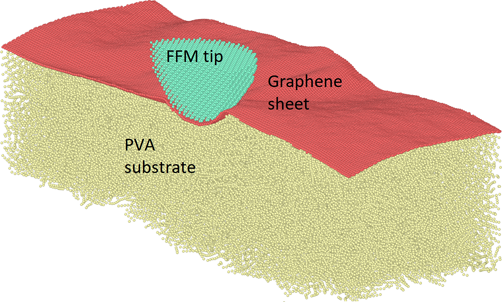
- challenging problem due to the complex viscoelastic properties and structure. Using molecular dynamics simulations, we investigate how a graphene sheet on top of the semicrystalline polymer polyvinyl alcohol affects the friction and wear. Our setup is meant to resemble an AFM experiment with a silicon tip. We
- have used two different graphene sheets, namely an unstrained, flat sheet, and one that has been crumpled before being deposited on the polymer. The graphene protects the top layer of the polymer from wear and reduces the friction. The unstrained flat graphene is stiffer, and we find that it constrains


Effect of lubricants on the rotational transmission between solid-state gears
Beilstein J. Nanotechnol. 2022, 13, 54–62, doi:10.3762/bjnano.13.3
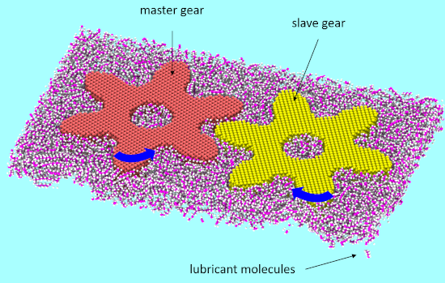
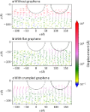
- Huang-Hsiang Lin Jonathan Heinze Alexander Croy Rafael Gutierrez Gianaurelio Cuniberti Institute for Materials Science and Max Bergmann Center of Biomaterials, TU Dresden, Dresden, Germany 10.3762/bjnano.13.3 Abstract Lubricants are widely used in macroscopic mechanical systems to reduce friction
- formation process between gears. Keywords: lubricants; MD simulation; rotational transmission; solid-state gears; Introduction In mechanical systems, lubrication is the most common way to reduce friction and wear [1][2][3][4]. The idea of lubricants is preventing direct contact between surfaces to avoid
- dry friction from asperities and wear. Hence, the desirable lubrication regime would be hydrodynamic or elastohydrodynamic lubrication in the Stribeck curve [5]. The former corresponds to the situation that surfaces are completely separated by a fluid. The latter is similar but surface deformations


Topographic signatures and manipulations of Fe atoms, CO molecules and NaCl islands on superconducting Pb(111)
Beilstein J. Nanotechnol. 2022, 13, 1–9, doi:10.3762/bjnano.13.1
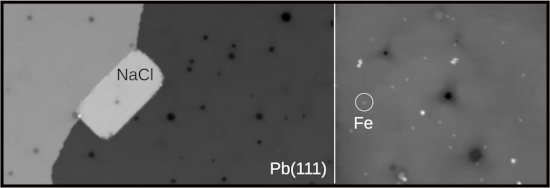
- features resemble typical patterns observed in friction force microscopy (FFM) [28][38] or scanning tunneling hydrogen microscopy (SThM) [70][71], since the trapped Fe atom senses the surface potential in analogy to the probing tip of FFM. For clarity, we overlay the Pb(111) surface lattice on top of the


Alteration of nanomechanical properties of pancreatic cancer cells through anticancer drug treatment revealed by atomic force microscopy
Beilstein J. Nanotechnol. 2021, 12, 1372–1379, doi:10.3762/bjnano.12.101
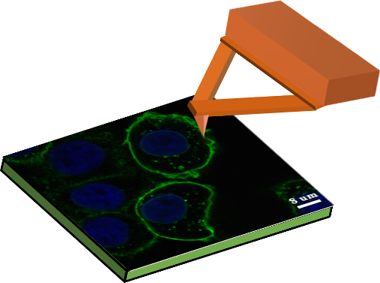
- smaller than that of the three PCCs. This could be caused by the difference of the internal friction and/or vicious damping [26][27] between the normal and the cancer cells. The relative Young’s modulus distributions of different kinds of cells, according to the nanomechanical mapping (Figure 3a–d) and


Polarity in cuticular ridge development and insect attachment on leaf surfaces of Schismatoglottis calyptrata (Araceae)
Beilstein J. Nanotechnol. 2021, 12, 1326–1338, doi:10.3762/bjnano.12.98
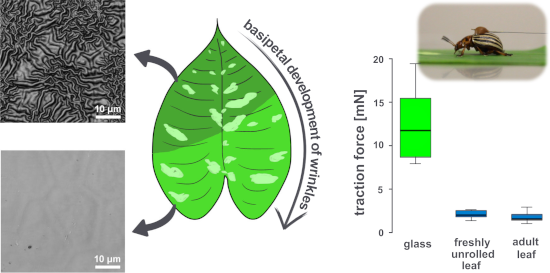
- different. Such unevenness in the exposure of the leaf to the external environment might result in the inclined ridge progression on the S. calyptrata leaves. Also, the presence of ridges on the leaf surfaces might reduce friction, thereby, avoiding damage between the delicate rolled leaf layers during




A review on slip boundary conditions at the nanoscale: recent development and applications
Beilstein J. Nanotechnol. 2021, 12, 1237–1251, doi:10.3762/bjnano.12.91
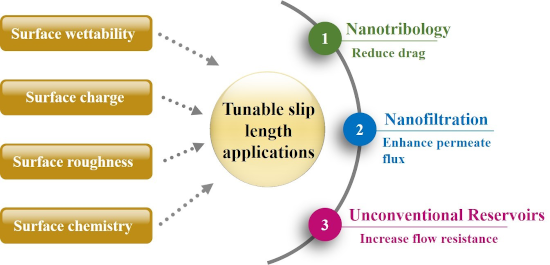
- shear viscosity of the liquid, equal to the friction stress suffered by the liquid from the wall, which is expressed as σ = λνs, where λ represents the interfacial friction coefficient [46]. Therefore, the slip length can be expressed as , which indicates that the slip length is reduced with the
- increase in the friction between liquid and solid surfaces. Since the interfacial friction coefficient can be expressed in terms of the Green–Kubo expression, the microscopic expression of slip length can be written as follows [1][46]: where S is the area of the solid wall and Fl is the component of the
- interaction energy, and water slippage (or friction coefficient) may also not have a one-to-one correspondence between each other [67][68][69]. Contrary to the conventional wisdom, where slip boundary conditions are not valied for water slippage on hydrophilic surfaces, some simulation observations show that





