Search results
Search for "gas sensors" in Full Text gives 108 result(s) in Beilstein Journal of Nanotechnology.
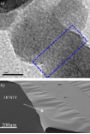
Oxidation of Au/Ag films by oxygen plasma: phase separation and generation of nanoporosity
Beilstein J. Nanotechnol. 2020, 11, 1608–1614, doi:10.3762/bjnano.11.143
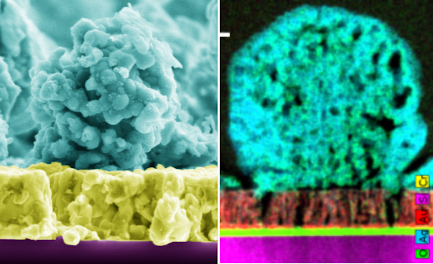
- oxygen, solid-state diffusion in metal alloys as well as the Kirkendall effect. The nanoporous microspheres generated by the silver oxidation within the Au/Ag alloy film might have potential applications to the field of gas sensors and catalysis since those require nanoporous semiconductor materials with


Walking energy harvesting and self-powered tracking system based on triboelectric nanogenerators
Beilstein J. Nanotechnol. 2020, 11, 1590–1595, doi:10.3762/bjnano.11.141
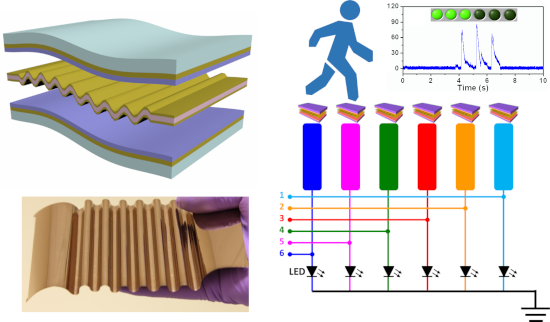
- excellent performance, which can be used as motion [35][36][37] and temperature sensors [38][39], UV detectors [40], tactile sensors [41][42][43], sensors for healthcare [44][45][46][47], humidity sensors, and gas sensors [48][49][50][51], for example. In this work, a flexible undulated electrode-based





Structural and electronic properties of SnO2 doped with non-metal elements
Beilstein J. Nanotechnol. 2020, 11, 1321–1328, doi:10.3762/bjnano.11.116
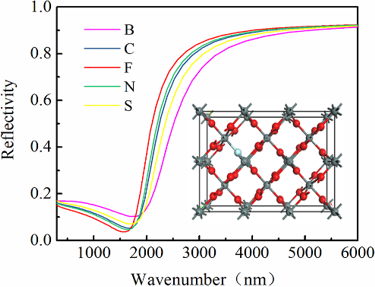
- research works has been done examining different doping elements. Doped tin oxide thin film have been widely used in the fields of thin film solar cell electrodes, electronic display devices, and gas sensors. Also doped SnO2 been used for energy-saving low-emissivity glass coatings due to low resistivity



Gas-sensing features of nanostructured tellurium thin films
Beilstein J. Nanotechnol. 2020, 11, 1010–1018, doi:10.3762/bjnano.11.85
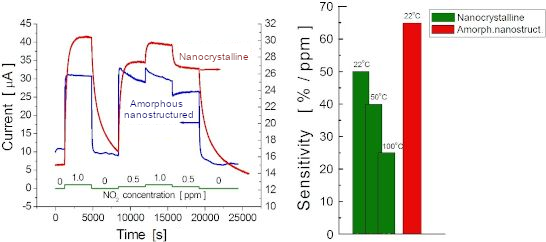
- nanotube-based sensors showed similar (or sometimes lower) numbers regarding sensitivity and response/recovery times in comparison to Te single-crystalline microtube-based gas sensors [7]. An increase in the gas-sensing performance was achieved by growing single-crystal Te-based nanotubes and nanowires via
- hydrothermal recrystallization [23]. The response time range of NH3 gas sensors based on such nanocomponents was 5–18 s but the recovery time ranged between 170–720 s. From comparison with state-of-the-art devices, it can be observed that the physically nanostructured Te thin films exhibit great potential for
- applications in development in advanced gas sensors and, so far, are the only Te-based nanostructured sensors tested with this purpose. Besides, it can also be observed that nanostructuring is mostly performed via phase transformations, such as hydrothermal recrystallization and growth of Te nanocrystals


Transition from freestanding SnO2 nanowires to laterally aligned nanowires with a simulation-based experimental design
Beilstein J. Nanotechnol. 2020, 11, 843–853, doi:10.3762/bjnano.11.69

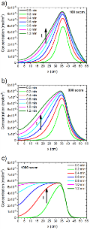
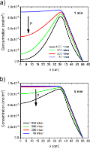
- result, Choi et al. were able to measure an improved sensitivity for gas sensors made of tin oxide nanowires (SnO2 NWs) in comparison with powder-based SnO2 thin films [9]. For the use of NWs in electronic and sensor devices, freestanding NWs often have to be scratched off of the growth substrate




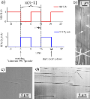

Exfoliation in a low boiling point solvent and electrochemical applications of MoO3
Beilstein J. Nanotechnol. 2020, 11, 662–670, doi:10.3762/bjnano.11.52

- layered materials, molybdenum oxide (MoO3) has gained special attention because of its numerous applications in electronics, catalysis, electrochemistry, solar cells and gas sensors [6]. Monolayered and few-layered MoO3 has been reported to have better properties than the bulk material [7]. Thus, it is
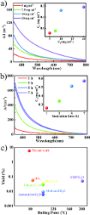



Synthesis and acetone sensing properties of ZnFe2O4/rGO gas sensors
Beilstein J. Nanotechnol. 2019, 10, 2516–2526, doi:10.3762/bjnano.10.242
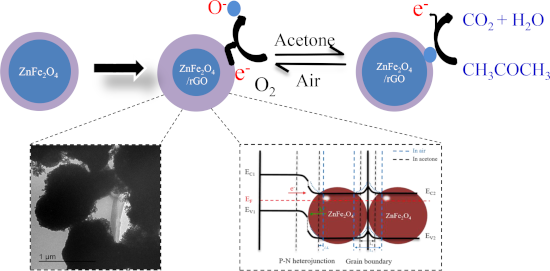
- , it may be possible to diagnose diabetes using a nondestructive testing technology based on sensing acetone. Thus, it is necessary to develop novel micro/nanomaterials, which can be applied as high-performance gas sensors to detect acetone at low concentration or to monitor variations of its
- concentration. Due to their excellent properties and cost efficiency, gas sensors based on metal oxide semiconductors, such as ZnO [5], SnO2 [6], WO3 [7], TiO2 [8], Er-SnO2 [9], Au-In2O3 [10], GO-WO3 [11] and Ni-SnO2/G [12] have been widely studied until now. However, their sensing properties regarding low
- effects in the heterostructures. This will enable corresponding gas sensors to accurately detect and monitor acetone vapor in real-time. In this view, compounding with certain organic or inorganic material could improve the gas sensing properties of ZnFe2O4 [18][19]. As a novel 2D carbon-based material


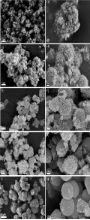


Multiwalled carbon nanotube based aromatic volatile organic compound sensor: sensitivity enhancement through 1-hexadecanethiol functionalisation
Beilstein J. Nanotechnol. 2019, 10, 2364–2373, doi:10.3762/bjnano.10.227
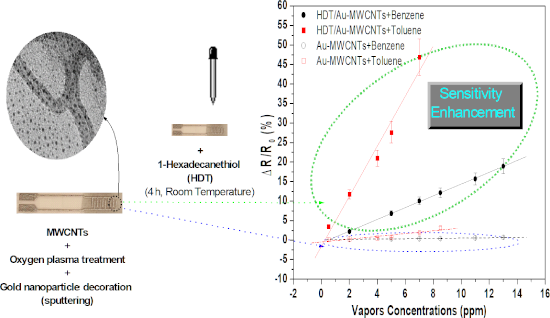
- prevention of indoor exposure to harmful aromatic VOCs, a new application has arisen recently for the development of such gas sensors. In fact, recent scientific evidence has shown a correlation between the presence of some VOCs in exhaled human breath and the presence of disease. For instance, the presence
- correlated to the active sensing film/material used. Various nanomaterial-based gas sensors have been investigated to monitor the presence of aromatic VOCs. The ones mainly studied are based on metal oxides, carbon nanotubes, graphene and hybrid materials [5][6]. Carbon nanotube based gas sensors (e.g
- they are strong covalent (chemisorption) or weak (physisorption), highly impact the sensor performance, that is, the sensitivity, response and recovery time, and detection range. Unlike metal-oxide-based gas sensors, CNT-based sensors operate at room temperature (low activation energy) and can





Review of advanced sensor devices employing nanoarchitectonics concepts
Beilstein J. Nanotechnol. 2019, 10, 2014–2030, doi:10.3762/bjnano.10.198

- that the delicate modulation of nanoarchitectures can improve chemical sensor capabilities. As an example of nanoarchitectonics effects between multiple components in sensing materials, Chen, Shi, and co-workers demonstrated highly sensitive resistance-based NOx gas sensors incorporating a dispersed





Kelvin probe force microscopy work function characterization of transition metal oxide crystals under ongoing reduction and oxidation
Beilstein J. Nanotechnol. 2019, 10, 1596–1607, doi:10.3762/bjnano.10.155
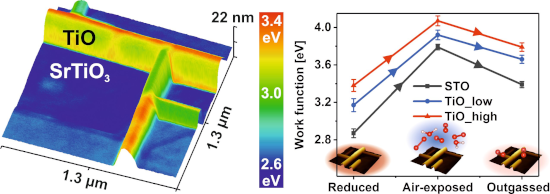
- abundant adsorbates, also mimicking the typical operating temperatures of metal oxide gas sensors [51]. Numerical calculations suggest that H2O and CO2 species present in air saturate almost all free adsorption sites on TiO2-terminated SrTiO3(100) [52]. The low Redhead desorption temperature of H2O (CO2


High-temperature resistive gas sensors based on ZnO/SiC nanocomposites
Beilstein J. Nanotechnol. 2019, 10, 1537–1547, doi:10.3762/bjnano.10.151
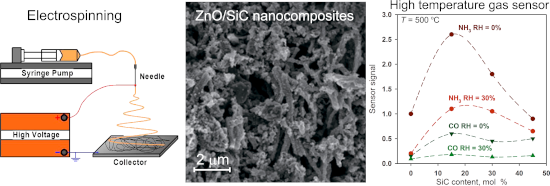
- high temperatures in the range of 300–800 °C. The development of high-temperature gas sensors requires the creation of new materials that are stable under these conditions. The stability of nanostructured semiconductor oxides at high temperature can be enhanced by creating composites with highly
- –800 °C. The composition of the main components of exhaust gas includes CO2, CO, SO2, H2S, NOx, CnH2n+2, and NH3. The ratio of these components depends primarily on the technology features and fuel type. High-temperature gas sensors are needed for local monitoring of pollution emissions, as well as for
- monitoring the complete combustion of fuel and controlling medium-temperature chemical and metallurgical processes [3][4][5]. The development of high-temperature gas sensors requires the creation of new materials that are stable at 300–600 °C, high humidity, and lack of oxygen. Nanostructured semiconductor



Selective gas detection using Mn3O4/WO3 composites as a sensing layer
Beilstein J. Nanotechnol. 2019, 10, 1423–1433, doi:10.3762/bjnano.10.140
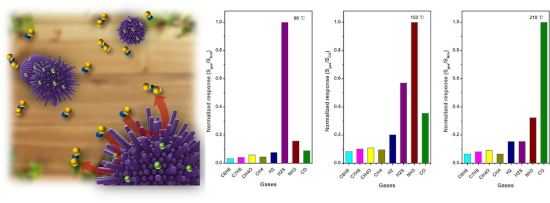
- . Gas sensing through resistance change caused by the oxidation of combustible gases on the surface is one of the major applications of WO3. However, the response mechanism of WO3 makes selective gas detection difficult. For WO3-based gas sensors, the working temperature is a key factor that can
- to enhance the selectivity of WO3-based gas sensors. Previous studies found that the gas sensing response of pure phase WO3 is usually low and improving this response for a particular gas could simultaneously enhance their selectivity [7][8][9]. Kabcum et al. developed a sensor based on PdO
- -nanoparticle-decorated WO3 nanorods, where 1 wt % Pd-WO3 showed excellent selectivity to H2 (>1000 times) over other gases and WO3 shows almost no selectivity [10]. Choi et al. fabricated gas sensors based on pristine WO3 nanorods and Cr2O3-functionalized WO3 nanorods. The gas sensing results showed that the


Gas sensing properties of individual SnO2 nanowires and SnO2 sol–gel nanocomposites
Beilstein J. Nanotechnol. 2019, 10, 1380–1390, doi:10.3762/bjnano.10.136
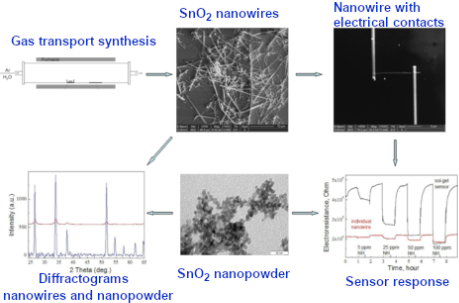
- Besòs, Catalonia, Barcelona, 08019, Spain 10.3762/bjnano.10.136 Abstract This work is an investigation of the properties of semiconductor materials based on metal oxides, their catalytic properties, and their application as gas sensors, which were shown to exhibit high sensitivity, stability, and
- sensor response due to the unlikelihood of sample recrystallization. The results from the ammonia detection experiments showed that the ratio of the sensor response to the surface area exhibits similar values for both the individual nanowire and nanopowders-based sensor materials. Keywords: gas sensors
- surface-to-volume ratio of gas sensing materials an important parameter in determining their gas sensitivity. Traditionally, quasi-0-dimensional (i.e., spherical) nano-objects have been used in order to create highly porous materials. In gas sensors, agglomerates of nanoparticles with a high specific area




Imaging the surface potential at the steps on the rutile TiO2(110) surface by Kelvin probe force microscopy
Beilstein J. Nanotechnol. 2019, 10, 1228–1236, doi:10.3762/bjnano.10.122
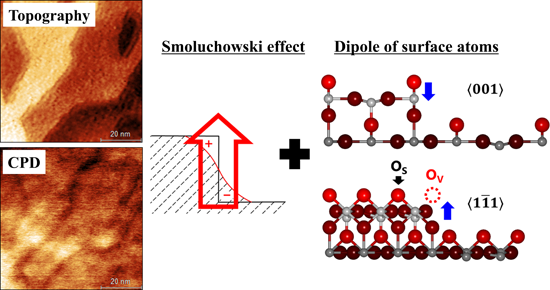
- steps in the catalytic reaction. Keywords: catalyst; Kelvin probe force microscopy; Smoluchowski effect; step; titanium dioxide; Introduction Titanium dioxide (TiO2) has attracted considerable interest for its promising applications as a photocatalyst and as catalyst support, as well as in gas sensors
![[Graphic 16]](/bjnano/content/inline/2190-4286-10-122-i16.svg?max-width=637&scale=1.18182) and
and ![[Graphic 17]](/bjnano/content/inline/2190-4286-10-122-i17.svg?max-width=637&scale=1.18182) .
.


![[Graphic 38]](/bjnano/content/inline/2190-4286-10-122-i38.svg?max-width=637&scale=1.18182) and
and ![[Graphic 39]](/bjnano/content/inline/2190-4286-10-122-i39.svg?max-width=637&scale=1.18182) steps. (a) Topographic image...
steps. (a) Topographic image...


![[Graphic 72]](/bjnano/content/inline/2190-4286-10-122-i72.svg?max-width=637&scale=1.18182) , b)
, b) ![[Graphic 73]](/bjnano/content/inline/2190-4286-10-122-i73.svg?max-width=637&scale=1.18182) , c) reduced
, c) reduced ![[Graphic 74]](/bjnano/content/inline/2190-4286-10-122-i74.svg?max-width=637&scale=1.18182) , and d)
, and d) ![[Graphic 75]](/bjnano/content/inline/2190-4286-10-122-i75.svg?max-width=637&scale=1.18182) steps. B...
steps. B...
A carrier velocity model for electrical detection of gas molecules
Beilstein J. Nanotechnol. 2019, 10, 644–653, doi:10.3762/bjnano.10.64
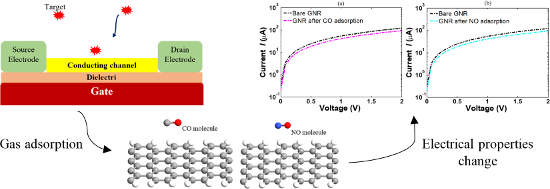
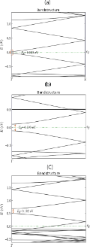
- . Graphene nanoribbons (GNRs) which have exceptional electrical, physical, and chemical properties can fulfil all of these requirements. The detection of gas molecules using gas sensors, particularly in medical diagnostics and safety applications, is receiving particularly high demand. GNRs exhibit
- detection approaches have been studied, and their electrical properties have also been investigated [5][6][7][8][9]. In addition, many researchers have experimentally worked on the fabrication of graphene and GNR-based biosensors and gas sensors [10][11][12][13][14][15]. Most of the previous works are
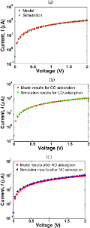
- ) [29], the carrier concentration including the gas adsorption effect can be formulated for AGNR-FET-based gas sensors. where kB is the Boltzmann constant and T is the temperature. We now have all the information required to calculate the carrier velocity. Finally, based on Equation 7, the carrier




Hydrophilicity and carbon chain length effects on the gas sensing properties of chemoresistive, self-assembled monolayer carbon nanotube sensors
Beilstein J. Nanotechnol. 2019, 10, 565–577, doi:10.3762/bjnano.10.58
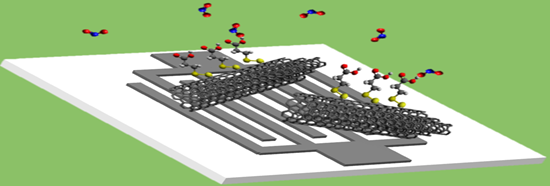
- response and selectivity. This would make the detection of polar and nonpolar gas species employing low-power gas sensors easier, even under fluctuating ambient moisture conditions. Keywords: carbon length chain; gas sensing mechanism; hydrophilicity; hydrophobicity; multiwall carbon nanotubes (MWCNTs
- ); self-assembled monolayer (SAM); thiol; Introduction Carbon nanotubes were first observed by Sumio Iijima in 1991 [1] and since then, this nanostructure has been widely used in chemoresistive gas sensors [2][3][4][5] due to the possibility to engineer its sensitivity towards chemicals present in a
- , pristine carbon nanotubes (CNTs) present some limitations for gas sensing. For example, carbon nanotube gas sensors often suffer from slow recovery, especially when operated at room temperature, which eventually results in baseline and response drift. For that reason, it is usually necessary to heat up the


Widening of the electroactivity potential range by composite formation – capacitive properties of TiO2/BiVO4/PEDOT:PSS electrodes in contact with an aqueous electrolyte
Beilstein J. Nanotechnol. 2019, 10, 483–493, doi:10.3762/bjnano.10.49

- Ti/TiO2:H/BiVO4:H electrode material could be further covered by conducting polymer prepared via electrodeposition. Beside many possible applications of conducting polymers like hole-transport material [63], electrochromic layers [64], electrochemical sensors [65] and gas sensors [66], a conducting




Wet chemistry route for the decoration of carbon nanotubes with iron oxide nanoparticles for gas sensing
Beilstein J. Nanotechnol. 2019, 10, 105–118, doi:10.3762/bjnano.10.10
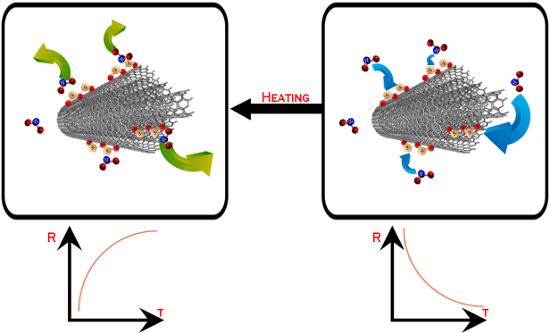
- chemical environment [2][3][4][5]. CNT gas sensors often exhibit fair sensitivity to gases even when operated at room temperature. Since their electrical conductivity is affected upon the adsorption of gases, their response is often measured as a change in resistance of a CNT film. The fact that CNT gas
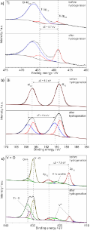
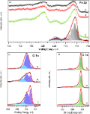
- chemical composition of the iron oxide decorated carbon nanotube samples were investigated employing transmission electron microscopy (TEM), Raman spectroscopy and X-ray photoelectron spectroscopy (XPS). The differently decorated CNT samples were used to make gas sensors for detecting nitrogen dioxide. A
- s in a continuous scanning mode. Fabrication and testing of gas sensors In order to check the effect of the different decorations on the gas sensing properties of modified CNTs, simple sensing devices were fabricated. For that purpose, small rectangular pieces of a silicon wafer, previously oxidized




Graphene-enhanced metal oxide gas sensors at room temperature: a review
Beilstein J. Nanotechnol. 2018, 9, 2832–2844, doi:10.3762/bjnano.9.264
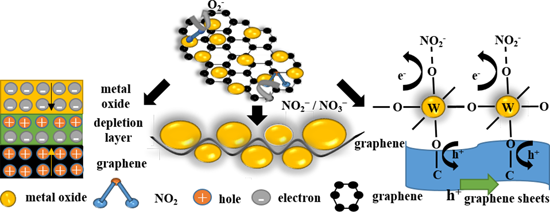
- semiconductors (MOS) are widely used as materials for gas sensing. Usually, MOS gas sensors have some common shortages, such as relatively poor selectivity and high operating temperature. Graphene has drawn much attention as a gas sensing material in recent years because it can even work at room temperature
- rate at room temperature. In this review, we have summarized the latest progress of graphene/metal-oxide gas sensors for the detection of NO2, NH3, CO and some volatile organic compounds (VOCs) at room temperature. Meanwhile, the sensing performance and sensing mechanism of the sensors are discussed
- ], graphene has been widely used in various fields such as photocatalysts, lithium battery electrodes, supercapacitors, gas sensors and electronic devices [2][3][4] due to its high specific surface area (2630 m2/g) and high carrier mobility at room temperature [5]. The electrical properties of graphene are



Oriented zinc oxide nanorods: A novel saturable absorber for lasers in the near-infrared
Beilstein J. Nanotechnol. 2018, 9, 2730–2740, doi:10.3762/bjnano.9.255
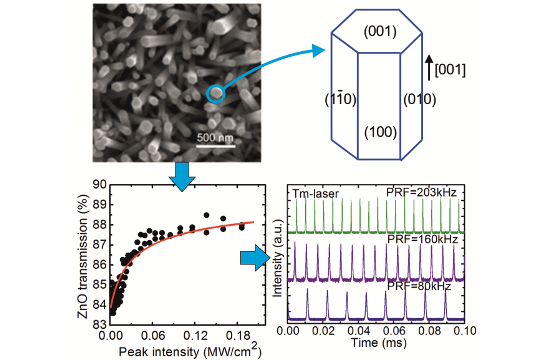
- epitaxy, metal-organic chemical vapor deposition, pulsed laser deposition), or by wet-chemical processes (e.g., the hydrothermal method, electrochemical deposition) [4]. The hydrothermal growth of ZnO NRs is a relatively simple, versatile and low temperature process [5]. ZnO NRs are used in gas sensors
- excellent sensing properties of the ZnO NRs, such composite structures can be of interest for the development of bio-molecule and gas sensors based on pulsed waveguide lasers. Experimental Growth of ZnO NRs ZnO NRs were directly grown on microscope glass slides (thickness: 1 mm, double-side polished) using




Electrospun one-dimensional nanostructures: a new horizon for gas sensing materials
Beilstein J. Nanotechnol. 2018, 9, 2128–2170, doi:10.3762/bjnano.9.202
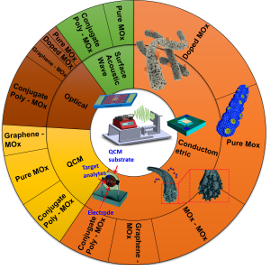
- in everyday life. Herein, we review recent developments of gas sensors based on electrospun 1D nanostructures in different sensing platforms, including optical, conductometric and acoustic resonators. After explaining the principle of electrospinning, we classify sensors based on the type of
- benefits and limitations for every approach. Keywords: 1D nanostructures; conductometric devices; electrospinning; gas sensors; optical sensors; resonators; Review 1 Introduction The monitoring and control of air pollutants, toxic gases and explosives has become increasingly important for human wellness
- followed by death. Gas sensors are the primary devices used for the detection and monitoring of these pollutants. Employing nanotechnology in sensor applications has significantly improved the performance of such devices, providing enhanced sensitivity, selectivity, low power consumption and high







Synthesis of hafnium nanoparticles and hafnium nanoparticle films by gas condensation and energetic deposition
Beilstein J. Nanotechnol. 2018, 9, 1868–1880, doi:10.3762/bjnano.9.179

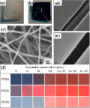
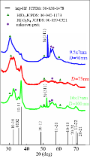
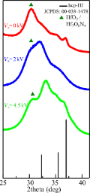
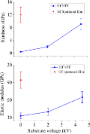
- the sensitivity of gas sensors [12], twinned silver NPs show important different chemical activity compared to their single crystalline counterparts [13]. These and many other examples illustrate that investigating the morphology and structure of metal NPs is essential for their efficient utilization






Free-radical gases on two-dimensional transition-metal disulfides (XS2, X = Mo/W): robust half-metallicity for efficient nitrogen oxide sensors
Beilstein J. Nanotechnol. 2018, 9, 1641–1646, doi:10.3762/bjnano.9.156
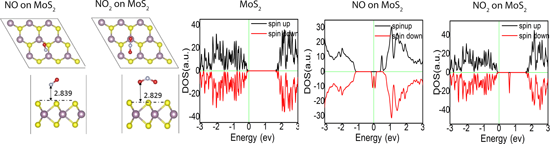
- ], composites of nanoflower-like CuxO and multilayer graphene (CuMGCs) [5] have been successfully synthesized as new types of room-temperature NO gas sensors. Compared with 3D materials [6], two-dimensional (2D) materials (sheets with thickness of on atom) [7][8][9][10][11][12][13][14][15] such as graphene [8
- ][16], phosphorene [9], siligraphene (SiC5) [10] and molybdenum disulfide (MoS2) [11][17] possess a high specific surface area and high electrical conductivity making them the ideal candidates for gas sensors. In particular, investigations of XS2-based (X = Mo, W) monolayer nanodevices demonstrate that


Surface-plasmon-enhanced ultraviolet emission of Au-decorated ZnO structures for gas sensing and photocatalytic devices
Beilstein J. Nanotechnol. 2018, 9, 771–779, doi:10.3762/bjnano.9.70
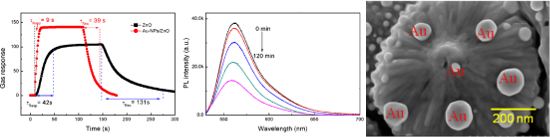
- . Keywords: Au-decorated ZnO; carrier dynamics; gas sensors; photocatalyst; SPR effect; Introduction Inorganic transition metal oxide sensor devices have attracted attention in particular for improving gas sensing, energy conversion, electronics, photocatalysis and optoelectronic devices [1][2][3][4]. Among
- them, ZnO nanostructures have particularly attracted attention for use in gas sensors due to their stability and relatively high sensitivity to target gases such as NO2, NO, CO, n-propane (C3H8), and NH3. In general, gas sensing devices based on ZnO structures are evidenced to be influenced by many
- and support the design of efficient NO2 gas sensing and photocatalysis devices. The effects of Au NPs on the performance of ZnO-based gas sensors were also investigated at an optimized operating temperature of 120 °C towards pollutant gases in a wide range of concentrations. The enhanced sensitivity



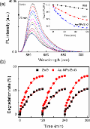

Synthesis and characterization of two new TiO2-containing benzothiazole-based imine composites for organic device applications
Beilstein J. Nanotechnol. 2018, 9, 721–739, doi:10.3762/bjnano.9.67
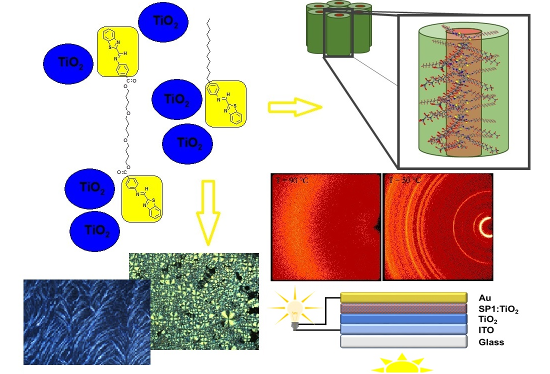
- dioxide, due to its suitable band position, non-toxicity, low cost, and simple synthesis, is an appropriate material for modification of various metals. Its chemical stability and biocompatibility plays an important role in various applications such as gas sensors, photocatalytic hydrogen generation